
Geranium sanguineum Frivolius™ Lilac - Bloody cranesbill
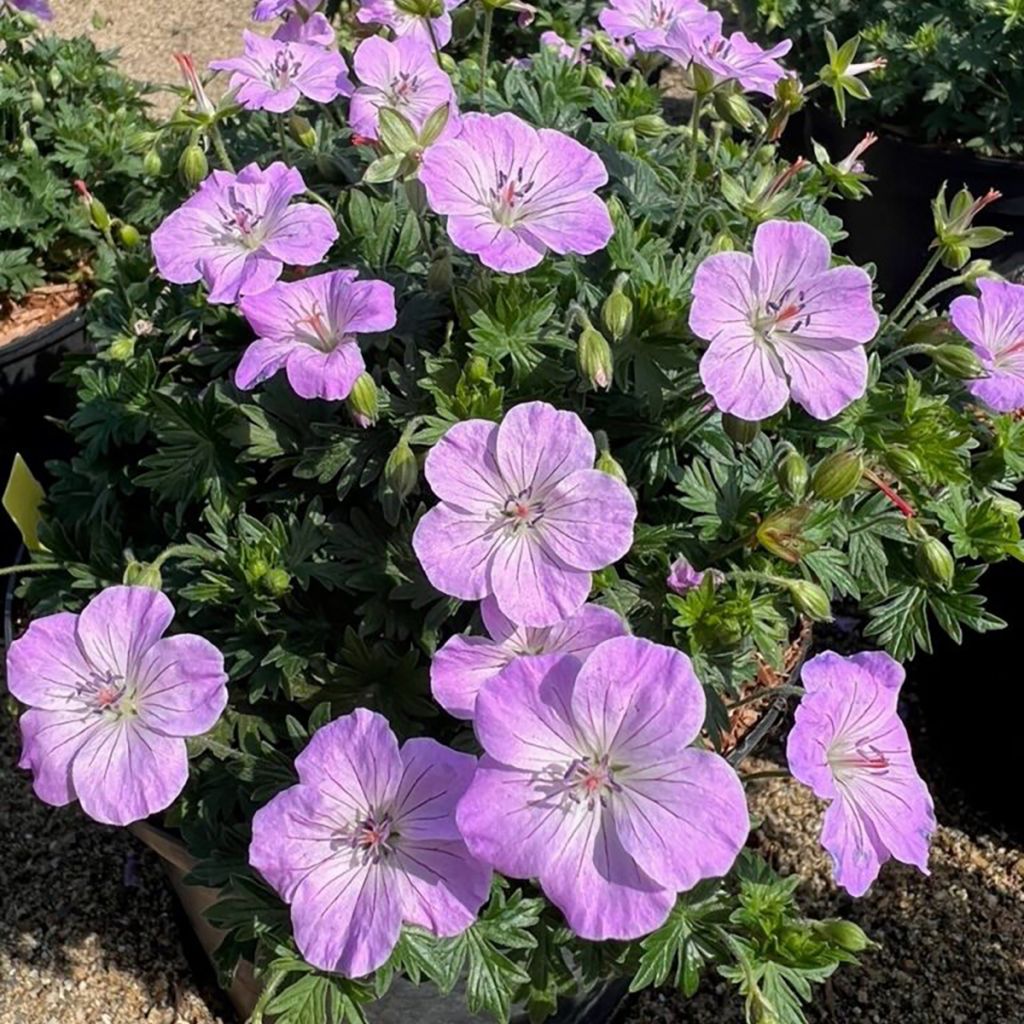
Geranium sanguineum Frivolius™ Lilac - Bloody cranesbill
Geranium sanguineum Frivolius™ Lilac - Bloody cranesbill
Geranium sanguineum ‘MVNG1901’ Frivolius™ Lilac
Striped Bloody Cranesbill, Bloody Geranium
Back-to-school special offer!
Get €10 off for every €50 you spend! And get up to €40 off on a single order.
How does it work?
1. Shop your favourites
Add your favourite plants to your basket. For every €50 you spend (excluding delivery charges, store credit and the plastic-free option), you’ll receive a €10 voucher.
€50 spent = €10 voucher
€100 spent = €20 voucher
€150 spent = €30 voucher
€200 spent = €40 voucher
2. Place your order
Once your basket reaches one of the spending thresholds, place your order. You can even choose your delivery date!
3. Receive your voucher
As soon as your order has been shipped, you’ll receive an email containing your personal voucher code and its value.
4. Use it on your next order
Your voucher is valid for 90 days from the date you receive it. It can be used once only, on a new order worth at least the value of the voucher, excluding delivery charges.
Please note: Vouchers can be combined with other offers, but cannot be split or refunded.
Why not try an alternative variety in stock?
View all →
Available in 0 sizes

Available in 0 sizes
Available in 2 sizes
Available in 1 sizes

Available in 0 sizes
Available in 1 sizes

Available in 1 sizes

Available in 3 sizes
Available in 1 sizes

Available in 1 sizes
This plant carries a 12 months recovery warranty
More information
We guarantee the quality of our plants for a full growing cycle, and will replace at our expense any plant that fails to recover under normal climatic and planting conditions.
Would this plant suit my garden?
Set up your Plantfit profile →
Description
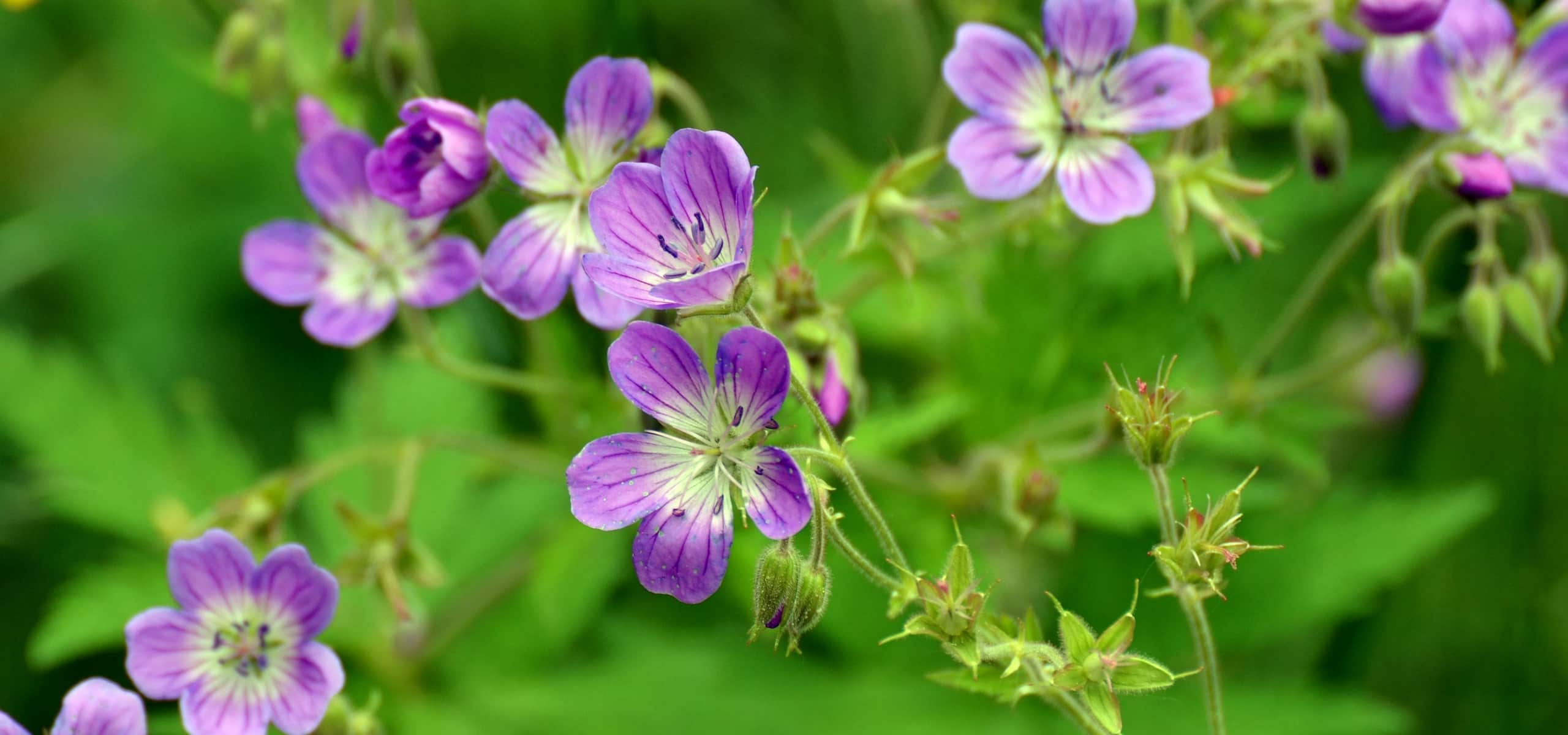
Geranium sanguineum ‘MVNG1901’ Frivolius™ Lilac is a hardy geranium selected for its early and exceptionally long flowering, its large lilac-pink corollas and its naturally spreading habit. This vigorous, undemanding and low-maintenance small groundcover plant is perfect for dry borders, dry rockeries and containers.
The Frivolius Lilac geranium belongs to the Geraniaceae botanical family and descends from the species Geranium sanguineum, the bloody cranesbill. It is a herbaceous perennial with a thick rhizome, native to a vast area from Europe to the Caucasus, Turkey and Western Siberia; it grows there in dry meadows, limestone rockeries, open woodland edges, on slopes and sometimes in coastal dunes.
The cultivar ‘MVNG1901’ is a recent Dutch selection by breeder Marco Van Noort (Warmond), originating from a sowing of Geranium sanguineum ‘Canon Miles’ in the early 2020s. Marketed under the name Frivolius™ Lilac, it is part of the Frivolius™ series (with Frivolius™ Pink ‘MVNG1811’ and Frivolius™ Purple ‘MVNG1905’), characterised by compact, very floriferous and repeat-flowering plants. This variety was distinguished with a silver medal at PLANTARIUM GROEN-Direkt in 2025.
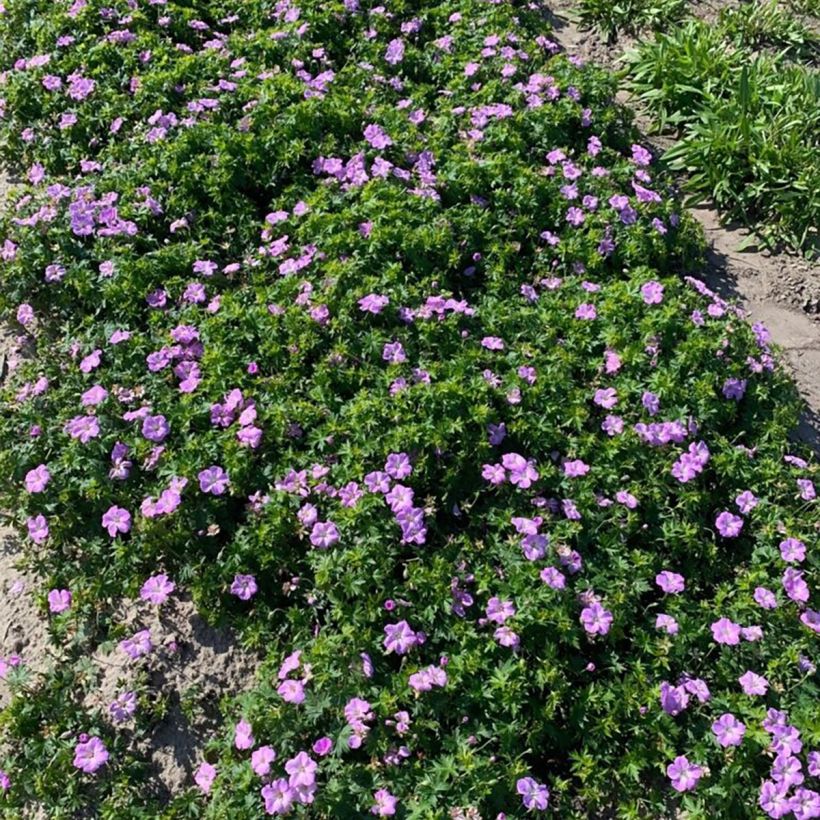
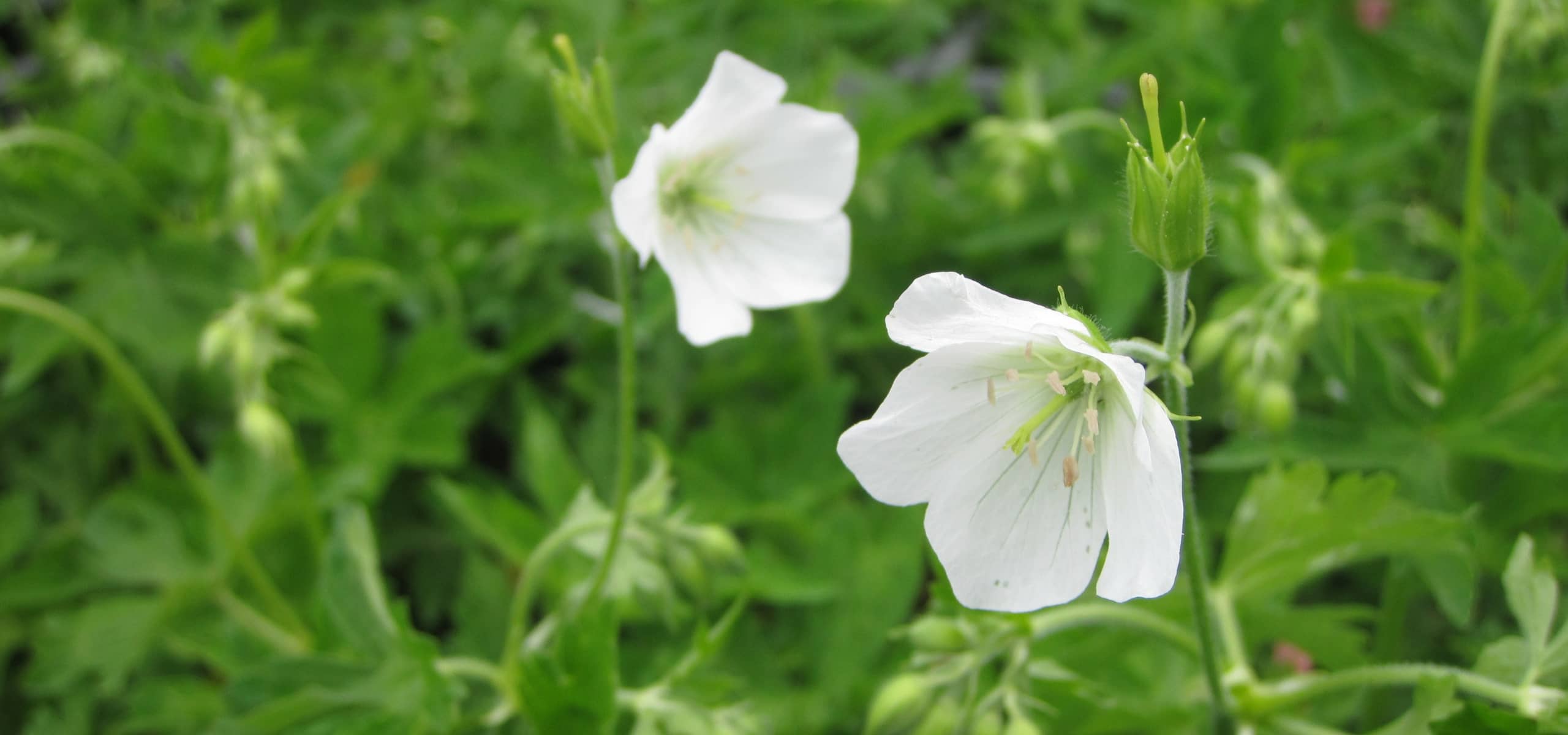
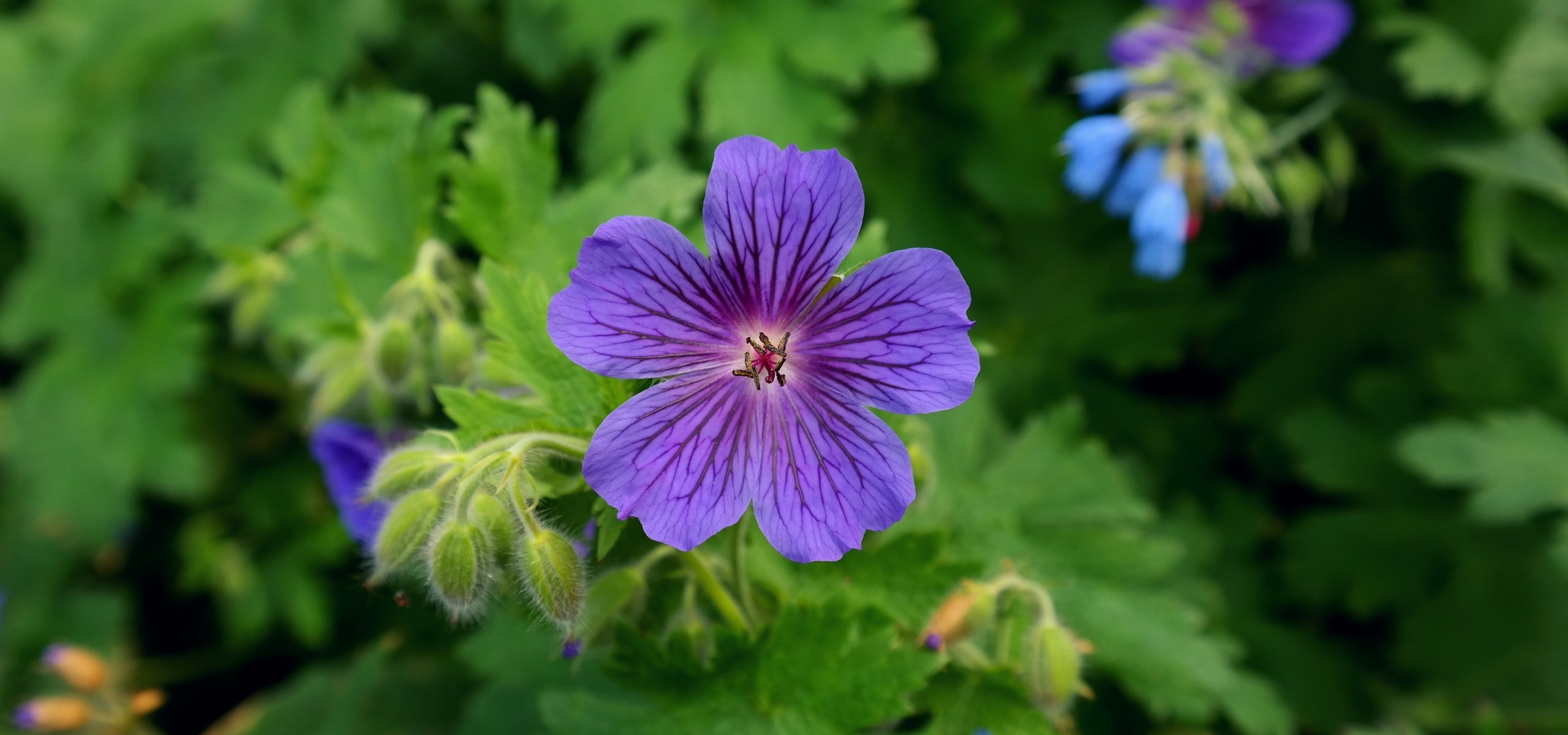
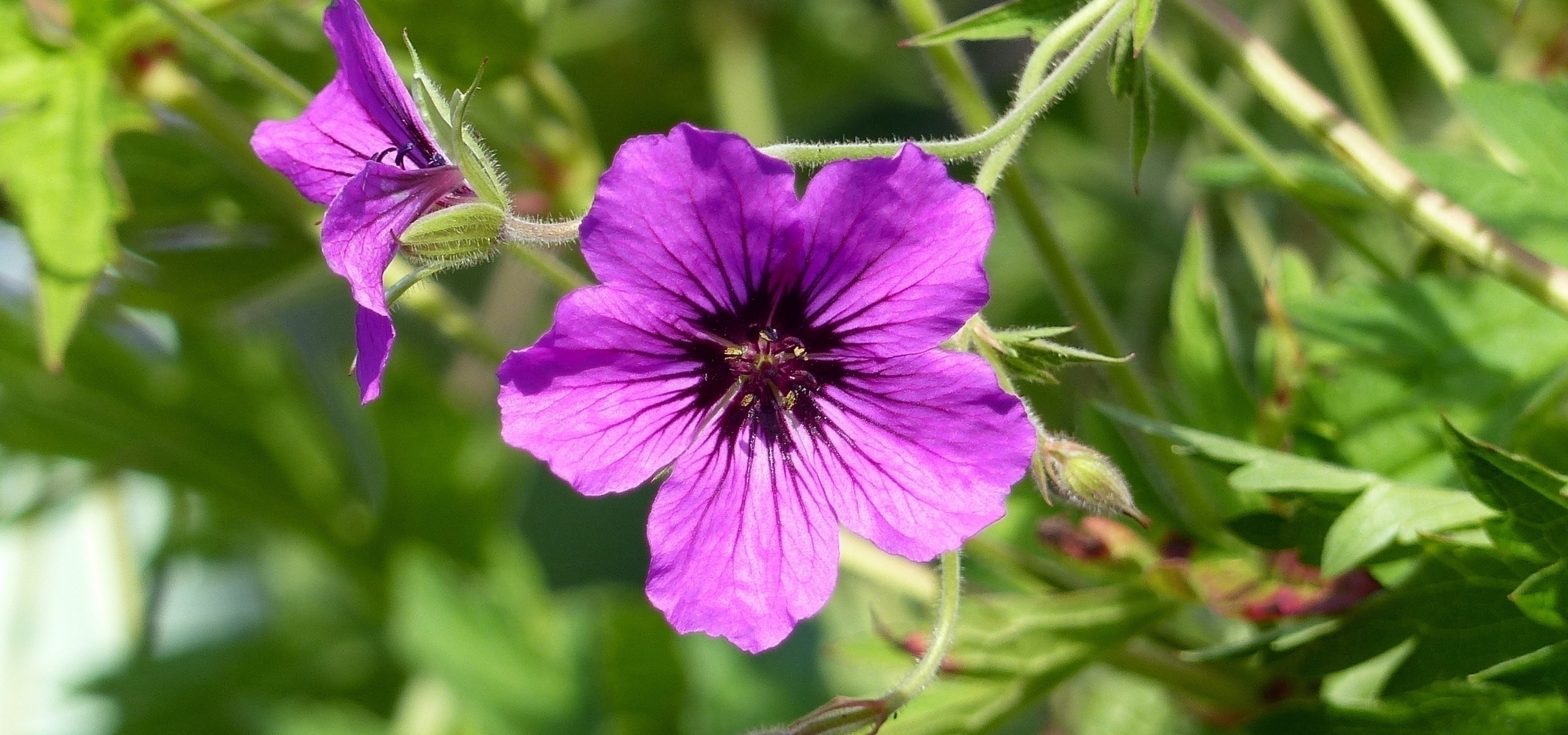
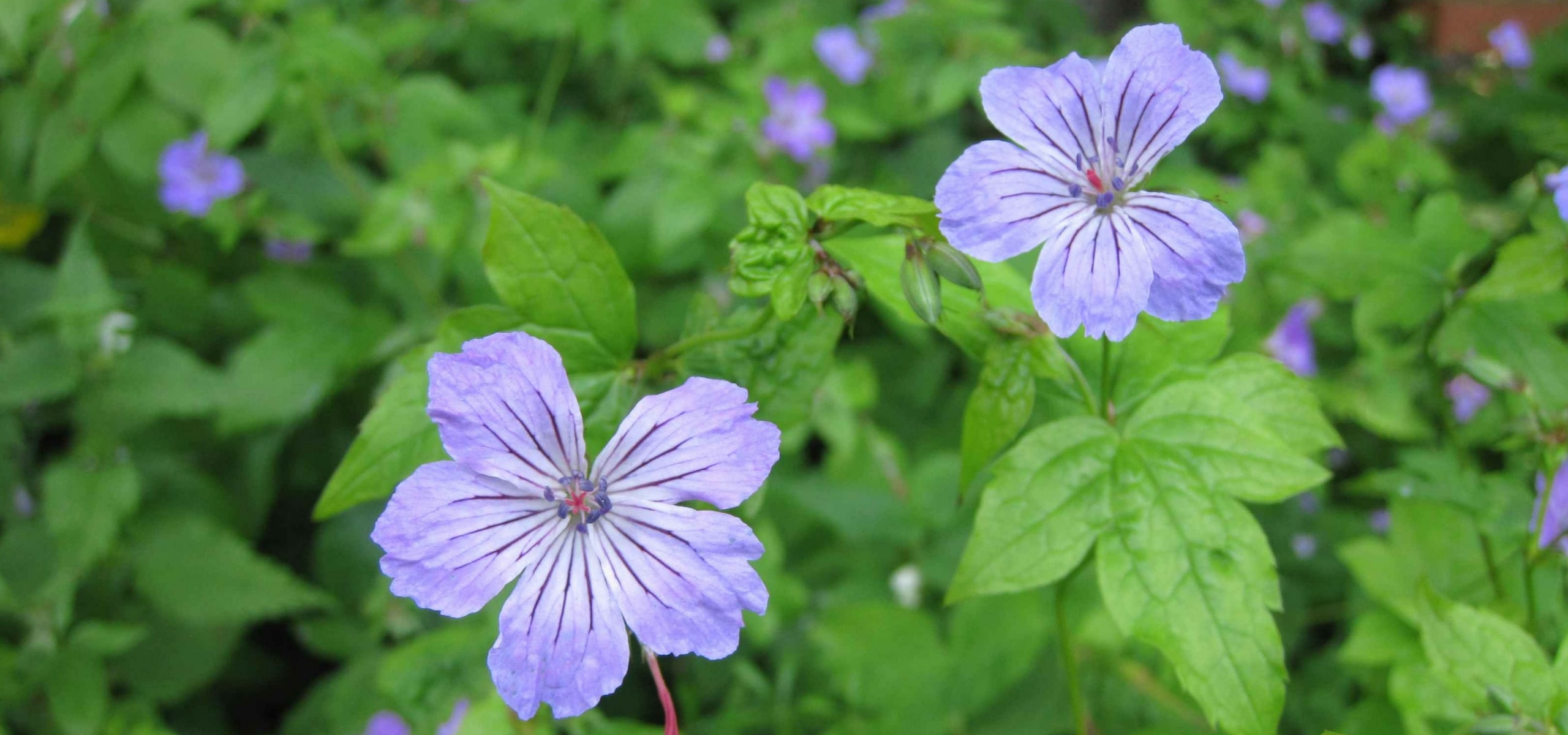
The plant forms a flattened, wide and well-branched clump, with a naturally dense and spreading habit. A mature clump reaches 20 to 25 cm in height and 35 to 40 cm in width in open ground. Its growth is moderately vigorous, forming a tight carpet without being invasive. The leaves, borne on long petioles, are rounded but deeply palmate into 5 lobes, themselves divided into fine segments; the foliage is very finely cut, medium to dark green, sometimes tinged with red in autumn. The aerial growth is normally deciduous, but can be semi-evergreen in mild climates. The flowers are solitary, 3.5 cm wide, with five, bright lilac-pink petals veined with deeper tones. They are very nectar-rich, visited by bees and other pollinating insects. They follow one another from May to August-September if lightly pruned after a major flush of flowering.
In the garden, Geranium sanguineum Frivolius™ Lilac is perfect for filling the front of sunny borders, stabilising a dry slope or adorning a limestone rockery. Plant it in well-drained soil, even stony or poor soil. In a terrace border or large container, it will accompany low-growing grasses and dryland perennials. It pairs particularly well with Nepeta faassenii ‘Purrsian Blue’, with its blue spikes, Achillea millefolium ‘Terracotta’ in ochre tones, the grass Stipa tenuifolia ‘Pony Tails’ and its blonde plumes, or Phlox subulata ‘Purple Beauty’, a small cushion-forming dryland perennial that flowers generously in spring. Together, these plants create very long-lasting, easy-care borders that are attractive to pollinators.

Geranium sanguineum Frivolius™ Lilac - Bloody cranesbill in pictures

Flowering
Foliage
Plant habit
Botanical data
Geranium
sanguineum
‘MVNG1901’ Frivolius™ Lilac
Geraniaceae
Striped Bloody Cranesbill, Bloody Geranium
Geranium sanguineum ‘MVNG1901’, Geranium sanguineum Frivolius™ Lilac
Cultivar or hybrid
Planting and care
Geranium sanguineum Frivolius Lilac is a very easy plant to grow successfully. It thrives in all well-drained soils, even clay, provided they do not retain too much moisture, and even lime-bearing soils, and all situations except shade. Thoroughly loosen the soil during planting, enrich it with compost, and water until the plant is well-rooted.
You can remove faded flowers in summer to encourage the growth of new flowering stems and prevent the plant from exhausting itself by producing seeds.
Planting period
Intended location
Care
Planting & care advice
-
-
-
-
-
-
-

-
This item has not been reviewed yet - be the first to leave a review about it.
Recently viewed products
Haven't found what you were looking for?
Hardiness is the lowest winter temperature a plant can endure without suffering serious damage or even dying. However, hardiness is affected by location (a sheltered area, such as a patio), protection (winter cover) and soil type (hardiness is improved by well-drained soil).

The flowering period indicated on our website applies to countries and regions located in USDA zone 8 (France, the United Kingdom, Ireland, the Netherlands, etc.)
It will vary according to where you live:- In zones 9 to 10 (Italy, Spain, Greece, etc.), flowering will occur about 2 to 4 weeks earlier.
- In zones 6 to 7 (Germany, Poland, Slovenia, and lower mountainous regions), flowering will be delayed by 2 to 3 weeks.
- In zone 5 (Central Europe, Scandinavia), blooming will be delayed by 3 to 5 weeks.
In temperate climates, pruning of spring-flowering shrubs (forsythia, spireas, etc.) should be done just after flowering.
Pruning of summer-flowering shrubs (Indian Lilac, Perovskia, etc.) can be done in winter or spring.
In cold regions as well as with frost-sensitive plants, avoid pruning too early when severe frosts may still occur.
The planting period indicated on our website applies to countries and regions located in USDA zone 8 (France, United Kingdom, Ireland, Netherlands).
It will vary according to where you live:
- In Mediterranean zones (Marseille, Madrid, Milan, etc.), autumn and winter are the best planting periods.
- In continental zones (Strasbourg, Munich, Vienna, etc.), delay planting by 2 to 3 weeks in spring and bring it forward by 2 to 4 weeks in autumn.
- In mountainous regions (the Alps, Pyrenees, Carpathians, etc.), it is best to plant in late spring (May-June) or late summer (August-September).
The harvesting period indicated on our website applies to countries and regions in USDA zone 8 (France, England, Ireland, the Netherlands).
In colder areas (Scandinavia, Poland, Austria...) fruit and vegetable harvests are likely to be delayed by 3-4 weeks.
In warmer areas (Italy, Spain, Greece, etc.), harvesting will probably take place earlier, depending on weather conditions.
The sowing periods indicated on our website apply to countries and regions within USDA Zone 8 (France, UK, Ireland, Netherlands).
In colder areas (Scandinavia, Poland, Austria...), delay any outdoor sowing by 3-4 weeks, or sow under glass.
In warmer climes (Italy, Spain, Greece, etc.), bring outdoor sowing forward by a few weeks.
Shipping country and language
Your country of residence may be:
Your country of residence is:
For a better user experience on our website, you can select:
Your shipping country:
-
 Austria
-
 Belgium
-
 Bosnia & Herzegovina
-
 Bulgaria
-
 Croatia
-
 Cyprus
-
 Czechia
-
 Denmark
-
 Estonia
-
 Finland
-
 France
-
 Germany
-
 Greece
-
 Hungary
-
 Iceland
-
 Ireland
-
 Italy
Italy
-
 Latvia
-
 Liechtenstein
-
 Lithuania
-
 Luxembourg
-
 Malta
Malta
-
 Netherlands
-
 Poland
-
 Portugal
-
 Romania
-
 Serbia
-
 Slovakia
-
 Slovenia
-
 Spain
Spain
-
 Sweden
-
 Switzerland
Language:
-
French
-
 English
-
Spanish
-
Italian
-
German
-
Portuguese
-
Dutch
-
Finnish
My Account
Hello
My wish lists
My cart
Log in / Register
Existing customer?
This form is protected by reCAPTCHA - the Google Privacy Policy and Terms of Service apply.
New customer?
Create an account to track your orders, access our customer service and, if you wish, make the most of our upcoming offers.