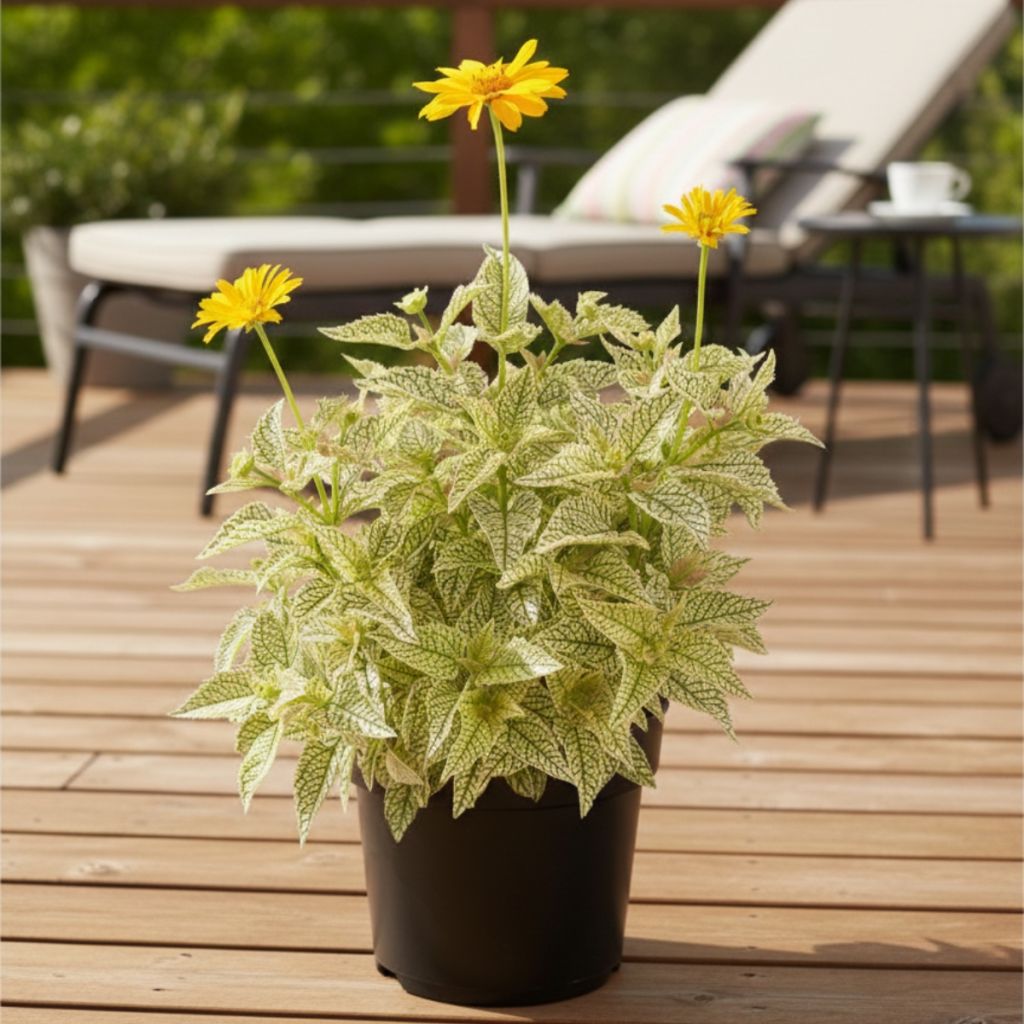
Heliopsis helianthoides Solar Flare - False sunflower
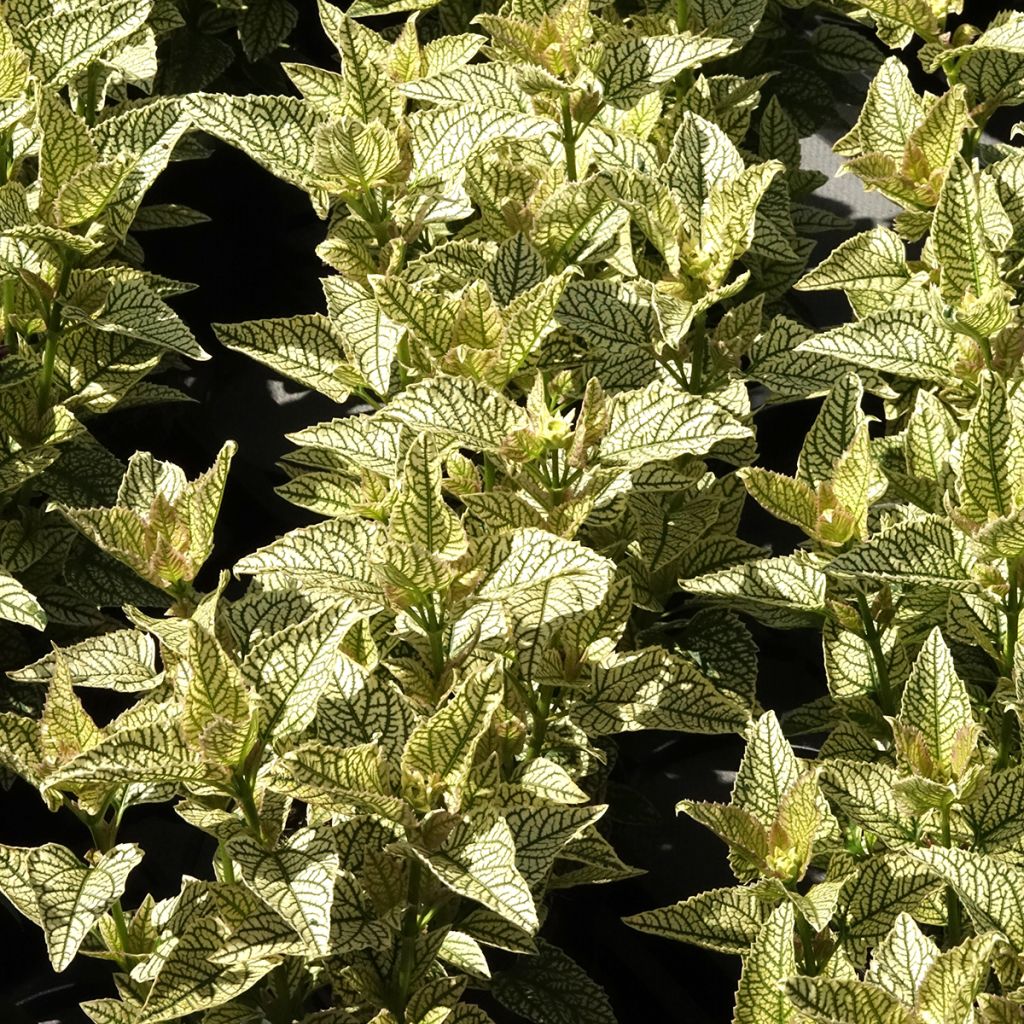
Heliopsis helianthoides Solar Flare - False sunflower
Heliopsis helianthoides Solar Flare - False sunflower
Heliopsis helianthoides Solar Flare
Back-to-school special offer!
Get €10 off for every €50 you spend! And get up to €40 off on a single order.
How does it work?
1. Shop your favourites
Add your favourite plants to your basket. For every €50 you spend (excluding delivery charges, store credit and the plastic-free option), you’ll receive a €10 voucher.
€50 spent = €10 voucher
€100 spent = €20 voucher
€150 spent = €30 voucher
€200 spent = €40 voucher
2. Place your order
Once your basket reaches one of the spending thresholds, place your order. You can even choose your delivery date!
3. Receive your voucher
As soon as your order has been shipped, you’ll receive an email containing your personal voucher code and its value.
4. Use it on your next order
Your voucher is valid for 90 days from the date you receive it. It can be used once only, on a new order worth at least the value of the voucher, excluding delivery charges.
Please note: Vouchers can be combined with other offers, but cannot be split or refunded.
Why not try an alternative variety in stock?
View all →
Available in 3 sizes
Available in 1 sizes
Available in 1 sizes

Available in 1 sizes
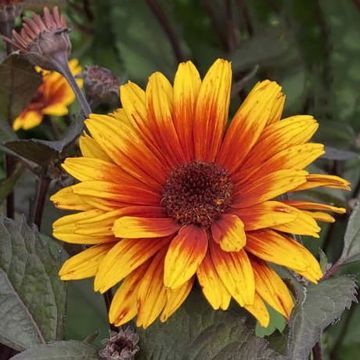
Available in 2 sizes
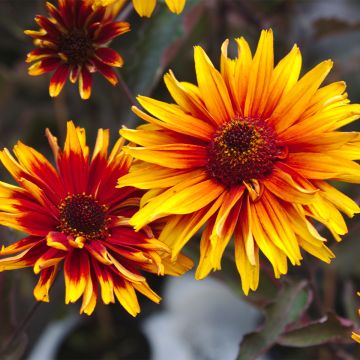
Available in 3 sizes

Available in 1 sizes
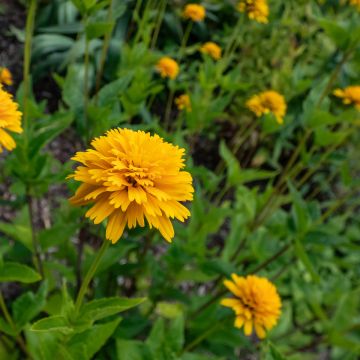
Available in 3 sizes
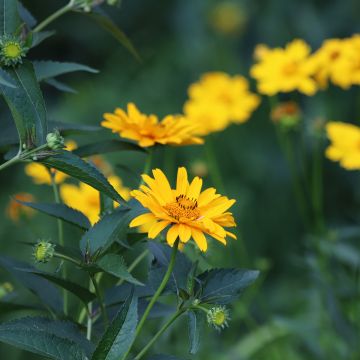
Available in 1 sizes
Available in 1 sizes
This plant carries a 12 months recovery warranty
More information
We guarantee the quality of our plants for a full growing cycle, and will replace at our expense any plant that fails to recover under normal climatic and planting conditions.
Would this plant suit my garden?
Set up your Plantfit profile →
Description
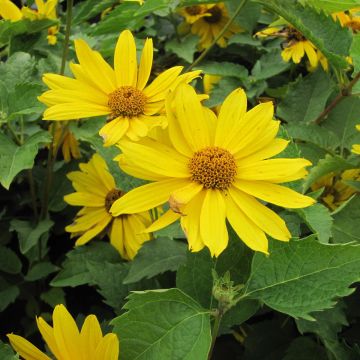
Heliopsis helianthoides ‘Solar Flare’ is a compact cultivar of false sunflower distinguished by its variegated, variegated foliage, in perfect harmony with its golden-yellow daisy-like flowers. This variety, which flowers from spring to autumn, finds a place in the sun, at the front of borders or in pots. Its decorative foliage remains interesting even outside of peak flowering. This hardy perennial is a robust and durable plant within reach of all gardeners, even beginners.
Originating from the North American species Heliopsis helianthoides, ‘Solar Flare’ belongs to the Asteraceae family. The species, known by the names heliopsis, ox-eye, or false sunflower, is one of the most cultivated heliopsis. In the wild, it is found in eastern and central North America, from southern Canada to Texas and New Mexico, in tallgrass prairies, open forest edges, and roadsides.
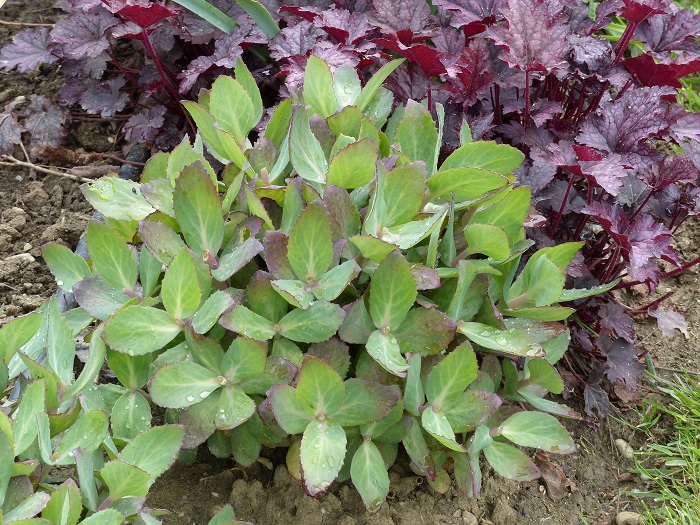
'Solar Flare' is a cultivar selected for its distinctly more compact habit and its cream-yellow to pale green foliage strongly veined with green. It is a herbaceous perennial with a woody base, slightly rhizomatous, but non-invasive, which over the years forms a dense clump. The upright, firm stems branch well and bear opposite, ovate to lanceolate leaves, measuring 6 to 10 cm long, with a toothed margin and a slightly rough texture. The clump reaches 30 to 35 cm in height in a pot, slightly more in open ground, and about 30 cm in width. Its growth is rapid, it flowers from the first year after planting.
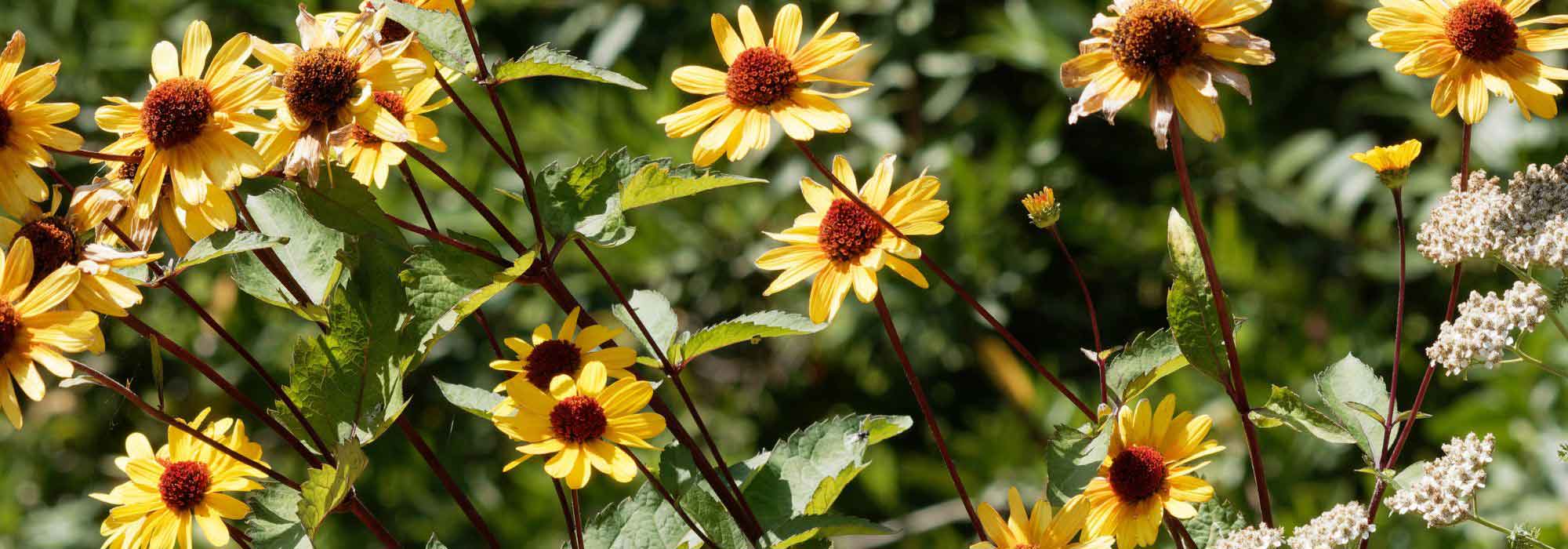
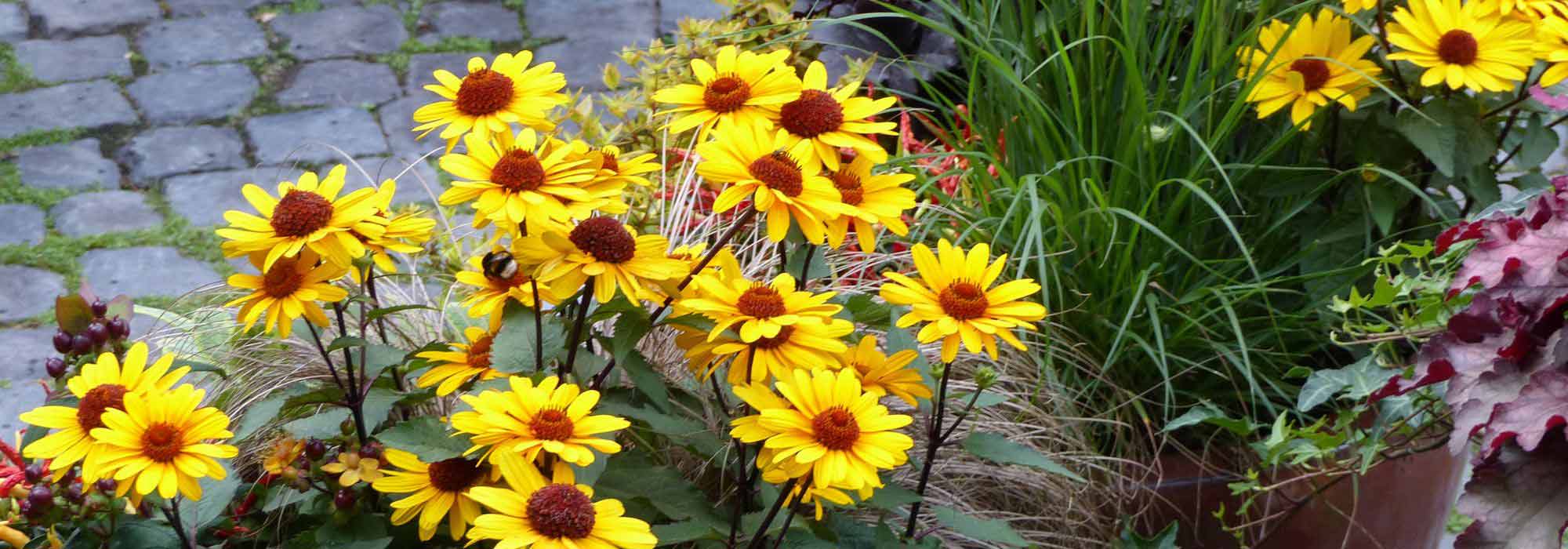
The flowering, in solitary heads borne at the ends of the stems, extends from July to October. Each 4 to 6 cm diameter head presents golden-yellow florets or ligules surrounding a central disc of a deeper yellow, turning towards orange at maturity. A characteristic of the genus, these ligules are fertile, which distinguishes them from those of true sunflowers. The flowers are rich in nectar and pollen, loved by bees, bumblebees, and butterflies. They also make good cut flowers, long-lasting in a vase. After flowering, the plant produces small dry achenes, which ensure seed dispersal.
The root system, formed of short rhizomes and fibrous roots, anchors the clump well while allowing it to withstand periods of moderate drought. The deciduous vegetation disappears in winter and develops each spring from the base.
Plant Heliopsis ‘Solar Flare’ at the edge of a border, in the sun, where its variegated foliage will create a beautiful and luminous band all summer. Pair it with the blue spikes of Salvia nemorosa ‘Caradonna’ or Nepeta ‘Kit Cat’ to create an easy-to-maintain scene full of contrast. In a prairie-style garden, mix it with a few clumps of Echinacea purpurea ‘Magnus’ in front of a bluish ornamental grass like Panicum virgatum ‘Heavy Metal’. In a large pot, combine it with a hardy geranium groundcover that will form a flowering cushion. This plant tolerates heat well; a gravel mulch will further enhance its decorative foliage.
The genus name Heliopsis comes from the Greek hélios (the sun) and opsis (appearance), in reference to the colour of the inflorescences, while the epithet helianthoides means "resembling a sunflower".
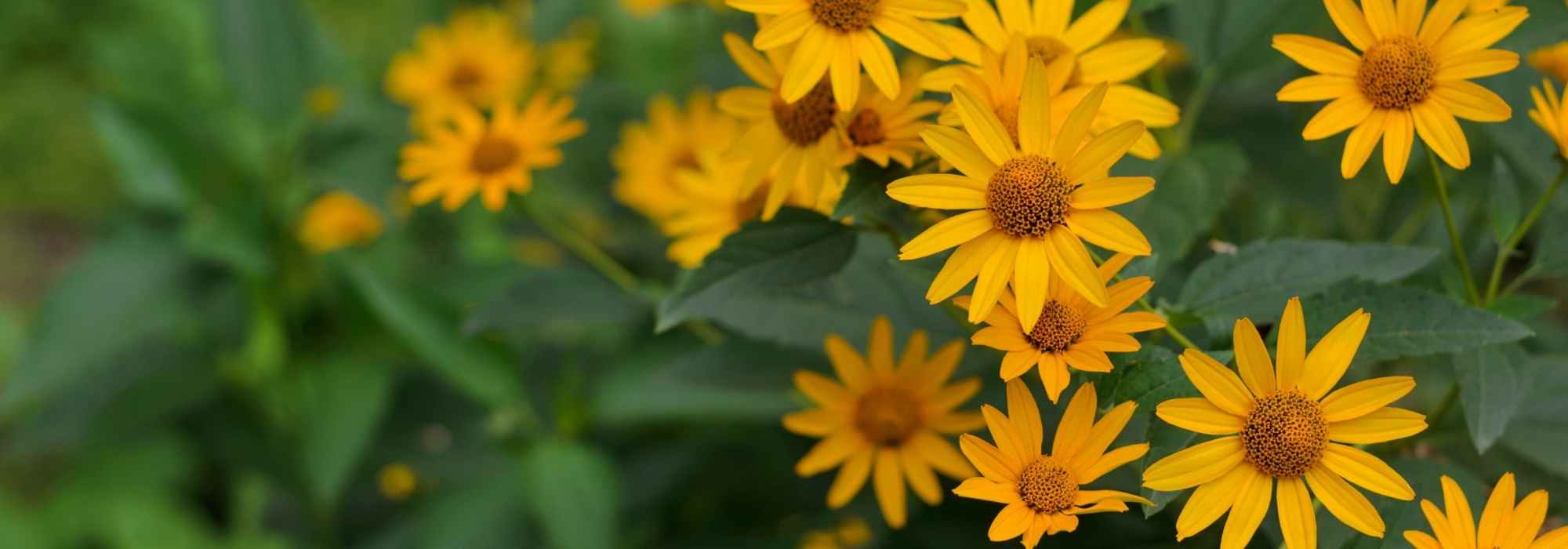
Heliopsis helianthoides Solar Flare - False sunflower in pictures
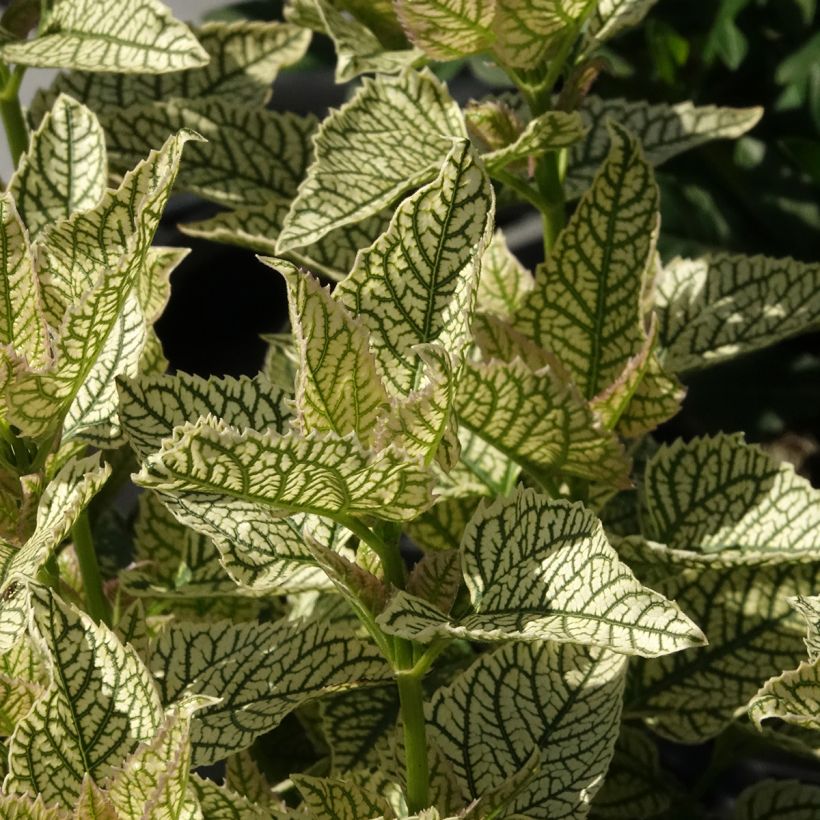
Flowering
Foliage
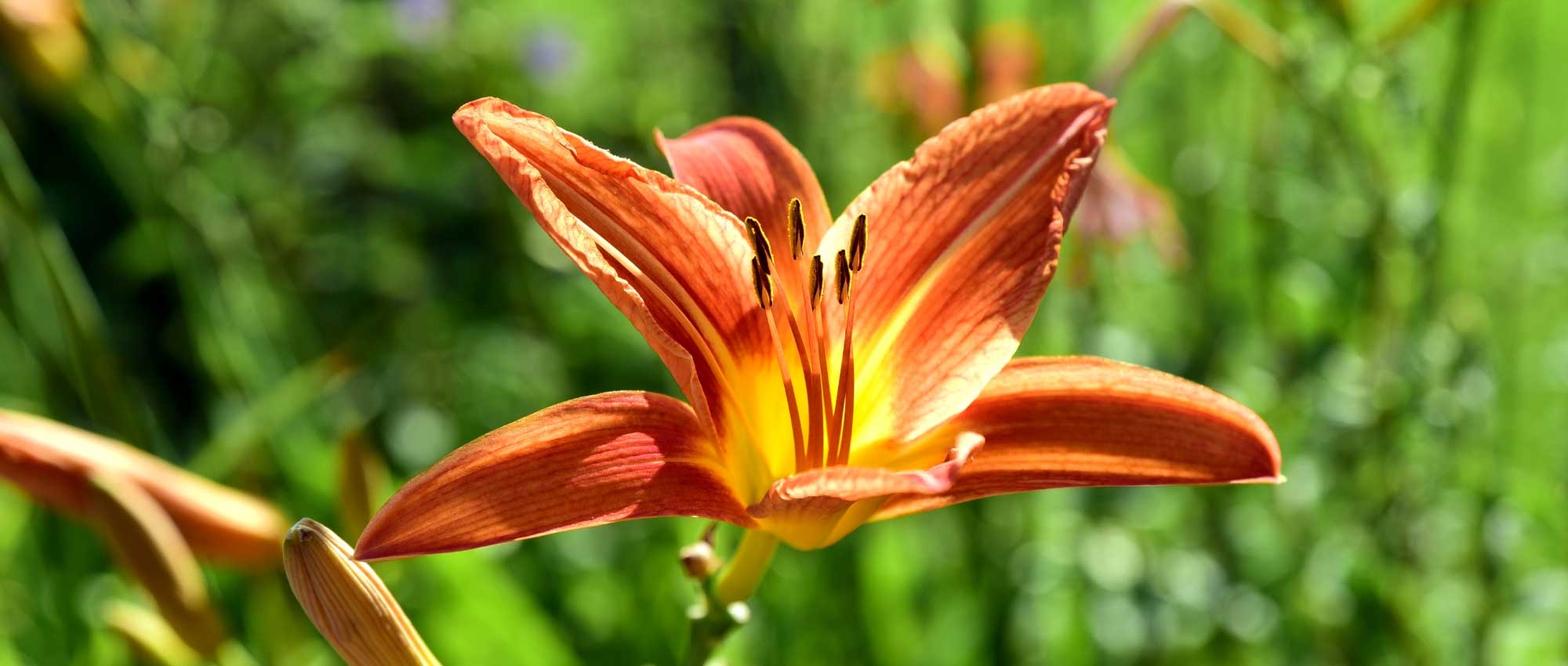
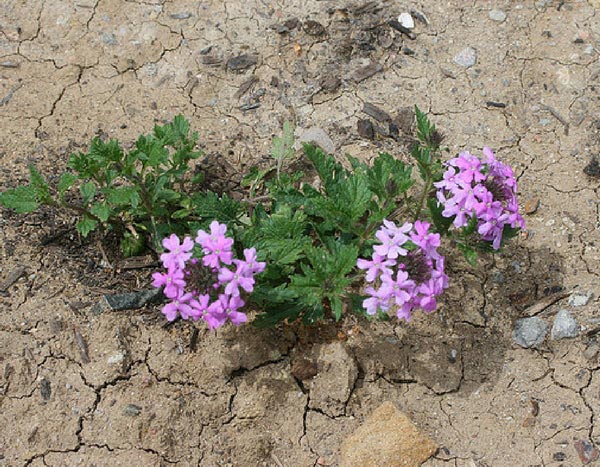
Plant habit
Botanical data
Heliopsis
helianthoides
Solar Flare
Asteraceae
Buphthalmum helianthoides Solar Flare
Cultivar or hybrid
Planting and care
Heliopsis 'Solar Flare', or false sunflower, is an easy plant to grow. It adapts to any well-drained soil and only dislikes excess winter moisture and soils that are a little too dry in summer. Its roots dislike competition. On the other hand, it tolerates clay, poor and occasionally dry soils. Heliopsis helianthoides 'Solar Flare' prefers a sunny position, but its variegated foliage tolerates partial shade well. This variety withstands wind well and does not require staking. It is preferable to cut back spent flowers to encourage further flowering. The plant can be divided every 2 to 3 years to maintain its vigour.
Some Heliopsis varieties are susceptible to powdery mildew and rust when growing conditions are not optimal. Use a preventive treatment against fungal diseases towards the end of winter. Subsequently, treatment should only be applied if it becomes necessary, in the case of confirmed presence of parasitic organisms on the plant, striving to use targeted treatments. In any case, all treatment should be avoided during the flowering period, so as not to harm pollinating insects.
Planting period
Intended location
Care
Planting & care advice
-
-
-
-
-
-
-

-
This item has not been reviewed yet - be the first to leave a review about it.
Recently viewed products
Haven't found what you were looking for?
Hardiness is the lowest winter temperature a plant can endure without suffering serious damage or even dying. However, hardiness is affected by location (a sheltered area, such as a patio), protection (winter cover) and soil type (hardiness is improved by well-drained soil).

The flowering period indicated on our website applies to countries and regions located in USDA zone 8 (France, the United Kingdom, Ireland, the Netherlands, etc.)
It will vary according to where you live:- In zones 9 to 10 (Italy, Spain, Greece, etc.), flowering will occur about 2 to 4 weeks earlier.
- In zones 6 to 7 (Germany, Poland, Slovenia, and lower mountainous regions), flowering will be delayed by 2 to 3 weeks.
- In zone 5 (Central Europe, Scandinavia), blooming will be delayed by 3 to 5 weeks.
In temperate climates, pruning of spring-flowering shrubs (forsythia, spireas, etc.) should be done just after flowering.
Pruning of summer-flowering shrubs (Indian Lilac, Perovskia, etc.) can be done in winter or spring.
In cold regions as well as with frost-sensitive plants, avoid pruning too early when severe frosts may still occur.
The planting period indicated on our website applies to countries and regions located in USDA zone 8 (France, United Kingdom, Ireland, Netherlands).
It will vary according to where you live:
- In Mediterranean zones (Marseille, Madrid, Milan, etc.), autumn and winter are the best planting periods.
- In continental zones (Strasbourg, Munich, Vienna, etc.), delay planting by 2 to 3 weeks in spring and bring it forward by 2 to 4 weeks in autumn.
- In mountainous regions (the Alps, Pyrenees, Carpathians, etc.), it is best to plant in late spring (May-June) or late summer (August-September).
The harvesting period indicated on our website applies to countries and regions in USDA zone 8 (France, England, Ireland, the Netherlands).
In colder areas (Scandinavia, Poland, Austria...) fruit and vegetable harvests are likely to be delayed by 3-4 weeks.
In warmer areas (Italy, Spain, Greece, etc.), harvesting will probably take place earlier, depending on weather conditions.
The sowing periods indicated on our website apply to countries and regions within USDA Zone 8 (France, UK, Ireland, Netherlands).
In colder areas (Scandinavia, Poland, Austria...), delay any outdoor sowing by 3-4 weeks, or sow under glass.
In warmer climes (Italy, Spain, Greece, etc.), bring outdoor sowing forward by a few weeks.
Shipping country and language
Your country of residence may be:
Your country of residence is:
For a better user experience on our website, you can select:
Your shipping country:
-
 Austria
-
 Belgium
-
 Bosnia & Herzegovina
-
 Bulgaria
-
 Croatia
-
 Cyprus
-
 Czechia
-
 Denmark
-
 Estonia
-
 Finland
-
 France
-
 Germany
-
 Greece
-
 Hungary
-
 Iceland
-
 Ireland
-
 Italy
Italy
-
 Latvia
-
 Liechtenstein
-
 Lithuania
-
 Luxembourg
-
 Malta
Malta
-
 Netherlands
-
 Poland
-
 Portugal
-
 Romania
-
 Serbia
-
 Slovakia
-
 Slovenia
-
 Spain
Spain
-
 Sweden
-
 Switzerland
Language:
-
French
-
 English
-
Spanish
-
Italian
-
German
-
Portuguese
-
Dutch
-
Finnish
My Account
Hello
My wish lists
My cart
Log in / Register
Existing customer?
This form is protected by reCAPTCHA - the Google Privacy Policy and Terms of Service apply.
New customer?
Create an account to track your orders, access our customer service and, if you wish, make the most of our upcoming offers.