This cultivar belongs to the Apocynaceae family, like all oleanders. The botanical species Nerium oleander grows naturally along wadis, rivers and ravines in the warmest regions of the Mediterranean basin, North Africa and Western Asia, to the fringes of the Himalayas and southern Asia. It is an evergreen shrub with a very long lifespan.
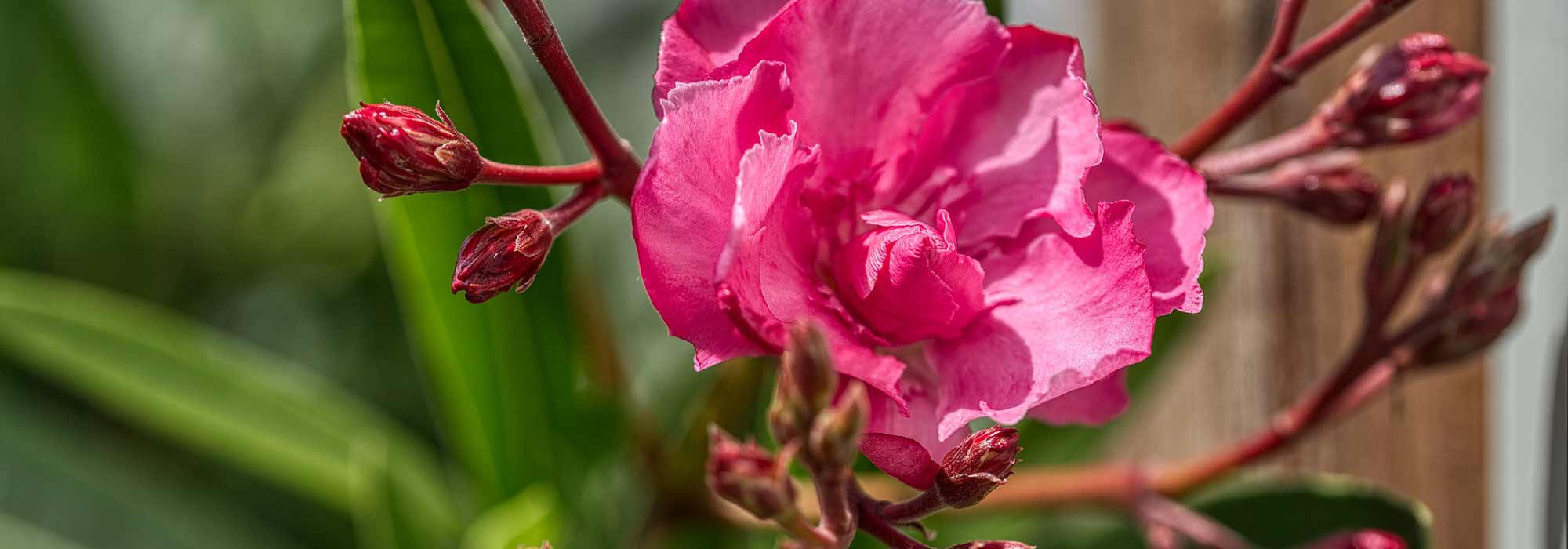
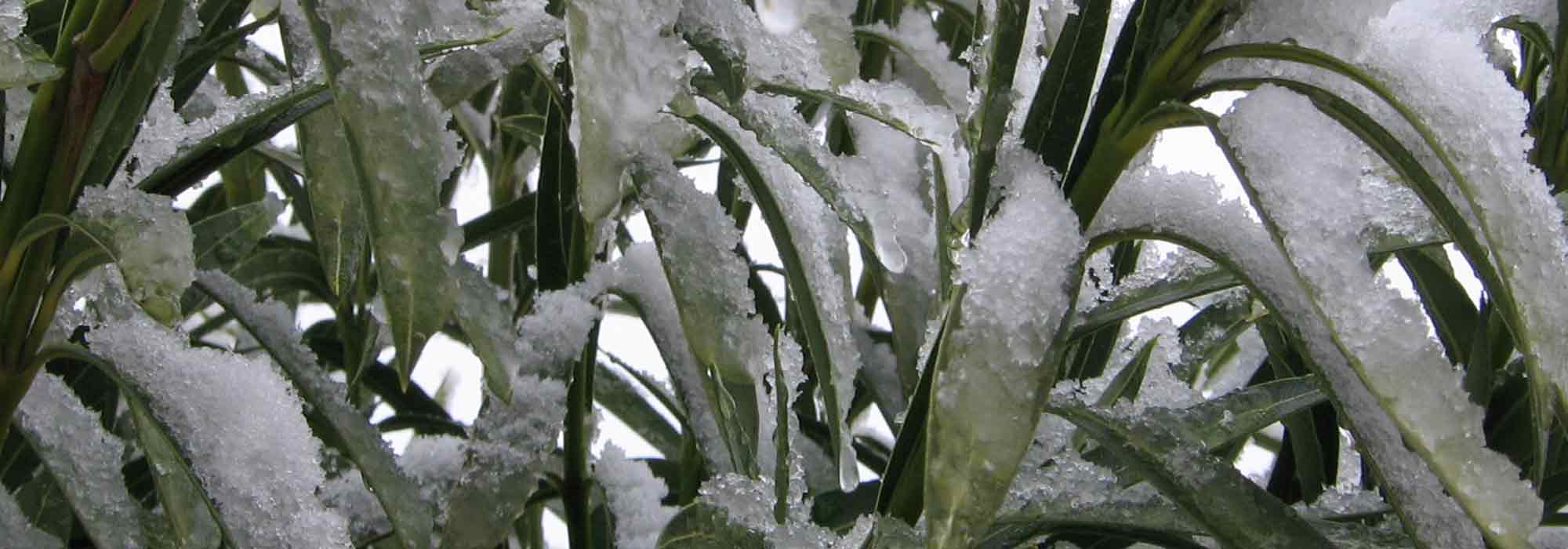
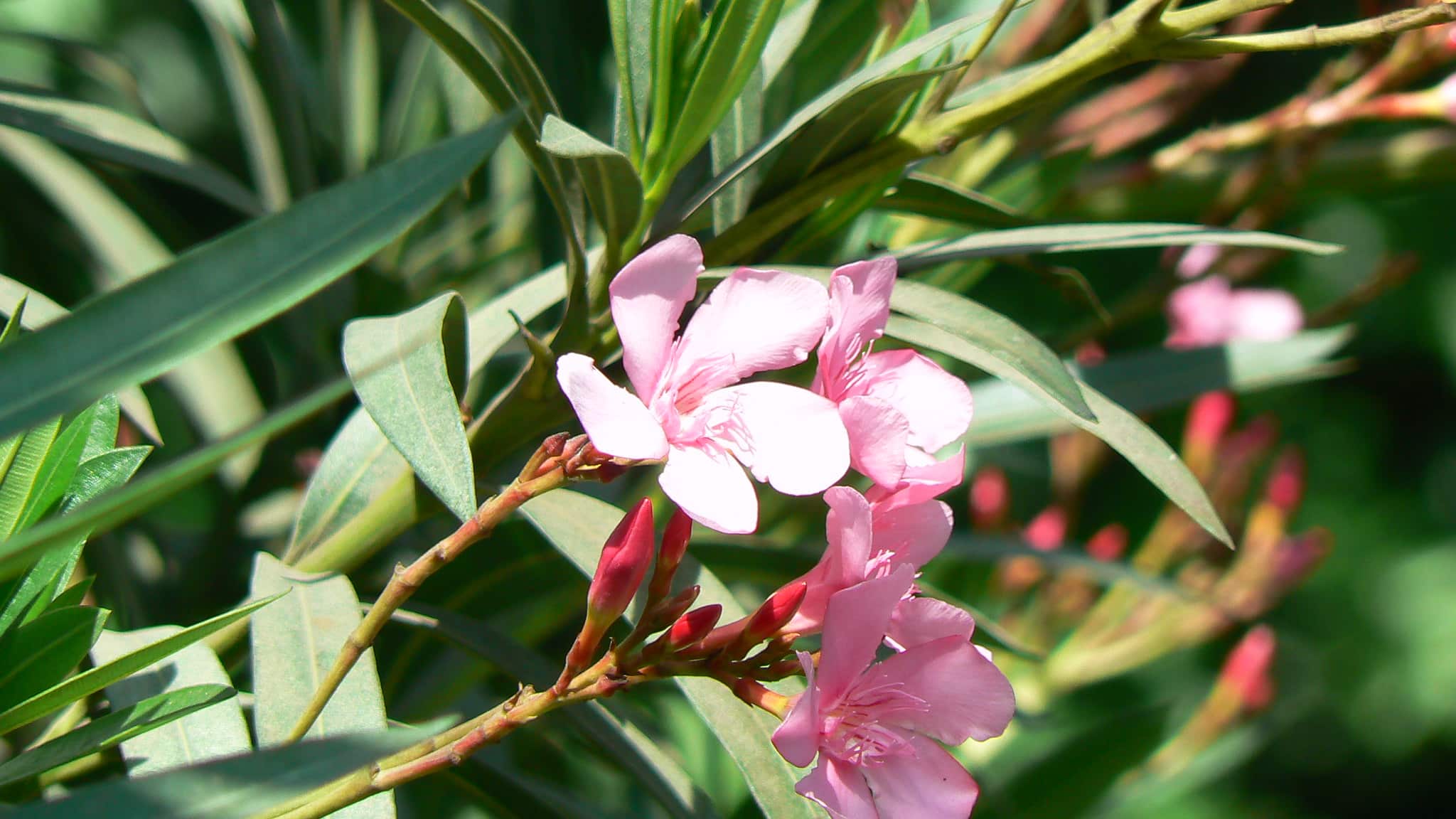
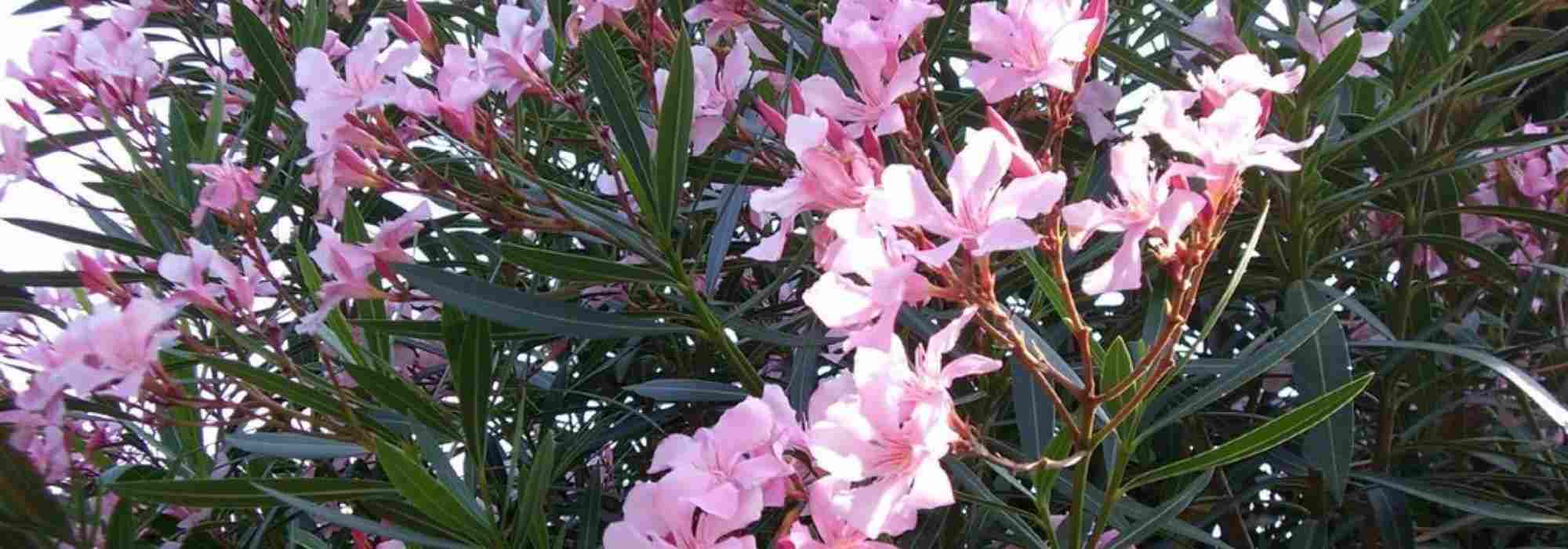
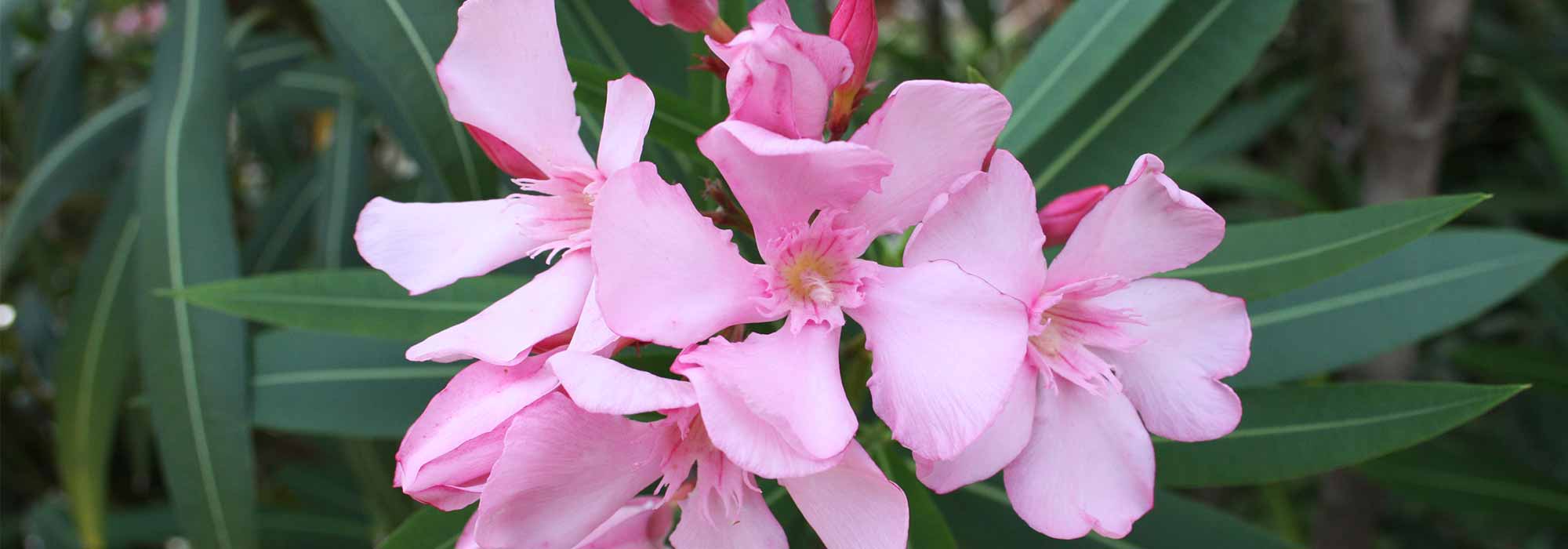
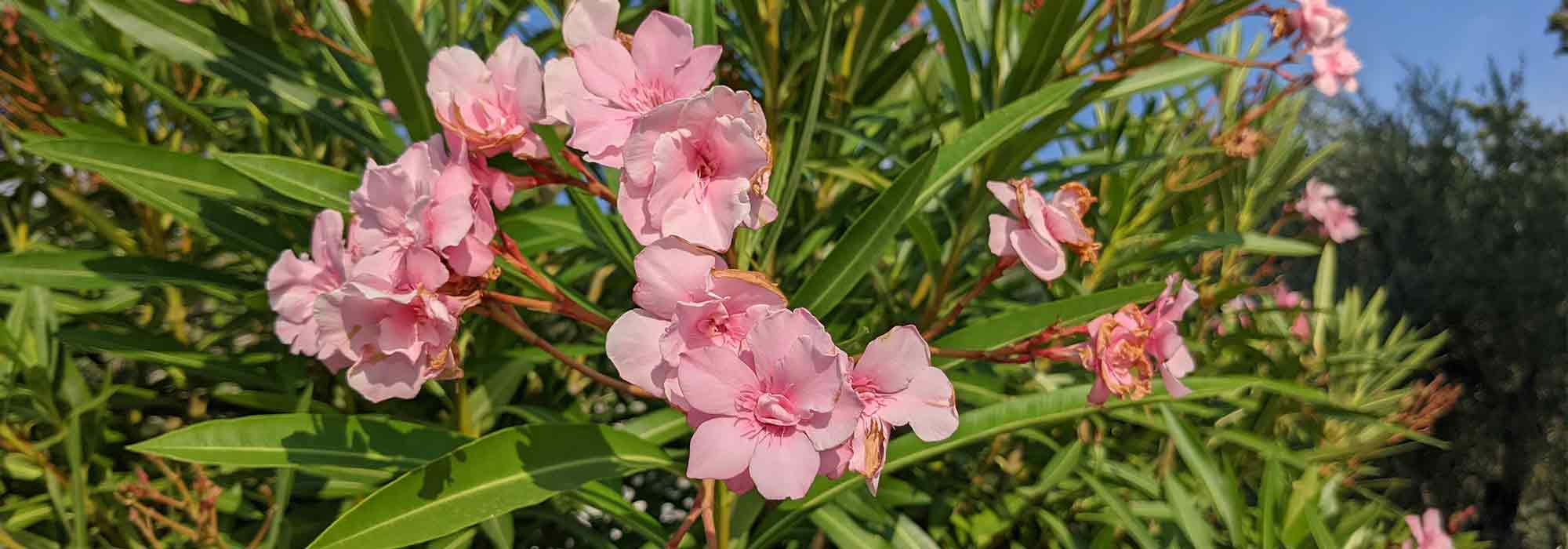
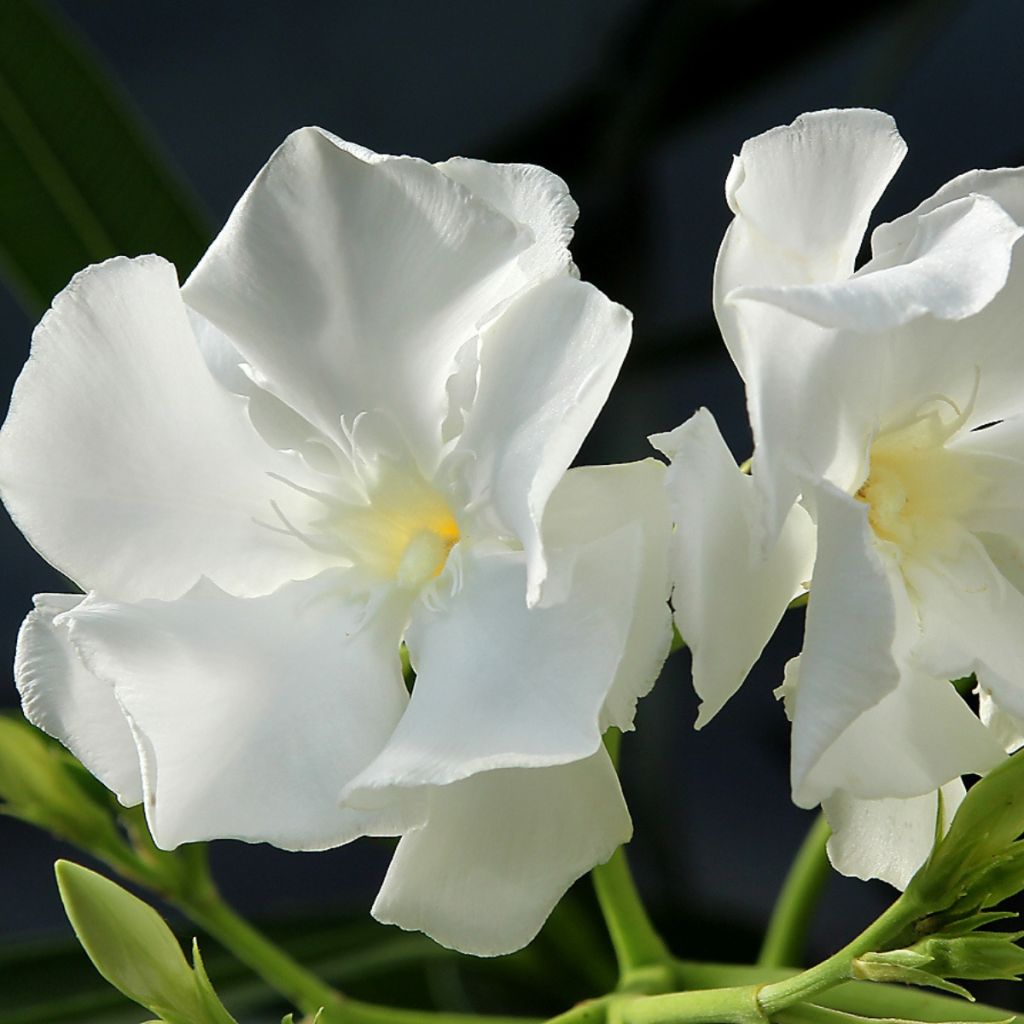
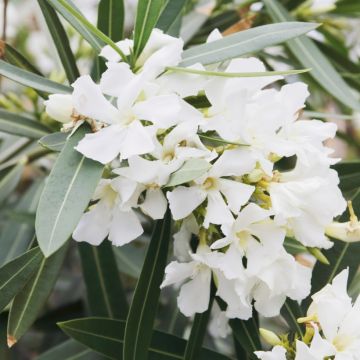
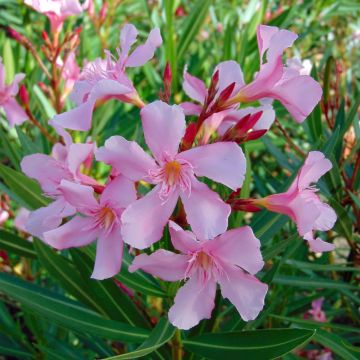
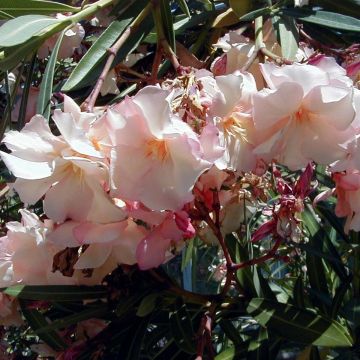
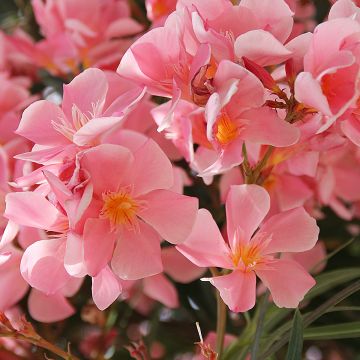
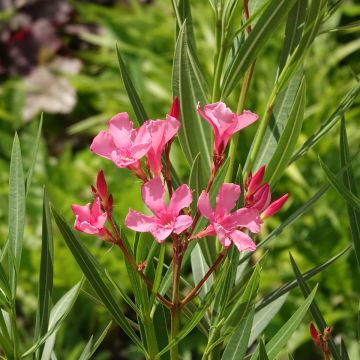
‘Mont Blanc’ is a horticultural selection with double white flowers, of old and fairly widespread origin. Some sources mention its distribution under the names ‘Magnolia Willis Sealy’ or ‘Album’ in Anglo-Saxon commerce, or 'Madonna' in Australia. The shrub has an upright, bushy habit, branched from the base, with erect stems that bend slightly under the weight of the inflorescences. Growth is moderately fast: in about ten years, you get a specimen 2 to 3 m in height and 1.50 m in width, up to 3–4 m in very mild regions. In a pot, it rarely exceeds 1.50 to 2 m in height. It does not produce suckers, but regrows from the base after hard pruning or frost. The evergreen leaves are simple, leathery, narrow and lanceolate, 8 to 15 cm long, dark green on top, lighter on the underside, arranged in pairs or in whorls of three. The double, 5 to 6 cm diameter flowers are gathered in tight clusters or corymbs at the ends of the branches. The numerous, slightly crumpled and wavy petals form a full corolla of a very pure white, sometimes creamy, with a very pale yellow throat. They follow one another from May-June to October, depending on the region. The hardiness of this cultivar is estimated at -5°C as a peak for a mature specimen grown in the ground.
All parts of the shrub are toxic if ingested, so keep it out of reach of young children.
In a coastal garden, Oleander ‘Mont Blanc’ finds its place at the back of a border or in an informal hedge, along a warm wall or a gravel path. It can be associated with generous, drought-tolerant shrubs such as Japanese rose 'Hansa' or the botanical rose Rosa chinensis 'Mutabilis', with shrubby germander Teucrium fruticans ‘Selection Erecta’, with Escallonia 'Dart's Rosy Red' and with Arbutus unedo 'Rubra', for example. On the terrace, surround it with a Plumbago 'Dark Blue' and an Abutilon ‘Souvenir de Bonn’.