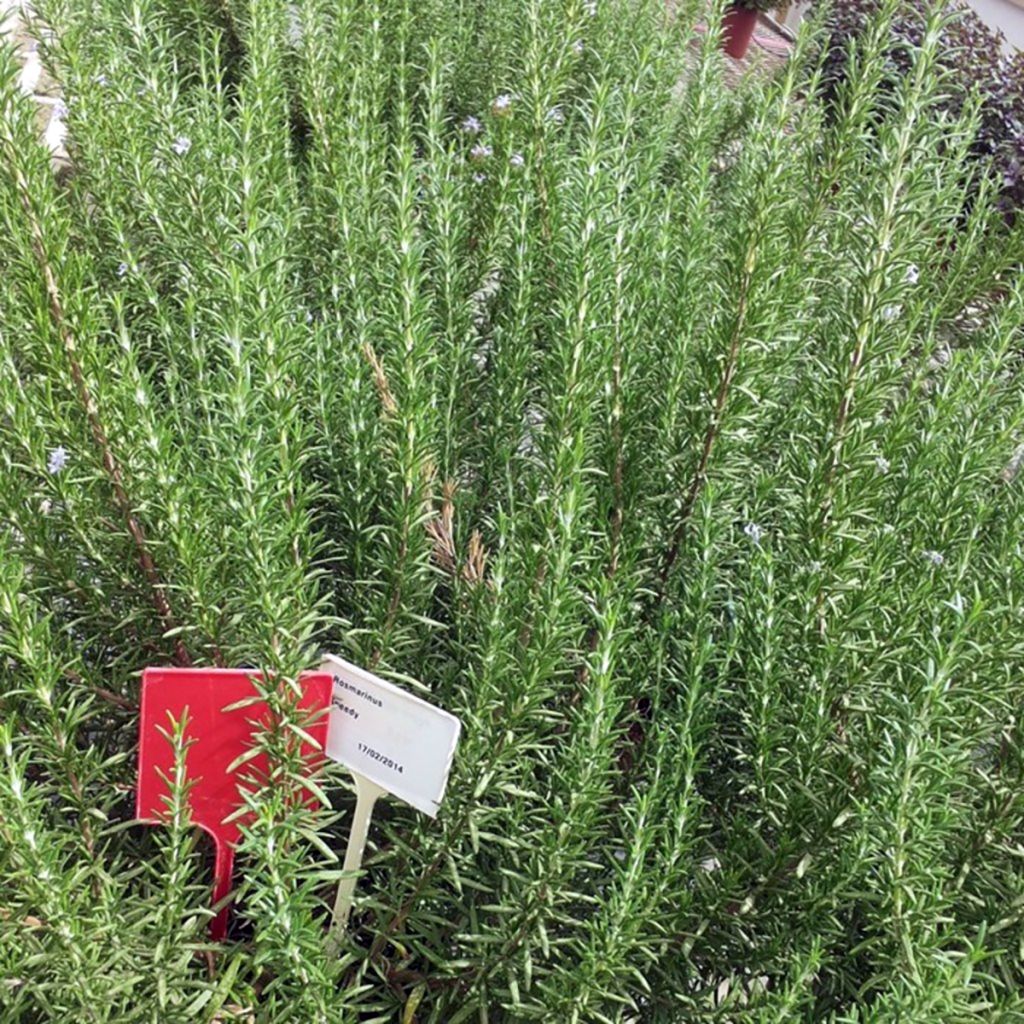
Rosmarinus officinalis Speedy
Rosmarinus officinalis Speedy
Rosmarinus officinalis Speedy
Rosemary
It's taken really well!
Irene, 03/06/2025
Back-to-school special offer!
Get €10 off for every €50 you spend! And get up to €40 off on a single order.
How does it work?
1. Shop your favourites
Add your favourite plants to your basket. For every €50 you spend (excluding delivery charges, store credit and the plastic-free option), you’ll receive a €10 voucher.
€50 spent = €10 voucher
€100 spent = €20 voucher
€150 spent = €30 voucher
€200 spent = €40 voucher
2. Place your order
Once your basket reaches one of the spending thresholds, place your order. You can even choose your delivery date!
3. Receive your voucher
As soon as your order has been shipped, you’ll receive an email containing your personal voucher code and its value.
4. Use it on your next order
Your voucher is valid for 90 days from the date you receive it. It can be used once only, on a new order worth at least the value of the voucher, excluding delivery charges.
Please note: Vouchers can be combined with other offers, but cannot be split or refunded.
Why not try an alternative variety in stock?
View all →
Available in 2 sizes

Available in 3 sizes

Available in 3 sizes
Available in 2 sizes

Available in 1 sizes

Available in 1 sizes
Available in 1 sizes

Available in 2 sizes

Available in 2 sizes
This plant carries a 6 months recovery warranty
More information
We guarantee the quality of our plants for a full growing cycle, and will replace at our expense any plant that fails to recover under normal climatic and planting conditions.

Description
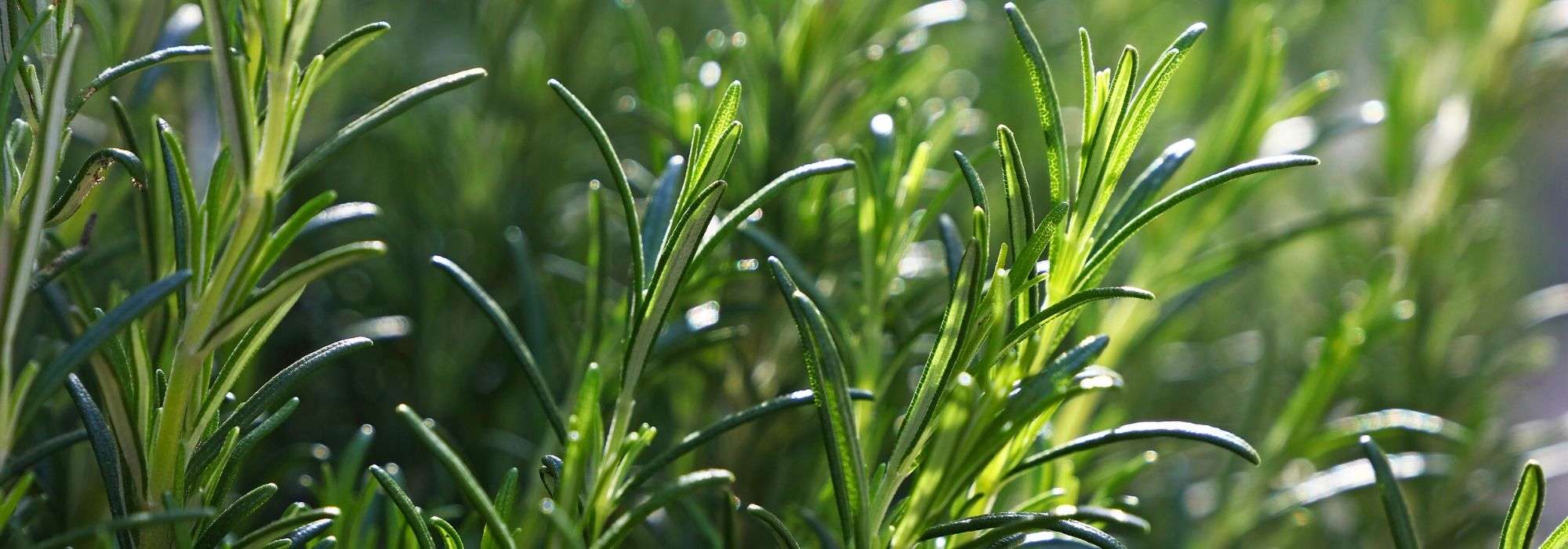
Rosemary Speedy is a cultivar of Rosmarinus officinalis selected for its faster growth, a real asset when grown in a pot to always have its fragrant leafy branches at hand. Mediterranean evergreen shrub renowned for the herbal and flowery aroma of its small leaves, it perfumes grilled dishes, fish, and brightens up any Mediterranean cuisine. It is used alone or in bouquet garni, combined with Parsley, Bay Leaf, and Thyme, and is part of aromatic blends called "herbes de Provence". Excellent plant for arid rock gardens and dry soil, highly nectar-producing, Speedy officinal Rosemary is grown in open ground or in pots. It is planted in spring or autumn, depending on the region, for a harvest from April to October. We offer plants from organic production methods.
The Speedy Rosemary is a perennial shrub that is relatively hardy, up to -10 °C (14°F) if planted in rocky soil that does not retain water. It belongs to the Lamiaceae family, like Thyme. This plant native to the Mediterranean forms small fragrant clumps with dark green evergreen foliage. It produces small light blue flowers in spikes from the beginning of the year, and sometimes again in autumn, which are highly nectar-producing.
Fresh or dried leaves are used to flavour slow-cooked dishes such as ratatouille, fish, poultry, game, vegetables, and pasta. They are used alone or in bouquet garni, combined with Parsley, Thyme, and Bay Leaf. It is part of mixed aromatics, together with various plants such as thyme, wild thyme, marjoram, oregano, marjoram, basil, chervil, tarragon, lovage, savory, sage, bay leaf, and fennel. Rosemary has antiseptic, anti-bacterial, and digestive properties.
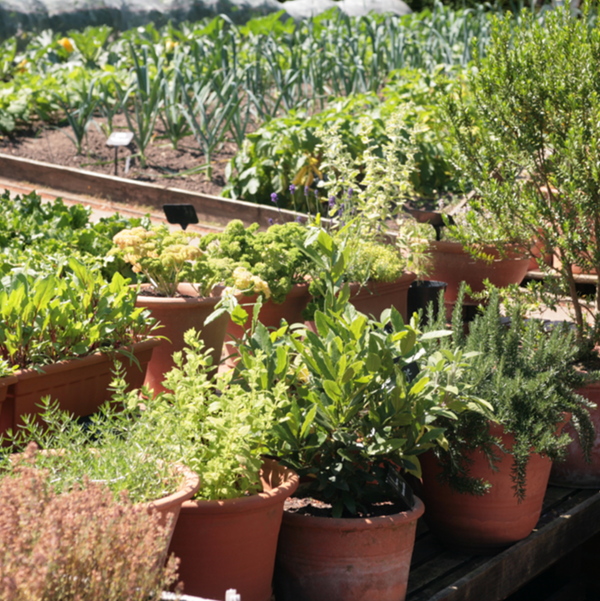
It will easily find its place in the garden but can also be grown in pots, on a balcony or at the edge of a terrace. Plant it next to other aromatic plants such as Savory or Thyme. Rosemary is not demanding, it thrives in sunny, arid, and rocky soils with a tendency to be alkaline, like most lavenders. However, it is sensitive to excess moisture, both in winter and summer.
Harvest: Leaves are harvested from the 2nd year, from April to October, by simply cutting the branches.
Storage: Leaves can be used fresh or dried. Dry the branches in the shade and store them dry in airtight jars.
Gardener's tip: In cooler regions, we recommend planting on a mound, in a rock garden, or on a rocky slope, in very well-draining soil. Protecting the base from the cold is unnecessary, as this shrub is incapable of regrowing from the stump. Never prune branches below the last green leaf you can see: old wood does not "re-sprout".
Harvest
Plant habit
Foliage
Botanical data
Rosmarinus
officinalis
Speedy
Lamiaceae
Rosemary
Cultivar or hybrid
Perennial
Planting and care
Rosemary Speedy is not demanding, it thrives in sunny, arid and rocky soils, with a tendency towards limestone and full sun. However, it is sensitive to excess moisture, both in winter and summer. Planting of young plants is done in spring (March-April) in cool regions or at the end of summer (August-September) in warmer regions.
In open ground: Initially, allow the plug plants to grow by transplanting them into trays or buckets with a diameter of 8 to 13cm (3 to 5in), filled with compost. Place them in a warm and bright place. Water regularly, but not excessively: let the substrate dry out a bit between waterings. For planting in open ground, choose a very sunny location. Space the plants 80cm (32in) apart in all directions. Dig a hole, place the root ball and cover it with soil. Firmly tamp down and lightly water. If your soil is damp, place some gravel at the bottom of the planting hole, cover with a little soil, place the root ball and fill in.
In a pot: Place a layer of gravel or clay balls at the bottom of the pot to facilitate drainage. Fill the pot with a mixture of compost and garden soil. Very delicately place the plug plant, cover it with soil and firm down well. Water without excess, always allowing the substrate to dry out a bit between waterings. Place your pot in the sun. Do not let water stagnate in the saucer.
As for maintenance, in open ground, water abundantly every 15 days, only during the first summer, and maybe the second. Afterwards, it will be unnecessary, even discouraged, to water it in summer, including in hot and dry areas. Indeed, Rosemary is a plant of scrub vegetation that dislikes soils that are both hot and constantly moist. Hoe and weed around the young plants. Later on, this will become unnecessary, as Rosemary is a very competitive plant that produces substances capable of inhibiting the germination and growth of "weeds" near its stump.
An annual pruning (of the current year's growth) will maintain a nice rounded and stocky habit.
Cultivation
Care
Intended location
Planting & care advice
-
-

-

-

-

-
-
-
-
, onOrder confirmed
Reply from on Promesse de fleurs
Recently viewed products
Haven't found what you were looking for?
Hardiness is the lowest winter temperature a plant can endure without suffering serious damage or even dying. However, hardiness is affected by location (a sheltered area, such as a patio), protection (winter cover) and soil type (hardiness is improved by well-drained soil).

The flowering period indicated on our website applies to countries and regions located in USDA zone 8 (France, the United Kingdom, Ireland, the Netherlands, etc.)
It will vary according to where you live:- In zones 9 to 10 (Italy, Spain, Greece, etc.), flowering will occur about 2 to 4 weeks earlier.
- In zones 6 to 7 (Germany, Poland, Slovenia, and lower mountainous regions), flowering will be delayed by 2 to 3 weeks.
- In zone 5 (Central Europe, Scandinavia), blooming will be delayed by 3 to 5 weeks.
In temperate climates, pruning of spring-flowering shrubs (forsythia, spireas, etc.) should be done just after flowering.
Pruning of summer-flowering shrubs (Indian Lilac, Perovskia, etc.) can be done in winter or spring.
In cold regions as well as with frost-sensitive plants, avoid pruning too early when severe frosts may still occur.
The planting period indicated on our website applies to countries and regions located in USDA zone 8 (France, United Kingdom, Ireland, Netherlands).
It will vary according to where you live:
- In Mediterranean zones (Marseille, Madrid, Milan, etc.), autumn and winter are the best planting periods.
- In continental zones (Strasbourg, Munich, Vienna, etc.), delay planting by 2 to 3 weeks in spring and bring it forward by 2 to 4 weeks in autumn.
- In mountainous regions (the Alps, Pyrenees, Carpathians, etc.), it is best to plant in late spring (May-June) or late summer (August-September).
The harvesting period indicated on our website applies to countries and regions in USDA zone 8 (France, England, Ireland, the Netherlands).
In colder areas (Scandinavia, Poland, Austria...) fruit and vegetable harvests are likely to be delayed by 3-4 weeks.
In warmer areas (Italy, Spain, Greece, etc.), harvesting will probably take place earlier, depending on weather conditions.
The sowing periods indicated on our website apply to countries and regions within USDA Zone 8 (France, UK, Ireland, Netherlands).
In colder areas (Scandinavia, Poland, Austria...), delay any outdoor sowing by 3-4 weeks, or sow under glass.
In warmer climes (Italy, Spain, Greece, etc.), bring outdoor sowing forward by a few weeks.
Shipping country and language
Your country of residence may be:
Your country of residence is:
For a better user experience on our website, you can select:
Your shipping country:
-
 Austria
-
 Belgium
-
 Bosnia & Herzegovina
-
 Bulgaria
-
 Croatia
-
 Cyprus
-
 Czechia
-
 Denmark
-
 Estonia
-
 Finland
-
 France
-
 Germany
-
 Greece
-
 Hungary
-
 Iceland
-
 Ireland
-
 Italy
Italy
-
 Latvia
-
 Liechtenstein
-
 Lithuania
-
 Luxembourg
-
 Malta
Malta
-
 Netherlands
-
 Poland
-
 Portugal
-
 Romania
-
 Serbia
-
 Slovakia
-
 Slovenia
-
 Spain
Spain
-
 Sweden
-
 Switzerland
Language:
-
French
-
 English
-
Spanish
-
Italian
-
German
-
Portuguese
-
Dutch
-
Finnish
My Account
Hello
My wish lists
My cart
Log in / Register
Existing customer?
This form is protected by reCAPTCHA - the Google Privacy Policy and Terms of Service apply.
New customer?
Create an account to track your orders, access our customer service and, if you wish, make the most of our upcoming offers.