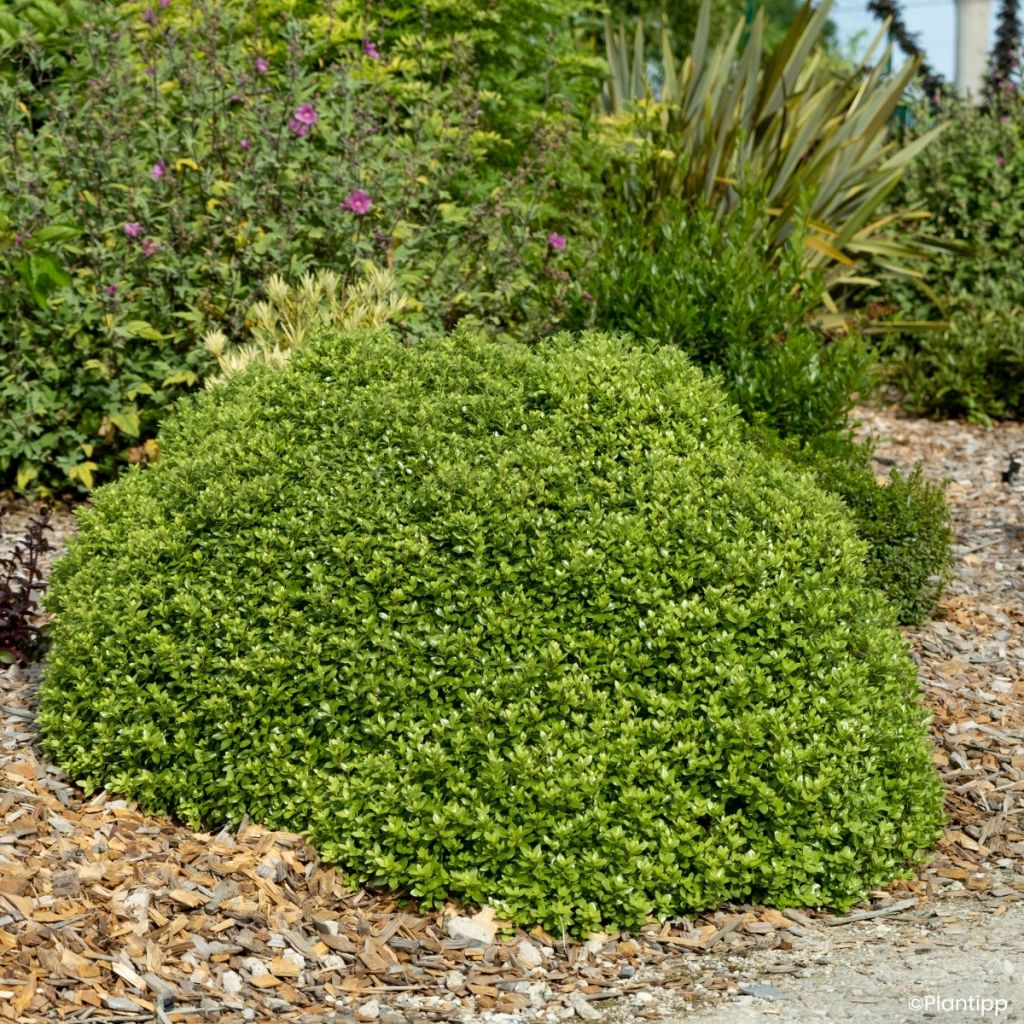
Pittosporum tenuifolium Beach Ball - Kohuhu
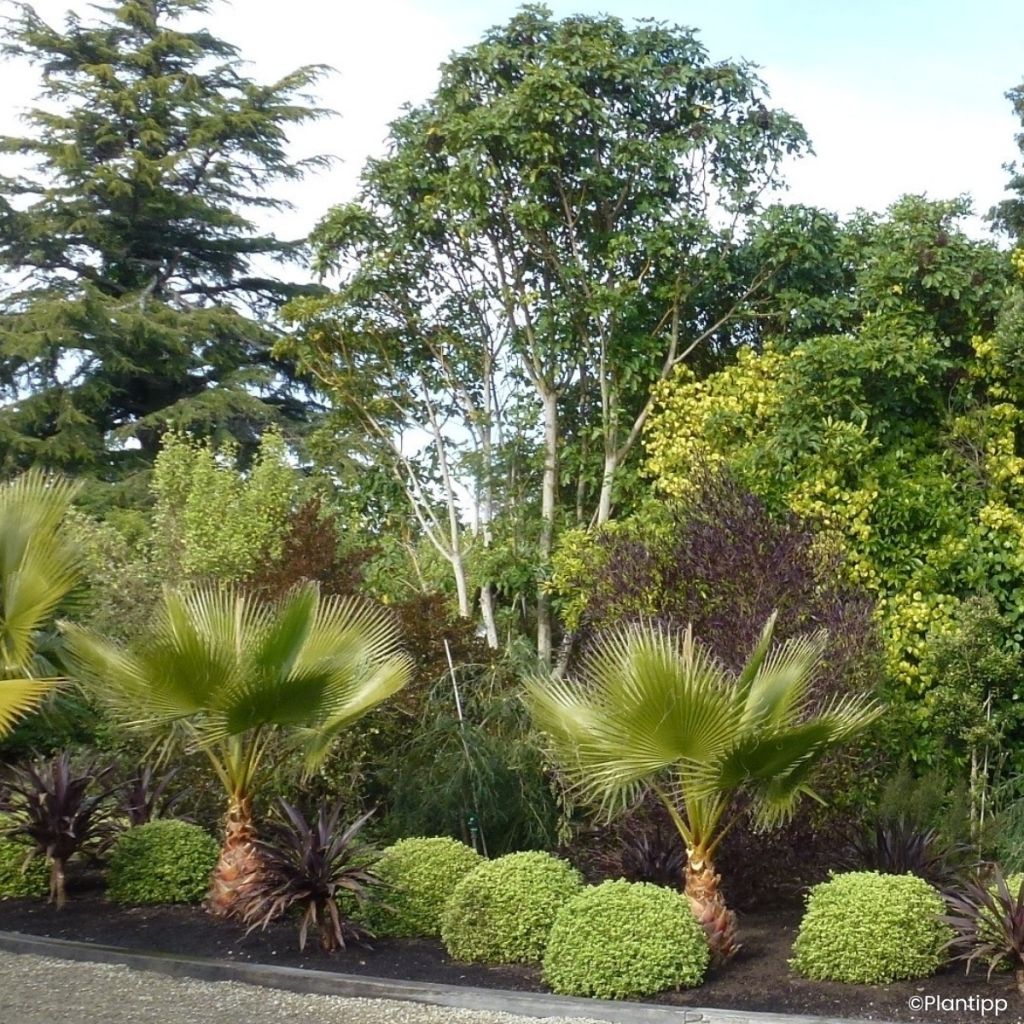
Pittosporum tenuifolium Beach Ball - Kohuhu
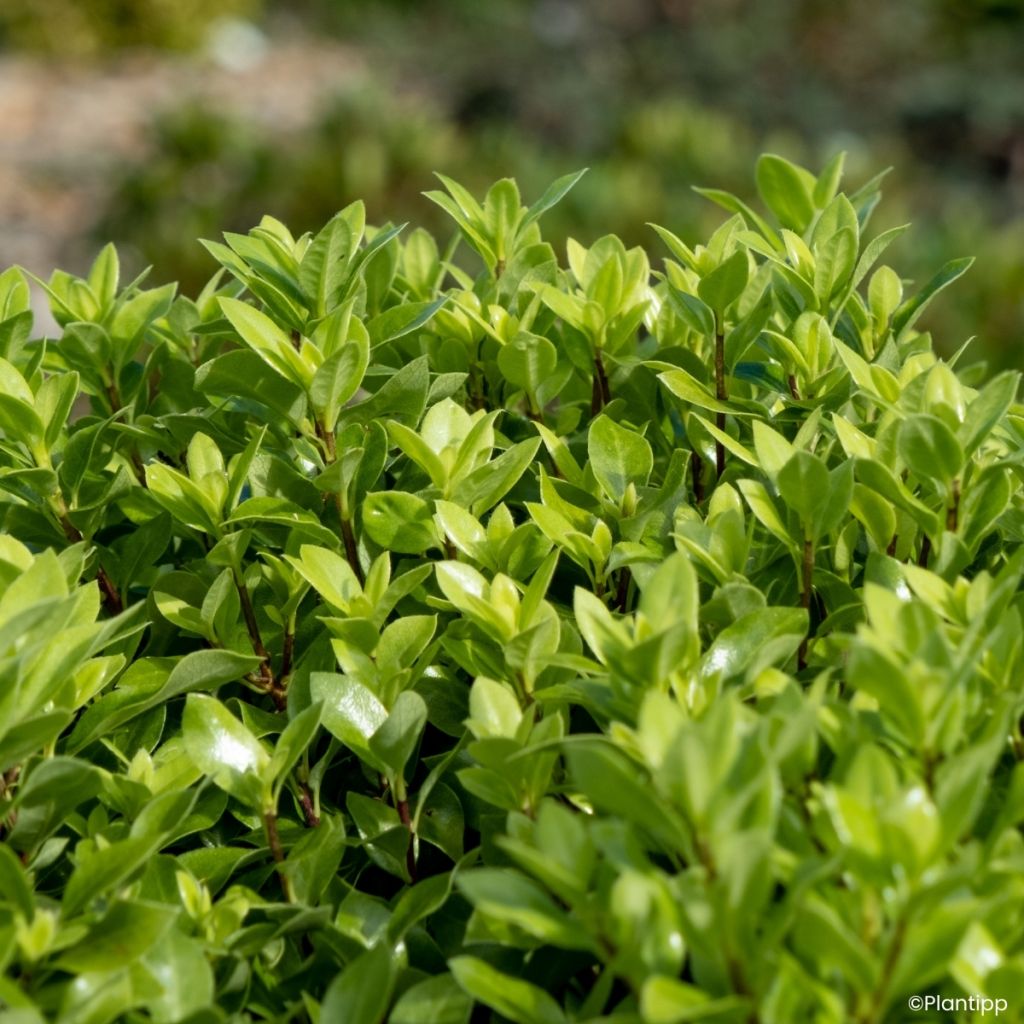
Pittosporum tenuifolium Beach Ball - Kohuhu
Pittosporum tenuifolium Beach Ball - Kohuhu
Pittosporum tenuifolium ‘TREW01’ Beach Ball
Tawhiwhi, Kohuhu, Black Matipo, New Zealand Pittosporum
Back-to-school special offer!
Get €10 off for every €50 you spend! And get up to €40 off on a single order.
How does it work?
1. Shop your favourites
Add your favourite plants to your basket. For every €50 you spend (excluding delivery charges, store credit and the plastic-free option), you’ll receive a €10 voucher.
€50 spent = €10 voucher
€100 spent = €20 voucher
€150 spent = €30 voucher
€200 spent = €40 voucher
2. Place your order
Once your basket reaches one of the spending thresholds, place your order. You can even choose your delivery date!
3. Receive your voucher
As soon as your order has been shipped, you’ll receive an email containing your personal voucher code and its value.
4. Use it on your next order
Your voucher is valid for 90 days from the date you receive it. It can be used once only, on a new order worth at least the value of the voucher, excluding delivery charges.
Please note: Vouchers can be combined with other offers, but cannot be split or refunded.
Why not try an alternative variety in stock?
View all →
Available in 1 sizes

Available in 3 sizes
Available in 2 sizes
Available in 2 sizes
Available in 2 sizes

Available in 0 sizes

Available in 1 sizes
Available in 1 sizes
Available in 2 sizes
Available in 2 sizes
This plant carries a 24 months recovery warranty
More information
We guarantee the quality of our plants for a full growing cycle, and will replace at our expense any plant that fails to recover under normal climatic and planting conditions.
Would this plant suit my garden?
Set up your Plantfit profile →
Description
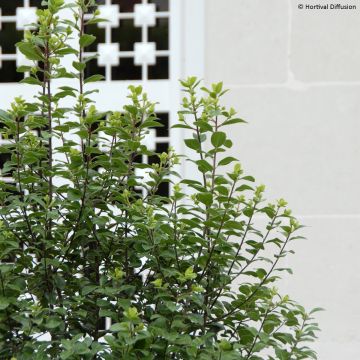
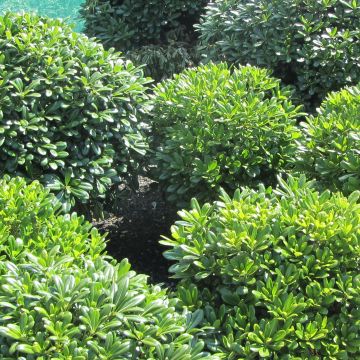
Pittosporum tenuifolium Beach Ball (‘TREW01’) is a pittosporum with a naturally rounded habit and evergreen foliage, which can be an excellent substitute for boxwood in mild climates. It can be used in borders and low hedges by the sea or in well-sheltered gardens. Its small, bright green leaves form a very neat mass, attractive in all seasons. It also makes a beautiful specimen in a large pot on a terrace, when it will need protection in winter.
This cultivar belongs to the Pittosporaceae family and derives from the species Pittosporum tenuifolium, the New Zealand pittosporum or small-leaved pittosporum. The type species is an evergreen shrub endemic to the islands of New Zealand, found mainly on forest edges and along sheltered coasts.
'Beach Ball' is a horticultural selection by New Zealand nurseryman Peter Trewavas, distributed under the cultivar name ‘TREW01’ by several Publishers, notably Plantipp and GlobePlanter. It is a particularly compact selection. The shrub has a naturally rounded habit, very branched from the base. Its growth is slow to moderate: it reaches 1 m to 1.20 m in height and 1.20 to 1.50 m in width after about ten years in the ground, slightly less in a pot. The thin and flexible stems quickly take on a very dark brown to almost black hue, which highlights the foliage. The fibrous and rather shallow root system spreads out in a mat without suckering or lifting paving. The foliage is evergreen, remaining on the plant in winter. The small leaves measure 2 to 3 cm long; they are ovate, thick, with a very slightly wavy margin. The young spring leaves are a light, zesty green, then become medium green to shiny grey-green.
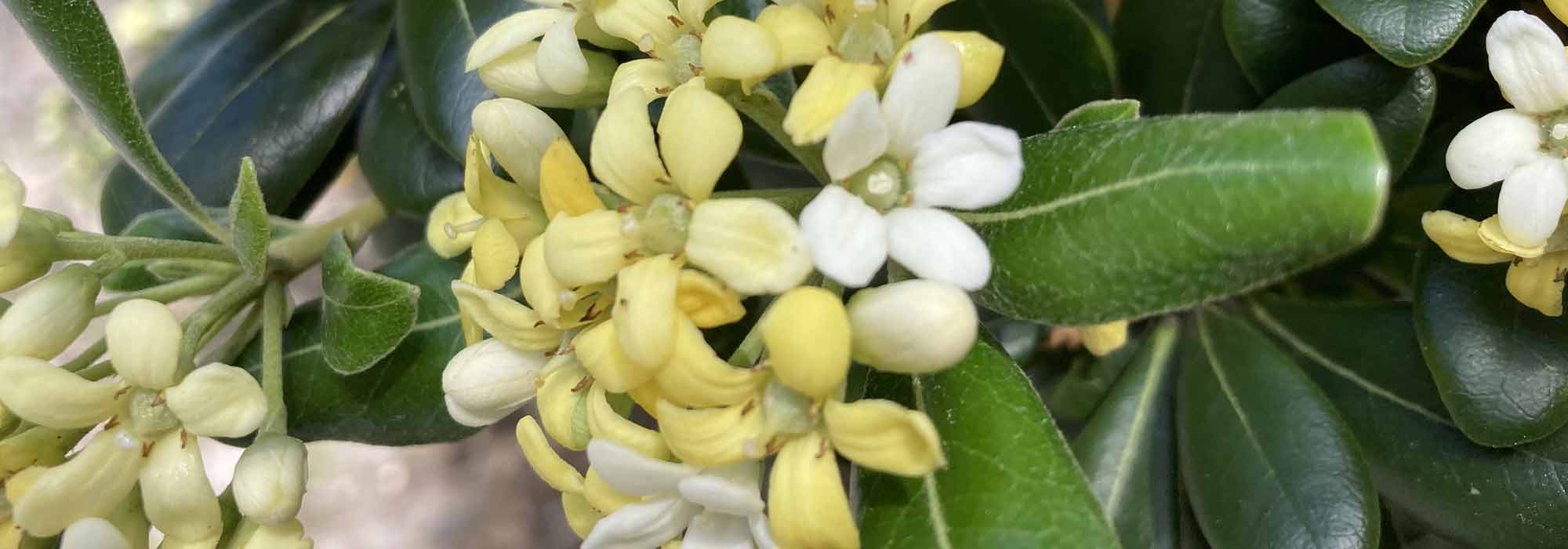
Flowering occurs from June to July, depending on the region. Small, campanulate, purplish-brown flowers open in the leaf axils. They are composed of five thick petals and are small but emit a sweet fragrance, more noticeable in the evening and in mild weather.
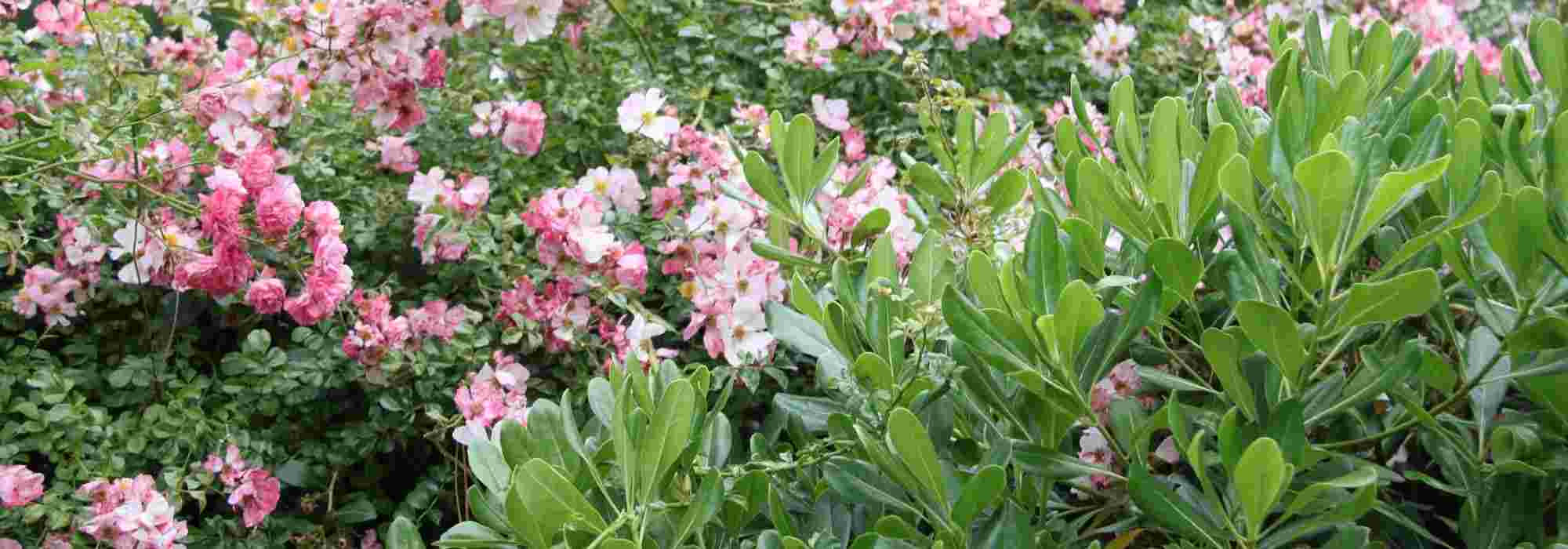
In the garden, Pittosporum tenuifolium 'Beach Ball' can be used as an accent in large borders, in low hedges, or in a pot on a sheltered terrace. Its dense, ball-like appearance complements the straight lines of a path or a low wall. It can be paired with the coloured foliage of Phormium ‘Jester’ or Cotinus coggygria ‘Dusky Maiden’ to create strong contrasts. As a groundcover, you can plant Liriope muscari 'Ingwersen' or lesser periwinkle 'Josefine'.
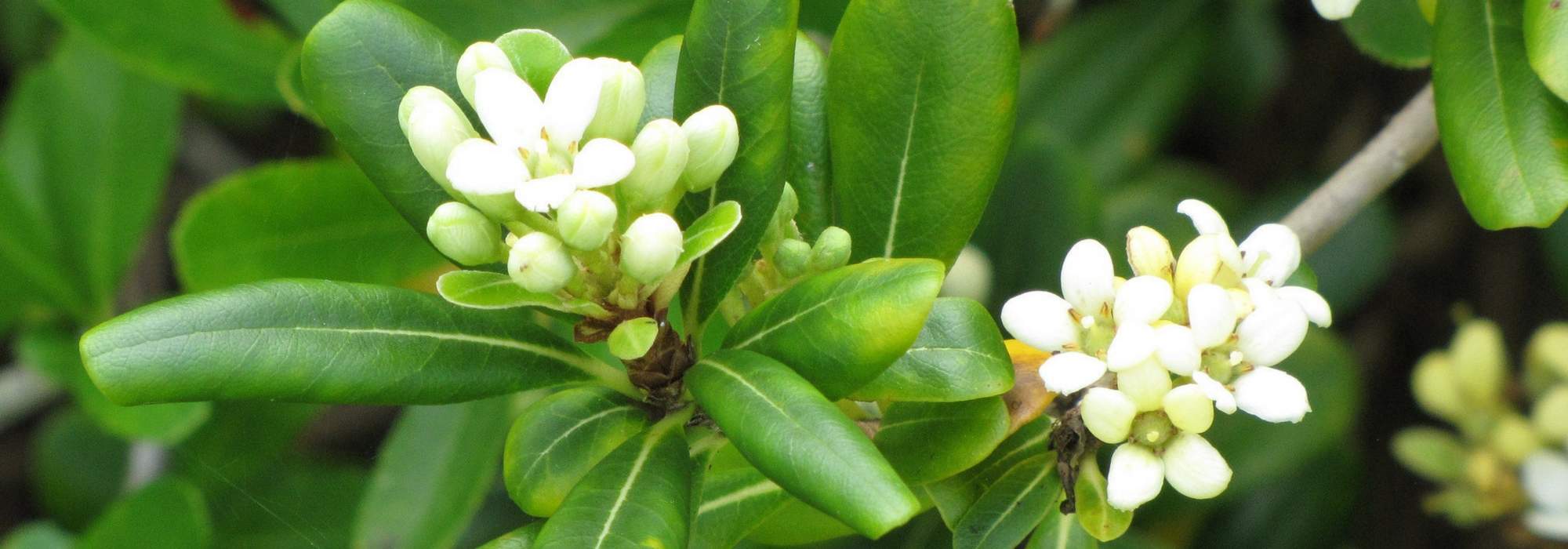
Pittosporum tenuifolium Beach Ball - Kohuhu in pictures
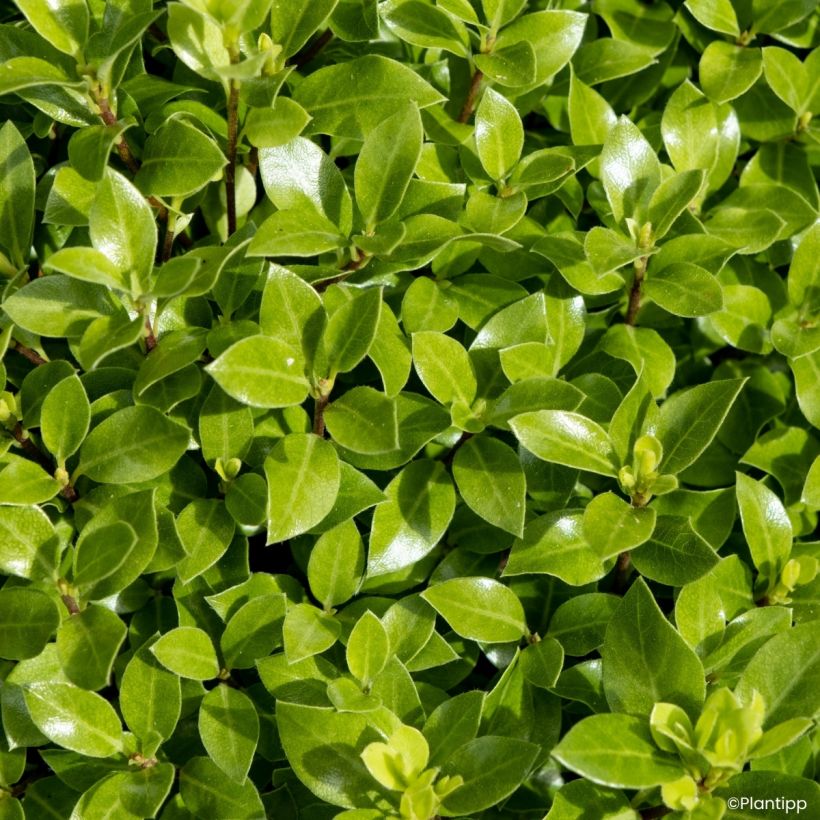
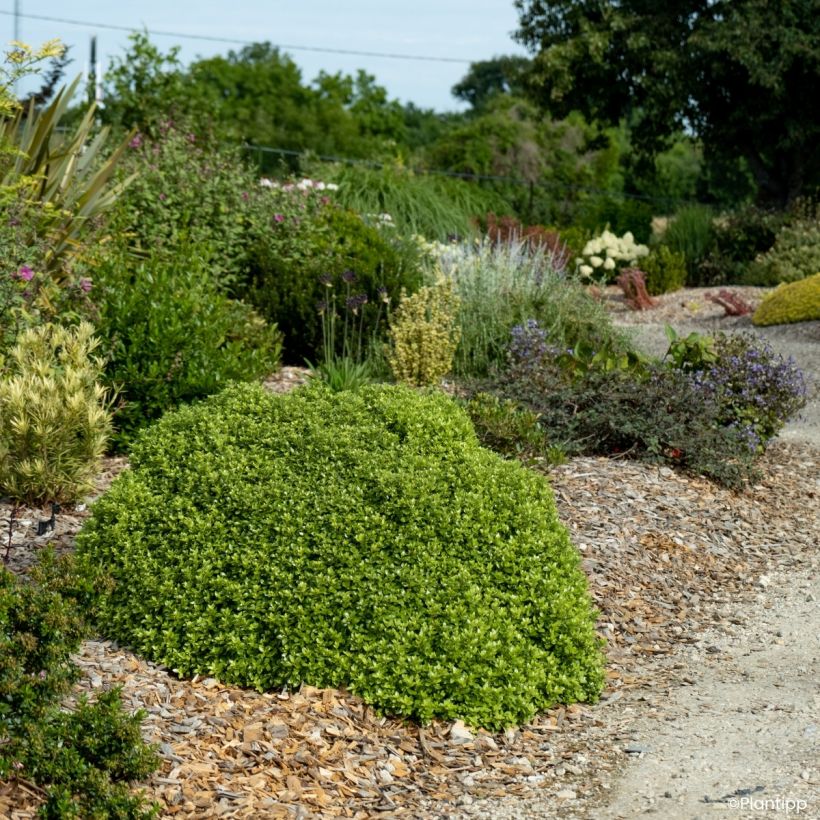
Plant habit
Flowering
Foliage
Botanical data
Pittosporum
tenuifolium
‘TREW01’ Beach Ball
Pittosporaceae
Tawhiwhi, Kohuhu, Black Matipo, New Zealand Pittosporum
Trichilia monophylla, Pittosporum colensoi, Schoutensia monophylla
Cultivar or hybrid
Planting and care
Plant Pittosporum Beach Ball in spring in a fertile, loose, well-drained soil. It tolerates lime and particularly appreciates soils rich in silt. When planting, mix leaf mould and coarse sand into your garden soil at a rate of 50%. Water your young plant copiously once or twice a week to encourage establishment. Once established (after 2 or 3 years), this shrub will not require watering in summer. In very dry regions, occasional summer watering will be welcome.
Not very hardy (-8°/-10°C), choose a warm location, in full sun and sheltered from prevailing winds. Mulch the base immediately. Position it along a south-facing wall in regions with harsh winters. In cooler climates, cover it with a winter fleece or shelter it in a frost-free conservatory over winter. In the event of a severe winter (prolonged cold, snow), prune hard; the plant will regrow and the "ball" will reform. Prune flush to the ground in the most severe cases; it is likely to regrow from the stump, quite late in spring.
Pittosporum tenuifolium can be susceptible to Phytophthora, a fungus that attacks the collar and roots in soils that are both permanently warm and damp.
Planting period
Intended location
Care
Planting & care advice
-
-

-
-

-
-
-
-
This item has not been reviewed yet - be the first to leave a review about it.
Recently viewed products
Haven't found what you were looking for?
Hardiness is the lowest winter temperature a plant can endure without suffering serious damage or even dying. However, hardiness is affected by location (a sheltered area, such as a patio), protection (winter cover) and soil type (hardiness is improved by well-drained soil).

The flowering period indicated on our website applies to countries and regions located in USDA zone 8 (France, the United Kingdom, Ireland, the Netherlands, etc.)
It will vary according to where you live:- In zones 9 to 10 (Italy, Spain, Greece, etc.), flowering will occur about 2 to 4 weeks earlier.
- In zones 6 to 7 (Germany, Poland, Slovenia, and lower mountainous regions), flowering will be delayed by 2 to 3 weeks.
- In zone 5 (Central Europe, Scandinavia), blooming will be delayed by 3 to 5 weeks.
In temperate climates, pruning of spring-flowering shrubs (forsythia, spireas, etc.) should be done just after flowering.
Pruning of summer-flowering shrubs (Indian Lilac, Perovskia, etc.) can be done in winter or spring.
In cold regions as well as with frost-sensitive plants, avoid pruning too early when severe frosts may still occur.
The planting period indicated on our website applies to countries and regions located in USDA zone 8 (France, United Kingdom, Ireland, Netherlands).
It will vary according to where you live:
- In Mediterranean zones (Marseille, Madrid, Milan, etc.), autumn and winter are the best planting periods.
- In continental zones (Strasbourg, Munich, Vienna, etc.), delay planting by 2 to 3 weeks in spring and bring it forward by 2 to 4 weeks in autumn.
- In mountainous regions (the Alps, Pyrenees, Carpathians, etc.), it is best to plant in late spring (May-June) or late summer (August-September).
The harvesting period indicated on our website applies to countries and regions in USDA zone 8 (France, England, Ireland, the Netherlands).
In colder areas (Scandinavia, Poland, Austria...) fruit and vegetable harvests are likely to be delayed by 3-4 weeks.
In warmer areas (Italy, Spain, Greece, etc.), harvesting will probably take place earlier, depending on weather conditions.
The sowing periods indicated on our website apply to countries and regions within USDA Zone 8 (France, UK, Ireland, Netherlands).
In colder areas (Scandinavia, Poland, Austria...), delay any outdoor sowing by 3-4 weeks, or sow under glass.
In warmer climes (Italy, Spain, Greece, etc.), bring outdoor sowing forward by a few weeks.
Shipping country and language
Your country of residence may be:
Your country of residence is:
For a better user experience on our website, you can select:
Your shipping country:
-
 Austria
-
 Belgium
-
 Bosnia & Herzegovina
-
 Bulgaria
-
 Croatia
-
 Cyprus
-
 Czechia
-
 Denmark
-
 Estonia
-
 Finland
-
 France
-
 Germany
-
 Greece
-
 Hungary
-
 Iceland
-
 Ireland
-
 Italy
Italy
-
 Latvia
-
 Liechtenstein
-
 Lithuania
-
 Luxembourg
-
 Malta
Malta
-
 Netherlands
-
 Poland
-
 Portugal
-
 Romania
-
 Serbia
-
 Slovakia
-
 Slovenia
-
 Spain
Spain
-
 Sweden
-
 Switzerland
Language:
-
French
-
 English
-
Spanish
-
Italian
-
German
-
Portuguese
-
Dutch
-
Finnish
My Account
Hello
My wish lists
My cart
Log in / Register
Existing customer?
This form is protected by reCAPTCHA - the Google Privacy Policy and Terms of Service apply.
New customer?
Create an account to track your orders, access our customer service and, if you wish, make the most of our upcoming offers.