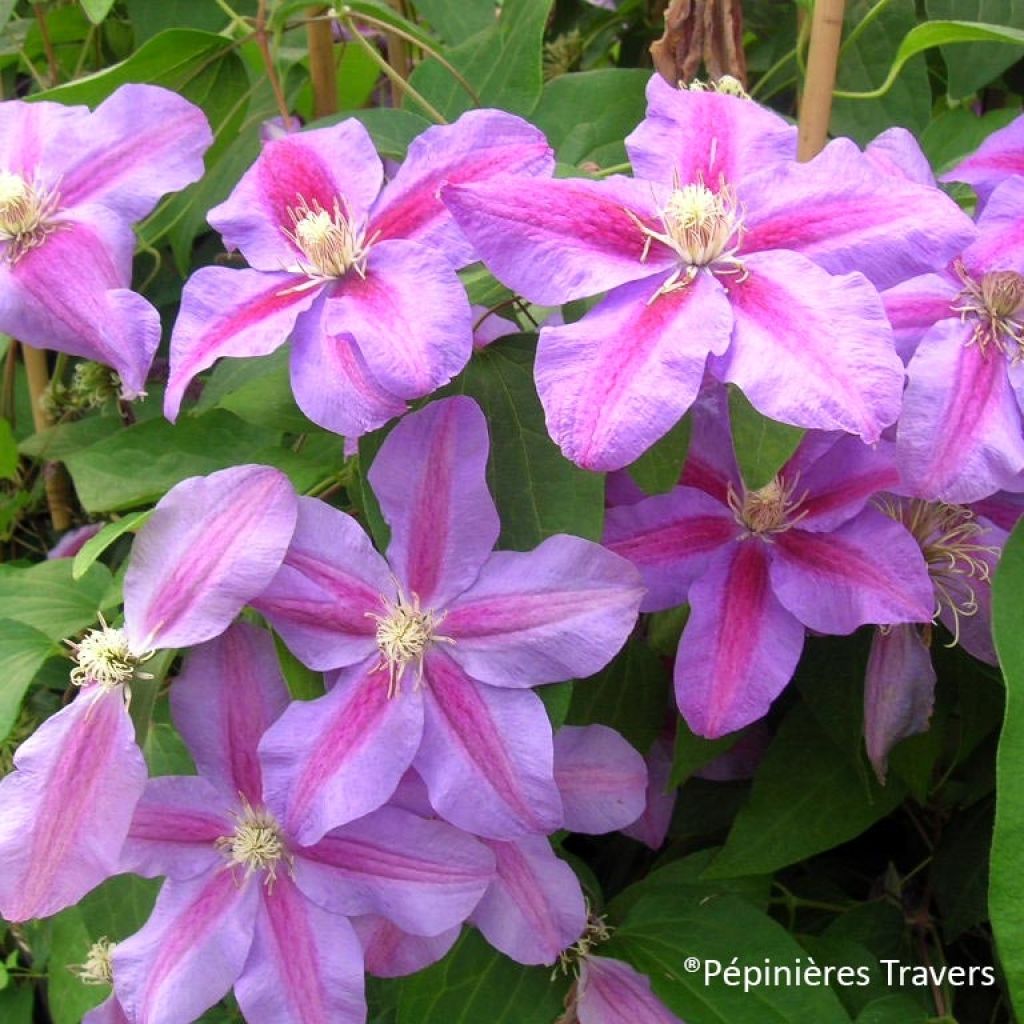
Clematis Beth Currie
Clematis Beth Currie
Clematis Vivienne Beth Currie
Clematis 'Beth Currie', Clematis 'Vivienne'
Back-to-school special offer!
Get €10 off for every €50 you spend! And get up to €40 off on a single order.
How does it work?
1. Shop your favourites
Add your favourite plants to your basket. For every €50 you spend (excluding delivery charges, store credit and the plastic-free option), you’ll receive a €10 voucher.
€50 spent = €10 voucher
€100 spent = €20 voucher
€150 spent = €30 voucher
€200 spent = €40 voucher
2. Place your order
Once your basket reaches one of the spending thresholds, place your order. You can even choose your delivery date!
3. Receive your voucher
As soon as your order has been shipped, you’ll receive an email containing your personal voucher code and its value.
4. Use it on your next order
Your voucher is valid for 90 days from the date you receive it. It can be used once only, on a new order worth at least the value of the voucher, excluding delivery charges.
Please note: Vouchers can be combined with other offers, but cannot be split or refunded.
Why not try an alternative variety in stock?
View all →
Available in 1 sizes

Available in 1 sizes

Available in 1 sizes

Available in 1 sizes
Available in 1 sizes
Available in 1 sizes
Available in 1 sizes
Available in 1 sizes

Available in 1 sizes
Available in 1 sizes
This plant carries a 12 months recovery warranty
More information
We guarantee the quality of our plants for a full growing cycle, and will replace at our expense any plant that fails to recover under normal climatic and planting conditions.
Would this plant suit my garden?
Set up your Plantfit profile →
Description
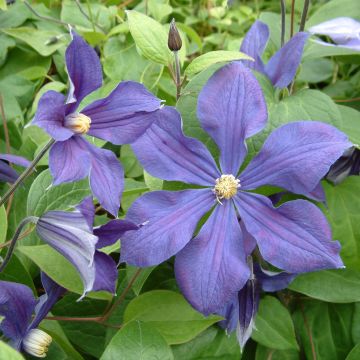
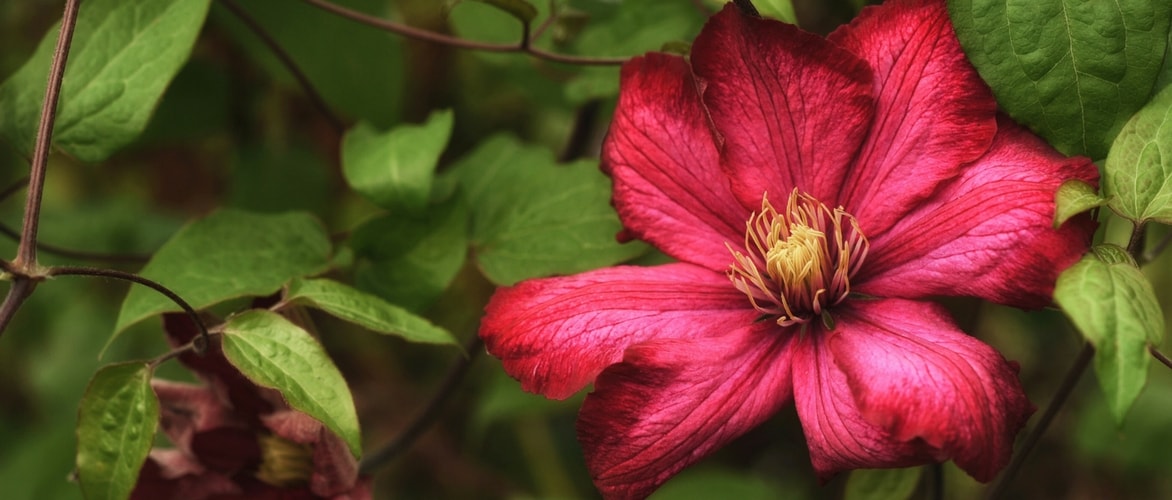
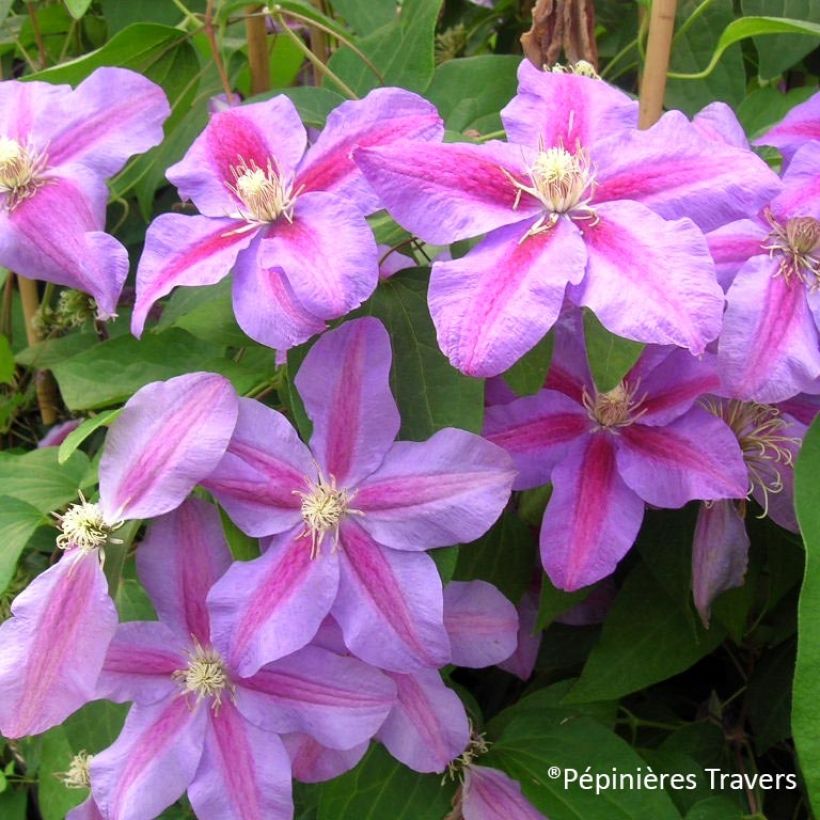
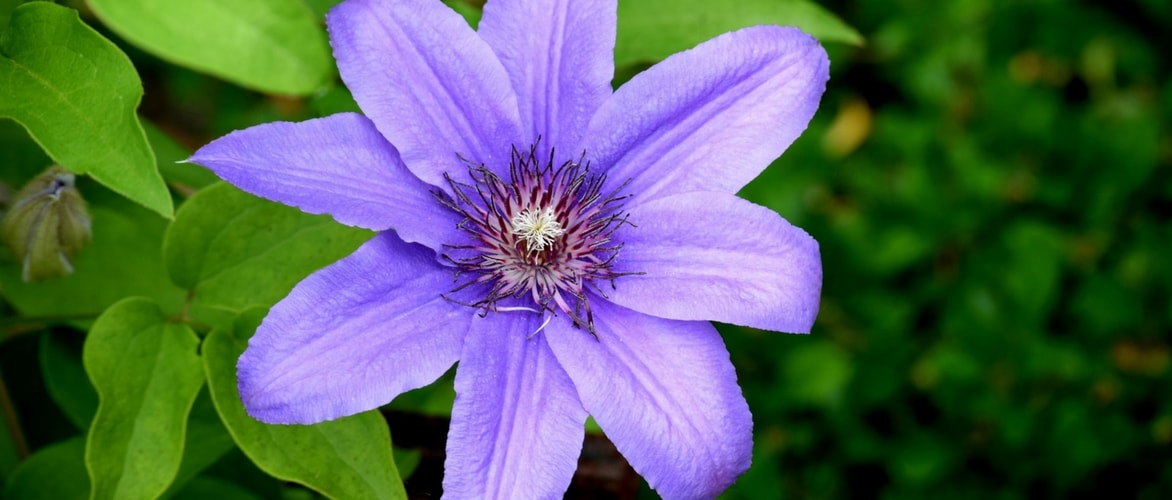
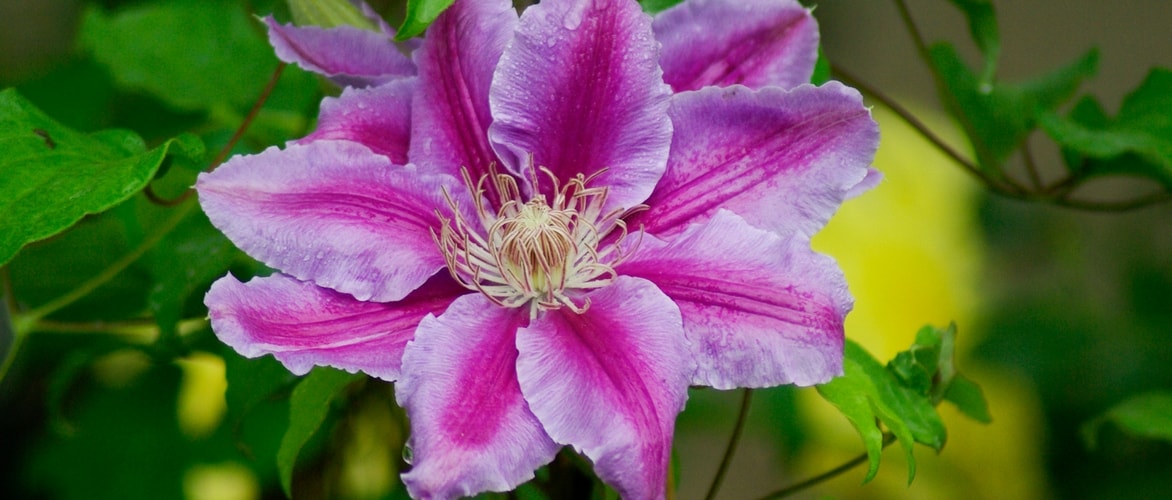
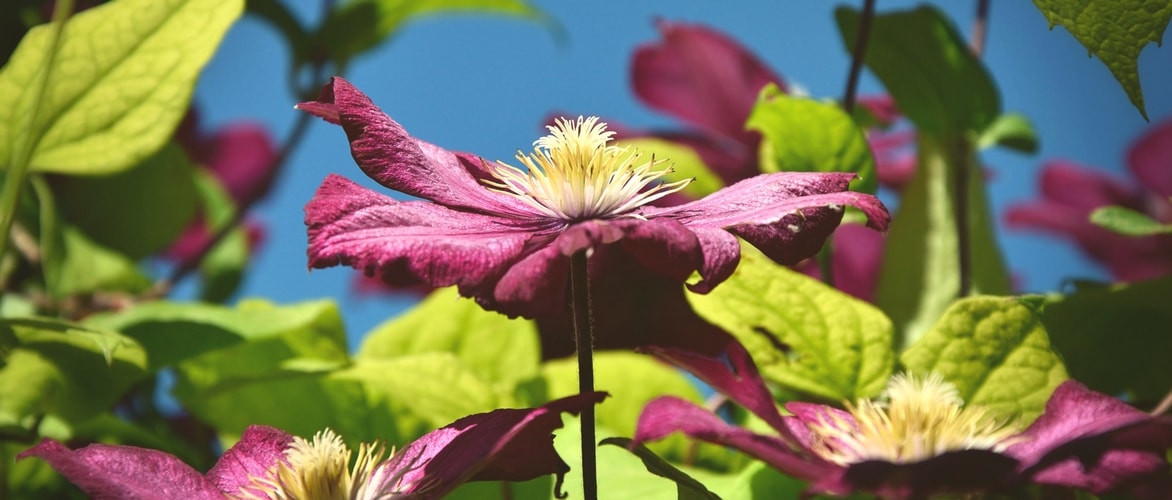
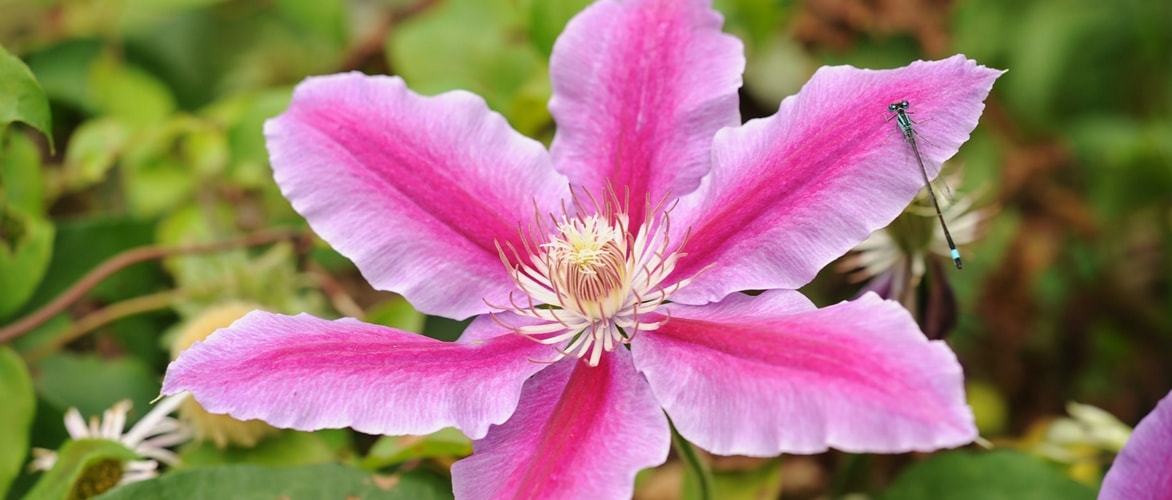
Clematis 'Beth Currie', also known as C. 'Vivienne', produces a profusion of large violet flowers (10 to 15cm (4 to 6in)) with a centre marked by a red-purple stripe. It blooms between May and June, with a second flowering in late summer on the current year's shoots.
This English cultivar has a moderate growth rate, reaching a height of 2 to 3m (7 to 10ft) and a spread of 1.2 to 1.5m (4 to 5ft). It was developed in 1980. It produces an abundance of blooms and easily fits into small spaces. It belongs to the Ranunculaceae family. This beautiful climber can be used to hide an unattractive fence, or climb up a trellis or pergola, to which it will cling with its tendrils. It also grows very well in pots, brightening up a patio or balcony.
Like most large-flowered clematis, 'Beth Currie' likes to have its base in the shade (for example behind a small bush or under a tile) and its head in the sun. This hardy plant appreciates moist and rich soil. In poorly drained soil, however, it can be sensitive to wilt disease, which is characterised by a sudden withering of leaves and stems. In this case, remove the affected parts at ground level and improve drainage. It is often recommended to plant clematis with the root ball horizontal and bury the stems a few centimetres deep to increase the number of new shoots from the base.
It flowers in spring on last year's stems and again in late summer on the current year's shoots.
Prune in winter, leaving one stem out of two a few tens of centimetres above the ground, above a pair of buds.
It can be grown with clumbing roses, or combined with other clematis in matching tones, such as Clematis 'General Sikorski' or C. 'Piilu'. It can also be trained to climb into bushes to complement their flowering, such as Hibiscus syriacus, which blooms in similar tones during its summer break, or forsythias, which have finished blooming when it takes over.
Clematis Beth Currie in pictures
Plant habit
Flowering
Foliage
Botanical data
Clematis
Vivienne Beth Currie
Ranunculaceae
Clematis 'Beth Currie', Clematis 'Vivienne'
Cultivar or hybrid
Planting and care
Plant in spring or autumn. It prefers moist but not waterlogged, deep, well-worked, well-drained, and nutrient-rich soil. Plant it 5cm (2in) deep, with the root ball slanted or even lying on the ground. The top of the plant should be in the sun (or partial shade) and the base in the shade. You can place a flat tile in front of the stump or use ground cover plants to achieve shady conditions. Cover the base with a small mound of soil to encourage new shoots. After planting, prune the shoots to 30cm (12in) from the base, above a pair of buds.
Train them loosely to help the plant to cling on its own.
Maintenance pruning should be done after flowering (in mid-summer) to remove faded flowers and shorten the bloomed stems. This will help the plant to produce new shoots for a second flowering. More vigorous pruning can be done in late winter to severely cut back some stems, but not necessarily every year.
Watch out for pests such as aphids, slugs, and snails.
Planting period
Intended location
Care
Planting & care advice

This item has not been reviewed yet - be the first to leave a review about it.
Recently viewed products
Haven't found what you were looking for?
Hardiness is the lowest winter temperature a plant can endure without suffering serious damage or even dying. However, hardiness is affected by location (a sheltered area, such as a patio), protection (winter cover) and soil type (hardiness is improved by well-drained soil).

The flowering period indicated on our website applies to countries and regions located in USDA zone 8 (France, the United Kingdom, Ireland, the Netherlands, etc.)
It will vary according to where you live:- In zones 9 to 10 (Italy, Spain, Greece, etc.), flowering will occur about 2 to 4 weeks earlier.
- In zones 6 to 7 (Germany, Poland, Slovenia, and lower mountainous regions), flowering will be delayed by 2 to 3 weeks.
- In zone 5 (Central Europe, Scandinavia), blooming will be delayed by 3 to 5 weeks.
In temperate climates, pruning of spring-flowering shrubs (forsythia, spireas, etc.) should be done just after flowering.
Pruning of summer-flowering shrubs (Indian Lilac, Perovskia, etc.) can be done in winter or spring.
In cold regions as well as with frost-sensitive plants, avoid pruning too early when severe frosts may still occur.
The planting period indicated on our website applies to countries and regions located in USDA zone 8 (France, United Kingdom, Ireland, Netherlands).
It will vary according to where you live:
- In Mediterranean zones (Marseille, Madrid, Milan, etc.), autumn and winter are the best planting periods.
- In continental zones (Strasbourg, Munich, Vienna, etc.), delay planting by 2 to 3 weeks in spring and bring it forward by 2 to 4 weeks in autumn.
- In mountainous regions (the Alps, Pyrenees, Carpathians, etc.), it is best to plant in late spring (May-June) or late summer (August-September).
The harvesting period indicated on our website applies to countries and regions in USDA zone 8 (France, England, Ireland, the Netherlands).
In colder areas (Scandinavia, Poland, Austria...) fruit and vegetable harvests are likely to be delayed by 3-4 weeks.
In warmer areas (Italy, Spain, Greece, etc.), harvesting will probably take place earlier, depending on weather conditions.
The sowing periods indicated on our website apply to countries and regions within USDA Zone 8 (France, UK, Ireland, Netherlands).
In colder areas (Scandinavia, Poland, Austria...), delay any outdoor sowing by 3-4 weeks, or sow under glass.
In warmer climes (Italy, Spain, Greece, etc.), bring outdoor sowing forward by a few weeks.
Shipping country and language
Your country of residence may be:
Your country of residence is:
For a better user experience on our website, you can select:
Your shipping country:
-
 Austria
-
 Belgium
-
 Bosnia & Herzegovina
-
 Bulgaria
-
 Croatia
-
 Cyprus
-
 Czechia
-
 Denmark
-
 Estonia
-
 Finland
-
 France
-
 Germany
-
 Greece
-
 Hungary
-
 Iceland
-
 Ireland
-
 Italy
Italy
-
 Latvia
-
 Liechtenstein
-
 Lithuania
-
 Luxembourg
-
 Malta
Malta
-
 Netherlands
-
 Poland
-
 Portugal
-
 Romania
-
 Serbia
-
 Slovakia
-
 Slovenia
-
 Spain
Spain
-
 Sweden
-
 Switzerland
Language:
-
French
-
 English
-
Spanish
-
Italian
-
German
-
Portuguese
-
Dutch
-
Finnish
My Account
Hello
My wish lists
My cart
Log in / Register
Existing customer?
This form is protected by reCAPTCHA - the Google Privacy Policy and Terms of Service apply.
New customer?
Create an account to track your orders, access our customer service and, if you wish, make the most of our upcoming offers.