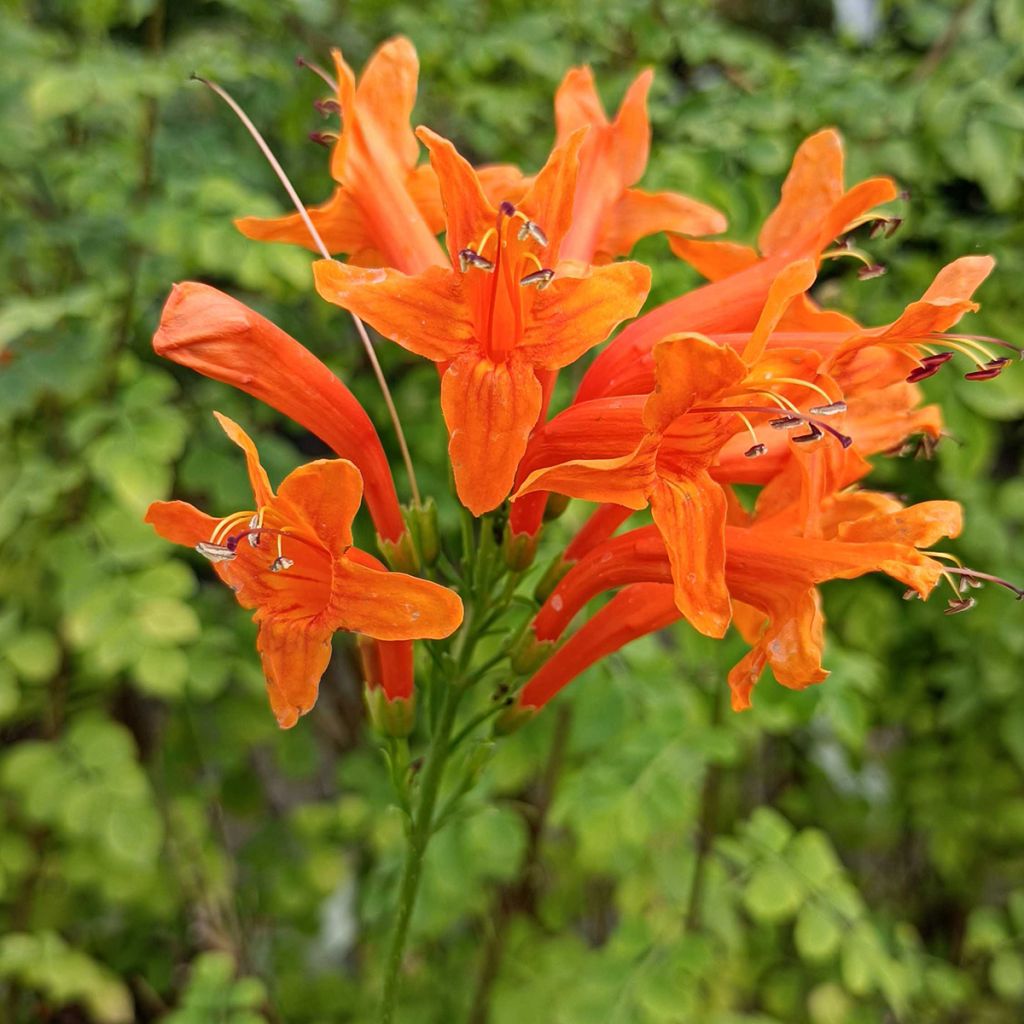
Tecoma capensis
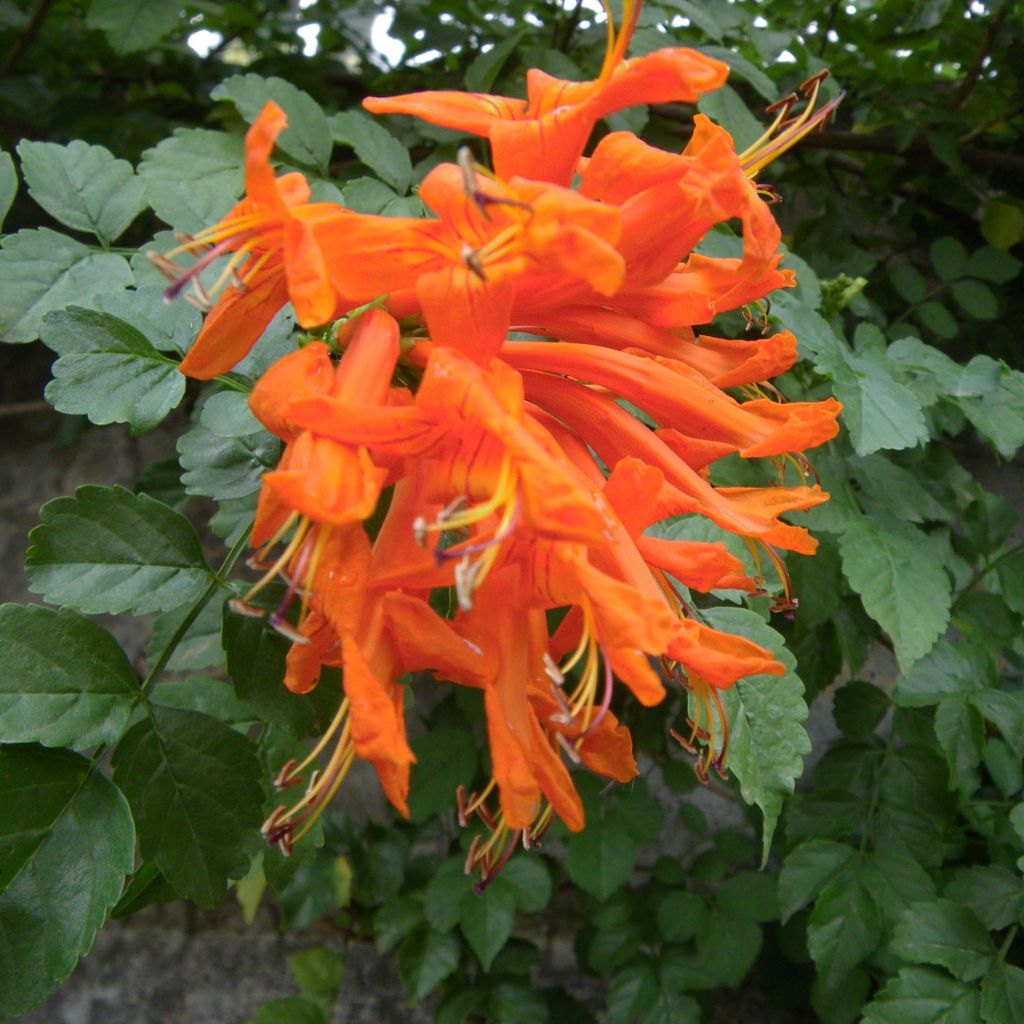
Tecoma capensis
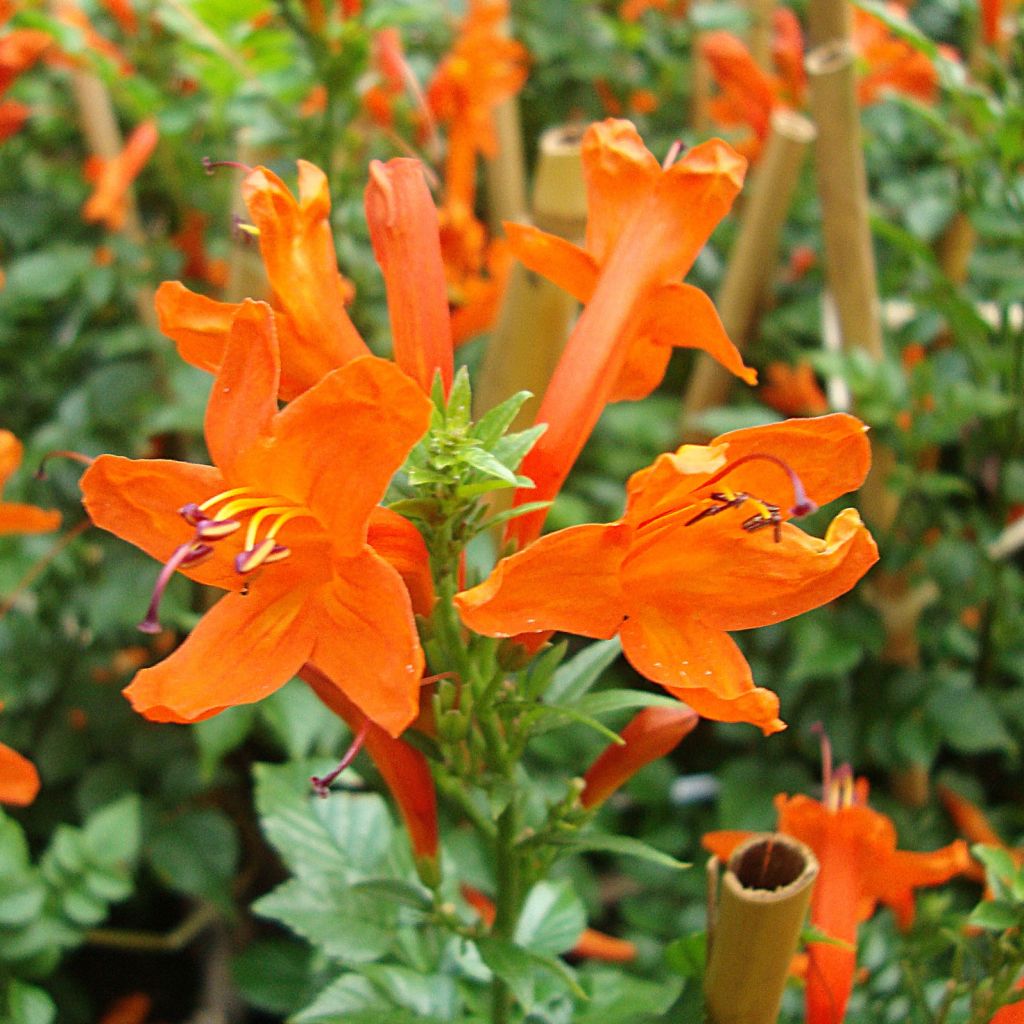
Tecoma capensis
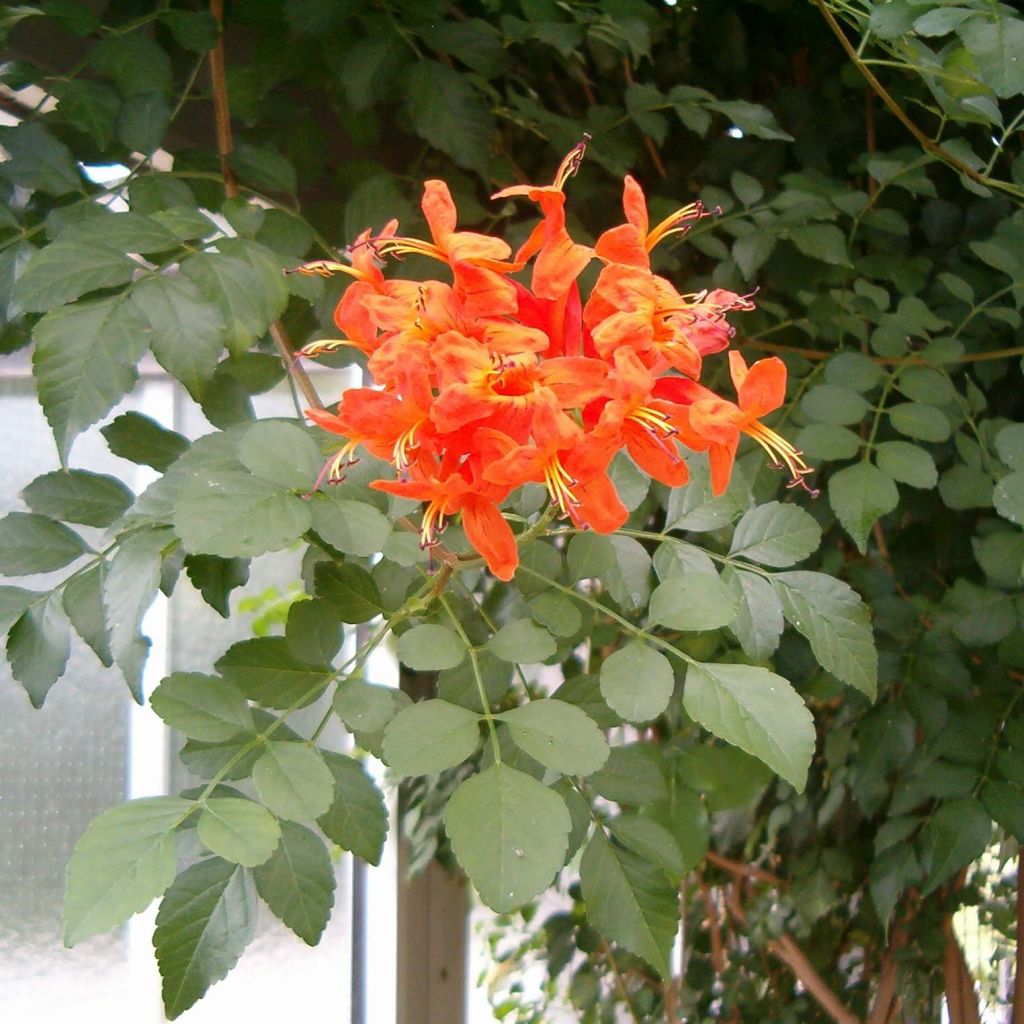
Tecoma capensis
Tecoma capensis
Tecoma capensis
Cape honeysuckle, West Indian honeysuckle
Thank you to the people (for order preparation and shipping), the plant I received looks healthy. Planted near a wall, I am now patiently waiting for it to take root... or not?
Thierry, 04/08/2023
Back-to-school special offer!
Get €10 off for every €50 you spend! And get up to €40 off on a single order.
How does it work?
1. Shop your favourites
Add your favourite plants to your basket. For every €50 you spend (excluding delivery charges, store credit and the plastic-free option), you’ll receive a €10 voucher.
€50 spent = €10 voucher
€100 spent = €20 voucher
€150 spent = €30 voucher
€200 spent = €40 voucher
2. Place your order
Once your basket reaches one of the spending thresholds, place your order. You can even choose your delivery date!
3. Receive your voucher
As soon as your order has been shipped, you’ll receive an email containing your personal voucher code and its value.
4. Use it on your next order
Your voucher is valid for 90 days from the date you receive it. It can be used once only, on a new order worth at least the value of the voucher, excluding delivery charges.
Please note: Vouchers can be combined with other offers, but cannot be split or refunded.
Home or relay delivery (depending on size and destination)
Important: You may be charged customs duties by your country’s customs authorities upon delivery.
Schedule delivery date,
and select date in basket
This plant carries a 12 months recovery warranty
More information
We guarantee the quality of our plants for a full growing cycle, and will replace at our expense any plant that fails to recover under normal climatic and planting conditions.

Would this plant suit my garden?
Set up your Plantfit profile →
Description
The Tecomaria (or Tecoma) capensis, contrary to its name of Cape Honeysuckle, is actually a bignonia and not a honeysuckle. However, it is more of a sarmentous bush, unable to climb on its own, rather than a true climber. The Tecoma is appreciated for its long late flowering, of a very bright orange, which brings a lot of charm to the late season. It is wonderfully highlighted by its finely cut foliage, with shiny leaflets, of a very bright green. Easy to grow in the ground in mild climates, this South African plant loves the sun and heat and tolerates summer drought once well established in deep soil. The Cape Honeysuckle is also a very beautiful subject for a terrace or balcony, to be stored in winter in colder regions.
The Tecomaria capensis belongs to the Bignoniaceae family. It is native to the Eastern Cape province of South Africa and southern Mozambique. It is a plant for mild climates: as an adult, it can withstand brief freezes of around -7 /-8°C in well-drained soil, regrowing from the stump in spring if properly protected. Its growth is quite fast, its habit is erect and weakly climbing. It can be trained as a large dense bush through regular pruning or its branches can be trained on a structure. Its basal stems, whose nodes easily root upon contact with the ground, allow the plant to spread in width. This characteristic is often used to create large hedges, trimmed or not, in its native region. It will reach an average height of 5 m in the ground, in very mild climates and under good growing conditions. If cut back every year by frost, it will rarely exceed 2.50 m (8ft) in height. In a container, it reaches about 1.50 m (5ft) in height with a 1 m (3ft) spread.
The stems of Tecomaria capensis are punctuated by lenticels, small round and light marks, which distinguish them from those of other bignonias, which peel off in flakes over time. They bear foliage that persists if it does not freeze in winter. It becomes deciduous from -2/-3°C. The leaves are arranged in an opposite manner on the branches. Each leaf is divided into 5 to 9 oblong to ovate leaflets, irregularly toothed, of an intense and glossy green.
The flowering begins at the end of summer, late August or early September, and continues into autumn if the weather permits. The flowers are long, slightly curved and erect narrow tubes, measuring 6 to 8 cm (2 to 3in) in length, slightly flaring at their tips. The flower is adorned with beautiful protruding stamens and a long style. Their colour is a very beautiful vivid and pure orange. This flowering attracts many pollinating insects. It gives way to elongated pods measuring up to 25 cm (10in) in length, which contain numerous winged seeds.
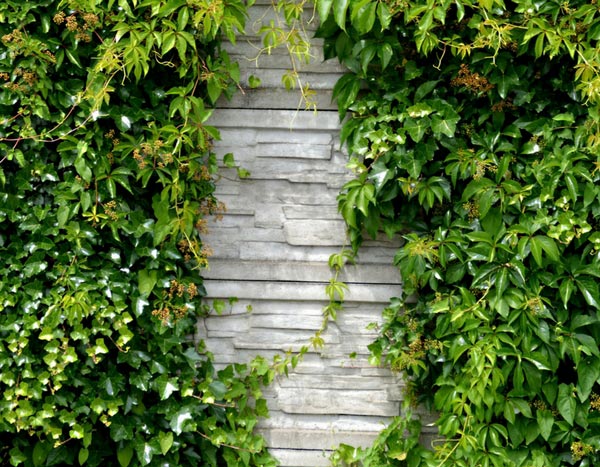
Tecomaria capensis absolutely requires protection during the first years of cultivation, even in regions that do not experience severe winter frosts. It is a beautiful shrub for USDA zone 8b, definitely worth trying in mild Mediterranean or oceanic climates. It flowers for a long time in a hedge or shrub border, adding a bright note to a time of year when colours are sometimes lacking. In the garden or on the terrace, it can be combined, for example, with the blue blooms of Plumbago capensis or Ceratostigma griffithii, whose foliage turns beautifully red in autumn. Some Mediterranean gardens have adopted it as a hedge: discreet annual pruning, after flowering, allows it to maintain a dense and welcoming habit for birds. When left free, the plant can run at the base of a wall or gradually cover it. It is often trained on trellises and wire. In very dry summer climates, a few deep but spaced-out waterings will be welcome.
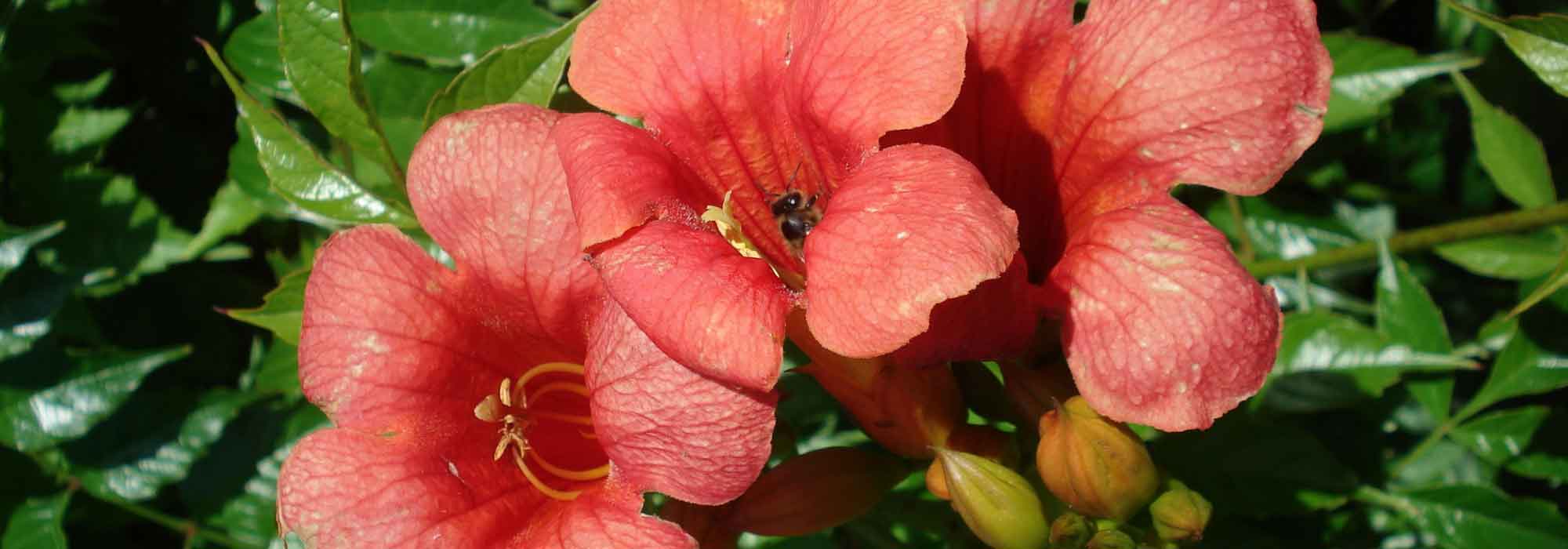
Tecoma capensis in pictures
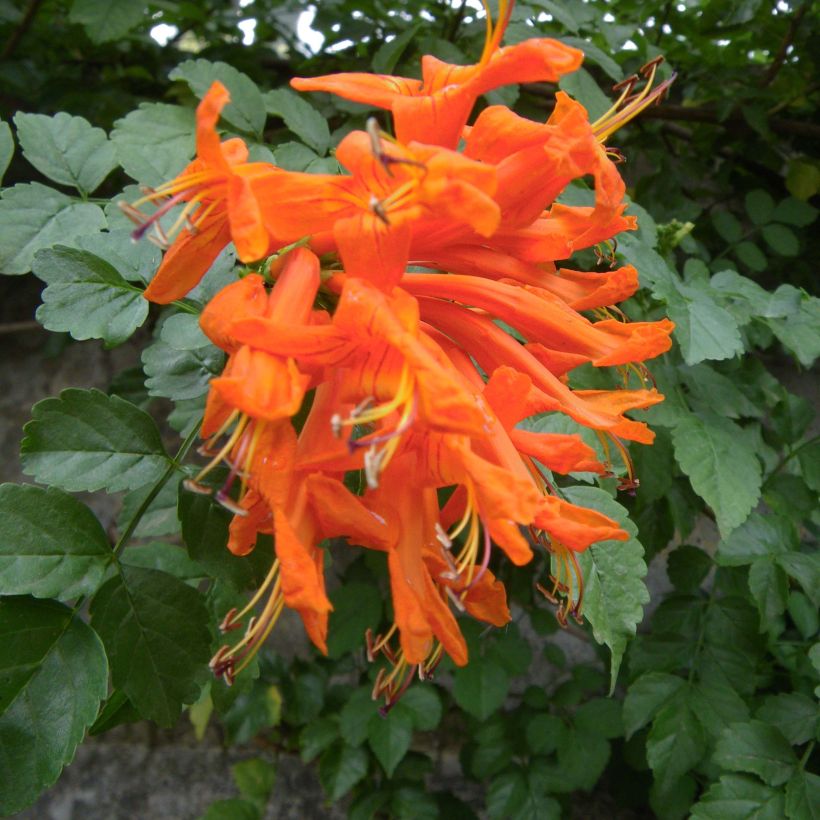
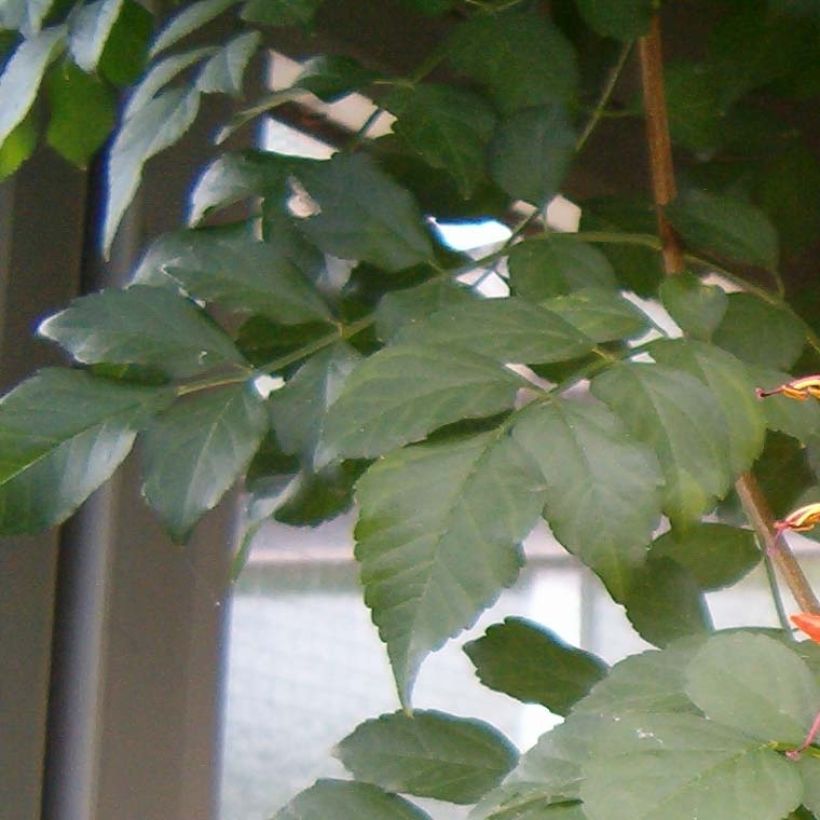
Plant habit
Flowering
Foliage
Botanical data
Tecoma
capensis
Bignoniaceae
Cape honeysuckle, West Indian honeysuckle
South Africa
Planting and care
The Tecomaria capensis is preferably planted in spring, to allow the plant to establish itself well before winter. It is a plant that is not very demanding on the nature of the soil, as long as it is rich enough and well-drained: a mixture of compost and garden soil, supplemented with some gravel, should be suitable. Its hardiness allows it to survive short frosts (for example, late at night) of around -7 to -8°C (19.4 to 17.6°F) once it is mature. However, young plants must be protected during the first 2 or 3 winters with a thick layer of mulch and winter protection fabric. After 2 or 3 years of cultivation, a good mulch on the base will suffice. The plant will vigorously regrow from the base if its branches have been affected by frost, and will reestablish its vegetation within a few months.
Its resistance to summer drought is respectable, once it is well rooted in deep soil: 2 to 3 generous waterings during the summer are necessary in dry Mediterranean regions. The Cape Honeysuckle enjoys warmth and prefers a sunny exposure, except in the Mediterranean where it will also thrive in partial shade. Plant it along a well-exposed wall or provide it with the shelter of other evergreen bushes that will protect it from the cold and dry winter winds. Pruning is not essential, but the Tecomaria tolerates it well. If it proves necessary after frost, you can do it in spring. The bush can also be pruned after flowering to limit its size or encourage branching.
Planting period
Intended location
Care
Planting & care advice
-
-
-
-
-
-
-
-
-
, onOrder confirmed
Reply from on Promesse de fleurs
Recently viewed products
Haven't found what you were looking for?
Hardiness is the lowest winter temperature a plant can endure without suffering serious damage or even dying. However, hardiness is affected by location (a sheltered area, such as a patio), protection (winter cover) and soil type (hardiness is improved by well-drained soil).

The flowering period indicated on our website applies to countries and regions located in USDA zone 8 (France, the United Kingdom, Ireland, the Netherlands, etc.)
It will vary according to where you live:- In zones 9 to 10 (Italy, Spain, Greece, etc.), flowering will occur about 2 to 4 weeks earlier.
- In zones 6 to 7 (Germany, Poland, Slovenia, and lower mountainous regions), flowering will be delayed by 2 to 3 weeks.
- In zone 5 (Central Europe, Scandinavia), blooming will be delayed by 3 to 5 weeks.
In temperate climates, pruning of spring-flowering shrubs (forsythia, spireas, etc.) should be done just after flowering.
Pruning of summer-flowering shrubs (Indian Lilac, Perovskia, etc.) can be done in winter or spring.
In cold regions as well as with frost-sensitive plants, avoid pruning too early when severe frosts may still occur.
The planting period indicated on our website applies to countries and regions located in USDA zone 8 (France, United Kingdom, Ireland, Netherlands).
It will vary according to where you live:
- In Mediterranean zones (Marseille, Madrid, Milan, etc.), autumn and winter are the best planting periods.
- In continental zones (Strasbourg, Munich, Vienna, etc.), delay planting by 2 to 3 weeks in spring and bring it forward by 2 to 4 weeks in autumn.
- In mountainous regions (the Alps, Pyrenees, Carpathians, etc.), it is best to plant in late spring (May-June) or late summer (August-September).
The harvesting period indicated on our website applies to countries and regions in USDA zone 8 (France, England, Ireland, the Netherlands).
In colder areas (Scandinavia, Poland, Austria...) fruit and vegetable harvests are likely to be delayed by 3-4 weeks.
In warmer areas (Italy, Spain, Greece, etc.), harvesting will probably take place earlier, depending on weather conditions.
The sowing periods indicated on our website apply to countries and regions within USDA Zone 8 (France, UK, Ireland, Netherlands).
In colder areas (Scandinavia, Poland, Austria...), delay any outdoor sowing by 3-4 weeks, or sow under glass.
In warmer climes (Italy, Spain, Greece, etc.), bring outdoor sowing forward by a few weeks.
Shipping country and language
Your country of residence may be:
Your country of residence is:
For a better user experience on our website, you can select:
Your shipping country:
-
 Austria
-
 Belgium
-
 Bosnia & Herzegovina
-
 Bulgaria
-
 Croatia
-
 Cyprus
-
 Czechia
-
 Denmark
-
 Estonia
-
 Finland
-
 France
-
 Germany
-
 Greece
-
 Hungary
-
 Iceland
-
 Ireland
-
 Italy
Italy
-
 Latvia
-
 Liechtenstein
-
 Lithuania
-
 Luxembourg
-
 Malta
Malta
-
 Netherlands
-
 Poland
-
 Portugal
-
 Romania
-
 Serbia
-
 Slovakia
-
 Slovenia
-
 Spain
Spain
-
 Sweden
-
 Switzerland
Language:
-
French
-
 English
-
Spanish
-
Italian
-
German
-
Portuguese
-
Dutch
-
Finnish
My Account
Hello
My wish lists
My cart
Log in / Register
Existing customer?
This form is protected by reCAPTCHA - the Google Privacy Policy and Terms of Service apply.
New customer?
Create an account to track your orders, access our customer service and, if you wish, make the most of our upcoming offers.