
Rosa Botero Climbing - Climbing Rose
Rosa Botero Climbing - Climbing Rose
Rosa 'Meiafonesar' GPT BOTERO®
Climbing Rose
Back-to-school special offer!
Get €10 off for every €50 you spend! And get up to €40 off on a single order.
How does it work?
1. Shop your favourites
Add your favourite plants to your basket. For every €50 you spend (excluding delivery charges, store credit and the plastic-free option), you’ll receive a €10 voucher.
€50 spent = €10 voucher
€100 spent = €20 voucher
€150 spent = €30 voucher
€200 spent = €40 voucher
2. Place your order
Once your basket reaches one of the spending thresholds, place your order. You can even choose your delivery date!
3. Receive your voucher
As soon as your order has been shipped, you’ll receive an email containing your personal voucher code and its value.
4. Use it on your next order
Your voucher is valid for 90 days from the date you receive it. It can be used once only, on a new order worth at least the value of the voucher, excluding delivery charges.
Please note: Vouchers can be combined with other offers, but cannot be split or refunded.
Home or relay delivery (depending on size and destination)
Important: You may be charged customs duties by your country’s customs authorities upon delivery.
Schedule delivery date,
and select date in basket
This plant carries a 6 months recovery warranty
More information
We guarantee the quality of our plants for a full growing cycle, and will replace at our expense any plant that fails to recover under normal climatic and planting conditions.

Description
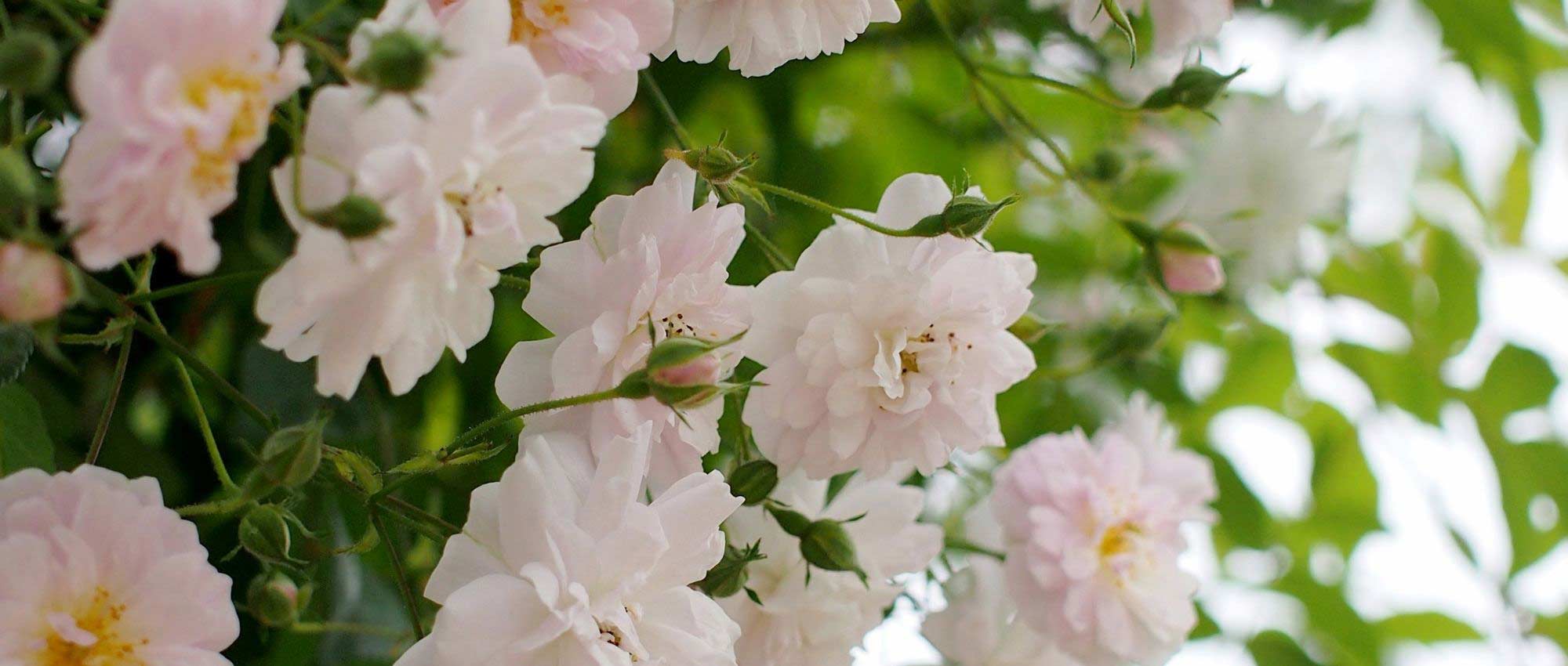
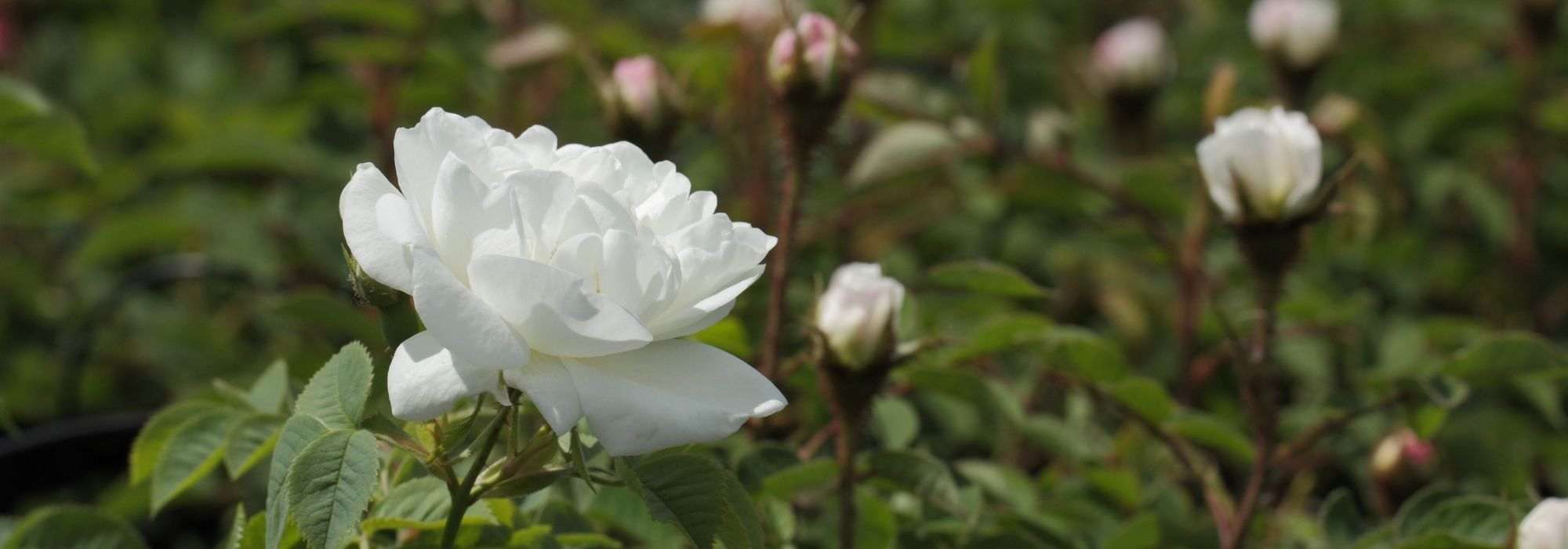
The 'Meiafonesar' BOTERO® Climbing Rose is a modern creation that wins over all lovers of beautiful flowers. Its continuous flowering blooms throughout the fine season, producing an abundance of densely double, fragrant, large red flowers that will charm you with their fruity hints reminiscent of red berries. This medium-sized Meilland Rose will easily find its place growing up a trellis near your fromt door. Its attractive satin-like, medium green foliage is highly disease-resistant, enabling you to enjoy all its advantages without any concerns.
The term Rose, Rosa in Latin, denotes the flagship genus of the Rosaceae family, which owes its name to it. The Rosa genus is estimated to include approximately 40,000 horticultural varieties, as this beloved genus among developers has been the focus of intense work by growers for centuries. The Botero Rose thus stems from Meilland's research, one of our French pioneers in producing new varieties globally renowned through the success of the 'Madame Antoine Meilland' rose ('Peace' in English-speaking regions). This rose's name pays tribute to the Colombian painter and sculptor Fernando Botero (1932-2023), known for his rounded figures. Launched in 2012, this is the sarmentous form of the BOTERO® Meiafone shrub rose introduced to the market nearly 10 years earlier. Trained up a support, trellis, pergola, or other structure, this rose will reach between 2 and 2.5 m in height and spread. Its compound, medium green foliage with a slight olive hue has a satin-like surface and is highly resistant to common rose diseases. It thus forms a beautiful green backdrop to highlight the intense red flowering. From June onwards, the flowers bloom profusely, almost continuously until October, especially if you remove faded flowers as they appear. After the spring abundance, you will still have blooms in mid-summer, followed by another intense wave in late summer and autumn. The turbinate flower buds open into a multitude of petals, 80 to 100, forming a slightly ruffled centre at full maturity, reminiscent of some old roses. The flowers can then measure up to 13 or 14 cm in diameter, and this abundance is accompanied by a powerful fragrance akin to May roses, with hints of red berries evoking currants and blackcurrants. Delighting your senses, this splendid Rose will thrive in full sun, in most not-too-dry soil types, and you can create cut flower displays with its fragrant blooms.
The 'Meiafonesar' BOTERO® Rose can be described as having 'high seductive potential' as its fragrance can be addictive while no one will remain indifferent to its colours as well as the size of its flowers. Train it near your front door to welcome visitors in the most beautiful way and enjoy its generous fragrance. If you train it on a pergola, pair it with other climbers like Clematis, which complement roses perfectly. Extend the flowering season to the extreme by also planting a Jasminum nudiflorum, a Winter Jasmine, another sarmentous plant that can easily be trained and will offer its bright yellow star-shaped flowers between December and March, bringing joy when grey weather and low skies prevail.

Plant habit
Flowering
Foliage
Botanical data
Rosa
'Meiafonesar' GPT BOTERO®
Rosaceae
Climbing Rose
Rosa 'Meiafonesar' GPT BOTERO®
Cultivar or hybrid
Planting and care
Plant your Botero Rose in a sunny position. Roses are tolerant but dislike excessive lime and thrive best in fertile, well-drained soil. They will adapt to any garden as long as the ground is well-prepared and sufficiently rich. To plant your rose, work the soil by breaking it up finely and adding an organic fertiliser such as dried blood or dehydrated horn at the bottom of the planting hole. Water generously after planting to remove any air pockets. Provide regular watering for a few weeks to encourage root establishment.
In late winter, shorten the side branches that have flowered to three buds. Use this pruning opportunity to remove any dead wood and unsightly branches. Prune at a slant above a bud to enable rainwater to drain quickly. As flowering progresses, deadhead to stimulate the growth of new buds.
If planting your climbing rose near a living tree, the rose's root system will compete with the well-established tree roots. To avoid this, here’s a trick: plant the rose in a large container with the bottom removed, placed at the base of the tree. The tree roots won’t penetrate the container for at least a year. Remove the container in the second year, for example by cutting one side, without disturbing the rose's root system. By then, the rose will have had time to develop a deep root system and will be more resilient.
This rose is highly disease-resistant, but if it does develop spots by late summer, it won’t affect its growth. These spots are harmless and a natural occurrence. Follow our advice to address them and read our article: Help! My Roses Have Spots
Planting period
Intended location
Care
Planting & care advice
-
-

-

-

-

-

-
-

This item has not been reviewed yet - be the first to leave a review about it.
Recently viewed products
Haven't found what you were looking for?
Hardiness is the lowest winter temperature a plant can endure without suffering serious damage or even dying. However, hardiness is affected by location (a sheltered area, such as a patio), protection (winter cover) and soil type (hardiness is improved by well-drained soil).

The flowering period indicated on our website applies to countries and regions located in USDA zone 8 (France, the United Kingdom, Ireland, the Netherlands, etc.)
It will vary according to where you live:- In zones 9 to 10 (Italy, Spain, Greece, etc.), flowering will occur about 2 to 4 weeks earlier.
- In zones 6 to 7 (Germany, Poland, Slovenia, and lower mountainous regions), flowering will be delayed by 2 to 3 weeks.
- In zone 5 (Central Europe, Scandinavia), blooming will be delayed by 3 to 5 weeks.
In temperate climates, pruning of spring-flowering shrubs (forsythia, spireas, etc.) should be done just after flowering.
Pruning of summer-flowering shrubs (Indian Lilac, Perovskia, etc.) can be done in winter or spring.
In cold regions as well as with frost-sensitive plants, avoid pruning too early when severe frosts may still occur.
The planting period indicated on our website applies to countries and regions located in USDA zone 8 (France, United Kingdom, Ireland, Netherlands).
It will vary according to where you live:
- In Mediterranean zones (Marseille, Madrid, Milan, etc.), autumn and winter are the best planting periods.
- In continental zones (Strasbourg, Munich, Vienna, etc.), delay planting by 2 to 3 weeks in spring and bring it forward by 2 to 4 weeks in autumn.
- In mountainous regions (the Alps, Pyrenees, Carpathians, etc.), it is best to plant in late spring (May-June) or late summer (August-September).
The harvesting period indicated on our website applies to countries and regions in USDA zone 8 (France, England, Ireland, the Netherlands).
In colder areas (Scandinavia, Poland, Austria...) fruit and vegetable harvests are likely to be delayed by 3-4 weeks.
In warmer areas (Italy, Spain, Greece, etc.), harvesting will probably take place earlier, depending on weather conditions.
The sowing periods indicated on our website apply to countries and regions within USDA Zone 8 (France, UK, Ireland, Netherlands).
In colder areas (Scandinavia, Poland, Austria...), delay any outdoor sowing by 3-4 weeks, or sow under glass.
In warmer climes (Italy, Spain, Greece, etc.), bring outdoor sowing forward by a few weeks.
Shipping country and language
Your country of residence may be:
Your country of residence is:
For a better user experience on our website, you can select:
Your shipping country:
-
 Austria
-
 Belgium
-
 Bosnia & Herzegovina
-
 Bulgaria
-
 Croatia
-
 Cyprus
-
 Czechia
-
 Denmark
-
 Estonia
-
 Finland
-
 France
-
 Germany
-
 Greece
-
 Hungary
-
 Iceland
-
 Ireland
-
 Italy
Italy
-
 Latvia
-
 Liechtenstein
-
 Lithuania
-
 Luxembourg
-
 Malta
Malta
-
 Netherlands
-
 Poland
-
 Portugal
-
 Romania
-
 Serbia
-
 Slovakia
-
 Slovenia
-
 Spain
Spain
-
 Sweden
-
 Switzerland
Language:
-
French
-
 English
-
Spanish
-
Italian
-
German
-
Portuguese
-
Dutch
-
Finnish
My Account
Hello
My wish lists
My cart
Log in / Register
Existing customer?
This form is protected by reCAPTCHA - the Google Privacy Policy and Terms of Service apply.
New customer?
Create an account to track your orders, access our customer service and, if you wish, make the most of our upcoming offers.