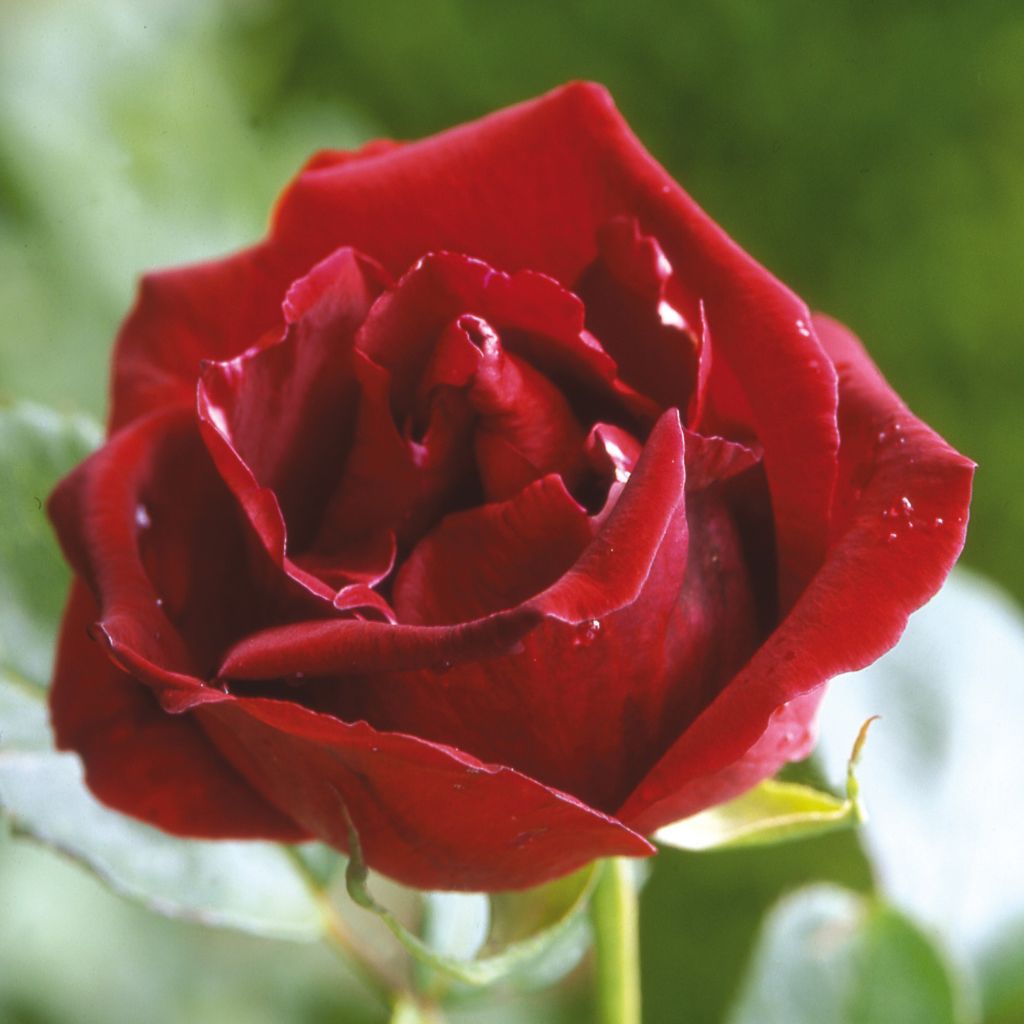
Rosa 'Guinée'
View more pictures
Hide images
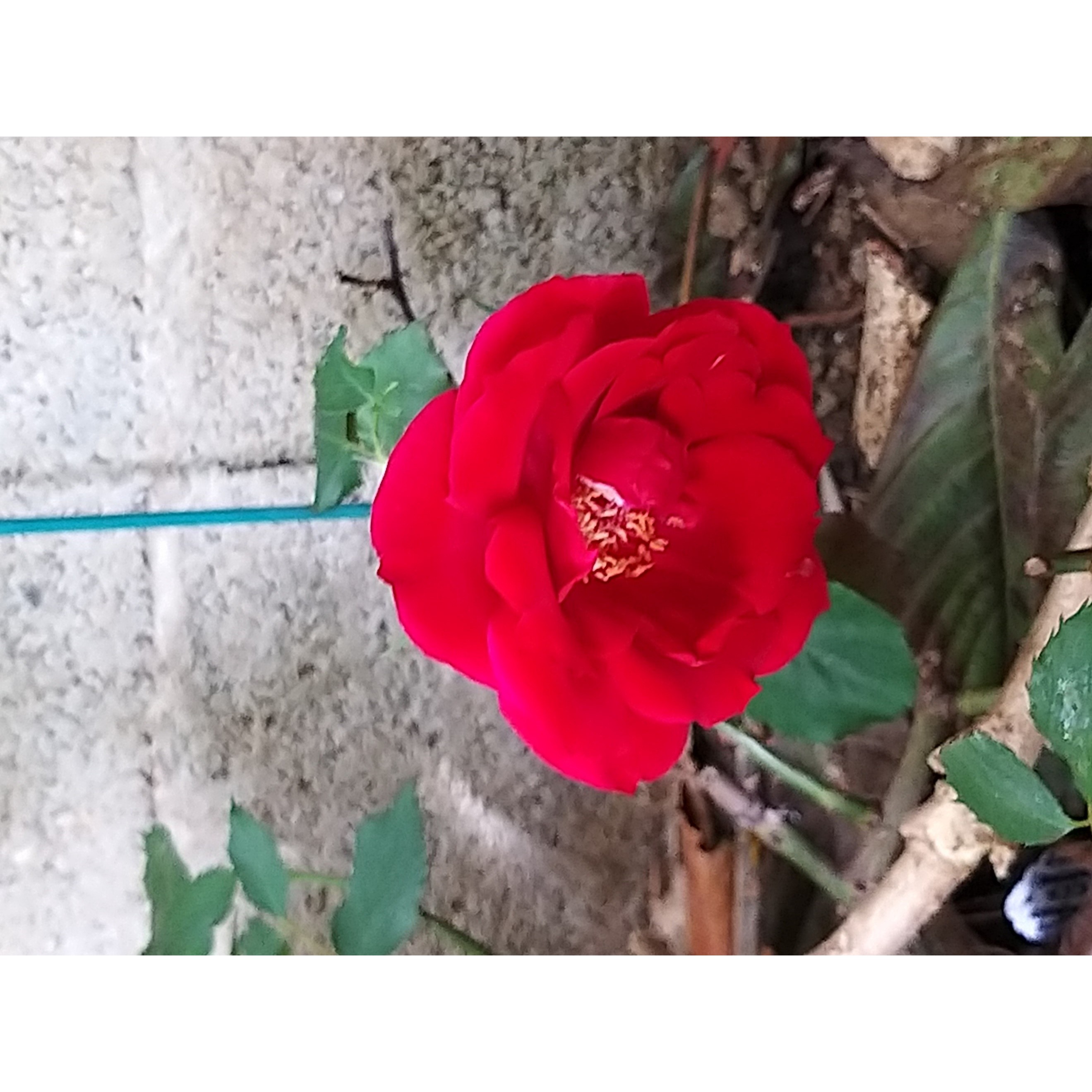
Thierry P.
Rosa 'Guinée'
Thierry P. • 84 FR
Rosa 'Guinée'
Rosa Guinée
Rose
It's shooting up... it's a climbing plant, and we'll see this summer if it starts to rub shoulders with the edge of the roof.
Jean louis, 05/05/2024
Back-to-school special offer!
Get €10 off for every €50 you spend! And get up to €40 off on a single order.
How does it work?
1. Shop your favourites
Add your favourite plants to your basket. For every €50 you spend (excluding delivery charges, store credit and the plastic-free option), you’ll receive a €10 voucher.
€50 spent = €10 voucher
€100 spent = €20 voucher
€150 spent = €30 voucher
€200 spent = €40 voucher
2. Place your order
Once your basket reaches one of the spending thresholds, place your order. You can even choose your delivery date!
3. Receive your voucher
As soon as your order has been shipped, you’ll receive an email containing your personal voucher code and its value.
4. Use it on your next order
Your voucher is valid for 90 days from the date you receive it. It can be used once only, on a new order worth at least the value of the voucher, excluding delivery charges.
Please note: Vouchers can be combined with other offers, but cannot be split or refunded.
Home or relay delivery (depending on size and destination)
Important: You may be charged customs duties by your country’s customs authorities upon delivery.
Schedule delivery date,
and select date in basket
This plant carries a 24 months recovery warranty
More information
We guarantee the quality of our plants for a full growing cycle, and will replace at our expense any plant that fails to recover under normal climatic and planting conditions.
Description
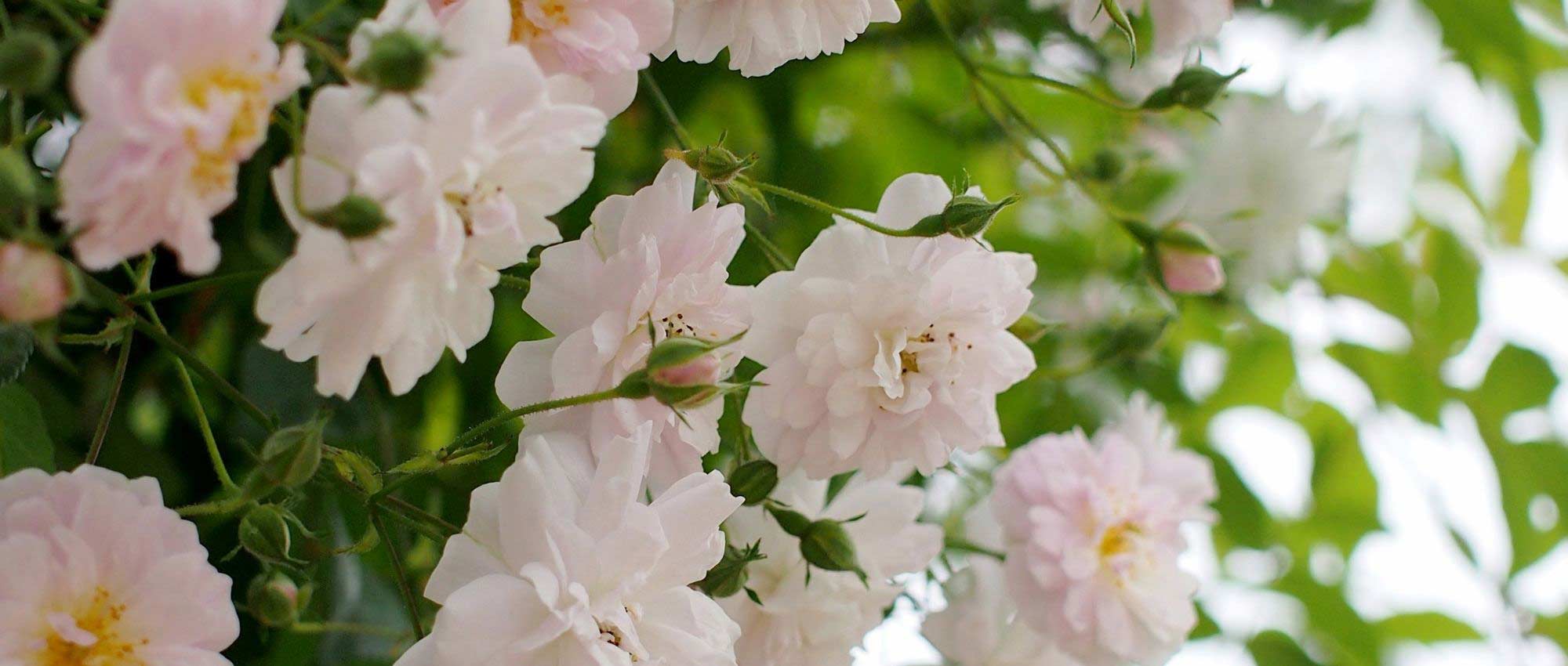
The 'Guinea' Climbing Rose, a powerful evocation of historic Tea roses, is undoubtedly the most sumptuous of climbing roses with dark red flowers, a true homage to the black beauties from distant lands where summer is endless. Its opulent roses are woven of crimson satin and velvety in a perfumed whirlwind in which black reflections drown, imprisoning the heavy fragrance of ancient roses. They are double, heavy with petals, shaped like open cups and of an unchanging colour, embroidered with a surprising heart of golden stamens. Its vegetation, on the other hand, is rather average and sensitive to extreme cold. It is, therefore, best suited for mild climates.
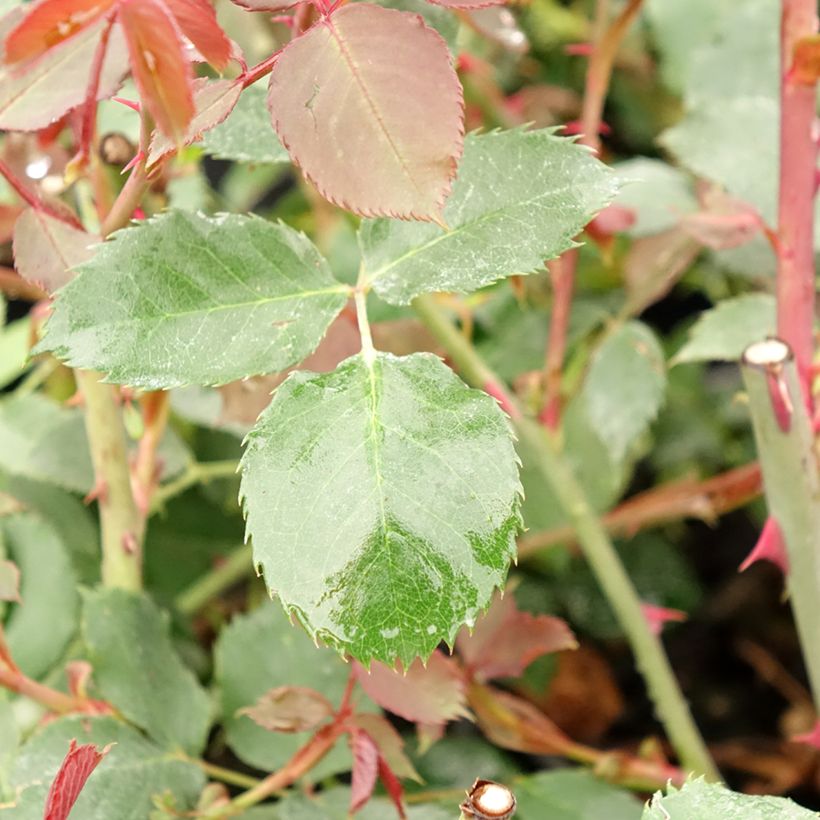
The 'Guinea' Rose is part of the complex family of hybrid tea roses. It is very close to historic tea roses, which are not very hardy, generally have a climbing habit, and are sensitive to severe pruning. It was created by the French rose breeder Charles Mallerin in 1938. It is a sarmentous rose with a flexible habit and thorny stems reaching 3 to 5 metres (10 to 16 feet) in height and 1 to 2 metres (3 to 7 feet) in width, depending on the growing conditions. Its growth is of medium vigour, and its dark green, shiny and deciduous foliage is quite susceptible to diseases such as black spot and powdery mildew, which will require preventive treatment. It stands out for the unique colour and texture of its large solitary roses, 10 cm (4in) wide, and its heady fragrance, awarded by the City of Lyon in 1938. While its summer flowering is dazzling, the repeat flowering is irregular and depends on the care given to the plant.
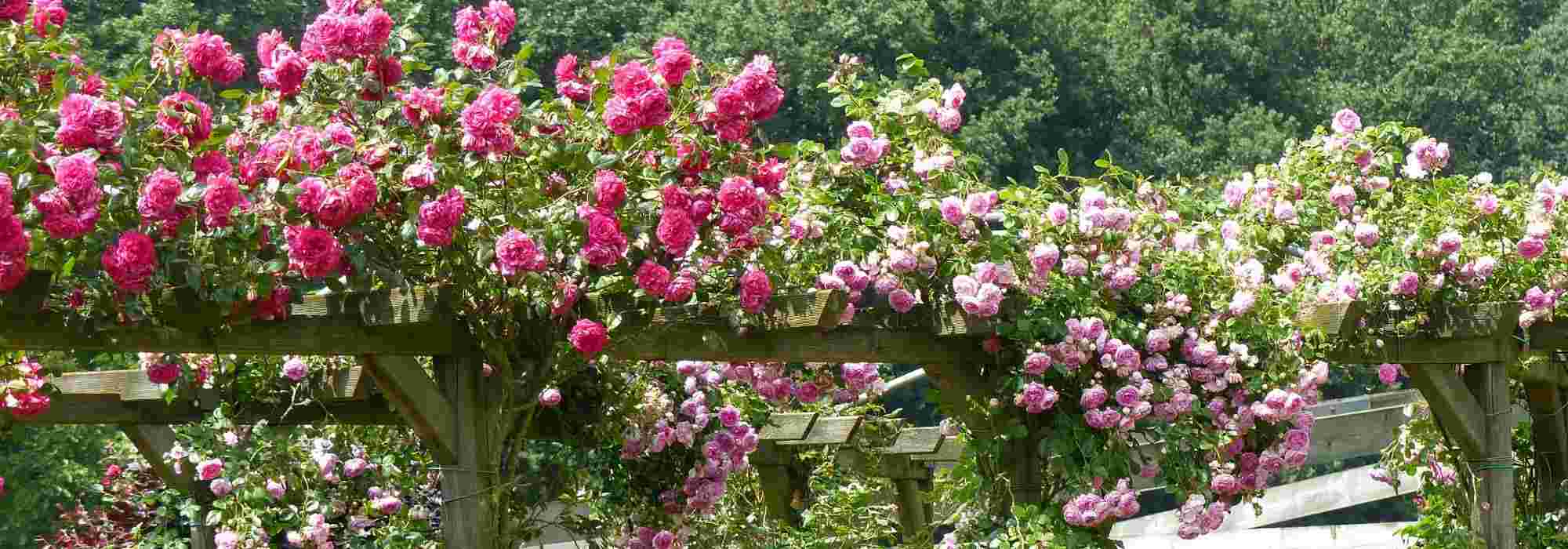
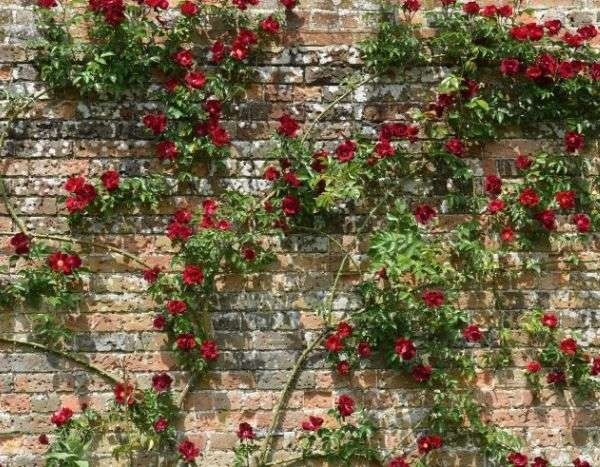
'Guinea' is simply a magnificent rose, full and dark, to be showcased on a small post, a column, trained on an arch near the terrace, even in a small garden, to enjoy its exceptional fragrance fully. It is incomparable for adding a touch of theatricality, planted above slightly romantic beds. It pairs well with the mauve roses of Blue Girl, Sissi, or the white corollas of the English rose Winchester Cathedral. It is an ideal companion for flowering shrubs (buddleias, mock oranges, hibiscus) and perennials such as bellflowers and foxgloves, adding immense charm.
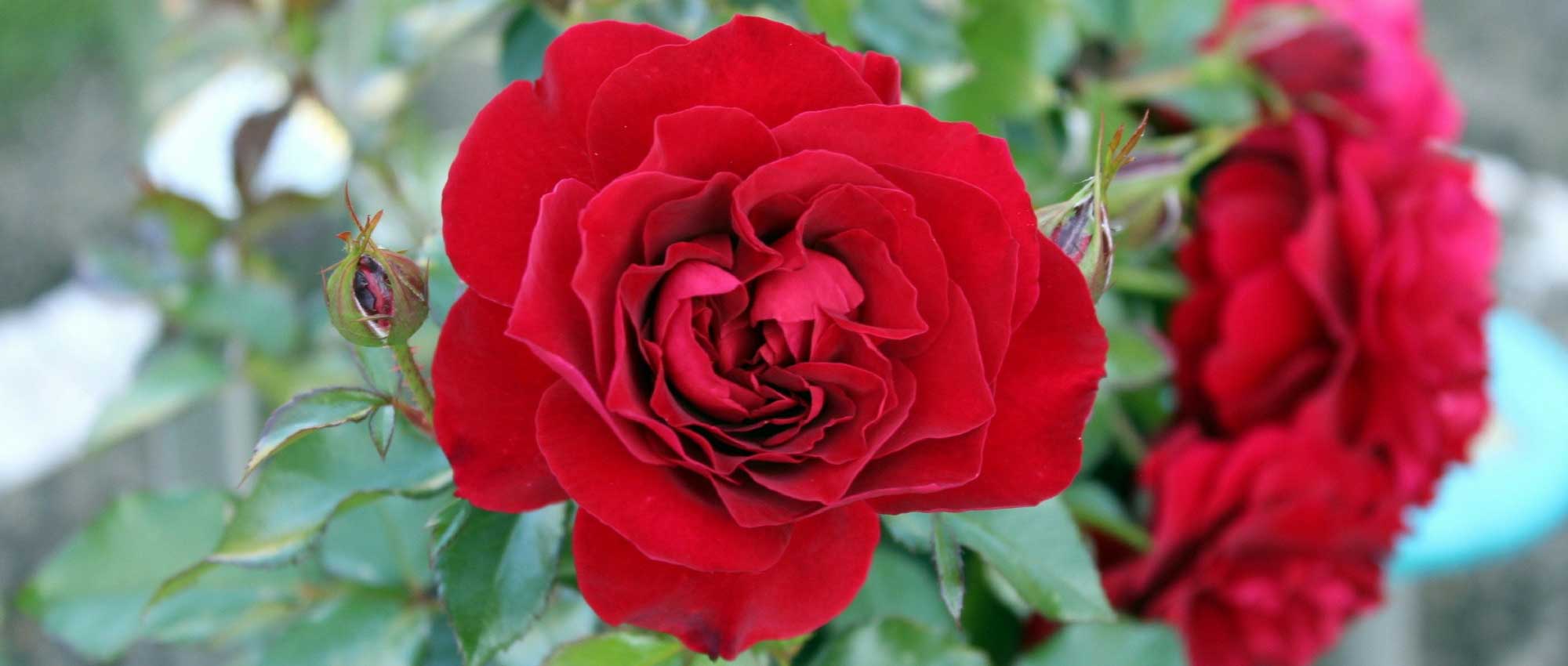
Rosa 'Guinée' in pictures
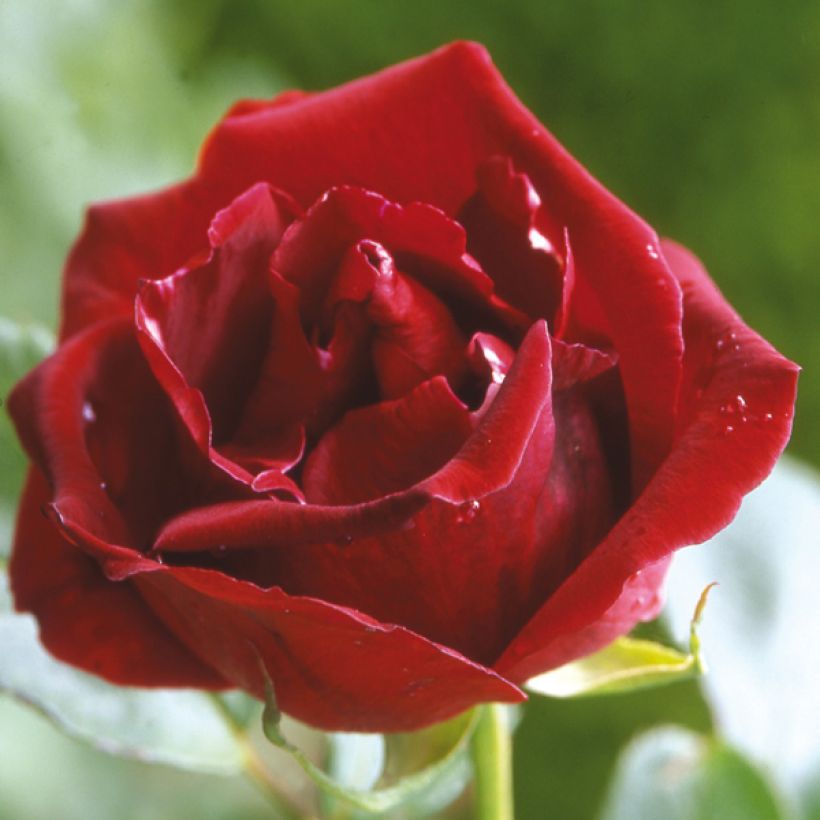
Plant habit
Flowering
Foliage
Botanical data
Rosa
Guinée
Rosaceae
Rose
Cultivar or hybrid
Planting and care
The 'Guinée' climbing rose thrives in sunny locations with fertile soil and mild climates. Its hardiness is limited to temperatures above -12/-15°C (10.4/5°F). To ensure healthy growth, it is essential to take preventive measures against rose diseases and regularly fertilise the plant to promote autumn regrowth. When planting the rose in a pot, use well-worked soil and crumble it well. Add an amendment such as blood, fish, and bone at the bottom of the planting hole. After planting, generously water the rose to remove air pockets. Water the plant regularly for a few weeks in dry weather to facilitate rooting. For optimal flowering, train the branches to grow horizontally whenever possible.
Pruning of repeat floweringl roses should be done at the end of winter. If its size bothers you, you can shorten it, but avoid cutting it back too much as it would harm the flowering. Thin out the branches by removing dead wood and unsightly branches. Throughout the summer, removing faded flowers promotes even more abundant flowering.
Roses often become stained or unsightly at the end of summer, but it is not a problem for their development. These stains are a natural phenomenon and do not harm the rose.
Planting period
Intended location
Care
Planting & care advice
-
-

-
-
-

-

-
-
-
, onOrder confirmed
Reply from on Promesse de fleurs
Recently viewed products
Haven't found what you were looking for?
Hardiness is the lowest winter temperature a plant can endure without suffering serious damage or even dying. However, hardiness is affected by location (a sheltered area, such as a patio), protection (winter cover) and soil type (hardiness is improved by well-drained soil).

The flowering period indicated on our website applies to countries and regions located in USDA zone 8 (France, the United Kingdom, Ireland, the Netherlands, etc.)
It will vary according to where you live:- In zones 9 to 10 (Italy, Spain, Greece, etc.), flowering will occur about 2 to 4 weeks earlier.
- In zones 6 to 7 (Germany, Poland, Slovenia, and lower mountainous regions), flowering will be delayed by 2 to 3 weeks.
- In zone 5 (Central Europe, Scandinavia), blooming will be delayed by 3 to 5 weeks.
In temperate climates, pruning of spring-flowering shrubs (forsythia, spireas, etc.) should be done just after flowering.
Pruning of summer-flowering shrubs (Indian Lilac, Perovskia, etc.) can be done in winter or spring.
In cold regions as well as with frost-sensitive plants, avoid pruning too early when severe frosts may still occur.
The planting period indicated on our website applies to countries and regions located in USDA zone 8 (France, United Kingdom, Ireland, Netherlands).
It will vary according to where you live:
- In Mediterranean zones (Marseille, Madrid, Milan, etc.), autumn and winter are the best planting periods.
- In continental zones (Strasbourg, Munich, Vienna, etc.), delay planting by 2 to 3 weeks in spring and bring it forward by 2 to 4 weeks in autumn.
- In mountainous regions (the Alps, Pyrenees, Carpathians, etc.), it is best to plant in late spring (May-June) or late summer (August-September).
The harvesting period indicated on our website applies to countries and regions in USDA zone 8 (France, England, Ireland, the Netherlands).
In colder areas (Scandinavia, Poland, Austria...) fruit and vegetable harvests are likely to be delayed by 3-4 weeks.
In warmer areas (Italy, Spain, Greece, etc.), harvesting will probably take place earlier, depending on weather conditions.
The sowing periods indicated on our website apply to countries and regions within USDA Zone 8 (France, UK, Ireland, Netherlands).
In colder areas (Scandinavia, Poland, Austria...), delay any outdoor sowing by 3-4 weeks, or sow under glass.
In warmer climes (Italy, Spain, Greece, etc.), bring outdoor sowing forward by a few weeks.
Shipping country and language
Your country of residence may be:
Your country of residence is:
For a better user experience on our website, you can select:
Your shipping country:
-
 Austria
-
 Belgium
-
 Bosnia & Herzegovina
-
 Bulgaria
-
 Croatia
-
 Cyprus
-
 Czechia
-
 Denmark
-
 Estonia
-
 Finland
-
 France
-
 Germany
-
 Greece
-
 Hungary
-
 Iceland
-
 Ireland
-
 Italy
Italy
-
 Latvia
-
 Liechtenstein
-
 Lithuania
-
 Luxembourg
-
 Malta
Malta
-
 Netherlands
-
 Poland
-
 Portugal
-
 Romania
-
 Serbia
-
 Slovakia
-
 Slovenia
-
 Spain
Spain
-
 Sweden
-
 Switzerland
Language:
-
French
-
 English
-
Spanish
-
Italian
-
German
-
Portuguese
-
Dutch
-
Finnish
My Account
Hello
My wish lists
My cart
Log in / Register
Existing customer?
This form is protected by reCAPTCHA - the Google Privacy Policy and Terms of Service apply.
New customer?
Create an account to track your orders, access our customer service and, if you wish, make the most of our upcoming offers.