Eucalyptus paliformis
Eucalyptus paliformis
Eucalyptus paliformis
Back-to-school special offer!
Get €10 off for every €50 you spend! And get up to €40 off on a single order.
How does it work?
1. Shop your favourites
Add your favourite plants to your basket. For every €50 you spend (excluding delivery charges, store credit and the plastic-free option), you’ll receive a €10 voucher.
€50 spent = €10 voucher
€100 spent = €20 voucher
€150 spent = €30 voucher
€200 spent = €40 voucher
2. Place your order
Once your basket reaches one of the spending thresholds, place your order. You can even choose your delivery date!
3. Receive your voucher
As soon as your order has been shipped, you’ll receive an email containing your personal voucher code and its value.
4. Use it on your next order
Your voucher is valid for 90 days from the date you receive it. It can be used once only, on a new order worth at least the value of the voucher, excluding delivery charges.
Please note: Vouchers can be combined with other offers, but cannot be split or refunded.
Home or relay delivery (depending on size and destination)
Important: You may be charged customs duties by your country’s customs authorities upon delivery.
Schedule delivery date,
and select date in basket
This plant carries a 24 months recovery warranty
More information
We guarantee the quality of our plants for a full growing cycle, and will replace at our expense any plant that fails to recover under normal climatic and planting conditions.
Would this plant suit my garden?
Set up your Plantfit profile →
Description
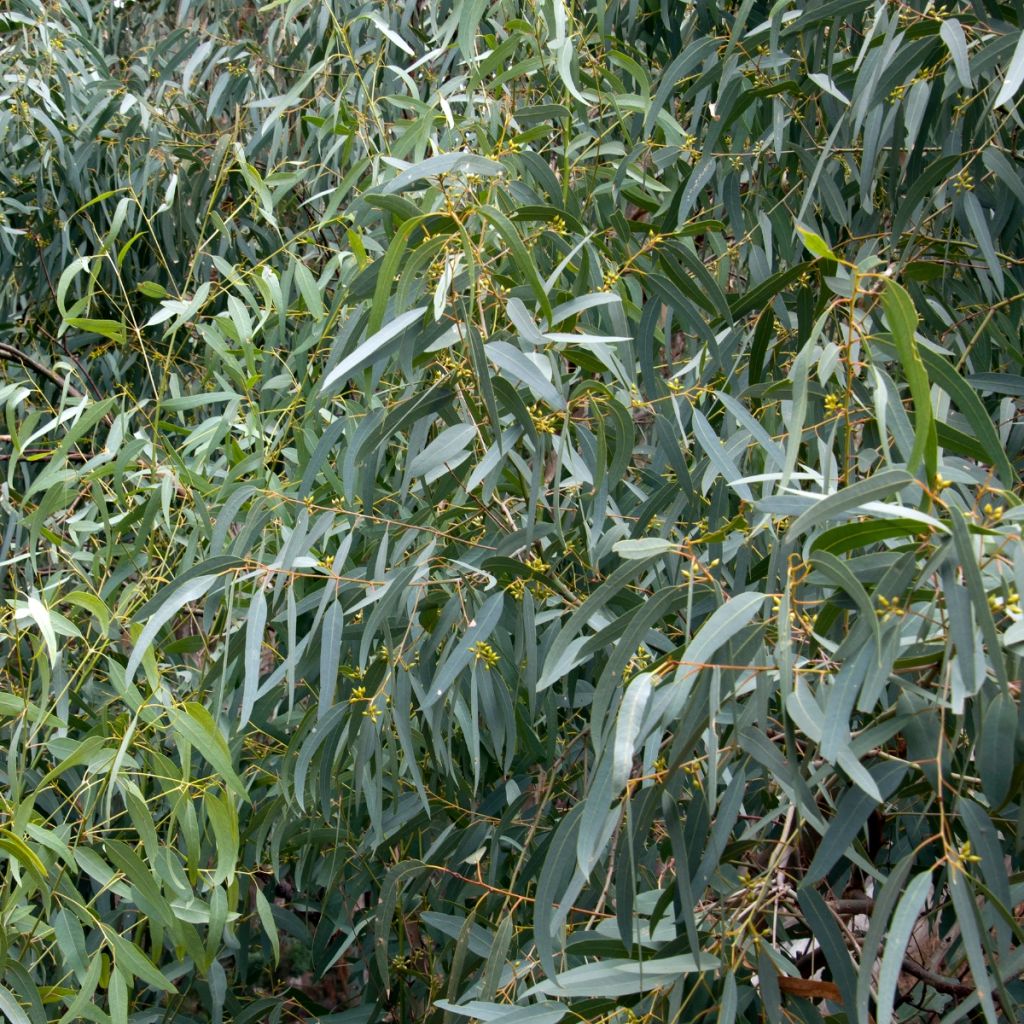
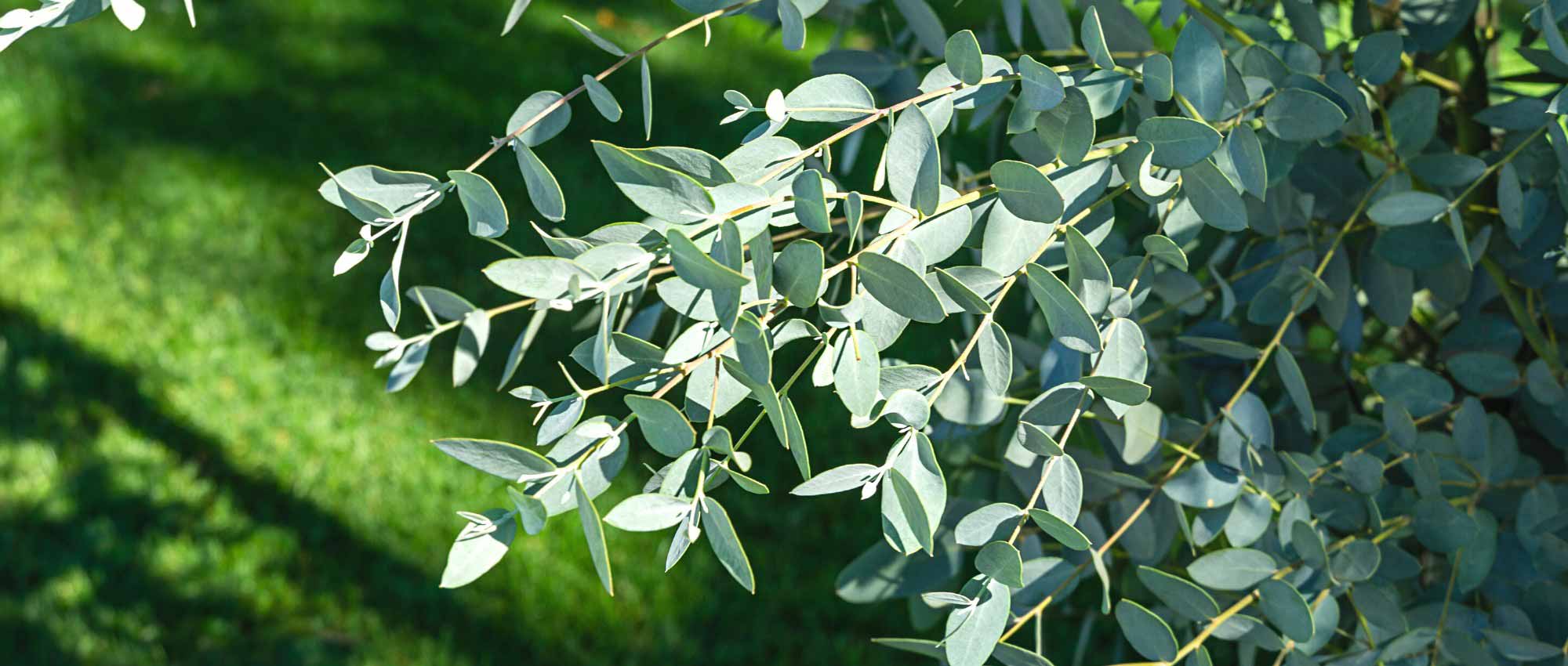
Eucalyptus paliformis is native to a very restricted geographic area in south-eastern Australia. This rare species displays distinctive characteristics. Its growth rate is fairly moderate, over time forming a small to medium-sized tree about ten metres in height, with a rather narrow habit. The trunk has very decorative smooth bark, colour varying between pale grey and olive green. Its evergreen foliage is also very attractive, composed of glossy green leaves more reminiscent of a willow than an eucalyptus. The white inflorescences in umbels form small white pom-poms. Standing out in the genus for its drought resistance, it is not very hardy and well-suited to Mediterranean climates.
Eucalypts belong to the large Myrtaceae family, well represented in tropical areas and warm temperate climates. There are more than 800 species, ranging from shrubs a few metres high to giant trees approaching 100 m! Almost all are native to Australia, as is the case with this species. It is very rare, only growing wild in a very restricted area in the south-east of the state of New South Wales. Nicknamed the Wadbilliga Eucalyptus because of this unique location, it grows in a semi-arid climate, where annual rainfall does not exceed 360 mm, but without a real dry season.
It forms a tree 10 to 12 m in height, with a more or less conical and narrow habit, often bare at the base. Although this species lacks a lignotuber (an underground formation rich in starch that allows many eucalypts to regrow from the stump after a fire by producing multiple buds) and does not belong to the mallee group (shrubby species branched from the base), individuals will sometimes spontaneously adopt a shrubby habit. If this is the case, for ornamental use, you can keep the strongest shoot and prune all others at ground level to form a single trunk. With slow growth in its first years, while establishing a root system, this tree then grows a little faster until it reaches adult size.
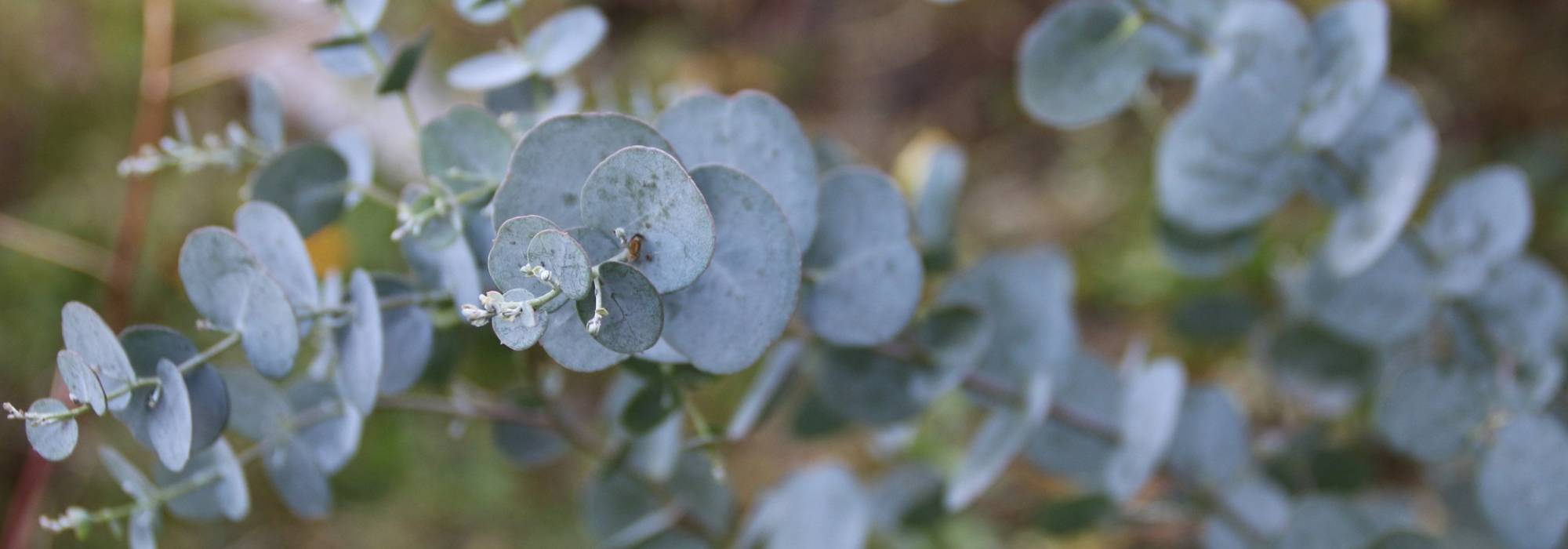
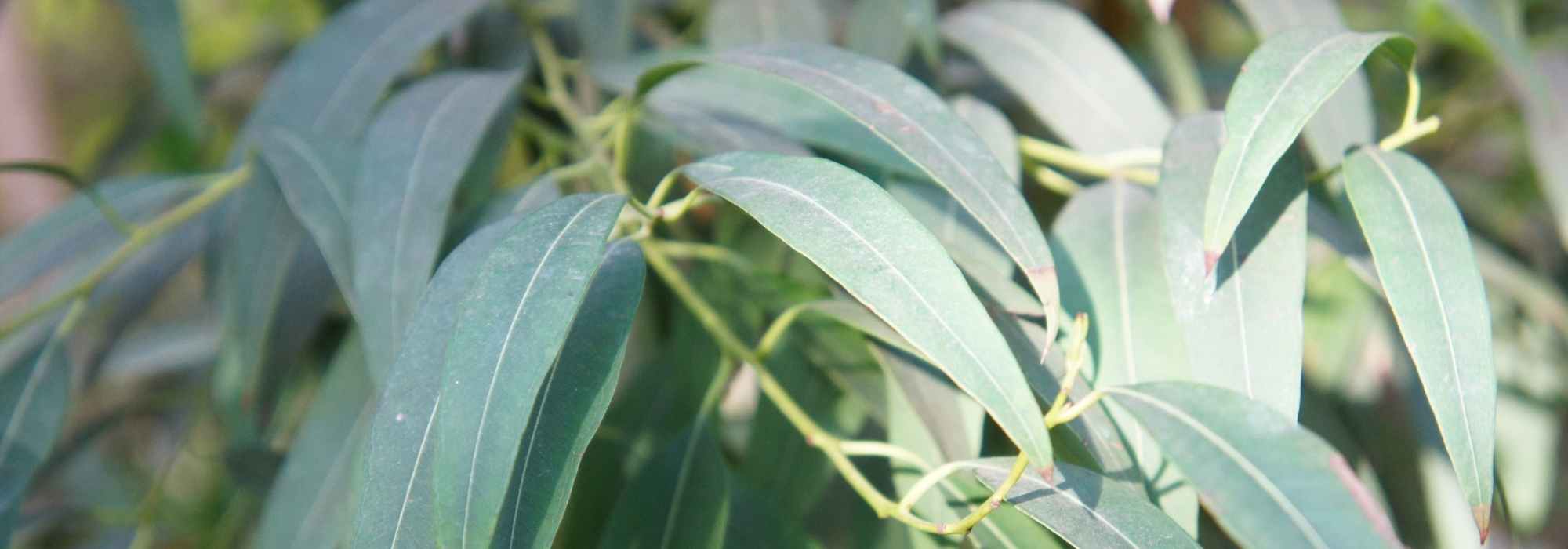
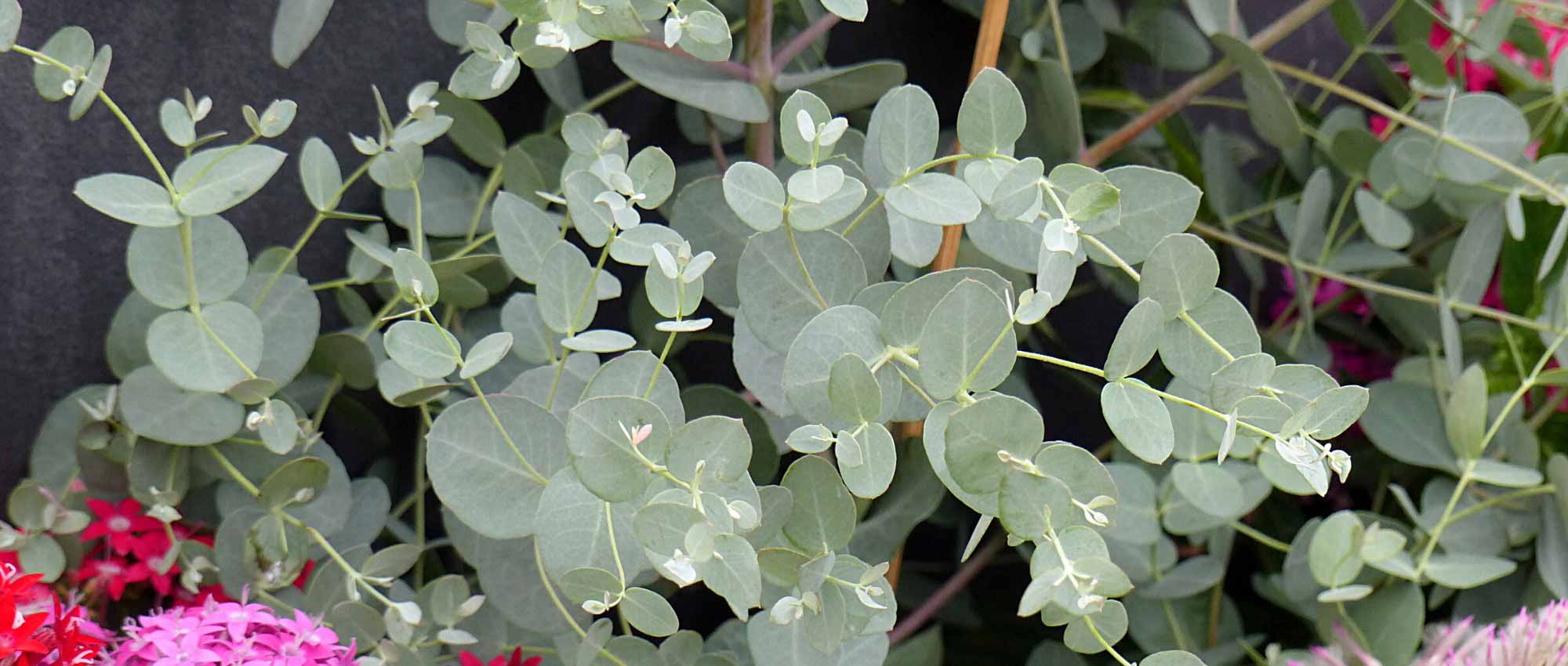
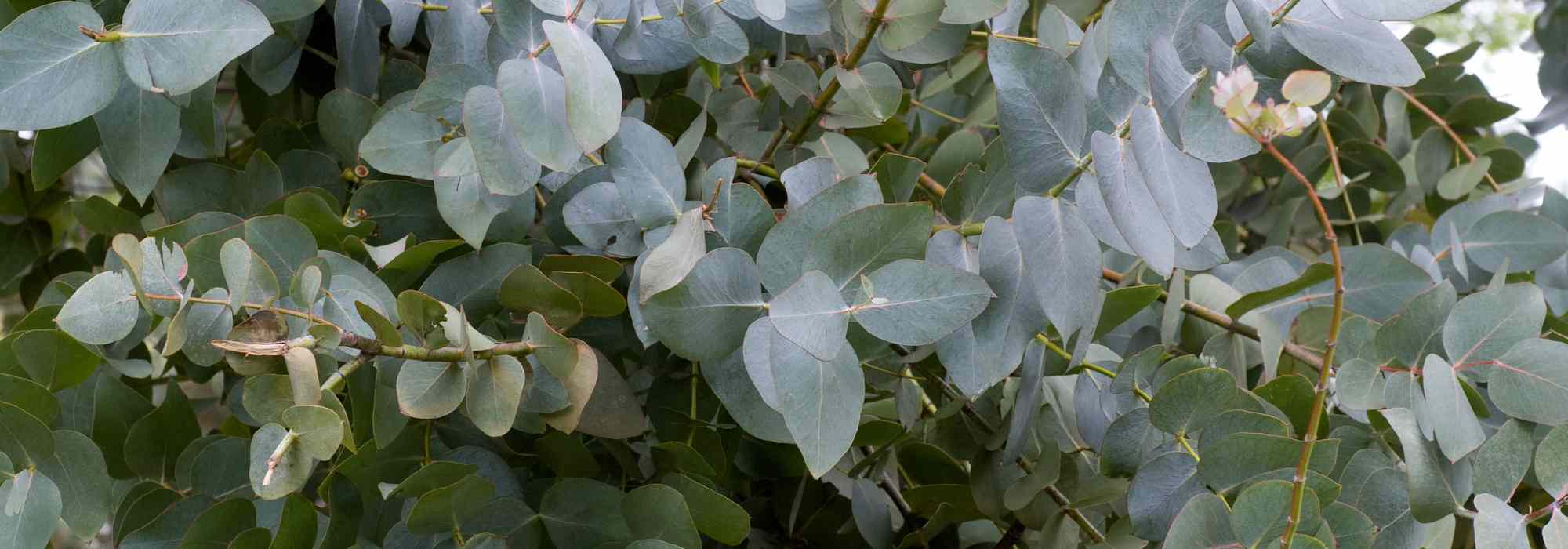
The Wadbilliga Eucalyptus is very attractive for its superb, very smooth bark, which peels to reveal a beautiful yellow colour. As it ages, it can take on whitish tints, but more often pale grey or olive green; in any case, very decorative. The branches typically grow at 45° on the trunk. They are covered with branchlets, which are dark red before gradually lightening. They bear green juvenile foliage, darker on the upper side and glossy. These leaves are lanceolate and pointed at the tip, and are borne on short petioles. Measuring 6.5 to 11 cm long and 1.5 to 2 cm wide, they could easily be mistaken for willow leaves. The adult foliage has very similar leaves, lanceolate to sickle-shaped, of comparable dimensions, entire or very slightly serrated. Rich in glands containing essential oils, the foliage releases a pleasant scent when bruised.
Between May and July in Australia, which corresponds to our winter in the northern hemisphere, a white pom-pom-like flowering appears, consisting of small flowers grouped in umbels of 7 in the leaf axils. These nectar-rich flowers are not very spectacular but are much appreciated by pollinating insects, including bees.
This tree has the fairly unusual characteristic among eucalypts of being adapted to dry conditions, whereas many species need moisture. It thrives in poor soils and acclimatises easily in Mediterranean climates. Hardy down to -8°C in very well-drained soil, it is perfect for enhancing southern gardens.
Well-suited to small gardens, due to its relatively slow growth for an eucalyptus (maximum 90 cm/year) and its moderate size, this eucalyptus has original foliage and superb bark. You can combine it with other decorative barks, like Arbutus andrachne, a large shrub or small tree also magnificent in all seasons, thanks to its white flowers, its globose fruits that turn from yellow to bright red, its pleasant green evergreen foliage and, of course, its orange bark. The mastic tree (Pistacia lentiscus), also a tough customer with a wild appearance, will be a good companion too, with its glossy green compound foliage and very aesthetic clusters of red fruits. And to create a foliar contrast effect and fill the base of your trees, plant Myrtus communis 'Variegata', a Myrtle with fine green, aromatic foliage variegated with white.
Plant habit
Flowering
Foliage
Botanical data
Eucalyptus
paliformis
Myrtaceae
Australia
Planting and care
Eucalyptus paliformis is not very hardy and should ideally be planted at the beginning of spring, after the last frosts, to allow it to develop a sufficient root system before winter. It requires very well-drained soil, as it cannot tolerate waterlogging, which also exacerbates the effects of frost. Plant it in lime-free soil, with a neutral to acidic pH, in a sunny exposure. Improve drainage by adding coarse sand, volcanic gravel, or lime-free gravel if your soil requires it. Water regularly during the first year to help it establish, then let nature take its course in subsequent years. Once well-rooted, this species is very drought-resistant and particularly well-suited to Mediterranean climates.
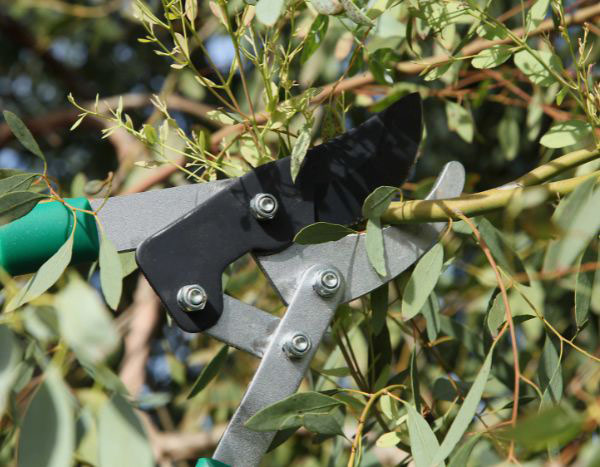
It does not specifically need to be pruned, but you can prune it if you wish to limit its growth. However, only light pruning should be carried out, as this species doesn't have a lignotuber and cannot produce coppice shoots from the stump.
Planting period
Intended location
Care
Planting & care advice


This item has not been reviewed yet - be the first to leave a review about it.
Recently viewed products
Haven't found what you were looking for?
Hardiness is the lowest winter temperature a plant can endure without suffering serious damage or even dying. However, hardiness is affected by location (a sheltered area, such as a patio), protection (winter cover) and soil type (hardiness is improved by well-drained soil).

The flowering period indicated on our website applies to countries and regions located in USDA zone 8 (France, the United Kingdom, Ireland, the Netherlands, etc.)
It will vary according to where you live:- In zones 9 to 10 (Italy, Spain, Greece, etc.), flowering will occur about 2 to 4 weeks earlier.
- In zones 6 to 7 (Germany, Poland, Slovenia, and lower mountainous regions), flowering will be delayed by 2 to 3 weeks.
- In zone 5 (Central Europe, Scandinavia), blooming will be delayed by 3 to 5 weeks.
In temperate climates, pruning of spring-flowering shrubs (forsythia, spireas, etc.) should be done just after flowering.
Pruning of summer-flowering shrubs (Indian Lilac, Perovskia, etc.) can be done in winter or spring.
In cold regions as well as with frost-sensitive plants, avoid pruning too early when severe frosts may still occur.
The planting period indicated on our website applies to countries and regions located in USDA zone 8 (France, United Kingdom, Ireland, Netherlands).
It will vary according to where you live:
- In Mediterranean zones (Marseille, Madrid, Milan, etc.), autumn and winter are the best planting periods.
- In continental zones (Strasbourg, Munich, Vienna, etc.), delay planting by 2 to 3 weeks in spring and bring it forward by 2 to 4 weeks in autumn.
- In mountainous regions (the Alps, Pyrenees, Carpathians, etc.), it is best to plant in late spring (May-June) or late summer (August-September).
The harvesting period indicated on our website applies to countries and regions in USDA zone 8 (France, England, Ireland, the Netherlands).
In colder areas (Scandinavia, Poland, Austria...) fruit and vegetable harvests are likely to be delayed by 3-4 weeks.
In warmer areas (Italy, Spain, Greece, etc.), harvesting will probably take place earlier, depending on weather conditions.
The sowing periods indicated on our website apply to countries and regions within USDA Zone 8 (France, UK, Ireland, Netherlands).
In colder areas (Scandinavia, Poland, Austria...), delay any outdoor sowing by 3-4 weeks, or sow under glass.
In warmer climes (Italy, Spain, Greece, etc.), bring outdoor sowing forward by a few weeks.
Shipping country and language
Your country of residence may be:
Your country of residence is:
For a better user experience on our website, you can select:
Your shipping country:
-
 Austria
-
 Belgium
-
 Bosnia & Herzegovina
-
 Bulgaria
-
 Croatia
-
 Cyprus
-
 Czechia
-
 Denmark
-
 Estonia
-
 Finland
-
 France
-
 Germany
-
 Greece
-
 Hungary
-
 Iceland
-
 Ireland
-
 Italy
Italy
-
 Latvia
-
 Liechtenstein
-
 Lithuania
-
 Luxembourg
-
 Malta
Malta
-
 Netherlands
-
 Poland
-
 Portugal
-
 Romania
-
 Serbia
-
 Slovakia
-
 Slovenia
-
 Spain
Spain
-
 Sweden
-
 Switzerland
Language:
-
French
-
 English
-
Spanish
-
Italian
-
German
-
Portuguese
-
Dutch
-
Finnish
My Account
Hello
My wish lists
My cart
Log in / Register
Existing customer?
This form is protected by reCAPTCHA - the Google Privacy Policy and Terms of Service apply.
New customer?
Create an account to track your orders, access our customer service and, if you wish, make the most of our upcoming offers.