
Leucanthemum vulgare - Oxeye Daisy seeds
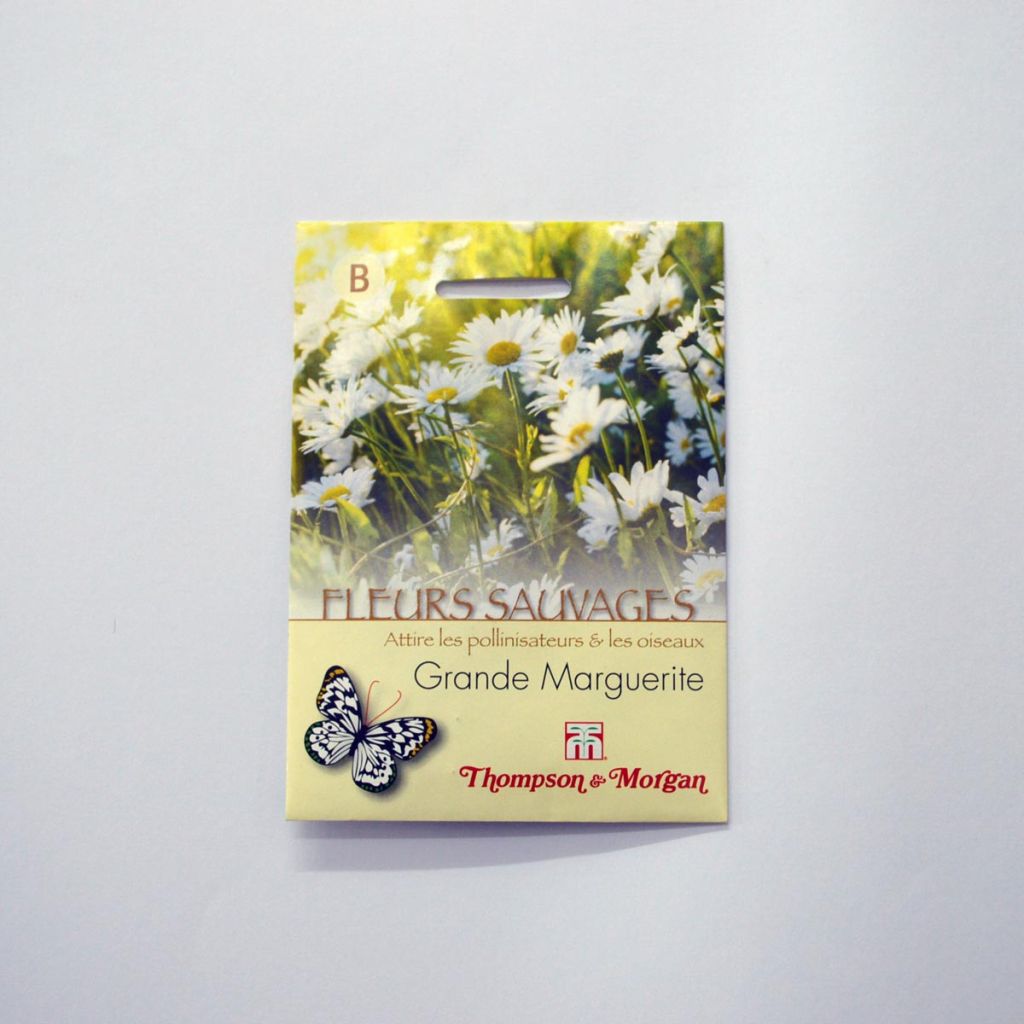
Leucanthemum vulgare - Oxeye Daisy seeds
Leucanthemum vulgare - Oxeye Daisy seeds
Leucanthemum vulgare
Ox-eye Daisy, Dog Daisy, Marguerite, Moon Daisy
Oh, it is difficult to get to see your comment appear and even more difficult to get a response to my request. I ordered seeds of Leucanthemum x superbum and I received seeds of a different variety. The mistake would be understandable, but negligence and disinterest towards a customer is less so? Order number 100714796.
Philippe, 01/07/2020
Back-to-school special offer!
Get €10 off for every €50 you spend! And get up to €40 off on a single order.
How does it work?
1. Shop your favourites
Add your favourite plants to your basket. For every €50 you spend (excluding delivery charges, store credit and the plastic-free option), you’ll receive a €10 voucher.
€50 spent = €10 voucher
€100 spent = €20 voucher
€150 spent = €30 voucher
€200 spent = €40 voucher
2. Place your order
Once your basket reaches one of the spending thresholds, place your order. You can even choose your delivery date!
3. Receive your voucher
As soon as your order has been shipped, you’ll receive an email containing your personal voucher code and its value.
4. Use it on your next order
Your voucher is valid for 90 days from the date you receive it. It can be used once only, on a new order worth at least the value of the voucher, excluding delivery charges.
Please note: Vouchers can be combined with other offers, but cannot be split or refunded.
Home or relay delivery (depending on size and destination)
Important: You may be charged customs duties by your country’s customs authorities upon delivery.
Schedule delivery date,
and select date in basket
This plant carries a 6 months recovery warranty
More information
We guarantee the quality of our plants for a full growing cycle, and will replace at our expense any plant that fails to recover under normal climatic and planting conditions.
Would this plant suit my garden?
Set up your Plantfit profile →
Description
This precious and stately, large white daisy with a pale yellow heart, also known as Leucanthemum x superbum or Chrysanthemum maximum, used to be found in our grandparents' gardens. This large perennial is ideal for the centre of flowerbeds or mixed borders and is easy to grow. It is hardy and disease-resistant and can be planted in most gardens. Its flowers last a long time in bouquets and flowerbeds. It thrives in full sun or partial shade, in relatively moist soil.
Leucanthemum x superbum is a very ancient horticultural plant, belonging to the aster family. It is widely accepted that this perennial is the result of cross-breeding between Leucanthemum maximum, native to the Pyrenees, and Leucanthemum lacustre, native to Portugal. This plant forms a clump of about 80 cm (32in) in all directions, spreading with moderate growth. The lush foliage is semi-evergreen. The flowers bloom from July to October, well above the shiny, dark green, and toothed leaves, in the form of large solitary heads 8 cm (3in) in diameter. The simple crown of white ligulate flowers surrounds a pale yellow heart. The plant reaches full maturity in five years.
Extravagant colours are not found among daisies, the emphasis is more on the detail and structure of the flowers, truly original in the garden. This large daisy is perfect for making bouquets and will be ideal in a flowerbed or meadow in a slightly wild corner. Pair it with cosmos, peonies, asters, blue lupins, bell flowers, or snapdragons, for example, to create a timeless, nostalgic scene.

Flowering
Foliage
Plant habit
Botanical data
Leucanthemum
vulgare
Asteraceae
Ox-eye Daisy, Dog Daisy, Marguerite, Moon Daisy
Cultivar or hybrid
Planting and care
Sowing:
Sow from late winter to late spring (February to May) or from late summer to autumn (August to October)
Sow indoors in pots or trays containing seed compost, at a temperature of 13 to 16°C. Barely cover the seeds with vermiculite or sifted compost. The seed needs light to germinate. The compost should be kept moist but not waterlogged. Germination should occur within 21 to 28 days.
If there is no germination, or if germination is poor, move the seedlings to a cold area, at 4°C (in the refrigerator) for two to four weeks, then return them to full light and higher temperature. This will stimulate germination, the seeds require vernalization to break dormancy. Germination will occur after this period of "warm-cold-warm" alternation.
Transplant into 7.5 cm (3in) pots when the seedlings have developed 2 leaves and are manageable. Gradually acclimatise them to outdoor conditions for 10 to 15 days before planting out.
Choose a sunny and well-drained location to optimize plant growth. Ox-eye daisies tolerate some shade but will be less floriferous. Space the plants 70cm (28in) apart.
Cultivation:
Plant Leucanthemum vulgare in deep, loose, moist, or even occasionally dry soil, not too rich, but very well-drained. This plant tolerates limestone well. It thrives in a sunny exposure, or at most semi-shaded. It can withstand temperatures down to -20°C. Regularly remove faded flowers and clean the plant in spring to remove dead foliage. This daisy can be attacked by aphids and snails and may develop leaf spots.
Sowing period
Intended location
Planting & care advice
-

-

-

-

-

-

-

-

-
, onOrder confirmed
Reply from on Promesse de fleurs
Recently viewed products
Haven't found what you were looking for?
Hardiness is the lowest winter temperature a plant can endure without suffering serious damage or even dying. However, hardiness is affected by location (a sheltered area, such as a patio), protection (winter cover) and soil type (hardiness is improved by well-drained soil).

The flowering period indicated on our website applies to countries and regions located in USDA zone 8 (France, the United Kingdom, Ireland, the Netherlands, etc.)
It will vary according to where you live:- In zones 9 to 10 (Italy, Spain, Greece, etc.), flowering will occur about 2 to 4 weeks earlier.
- In zones 6 to 7 (Germany, Poland, Slovenia, and lower mountainous regions), flowering will be delayed by 2 to 3 weeks.
- In zone 5 (Central Europe, Scandinavia), blooming will be delayed by 3 to 5 weeks.
In temperate climates, pruning of spring-flowering shrubs (forsythia, spireas, etc.) should be done just after flowering.
Pruning of summer-flowering shrubs (Indian Lilac, Perovskia, etc.) can be done in winter or spring.
In cold regions as well as with frost-sensitive plants, avoid pruning too early when severe frosts may still occur.
The planting period indicated on our website applies to countries and regions located in USDA zone 8 (France, United Kingdom, Ireland, Netherlands).
It will vary according to where you live:
- In Mediterranean zones (Marseille, Madrid, Milan, etc.), autumn and winter are the best planting periods.
- In continental zones (Strasbourg, Munich, Vienna, etc.), delay planting by 2 to 3 weeks in spring and bring it forward by 2 to 4 weeks in autumn.
- In mountainous regions (the Alps, Pyrenees, Carpathians, etc.), it is best to plant in late spring (May-June) or late summer (August-September).
The harvesting period indicated on our website applies to countries and regions in USDA zone 8 (France, England, Ireland, the Netherlands).
In colder areas (Scandinavia, Poland, Austria...) fruit and vegetable harvests are likely to be delayed by 3-4 weeks.
In warmer areas (Italy, Spain, Greece, etc.), harvesting will probably take place earlier, depending on weather conditions.
The sowing periods indicated on our website apply to countries and regions within USDA Zone 8 (France, UK, Ireland, Netherlands).
In colder areas (Scandinavia, Poland, Austria...), delay any outdoor sowing by 3-4 weeks, or sow under glass.
In warmer climes (Italy, Spain, Greece, etc.), bring outdoor sowing forward by a few weeks.
Shipping country and language
Your country of residence may be:
Your country of residence is:
For a better user experience on our website, you can select:
Your shipping country:
-
 Austria
-
 Belgium
-
 Bosnia & Herzegovina
-
 Bulgaria
-
 Croatia
-
 Cyprus
-
 Czechia
-
 Denmark
-
 Estonia
-
 Finland
-
 France
-
 Germany
-
 Greece
-
 Hungary
-
 Iceland
-
 Ireland
-
 Italy
Italy
-
 Latvia
-
 Liechtenstein
-
 Lithuania
-
 Luxembourg
-
 Malta
Malta
-
 Netherlands
-
 Poland
-
 Portugal
-
 Romania
-
 Serbia
-
 Slovakia
-
 Slovenia
-
 Spain
Spain
-
 Sweden
-
 Switzerland
Language:
-
French
-
 English
-
Spanish
-
Italian
-
German
-
Portuguese
-
Dutch
-
Finnish
My Account
Hello
My wish lists
My cart
Log in / Register
Existing customer?
This form is protected by reCAPTCHA - the Google Privacy Policy and Terms of Service apply.
New customer?
Create an account to track your orders, access our customer service and, if you wish, make the most of our upcoming offers.