WE’RE OPEN ALL SUMMER: Discover our current offers!
Share your pictures?
New arrival

Clematis Guernsey Flute™

Clematis x patens ‘EviGsy153’ EU 20240006 Guernsey Flute™
Large-flowered clematis

Be the first to leave a review

Why not try an alternative variety in stock?

5
From 18,90 € 2L/3L pot
12
From 20,50 € 2L/3L pot
Dispatched on 6 Aug
From 14,90 € 1.5L/2L pot
9
From 24,50 € 2L/3L pot
18
From 18,50 € 2L/3L pot
6
From 20,50 € 2L/3L pot
5
From 24,50 € 2L/3L pot
Dispatched on 6 Aug
From 17,50 € 2L/3L pot
Dispatched on 6 Aug
From 20,50 € 2L/3L pot
13
From 20,50 € 2L/3L pot

This plant carries a 12 months recovery warranty

More information

Chelsea Flower Show
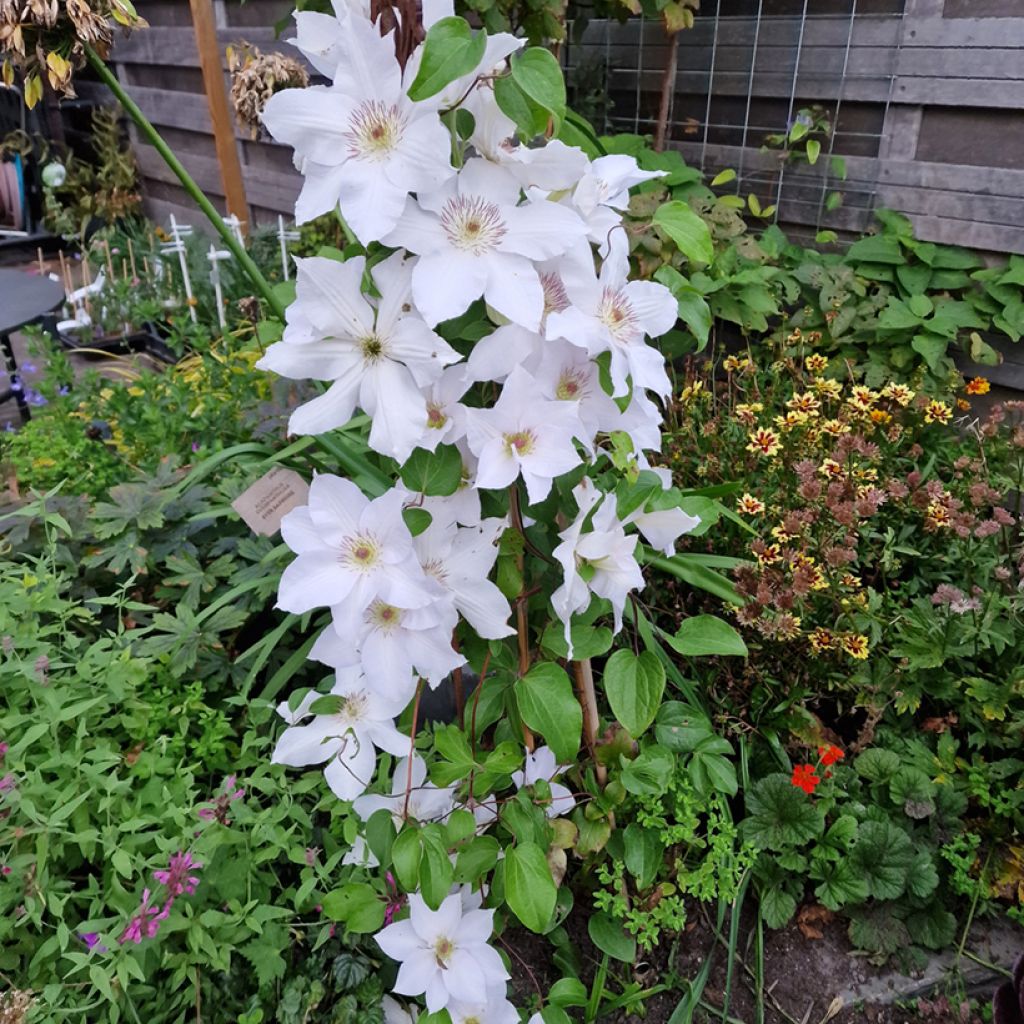
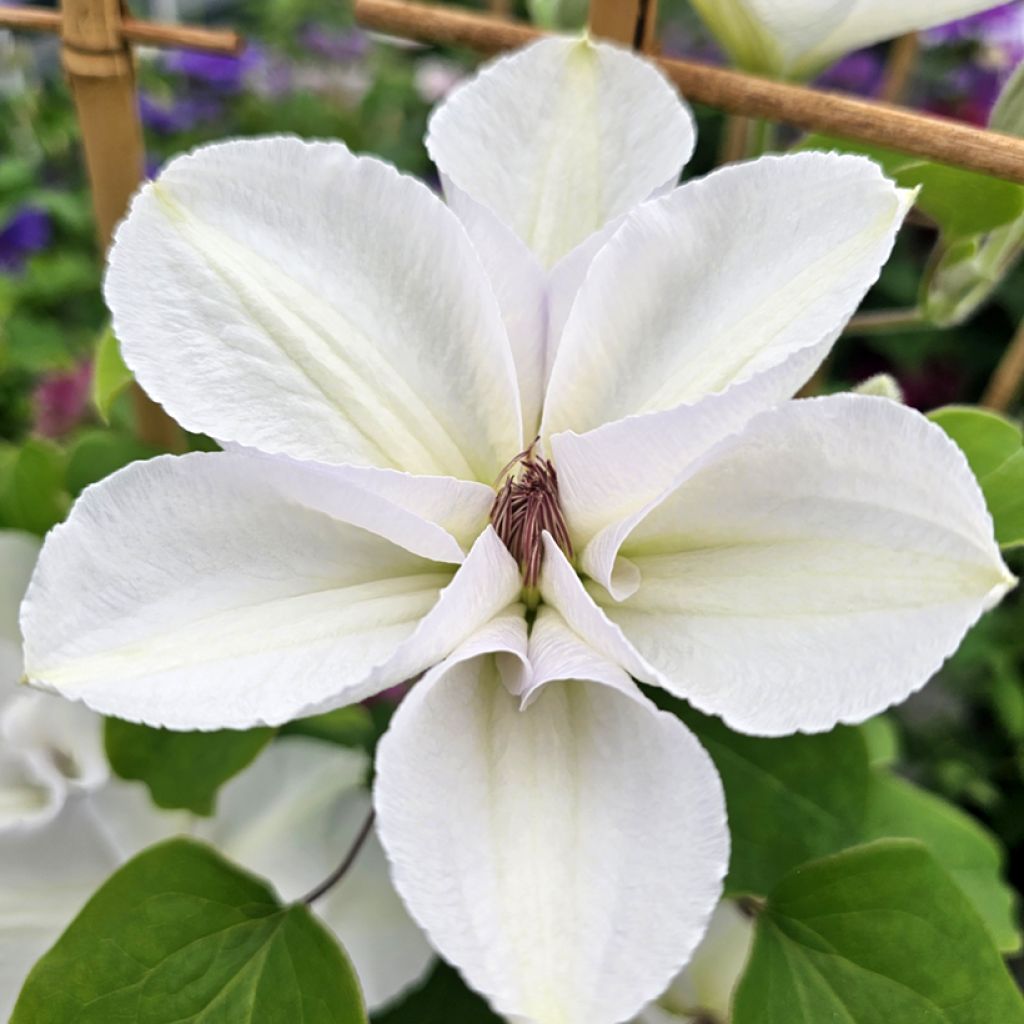
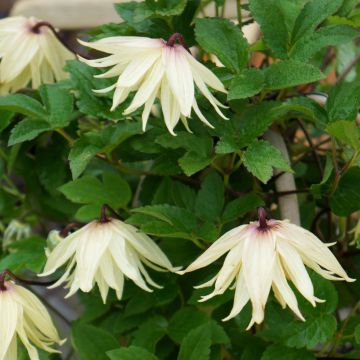
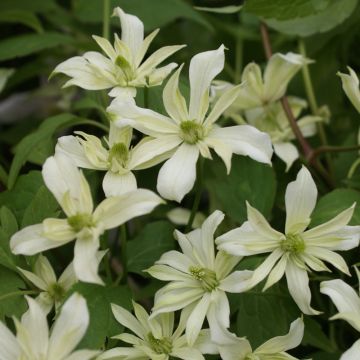
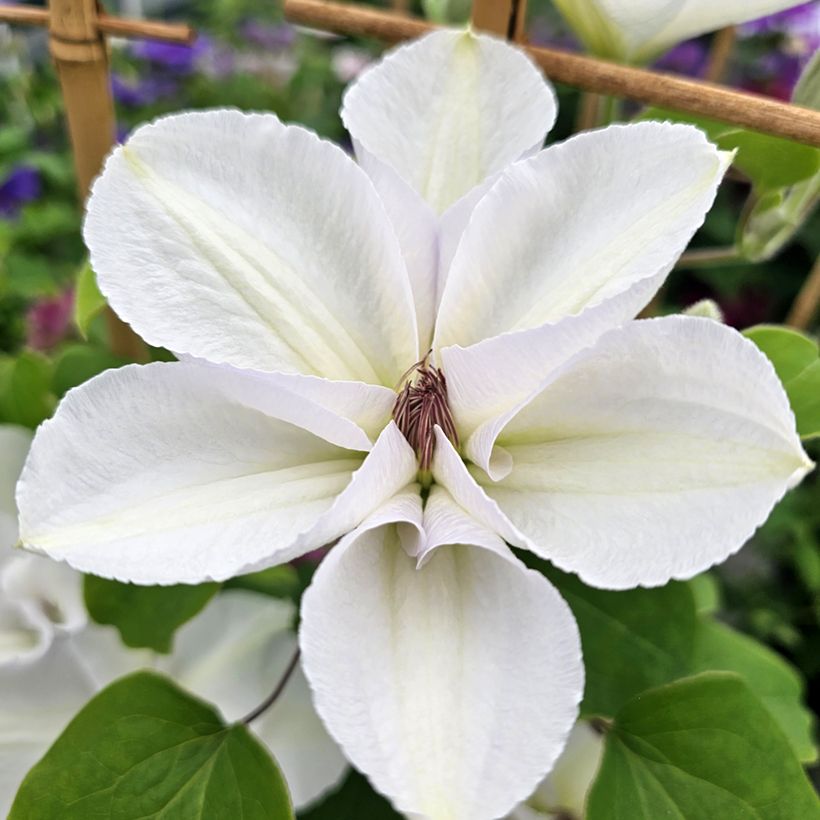
A compact clematis with spectacular flowering. Its flower buds, shaped like champagne flutes, open into large white flowers with thick, pointed petals, measuring 12 to 14 cm in diameter. It flowers abundantly from May to July, then again in September. Valued for its compact habit (90cm to 1.20m in height), it is easy to grow in pots. Plant it in fertile, moist but well-drained soil, in sun or partial shade.
Flower size
13 cm
Height at maturity
1 m
Spread at maturity
50 cm
Exposure
Sun, Partial shade
Hardiness
Hardy down to -23.5°C
Soil moisture
Moist soil
plantfit-full

Would this plant suit my garden?

Set up your Plantfit profile →

Best planting time March, October
Recommended planting time March to May, September to October
J
F
M
A
M
J
J
A
S
O
N
D
Flowering time May to July, September
J
F
M
A
M
J
J
A
S
O
N
D

Description

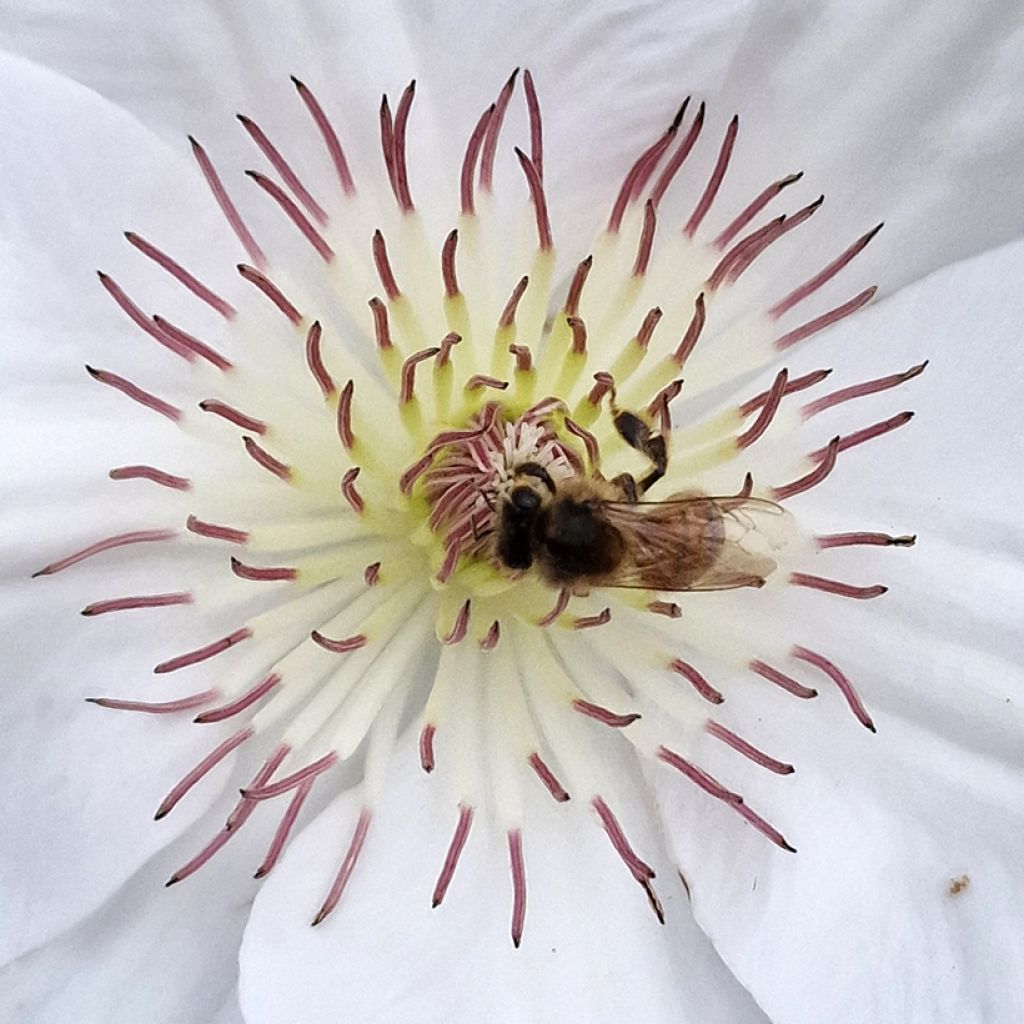
Clematis Guernsey Flute™ (EviGsy153) is a compact and refined clematis, ideal for brightening up small gardens, balconies or patios. From May onwards, it displays large ivory flowers with thick, pointed petals, beautifully fluted when opening, highlighted by red stamens. This variety reliably repeats flowering in September. Its small size makes it suitable for growing in pots or in the ground. 

Clematis belong to the Ranunculaceae family. The variety Guernsey Flute™ was developed in England by Raymond Evison. It belongs to the series "Guernsey Clematis", and shares the noble genes of Clematis patens, the famous Japanese species with large, elegant flowers. This variety, like its close relative 'Guernsey Cream', is recognised for its ornamental qualities and garden performance. It was noted at the prestigious RHS Chelsea Flower Show 2024, where it was among the plants shortlisted for the title of “Plant of the Year”.

It is a perennial and hardy plant, semi-woody and climbing, which reaches between 90 cm and 1.20 m in height. Guernsey Flute™ produces tubular floral buds from late spring, reminiscent of a champagne flute, which open into large star-shaped flowers, 12 to 14 cm in diameter. Each flower has 8 sepals (apparent petals), well-developed, broad at the base, pointed at the tips, and slightly crinkled on the edges. The sepals are thick and fleshy, with an almost satiny texture. The centre is adorned with a cluster of reddish-purple stamens with cream anthers. The main flowering occurs in May-June on the previous year's stems, then a reliable repeat flowering occurs in September on new growth.
Although deciduous, the foliage of Guernsey Flute™ is lush and healthy, composed of opposite simple or slightly divided, medium to dark green leaves which naturally disappear in winter. The plant clings to its support by means of its petioles transformed into flexible tendrils. 

Clematis Guernsey Flute™ fits into all gardens, including the smallest. On an arch, trellis, tipi or small column, it envelops its support with a gently original flowering. Its moderate growth is interesting for edging a terrace or framing an entrance. Let it climb through small leafy shrubs such as Physocarpus ‘Little Devil’, Berberis ‘Orange Rocket’ or Pittosporum tenuifolium ‘Golf Ball’, for example. In a pot, it becomes a focal point, easy to move and combine with other seasonal plants.


Report an error about the product description

Clematis: planting, pruning and care
Family sheet
by Alexandra 21 min.

Clematis: planting, pruning and care
Read article

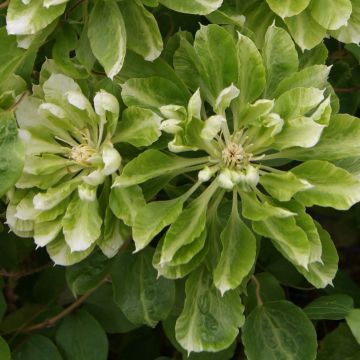
Clematis Guernsey Flute™ in pictures

Clematis Guernsey Flute™ (Flowering) Flowering

Plant habit

Height at maturity 1 m
Spread at maturity 50 cm
Growth rate normal
Methods of attachment Twining stems

Flowering

Flower colour white
Flowering time May to July, September
Inflorescence Solitary
Flower size 13 cm
Good for cut flowers Cut flower blooms
Repeat-flowering Blooms several times a year
Fruit colour grey

Foliage

Foliage persistence Deciduous
Foliage colour dark green

Botanical data

Genus

Clematis

Species

x patens

Cultivar

‘EviGsy153’ EU 20240006 Guernsey Flute™

Family

Ranunculaceae

Other common names

Large-flowered clematis

Botanical synonyms

Clematis ‘EviGsy153’, Clematis Guernsey Flute™

Origin

Cultivar or hybrid

Product reference24799

Planting and care

Plant Clematis Guernsey Flute where its roots are in the shade. Keep the soil moist with a mulch of garden compost or well-rotted manure applied in February. Avoid contact with the stem. This will limit the risk of wilting and encourage the growth of strong new shoots from the base. You can also shade the base with a groundcover plant or a hardy geranium. Keep the top of the Clematis in the sun. Plant covering the root ball with 3cm of soil, in soil worked to a depth of 20cm, lightened with good potting compost. The enemy of clematis is excess water, which is why you should water regularly but sparingly, and not directly on the base.

Planting period

Best planting time March, October
Recommended planting time March to May, September to October

Intended location

Suitable for Meadow, Woodland edge
Type of use Small gardens, Container, Climbing
Type of support Tree, Trellis
Hardiness Hardy down to -23.5°C (USDA zone 6a) Show map
Ease of cultivation Amateur
Planting density 1 per m2
Exposure Sun, Partial shade
Soil pH Any
Soil moisture Moist soil humus-bearing, rich and light

Care

Pruning instructions Prune the stems in winter or early spring to 15cm above the soil.
Pruning Pruning recommended once a year
Pruning time February to March, July
Soil moisture Moist soil
Disease resistance Good
Overwinter Can be left in the ground

This item has not been reviewed yet - be the first to leave a review about it.

Leave a review →

Recently viewed products

Haven't found what you were looking for?