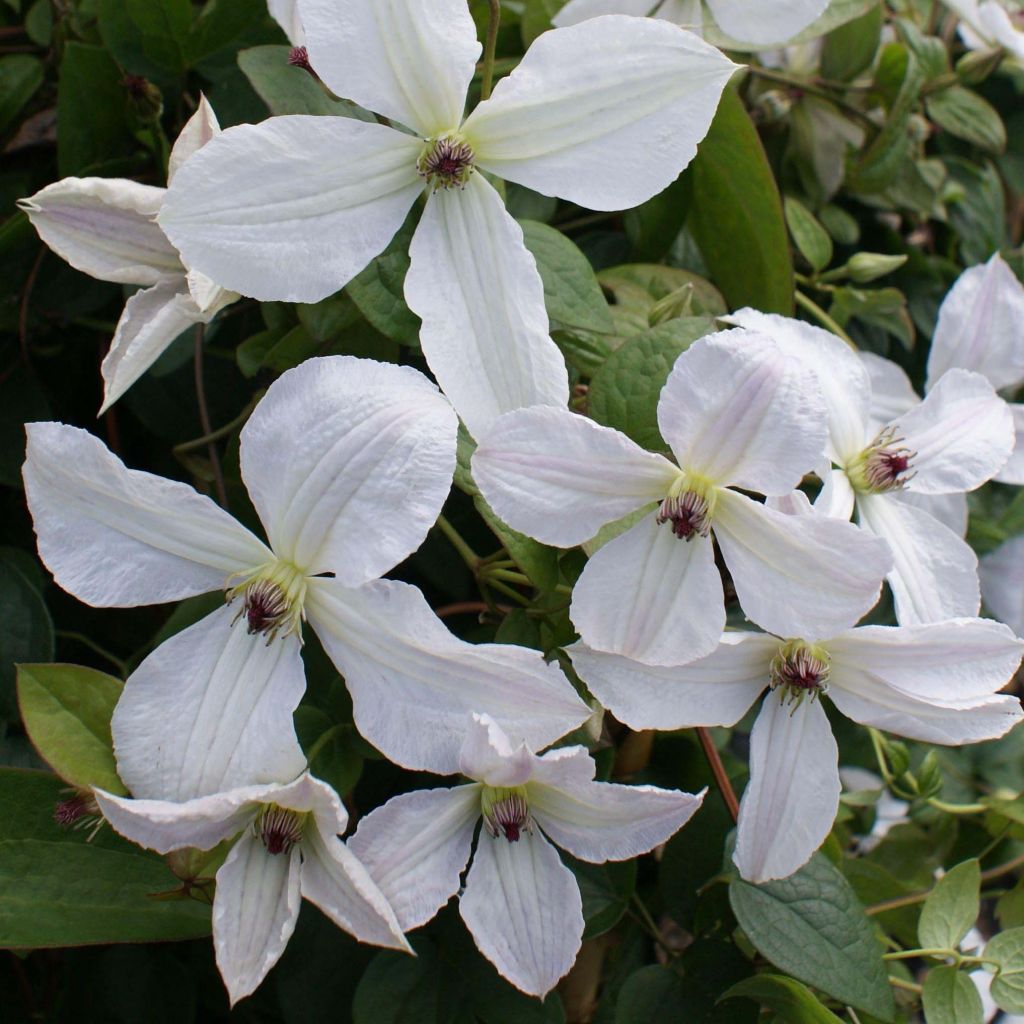
Clematis jackmanii Forever Friends
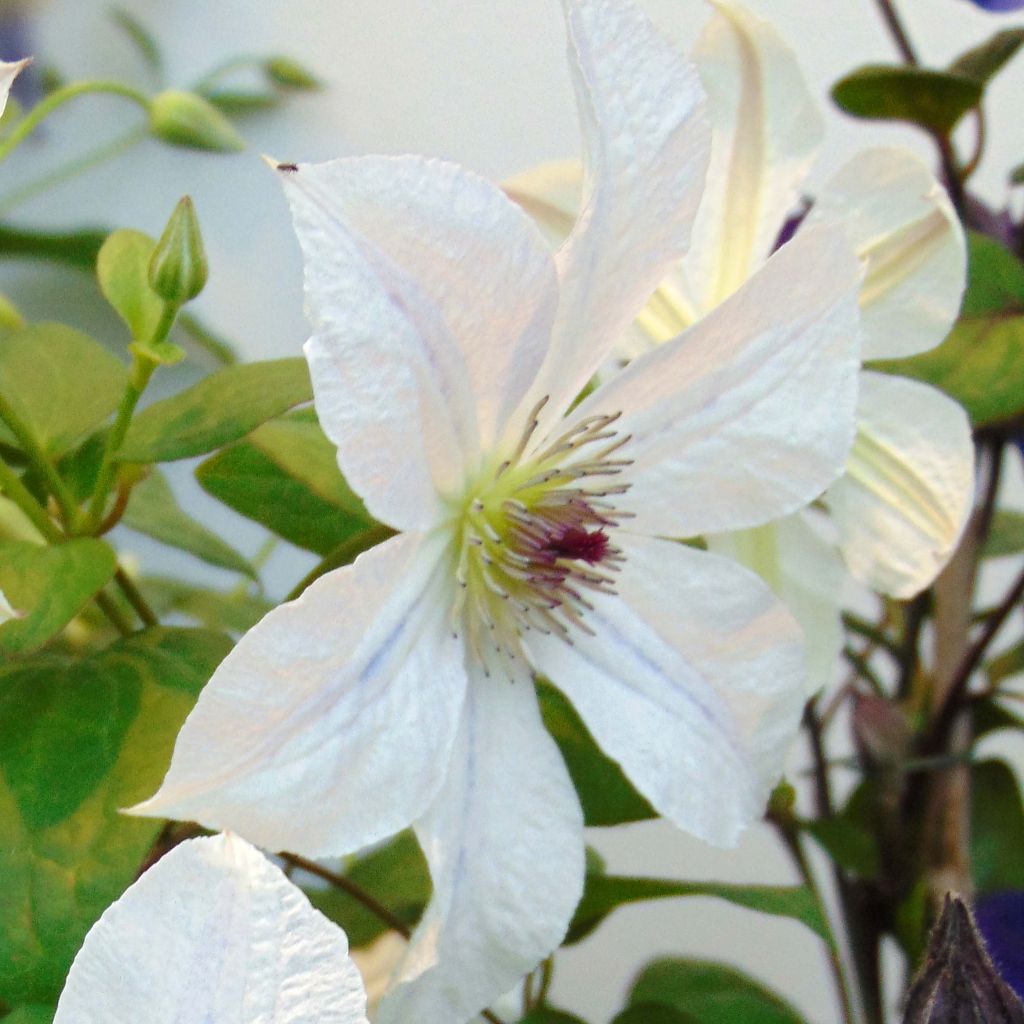
Clematis jackmanii Forever Friends
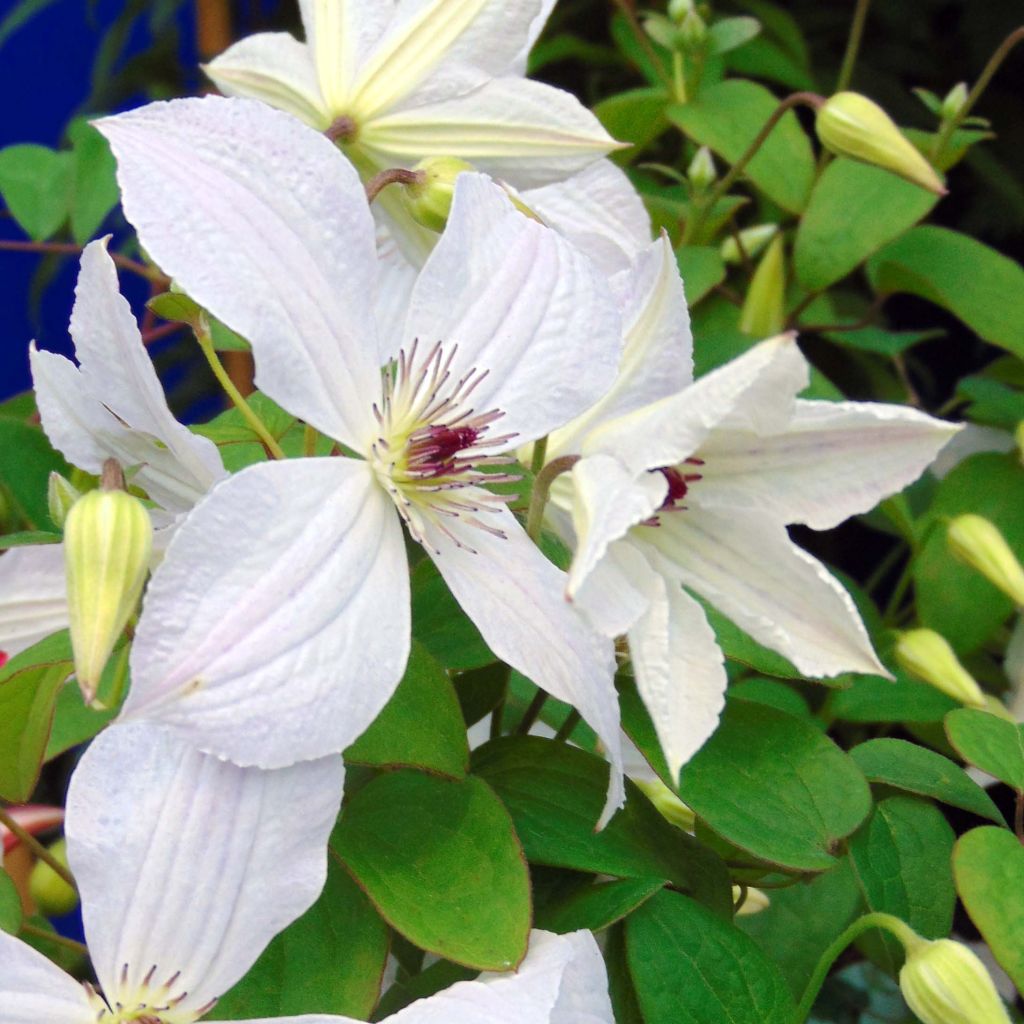
Clematis jackmanii Forever Friends
View more pictures
Hide images

Caroline P.
Clematis jackmanii Forever Friends
Caroline P. • 91 FR
Clematis jackmanii Forever Friends
Clematis GLORIOUS® WHITE 'Zofofri'
Very little growth since planting, with only one or two flowers. Very disappointed, but hope it will improve next year!
Brenda, 27/09/2024
Back-to-school special offer!
Get €10 off for every €50 you spend! And get up to €40 off on a single order.
How does it work?
1. Shop your favourites
Add your favourite plants to your basket. For every €50 you spend (excluding delivery charges, store credit and the plastic-free option), you’ll receive a €10 voucher.
€50 spent = €10 voucher
€100 spent = €20 voucher
€150 spent = €30 voucher
€200 spent = €40 voucher
2. Place your order
Once your basket reaches one of the spending thresholds, place your order. You can even choose your delivery date!
3. Receive your voucher
As soon as your order has been shipped, you’ll receive an email containing your personal voucher code and its value.
4. Use it on your next order
Your voucher is valid for 90 days from the date you receive it. It can be used once only, on a new order worth at least the value of the voucher, excluding delivery charges.
Please note: Vouchers can be combined with other offers, but cannot be split or refunded.
Home or relay delivery (depending on size and destination)
Important: You may be charged customs duties by your country’s customs authorities upon delivery.
Schedule delivery date
and select date in basket
This plant carries a 12 months recovery warranty
More information
We guarantee the quality of our plants for a full growing cycle, and will replace at our expense any plant that fails to recover under normal climatic and planting conditions.
Would this plant suit my garden?
Set up your Plantfit profile →
Description
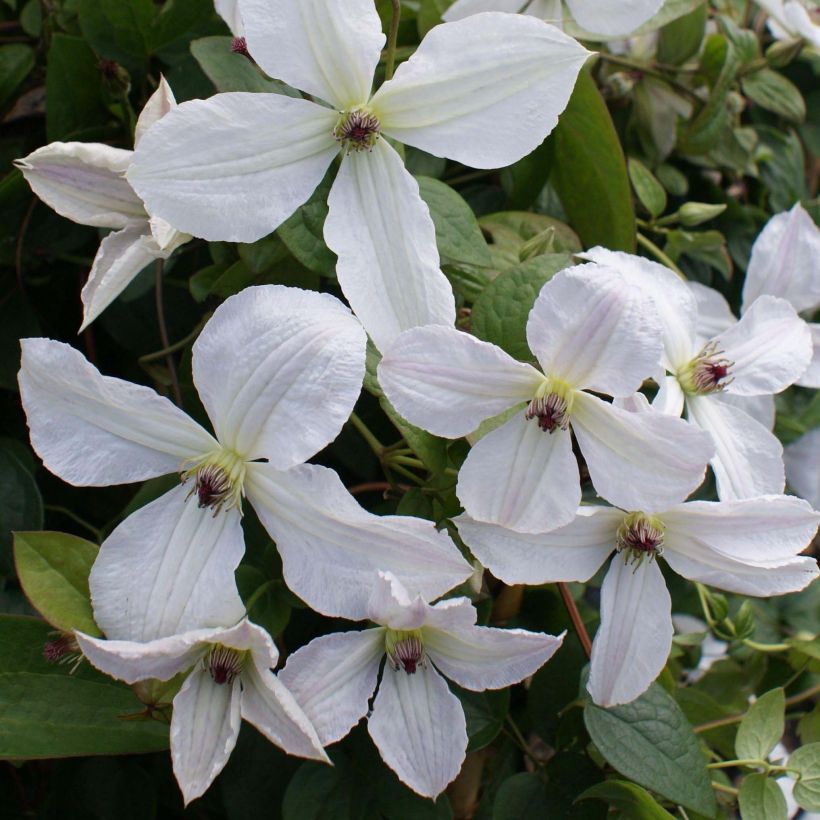
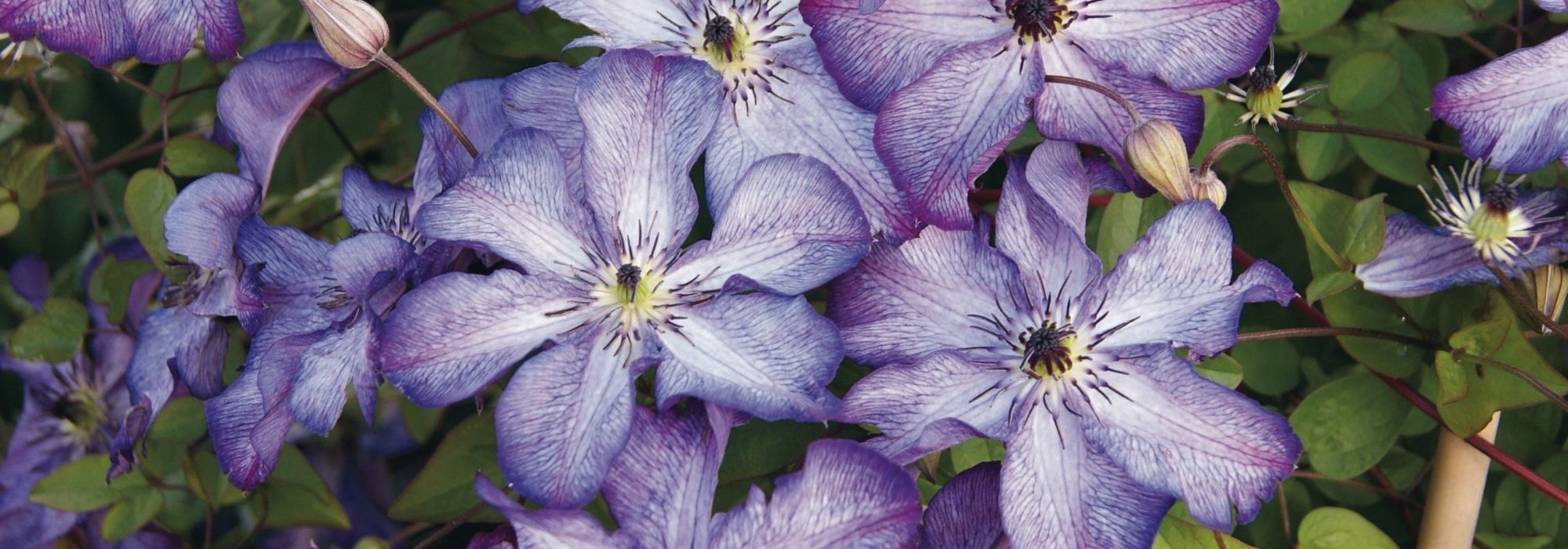
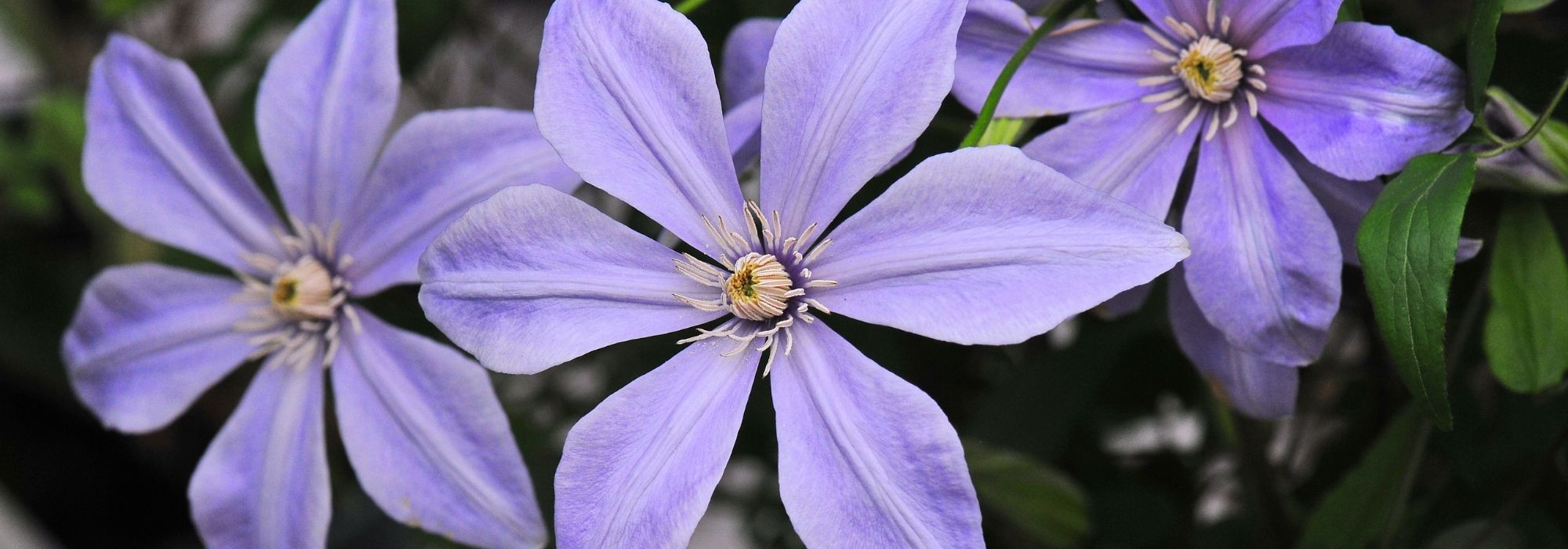
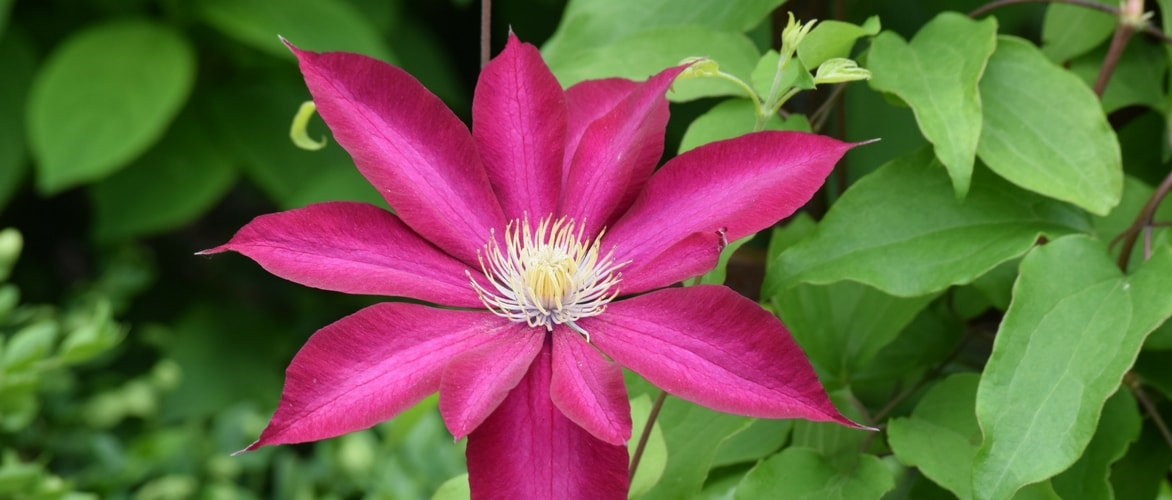
Clematis Forever Friends ('Zofofri') is a recent variety, selected for the abundance and duration of its flowering, the delicacy of its white flowers with pink and mauve reflections, and its robustness. Fast-growing and of medium size, it is covered with pale moon-coloured flowers beautifully punctuated at the heart by a feathery red-violet pistil. This variety, awarded at the Plantarium in 2009, will satisfy both busy gardeners and the most demanding collectors. Its maintenance consists of an annual pruning at the end of winter, 35cm (14in) from the ground.
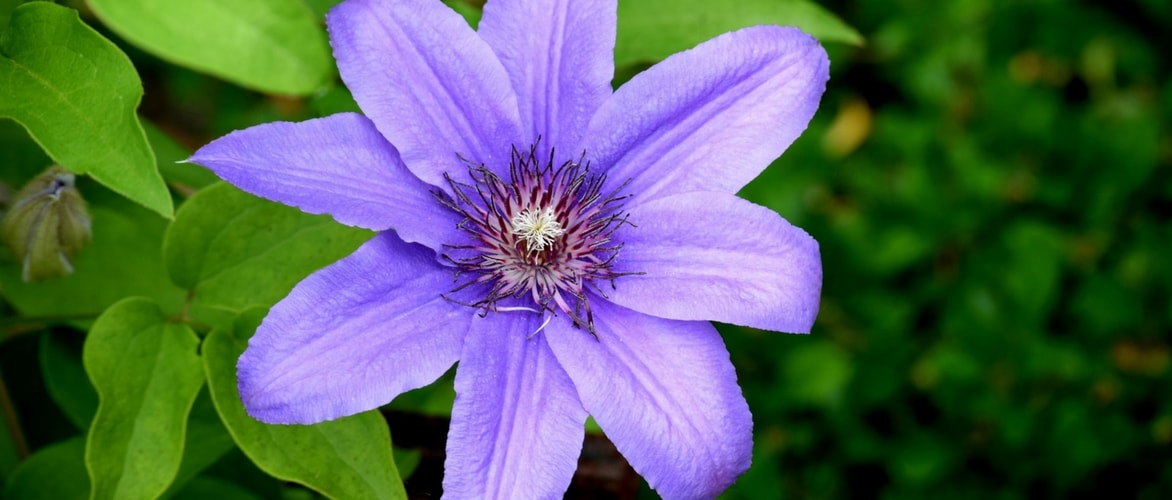
Clematis Forever Friends, obtained in the Netherlands, is one of the many descendants of C. 'Jackmanii', also called Jackman's Clematis. This plant belongs to the Ranunculaceae family and is a hybrid resulting from a cross between C. lanuginosa and C. viticella. It belongs to the group of large-flowered clematis. Clematis attach themselves to their support through petioles transformed into tendrils. This variety is a climbing plant with a woody stump. It is bushy, dense, and compact, with deciduous foliage. Fast-growing and vigorous, it can climb up to 3m (10ft) in height, with a spread of about 1m (3ft). From June to September, it bears an abundance of flowers measuring 6 to 8cm (2 to 3in) in diameter, with 4 to 5 ovate tepals with pointed tips, and a wavy texture. Their colour is a milky white, slightly tinted with pink and mauve, contrasting beautifully with a centre adorned with a violet pistil surrounded by cream-yellow stamens.
Large-flowered clematis, the ultimate climbing plants, are easy to grow and can be displayed in many ways. Essential in English gardens, they undoubtedly offer a romantic, natural, and wild touch to the garden. They will be the perfect companions for climbing roses or non-remontant climbers, thanks to their long uninterrupted flowering until autumn. They will certainly be the ideal plants to adorn and enhance walls, trellises, pergolas, arches, and fences. They can also be grown in trees, shrubs, and hedges, bringing colour when other flowers have faded. Clematis are excellent candidates for container gardening, to liven up a balcony or patio. It is wise to avoid excessively hot locations, both in pots and in the ground. Forever Friends will be beautiful when associated with an Albertine or Alchymist rose, Japanese maple, bamboo, ceanothus, hibiscus, wisteria, or a lilac with small leaves. Medium-height perennials will shade its base, such as perennial geranium, daylily, hellebore, heuchera, or columbine.
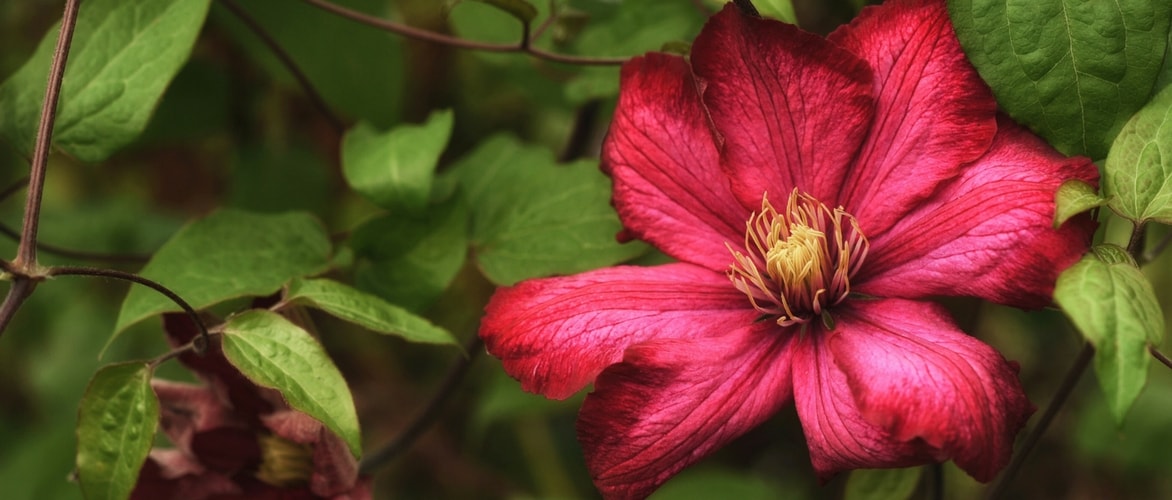
Clematis jackmanii Forever Friends in pictures
Plant habit
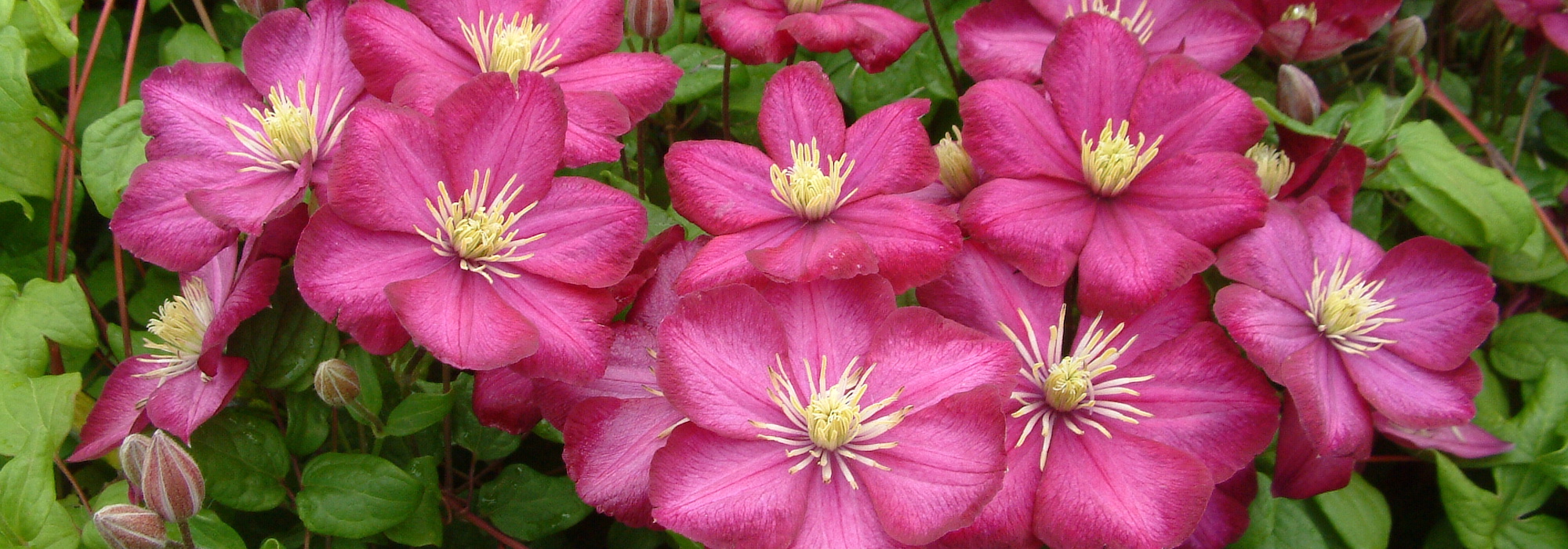
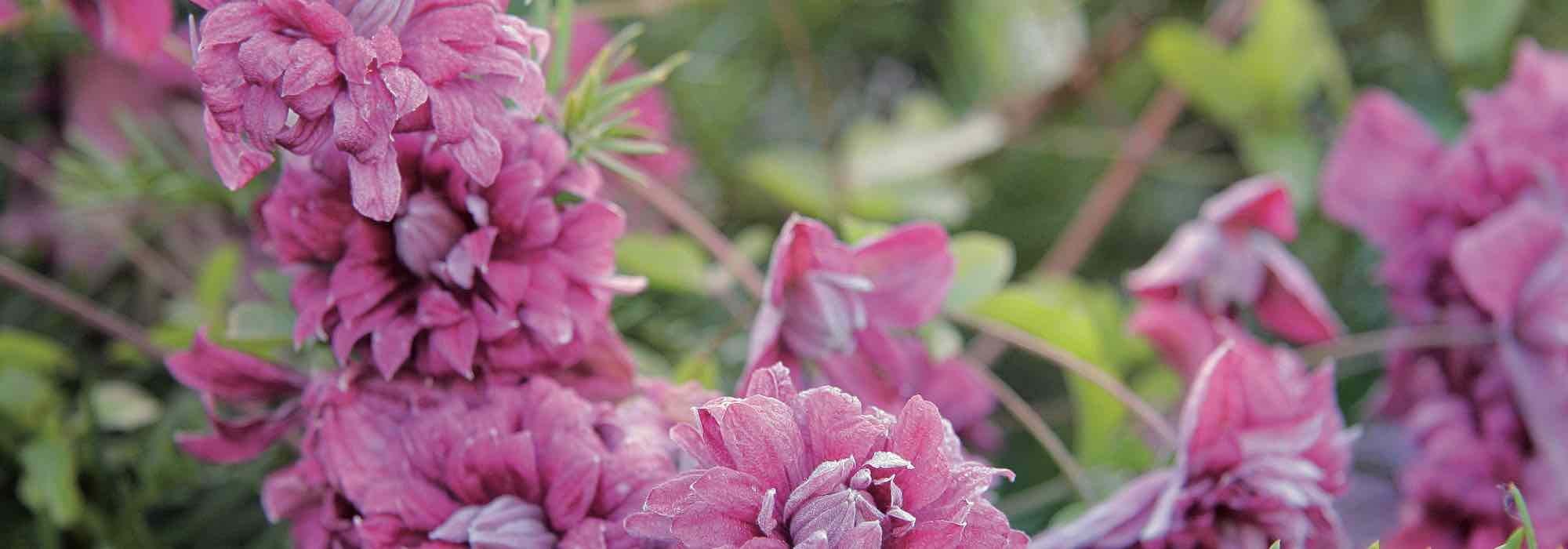
Flowering
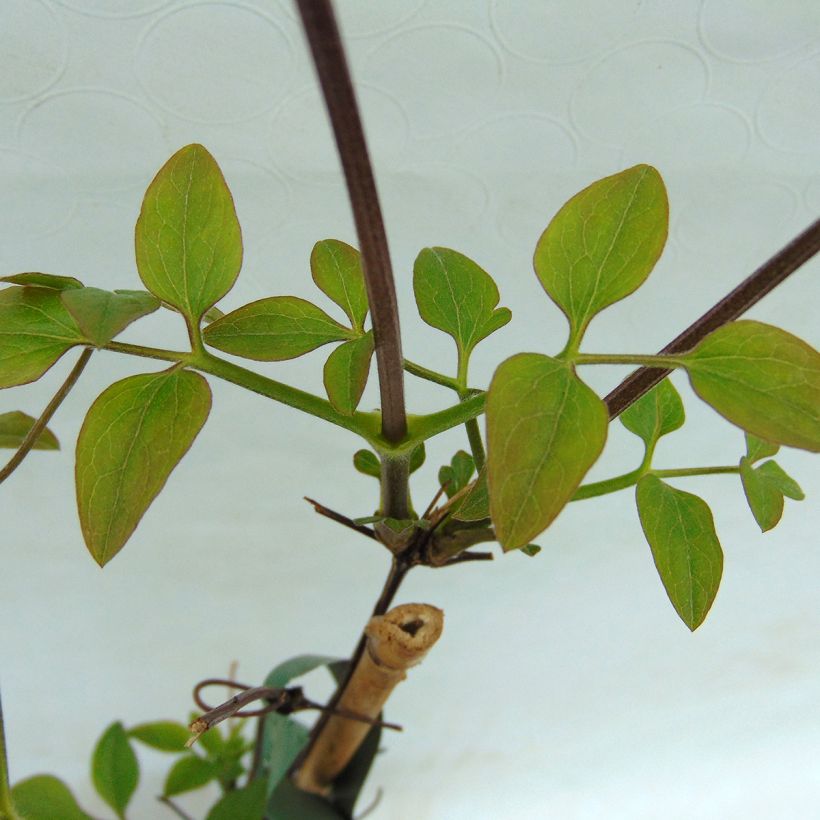
Foliage
Botanical data
Clematis
GLORIOUS® WHITE 'Zofofri'
Ranunculaceae
Clematis ‘Zofofri’, Clematis GLORIOUS® WHITE, Clematis FOREVER FRIENDS
Cultivar or hybrid
Planting and care
Clematis Forever Friends is a perfectly hardy and robust variety. It thrives in a sunny to partially shaded exposure, as well as in fertile, humus-rich, moist, and well-drained soil. Clematis like to climb towards the sun, with their base in the shade. It is essential that the base of its stem and its roots are shaded. For this, an inclined flat tile will provide the necessary shade. Similarly, a bushy perennial plant or a low-growing bush in front of the clematis will also provide protection against the sun, while attractively concealing the clematis stump. When planting, take care when handling the root ball as clematis roots are quite fragile. Work the soil deeply and incorporate compost and a handful of bone meal or dried blood, a base fertiliser that will benefit the clematis' establishment. In the first few weeks after planting, regular but moderate watering will be necessary to keep the soil consistently moist. The main enemy of the clematis is excessive moisture, so the soil should never be waterlogged. Overly wet soil can cause the wilting of its stems and leaves, often resulting in death. The plant should be placed in the hole at an angle, with the stem oriented towards the support it will climb on. Cover with soil and create a small mound to properly cover the base and stem, reducing the risk of wilting and promoting the growth of vigorous shoots from the stump. After planting, prune the stems to 30cm (12in) or 40cm (16in) above a healthy pair of buds. Train the stems until the plant can grip onto the support with its voluble petioles. Mulch the clematis in February with garden compost or well-rotted manure, avoiding direct contact with the stems
Planting period
Intended location
Care
Planting & care advice
-
-
-
-
-
-
-
-
-
, onOrder confirmed
Reply from on Promesse de fleurs
Recently viewed products
Haven't found what you were looking for?
Hardiness is the lowest winter temperature a plant can endure without suffering serious damage or even dying. However, hardiness is affected by location (a sheltered area, such as a patio), protection (winter cover) and soil type (hardiness is improved by well-drained soil).

The flowering period indicated on our website applies to countries and regions located in USDA zone 8 (France, the United Kingdom, Ireland, the Netherlands, etc.)
It will vary according to where you live:- In zones 9 to 10 (Italy, Spain, Greece, etc.), flowering will occur about 2 to 4 weeks earlier.
- In zones 6 to 7 (Germany, Poland, Slovenia, and lower mountainous regions), flowering will be delayed by 2 to 3 weeks.
- In zone 5 (Central Europe, Scandinavia), blooming will be delayed by 3 to 5 weeks.
In temperate climates, pruning of spring-flowering shrubs (forsythia, spireas, etc.) should be done just after flowering.
Pruning of summer-flowering shrubs (Indian Lilac, Perovskia, etc.) can be done in winter or spring.
In cold regions as well as with frost-sensitive plants, avoid pruning too early when severe frosts may still occur.
The planting period indicated on our website applies to countries and regions located in USDA zone 8 (France, United Kingdom, Ireland, Netherlands).
It will vary according to where you live:
- In Mediterranean zones (Marseille, Madrid, Milan, etc.), autumn and winter are the best planting periods.
- In continental zones (Strasbourg, Munich, Vienna, etc.), delay planting by 2 to 3 weeks in spring and bring it forward by 2 to 4 weeks in autumn.
- In mountainous regions (the Alps, Pyrenees, Carpathians, etc.), it is best to plant in late spring (May-June) or late summer (August-September).
The harvesting period indicated on our website applies to countries and regions in USDA zone 8 (France, England, Ireland, the Netherlands).
In colder areas (Scandinavia, Poland, Austria...) fruit and vegetable harvests are likely to be delayed by 3-4 weeks.
In warmer areas (Italy, Spain, Greece, etc.), harvesting will probably take place earlier, depending on weather conditions.
The sowing periods indicated on our website apply to countries and regions within USDA Zone 8 (France, UK, Ireland, Netherlands).
In colder areas (Scandinavia, Poland, Austria...), delay any outdoor sowing by 3-4 weeks, or sow under glass.
In warmer climes (Italy, Spain, Greece, etc.), bring outdoor sowing forward by a few weeks.
Shipping country and language
Your country of residence may be:
Your country of residence is:
For a better user experience on our website, you can select:
Your shipping country:
-
 Austria
-
 Belgium
-
 Bosnia & Herzegovina
-
 Bulgaria
-
 Croatia
-
 Cyprus
-
 Czechia
-
 Denmark
-
 Estonia
-
 Finland
-
 France
-
 Germany
-
 Greece
-
 Hungary
-
 Iceland
-
 Ireland
-
 Italy
Italy
-
 Latvia
-
 Liechtenstein
-
 Lithuania
-
 Luxembourg
-
 Malta
Malta
-
 Netherlands
-
 Poland
-
 Portugal
-
 Romania
-
 Serbia
-
 Slovakia
-
 Slovenia
-
 Spain
Spain
-
 Sweden
-
 Switzerland
Language:
-
French
-
 English
-
Spanish
-
Italian
-
German
-
Portuguese
-
Dutch
-
Finnish
My Account
Hello
My wish lists
My cart
Log in / Register
Existing customer?
This form is protected by reCAPTCHA - the Google Privacy Policy and Terms of Service apply.
New customer?
Create an account to track your orders, access our customer service and, if you wish, make the most of our upcoming offers.