Indoor plants: 8 common mistakes to avoid in summer
... to avoid stressing them
Contents
In summer, houseplants sometimes take a back seat and can, during spells of high temperatures, suffer more than usual. People tend to water them too much before going on holiday, sometimes even too often, or give them too much fertiliser to boost their growth.
Let’s run through a few common mistakes people make to help your houseplants enjoy a good summer!
Overwatering them or watering them at the wrong time
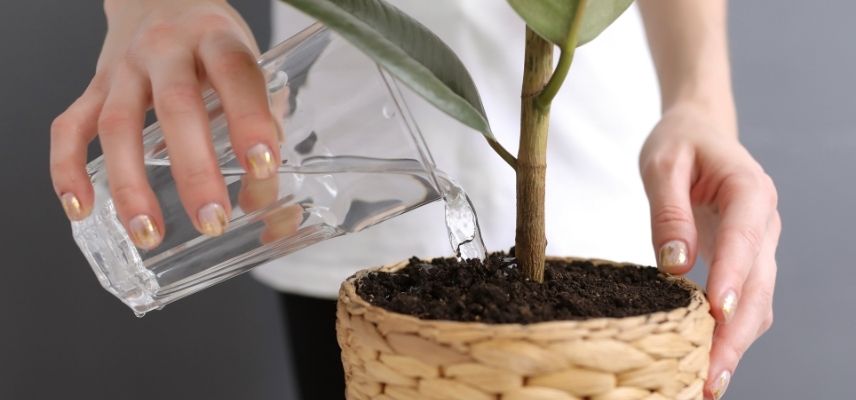
As in the garden, watering should be carried out at the right time, but above all it must be properly dosed for indoor plants.
Watering in the heat of the day is not ideal, indoors no more than outdoors. Preferably water early morning or in the evening, always checking substrate moisture: push a finger into the pot — if it is dry below 3 cm, the plant needs water.
Regarding frequency, it does increase in summer for most plants, but beware of excess water that causes roots to rot. Adapt according to plant type (tropical plants with large leaves = greater need; small-leaved or succulent plants = reduced need). For forgetful people like me, consider noting when you water!
Remember that excess water is always more fatal to a plant than the opposite.
→ Read also: How to water indoor houseplants?
Read also
Misting indoor plantsTake them outside into full sun.
It’s often recommended, when possible, to take houseplants outside in the warmer months. But the best is the enemy of the good! Placing them baking in the sun on a balcony or terrace is really not suitable for an indoor plant, accustomed to filtered or indirect light year-round in flats or houses.
It should be done very gradually, and never place them in full sun, nor in the scorching midday sun, even for plants with very high light requirements, such as all succulent plants.
Outside, favour partial shade, or place your pots behind another plant that will provide shade (a larger plant, a climbing plant).
→ Read all our tips in : Taking houseplants outdoors in the warmer months.
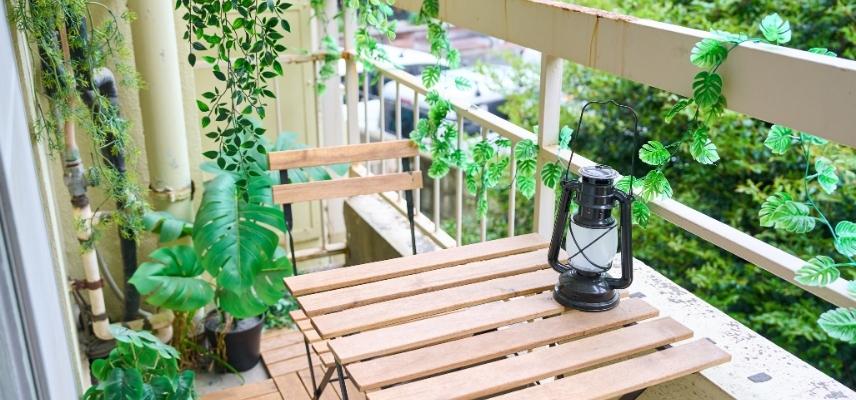
On a balcony, yes, but not in full sun!
Underestimating overly dry indoor air
Apartments have dry air, much drier than outdoor natural humidity. In summer, this effect is even more pronounced when running air conditioning. It literally dries out ambient air, which is bad for any houseplant. Heatwaves also contribute to drier indoor air.
Check indoor humidity percentage with a hygrometer. It should be around 50-55% in summer. Below that, air is too dry for most indoor houseplants.
Do not leave plants exposed to air conditioning for too long: keep them away from vents, of any kind, and from direct airflow by at least 2 metres, as this can stress and dehydrate them (leaves yellowing, edges browning, slowed growth). Compensate by placing them on a tray of water and clay pebbles under pots (water must not touch roots). Finally, mist sensitive plants (broad-leaved tropical types such as Monstera or indoor ferns) more frequently and regularly in summer, especially during heatwaves.
Another tip is to group plants together to create a humid microclimate, especially for tropical plants.
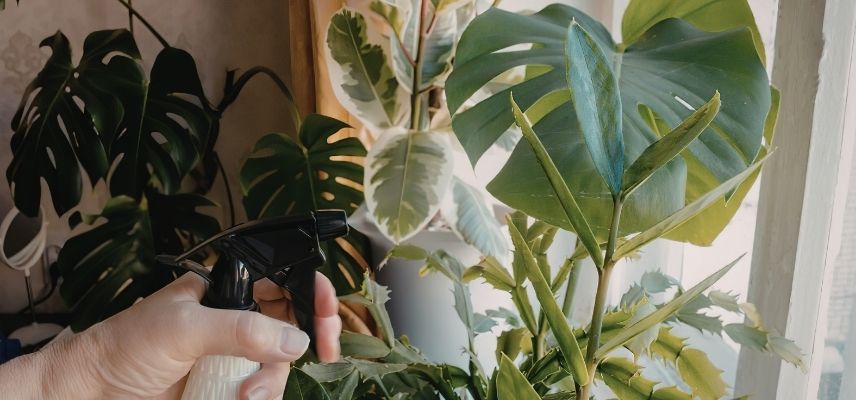
Misting is sometimes necessary in overly dry interiors.
Overdosing on fertiliser in summer
This is a fairly common problem when caring for houseplants all year round. Many rightly think that summer is a period of intense growth and start fertilising indiscriminately. Although many plants benefit from fertiliser at this time of year, avoid overdosing and apply it at the right moment. A fertiliser applied to dry growing medium… disaster follows! In trying to help, roots can be burnt. Since plants are already stressed by heat, fertilisation should only be applied when the plant is not under stress.
In summer, therefore never fertilise on a dry growing medium (this applies to all seasons) or in the height of the heat. Wait until you have watered the plant thoroughly, or after returning from an extended holiday, until it has “recovered” a little.
In case of very hot weather, wait until the heatwave is over, and use half the usual dose. You can resume the normal feeding frequency once weather conditions return to normal.
N.B.: These tips also apply to plants grown in pots outdoors!
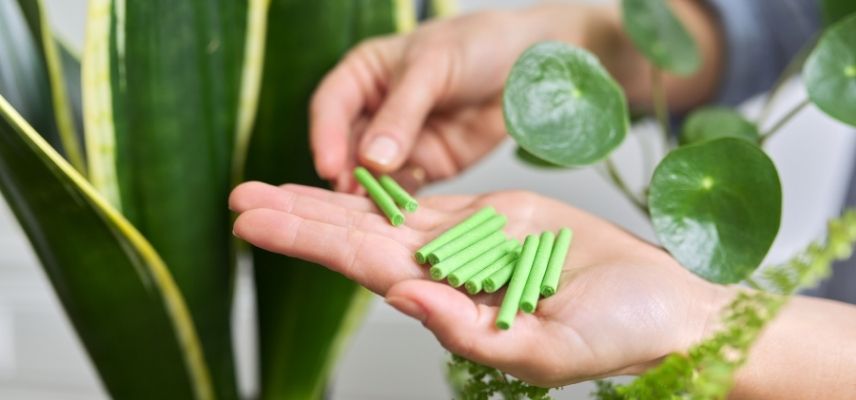
Watch out for overdosing!
Leaving succulent plants to bake in direct sunlight behind glass
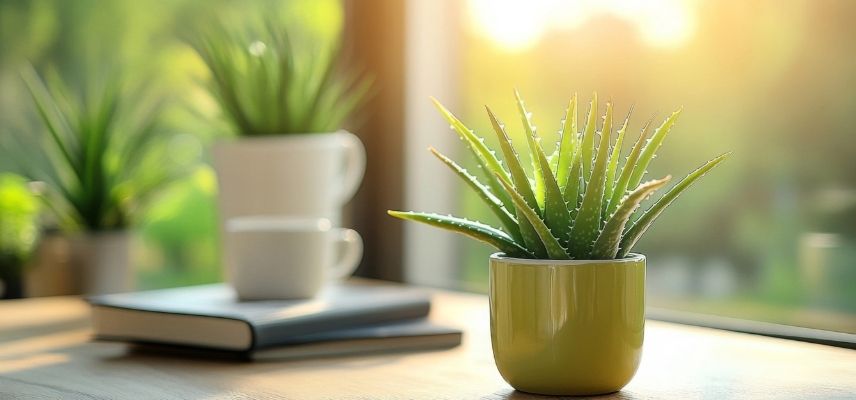
Your Aloe vera loves sun, that’s true… but not 40°C behind a window! Reflected heat just behind a windowpane is a real trap for houseplants in summer. They can scorch badly if not moved away from this dreadful greenhouse effect.
Even more so, of course, move all shade or part-shade plants away from windows (ferns, Calathea, Dieffenbachia, Sansevieria, Zamioculcas, etc.). But other plants too, even those that crave warmth and sun such as succulent plants, must not be allowed to suffer heat stress in mid-afternoon behind south-facing glass in full sun, which would burn their leaves: therefore keep sensitive plants, especially those with larger foliage, 1 to 2 m away from the window, and turn their pot regularly for even growth.
Bear in mind that windowsills are favourite spots for some plants in winter, spring and late autumn, giving them maximum light. At other times of year, south-facing windows become ovens, even for succulent plants, which overheat.
Using water that is too cold
Water stress is often discussed for plants, but thermal stress exists too, and not just via air temperature.
Tap water that is too cold and often hard can thus stress the roots and leave white deposits on the leaves.
Ideally leave water to stand for 24 hours at room temperature before watering, or use rainwater. Letting water stand (in open air or indoors) removes much of the limescale.
Repotting during periods of intense heat
It’s really not a good idea to try to repot your plant all at once in midsummer. Unless you really have no choice (a move that forces it, for example), avoid repotting during a heatwave. A plant already stressed will recover poorly.
Wait until September or a cool, cloudy day to repot.
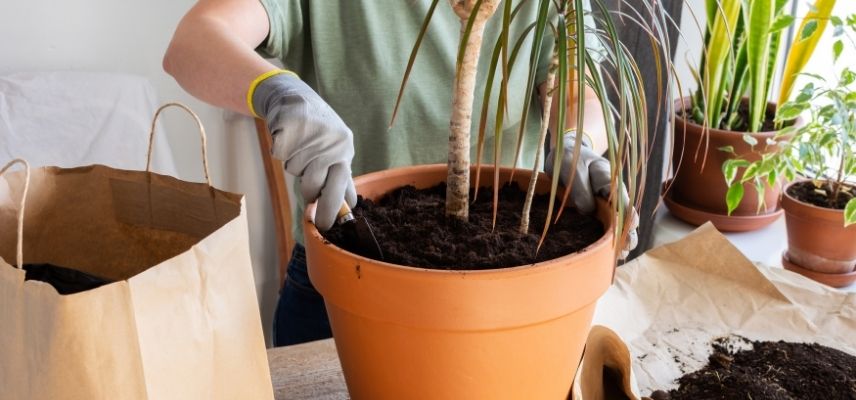
Postpone repotting to cooler days when possible
Neglecting dust on leaves
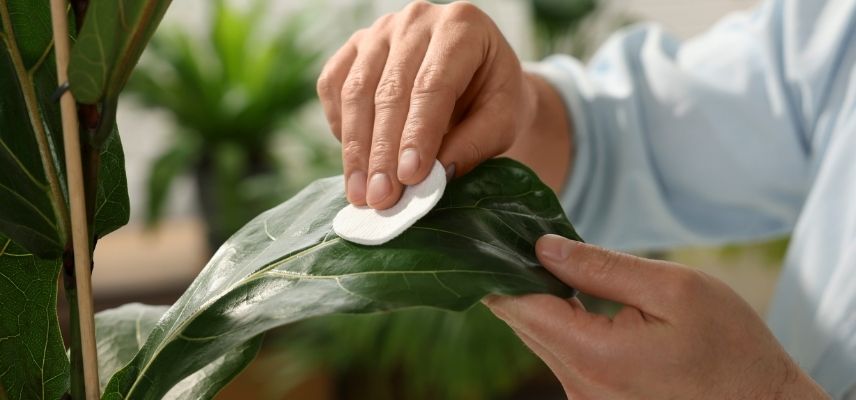
Dust blocks light and photosynthesis, all year round, but especially in summer, when plants need all their energy.
Cleaning the leaves of indoor plants is therefore particularly recommended in spring, when they come out of dormancy, and in summer (in reality, it should be done all year round, because in winter light levels fall significantly, further limiting this vital photosynthesis for our plants).
Wipe leaves with a soft damp cloth twice a month. Read more in: How to clean the foliage of indoor plants?
- Subscribe!
- Contents
This form is protected by reCAPTCHA - the Google Privacy Policy and Terms of Service apply.

































Comments