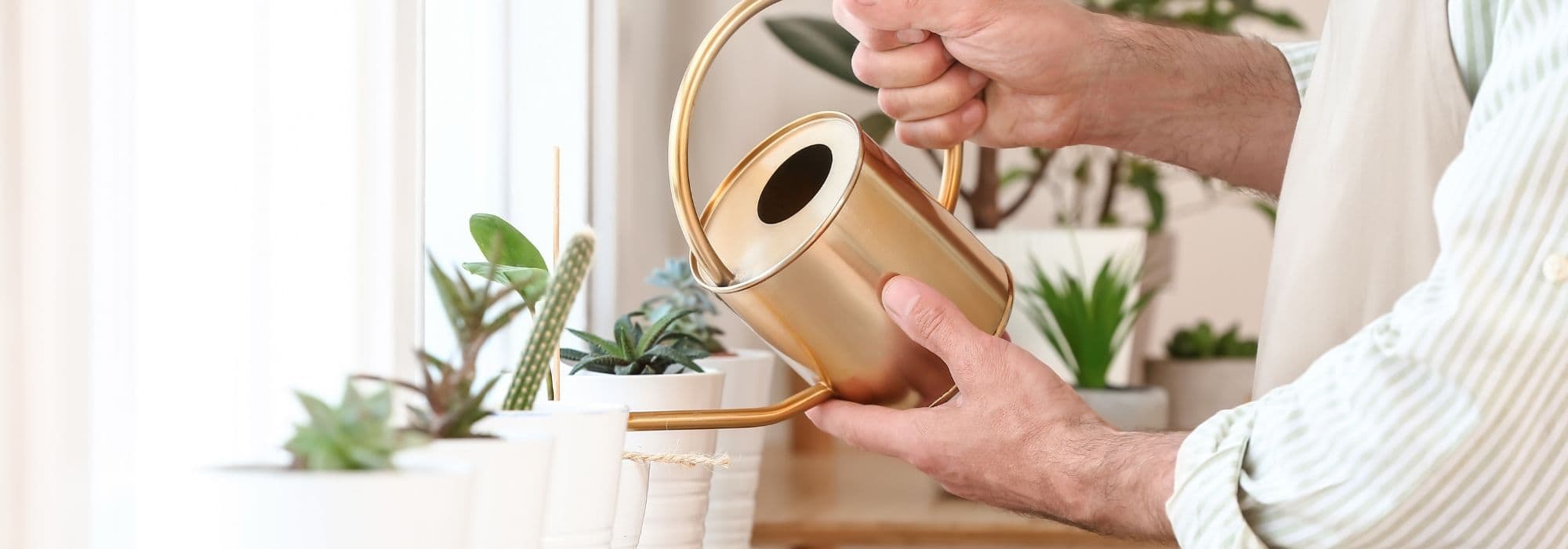
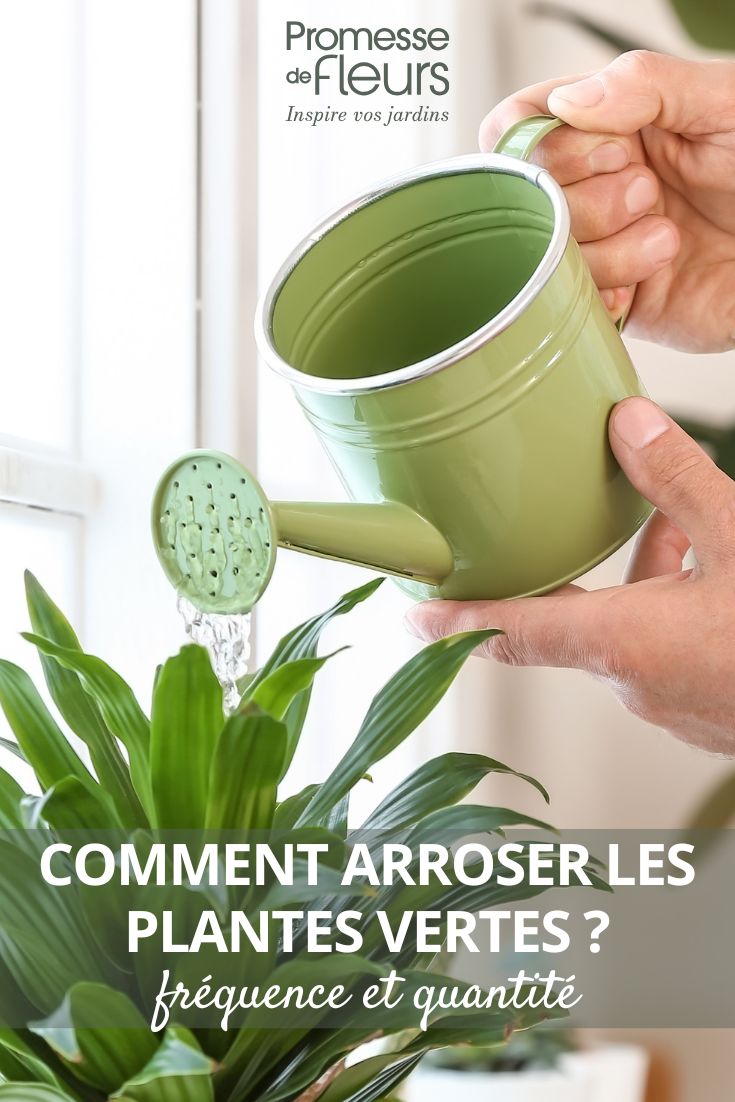
How to water indoor plants?
Frequency, quantity and mistakes to avoid
Contents
Indoor green plants bring a lively, natural atmosphere to a house or flat, but their health depends largely on watering. Too much water or not enough weakens the foliage, slows growth and can even kill the plant. Knowing the right frequency, the correct amount and avoiding common mistakes helps keep plants vigorous all year round. Discover our tips to master watering your indoor green plants.

What is the watering frequency for indoor plants?
Watering frequency varies according to species, pot size and room temperature. For example, a Calathea or a Spathiphyllum (peace lily) requires a consistently moist potting mix, whereas a cactus or a Sansevieria can tolerate several weeks of drought.
As a rule, most houseplants need water every 7 to 10 days in summer and every two to three weeks in winter, when growth slows.
A good indicator is to touch the surface of the potting mix: if the top 2 centimetres are dry, water is needed.
To make comparison easier, here is a table of water needs for common houseplants.
| Houseplant | Watering frequency | Recommended amount | Specific advice |
|---|---|---|---|
| Monstera deliciosa | Once a week in summer, every 2 to 3 weeks in winter. | Water until the entire root ball is moist. | Avoid overwatering; prefers humid air. |
| Ficus elastica (rubber plant) | Every 7 to 10 days in summer; water less frequently in winter. | Water moderately, allow surface of potting mix to dry. | Doesn’t tolerate excess water. |
| Pothos (Epipremnum aureum) | About once a week. | Moisten the substrate without waterlogging it. | Tolerates occasional missed waterings better than overwatering. |
| Calathea | Every 4 to 7 days depending on temperature. | Keep potting mix slightly moist but not waterlogged. | Likes regular misting. |
| Spathiphyllum (peace lily) | 1–2 times per week in summer, once every 2 weeks in winter. | Water generously, then empty the saucer. | Responds quickly to lack of water: leaves droop. |
| Sansevieria (mother-in-law’s tongue) | Every 3 to 4 weeks. | Very small amount of water. | Tolerates drought well; dislikes standing moisture. |
| Cactus | Every 3 to 4 weeks in summer, very rarely in winter. | Small amount of water. Let substrate dry between waterings. | Minimal watering, especially during winter dormancy. |
| Aloe vera | About every 3 weeks in summer, once a month in winter. | Water sparingly; allow substrate to dry between waterings. | Doesn’t tolerate excess moisture. Leaves droop if overwatered. |
| Dracaena | Every 10 to 15 days. | Water moderately; allow substrate to dry slightly. | Prefers low-calcium (soft) water. |
| Phalaenopsis orchid | Every 7 to 10 days, less in winter. | Soak the pot for 10 minutes then drain. | Never let water stand; prefers soft water. |
| Anthurium | Once a week in summer, every 2 weeks in winter. | Potting mix kept slightly moist. | Likes high ambient humidity; mist foliage regularly. |
| Philodendron | Every 7 to 10 days. | Moisten the potting mix without excess. | Tolerates occasional missed waterings but not standing water. |
Read also
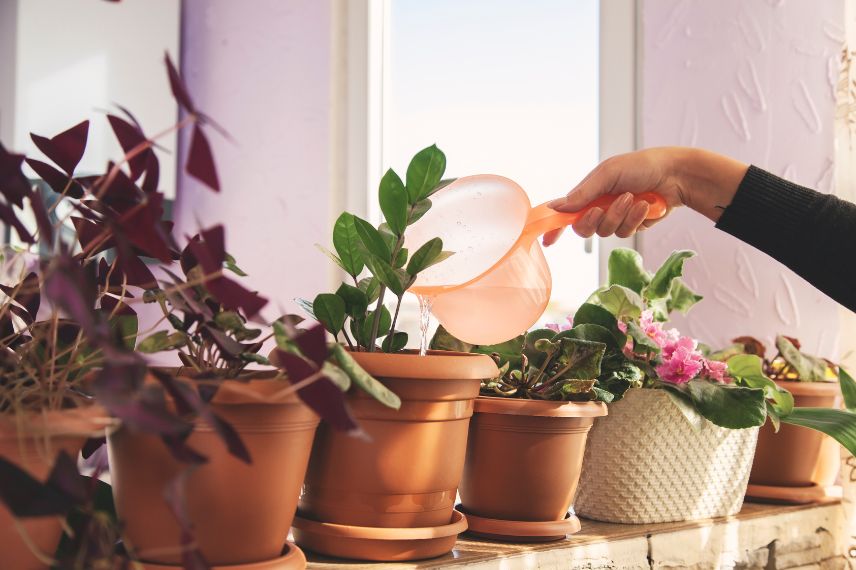
How to water succulents properly?How much water to give to indoor plants?
When watering green plants, make sure to moisten the entire root ball without waterlogging the potting mix. The correct technique is to:
- Pour water slowly until a few drops run out of the pot’s drainage holes.
- Then, empty the saucer after about ten minutes to prevent roots from sitting in stagnant water.
A sign of successful watering: potting mix is moist throughout, but remains supple to the touch, never compacted or waterlogged. Too little water wets only the surface, leaving roots dry, while repeated overwatering causes foliage to yellow. The larger the pot, the more water the plant needs, but always in proportion to its size and species.
Common mistakes to avoid
Several mistakes regularly occur when watering indoor houseplants. Knowing them helps preserve plants’ health:
-
Watering according to a fixed schedule : watering always on the same day (or at the same time), without checking the potting mix, can cause overwatering or underwatering. Plants’ needs change with the season, temperature and light. Checking the surface of the potting mix remains the best guide.
-
Using unsuitable water : cold water shocks the roots, while hard water leaves deposits in the potting mix and is not suitable for all plants. Prefer rainwater or filtered water, gentler for the plant, and at room temperature.
-
Leaving water in the saucer : this standing water suffocates roots and encourages root rot. After watering, empty any excess after a few minutes.
-
Watering too much in winter : during the cold season, growth slows and water uptake decreases.
-
Wetting the foliage : pouring water over leaves, especially on sensitive species such as orchids or cacti, leads to spotting and disease. Always water at the base of the plant, directly onto the potting mix.
Practical tips for successful watering
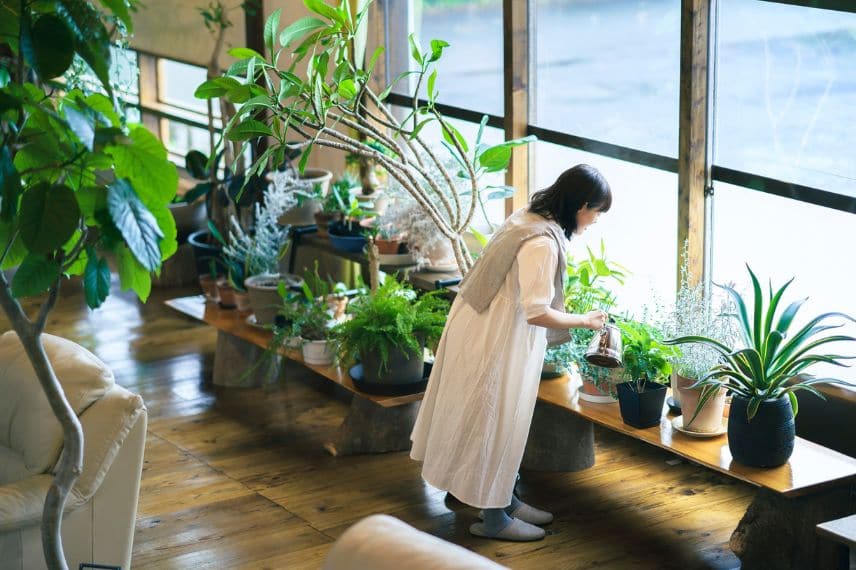
Beyond frequency and quantity, some simple practices improve the comfort and vigour of houseplants:
- Adapt watering method : some species benefit from immersion, such as orchids. The pot is plunged for a few minutes in a basin so the rootball becomes thoroughly moist. Others prefer standard top watering.
-
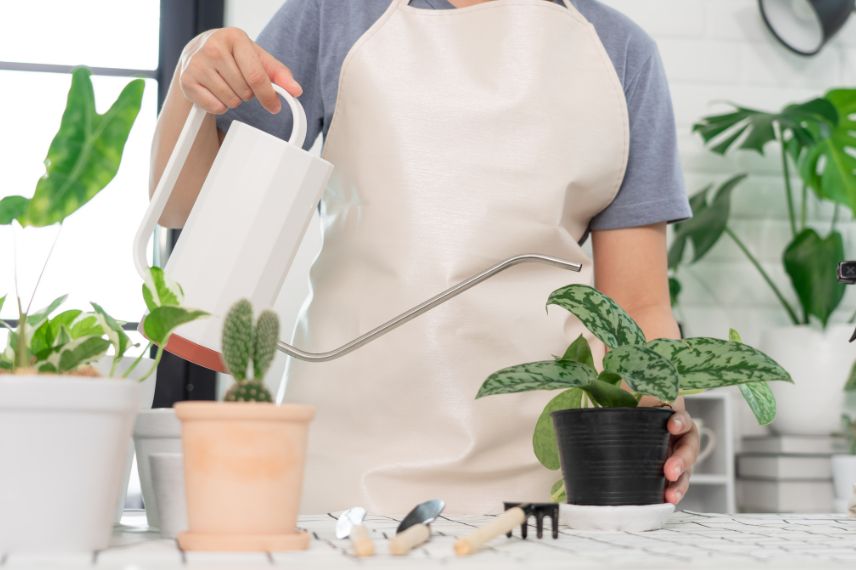
Use a long-spouted watering can : this allows water to be directed precisely at the base of the plant, without wetting the foliage.
-
Check drainage regularly : ensure the pot’s drainage holes are not blocked and add a layer of clay pebbles or gravel if necessary. This prevents water stagnation.
-
Lighten compost if needed : overly compact potting compost retains too much moisture. Mixing in some perlite or sand improves root aeration.
-
Watch for signs from the plant : softened, yellowing or curled leaves often indicate a watering problem. Adjust watering at the first signs to correct quickly.
-
Place plants according to their needs : situate tropical species in naturally humid rooms (kitchen, bathroom) and succulents in dry, bright spots to reduce watering errors.
-
Maintain good ambient humidity : for plants that appreciate humidity (tropical plants, ferns…), mist foliage or place pots on a tray of moist clay pebbles.
- Subscribe!
- Contents
This form is protected by reCAPTCHA - the Google Privacy Policy and Terms of Service apply.

































Comments