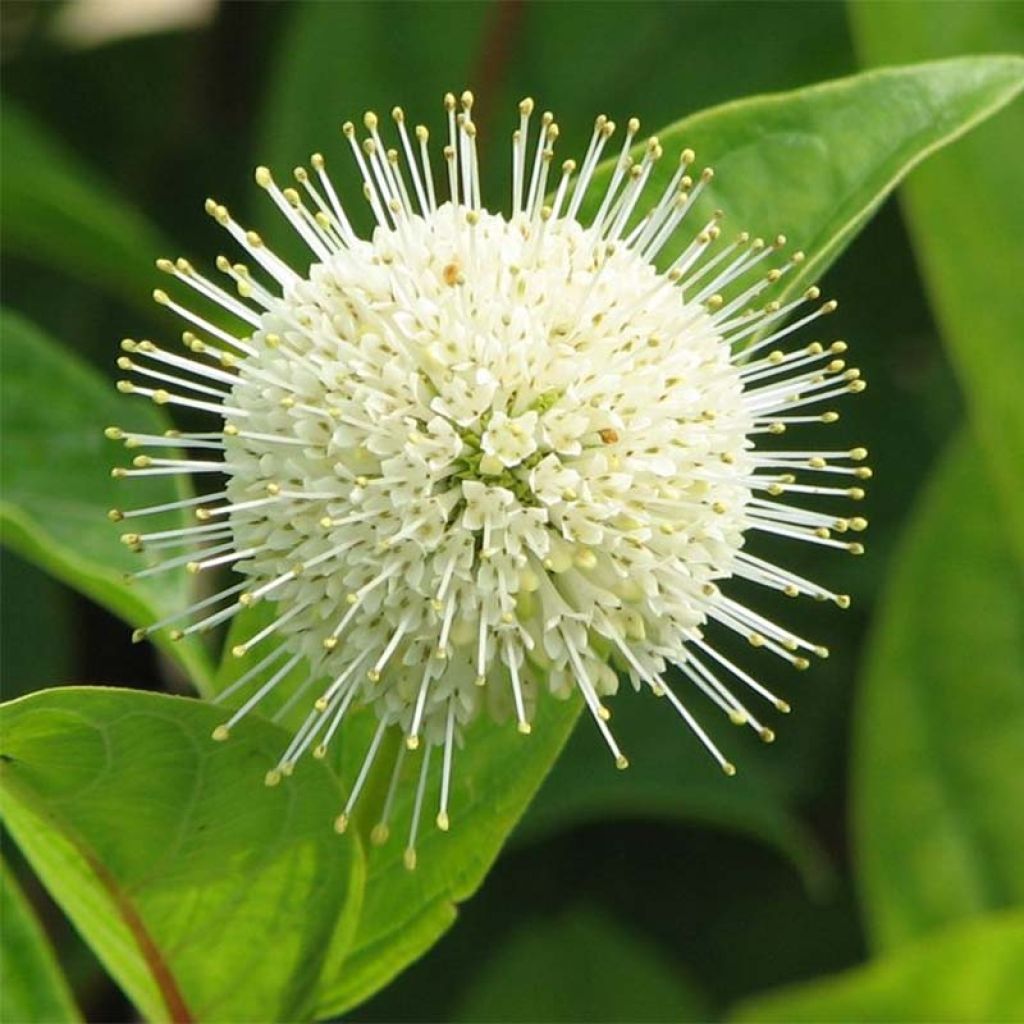
Cephalanthus occidentalis Fiber Optics
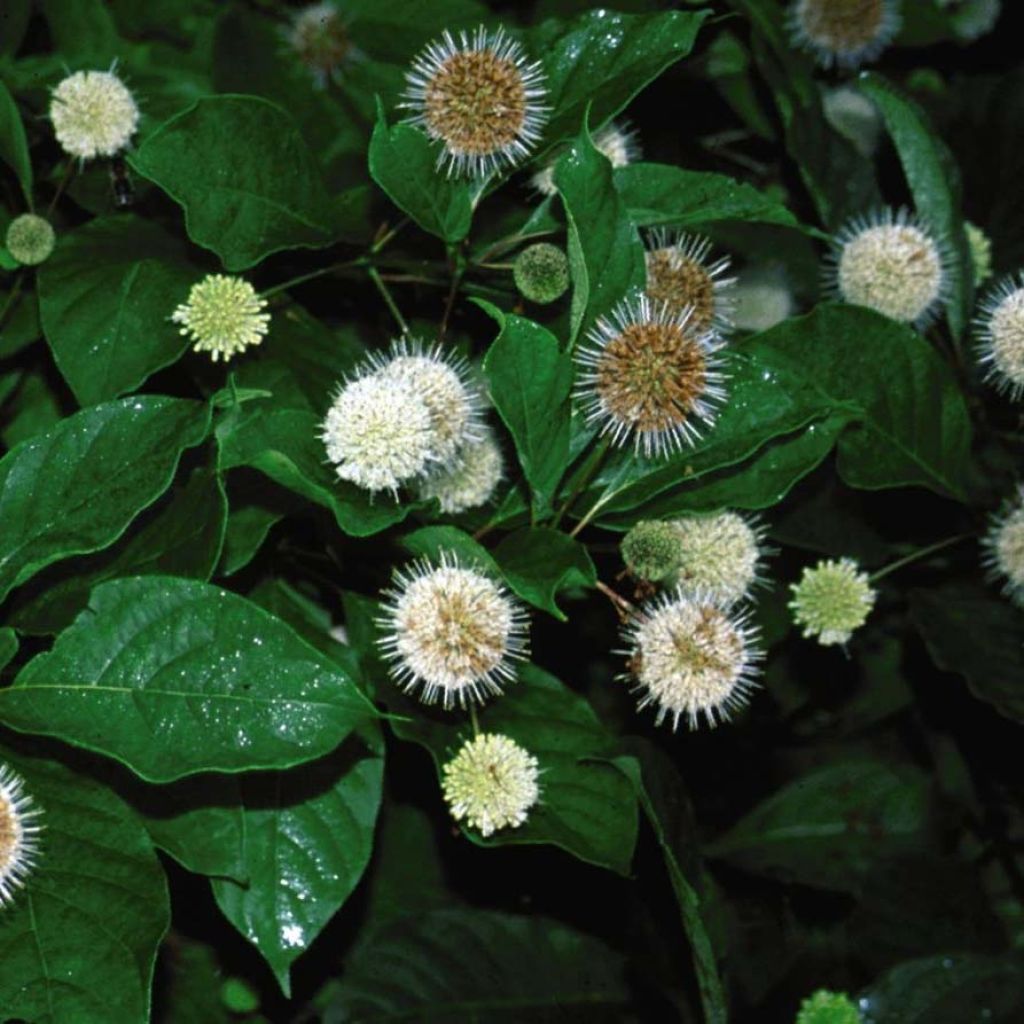
Cephalanthus occidentalis Fiber Optics
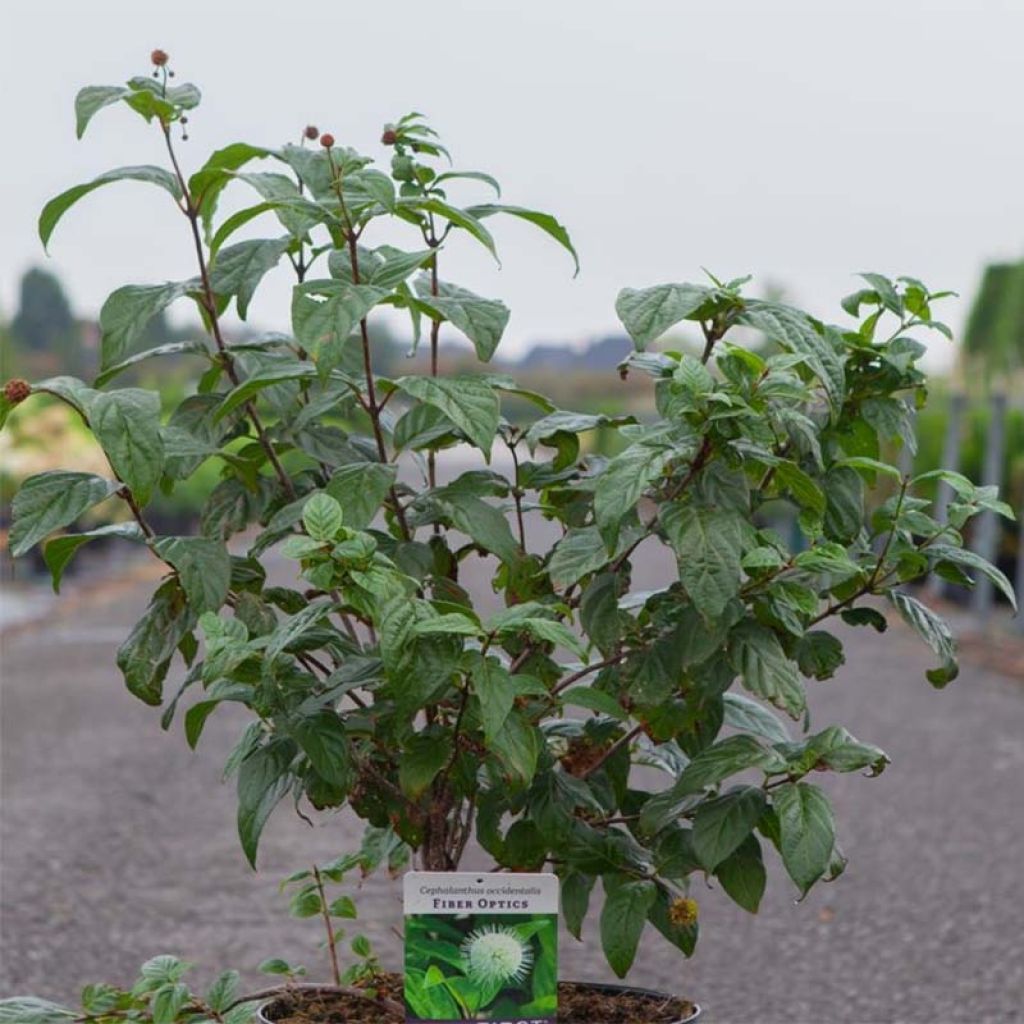
Cephalanthus occidentalis Fiber Optics
View more pictures
Hide images
Emilie V.
Cephalanthus occidentalis Fiber Optics
Emilie V. • 27 FR
Cephalanthus occidentalis Fiber Optics
Cephalanthus occidentalis Fiber Optics®
Button Bush, Button Willow, Globe-flowered bush, Honeybells, Little Snowballs, Swamp Globeflower, White Pond - Dogwood
Buds are starting to appear, looking forward to seeing them in leaves and flowers. I hope the planting location suits them well.
Cecile, 15/04/2023
Back-to-school special offer!
Get €10 off for every €50 you spend! And get up to €40 off on a single order.
How does it work?
1. Shop your favourites
Add your favourite plants to your basket. For every €50 you spend (excluding delivery charges, store credit and the plastic-free option), you’ll receive a €10 voucher.
€50 spent = €10 voucher
€100 spent = €20 voucher
€150 spent = €30 voucher
€200 spent = €40 voucher
2. Place your order
Once your basket reaches one of the spending thresholds, place your order. You can even choose your delivery date!
3. Receive your voucher
As soon as your order has been shipped, you’ll receive an email containing your personal voucher code and its value.
4. Use it on your next order
Your voucher is valid for 90 days from the date you receive it. It can be used once only, on a new order worth at least the value of the voucher, excluding delivery charges.
Please note: Vouchers can be combined with other offers, but cannot be split or refunded.
Home or relay delivery (depending on size and destination)
Important: You may be charged customs duties by your country’s customs authorities upon delivery.
Schedule delivery date,
and select date in basket
This plant carries a 24 months recovery warranty
More information
We guarantee the quality of our plants for a full growing cycle, and will replace at our expense any plant that fails to recover under normal climatic and planting conditions.

Would this plant suit my garden?
Set up your Plantfit profile →
Description
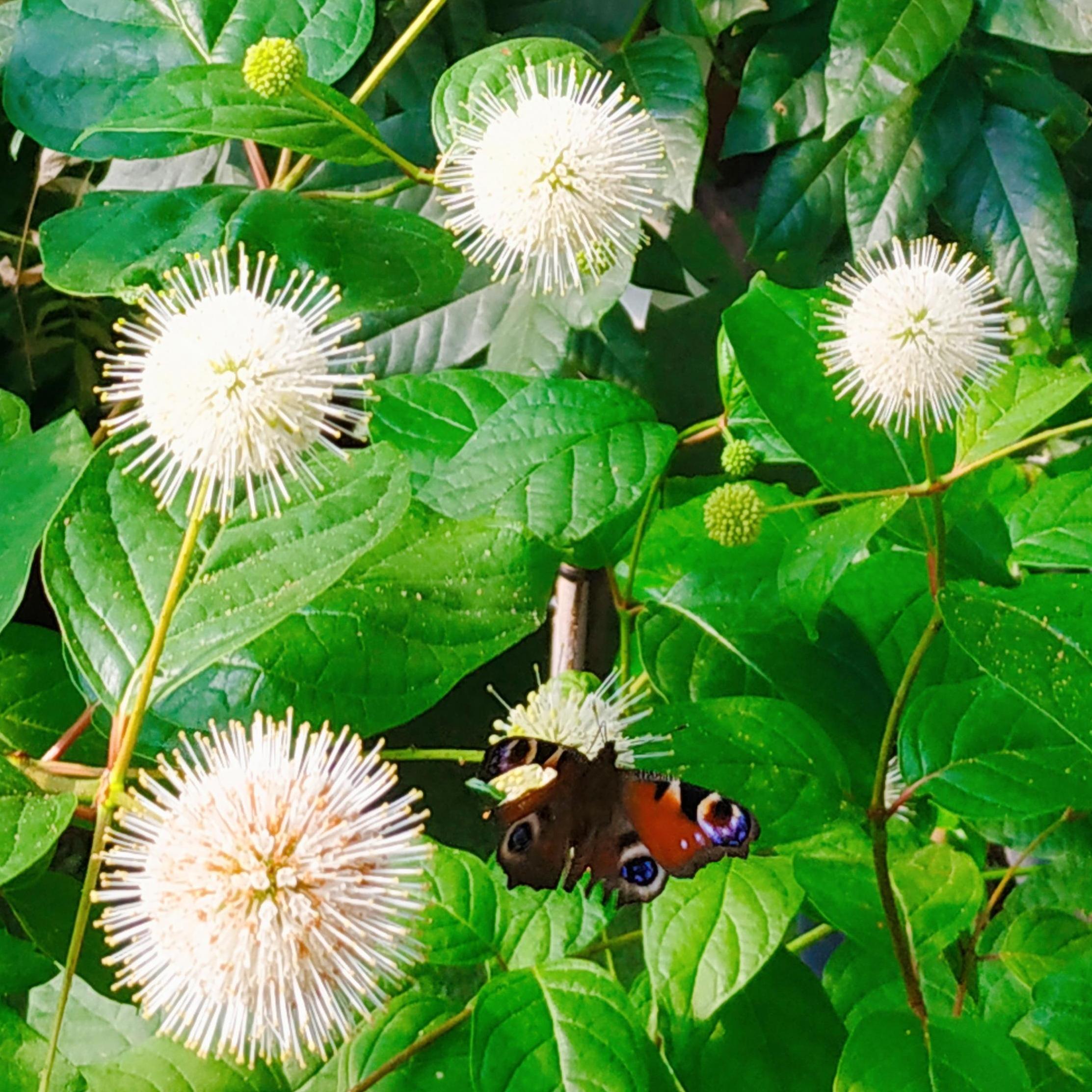
The Cephalanthus occidentalis Fiber Optics is an improvement of the species, presenting a more compact habit and moderate growth, not exceeding 1.50 m (4 ft 11 in) in all directions. This bush is cultivated for its original and bright flowering with tiny narrow, cream-white flowers, gathered in perfect spheres, adorned with fine and prominent stamens. They release a pleasant fragrance and attract a large number of bees and butterflies. Bright red fruits, similar in appearance to arbutus, follow, standing out from its large, oval, dark green foliage, colouring the garden until winter. The seeds are adored by birds. It is a very robust bush that perfectly withstands freezing temperatures and is suitable for cool to wet soils, normal to heavy, even tolerating temporary flooding and partial shade. It blooms better in the sun and planting in limestone or dry soil should be avoided. It is an ornamental plant, suitable for enhancing pond banks or flower beds in not too dry soil, with other flowering perennials.
Cephalanthus occidentalis belongs to the Rubiaceae family, just like Gardenia, coffee or quinine. This deciduous and very hardy bush is native to North America, specifically wet to marshy areas in Eastern Canada and the United States. Its distribution range extends to Mexico and Cuba where it often forms very dense groups. Its grey-brown bark cracks with age, exfoliating in thick flakes. Tolerating the shade well, Buttonbush are much more floriferous in the non-scorching sun.
The cultivar 'Fiber Optics', obtained in 2005 in the USA by breeder Jon Burns, is distinguished mainly by a much more compact habit and reduced growth. It quickly forms a very dense bush, producing numerous highly branched stems from its base. At maturity, the bush will reach approximately 1.50 m (4 ft 11 in) in all directions. The grey-brown branches bear deciduous leaves that bud late in spring, taking on coppery-red tones. They are leathery, 10 cm (3.9 in) long, ovate, lanceolate, with shiny olive-green to dark green on the upper side before turning dark green, lighter underneath, with lighter veins giving the lamina a waffle-like appearance. The autumn foliage shows a beautiful golden yellow colour, sometimes tinged with coppery-red before falling. From August to September, depending on the climate, for approximately 8 weeks, the unusual flowering of this plant unfolds. At the tips of the branches of the year, a long branched petiole appears, each branch bearing a very dense globular flower head measuring approximately 3 cm (1.2 in) in diameter. Each inflorescence or 'pom-pom' is composed of tiny tubular cream-white flowers with prominent yellow stamens resembling pinheads. This fragrant, nectar-bearing and honey-producing flowering attracts many pollinating insects. The fruit is a round, very bright red capsule, downy in appearance, measuring 2 cm (0.8 in) in diameter, which remains on the branches until winter. The root system of Cephalanthus is superficial, making it sensitive to lack of water but easy to transplant.
Cephalanthus occidentalis 'Fiber Optics' is a beautiful bush that produces honey and has an ornamental appearance. It thrives in soils that retain moisture and in humid areas like marshes or waterlogged surroundings. This makes it a great addition to pond borders or for planting alongside other water-loving plants like Japanese irises, ligularias, astilbes, or filipendulas. However, it's not limited to these areas and can grow comfortably in any soil that's not excessively high in limestone and doesn't dry out. It's versatile enough to be integrated into a small flowering hedge or a low shrub bed alongside other plants like hedge honeysuckles, evergreen or deciduous barberries, flowering currants, dwarf lilacs, and dogwoods. Its compact size makes it perfect for container or pot cultivation, with regular watering and fertilising.
Report an error about the product description
Cephalanthus occidentalis Fiber Optics in pictures
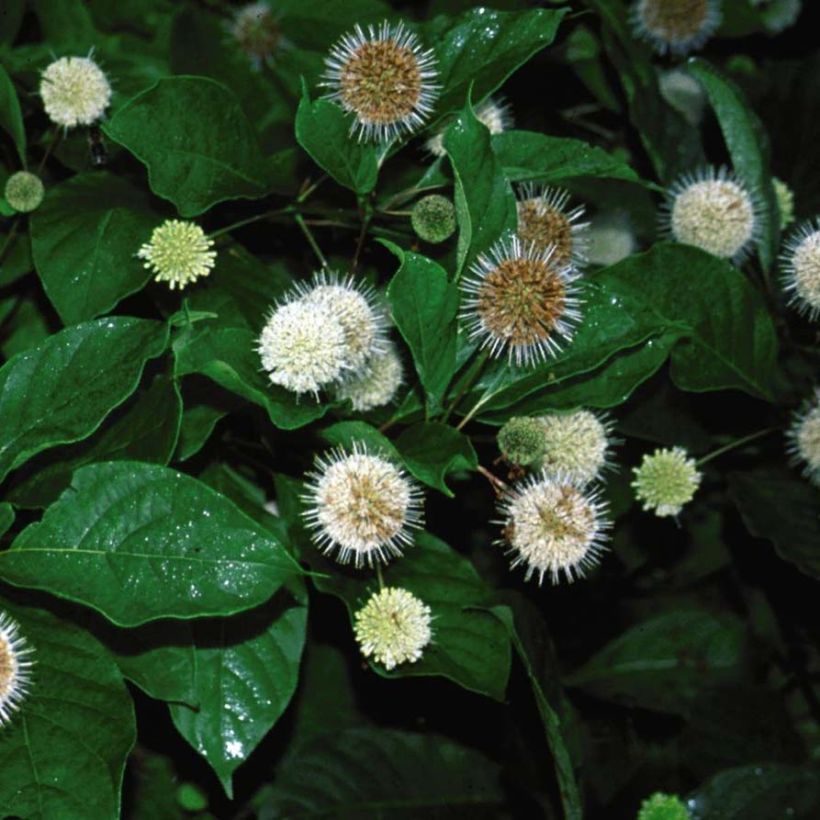
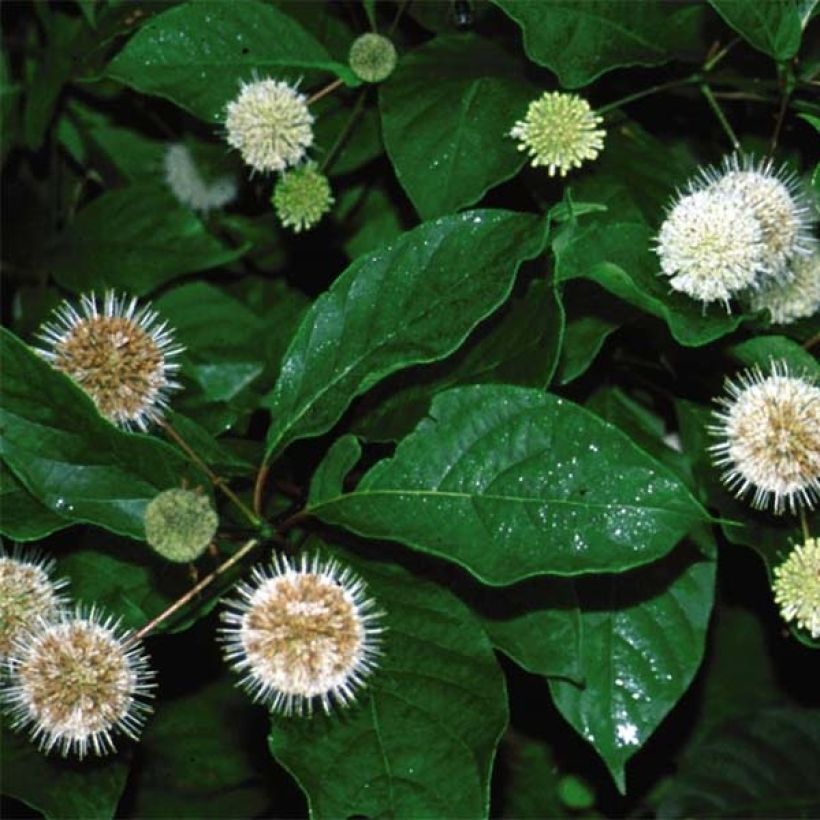
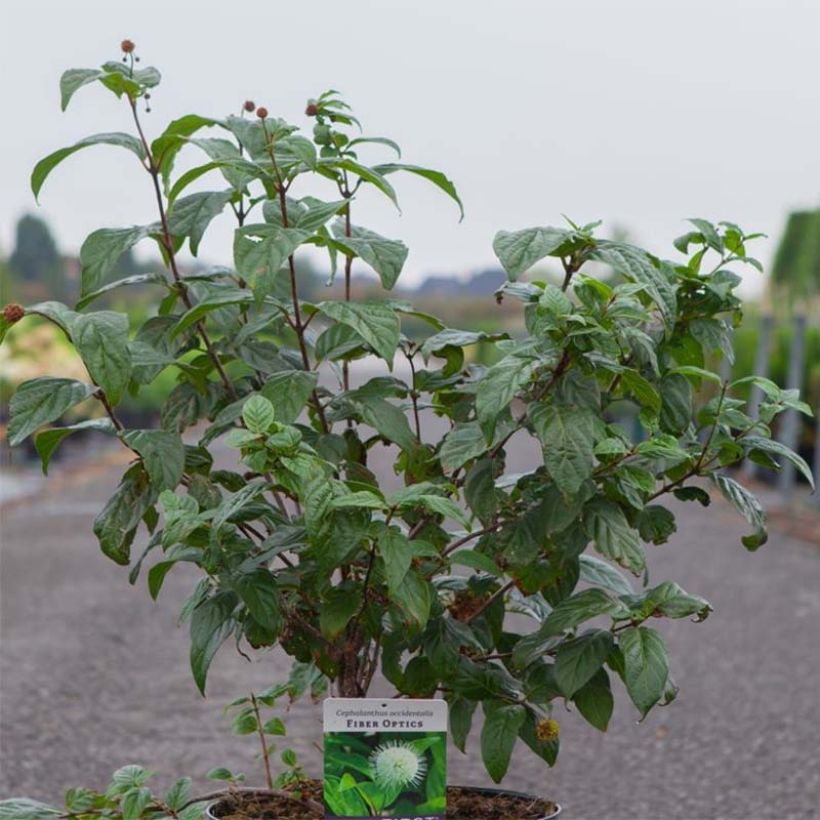
Plant habit
Flowering
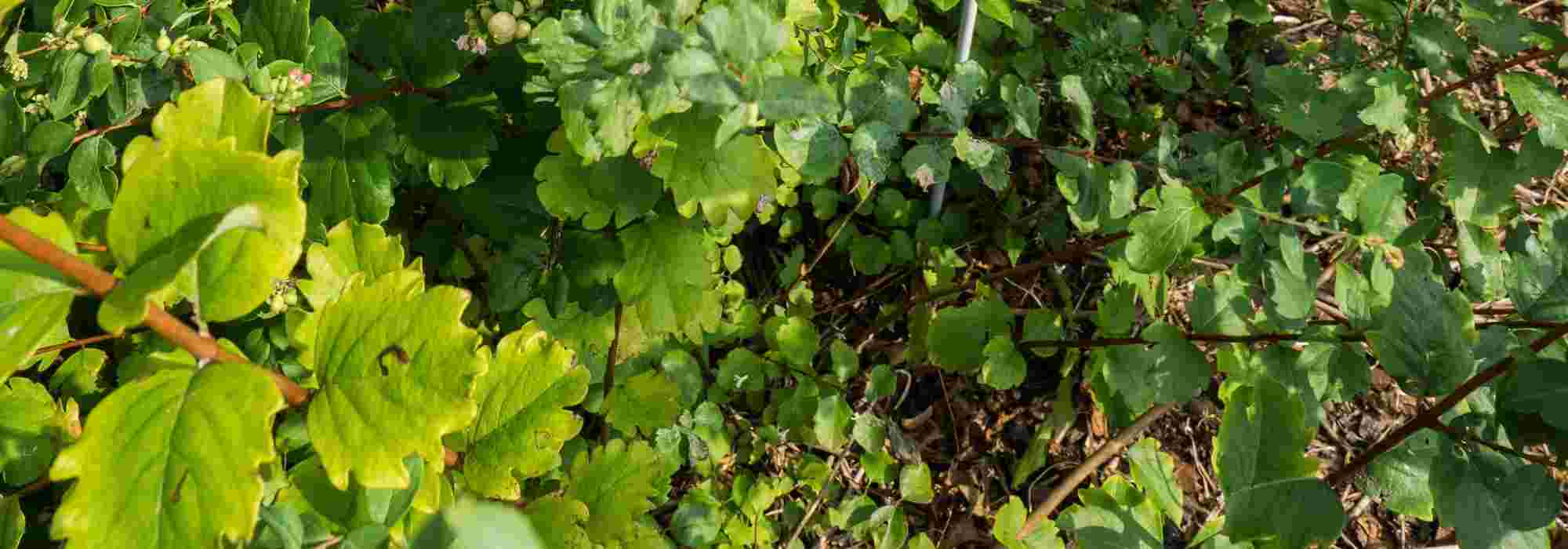
Foliage
Botanical data
Cephalanthus
occidentalis
Fiber Optics®
Rubiaceae
Button Bush, Button Willow, Globe-flowered bush, Honeybells, Little Snowballs, Swamp Globeflower, White Pond - Dogwood
Cultivar or hybrid
Planting and care
When planting Cephalanthus occidentalis 'Fiber Optics', choose autumn or early spring and soil that stays moist or damp all year. It grows well in most soils, but avoid too much limestone. To improve your garden soil, mix it with leaf compost, coarse sand, and well-rotted compost. Mulch the soil to keep it fresh, and water it regularly. Plant it in a sunny, not too hot area, or in partial shade.
Planting period
Intended location
Care
Planting & care advice
-

-
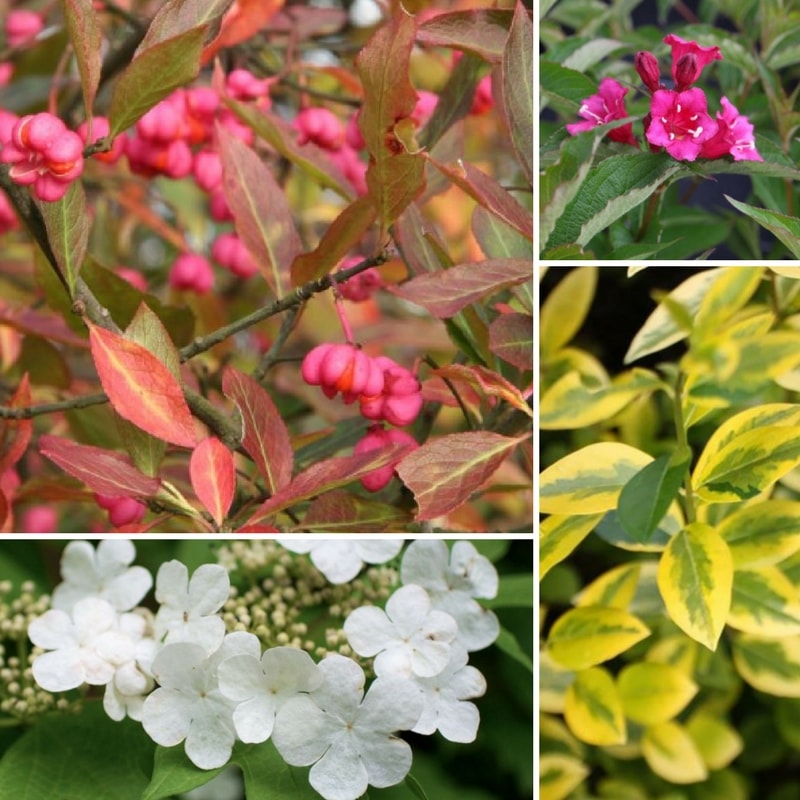
-
-

-
-
-

-
-
, onOrder confirmed
Reply from on Promesse de fleurs
Recently viewed products
Haven't found what you were looking for?
Hardiness is the lowest winter temperature a plant can endure without suffering serious damage or even dying. However, hardiness is affected by location (a sheltered area, such as a patio), protection (winter cover) and soil type (hardiness is improved by well-drained soil).

The flowering period indicated on our website applies to countries and regions located in USDA zone 8 (France, the United Kingdom, Ireland, the Netherlands, etc.)
It will vary according to where you live:- In zones 9 to 10 (Italy, Spain, Greece, etc.), flowering will occur about 2 to 4 weeks earlier.
- In zones 6 to 7 (Germany, Poland, Slovenia, and lower mountainous regions), flowering will be delayed by 2 to 3 weeks.
- In zone 5 (Central Europe, Scandinavia), blooming will be delayed by 3 to 5 weeks.
In temperate climates, pruning of spring-flowering shrubs (forsythia, spireas, etc.) should be done just after flowering.
Pruning of summer-flowering shrubs (Indian Lilac, Perovskia, etc.) can be done in winter or spring.
In cold regions as well as with frost-sensitive plants, avoid pruning too early when severe frosts may still occur.
The planting period indicated on our website applies to countries and regions located in USDA zone 8 (France, United Kingdom, Ireland, Netherlands).
It will vary according to where you live:
- In Mediterranean zones (Marseille, Madrid, Milan, etc.), autumn and winter are the best planting periods.
- In continental zones (Strasbourg, Munich, Vienna, etc.), delay planting by 2 to 3 weeks in spring and bring it forward by 2 to 4 weeks in autumn.
- In mountainous regions (the Alps, Pyrenees, Carpathians, etc.), it is best to plant in late spring (May-June) or late summer (August-September).
The harvesting period indicated on our website applies to countries and regions in USDA zone 8 (France, England, Ireland, the Netherlands).
In colder areas (Scandinavia, Poland, Austria...) fruit and vegetable harvests are likely to be delayed by 3-4 weeks.
In warmer areas (Italy, Spain, Greece, etc.), harvesting will probably take place earlier, depending on weather conditions.
The sowing periods indicated on our website apply to countries and regions within USDA Zone 8 (France, UK, Ireland, Netherlands).
In colder areas (Scandinavia, Poland, Austria...), delay any outdoor sowing by 3-4 weeks, or sow under glass.
In warmer climes (Italy, Spain, Greece, etc.), bring outdoor sowing forward by a few weeks.
Shipping country and language
Your country of residence may be:
Your country of residence is:
For a better user experience on our website, you can select:
Your shipping country:
-
 Austria
-
 Belgium
-
 Bosnia & Herzegovina
-
 Bulgaria
-
 Croatia
-
 Cyprus
-
 Czechia
-
 Denmark
-
 Estonia
-
 Finland
-
 France
-
 Germany
-
 Greece
-
 Hungary
-
 Iceland
-
 Ireland
-
 Italy
Italy
-
 Latvia
-
 Liechtenstein
-
 Lithuania
-
 Luxembourg
-
 Malta
Malta
-
 Netherlands
-
 Poland
-
 Portugal
-
 Romania
-
 Serbia
-
 Slovakia
-
 Slovenia
-
 Spain
Spain
-
 Sweden
-
 Switzerland
Language:
-
French
-
 English
-
Spanish
-
Italian
-
German
-
Portuguese
-
Dutch
-
Finnish
My Account
Hello
My wish lists
My cart
Log in / Register
Existing customer?
This form is protected by reCAPTCHA - the Google Privacy Policy and Terms of Service apply.
New customer?
Create an account to track your orders, access our customer service and, if you wish, make the most of our upcoming offers.