Eucalyptus Moon Lagoon
Eucalyptus Moon Lagoon
Eucalyptus kruseana x latens Moon Lagoon
Back-to-school special offer!
Get €10 off for every €50 you spend! And get up to €40 off on a single order.
How does it work?
1. Shop your favourites
Add your favourite plants to your basket. For every €50 you spend (excluding delivery charges, store credit and the plastic-free option), you’ll receive a €10 voucher.
€50 spent = €10 voucher
€100 spent = €20 voucher
€150 spent = €30 voucher
€200 spent = €40 voucher
2. Place your order
Once your basket reaches one of the spending thresholds, place your order. You can even choose your delivery date!
3. Receive your voucher
As soon as your order has been shipped, you’ll receive an email containing your personal voucher code and its value.
4. Use it on your next order
Your voucher is valid for 90 days from the date you receive it. It can be used once only, on a new order worth at least the value of the voucher, excluding delivery charges.
Please note: Vouchers can be combined with other offers, but cannot be split or refunded.
Why not try an alternative variety in stock?
View all →
Available in 1 sizes

Available in 5 sizes
Available in 1 sizes
Available in 1 sizes
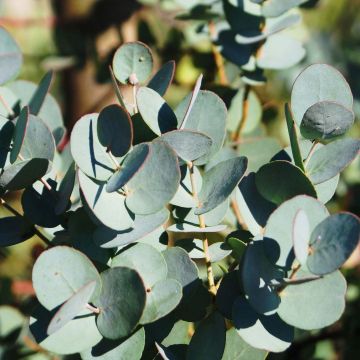
Available in 3 sizes
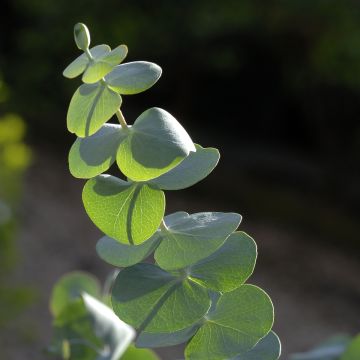
Available in 1 sizes

Available in 3 sizes
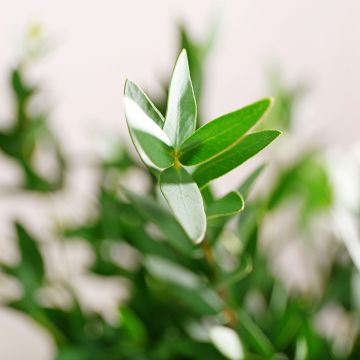
Available in 2 sizes
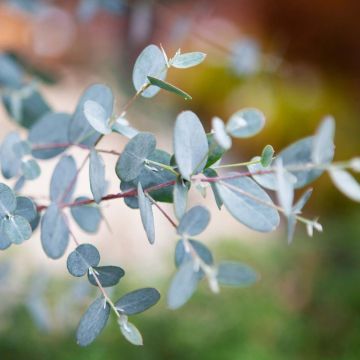
Available in 2 sizes
Available in 1 sizes
This plant carries a 24 months recovery warranty
More information
We guarantee the quality of our plants for a full growing cycle, and will replace at our expense any plant that fails to recover under normal climatic and planting conditions.
Would this plant suit my garden?
Set up your Plantfit profile →
Description
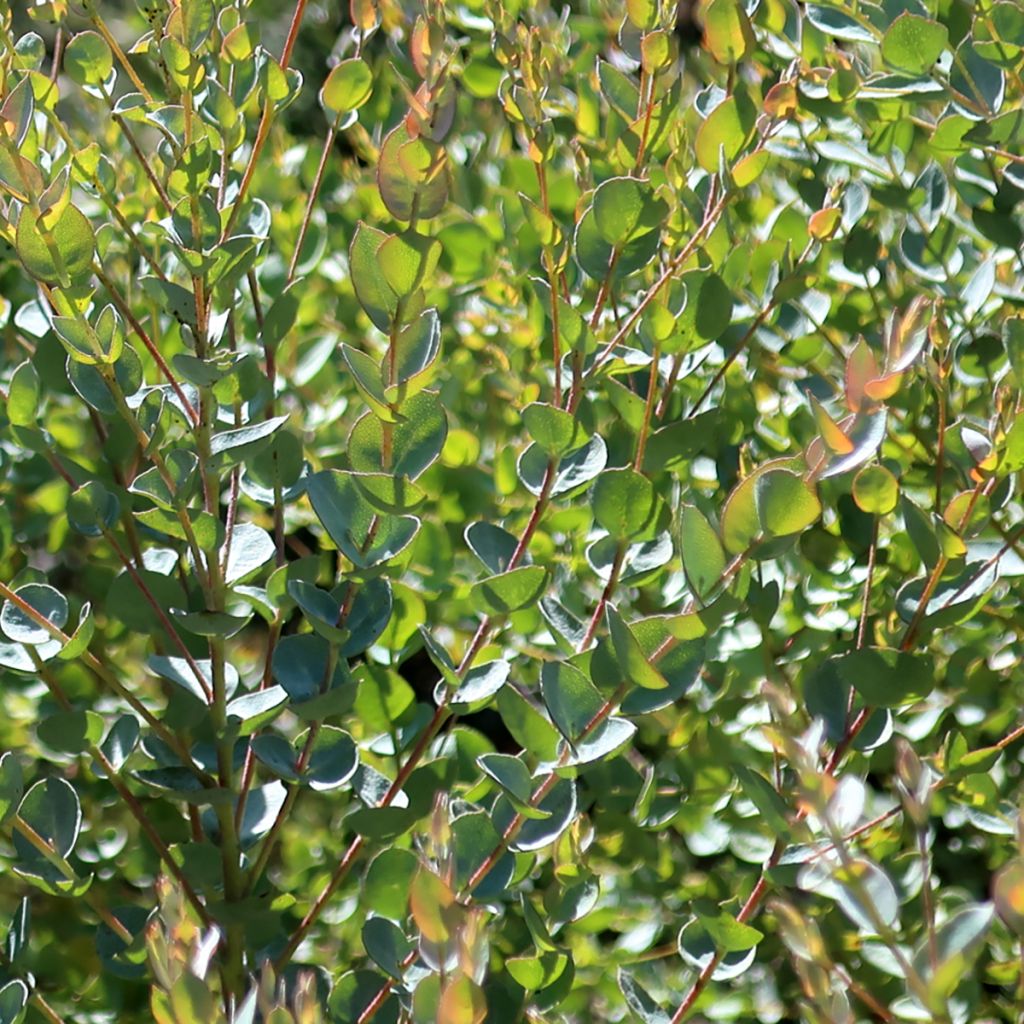
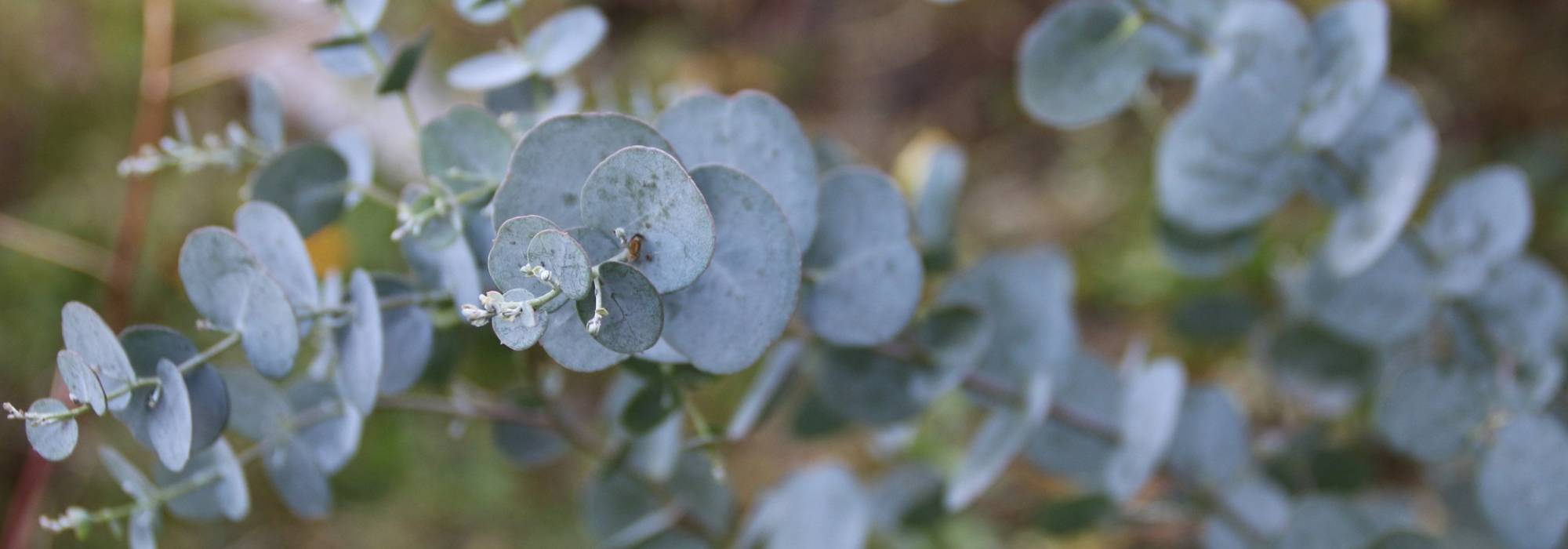
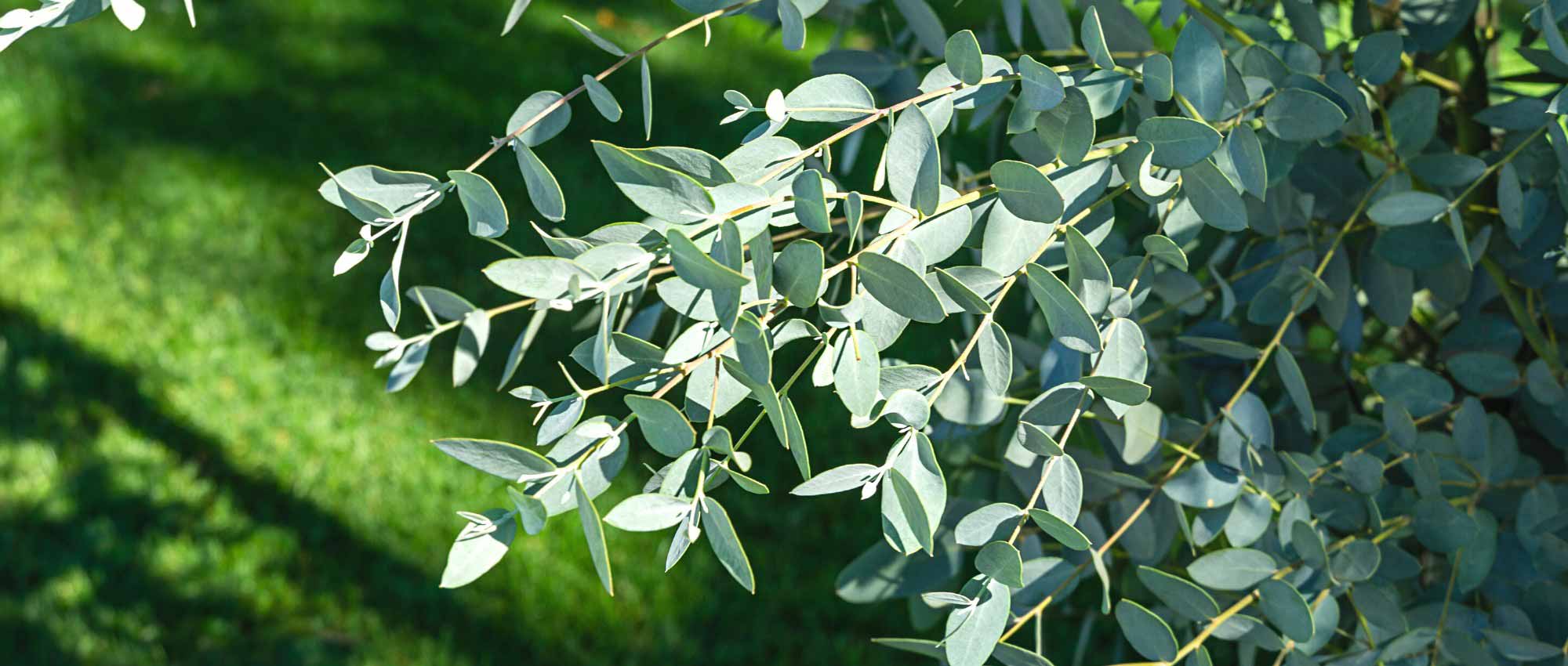
Eucalyptus 'Moon Lagoon' is a bush native to Australia, well suited to small spaces. Graceful and extremely decorative, it evolves throughout the seasons. For the most beautiful effect in spring, the young shoots produce young leaves with pink hues, above a blue-green foliage, carried by reddish branches. With low growth and tolerating pruning well, it is easy to renew this spectacle every year by cutting back the branches at the end of winter. Without this regular pruning, from spring to summer, orange-red flower buds appear that will open to numerous small bouquets of flowers in the shape of whitish pompons, very fragrant and attractive to bees. For bonsai lovers, this little eucalyptus is well-predisposed.
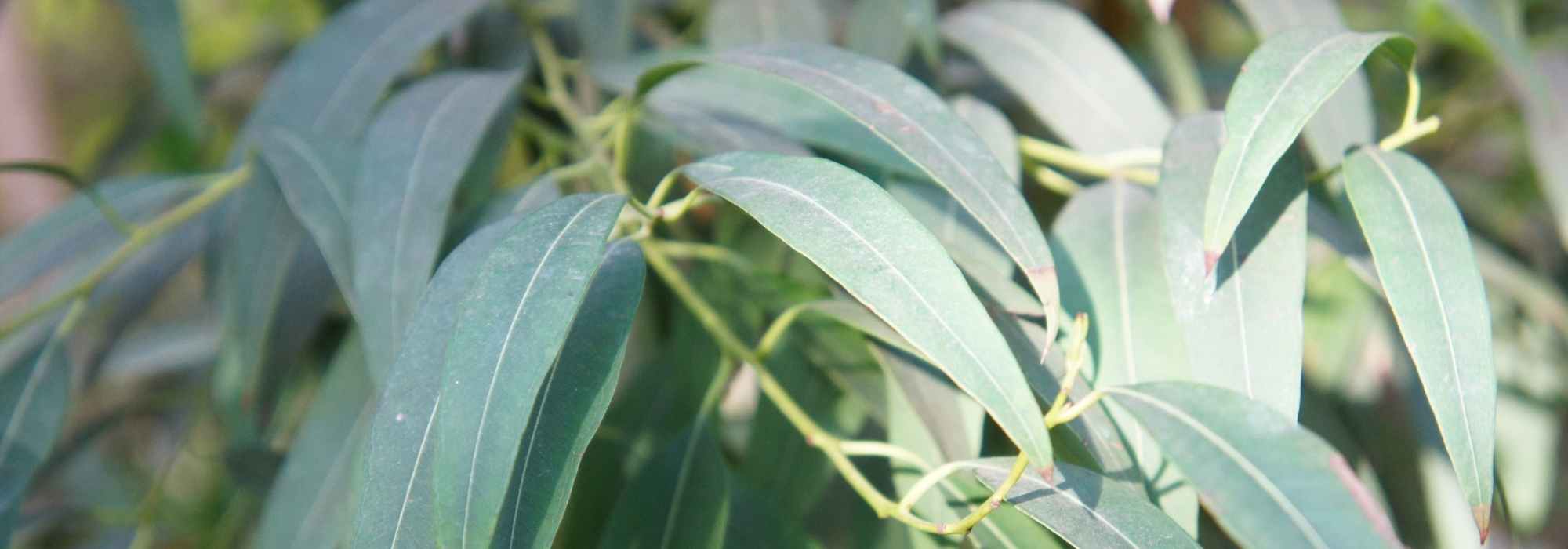
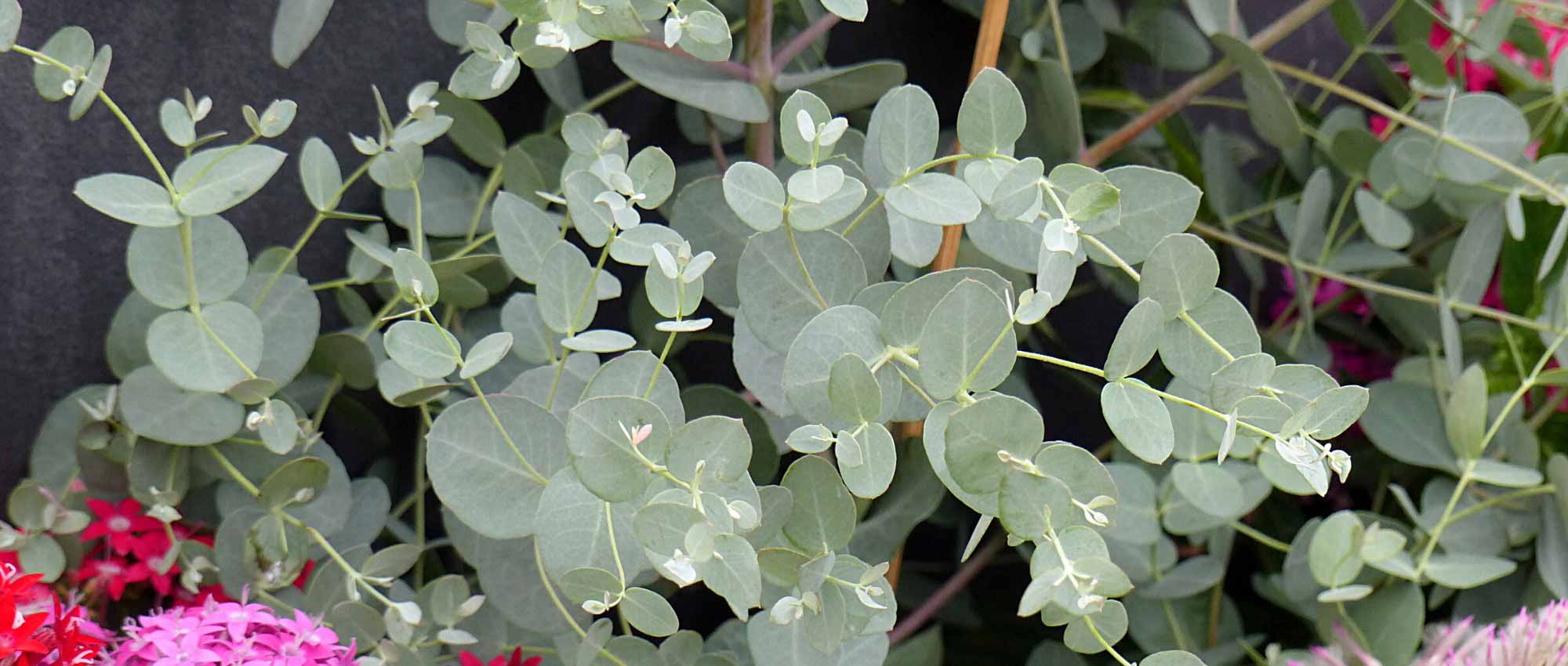
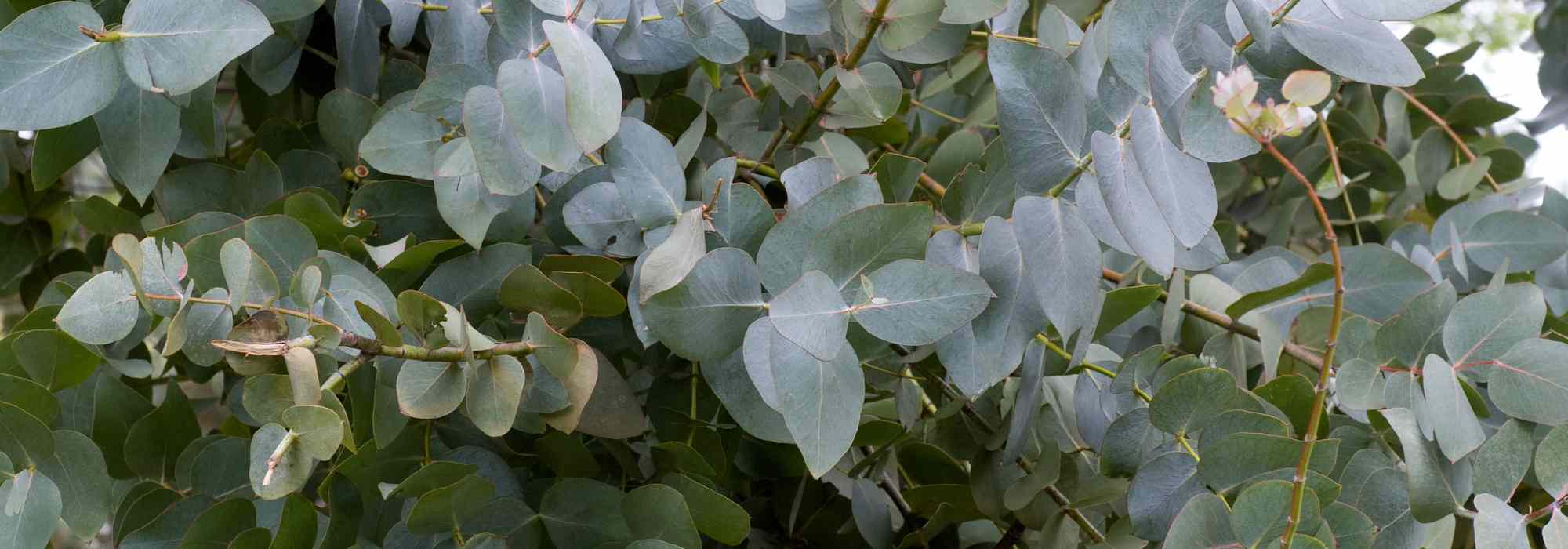
Eucalyptus Moon Lagoon is a natural hybrid originating from Western Australia, resulting from the cross-breeding between Eucalyptus kruseana and Eucalyptus latens. Belonging to the Myrtaceae family, it is commonly named Fine-leafed Mallee. In its natural habitat, it grows on sandy-clay soils, composed of yellow sand or laterite, under a temperate climate, with hot and dry summers, of a Mediterranean type. It is called "mallee" in Australia, due to its stature formed by several stems starting from the soil, reaching a height of less than 10 metres (32 feet 10 inches). With relatively slow growth, when mature it forms a bushy clump 2 to 3 m (7 ft to 10 ft) high and about 3 m (10 ft) wide. It generally rises on several stems starting from a lignotuber* located just below the surface of the soil. When young, it has reddish branches, carrying juvenile foliage, composed of elliptical, rounded leaves 3 to 5 cm (1.2 to 2 in) long by 2 to 4 cm (0.8 to 1.6 in) wide, without petioles, silver blue, bordered with a pale violet edge. Then, as it develops, the leaves take on a lanceolate shape, narrow, pointed at the end, 4 to 6 cm (1.6 to 2.4 in) long by 0.5 to 1.5 cm (0.2 to 0.6 in) wide, shiny on both sides, a pretty water green. The leaves are tough and slightly aromatic, releasing a menthol scent when crushed, rich in eucalyptol. The flowering occurs in spring, between April and June, under our climates, on unpruned plants aged a few years. The inflorescence, arranged in the axil of the leaves, is composed of small white flowers gathered in a tight bouquet, delicately scented and very attractive to bees.
This eucalyptus has a * lignotuber, constituted by a swelling rich in starch which forms on the roots just below the surface of the soil. This organ allows it to start again from the stump in case of severe frost, fire or severe pruning. The plant also produces numerous shoots from dormant buds located under its bark, which allows it to respond well to coppicing, topping or more severe pruning.
The Fine-leafed Mallee is comfortable in the sun in well-drained soil. Tolerant to summer drought, it requires little care once established. With little or no irrigation, this eucalyptus copes well with hot and dry summers, wind and sea spray. Tolerating pruning well, it is easy to shape it into a dense and compact ball. Colourful all year round, it brings animation to a shrub bed in association with Grevillea, Callistemon (Bottle Brush), Westringia fruticosa (Australian Rosemary), Leptsospermum, Restio tetraphyllus, Cordylines, … Its evergreen foliage allows for use as a hedge or visual screen.
Plant habit
Flowering
Foliage
Botanical data
Eucalyptus
kruseana x latens
Moon Lagoon
Myrtaceae
Australia
Planting and care
Eucalyptus Moon Lagoon is best planted in the early spring in mild and humid regions, in the early autumn in dry and hot climates. Plant in well-prepared soil, not too dry to moist, in a very sunny location. Clay or silty soils, even limestone, are well tolerated. A well-established bush is hardy down to -8 °C (17.6°F) and tolerates drought well. Young plants are more sensitive to heavy frosts, especially if the frost sets in for several days and the soil is wet. In most regions, you can plant it in the open ground, ensuring good drainage by adding coarse sand, pozzolan or non-limestone gravel. Then let nature take its course, the growth is normal. Pot cultivation is not recommended in the long term, as this eucalyptus has a stump that widens a lot with the production of shoots.
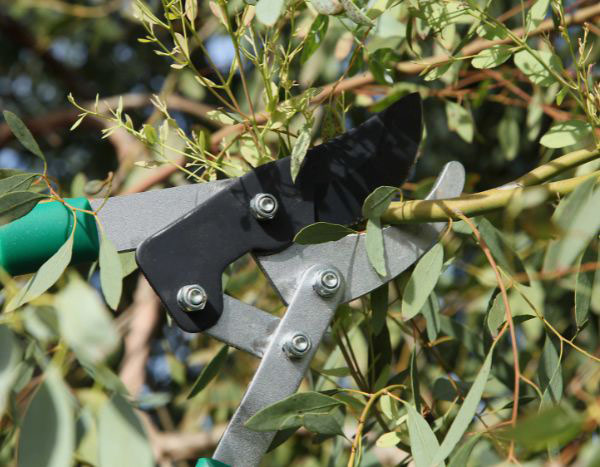
For the first two years, regular watering is necessary, then the bush totally goes without watering in summer. Fertiliser is discouraged. Pruning is not necessary, to let the unique habit of this superb eucalyptus express itself. However, it is tolerated after flowering. It is quite possible to prune this bush to form a dense and balanced clump whose spread you can limit.
Young plants take root most easily in the open ground. The well-developed root system of the Eucalyptus does not like to be disturbed. Choose its location carefully.
Planting period
Intended location
Care
Planting & care advice


This item has not been reviewed yet - be the first to leave a review about it.
Recently viewed products
Haven't found what you were looking for?
Hardiness is the lowest winter temperature a plant can endure without suffering serious damage or even dying. However, hardiness is affected by location (a sheltered area, such as a patio), protection (winter cover) and soil type (hardiness is improved by well-drained soil).

The flowering period indicated on our website applies to countries and regions located in USDA zone 8 (France, the United Kingdom, Ireland, the Netherlands, etc.)
It will vary according to where you live:- In zones 9 to 10 (Italy, Spain, Greece, etc.), flowering will occur about 2 to 4 weeks earlier.
- In zones 6 to 7 (Germany, Poland, Slovenia, and lower mountainous regions), flowering will be delayed by 2 to 3 weeks.
- In zone 5 (Central Europe, Scandinavia), blooming will be delayed by 3 to 5 weeks.
In temperate climates, pruning of spring-flowering shrubs (forsythia, spireas, etc.) should be done just after flowering.
Pruning of summer-flowering shrubs (Indian Lilac, Perovskia, etc.) can be done in winter or spring.
In cold regions as well as with frost-sensitive plants, avoid pruning too early when severe frosts may still occur.
The planting period indicated on our website applies to countries and regions located in USDA zone 8 (France, United Kingdom, Ireland, Netherlands).
It will vary according to where you live:
- In Mediterranean zones (Marseille, Madrid, Milan, etc.), autumn and winter are the best planting periods.
- In continental zones (Strasbourg, Munich, Vienna, etc.), delay planting by 2 to 3 weeks in spring and bring it forward by 2 to 4 weeks in autumn.
- In mountainous regions (the Alps, Pyrenees, Carpathians, etc.), it is best to plant in late spring (May-June) or late summer (August-September).
The harvesting period indicated on our website applies to countries and regions in USDA zone 8 (France, England, Ireland, the Netherlands).
In colder areas (Scandinavia, Poland, Austria...) fruit and vegetable harvests are likely to be delayed by 3-4 weeks.
In warmer areas (Italy, Spain, Greece, etc.), harvesting will probably take place earlier, depending on weather conditions.
The sowing periods indicated on our website apply to countries and regions within USDA Zone 8 (France, UK, Ireland, Netherlands).
In colder areas (Scandinavia, Poland, Austria...), delay any outdoor sowing by 3-4 weeks, or sow under glass.
In warmer climes (Italy, Spain, Greece, etc.), bring outdoor sowing forward by a few weeks.
Shipping country and language
Your country of residence may be:
Your country of residence is:
For a better user experience on our website, you can select:
Your shipping country:
-
 Austria
-
 Belgium
-
 Bosnia & Herzegovina
-
 Bulgaria
-
 Croatia
-
 Cyprus
-
 Czechia
-
 Denmark
-
 Estonia
-
 Finland
-
 France
-
 Germany
-
 Greece
-
 Hungary
-
 Iceland
-
 Ireland
-
 Italy
Italy
-
 Latvia
-
 Liechtenstein
-
 Lithuania
-
 Luxembourg
-
 Malta
Malta
-
 Netherlands
-
 Poland
-
 Portugal
-
 Romania
-
 Serbia
-
 Slovakia
-
 Slovenia
-
 Spain
Spain
-
 Sweden
-
 Switzerland
Language:
-
French
-
 English
-
Spanish
-
Italian
-
German
-
Portuguese
-
Dutch
-
Finnish
My Account
Hello
My wish lists
My cart
Log in / Register
Existing customer?
This form is protected by reCAPTCHA - the Google Privacy Policy and Terms of Service apply.
New customer?
Create an account to track your orders, access our customer service and, if you wish, make the most of our upcoming offers.