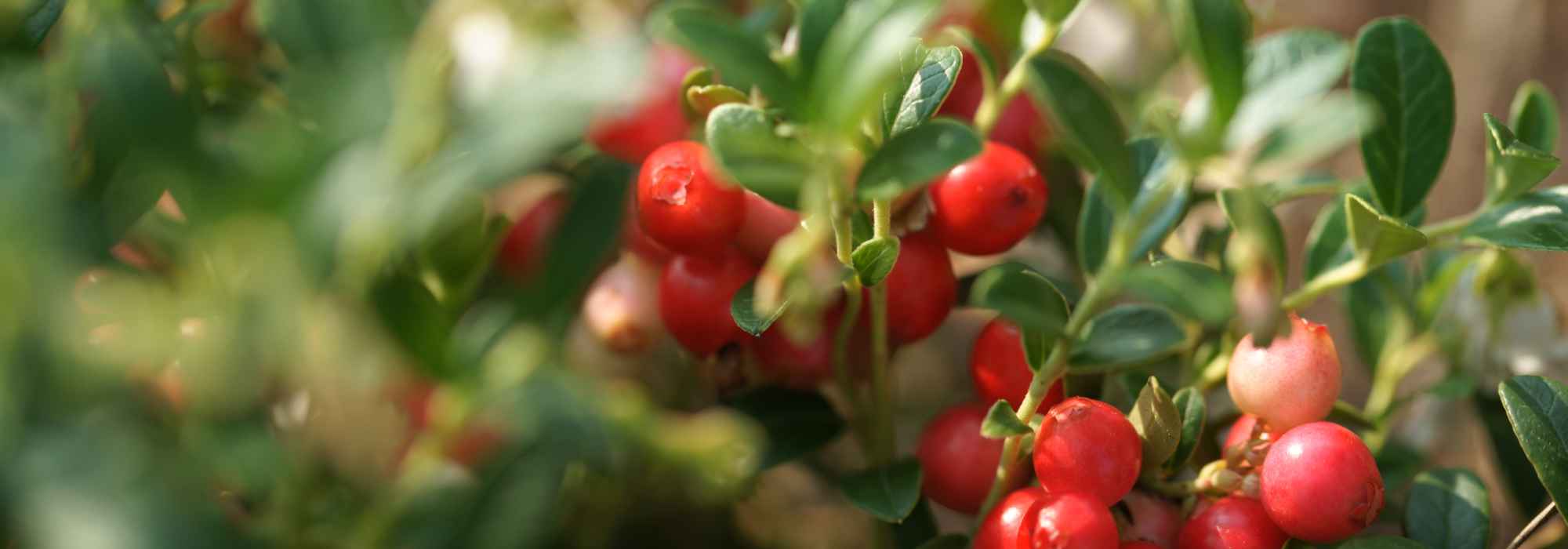
Which soft fruits to harvest in autumn?
A selection of the main traditional or less well-known soft fruits that can be harvested in autumn
Contents
If apples, pears, quinces and nuts are the kings of autumn, other, smaller fruits can also be harvested between September and November. Often more accessible because they grow on shrubs, these soft fruits are full of flavour and are often very good for your health, thanks to their nutrient and mineral content. Harvesting them in the heart of autumn helps extend the always-enjoyable soft fruit season. Discover our selection of the main fruiting shrubs that produce fruit in autumn.

The Benefits of Soft Fruit in Autumn
In summer, we often gorge ourselves on strawberries, raspberries, redcurrants, blackcurrants, serviceberries… A gustatory delight renewed with every mouthful. Autumn berries are also appreciated for the pleasure they bring to the palate. But their benefits go far beyond that.
Indeed, these berries are, for the most part, packed with vitamins, fibre and minerals. And vitality too! In autumn, we often need plenty of that. The light fades a little more each day, as do the temperatures, putting our immune system to the test. Enjoying these berries and small fruits between September and November, or even beyond for those that keep well, is in a way the most natural way to strengthen our immunity and boost our bodies to face the winter ahead.
It is also a way of extending the season in the garden and appreciating this less fertile late season. It allows us to capture the last rays of sunshine, still concentrated in these small fruits. To extend the pleasure beyond autumn, do not hesitate to turn them into jellies, jams or syrups, or to dry them.
Read also
Raspberries: planting, pruning and careLate red berries to extend the summer season
Like summer, autumn proves to be a wonderfully generous season for gardeners. Even as temperatures fall, small fruits ripen for harvesting throughout the three autumn months. Filled with summer sunshine, these small fruits often offer incomparable flavours.
Repeat-flowering raspberries
Repeat-flowering raspberries have a special place in the autumn garden. Unlike spring varieties, which fruit on the previous year’s wood, repeat-flowering raspberry plants produce a first summer harvest, followed by a more generous second flush extending from the end of August until the first frosts. Varieties such as ‘Héritage‘, ‘Mademoiselle Françoise‘ and ‘Marastar‘ produce bright red, slightly tart fruit until October. For a splash of colour, also consider raspberry plant ‘Fall Gold‘, which produces very sweet yellow raspberries with no acidity.
Growing these repeat-flowering raspberry plants requires a little care. Cut the fruited stems down to ground level at the end of winter to obtain vigorous young plants the following autumn.
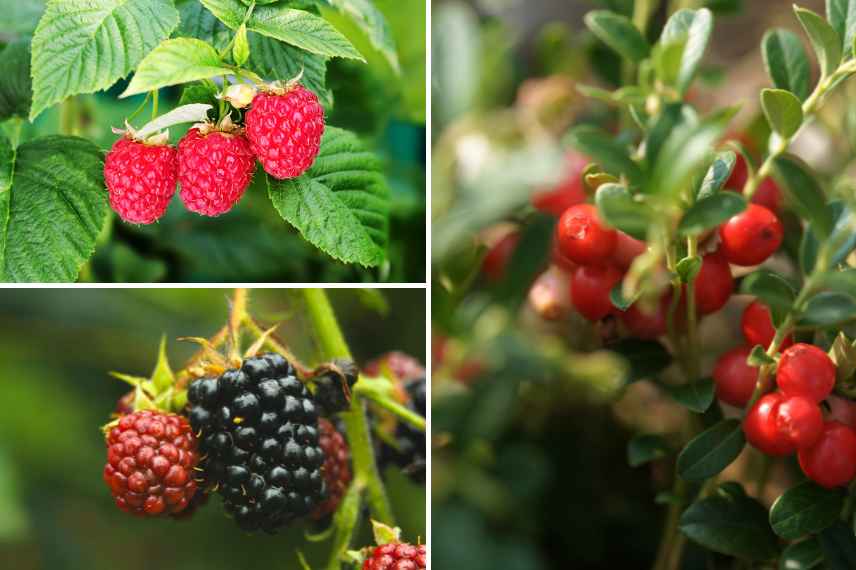
Repeat-flowering raspberries, late blackberries and cranberries are harvested in autumn
Late blackberries
Late blackberries also extend summer until the first light frosts. Varieties from botanical brambles or thornless horticultural selections, such as ‘Thornless Evergreen‘, ‘Oregon Thornless‘ and ‘Triple Crown‘, bend under the weight of large, juicy fruits until the middle of October. Their black, glossy berries, filled with sunshine, offer a perfect balance between acidity and sweetness. Their high antioxidant content, particularly anthocyanins, which are responsible for their deep colour, makes them a major nutritional asset for facing the arrival of cold weather.
Cranberries
As for cranberries, they particularly enjoy acidic, moist soils. Their small scarlet-red berries, with especially tart flesh, are harvested in autumn, between October and November, to be made into juice, jams, jellies and traditional sauces for savoury dishes, or dried.
Find out more: Cranberry: planting, harvesting and benefits.
Goji berries for a vitamin boost
Native to the foothills of the Himalayas, goji berries, the fruits of Barbary wolfberry (Lycium barbarum), also brighten the autumn garden. Their small, elongated fruits, in a vibrant orange, ripen gradually from summer until the first morning frosts. Renowned for their immune-boosting properties and their richness in vitamins C and A, these berries are valued for their health benefits. Eaten fresh, dried or added to infusions, they bring a slightly sweet touch with subtly bitter notes.
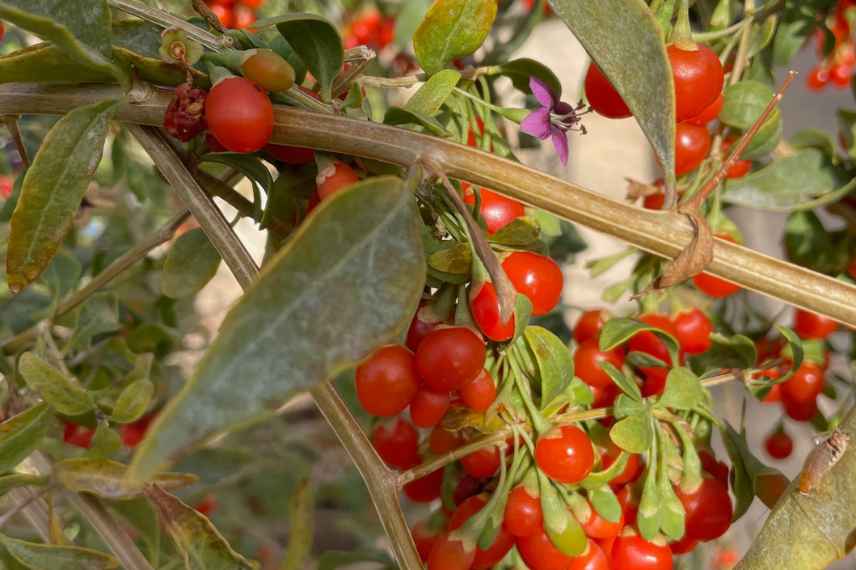
Goji berries are harvested from mid-summer until the first frosts
Admittedly, harvesting requires a little delicacy and patience, as these berries are small and fragile. However, after 2 to 3 years following planting, the harvest is truly generous. As for the shrub, it is very hardy, drought-resistant and accommodating. It adapts to all soils, although it prefers sunny positions to increase the sugar concentration of its fruit. Light pruning at the end of winter stimulates the emergence of new shoots, which will bear the future autumn harvest.
Further reading: Barbary wolfberry: planting, caring for and harvesting goji berries.
Read also
Blackberries: planting, pruning and carePhysalis: golden lanterns with an exotic flavour
The cape gooseberry (Physalis peruviana), also known as cape gooseberry or Peruvian groundcherry, adds an attractive touch as autumn sets in. Its calyxes, which transform into delicate parchment-like Chinese lanterns, encase a spherical fruit of a wonderfully bright orange. When ripe, the fruit of Physalis peruviana offers a unique flavour, both sharp and fruity, with subtle vanilla notes, evoking cherry tomato, pineapple and mango all at once.
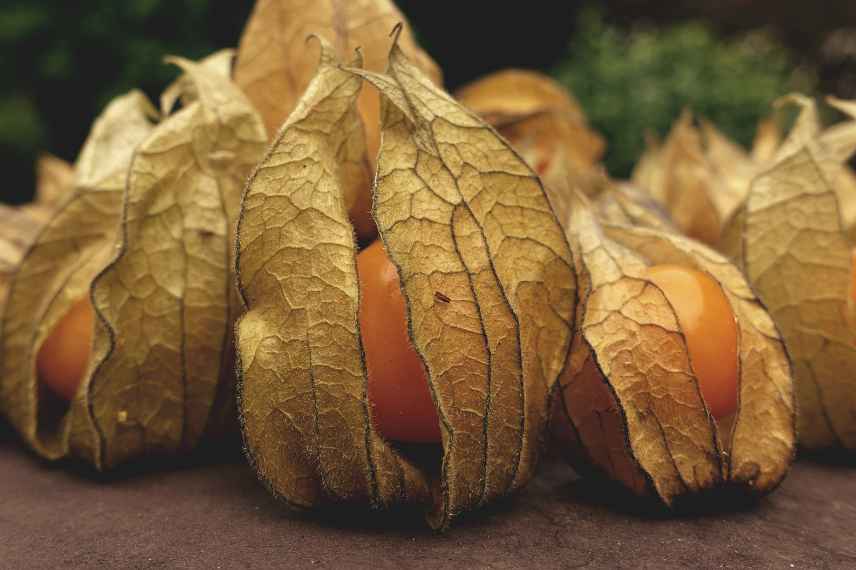
Cape gooseberries are harvested as soon as the lanterns begin to dry and open.
Highly valued in pastry-making for decorating cakes or enjoyed fresh at the end of a meal, cape gooseberries are harvested as soon as the lanterns begin to dry and open. Although often grown as an annual in our temperate climates, it is a perennial plant that can be overwintered under frost-free conditions. Growing it requires well-drained soil and a sunny position to allow the berries to develop their full flavour before the cold weather arrives.
Further reading: Cape gooseberry: sowing, growing and harvesting.
Kiwifruit and hardy kiwifruit, true fruits of the season
Kiwis and their cousins, kiwiberries, are delicious representatives of the autumn season in the fruit garden. Traditional green kiwis or more unusual yellow-fleshed varieties, which are noticeably sweeter, ripen in November. The fruits of Actinidia deliciosa are picked while firm, before they are fully ripe, as they finish ripening once brought indoors to a cellar or cool storeroom. This particular feature means that kiwis can be stored for many weeks, extending the benefits of the autumn harvest well beyond winter.
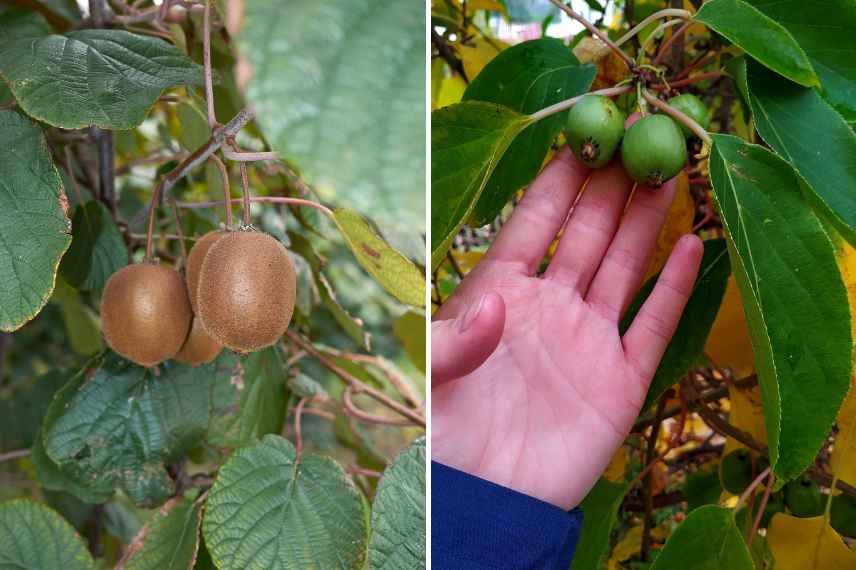
Kiwis and their cousins, kiwiberries, are harvested in the heart of autumn.
Kiwiberries, or Siberian kiwis (Actinidia arguta), are distinguished by their small size, comparable to that of a large gooseberry, and by their smooth, edible skin, which means there is no need to peel them. Their clusters of green, purple or variegated fruits are generally harvested in October, before hard frosts, and then allowed to ripen indoors for a few days, developing a flesh that is often sweeter, softer and richer in vitamins than that of kiwis.
These two small autumn fruits grow on vigorous, hardy lianas that need training against sturdy supports. To ensure good fruiting, you will often need to plant both a male and a female plant. However, self-fertile varieties are also available, such as ‘Herma’, ‘Solissimo’, ‘Boskoop’ and ‘Jenny’ among kiwis, or ‘Issai’ and ‘Super Issai’ among kiwiberries, which are highly productive.
Aronia berries and cornelian cherries, little-known autumn fruits
Other less common but equally delicious fruits also deserve to be picked during this transitional season, namely black chokeberries and cornelian cherries.
Chokeberry (Aronia) is a small deciduous shrub from the Rosaceae family. It is hardy and easy to grow, with attractive autumn foliage, and produces black berries in corymbs, similar to blueberries and exceptionally rich in polyphenols. These fruits are therefore highly nutritious and are often used to make jellies, jams and juice, or added to pastries, as they are slightly sharp and astringent when raw and fresh.
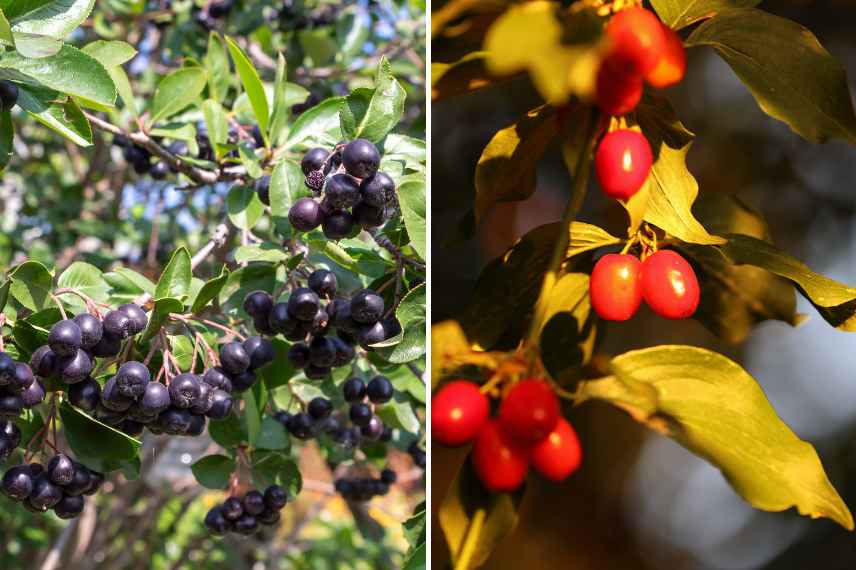
Chokeberries and cornelian cherries are less common but delicious fruits
The cornelian cherry (Cornus mas), meanwhile, produces oval, bright red drupes that ripen at the end of summer and the beginning of autumn. Their sharp-tasting flesh, rich in vitamin C, becomes deliciously soft and sweet when the fruit is fully ripe and begins to detach from the tree. This is a deciduous shrub that is very robust and hardy, flowering yellow early at the end of winter. In autumn, this shrub takes on magnificent red colours. Among the stars is ‘Jolico’, with very sweet fruits that are two to three times larger than those of the wild species.
Including these shrubs in fruiting and informal hedges supports biodiversity while ensuring varied harvests full of flavour surprises.
Find out more: Chokeberry, Aronia: planting, pruning and care.
- Subscribe!
- Contents
This form is protected by reCAPTCHA - the Google Privacy Policy and Terms of Service apply.

































Comments