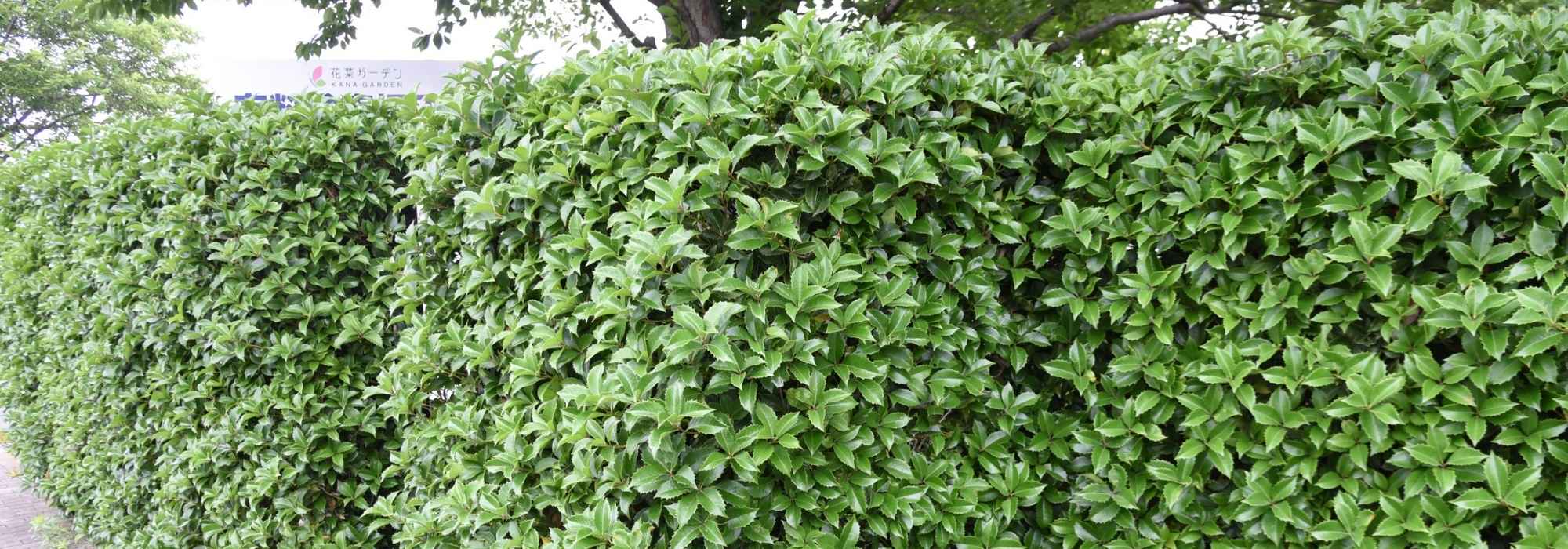
Hedge planting: what price depending on the species chosen for 10 metres of hedge?
Bare-root plants, pots and containers: the true cost of a 10-metre hedge, depending on the species
Contents
Planting a ten-metre hedge generally costs between €30 and €800, depending on the species and type of plants: prices start at around €30 to €60 for bare-root hornbeam, beech or privet, range from €150 to €350 for young plants with a rootball or in containers (thuja, privet, hornbeam), from €250 to €500 for cherry laurel or photinia, and can reach €800 for mature plants providing an immediate effect. The final budget mainly depends on the size of the plants chosen, planting density and whether or not you use a professional for the work. We tell you everything you need to know to make the right choices in this article!
N.B.: the prices given are averages and are for guidance only, as they vary depending on the nursery, the quantity ordered, special offers and promotional lots.
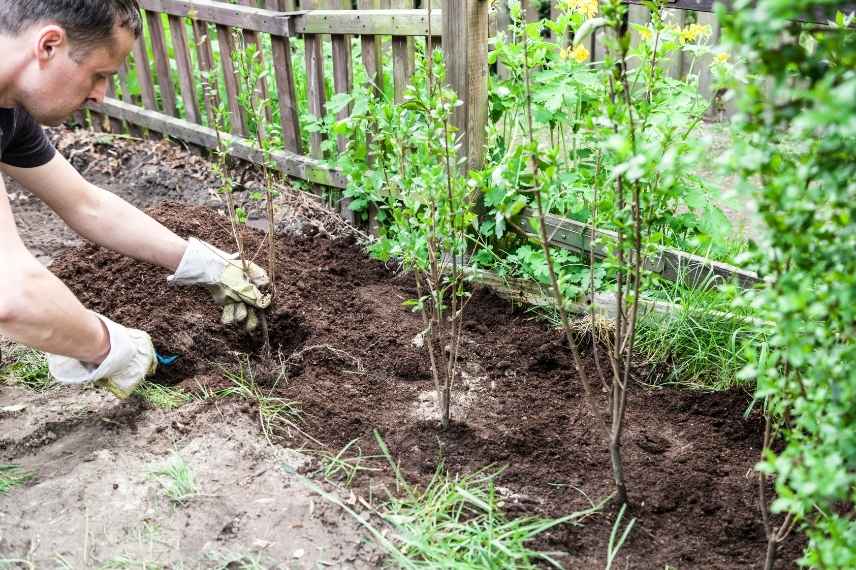
Planting young, already-established shrubs is a good way to reduce the cost of a hedge.
Cost of a 10-metre hedge: what you need to know
|
Read also
How to plant a hedge?How many plants are needed for a 10-metre hedge?
A 10-metre hedge generally consists of 7 to 10 plants, with spacing ranging from 60cm to 1.50m depending on the species and the desired effect. The closer together the plants are, the quicker the hedge becomes an effective screen, but the cost increases accordingly.
The most common planting distances are: 80cm to 1m for elaeagnus, cotoneaster and Portugal laurel; 60 to 80cm for hornbeam and beech, which are planted closer together to form dense, clipped hedges; 1m to 1.50m for informal hedge shrubs such as leatherleaf viburnum or Cotoneaster lacteus, as each plant needs to retain its natural habit. A mixed hedge, made up of two or three different species, is always more ornamental and resilient than a single-species hedge. It also spreads the cost between more expensive and more economical plants.
For an informal hedge made up of flowering shrubs, spacing of 1m to 1.50m is suitable, as each plant needs to retain its natural habit.
Our advice: for a quick screen at a lower cost, plant vigorous species 80cm apart. You will have an effective screening hedge in 3 to 4 years with just 12 to 13 plants.
→ For more information, read our article Trees, shrubs and hedges: what planting distances should you use?
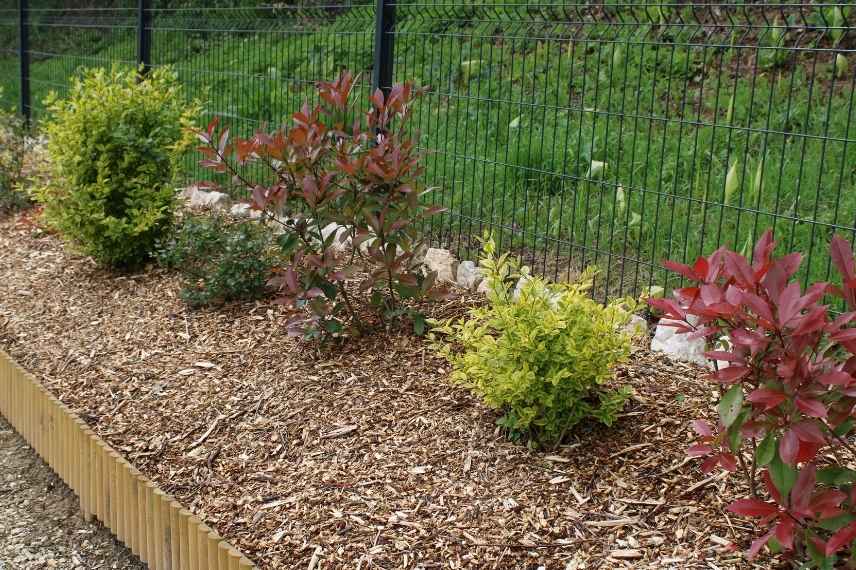
Planting distances mean that there is an average of 1 metre between each shrub.
Which shrubs are the most affordable?
The cheapest hedges are made up of hardy shrubs sold bare-root: expect to pay €15 to €60 for 10 metres. The common hornbeam (Carpinus betulus), beech (Fagus sylvatica) and privet (Ligustrum ovalifolium) are traditionally planted bare-root from November to March, at £1.50 to £6 per plant measuring 60–80 cm. These plants, lifted to order, establish very well provided they are planted quickly, with their roots dipped in root-dip slurry, in soil that is neither frozen nor waterlogged.
Common hornbeam remains a favourite species for cold regions and heavy soils: its marcescent foliage, which stays in place for part of the winter, provides privacy during the dormant season at a moderate maintenance cost, and one pruning a year is enough. Semi-evergreen garden privet has dark green, glossy foliage and grows by around 50 cm per year once established; its yellow-variegated variety ‘Aureum’ brightens a hedge without significantly increasing the cost.
Thuja and Leyland cypress, which were widely planted for many years, are conifers that are inexpensive to buy but have their limitations: they need plenty of water, age badly if severely pruned into old wood, and are particularly susceptible to disease. Two prunings a year are required once mature, so this care should be factored into the overall cost of the hedge.
→ Discover our selection of budget-friendly shrubs and our hedging shrubs.
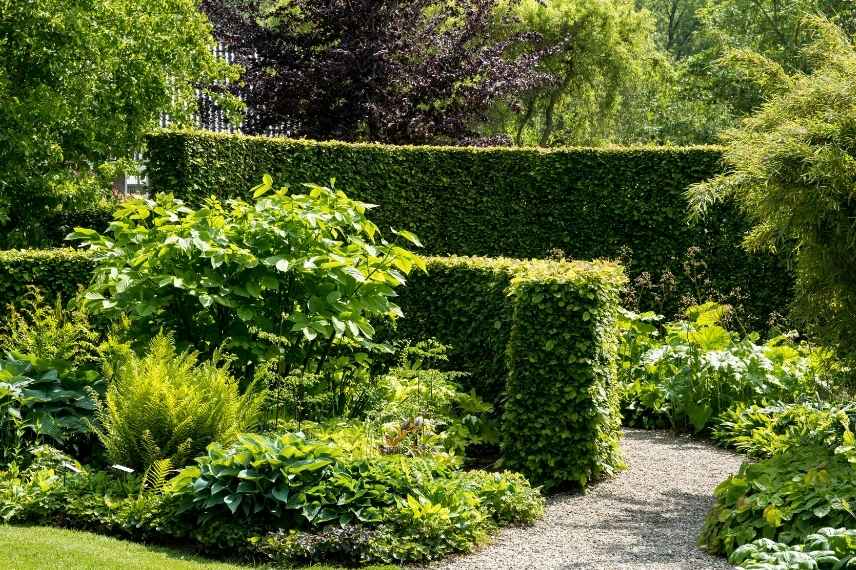
A common hornbeam hedge, one of the most economical shrub species
Read also
Fast-growing evergreen hedge shrubsWhat budget do you need for an ornamental or flowering evergreen hedge?
Hedge shrubs such as cherry laurel (Prunus laurocerasus) and photinia (including the very popular Photinia × fraseri ‘Red Robin’) cost €150 to €700 for 10 metres, an average of €15 to €70 per container-grown plant, for specimens measuring 80 to 125cm. Their growth of 30 to 50cm per year remains fast, and their tough foliage provides a dense screen all year round.
Other, more elegant and longer-lasting species nevertheless deserve to replace them. For an elegant, long-lasting hedge, without thujas or cherry laurels, which are somewhat dated and not always appreciated for the reasons mentioned above, choose highly ornamental shrubs when conditions are suitable. Some varieties have variegated foliage.
Reliable choices for all climates:
- late cotoneaster (Cotoneaster lacteus), with dark foliage and creamy, nectar-rich flowers followed by red berries that persist until winter, hardy down to -20 °C;
- laurustinus (Viburnum tinus), valued for its pink and white winter flowering, from November to March, and suitable for all soils and partially shaded positions;
- wrinkled viburnum (Viburnum rhytidophyllum), with large puckered leaves, growing by 40 to 50cm per year and tolerating -29 °C;
- Portugal laurel (Prunus lusitanica), more refined than cherry laurel, with fragrant creamy flowers, and looking equally attractive clipped or left to grow naturally.
In mild climates or coastal areas, other shrubs offer growth of 40 to 60cm per year and highly decorative foliage, including variegated varieties: elaeagnus (Elaeagnus × ebbingei) and its ‘Limelight’ variety, unaffected by salt spray; New Zealand broadleaf (Griselinia littoralis); pittosporums, including fragrant Pittosporum tobira; abelias; and California lilacs, grevilleas and escallonias, perfect for flowering coastal hedges. Clumping bamboos of the genus Fargesia finally form a rapid screen in 3 years, for a slightly higher budget (€20 to €50 per plant, depending on the size of the container).
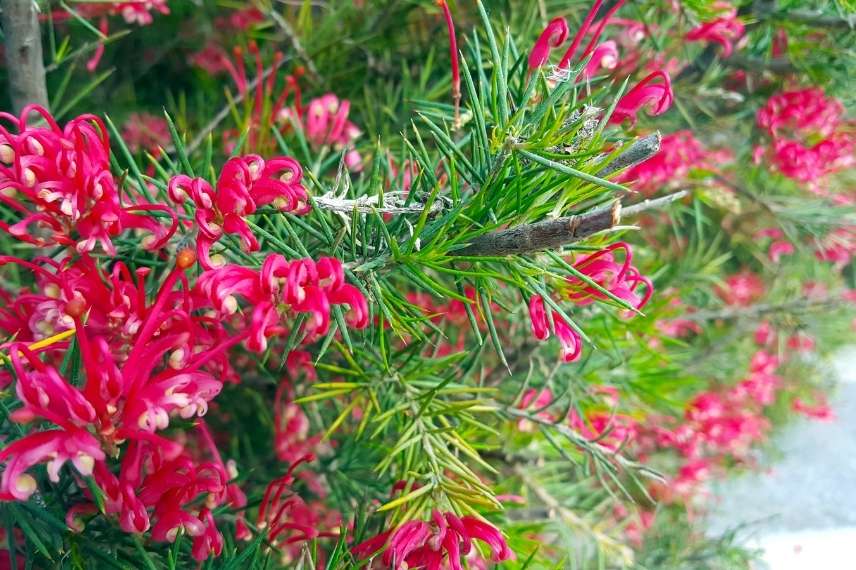
Grevillea rosmarinifolia, a shrub of interest for evergreen hedges in mild climates
How much does a hedge of mature plants cost?
A 10-metre hedge made up of 150 to 200cm mature plants costs €400 to €800, sometimes more, which is three to four times the price of young plants. This is the only way to obtain a genuinely screening hedge from the first year, providing an immediate effect that is useful for concealing a particularly troublesome overlooked view.
However, this choice has its limitations. Establishing large plants is always more delicate, and their watering requirements are greater in the first year (15 to 20 litres per plant per week during dry periods). Temporary staking may even be useful in some cases. The cost of professional planting also increases, as handling heavy rootballs requires suitable equipment.
Our advice: unless you need immediate privacy, choose young plants. They establish more reliably, often catch up with mature plants within 3 to 4 years and require an initial investment two to three times lower. Read Christine’s advice on this subject in Planting large trees and shrubs: for an immediate effect.
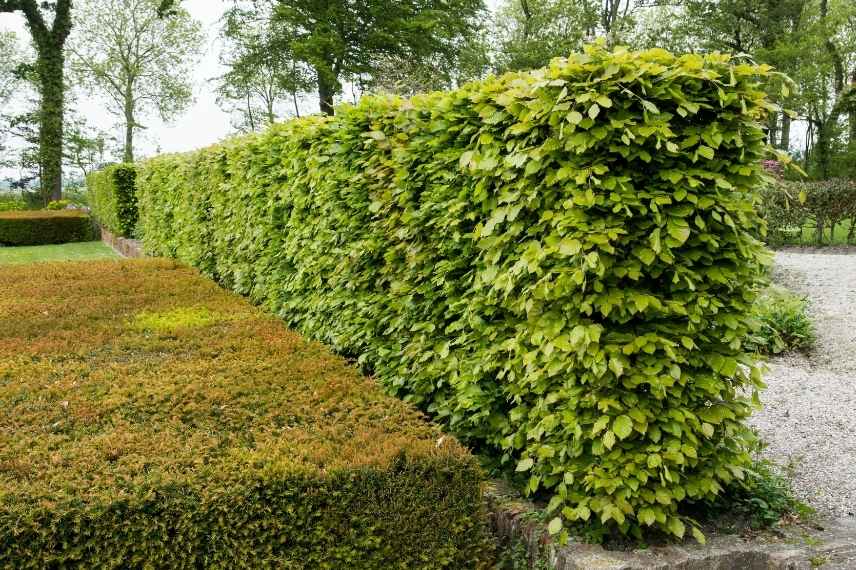
Fagus sylvatica and Taxus
Additional costs when purchasing plants
Beyond the plants themselves, several other elements involved in planting need to be factored in. Allow approximately €50 to €150 for materials per 10 linear metres, including:
- potting compost for planting (around €10 per hole for container-grown plants, less for bare-root plants),
- a base fertiliser such as bonemeal,
- bark or organic mulch to reduce weeding and watering (at no cost if you make your own mulch),
- and, of course, water for watering during the first two years, if you do not have a well.
Other materials are optional, depending on the type of planting:
- A weed-suppressing membrane is being recommended less and less, as it allows little air through. It also adds to the basic budget. However, it can be replaced with mulch mats or biodegradable jute or hemp mulch rolls, which are very useful for making care easier in the case of hedges planted on banks, although they add further to the cost,
- Running bamboo, which we always advise against planting along a property boundary, is the only case where a rhizome barrier is essential.
If you entrust the planting to a landscape gardener, the usual price in France is between €40 and €80 per linear metre, including materials and planting, for a classic evergreen hedge: that is €400 to €800 for a 10-metre length. Planting alone, with the plants supplied, costs around €10 to €20 per plant, depending on soil preparation. These prices obviously vary according to the region and how accessible the site is.
To reduce your planting budget, plant the hedge yourself in autumn: this is the best season for most shrubs, apart from the less hardy ones, as moist soil is easier to work and encourages rooting before winter. Read Olivier’s detailed method and useful advice in our article: How to plant a hedge?
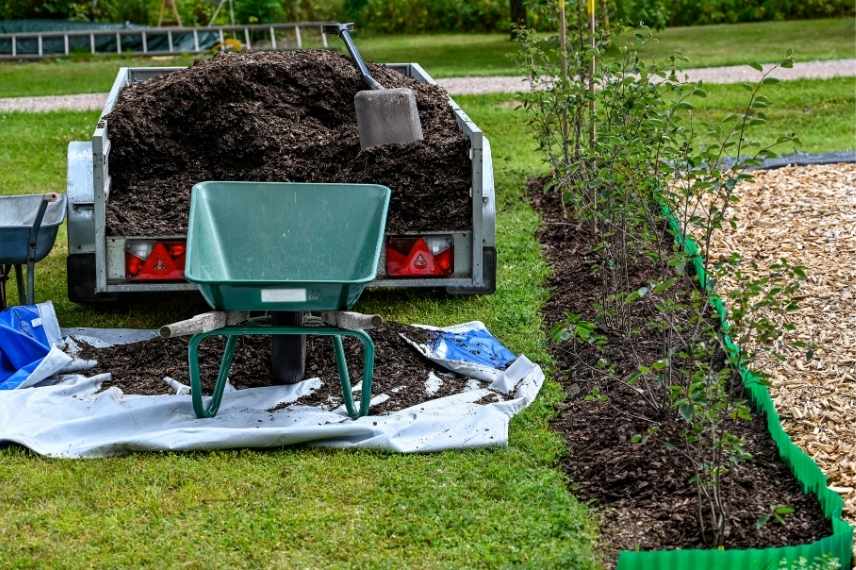
Beyond planting a hedge, you will need to factor in the cost of quality growing medium, fertiliser and mulch.
In summary: the total budget to allow for a 10-metre hedge, depending on the plant size chosen
Here is a brief summary of the budget to allow for, depending on the species chosen (deciduous shrubs, evergreen shrubs or a flowering hedge), plus the additional costs for a 10-metre hedge:
|
Shrub category
|
Bare-root (60–80 cm) | Pot (young plant, 20–40 cm) |
Young plant 40–60 cm in a container |
Plant budget for 10 m | Additional costs (potting compost, root dip, mulch, fertiliser) |
| Deciduous leafy shrubs (hornbeam, beech, privet, hawthorn…) |
1.50–6 €
|
2–4 € | 5–12 € | 15–120 € | 30–60 € (root dip + mulch, less potting compost) |
| Evergreen or semi-evergreen shrubs (oleaster, privet, cotoneaster, pittosporum, laurustinus, griselinia…) |
3–8 €
|
3–6 € | 10–25 € | 40–250 € | 50–100 € (generous amount of potting compost, mulch essential) |
| Flowering shrubs (forsythia, weigela, lilac, mock orange, deutzia…) |
2–6 €
|
2.50–5 € | 8–18 € | 25–200 € | 40–80 € (fertiliser, mulch) |
For 10 metres, allow for 10 to 13 closely planted deciduous shrubs and 8 to 10 evergreen shrubs: the most economical option (pot-grown or bare-root deciduous shrubs) costs around 45–180 €, including supplies, compared with 90–350 € for container-grown evergreen shrubs.
Frequently asked questions about the cost of a hedge
Which is the cheapest shrub for a 10-metre hedge?
Privet and bare-root hornbeam plants measuring 60–80cm form the most economical hedge, costing between €20 and €80 for 10 metres. If you prefer container-grown thuja or Leyland cypress, expect to pay €150 to €300 for a screen that will develop over 3 to 4 years.
What offers the best value for money for a 10-metre hedge, including establishment and growth rate?
If you are not in a hurry to create a fast-growing privacy hedge, pot-grown plants offer the best balance between establishment speed and cost: €2 to €5 per plant (€25 to €60 for 10 metres), with an almost perfect establishment rate and youthful growth that closes the gap with older plants within 4 to 5 years — making this the ideal format for informal flowering hedges. If you need a screen within 4 to 5 years, choose 60–80cm bare-root privet or hornbeam (€20 to €80 for 10 metres); for an evergreen hedge, container-grown elaeagnus in 2 to 3-litre pots (€150 to €250 for 10 metres) becomes dense in around 3 years.
Where can you find inexpensive hedge plants?
Online sales of young plants supplied with a rootball or as bare-root plants, ordered in autumn and winter, offer the lowest prices: expect to pay €2 to €6 per plant for 60–80cm bare-root privet or hornbeam, compared with €7 to €15 for the same plant in a container.
Local nurseries and group orders (through councils or local gardening associations) can also significantly reduce the cost. However, beware of very low-priced batches: poorly rooted plants or those that have remained in the nursery for too long establish badly (always check for possible root circling). We recommend choosing fresh plants with healthy roots, even if they cost a few euros more.
- Subscribe!
- Contents
This form is protected by reCAPTCHA - the Google Privacy Policy and Terms of Service apply.

























Comments