How to combat water stress in garden plants?
Recognise signs of water stress and act promptly
Contents
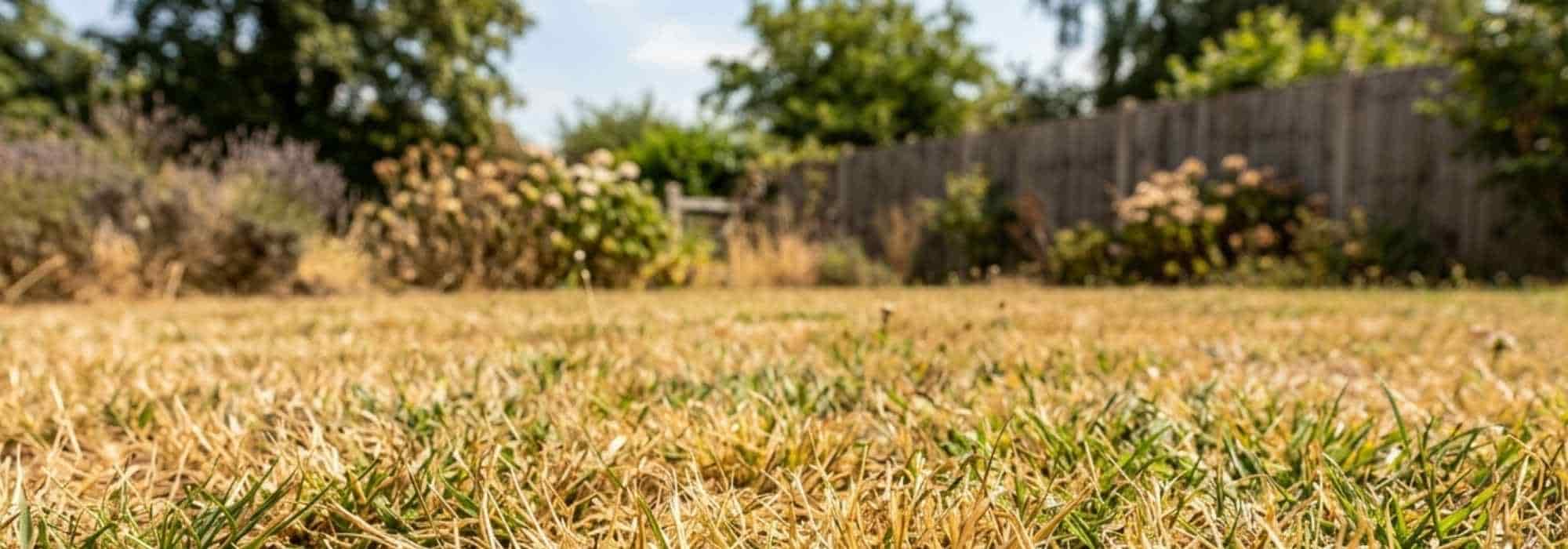
With dry summers, pronounced heat spells and increasingly frequent watering restrictions, our plants can suffer from “water stress” in the garden. This phenomenon occurs when the plant does not receive enough water, or when it can no longer absorb it properly through its roots. Wilting leaves, curtailed flowering, slowed growth, leaf drop: some signs allow action before the plant weakens completely.
In this article, we give you our tips and advice to recognise water stress in plants and the right actions to take to save them.

What is water stress in plants?
Water plays a vital role in plant life. It enables circulation of sap, transport of nutrients, photosynthesis and maintenance of tissues. When a plant lacks available water, it naturally reduces its activity to limit losses. This is a defence response.
Water stress can be temporary, for example after a hot day followed by a thorough watering or rain. It becomes more worrying when it lasts several days, especially during drought, in soil poor in organic matter or in a young plant. A potted plant is also more exposed, as soil volume dries out quickly.
How to recognise a plant suffering from water stress?
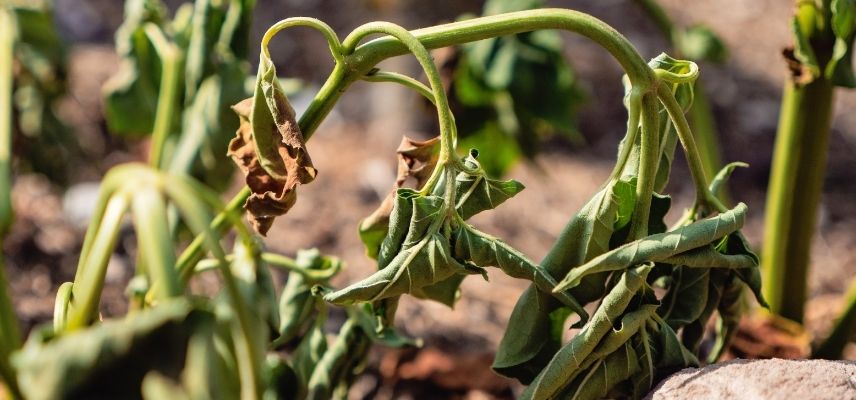
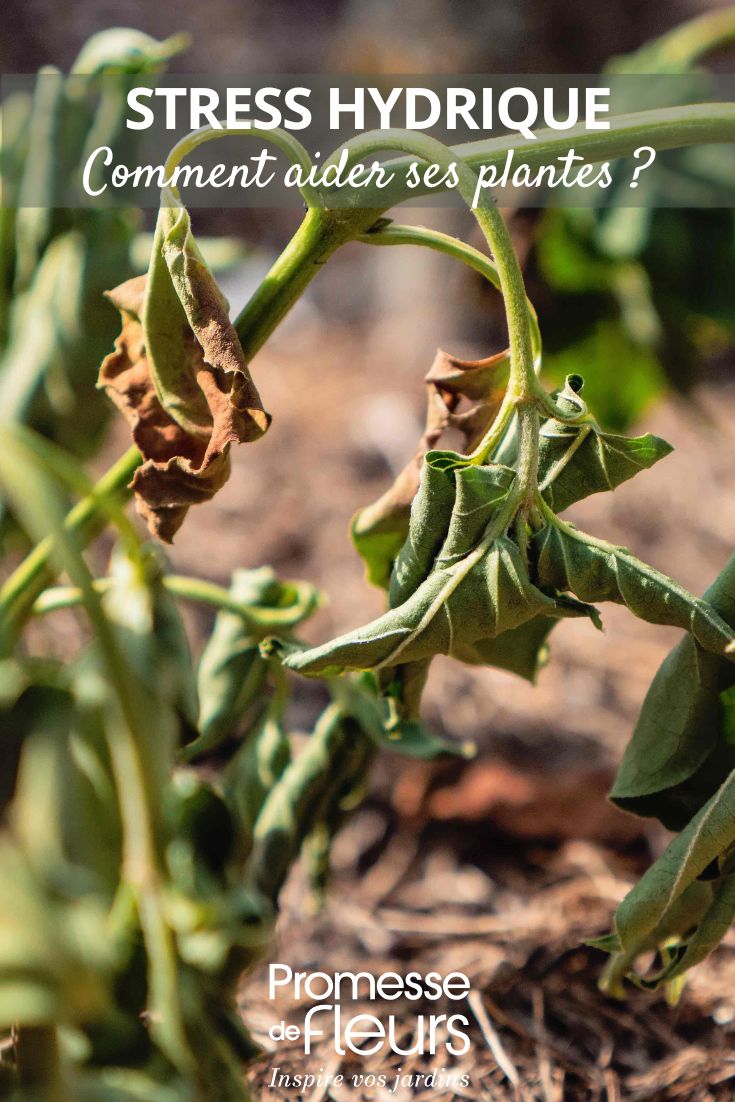
First signs often appear on foliage. A plant under water stress can show several symptoms :
- limp or wilted leaves, especially by the end of the day ;
- foliage that curls in on itself to limit evaporation ;
- leaves that yellow or brown at the edges or dry out ;
- premature loss of leaves, flowers or fruits ;
- slowed growth and less vigorous young shoots.
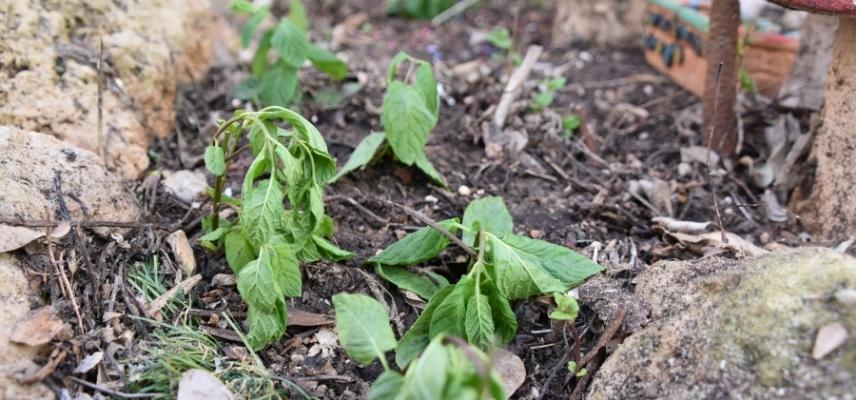
In some plants, foliage temporarily returns to normal in the morning when temperatures fall. If lack of water persists, symptoms worsen and can permanently affect growth, flowering or fruiting… even plant survival if nothing is done!
Plants such as perennials, shrubs and recently planted young trees are particularly sensitive, because their root system is not yet developed enough to draw water from deeper soil.
Good to know: be careful not to confuse lack of water with overwatering. In both cases, plants can wilt. Before watering, check soil moisture a few centimetres deep. If soil is dry, the plant is probably suffering from a water deficit. If instead the soil is damp, compact or gives off a fermenting smell, the problem may come from overwatering or poor drainage.
How to naturally help a plant under water stress?
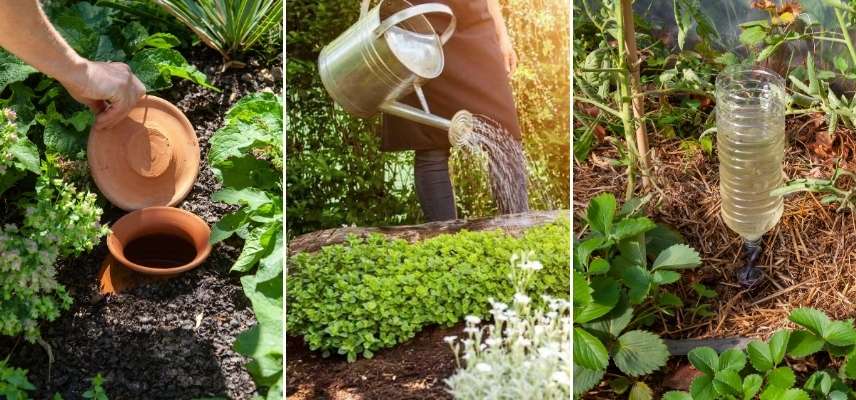
Watering
The first instinct is to water deeply and thoroughly. When?: In summer, water preferably early morning or in the evening to avoid evaporation from the sun. Frequency:
– for plants in ground: 1 to 2 times per week in summer or during a heatwave.
– for container-grown plants: 2 to 3 times per week, or even daily if pot is small and in full sun.
Adjust watering according to soil type, plant type (succulents and Mediterranean plants need less water) and rooting (a 30-year-old tree will need less water than a young specimen).
Tips: a watering basin formed around the plant concentrates water at root level and limits losses through runoff. You can also install oyas at the base of plants to maintain soil moisture.
Did you know? A shallow watering only moistens the surface and encourages roots to remain near soil, where heat quickly dries the earth. Conversely, a deep, thorough watering will encourage the plant to develop deeper roots.
Mulching
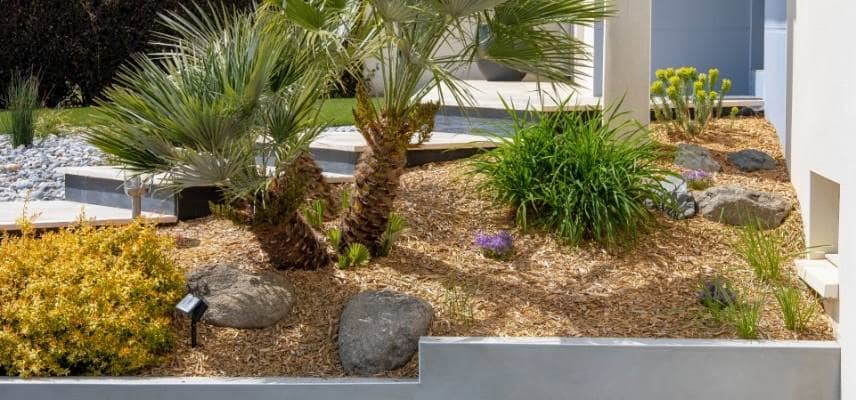
The mulching is one of most effective actions to limit water stress in the garden. A layer of dead leaves, dry grass clippings, straw, shredded branches or wood chips protects soil from the sun and slows evaporation of water under its rays.
Move pots into partial shade
For pot-grown plants, move them temporarily into partial shade or to a spot less exposed to intense heat to reduce water stress and slow drying out of the potting mix.
Create shade during hottest hours
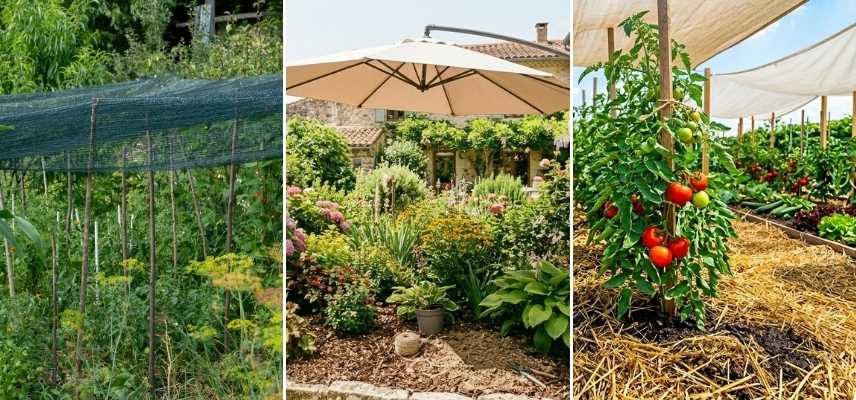
For plants in ground, create shade during the hottest hours while plant recovers vigour or during a heatwave: shade cloth or sail, parasol, old white sheet hung up, overturned wooden crate, etc.
Avoid fertilising
For already weakened plants, avoid applying nitrogen-rich fertiliser. It would stimulate tender growth that demands more water.
Weed to limit competition
Also remove adventive plants from around bases of most vulnerable plants. In dry periods, these competing herbs also draw on soil water reserves and can increase water stress.
Our podcast video: “How to save garden plants after a drought” :
Read also
7 drought-resistant melliferous bushesPrevent water stress in the garden
Choosing plants suited to your climate
A plant adapted to local climate, exposure and soil type will suffer less water stress and require fewer interventions.
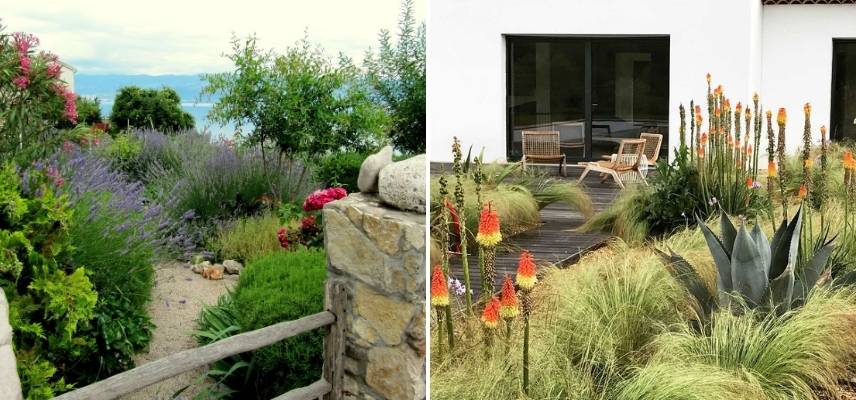
In dry soil and full sun, favour low-water plants such as lavenders, sages, rockroses, euphorbias, thyme, Perovskia, yarrows or Mediterranean grasses. In cooler regions, choice will depend mainly on drainage, wind and soil fertility.
Did you know? Plants with silvery or leathery foliage are generally more tolerant of sun and drought.
Plant at the right time
In regions where summers are very dry, favour planting in autumn. Plants will then have time to develop roots before the following summer.
Watering
A good watering at planting, followed by infrequent, generous and deep applications, encourages deep rooting. As mentioned above, water preferably late in the evening or early in the morning.
Installing a rainwater collector provides a useful reserve for summer waterings. To deliver water more evenly and limit losses through evaporation, you can also use a drip system or oyas, particularly suited to borders, vegetable patch and container-grown plants.
Mulch to conserve water
Consider installing a mulch which will protect soil from cold in winter and from water evaporation in summer. It will also feed the soil as it decomposes.
Compost to improve soil structure
In spring or autumn, spread a layer of well-rotted compost at the base of plants. This addition of organic matter helps soil retain moisture for longer and better withstand dry periods.
Plan for your absences
Before going on holiday, group potted plants in a slightly shaded spot and set up a suitable watering system (such as a drip system, oyas or water reserves). And if possible, arrange for a neighbour, friend or family member to water the most sensitive plants. Also read our article: “Prepare your garden for the holidays: everything you need to do before you go!
Frequently asked questions about plant water stress
What to do when foliage is already damaged?
If some leaves have been scorched by water stress, there is no need to remove them immediately. Wait for growth to resume before pruning completely dry parts. Leaves that are only wilted or curled can sometimes return to normal after rehydration.
Can a wilted plant recover?
Yes, if roots are still alive. After deep watering and temporary shelter from the sun, some plants recover within hours or a few days. Completely dry parts, however, will not green up again.
Should you water every day during hot weather?
Not necessarily. For most plants in the ground, it is better to water less often but for longer, so soil is moistened deeply. Pots, planters and young plants, however, need closer attention and some may indeed need daily watering if necessary.
- Subscribe!
- Contents
This form is protected by reCAPTCHA - the Google Privacy Policy and Terms of Service apply.

































Comments