Cyathea brownii - Norfolk tree fern
Cyathea brownii - Norfolk tree fern
Cyathea brownii - Norfolk tree fern
Cyathea brownii - Norfolk tree fern
Cyathea brownii - Norfolk tree fern
Cyathea brownii
Norfolk tree fern, Smooth tree fern
Back-to-school special offer!
Get €10 off for every €50 you spend! And get up to €40 off on a single order.
How does it work?
1. Shop your favourites
Add your favourite plants to your basket. For every €50 you spend (excluding delivery charges, store credit and the plastic-free option), you’ll receive a €10 voucher.
€50 spent = €10 voucher
€100 spent = €20 voucher
€150 spent = €30 voucher
€200 spent = €40 voucher
2. Place your order
Once your basket reaches one of the spending thresholds, place your order. You can even choose your delivery date!
3. Receive your voucher
As soon as your order has been shipped, you’ll receive an email containing your personal voucher code and its value.
4. Use it on your next order
Your voucher is valid for 90 days from the date you receive it. It can be used once only, on a new order worth at least the value of the voucher, excluding delivery charges.
Please note: Vouchers can be combined with other offers, but cannot be split or refunded.
Why not try an alternative variety in stock?
View all →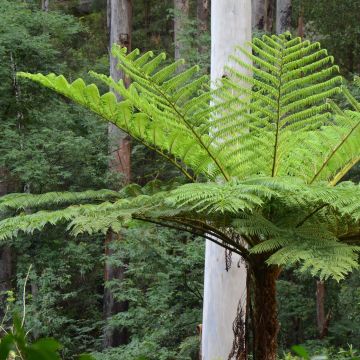
Available in 1 sizes

Available in 4 sizes
This plant carries a 24 months recovery warranty
More information
We guarantee the quality of our plants for a full growing cycle, and will replace at our expense any plant that fails to recover under normal climatic and planting conditions.
Would this plant suit my garden?
Set up your Plantfit profile →
Description
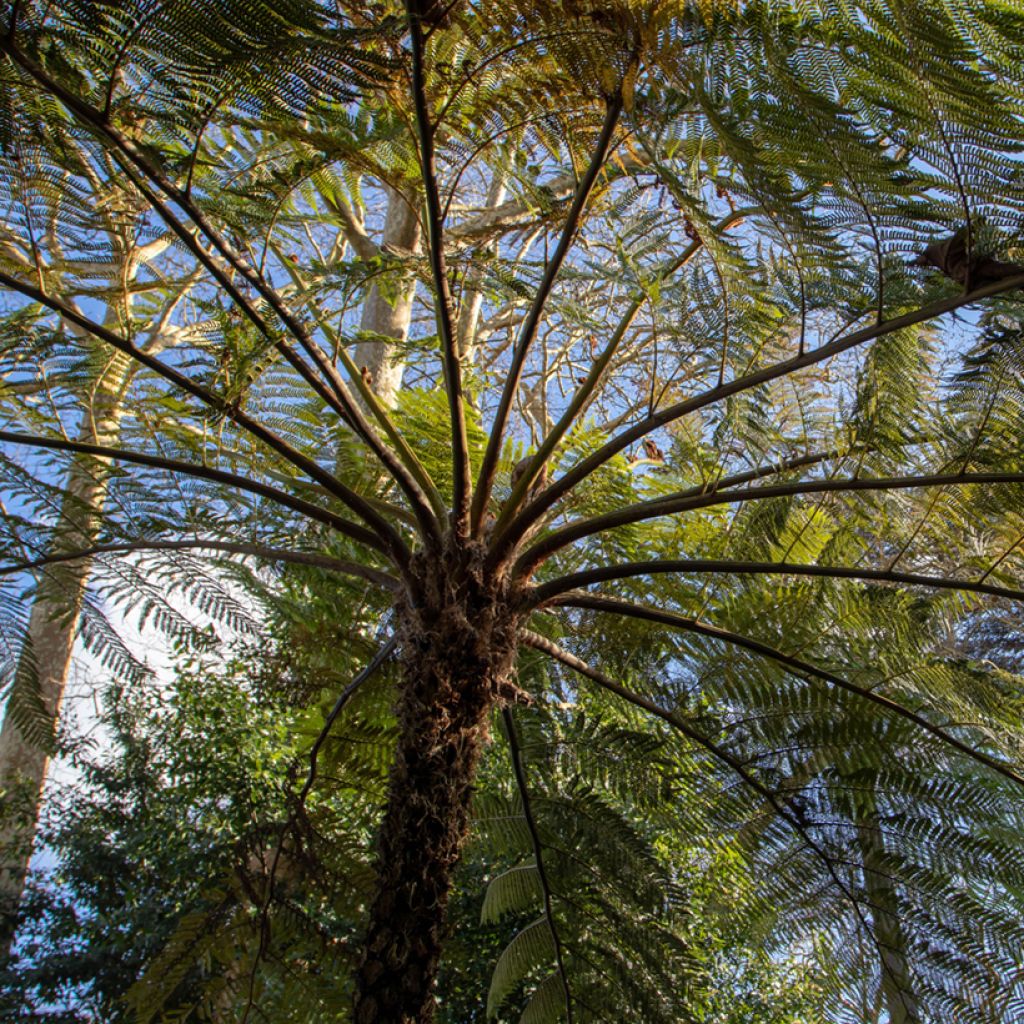
Cyathea brownii, also known as Sphaeropteris excelsa, is a majestic tree fern native to Norfolk Island. It is an impressive plant with a highly exotic appearance. With its slender "trunk" and delicately cut airy fronds, it creates a lush atmosphere reminiscent of tropical forests. Ideal for shaded gardens or spacious interiors, this fern is a popular choice among enthusiasts of exotic plants.
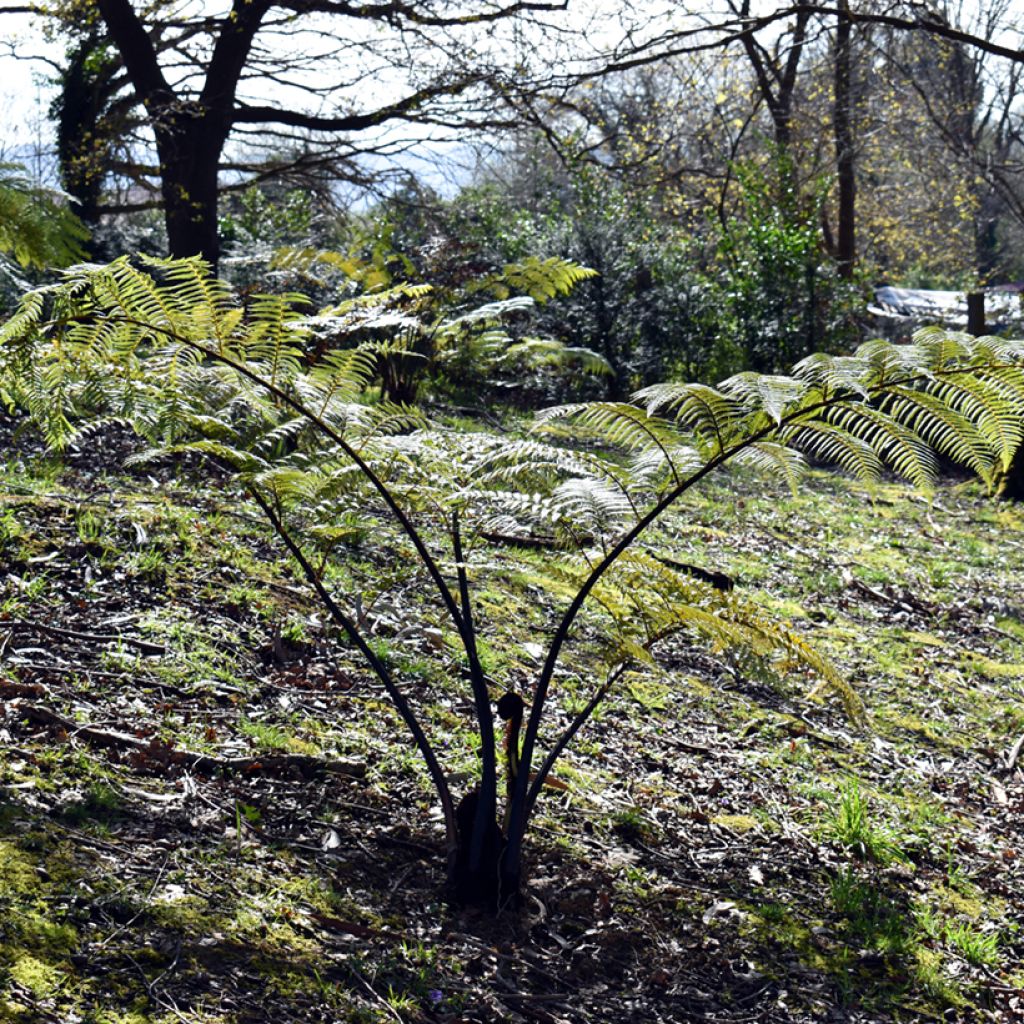
Cyathea brownii belongs to the Cyatheaceae family. This Cyathea genus, which includes around 470 different species, comprises the largest tree ferns in the world, with some species reaching heights of up to 30 metres. These plants are mainly found in the humid tropical and subtropical regions of the southern hemisphere. The Cyathea brownii is native to Norfolk Island, located in the southwest Pacific Ocean. In its natural habitat, it can reach an impressive height of over 20 metres, but when cultivated in our latitudes, the plant does not exceed 5 metres in height. In a pot, it will grow up to a maximum of 3-4 metres in height. This tree fern is characterised by a sturdy and slender stipe, topped with a crown of light green fronds (leaves), finely divided and measuring between 2 and 6 metres in length. Arranged in a crown at the top of the stipe, they give the plant a majestic and exotic look.
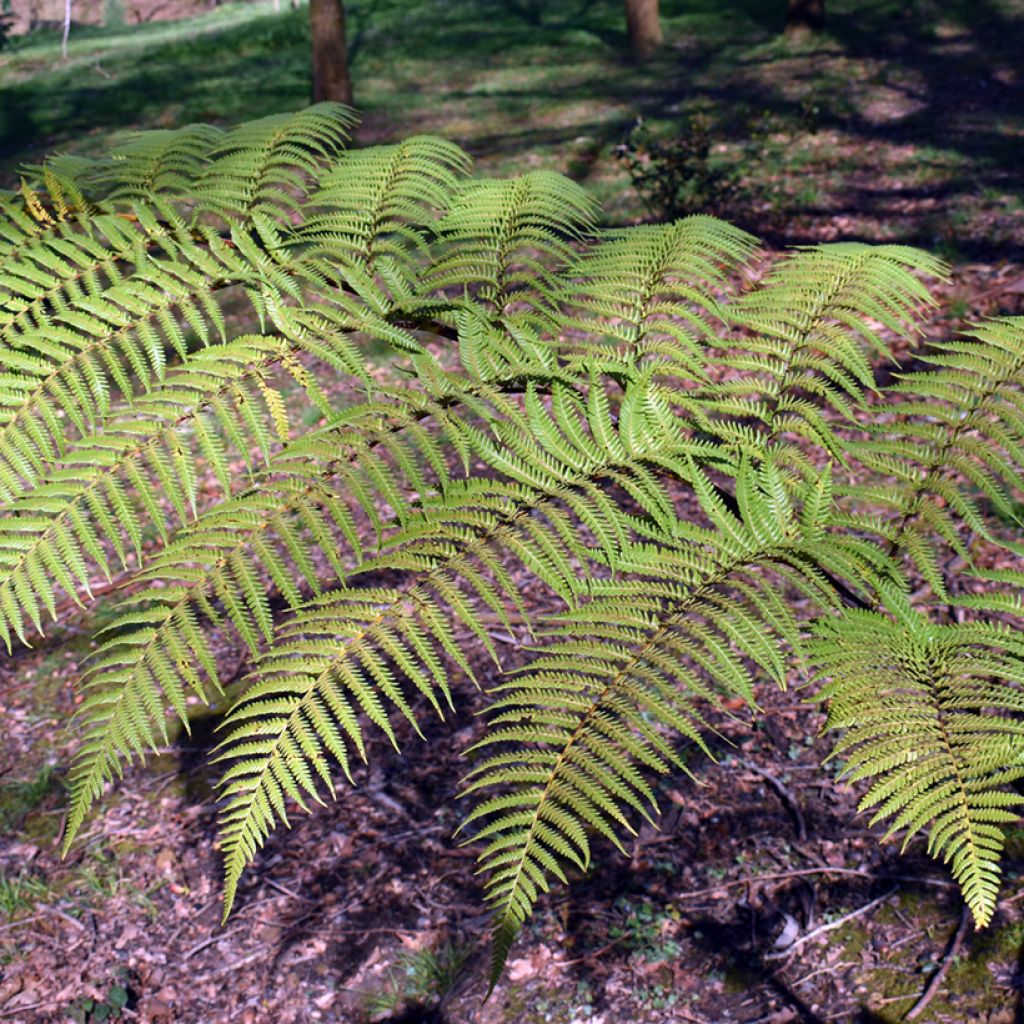
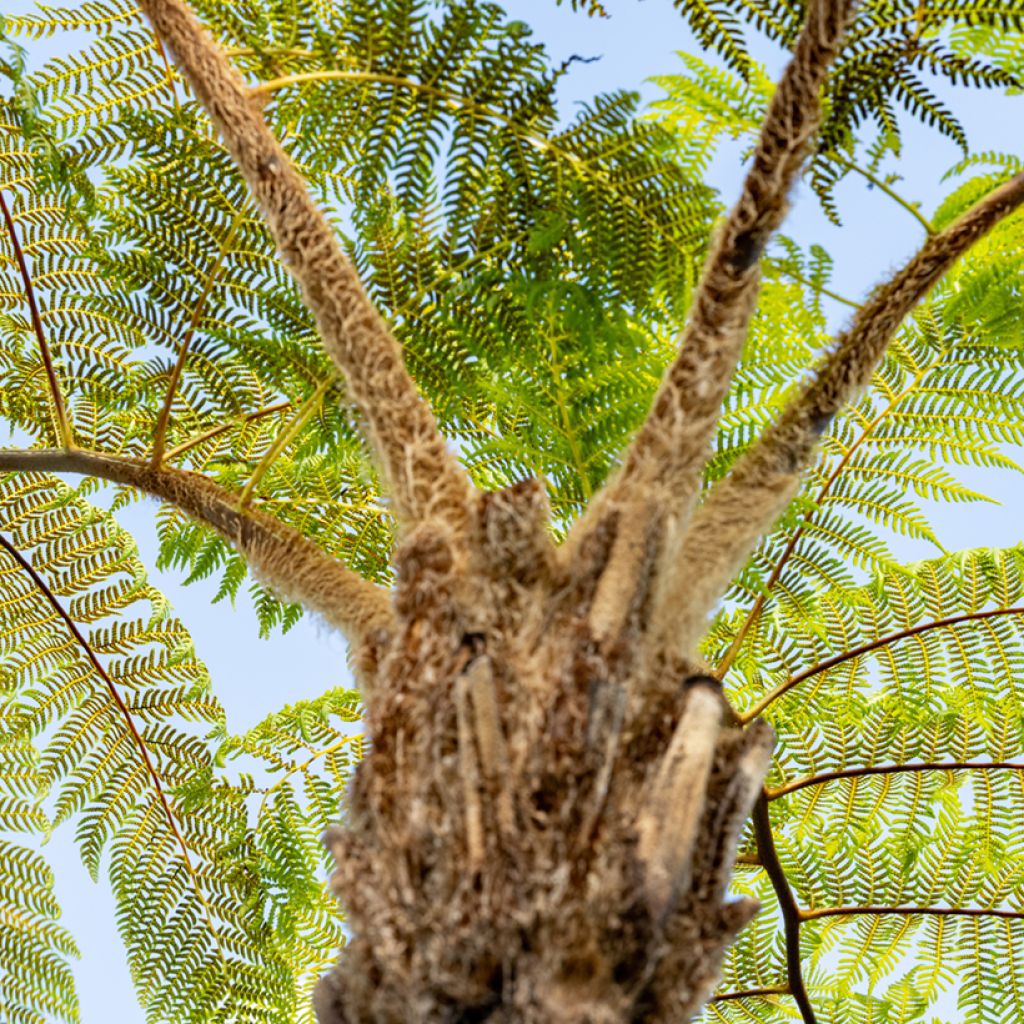
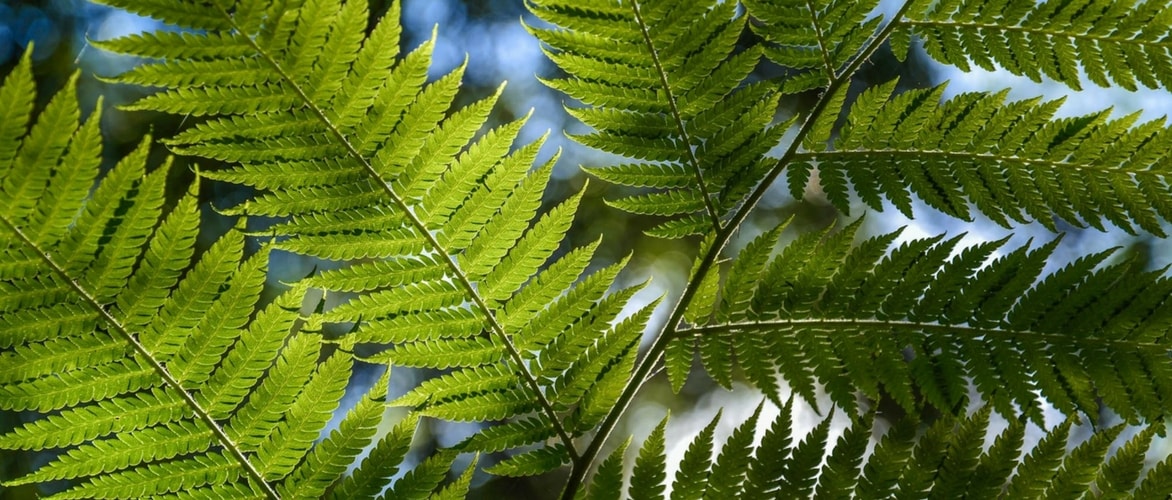
The fronds of Sphaeropteris excelsa are bipinnate to tripinnate. Each one is composed of a long, sturdy, dark brown to black petiole, covered with fine golden-brown to dark brown scales, characteristic of young developing fronds. The pinnae (primary segments) are long and arched, each bearing finely cut pinnules (secondary segments). These pinnules are lanceolate, deeply toothed, and have well-defined veins. They are generally light green to dark green, with a slightly leathery texture and a satin-like appearance. The young fronds unfurl in a spiral, a typical fern phenomenon called circinate vernation. During this phase, they are covered with protective reddish-brown scales.
In tree ferns, the stipe is the main "trunk" or stem that rises vertically above the ground. It is formed by the accumulation of the bases of old fronds (or leaves) after they fall. Unlike a true woody trunk, the stipe is made up of fibrous tissues and remains flexible yet resistant. It enables the fern to support its imposing foliage.
Tree ferns are not known for their great hardiness, except for the widespread Dicksonia antarctica. Cyathea brownii can only be grown in the ground in the most sheltered coastal gardens. In a colder climate, it will need to be planted in a container to be brought indoors in winter. In gardens where it can be grown in the ground, it serves as a centrepiece to create a tropical-inspired scene. It can be paired with giant foliage plants, such as Gunnera manicata, Brazilian Giant Rhubarb, by a pond, or with non-invasive bamboos like Fargesia papyrifera 'Blue Dragon'. To cover the ground, consider Farfugium, with its extremely decorative leaves.

Cyathea brownii - Norfolk tree fern in pictures

Plant habit
Foliage
Botanical data
Cyathea
brownii
Cyatheaceae
Norfolk tree fern, Smooth tree fern
Sphaeropteris excelsa
Australia
Planting and care
To cultivate Cyathea brownii, it is essential to recreate the humid and shady conditions of its natural habitat.
When planted in the ground, it thrives in a soil rich in humus, well-drained, but always moist. A semi-shaded location, sheltered from strong winds, is essential to protect its delicate fronds. The soil should remain moist, without excess water to prevent the collar from rotting. A thick mulch around the base helps retain moisture and protect the roots from the cold. In winter, in regions with harsh winters, winter protection is necessary, as it does not tolerate temperatures below -4 to -5 °C.
When grown in a container, choose a wide and deep pot to allow its stipe to develop properly. Use a mix of potting soil for green plants and well-decomposed compost. Place it in a bright location without direct sunlight. Maintain a constant substrate moisture by watering regularly, but without letting water stagnate in the saucer. Regularly misting the fronds is recommended to recreate the ambient humidity of tropical forests. During the growth period, apply a liquid organic fertiliser every month to stimulate development. In winter, bring the container into a cool, bright space if outdoor temperatures drop below zero.
Planting period
Intended location
Care
Planting & care advice
-
-

-

-
-
-

-
-
This item has not been reviewed yet - be the first to leave a review about it.
Recently viewed products
Haven't found what you were looking for?
Hardiness is the lowest winter temperature a plant can endure without suffering serious damage or even dying. However, hardiness is affected by location (a sheltered area, such as a patio), protection (winter cover) and soil type (hardiness is improved by well-drained soil).

The flowering period indicated on our website applies to countries and regions located in USDA zone 8 (France, the United Kingdom, Ireland, the Netherlands, etc.)
It will vary according to where you live:- In zones 9 to 10 (Italy, Spain, Greece, etc.), flowering will occur about 2 to 4 weeks earlier.
- In zones 6 to 7 (Germany, Poland, Slovenia, and lower mountainous regions), flowering will be delayed by 2 to 3 weeks.
- In zone 5 (Central Europe, Scandinavia), blooming will be delayed by 3 to 5 weeks.
In temperate climates, pruning of spring-flowering shrubs (forsythia, spireas, etc.) should be done just after flowering.
Pruning of summer-flowering shrubs (Indian Lilac, Perovskia, etc.) can be done in winter or spring.
In cold regions as well as with frost-sensitive plants, avoid pruning too early when severe frosts may still occur.
The planting period indicated on our website applies to countries and regions located in USDA zone 8 (France, United Kingdom, Ireland, Netherlands).
It will vary according to where you live:
- In Mediterranean zones (Marseille, Madrid, Milan, etc.), autumn and winter are the best planting periods.
- In continental zones (Strasbourg, Munich, Vienna, etc.), delay planting by 2 to 3 weeks in spring and bring it forward by 2 to 4 weeks in autumn.
- In mountainous regions (the Alps, Pyrenees, Carpathians, etc.), it is best to plant in late spring (May-June) or late summer (August-September).
The harvesting period indicated on our website applies to countries and regions in USDA zone 8 (France, England, Ireland, the Netherlands).
In colder areas (Scandinavia, Poland, Austria...) fruit and vegetable harvests are likely to be delayed by 3-4 weeks.
In warmer areas (Italy, Spain, Greece, etc.), harvesting will probably take place earlier, depending on weather conditions.
The sowing periods indicated on our website apply to countries and regions within USDA Zone 8 (France, UK, Ireland, Netherlands).
In colder areas (Scandinavia, Poland, Austria...), delay any outdoor sowing by 3-4 weeks, or sow under glass.
In warmer climes (Italy, Spain, Greece, etc.), bring outdoor sowing forward by a few weeks.
Shipping country and language
Your country of residence may be:
Your country of residence is:
For a better user experience on our website, you can select:
Your shipping country:
-
 Austria
-
 Belgium
-
 Bosnia & Herzegovina
-
 Bulgaria
-
 Croatia
-
 Cyprus
-
 Czechia
-
 Denmark
-
 Estonia
-
 Finland
-
 France
-
 Germany
-
 Greece
-
 Hungary
-
 Iceland
-
 Ireland
-
 Italy
Italy
-
 Latvia
-
 Liechtenstein
-
 Lithuania
-
 Luxembourg
-
 Malta
Malta
-
 Netherlands
-
 Poland
-
 Portugal
-
 Romania
-
 Serbia
-
 Slovakia
-
 Slovenia
-
 Spain
Spain
-
 Sweden
-
 Switzerland
Language:
-
French
-
 English
-
Spanish
-
Italian
-
German
-
Portuguese
-
Dutch
-
Finnish
My Account
Hello
My wish lists
My cart
Log in / Register
Existing customer?
This form is protected by reCAPTCHA - the Google Privacy Policy and Terms of Service apply.
New customer?
Create an account to track your orders, access our customer service and, if you wish, make the most of our upcoming offers.