
Rosa x multibracteata Cerise Bouquet

Rosa x multibracteata Cerise Bouquet
Rosa x multibracteata Cerise Bouquet
Rosa x multibracteata Cerise Bouquet
Rose 'Cerise Bouquet'
Back-to-school special offer!
Get €10 off for every €50 you spend! And get up to €40 off on a single order.
How does it work?
1. Shop your favourites
Add your favourite plants to your basket. For every €50 you spend (excluding delivery charges, store credit and the plastic-free option), you’ll receive a €10 voucher.
€50 spent = €10 voucher
€100 spent = €20 voucher
€150 spent = €30 voucher
€200 spent = €40 voucher
2. Place your order
Once your basket reaches one of the spending thresholds, place your order. You can even choose your delivery date!
3. Receive your voucher
As soon as your order has been shipped, you’ll receive an email containing your personal voucher code and its value.
4. Use it on your next order
Your voucher is valid for 90 days from the date you receive it. It can be used once only, on a new order worth at least the value of the voucher, excluding delivery charges.
Please note: Vouchers can be combined with other offers, but cannot be split or refunded.
Why not try an alternative variety in stock?
View all →
Available in 2 sizes

Available in 2 sizes

Available in 2 sizes

Available in 2 sizes

Available in 2 sizes
Available in 2 sizes

Available in 2 sizes

Available in 2 sizes
Available in 2 sizes

Available in 2 sizes
This plant carries a 24 months recovery warranty
More information
We guarantee the quality of our plants for a full growing cycle, and will replace at our expense any plant that fails to recover under normal climatic and planting conditions.

Description
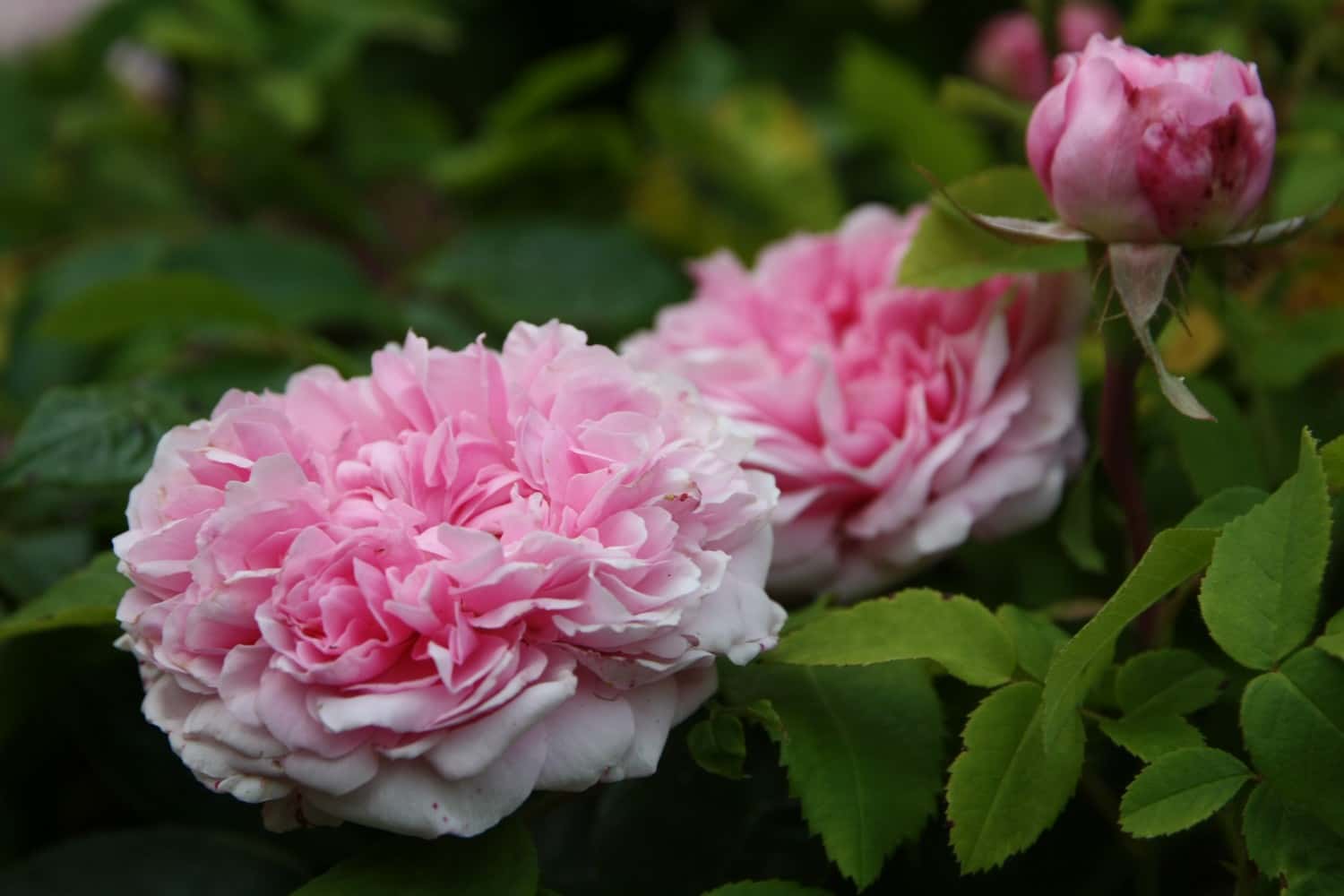
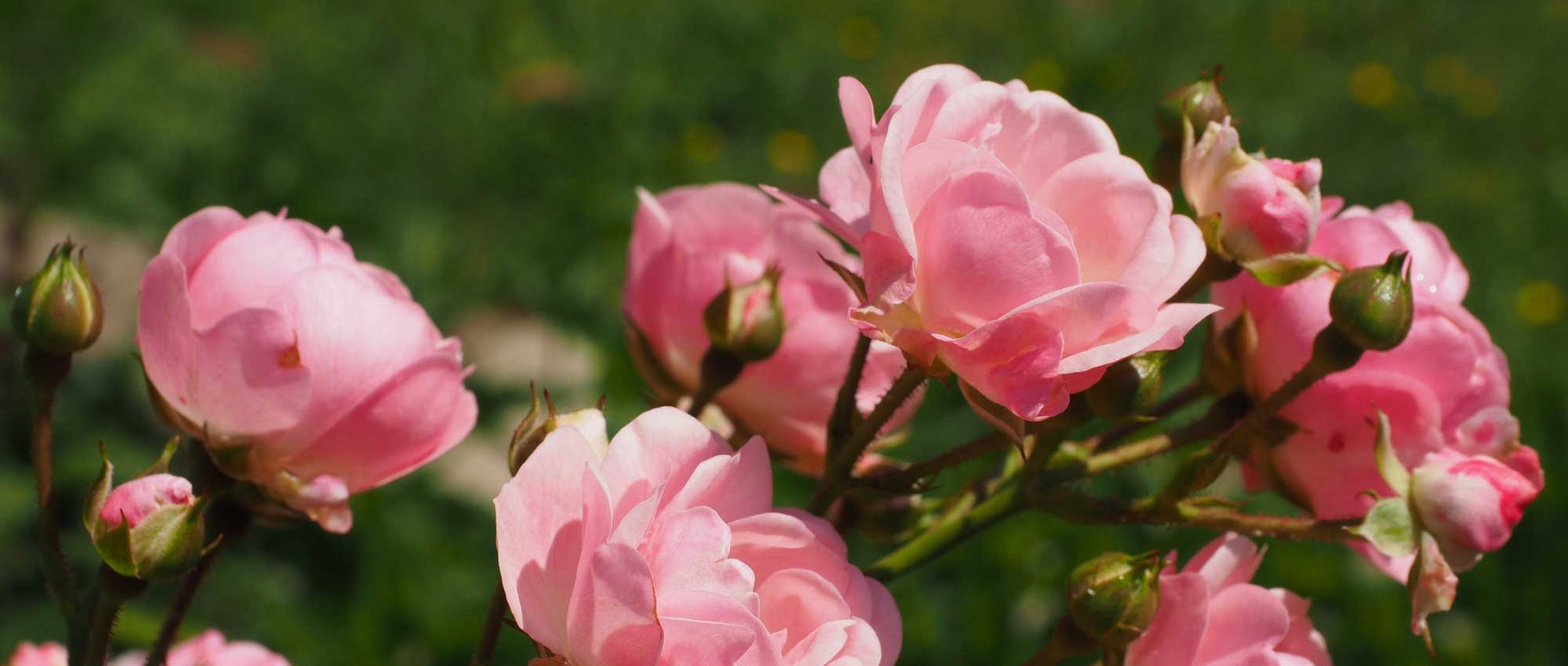
Rosa 'Cerise Bouquet' was obtained in 1958 by the German rose breeder Kordes. It will delight enthusiasts: its dimensions are impressive, its branches are armed with formidable thorns, its habit is widely spreading, and its summer flowering is as prolonged as it is brilliant. Its bright pink-red double flowers cover long branches that bend under their weight. They bloom for several weeks in June-July, and sometimes more sporadically in autumn. It is perfect in a large garden, isolated on a large lawn, as a backdrop for large flower beds, or in a defensive hedge.
Rosa 'Cerise Bouquet' is the result of a cross-breeding between R. multibracteacta, native to eastern China, and the 'Crimson Glory' cultivar. This particularly vigorous rose received the Royal Horticultural Society's Award of Garden Merit.
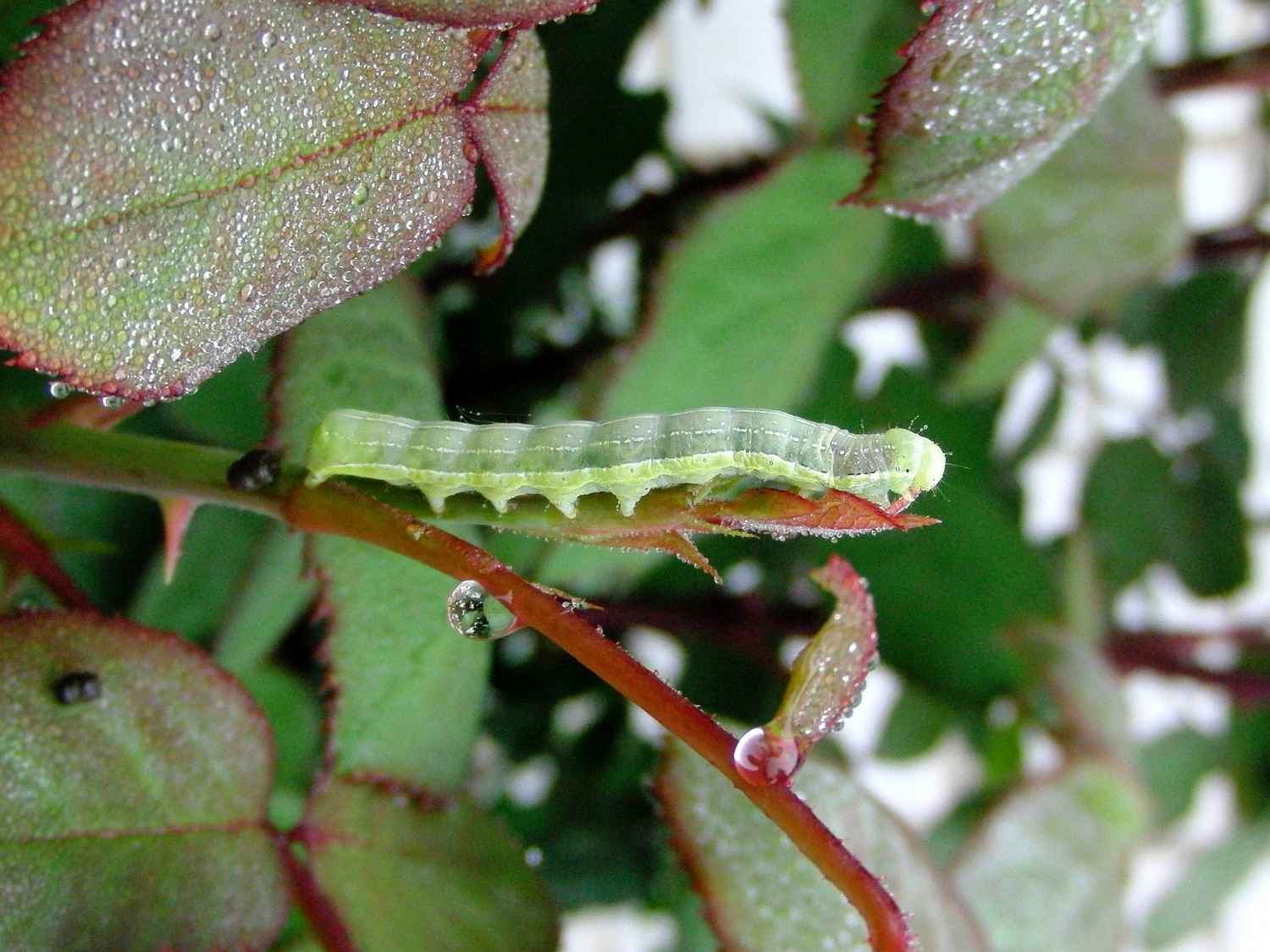
It is a very large bush, with an upright and widely spreading habit, as wide as it is tall. It bears long, thick branches, which are slightly stiff when they are not carrying flowers. The heavily thorned stems tend to branch at right angles after pruning. It easily reaches 3m (10ft) in all directions, with a rapid growth rate when planted in deep and fertile soil. Its disease-resistant deciduous foliage is a matte glaucous green, divided into rounded leaflets. Flowering mainly takes place in summer, from June to July depending on the climate. It lasts for a minimum of 4 weeks. It takes the form of generous bouquets produced on short secondary branches appearing along the main branches. The pendulous flowers, 7cm (3in) in diameter, dangle on long petioles. They are semi-double to double, with frilly rosette-shaped blooms composed of 20 to 39 petals. The centre of the corolla is occupied by a crown of golden yellow stamens. Their colour is a very bright carmine-pink, and they have a beautiful fragrance. This rose requires deep, moist, and fertile soil to fully thrive.
The 'Cerise Bouquet' rose can be trained on a support, up to 4m (13ft) in height, or allowed to grow freely as a 2 to 3m (7 to 10ft) bush in all directions. It is preferably suited for a medium to large-sized garden, away from high traffic areas to avoid its thorns. It can be planted in a large flower bed or in a rustic or defensive hedge. It can create a beautiful ensemble with other large roses such as the easy-to-grow Rosa complicata, R. californica 'Plena', R. rubiginosa (sweet briar), or R. rubrifolia with purple leaves. Many other combinations are possible, with easy-to-grow shrubs such as amelanchiers, Elaeagnus 'Zempin', deciduous euonymus, white spireas, ornamental fruit trees (prunus, malus, pyrus), and viburnums. Its spectacular habit and flowering deserve to be displayed in isolation, on a lawn, where it will provide a dazzling display in summer. It is a very healthy shrub, requiring no maintenance once well established.
Tips: provide sturdy bamboo supports to prevent its long stems from collapsing under the weight of the flowers, especially if the bush is planted at the back of a flower bed.

Rosa x multibracteata Cerise Bouquet in pictures

Plant habit
Flowering
Foliage
Botanical data
Rosa
x multibracteata
Cerise Bouquet
Rosaceae
Rose 'Cerise Bouquet'
Cultivar or hybrid
Planting and care
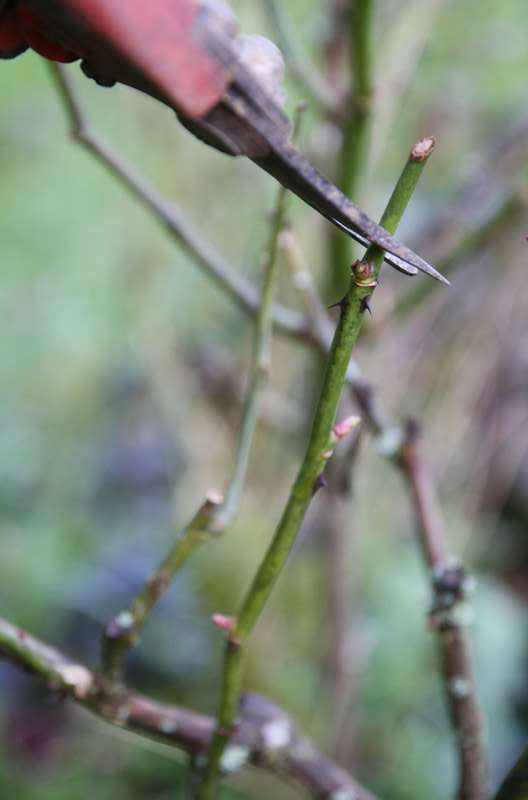
Rosa 'Cerise Bouquet' is not demanding on the nature of the soil, as long as it is deep, fertile, and moist to support its growth and flowering. It is hardy down to at least -15°C (5°F). It tolerates limestone and clay soils quite well, but dislikes overly suffocating soils. If your soil is heavy, incorporate leaf compost, river sand, gravel, or pumice into the planting hole (40cm (16in) in all directions) with your garden soil. It thrives in sufficiently sunny regions. It is not susceptible to diseases or cold, but is sensitive to drought. It adapts to most gardens, as long as the planting is well cared for. Plant it in well-worked and properly drained ordinary soil, in a sunny or partially shaded location, which it particularly tolerates well in hot climates. It may be useful to remove dead wood in winter. Avoid severe pruning that encourages the formation of very stiff branches, branching at right angles, which impairs the overall flexibility.
Planting period
Intended location
Care
Planting & care advice
-

-
-

-
-

-
-
-

This item has not been reviewed yet - be the first to leave a review about it.
Recently viewed products
Haven't found what you were looking for?
Hardiness is the lowest winter temperature a plant can endure without suffering serious damage or even dying. However, hardiness is affected by location (a sheltered area, such as a patio), protection (winter cover) and soil type (hardiness is improved by well-drained soil).

The flowering period indicated on our website applies to countries and regions located in USDA zone 8 (France, the United Kingdom, Ireland, the Netherlands, etc.)
It will vary according to where you live:- In zones 9 to 10 (Italy, Spain, Greece, etc.), flowering will occur about 2 to 4 weeks earlier.
- In zones 6 to 7 (Germany, Poland, Slovenia, and lower mountainous regions), flowering will be delayed by 2 to 3 weeks.
- In zone 5 (Central Europe, Scandinavia), blooming will be delayed by 3 to 5 weeks.
In temperate climates, pruning of spring-flowering shrubs (forsythia, spireas, etc.) should be done just after flowering.
Pruning of summer-flowering shrubs (Indian Lilac, Perovskia, etc.) can be done in winter or spring.
In cold regions as well as with frost-sensitive plants, avoid pruning too early when severe frosts may still occur.
The planting period indicated on our website applies to countries and regions located in USDA zone 8 (France, United Kingdom, Ireland, Netherlands).
It will vary according to where you live:
- In Mediterranean zones (Marseille, Madrid, Milan, etc.), autumn and winter are the best planting periods.
- In continental zones (Strasbourg, Munich, Vienna, etc.), delay planting by 2 to 3 weeks in spring and bring it forward by 2 to 4 weeks in autumn.
- In mountainous regions (the Alps, Pyrenees, Carpathians, etc.), it is best to plant in late spring (May-June) or late summer (August-September).
The harvesting period indicated on our website applies to countries and regions in USDA zone 8 (France, England, Ireland, the Netherlands).
In colder areas (Scandinavia, Poland, Austria...) fruit and vegetable harvests are likely to be delayed by 3-4 weeks.
In warmer areas (Italy, Spain, Greece, etc.), harvesting will probably take place earlier, depending on weather conditions.
The sowing periods indicated on our website apply to countries and regions within USDA Zone 8 (France, UK, Ireland, Netherlands).
In colder areas (Scandinavia, Poland, Austria...), delay any outdoor sowing by 3-4 weeks, or sow under glass.
In warmer climes (Italy, Spain, Greece, etc.), bring outdoor sowing forward by a few weeks.
Shipping country and language
Your country of residence may be:
Your country of residence is:
For a better user experience on our website, you can select:
Your shipping country:
-
 Austria
-
 Belgium
-
 Bosnia & Herzegovina
-
 Bulgaria
-
 Croatia
-
 Cyprus
-
 Czechia
-
 Denmark
-
 Estonia
-
 Finland
-
 France
-
 Germany
-
 Greece
-
 Hungary
-
 Iceland
-
 Ireland
-
 Italy
Italy
-
 Latvia
-
 Liechtenstein
-
 Lithuania
-
 Luxembourg
-
 Malta
Malta
-
 Netherlands
-
 Poland
-
 Portugal
-
 Romania
-
 Serbia
-
 Slovakia
-
 Slovenia
-
 Spain
Spain
-
 Sweden
-
 Switzerland
Language:
-
French
-
 English
-
Spanish
-
Italian
-
German
-
Portuguese
-
Dutch
-
Finnish
My Account
Hello
My wish lists
My cart
Log in / Register
Existing customer?
This form is protected by reCAPTCHA - the Google Privacy Policy and Terms of Service apply.
New customer?
Create an account to track your orders, access our customer service and, if you wish, make the most of our upcoming offers.