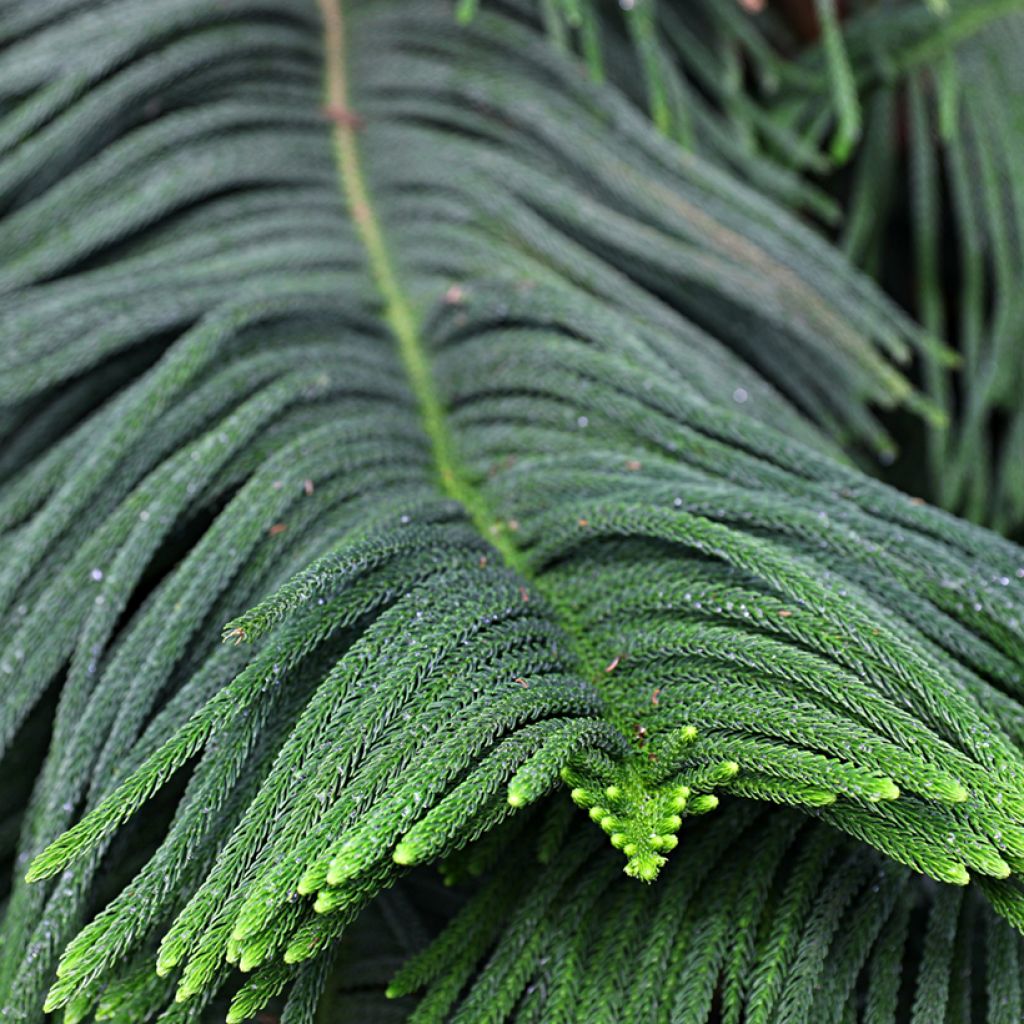
Araucaria heterophylla - Norfolk Island pine
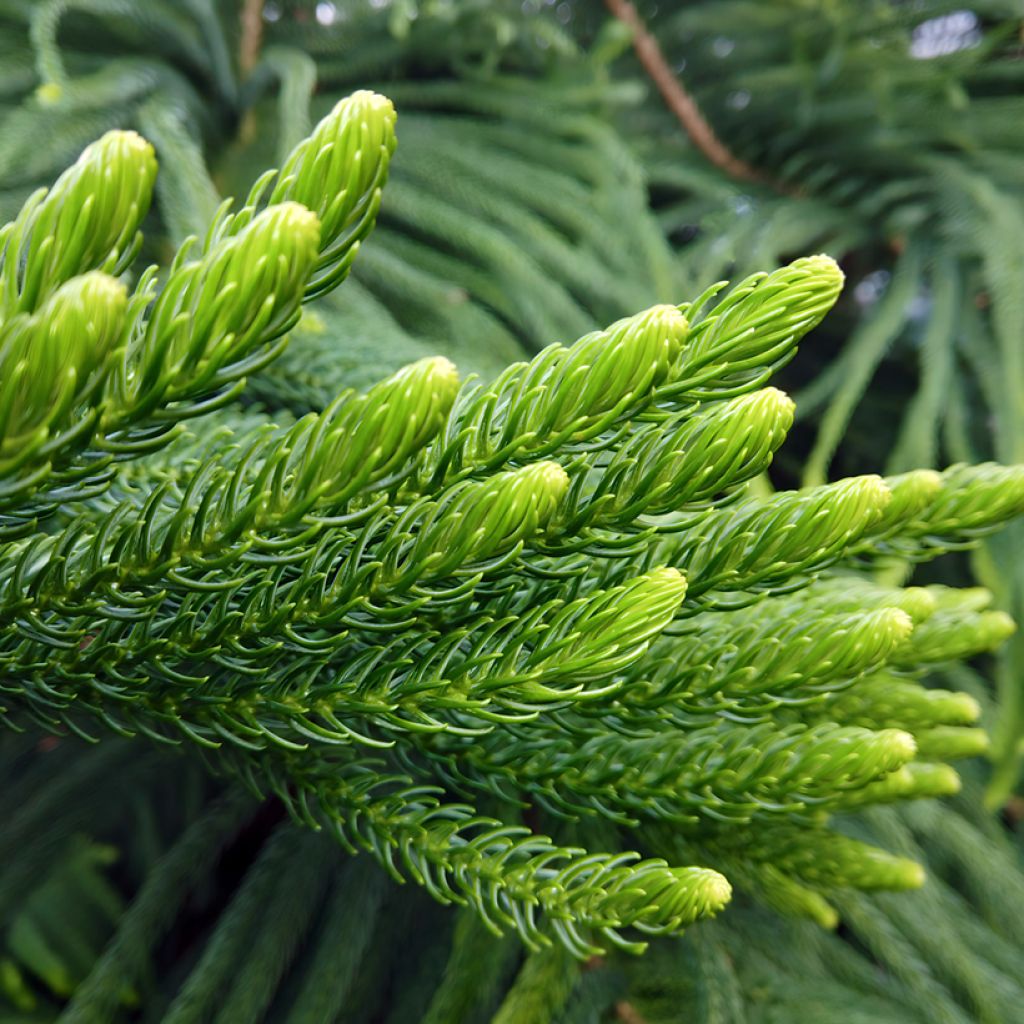
Araucaria heterophylla - Norfolk Island pine
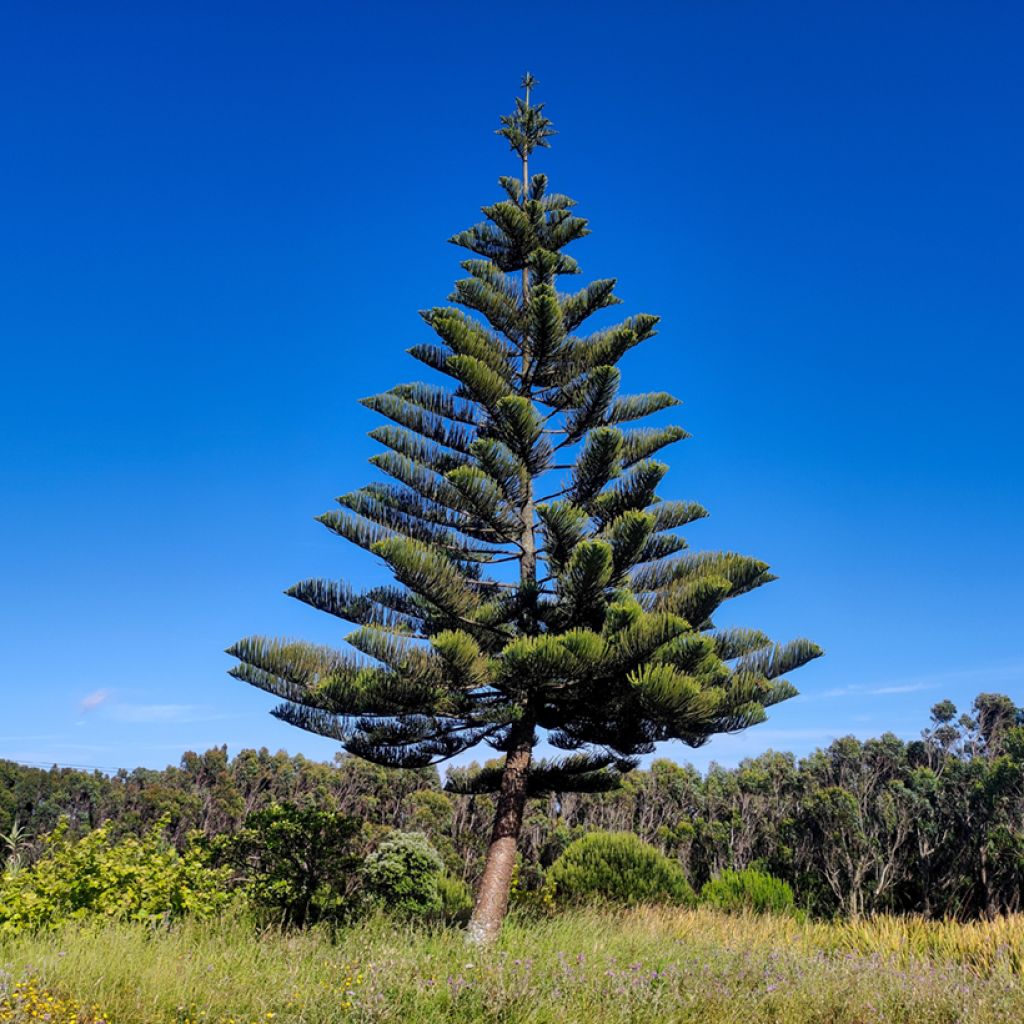
Araucaria heterophylla - Norfolk Island pine
Araucaria heterophylla - Norfolk Island pine
Araucaria heterophylla
Norfolk Island pine
Back-to-school special offer!
Get €10 off for every €50 you spend! And get up to €40 off on a single order.
How does it work?
1. Shop your favourites
Add your favourite plants to your basket. For every €50 you spend (excluding delivery charges, store credit and the plastic-free option), you’ll receive a €10 voucher.
€50 spent = €10 voucher
€100 spent = €20 voucher
€150 spent = €30 voucher
€200 spent = €40 voucher
2. Place your order
Once your basket reaches one of the spending thresholds, place your order. You can even choose your delivery date!
3. Receive your voucher
As soon as your order has been shipped, you’ll receive an email containing your personal voucher code and its value.
4. Use it on your next order
Your voucher is valid for 90 days from the date you receive it. It can be used once only, on a new order worth at least the value of the voucher, excluding delivery charges.
Please note: Vouchers can be combined with other offers, but cannot be split or refunded.
Why not try an alternative variety in stock?
View all →
Available in 2 sizes
Available in 1 sizes
Available in 1 sizes
Available in 1 sizes

Available in 1 sizes
Available in 1 sizes
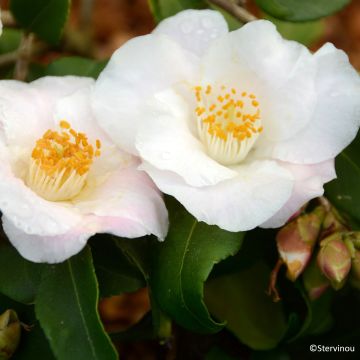
Available in 1 sizes
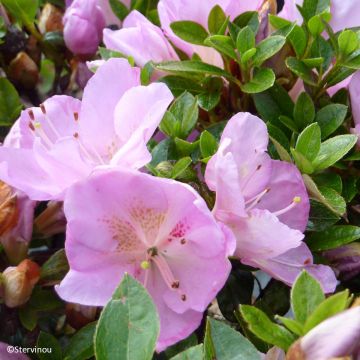
Available in 1 sizes
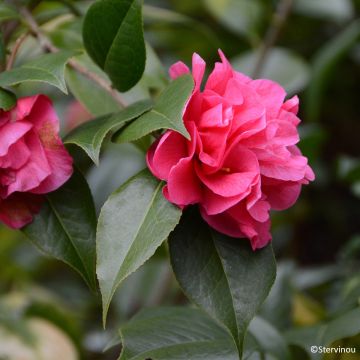
Available in 1 sizes
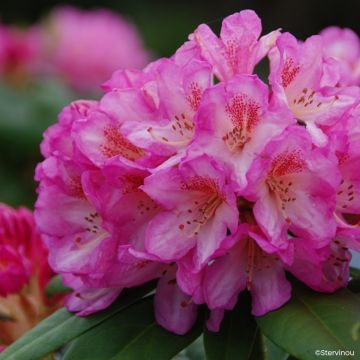
Available in 1 sizes
This plant carries a 24 months recovery warranty
More information
We guarantee the quality of our plants for a full growing cycle, and will replace at our expense any plant that fails to recover under normal climatic and planting conditions.
Would this plant suit my garden?
Set up your Plantfit profile →
Description
The Norfolk Island Pine, in Latin Araucaria heterophylla, is a frost-sensitive conifer that makes an elegant houseplant outside the mildest coastal areas. It is prized for its pyramidal silhouette and symmetrically tiered branches. Its fine, flexible needles are a soft, fresh green. In a pot, in temperate climates, its growth is very slow, taking several years to reach 1 to 2 m, which remains manageable. To limit its development, choose a pot that is not too large and avoid overfeeding it with fertilisers. It will grow slowly and remain an adorable little indoor fir tree!
Araucaria heterophylla, commonly known as the Norfolk Island Pine, belongs to the Araucariaceae family. Native to Norfolk Island, located in the South Pacific between Australia, New Zealand, and New Caledonia, this species is endemic to this region. In its natural habitat, the tree can reach a height of 50 to 65 m. It develops a very straight trunk and symmetrical branches arranged in regular tiers. The young leaves are awl-shaped, curved, measuring 1 to 1.5 cm in length and about 1 mm in thickness. As the tree matures, the leaves become larger, reaching 5 to 10 cm in length and 2 to 4 mm in thickness. The male cones are cylindrical. The female cones are globose, measuring 10 to 12 cm in diameter. Edible seeds are released when the mature cones disintegrate.
The Araucaria genus includes several species of conifers mainly distributed in the southern hemisphere, particularly in South America, Australia, New Zealand, and the Pacific Islands. These trees are recognisable by their majestic habit and scale, or needle-shaped leaves. Araucaria heterophylla stands out for its symmetry and tolerance to coastal conditions. Note that this conifer cannot tolerate frost.
As an indoor plant, the Norfolk Island Pine prefers bright light. It can even tolerate a few hours of direct sunlight, except during the hottest hours (between 12 pm and 4 pm). Moderate ambient humidity is ideal, and it is recommended to maintain the temperature between 18 and 22 °C during the active growth period. In winter, a cooler temperature of around 8 to 12 °C is beneficial for the plant. It is essential to avoid cold draughts and sudden temperature fluctuations.
If your garden is located by the sea, you can try acclimatising the Norfolk Island Pine in the ground. This conifer thrives in very mild and humid climates. It can then be placed as a standalone specimen in deep, well-drained, non-calcareous soil, preferably rich in humus. Everywhere else, you will grow it in a pot indoors for at least part of the year. It should be overwintered in a temperate greenhouse or conservatory, like a citrus tree.

Araucaria heterophylla - Norfolk Island pine in pictures
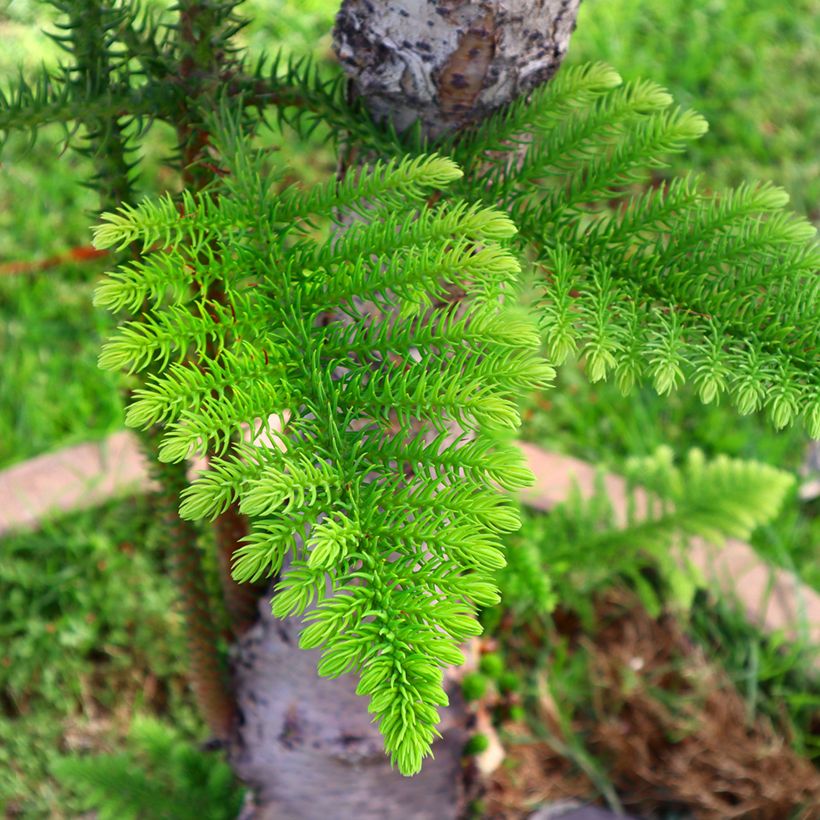
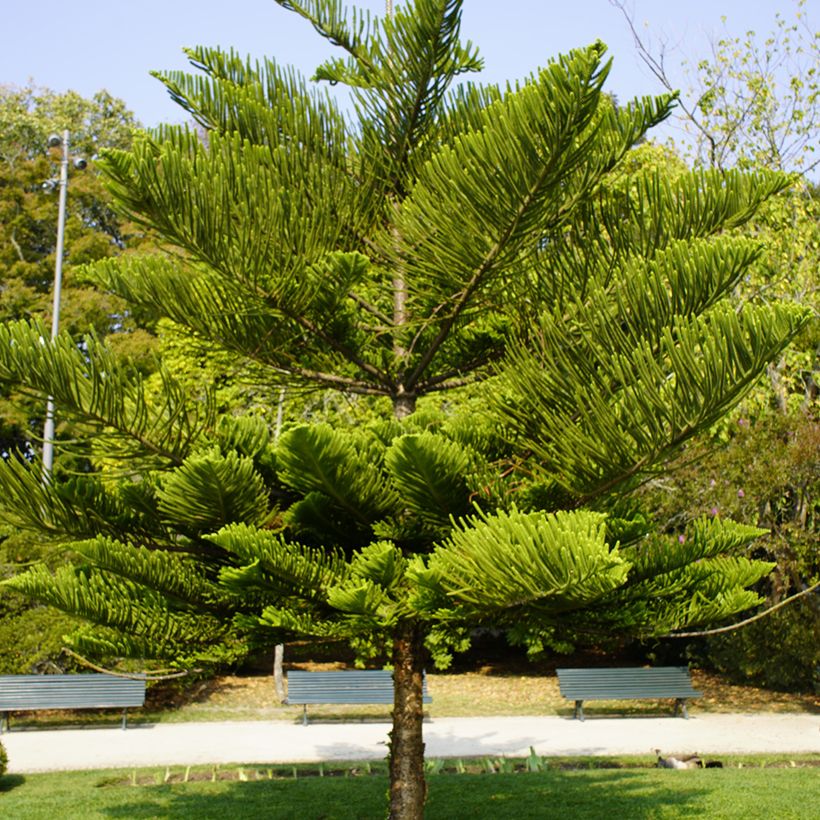
Plant habit
Foliage
Planting and care
The Norfolk Island Pine is a conifer that can only be planted in the ground in coastal regions with very mild and humid climates. Elsewhere, it is grown in pots indoors.
Outdoor cultivation: Choose a sunny to partially shaded location, sheltered from cold winds. Araucaria tolerates sea spray well. Plant it in deep, well-drained, non-calcareous soil, ideally slightly acidic to neutral. The ideal planting period is spring. Dig a hole at least twice the size of the root ball, loosen the bottom, and mix mature compost with the original soil to enrich the substrate. After planting, water generously to help establish the roots. In the first few years, keep the soil slightly moist, especially during dry periods. Apply a layer of organic mulch around the base to retain moisture and protect the shallow roots. Avoid pruning the tree, except to remove dead or damaged branches.
Pot cultivation: Place it in a pot at least 20% wider than the original nursery pot, using standard houseplant compost. Avoid using clay pebbles at the bottom of the pot, as they can cause water stagnation and root rot; opt for a well-draining substrate instead. Position the plant in a bright spot but sheltered from direct sunlight during the hottest hours. In summer, water regularly, allowing the substrate to dry slightly between waterings. In winter, reduce watering, keeping the soil just moist. Place the Norfolk Island Pine in a slightly cooler room during winter. Repot the plant every two years or so, or top-dress if it exceeds 1m in height. Avoid pruning the tree, except to remove dry or damaged branches.
Planting period
Intended location
Care
Planting & care advice
-
-
-
-
-
-
-

-
This item has not been reviewed yet - be the first to leave a review about it.
Recently viewed products
Haven't found what you were looking for?
Hardiness is the lowest winter temperature a plant can endure without suffering serious damage or even dying. However, hardiness is affected by location (a sheltered area, such as a patio), protection (winter cover) and soil type (hardiness is improved by well-drained soil).

The flowering period indicated on our website applies to countries and regions located in USDA zone 8 (France, the United Kingdom, Ireland, the Netherlands, etc.)
It will vary according to where you live:- In zones 9 to 10 (Italy, Spain, Greece, etc.), flowering will occur about 2 to 4 weeks earlier.
- In zones 6 to 7 (Germany, Poland, Slovenia, and lower mountainous regions), flowering will be delayed by 2 to 3 weeks.
- In zone 5 (Central Europe, Scandinavia), blooming will be delayed by 3 to 5 weeks.
In temperate climates, pruning of spring-flowering shrubs (forsythia, spireas, etc.) should be done just after flowering.
Pruning of summer-flowering shrubs (Indian Lilac, Perovskia, etc.) can be done in winter or spring.
In cold regions as well as with frost-sensitive plants, avoid pruning too early when severe frosts may still occur.
The planting period indicated on our website applies to countries and regions located in USDA zone 8 (France, United Kingdom, Ireland, Netherlands).
It will vary according to where you live:
- In Mediterranean zones (Marseille, Madrid, Milan, etc.), autumn and winter are the best planting periods.
- In continental zones (Strasbourg, Munich, Vienna, etc.), delay planting by 2 to 3 weeks in spring and bring it forward by 2 to 4 weeks in autumn.
- In mountainous regions (the Alps, Pyrenees, Carpathians, etc.), it is best to plant in late spring (May-June) or late summer (August-September).
The harvesting period indicated on our website applies to countries and regions in USDA zone 8 (France, England, Ireland, the Netherlands).
In colder areas (Scandinavia, Poland, Austria...) fruit and vegetable harvests are likely to be delayed by 3-4 weeks.
In warmer areas (Italy, Spain, Greece, etc.), harvesting will probably take place earlier, depending on weather conditions.
The sowing periods indicated on our website apply to countries and regions within USDA Zone 8 (France, UK, Ireland, Netherlands).
In colder areas (Scandinavia, Poland, Austria...), delay any outdoor sowing by 3-4 weeks, or sow under glass.
In warmer climes (Italy, Spain, Greece, etc.), bring outdoor sowing forward by a few weeks.
Shipping country and language
Your country of residence may be:
Your country of residence is:
For a better user experience on our website, you can select:
Your shipping country:
-
 Austria
-
 Belgium
-
 Bosnia & Herzegovina
-
 Bulgaria
-
 Croatia
-
 Cyprus
-
 Czechia
-
 Denmark
-
 Estonia
-
 Finland
-
 France
-
 Germany
-
 Greece
-
 Hungary
-
 Iceland
-
 Ireland
-
 Italy
Italy
-
 Latvia
-
 Liechtenstein
-
 Lithuania
-
 Luxembourg
-
 Malta
Malta
-
 Netherlands
-
 Poland
-
 Portugal
-
 Romania
-
 Serbia
-
 Slovakia
-
 Slovenia
-
 Spain
Spain
-
 Sweden
-
 Switzerland
Language:
-
French
-
 English
-
Spanish
-
Italian
-
German
-
Portuguese
-
Dutch
-
Finnish
My Account
Hello
My wish lists
My cart
Log in / Register
Existing customer?
This form is protected by reCAPTCHA - the Google Privacy Policy and Terms of Service apply.
New customer?
Create an account to track your orders, access our customer service and, if you wish, make the most of our upcoming offers.