Hydrangea paniculata Living Sugar Rush
Hydrangea paniculata Living Sugar Rush
Hydrangea paniculata Living Sugar Rush
Hydrangea paniculata Living Sugar Rush
Hydrangea paniculata ‘LC NO11’, Living Sugar Rush
Paniculate Hydrangea, Panicled Hydrangea, Panicle Hydrangea
Back-to-school special offer!
Get €10 off for every €50 you spend! And get up to €40 off on a single order.
How does it work?
1. Shop your favourites
Add your favourite plants to your basket. For every €50 you spend (excluding delivery charges, store credit and the plastic-free option), you’ll receive a €10 voucher.
€50 spent = €10 voucher
€100 spent = €20 voucher
€150 spent = €30 voucher
€200 spent = €40 voucher
2. Place your order
Once your basket reaches one of the spending thresholds, place your order. You can even choose your delivery date!
3. Receive your voucher
As soon as your order has been shipped, you’ll receive an email containing your personal voucher code and its value.
4. Use it on your next order
Your voucher is valid for 90 days from the date you receive it. It can be used once only, on a new order worth at least the value of the voucher, excluding delivery charges.
Please note: Vouchers can be combined with other offers, but cannot be split or refunded.
Home or relay delivery (depending on size and destination)
Important: You may be charged customs duties by your country’s customs authorities upon delivery.
Schedule delivery date,
and select date in basket
This plant carries a 24 months recovery warranty
More information
We guarantee the quality of our plants for a full growing cycle, and will replace at our expense any plant that fails to recover under normal climatic and planting conditions.
Would this plant suit my garden?
Set up your Plantfit profile →
Description
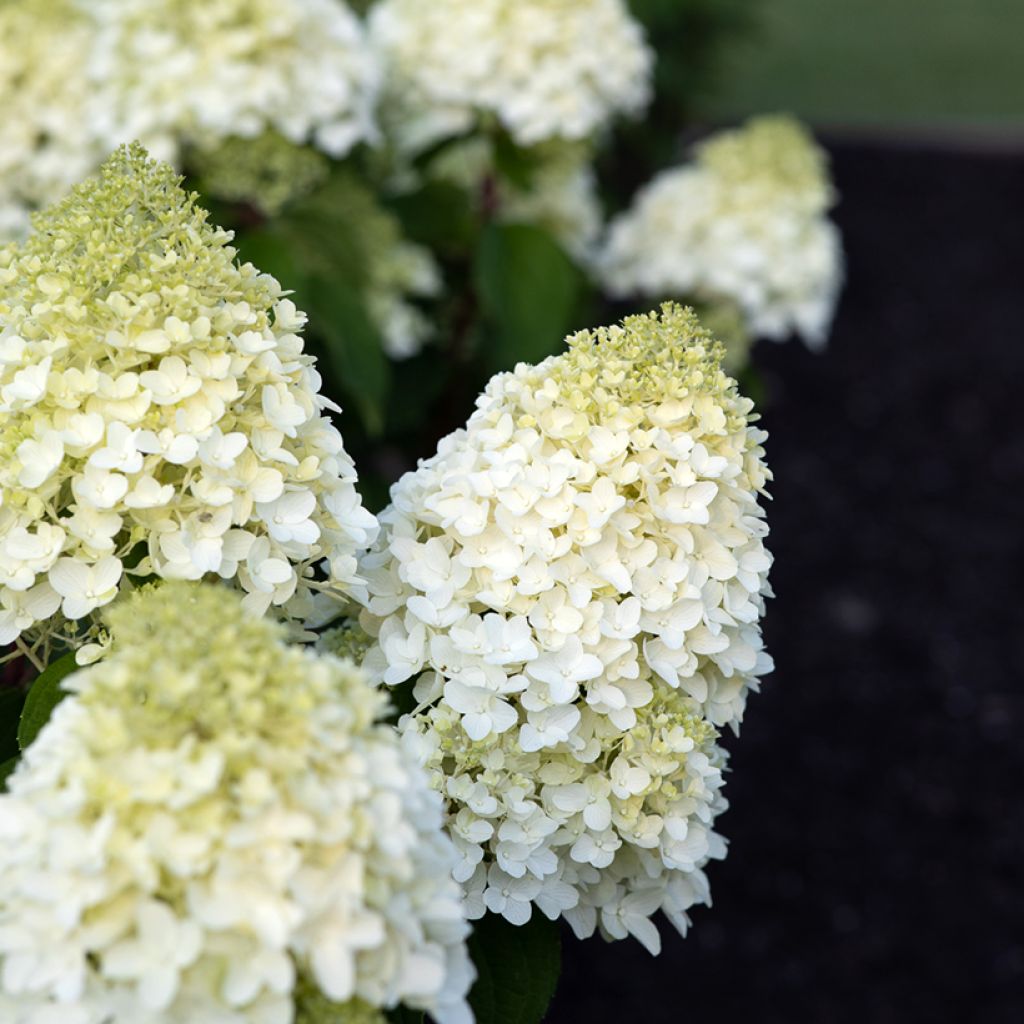
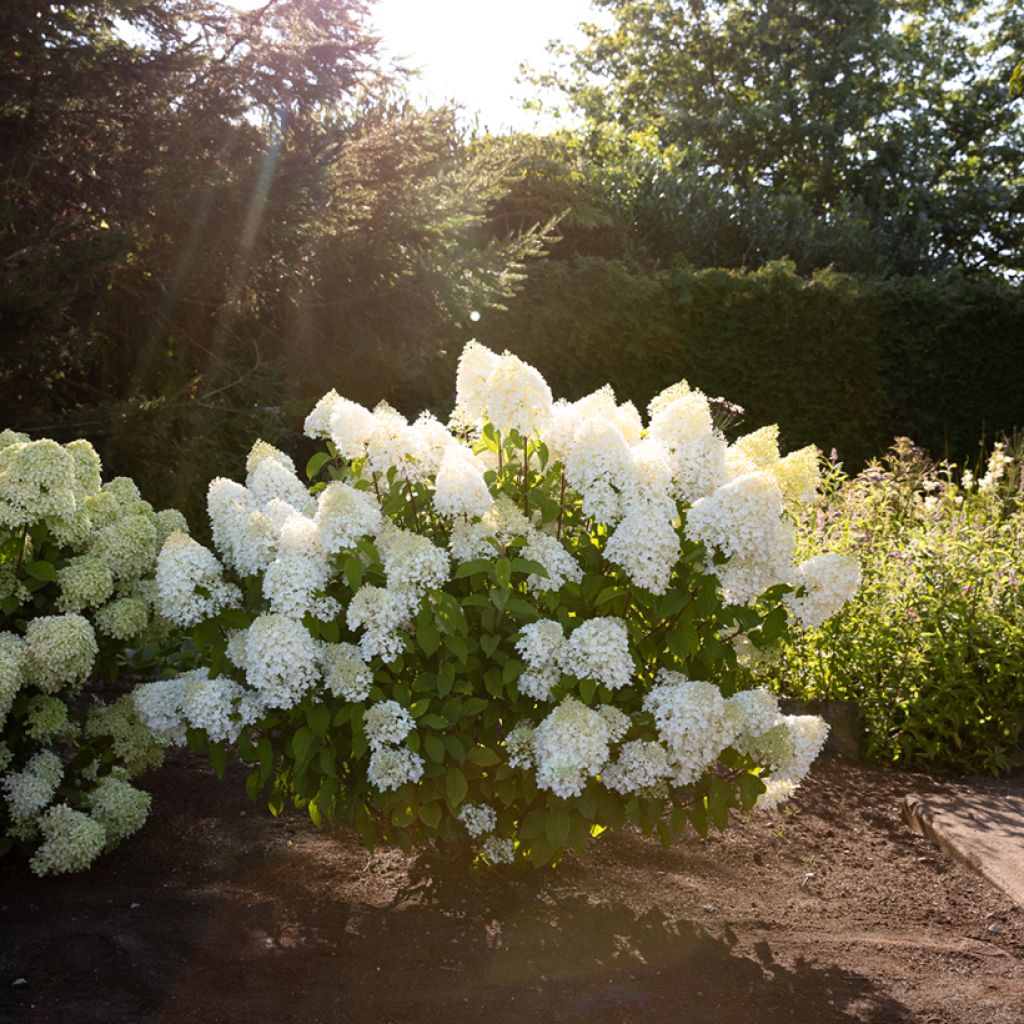
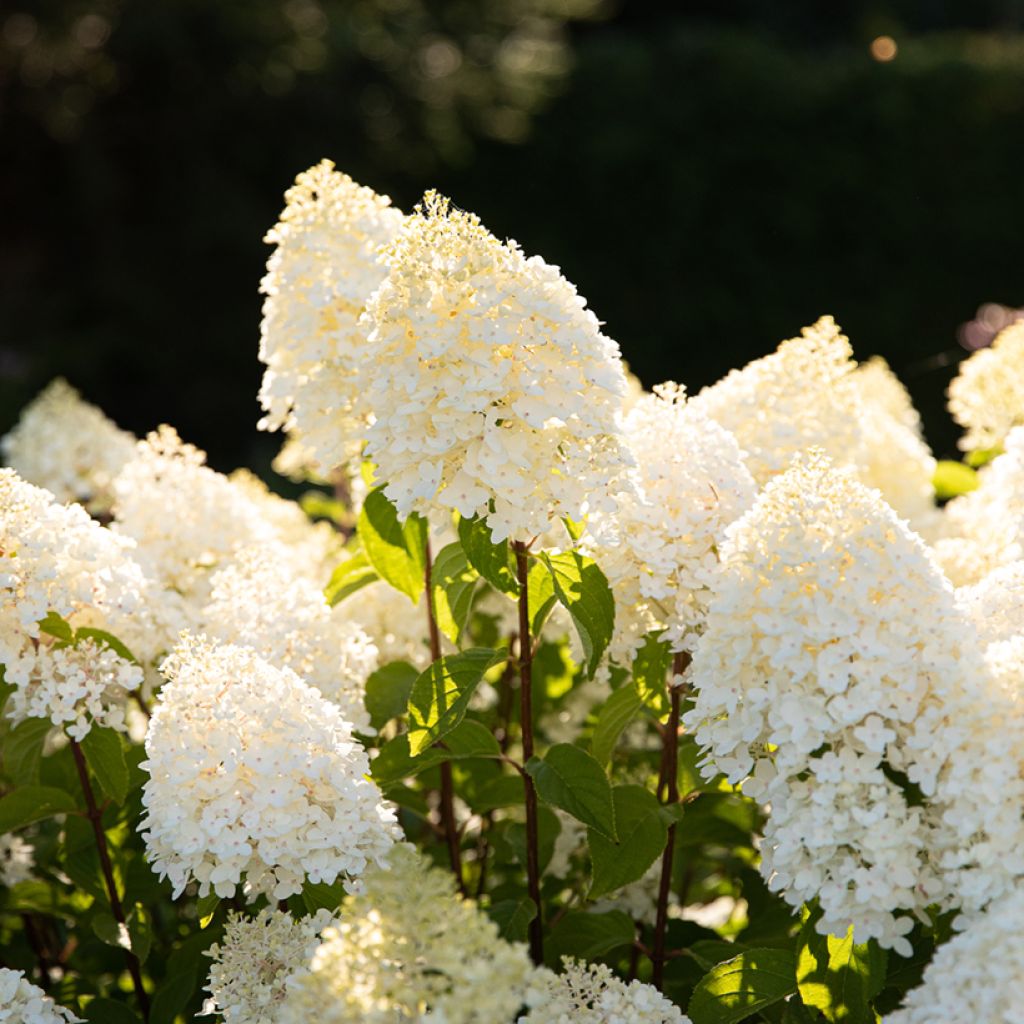
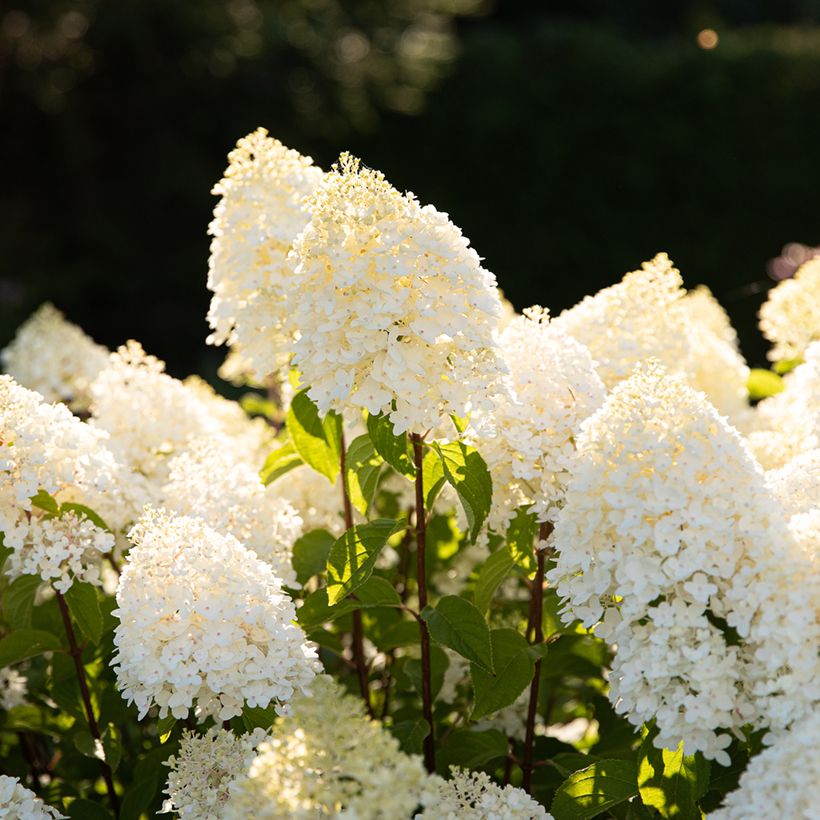
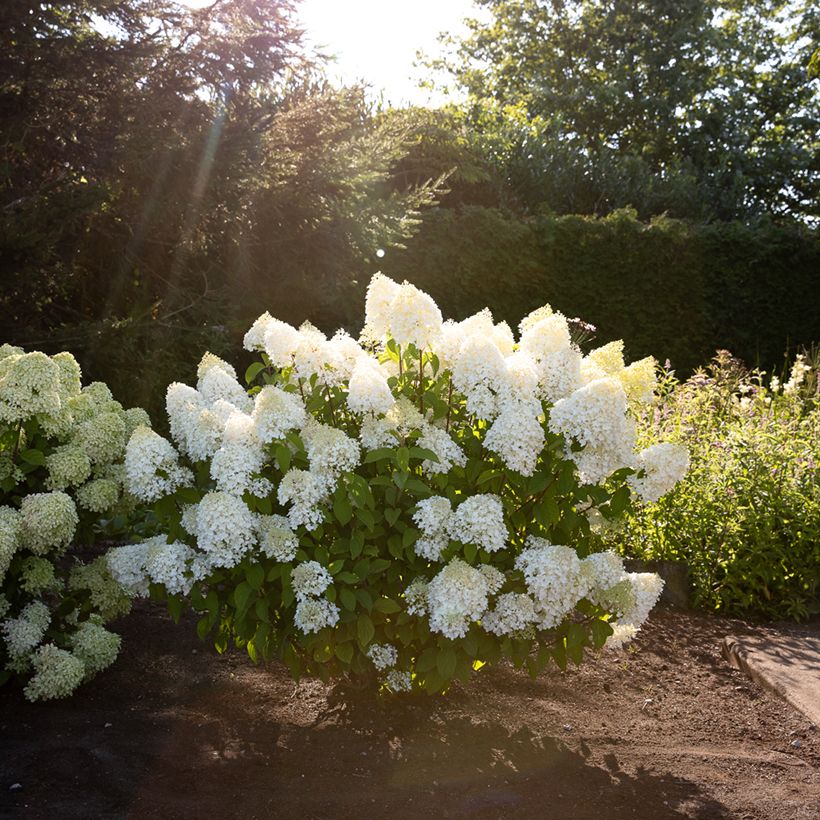
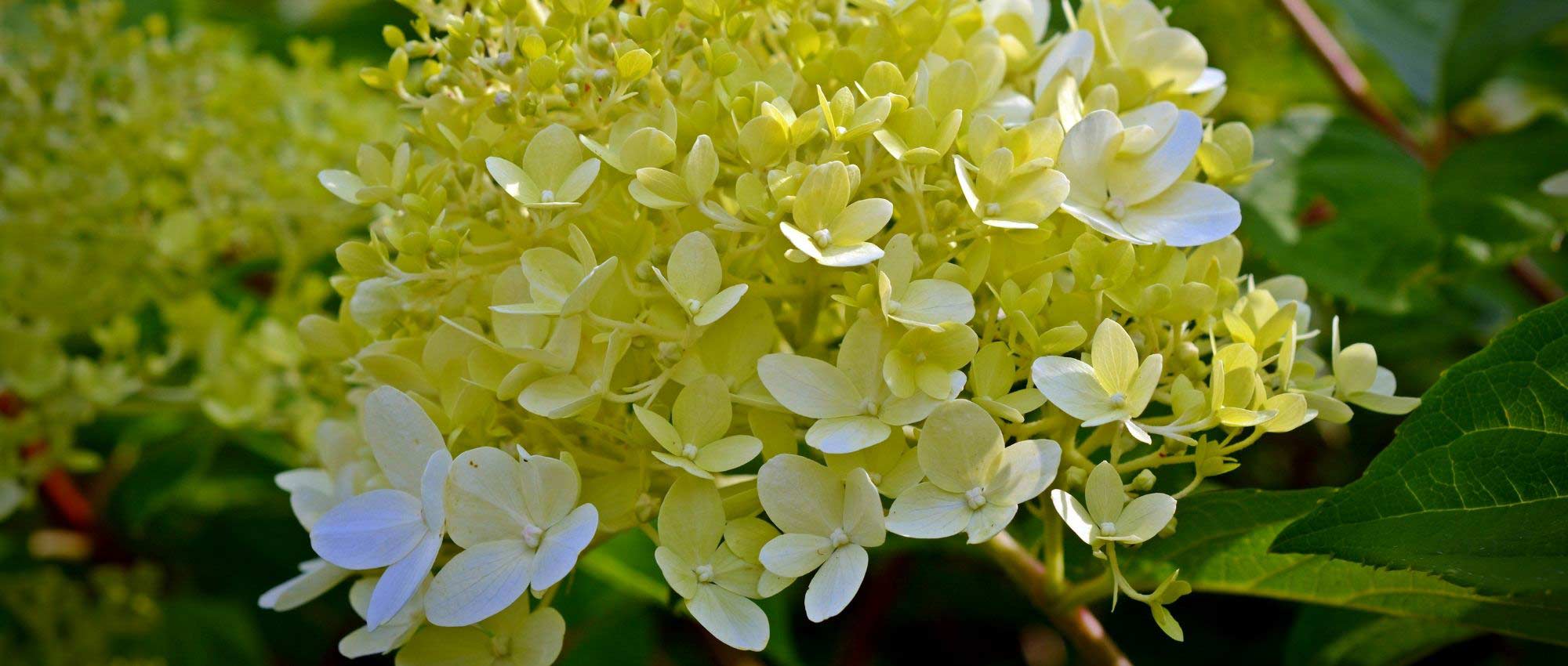
Hydrangea paniculata Living Sugar Rush® is a cream-white panicled hydrangea perfect for brightening up a border or patio. Its foamy panicles that do not change colour offer a beautifully elegant display throughout the summer. Its naturally rounded habit, modest stature and long flowering period make it ideal for small spaces. Easy to grow and very hardy, Living Sugar Rush® will delight many gardeners.
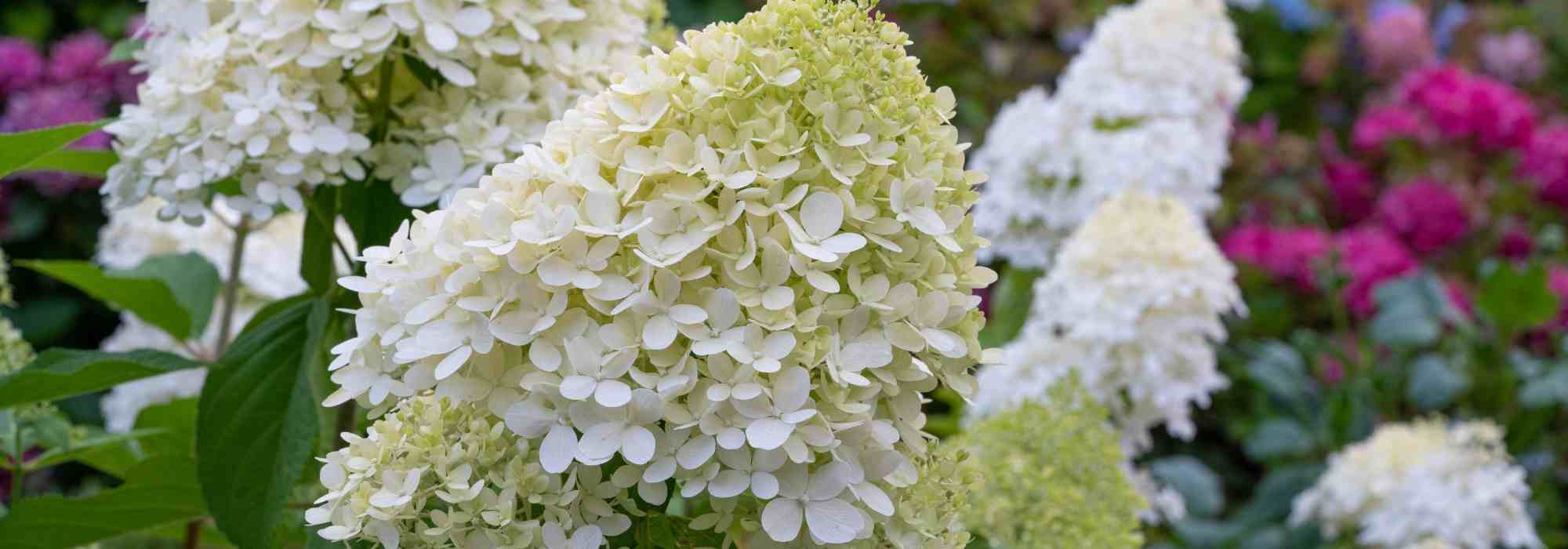
Hydrangea paniculata Living Sugar Rush® is a medium-sized paniculate hydrangea from the Living Creations® series, developed by Dutch breeder Alex Schoemaker. Selected after more than ten years of evaluation, this cultivar was introduced in 2021 and registered under the code ‘LC NO11’ PBR. That same year, it received a silver medal at the KVBC* competition, rewarding its remarkable flowering, perfect flower retention and ease of cultivation. At maturity, the shrub reaches 80 to 95cm in height and spread. It forms a compact bush with a rounded habit. Its deciduous foliage is medium green and slightly serrated at the edge, providing a verdant setting for the well-proportioned inflorescences. Flowering begins in July and remains decorative until the end of September, lasting nearly 100 days. The erect conical, 15 to 20 cm long panicles display a stable cream-white colour that does not turn pink. The foliage turns yellow in autumn before falling. Hydrangea Living Sugar Rush® tolerates temperatures down to –30 °C. It grows equally well in full sun or partial shade, as long as the soil is fertile, well-drained and remains moist in summer.
Hydrangea paniculata Living Sugar Rush® is a beautiful shrub for borders that also suits balconies and patios. Its cream-white flowering creates a bright atmosphere and combines easily with many companion plants. Its cut flowers are also suitable for fresh or dried arrangements. For a soft effect, combine it with pastel-toned shrub roses such as 'Crystal Fairy' or White Meidiland®. A compact and colourful Japanese spirea, such as ‘Magic Carpet’, will add a touch of freshness at its base. For contrast, a Physocarpus ‘Diabolo’ or ‘Midnight’, with its dark purple foliage, will highlight the brightness of the inflorescences.
*prestigious competition in Europe, founded by the KVBC (Belgian plant producers association), regularly testing new cultivars; it provides insight into their performance under varying conditions.
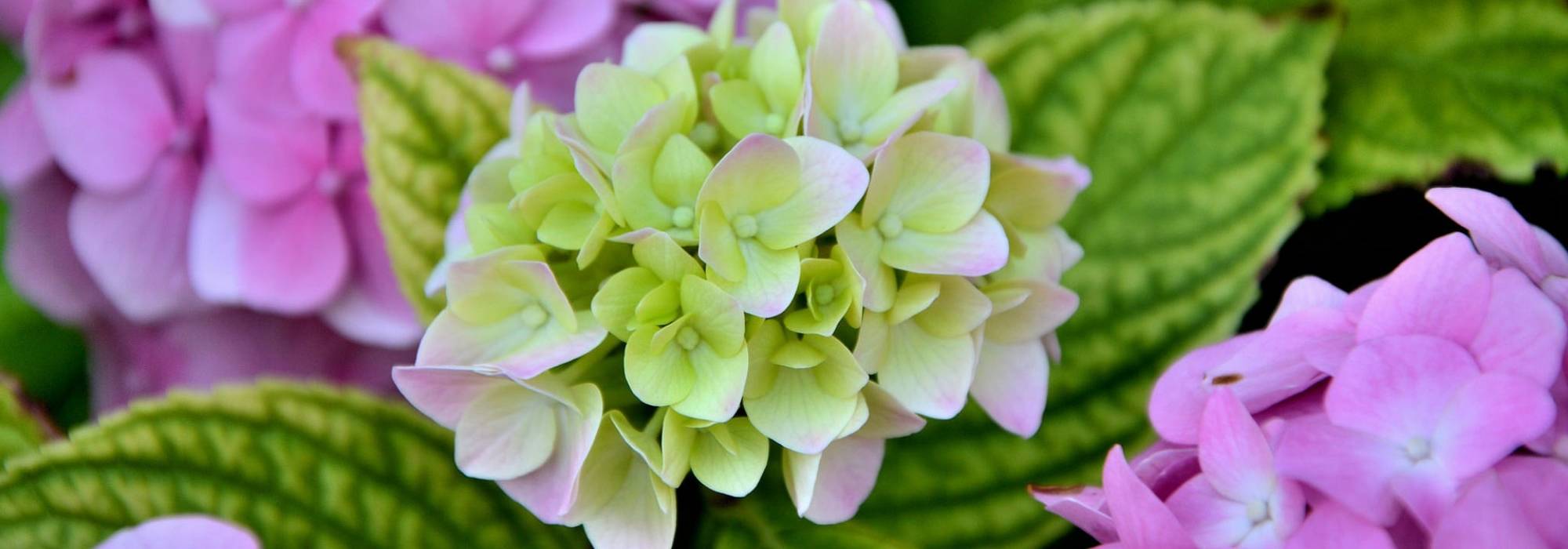
Hydrangea paniculata Living Sugar Rush in pictures
Plant habit
Flowering
Foliage
Botanical data
Hydrangea
paniculata
‘LC NO11’, Living Sugar Rush
Hydrangeaceae
Paniculate Hydrangea, Panicled Hydrangea, Panicle Hydrangea
Hydrangea paniculata ‘LC NO11’ PBR
Cultivar or hybrid
Planting and care
Hydrangea paniculata 'Living Sugar Rush' is not demanding about soil type, as long as it is not too heavy, not too chalky, and not too dry in summer. It requires a sunny, non-scorching position or partial shade. Plant it in deeply worked soil. A good base fertiliser (horn or dried blood) will help your plant establish and feed it without risk of scorching. If your soil tends to be dry, mix some compost and potting compost with the soil when backfilling the planting hole, and create a watering basin on the surface. Mulch in summer to reduce watering needs. Spring growth is quite late.
Hydrangea paniculata are more tolerant of occasional lack of water and establish easily even in non-acid soil (but avoid strongly chalky soils).
Planting period
Intended location
Care
Planting & care advice





This item has not been reviewed yet - be the first to leave a review about it.
Recently viewed products
Haven't found what you were looking for?
Hardiness is the lowest winter temperature a plant can endure without suffering serious damage or even dying. However, hardiness is affected by location (a sheltered area, such as a patio), protection (winter cover) and soil type (hardiness is improved by well-drained soil).

The flowering period indicated on our website applies to countries and regions located in USDA zone 8 (France, the United Kingdom, Ireland, the Netherlands, etc.)
It will vary according to where you live:- In zones 9 to 10 (Italy, Spain, Greece, etc.), flowering will occur about 2 to 4 weeks earlier.
- In zones 6 to 7 (Germany, Poland, Slovenia, and lower mountainous regions), flowering will be delayed by 2 to 3 weeks.
- In zone 5 (Central Europe, Scandinavia), blooming will be delayed by 3 to 5 weeks.
In temperate climates, pruning of spring-flowering shrubs (forsythia, spireas, etc.) should be done just after flowering.
Pruning of summer-flowering shrubs (Indian Lilac, Perovskia, etc.) can be done in winter or spring.
In cold regions as well as with frost-sensitive plants, avoid pruning too early when severe frosts may still occur.
The planting period indicated on our website applies to countries and regions located in USDA zone 8 (France, United Kingdom, Ireland, Netherlands).
It will vary according to where you live:
- In Mediterranean zones (Marseille, Madrid, Milan, etc.), autumn and winter are the best planting periods.
- In continental zones (Strasbourg, Munich, Vienna, etc.), delay planting by 2 to 3 weeks in spring and bring it forward by 2 to 4 weeks in autumn.
- In mountainous regions (the Alps, Pyrenees, Carpathians, etc.), it is best to plant in late spring (May-June) or late summer (August-September).
The harvesting period indicated on our website applies to countries and regions in USDA zone 8 (France, England, Ireland, the Netherlands).
In colder areas (Scandinavia, Poland, Austria...) fruit and vegetable harvests are likely to be delayed by 3-4 weeks.
In warmer areas (Italy, Spain, Greece, etc.), harvesting will probably take place earlier, depending on weather conditions.
The sowing periods indicated on our website apply to countries and regions within USDA Zone 8 (France, UK, Ireland, Netherlands).
In colder areas (Scandinavia, Poland, Austria...), delay any outdoor sowing by 3-4 weeks, or sow under glass.
In warmer climes (Italy, Spain, Greece, etc.), bring outdoor sowing forward by a few weeks.
Shipping country and language
Your country of residence may be:
Your country of residence is:
For a better user experience on our website, you can select:
Your shipping country:
-
 Austria
-
 Belgium
-
 Bosnia & Herzegovina
-
 Bulgaria
-
 Croatia
-
 Cyprus
-
 Czechia
-
 Denmark
-
 Estonia
-
 Finland
-
 France
-
 Germany
-
 Greece
-
 Hungary
-
 Iceland
-
 Ireland
-
 Italy
Italy
-
 Latvia
-
 Liechtenstein
-
 Lithuania
-
 Luxembourg
-
 Malta
Malta
-
 Netherlands
-
 Poland
-
 Portugal
-
 Romania
-
 Serbia
-
 Slovakia
-
 Slovenia
-
 Spain
Spain
-
 Sweden
-
 Switzerland
Language:
-
French
-
 English
-
Spanish
-
Italian
-
German
-
Portuguese
-
Dutch
-
Finnish
My Account
Hello
My wish lists
My cart
Log in / Register
Existing customer?
This form is protected by reCAPTCHA - the Google Privacy Policy and Terms of Service apply.
New customer?
Create an account to track your orders, access our customer service and, if you wish, make the most of our upcoming offers.