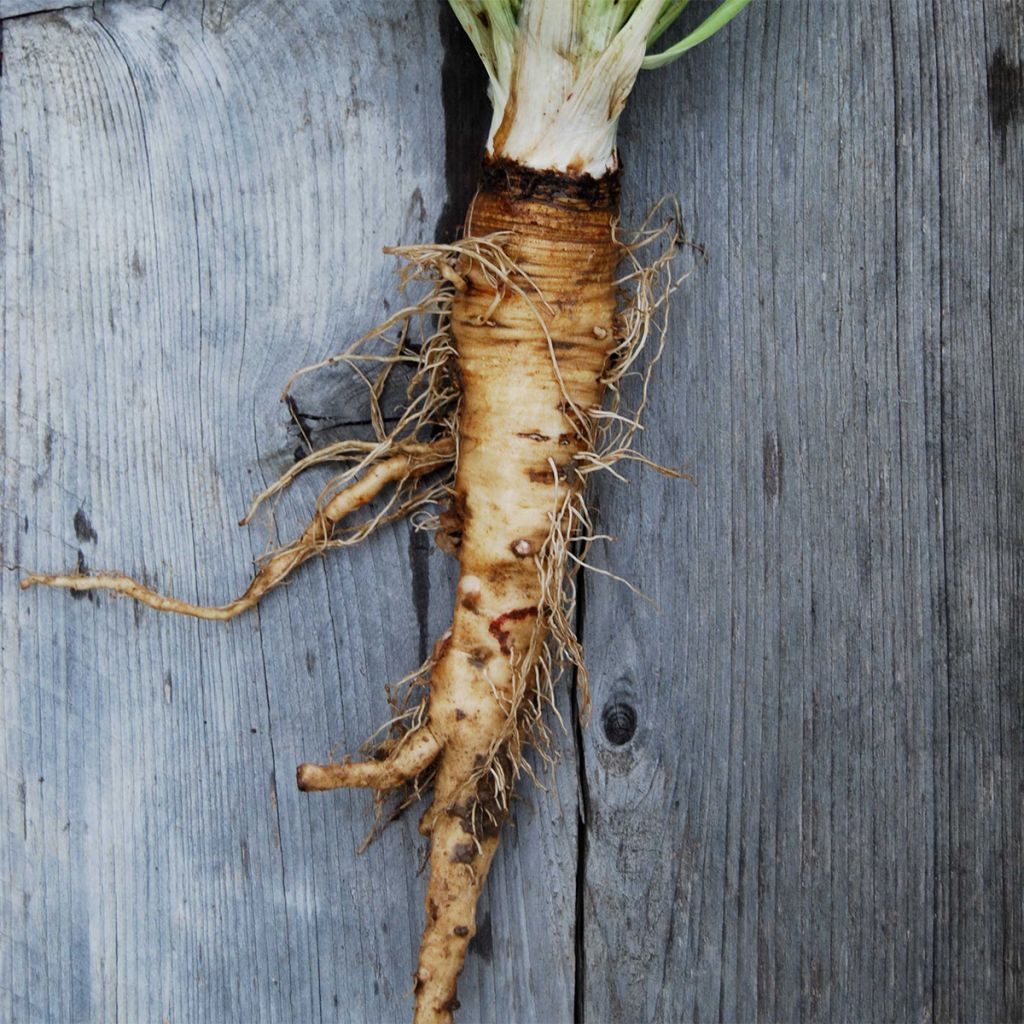
Mammoth Organic Salsify - Ferme de Sainte Marthe seeds

Mammoth Organic Salsify - Ferme de Sainte Marthe seeds
Mammoth Organic Salsify - Ferme de Sainte Marthe seeds
Tragopogon porrifolius Mammouth
Salsify, Oyster plant, Purple goat's beard, Vegetable oyster
Back-to-school special offer!
Get €10 off for every €50 you spend! And get up to €40 off on a single order.
How does it work?
1. Shop your favourites
Add your favourite plants to your basket. For every €50 you spend (excluding delivery charges, store credit and the plastic-free option), you’ll receive a €10 voucher.
€50 spent = €10 voucher
€100 spent = €20 voucher
€150 spent = €30 voucher
€200 spent = €40 voucher
2. Place your order
Once your basket reaches one of the spending thresholds, place your order. You can even choose your delivery date!
3. Receive your voucher
As soon as your order has been shipped, you’ll receive an email containing your personal voucher code and its value.
4. Use it on your next order
Your voucher is valid for 90 days from the date you receive it. It can be used once only, on a new order worth at least the value of the voucher, excluding delivery charges.
Please note: Vouchers can be combined with other offers, but cannot be split or refunded.
Why not try an alternative variety in stock?
View all →
Available in 1 sizes
Available in 1 sizes
Available in 1 sizes
Available in 1 sizes

Available in 1 sizes
Available in 1 sizes

Available in 1 sizes

Available in 1 sizes

Available in 1 sizes
Available in 1 sizes
This plant carries a 6 months recovery warranty
More information
We guarantee the quality of our plants for a full growing cycle, and will replace at our expense any plant that fails to recover under normal climatic and planting conditions.
Description
The Mammoth Salsify (Tragopogon porrifolius) is a variety that stands out for the size of its creamy white, long and cylindrical root. Its white flesh, very tasty, can be consumed cooked, au gratin, sliced with mayonnaise or as a side dish with meat or fish. You can sow it from March to May for a harvest from October to April.
Salsify is a biennial root vegetable that belongs to the Asteraceae family. It has become almost confidential in vegetable gardens, in favor of Scorzonera, and is hardly found on the stalls, as its cultivation is now intended for the production of canned or frozen foods.
It is a vegetable with a slightly sweet flavor, which is somewhat similar to artichoke, so you will enjoy rediscovering it in the garden to taste it freshly harvested. It can be prepared in multiple ways: children generally appreciate it with béchamel sauce, but you can also enjoy it cold, with a sauce made from fresh cream. Its young leaves can also be consumed, they are excellent fresh, in salads.
Salsify is a very good source of fiber and minerals, it contains inulin, a non-digestible sugar, and its caloric value is low.
In the garden, salsify likes sunny, fairly rich, fresh, deep, and well-tilled soil.
Harvest: it is done 7 to 8 months after sowing, as needed (they can be stored in the ground) by digging them out with a spade.
Storage: Salsify can be kept for a few days in a cool place, wrapped in paper towels. They can be frozen after being blanched for a few minutes in boiling water. They can also be stored in a cellar for a few months, buried in sand.
The gardener's tip: carry out regular weeding and hoeing and cut the flower stalks as soon as they appear.
Organic or "AB" seeds come from plants grown without phytosanitary products (insecticides, herbicides). These seeds also do not undergo any post-harvest treatment. They bear the AB label and are certified by Ecocert, which is an independent organization.
Report an error about the product description
Harvest
Plant habit
Foliage
Botanical data
Tragopogon
porrifolius
Mammouth
Asteraceae
Salsify, Oyster plant, Purple goat's beard, Vegetable oyster
Cultivar or hybrid
Biennial
Planting and care
Sowing
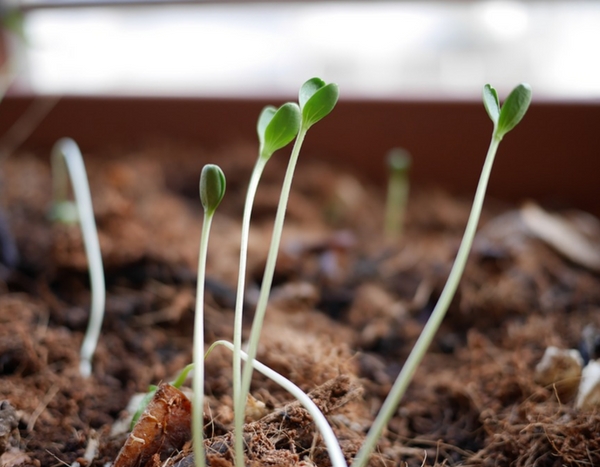
The seeds are sown thinly in well-prepared soil, in rows spaced 25 cm (10in) apart. It is advisable to cover the seeds with half a centimeter of compost or fine soil. Gently press down with the back of a rake and water with a fine sprinkle. Keep sufficiently moist until germination, which can take 20 days. To improve germination, you can cover your sowing with a light herb mulch that you will remove after complete germination.
Salsify thrives in sunny, fairly rich, fresh, deep, and well-cultivated soil.
Maintenance
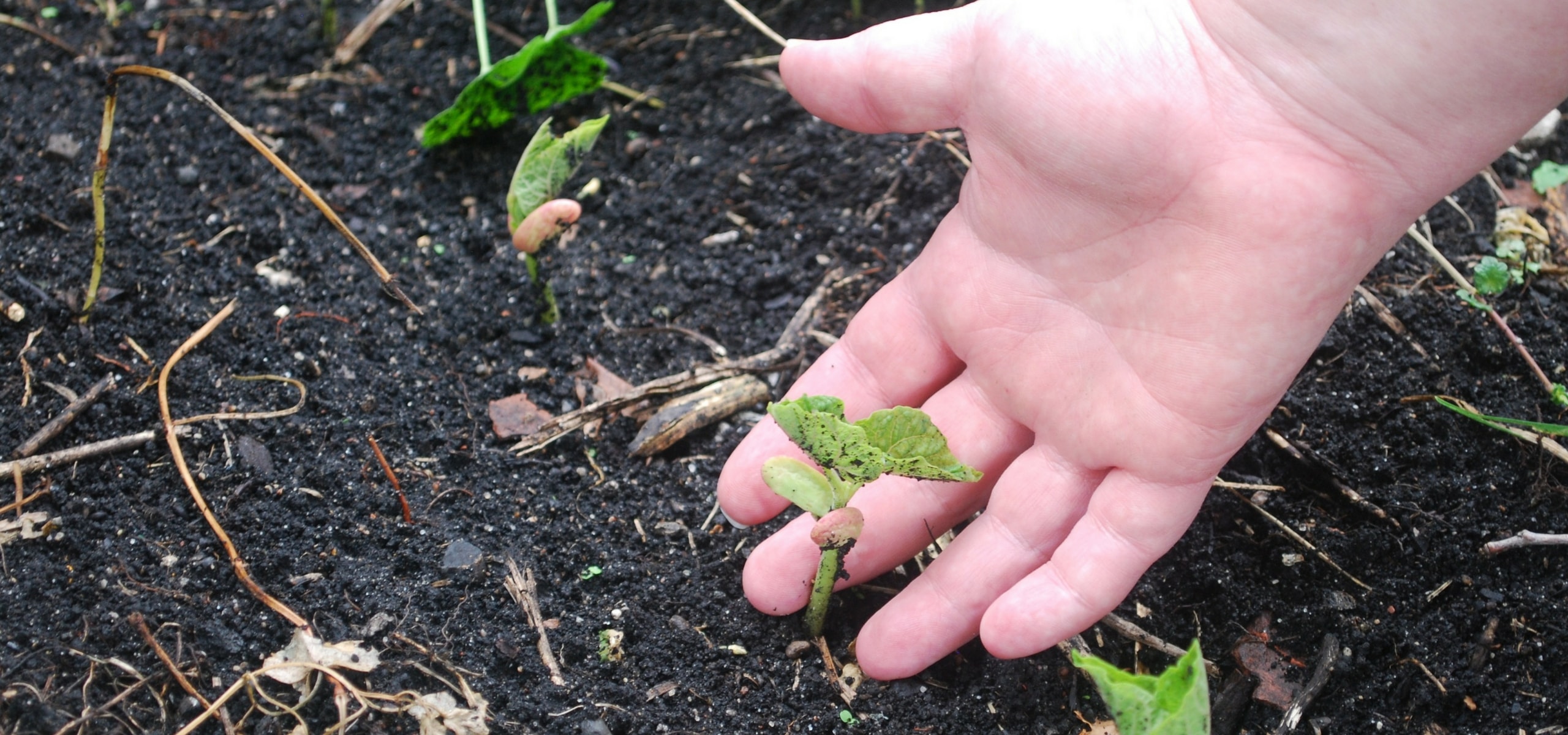
When the plants have 4 to 5 leaves, thin them out, leaving one plant every 10 cm (4in). Weed and water regularly.
Seedlings
Care
Intended location
Planting & care advice
-

-

-

-
-
-

-

-

This item has not been reviewed yet - be the first to leave a review about it.
Recently viewed products
Haven't found what you were looking for?
Hardiness is the lowest winter temperature a plant can endure without suffering serious damage or even dying. However, hardiness is affected by location (a sheltered area, such as a patio), protection (winter cover) and soil type (hardiness is improved by well-drained soil).

The flowering period indicated on our website applies to countries and regions located in USDA zone 8 (France, the United Kingdom, Ireland, the Netherlands, etc.)
It will vary according to where you live:- In zones 9 to 10 (Italy, Spain, Greece, etc.), flowering will occur about 2 to 4 weeks earlier.
- In zones 6 to 7 (Germany, Poland, Slovenia, and lower mountainous regions), flowering will be delayed by 2 to 3 weeks.
- In zone 5 (Central Europe, Scandinavia), blooming will be delayed by 3 to 5 weeks.
In temperate climates, pruning of spring-flowering shrubs (forsythia, spireas, etc.) should be done just after flowering.
Pruning of summer-flowering shrubs (Indian Lilac, Perovskia, etc.) can be done in winter or spring.
In cold regions as well as with frost-sensitive plants, avoid pruning too early when severe frosts may still occur.
The planting period indicated on our website applies to countries and regions located in USDA zone 8 (France, United Kingdom, Ireland, Netherlands).
It will vary according to where you live:
- In Mediterranean zones (Marseille, Madrid, Milan, etc.), autumn and winter are the best planting periods.
- In continental zones (Strasbourg, Munich, Vienna, etc.), delay planting by 2 to 3 weeks in spring and bring it forward by 2 to 4 weeks in autumn.
- In mountainous regions (the Alps, Pyrenees, Carpathians, etc.), it is best to plant in late spring (May-June) or late summer (August-September).
The harvesting period indicated on our website applies to countries and regions in USDA zone 8 (France, England, Ireland, the Netherlands).
In colder areas (Scandinavia, Poland, Austria...) fruit and vegetable harvests are likely to be delayed by 3-4 weeks.
In warmer areas (Italy, Spain, Greece, etc.), harvesting will probably take place earlier, depending on weather conditions.
The sowing periods indicated on our website apply to countries and regions within USDA Zone 8 (France, UK, Ireland, Netherlands).
In colder areas (Scandinavia, Poland, Austria...), delay any outdoor sowing by 3-4 weeks, or sow under glass.
In warmer climes (Italy, Spain, Greece, etc.), bring outdoor sowing forward by a few weeks.
Shipping country and language
Your country of residence may be:
Your country of residence is:
For a better user experience on our website, you can select:
Your shipping country:
-
 Austria
-
 Belgium
-
 Bosnia & Herzegovina
-
 Bulgaria
-
 Croatia
-
 Cyprus
-
 Czechia
-
 Denmark
-
 Estonia
-
 Finland
-
 France
-
 Germany
-
 Greece
-
 Hungary
-
 Iceland
-
 Ireland
-
 Italy
Italy
-
 Latvia
-
 Liechtenstein
-
 Lithuania
-
 Luxembourg
-
 Malta
Malta
-
 Netherlands
-
 Poland
-
 Portugal
-
 Romania
-
 Serbia
-
 Slovakia
-
 Slovenia
-
 Spain
Spain
-
 Sweden
-
 Switzerland
Language:
-
French
-
 English
-
Spanish
-
Italian
-
German
-
Portuguese
-
Dutch
-
Finnish
My Account
Hello
My wish lists
My cart
Log in / Register
Existing customer?
This form is protected by reCAPTCHA - the Google Privacy Policy and Terms of Service apply.
New customer?
Create an account to track your orders, access our customer service and, if you wish, make the most of our upcoming offers.