When savouring the vegetables from the vegetable garden, it’s not uncommon to marvel at their flavour and texture. And if, on top of that, the plant has grown bravely despite all manner of difficulties, it would be a shame not to grow it again. So why not save your own seeds — for vegetables and also for flowers?
Why save your own seeds?
Beyond the economic aspect, producing your own seeds offers several advantages:
- it allows you to increase number of varieties grown in the garden, the money saved being used to buy new varieties (good news — we sell them ;-)) ;
- to choose parents of future offspring by selecting, as far as possible, the best plants ;
- to acclimatise little by little, thanks to natural mutation, a variety to its soil, climate and even to your way of gardening ;
- to preserve so‑called “local” varieties that may not interest seed companies but are nevertheless precious ;
- to share and exchange with other gardeners (while that remains more or less allowed…), or to pass on to your children the means to grow their own vegetable garden.
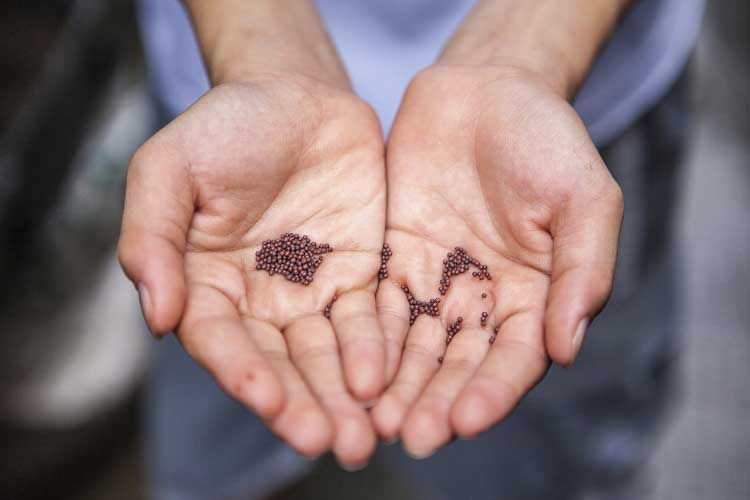
Is saving seeds difficult?
Producing your own seeds is not really difficult. It requires time, patience and some knowledge of plants’ life cycles.
Harvesting seeds is more or less easy
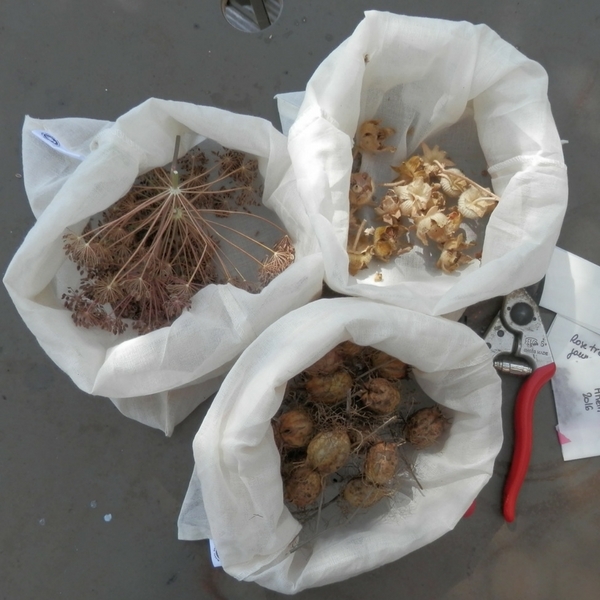
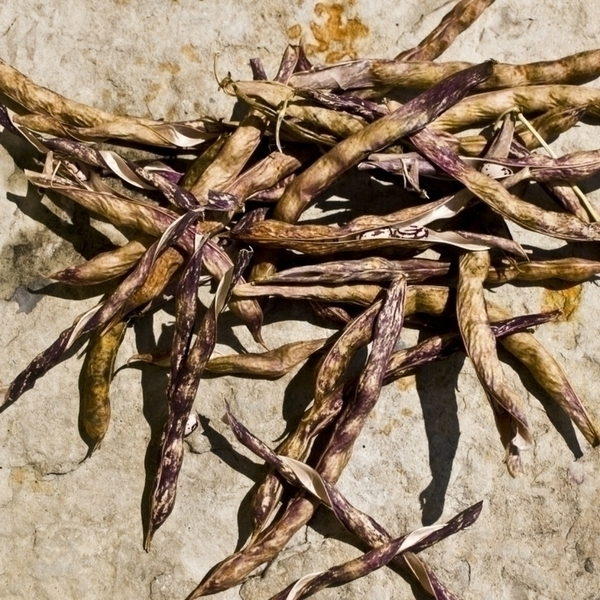
To collect seeds of dill or fennel, simply go to the garden with a bag and shake the flowers. Harvesting peas, beans or broad beans does not require heroic effort either: a simple shelling is enough. By contrast, recovering seed from tomatoes or physalis requires prior fermentation followed by careful drying. Finally, producing seeds from cucurbits may seem child’s play since they are large. But beware: some hybridise with one another with alarming ease, which can lead to pleasant or disappointing surprises. We’ve already talked about this here.
… and faster or slower
Seed harvest from annuals takes place within the year, at end of season. But for biennials, such as beetroot or spinach, you will need to wait several months, until the plant flowers and then produces seed. For these plants that means long months of waiting (up to 14 months for leek) during which the mother plants will occupy their place in the vegetable garden. Conversely, some plants require speed. To collect lupine seeds, pods must be fully dry… but not too dry, as they tend to open spontaneously. A few days too late and you will find only empty pods — which, you’ll agree, is very annoying when you have promised seed to your neighbour.
Producing good seed: conditions for success
To obtain quality seed, follow three simple principles:
1) Select the best plants:
Harvesting seed also means making choices: selecting the most vigorous plants or varieties, the tastiest vegetables and those that have withstood diseases with distinction. Leave aside cucumbers shrivelled by powdery mildew, tomatoes ruined by late blight or that radish variety that hollowed out from an early stage… and, in general, all weak plants that required endless attention. For lettuces, resist temptation to save seed from a variety that bolted while you were on holiday. Opportunity makes the thief, true, but if it did not tolerate this year’s heat, chances are offspring will inherit same tendency next year!
2) Harvest at maturity and in good conditions
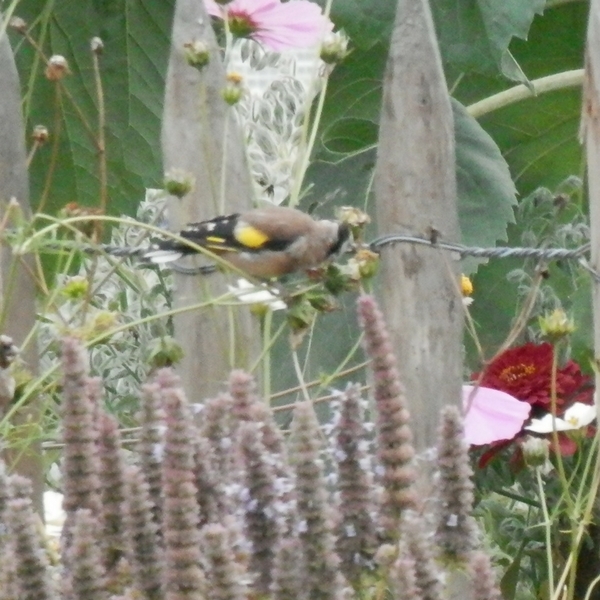
Don’t be too hasty: if seed isn’t ripe, it’s too early, as it will lack reserves needed for germination. But don’t wait too long either… otherwise, as with lupine, seeds may have fallen or been eaten by birds (goldfinches, at my place, adore cosmos seeds). Ideally, collect seeds at end of a sunny day, which will significantly shorten drying time. And if, unlike me, you garden by the moon, do so in waxing moon, on a seed or fruit day.
3) Sort and dry
If you harvest large quantities of seed in one go, a sort to remove plant debris is necessary. At family-garden scale, this step is fairly easy. Use kitchen sieves as makeshift screens. Personally, I’m not too fussy about this step, unlike drying.
The seed drying stage is crucial to prevent mould. No need to bake seeds in blazing sun. Store them in shade, in a well‑ventilated place and be patient.
Storing seeds properly
Seed viability varies between vegetables. For parsnip or angelica it is very short. Even for vegetables whose seeds are reputed to keep for a long time, poor storage can destroy viability.
Factors affecting seed storage include humidity, excessive heat, and formaldehyde. This toxic substance is present in furniture made from chipboard. Store packets in solid wood furniture, if possible untreated, in metal or cardboard boxes.
For good seed storage, forget overly airtight containers and opt for sachets. Use small envelopes or make your own sachets (many models online and, in particular, on Pinterest). I chose clear sleeves used by stamp collectors. They are handy because they are translucent and inexpensive (around €5 for 100 sachets at 5.5 × 7.5 cm). I write variety name and harvest date directly on sleeve and close it with repositionable tape or “masking tape”.
Mistakes to avoid
1) Saving seed from F1 hybrid varieties
Although debated and wrongly equated with GMO seed, F1 hybrid varieties are interesting for their uniformity, productivity or resistance. Unfortunately, their qualities do not carry over to following generations. You can collect the seed, but you will not recover the same traits in the next generation. You may even obtain no fruit or vegetable at all.
2) Saving seed from supermarket fruit or vegetables
Life is full of surprises. Sometimes they are good, even when shopping at the supermarket. An ultra‑crisp cucumber, a wonderfully fragrant melon, a tasty tomato — it can happen. So, is saving seed from these vegetables a good idea?
Although it sometimes works, I would say it is generally a bad idea for the following reasons:
- these vegetables are grown by market gardeners who mostly use F1 hybrid varieties (see above)
- if Pascal Poot grows tomatoes with almost no water, it stands to reason a tomato raised in a greenhouse, soilless with constant watering will produce somewhat demanding offspring, won’t it? On the other hand, if you buy from organic shops or organic market gardeners, give it a try. Although F1 varieties can be grown organically, you are more likely to find an open‑pollinated variety grown in traditional, even tough, conditions.
That’s about it — almost everything you need to know. Feel free to share your experiences in the comments!
Further reading :
- Producing Organic Seeds - Christian Bouté - Terre Vivante Editions
- Discover our video tutorial devoted to seed harvesting :

































Comments