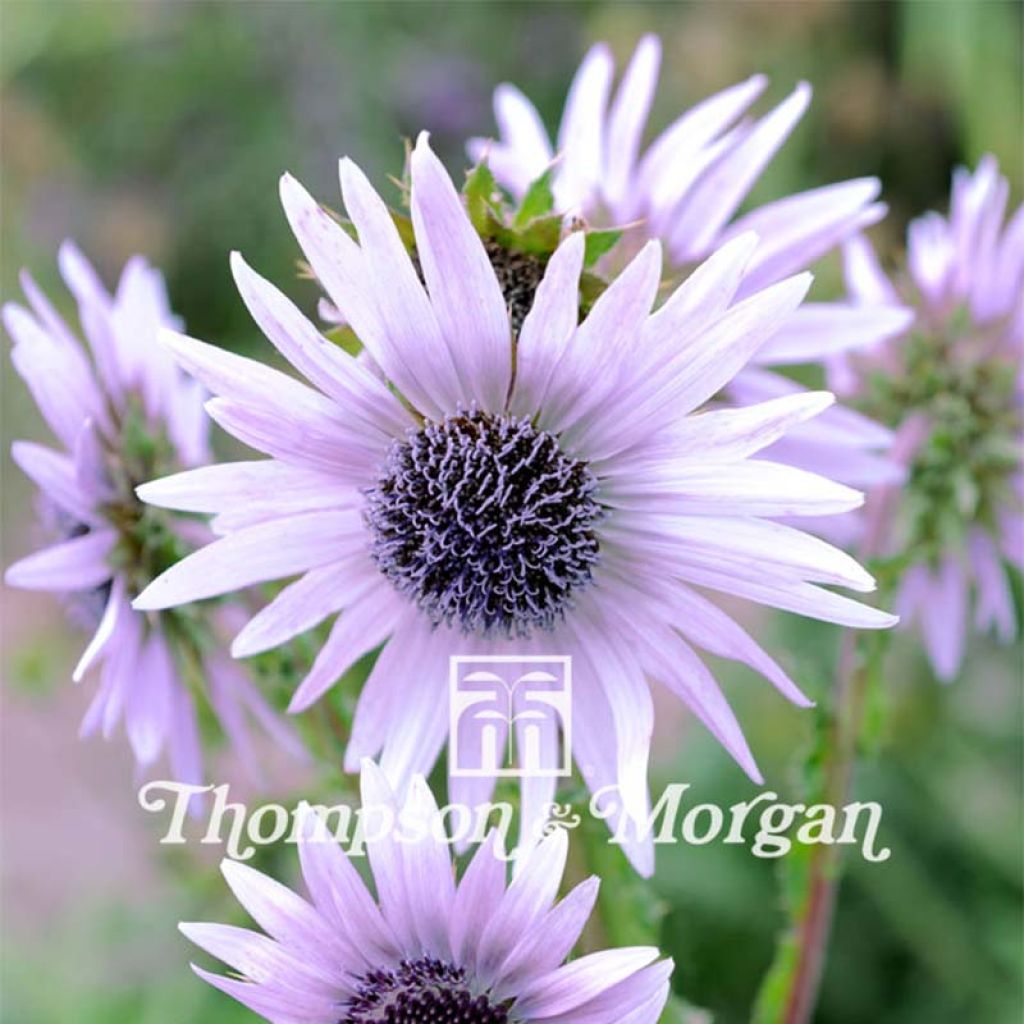
Berkheya purpurea - South African purple thistle seeds
Berkheya purpurea - South African purple thistle seeds
Berkheya purpurea
Purple Berkheya
nothing, not a single one
Maria D., 20/08/2018
Back-to-school special offer!
Get €10 off for every €50 you spend! And get up to €40 off on a single order.
How does it work?
1. Shop your favourites
Add your favourite plants to your basket. For every €50 you spend (excluding delivery charges, store credit and the plastic-free option), you’ll receive a €10 voucher.
€50 spent = €10 voucher
€100 spent = €20 voucher
€150 spent = €30 voucher
€200 spent = €40 voucher
2. Place your order
Once your basket reaches one of the spending thresholds, place your order. You can even choose your delivery date!
3. Receive your voucher
As soon as your order has been shipped, you’ll receive an email containing your personal voucher code and its value.
4. Use it on your next order
Your voucher is valid for 90 days from the date you receive it. It can be used once only, on a new order worth at least the value of the voucher, excluding delivery charges.
Please note: Vouchers can be combined with other offers, but cannot be split or refunded.
Why not try an alternative variety in stock?
View all →
Available in 1 sizes

Available in 1 sizes
Available in 1 sizes
Available in 1 sizes
Available in 1 sizes
Available in 1 sizes
Available in 1 sizes

Available in 1 sizes
Available in 1 sizes
Available in 1 sizes
This plant carries a 6 months recovery warranty
More information
We guarantee the quality of our plants for a full growing cycle, and will replace at our expense any plant that fails to recover under normal climatic and planting conditions.
Would this plant suit my garden?
Set up your Plantfit profile →
Description
Berkheya purpurea, nicknamed South African Purple Thistle, is one of those unusual large perennials with wild charm that give a unique touch to a curious gardener's garden. Resembling a thistle, it is botanically closer to Arctotis and Gazania. It develops a persistent rosette composed of long, grey-green, spiny, fuzzy leaves, from which tall, branched stems emerge in summer, bearing large inflorescences resembling pale purple daisies around a purplish centre. Relatively hardy in well-drained soil, it will self-seed freely in a garden that leaves room for nature, in a large rockery, near a pathway, or in a sunny bed.
Berkheya purpurea is a plant in the Asteraceae family, native to cool high-altitude grasslands in eastern South Africa. Its natural habitat is a large, moist rocky escarpment along watercourses, in cold and sporadically hot and dry climates. This plant is therefore capable of adapting to our climates, mountainous or coastal, with a few waterings if the summer is dry. As an adult, the purple thistle will reach a height of 90 cm (35in) when flowering, 30 cm (12in) for the foliage, and 50 cm (20in) in width. Its growth is fast, and its longevity is quite remarkable in favourable soil. Its leaves form a fairly dense basal rosette. They are long and narrow, thick, upright, pale silver-green, shiny, and spiny-edged. Their undersides are fuzzy. The main attraction of this plant is its flowering, in the form of large 8-10cm (3-4in) diameter heads. The inflorescence consists of a crown of green, spiny bracts supporting the collar of pale mauve-lilac ligulate florets arranged around a centre of purple florets, dusted with white pollen. Each basal rosette produces a single thick stem covered with small leaves, which branches out and bears between 10 and 15 inflorescences at the same time. Their lifespan does not exceed a few days. They are visited by bees and butterflies, as well as numerous pollinating insects. The flowering is followed by the formation of numerous seeds that easily germinate in light soil.
This purple thistle is a plant that inspires admiration or arouses curiosity, better suited to a country garden or a natural rockery than to an urban garden where every element is precisely placed in a limited space. In fact, this Berkheya self-seeds everywhere, in the smallest crack where its seed can lodge. It is simply stunning in sloping gardens on hills or mountains, in the company of blue delphiniums, Aconitum, and pink or purple roses in moist soil, but also blends well with giant grasses (Panicum virgatum, Miscanthus sinensis), agapanthus, Grevillea, Callistemon, cistus, lavender, and rosemary, or tall mulleins in drier gardens.
Report an error about the product description
Flowering
Foliage
Plant habit
Botanical data
Berkheya
purpurea
Asteraceae
Purple Berkheya
South Africa
Planting and care
Sowing:
Sow the South African Purple Thistle in February, undercover, or directly in place in April.
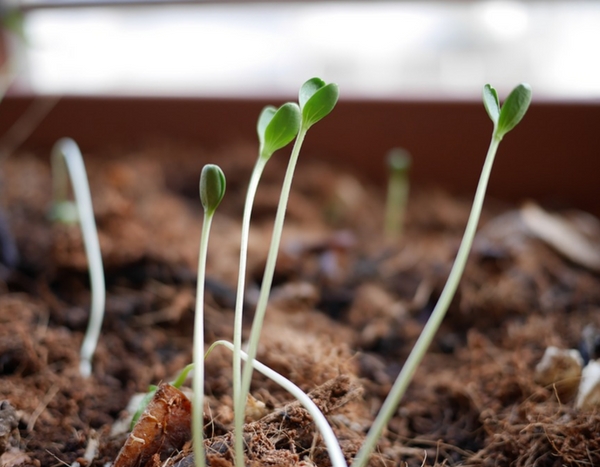
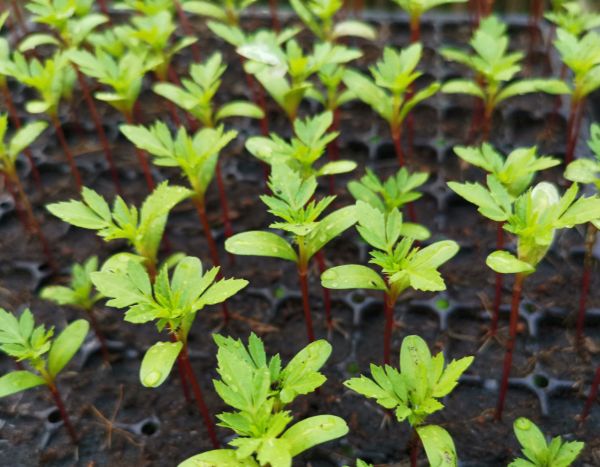
In February: sow on the surface of a light and well-draining special sowing compost, moistened, then lightly cover the seeds with a thin layer of compost or fine quality vermiculite. Place the container in a heated mini-greenhouse, or enclose the sowing in a polythene bag in a place maintained at 15-20°C. Germination can take up to 1 month. Keep the sowing near a source of light, as it facilitates germination.
Transplant the young plants when they are large enough to handle into 8 cm (3in) pots or trays. Gradually acclimatise them to cooler conditions for a few weeks before planting them out, after all risk of frost, with a spacing of 45-60cm (18-24in).
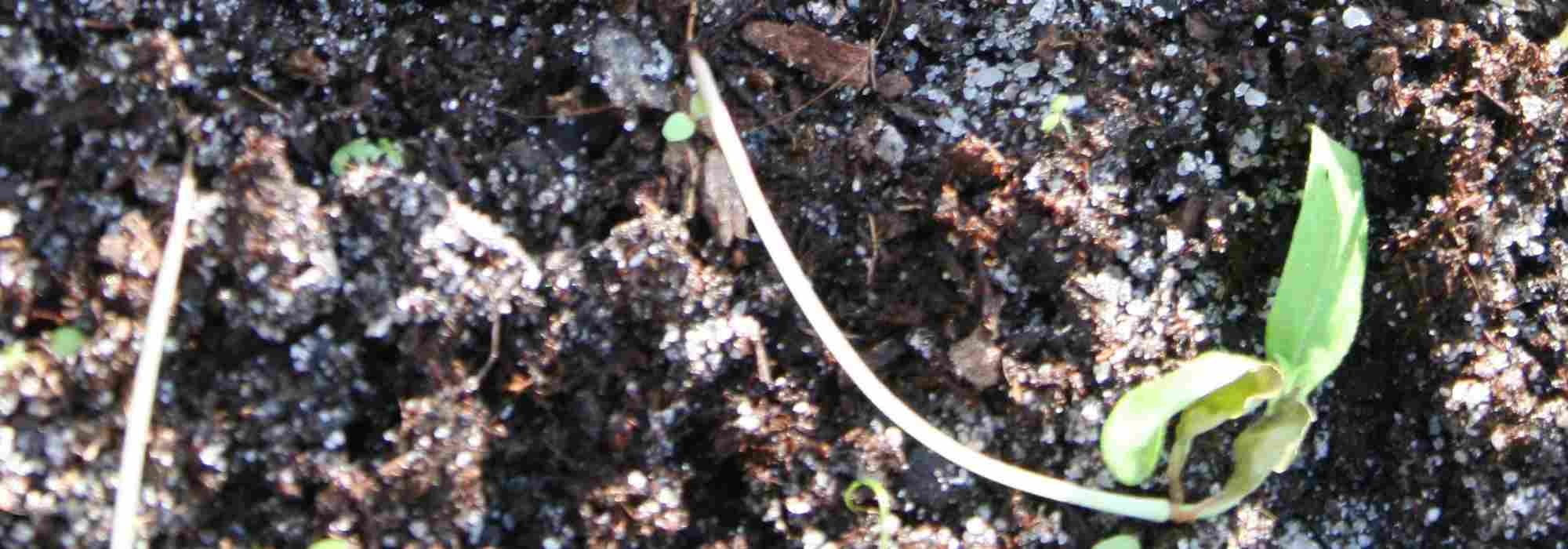
Sowing in place is also possible, between April and May. Prepare the soil by weeding it and sow in loosened soil free of surface stones using a rake. After sowing, lightly firm the soil. For a flower meadow, mix the Berkheya with other seeds.
Cultivation:
Berkheya purpurea thrives in full sun, or in partial shade in warm climates, in ordinary soil lightened with coarse sand or gravel, both light and well-draining to improve its hardiness (around -10/-12°C). Prune the faded stems after flowering if you want to avoid self-seeding. In cold regions, it is advisable to cover the plant with a winter veil. This plant also grows very well in pots, in good horticultural compost. The plant can then be overwintered in a cold greenhouse or in an unheated conservatory.
Sowing period
Intended location
Planting & care advice
-

-
-
-
-

-
-
-

-
, onOrder confirmed
Reply from on Promesse de fleurs
Recently viewed products
Haven't found what you were looking for?
Hardiness is the lowest winter temperature a plant can endure without suffering serious damage or even dying. However, hardiness is affected by location (a sheltered area, such as a patio), protection (winter cover) and soil type (hardiness is improved by well-drained soil).

The flowering period indicated on our website applies to countries and regions located in USDA zone 8 (France, the United Kingdom, Ireland, the Netherlands, etc.)
It will vary according to where you live:- In zones 9 to 10 (Italy, Spain, Greece, etc.), flowering will occur about 2 to 4 weeks earlier.
- In zones 6 to 7 (Germany, Poland, Slovenia, and lower mountainous regions), flowering will be delayed by 2 to 3 weeks.
- In zone 5 (Central Europe, Scandinavia), blooming will be delayed by 3 to 5 weeks.
In temperate climates, pruning of spring-flowering shrubs (forsythia, spireas, etc.) should be done just after flowering.
Pruning of summer-flowering shrubs (Indian Lilac, Perovskia, etc.) can be done in winter or spring.
In cold regions as well as with frost-sensitive plants, avoid pruning too early when severe frosts may still occur.
The planting period indicated on our website applies to countries and regions located in USDA zone 8 (France, United Kingdom, Ireland, Netherlands).
It will vary according to where you live:
- In Mediterranean zones (Marseille, Madrid, Milan, etc.), autumn and winter are the best planting periods.
- In continental zones (Strasbourg, Munich, Vienna, etc.), delay planting by 2 to 3 weeks in spring and bring it forward by 2 to 4 weeks in autumn.
- In mountainous regions (the Alps, Pyrenees, Carpathians, etc.), it is best to plant in late spring (May-June) or late summer (August-September).
The harvesting period indicated on our website applies to countries and regions in USDA zone 8 (France, England, Ireland, the Netherlands).
In colder areas (Scandinavia, Poland, Austria...) fruit and vegetable harvests are likely to be delayed by 3-4 weeks.
In warmer areas (Italy, Spain, Greece, etc.), harvesting will probably take place earlier, depending on weather conditions.
The sowing periods indicated on our website apply to countries and regions within USDA Zone 8 (France, UK, Ireland, Netherlands).
In colder areas (Scandinavia, Poland, Austria...), delay any outdoor sowing by 3-4 weeks, or sow under glass.
In warmer climes (Italy, Spain, Greece, etc.), bring outdoor sowing forward by a few weeks.
Shipping country and language
Your country of residence may be:
Your country of residence is:
For a better user experience on our website, you can select:
Your shipping country:
-
 Austria
-
 Belgium
-
 Bosnia & Herzegovina
-
 Bulgaria
-
 Croatia
-
 Cyprus
-
 Czechia
-
 Denmark
-
 Estonia
-
 Finland
-
 France
-
 Germany
-
 Greece
-
 Hungary
-
 Iceland
-
 Ireland
-
 Italy
Italy
-
 Latvia
-
 Liechtenstein
-
 Lithuania
-
 Luxembourg
-
 Malta
Malta
-
 Netherlands
-
 Poland
-
 Portugal
-
 Romania
-
 Serbia
-
 Slovakia
-
 Slovenia
-
 Spain
Spain
-
 Sweden
-
 Switzerland
Language:
-
French
-
 English
-
Spanish
-
Italian
-
German
-
Portuguese
-
Dutch
-
Finnish
My Account
Hello
My wish lists
My cart
Log in / Register
Existing customer?
This form is protected by reCAPTCHA - the Google Privacy Policy and Terms of Service apply.
New customer?
Create an account to track your orders, access our customer service and, if you wish, make the most of our upcoming offers.