
Tanacetum parthenium Camilla seeds - Feverfew

Tanacetum parthenium Camilla seeds - Feverfew
Tanacetum parthenium Camilla seeds - Feverfew
Tanacetum parthenium 'Camilla'
Feverfew
Back-to-school special offer!
Get €10 off for every €50 you spend! And get up to €40 off on a single order.
How does it work?
1. Shop your favourites
Add your favourite plants to your basket. For every €50 you spend (excluding delivery charges, store credit and the plastic-free option), you’ll receive a €10 voucher.
€50 spent = €10 voucher
€100 spent = €20 voucher
€150 spent = €30 voucher
€200 spent = €40 voucher
2. Place your order
Once your basket reaches one of the spending thresholds, place your order. You can even choose your delivery date!
3. Receive your voucher
As soon as your order has been shipped, you’ll receive an email containing your personal voucher code and its value.
4. Use it on your next order
Your voucher is valid for 90 days from the date you receive it. It can be used once only, on a new order worth at least the value of the voucher, excluding delivery charges.
Please note: Vouchers can be combined with other offers, but cannot be split or refunded.
Home or relay delivery (depending on size and destination)
Important: You may be charged customs duties by your country’s customs authorities upon delivery.
Schedule delivery date,
and select date in basket
This plant carries a 6 months recovery warranty
More information
We guarantee the quality of our plants for a full growing cycle, and will replace at our expense any plant that fails to recover under normal climatic and planting conditions.
Would this plant suit my garden?
Set up your Plantfit profile →
Description
La Matricaire ‘Camilla’ (Tanacetum parthenium) est une Grande camomille qui séduit par ses petites « marguerites » crème à disque doré, portées en nuages sur des tiges bien ramifiées. Robuste et facile à cultiver, elle anime tout l'été les grandes bordures, jardins de cottage et plates-bandes de fleurs à couper. C'est aussi une plante qui attire les auxiliaires au jardin. Ses tiges fines et régulières sont très appréciées dans les bouquets.
Les graines enrobées sont des semences entourées d’une fine pellicule qui augmente leur volume : elles se manipulent plus facilement et permettent un semis plus précis et homogène.
La Matricaire simple ‘Camilla’ appartient à la famille des Astéracées. L’espèce type est Tanacetum parthenium (synonymes Chrysanthemum parthenium et Pyrethrum parthenium) ; on l’appelle aussi grande camomille. Espèce eurasiatique, elle est originaire des Balkans, d’Anatolie et du Caucase, où on la rencontre sur pentes sèches, dans les friches et lisières claires ; elle s’est naturalisée dans de nombreuses régions tempérées.
'Camilla' est une sélection horticole choisie pour ses capitules simples à ligules crème entourant un disque jaune soutenu. Ses capitules, portées en corymbes très ramifiés, offrent une profusion de petites “marguerites” de 1,5 à 2 cm de diamètre. La floraison s’étale de juin à septembre si l’on coupe régulièrement les fleurs fanées. Le port de cette matricaire est buissonnant, dressé et léger ; sa croissance est rapide. En pleine terre, la touffe atteint 60 à 80 cm de hauteur pour 40 à 50 cm d’étalement ; en pot, plutôt 40 à 60 cm de haut. Le feuillage, caduc à semi-persistant selon l’hiver, est profondément découpé, d’un vert moyen, aromatique au froissement. La plante ne drageonne pas ; elle se pérennise 2 à 3 ans selon les conditions, puis se renouvelle volontiers par semis spontanés en terre légère. Cultivée depuis des siècles dans les jardins de simples d’Europe, la grande camomille figurait dans les herbiers médiévaux ; son feuillage aromatique était apprécié autant que sa longue floraison.
Plantez cette matricaire ‘Camilla’ par groupes de 5 à 9 dans une grande bordure ensoleillée, près d’un chemin ou dans une planche de fleurs à couper au potager. Vous pouvez l'associer à des graminées fines telles que le Panicum virgatum ‘Cloud Nine’ et aux fleurs légères du Cosmos 'Psyché White', de la Scabieuse atropurpurea ‘Beaujolais Bonnets’ et de l'Achillée millefolium ‘Terracotta’. En grands bacs, associez ‘Camilla’ à des sauges annuelles compactes et à des feuillages gris.
Nos conseils : tuteurez dans les sites venteux, arrosez régulièrement, mais sans excès, coupez court après chaque vague de floraison. Pour la coupe, récoltez les tiges quand la majorité des capitules est ouverte.

Tanacetum parthenium Camilla seeds - Feverfew in pictures

Flowering
Foliage
Plant habit
Botanical data
Tanacetum
parthenium
'Camilla'
Asteraceae
Feverfew
Chrysanthemum parthenium, Chrysanthemum praealtum, Leucanthemum parthenium, Matricaria parthenium, Matricaria eximia
Cultivar or hybrid
Planting and care
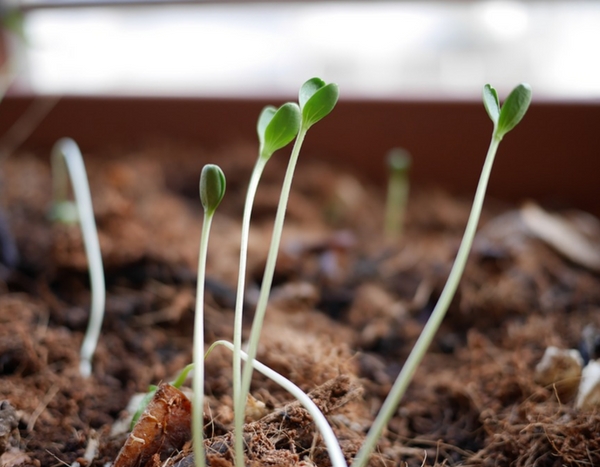
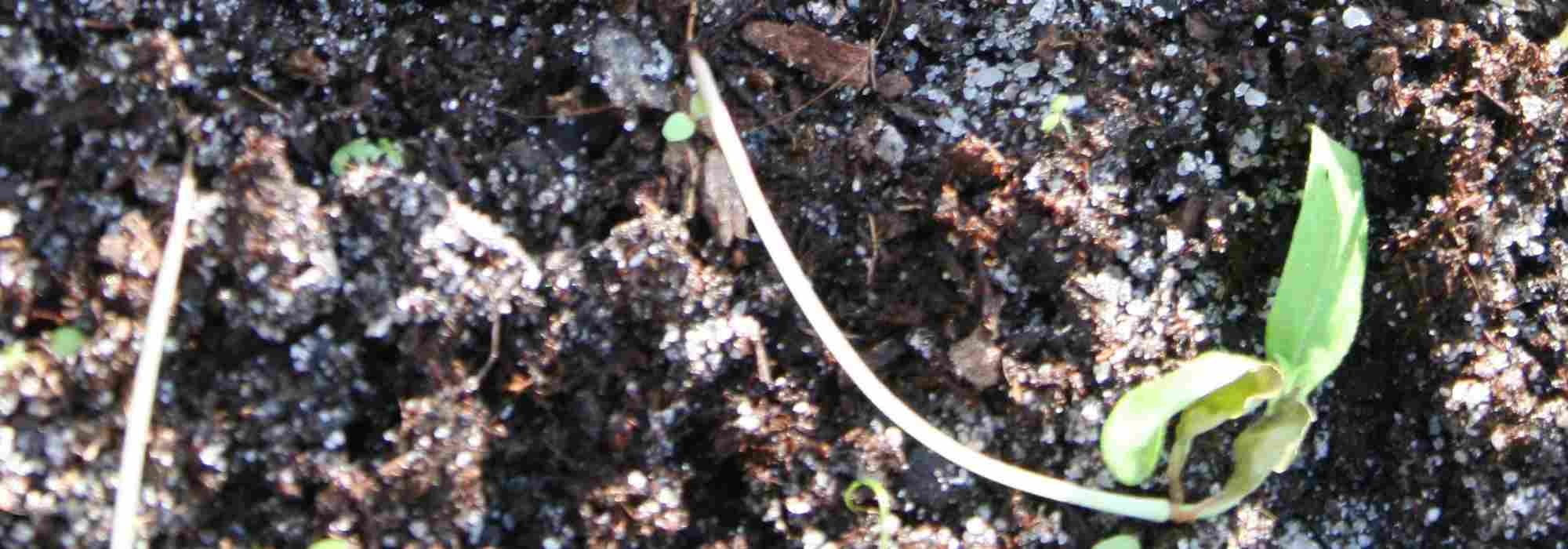
Sow Tanacetum parthenium 'Camilla' 6 to 8 weeks before planting out in the garden, after the last frosts, in a seed tray. Use good quality compost. Broadcast your seeds. Cover the seeds by sprinkling compost or vermiculite, firm lightly and water thoroughly with a fine spray. Place your seed tray in the light, without direct sun, at a temperature of 15°C to 20°C. Lower the temperature slightly at night.
Growth is rapid. Once the young plants have reached a height of 5 cm, prick them out into pots. 15 days before their final planting out, begin to acclimatise them gradually to the outdoor temperature.
By the end of May, the temperature in the garden will be warm enough to plant out your young plants. Choose a location in full sun. Space your plants 30 to 40 cm apart.
To obtain more ramified plants, pinch out the growing tips 2 to 4 times during cultivation.
Remove faded flowers to encourage flowering.
You can also sow directly in situ, after the last frosts.
Sowing period
Intended location
Planting & care advice
-

-
-
-

-

-

-

-

This item has not been reviewed yet - be the first to leave a review about it.
Recently viewed products
Haven't found what you were looking for?
Hardiness is the lowest winter temperature a plant can endure without suffering serious damage or even dying. However, hardiness is affected by location (a sheltered area, such as a patio), protection (winter cover) and soil type (hardiness is improved by well-drained soil).

The flowering period indicated on our website applies to countries and regions located in USDA zone 8 (France, the United Kingdom, Ireland, the Netherlands, etc.)
It will vary according to where you live:- In zones 9 to 10 (Italy, Spain, Greece, etc.), flowering will occur about 2 to 4 weeks earlier.
- In zones 6 to 7 (Germany, Poland, Slovenia, and lower mountainous regions), flowering will be delayed by 2 to 3 weeks.
- In zone 5 (Central Europe, Scandinavia), blooming will be delayed by 3 to 5 weeks.
In temperate climates, pruning of spring-flowering shrubs (forsythia, spireas, etc.) should be done just after flowering.
Pruning of summer-flowering shrubs (Indian Lilac, Perovskia, etc.) can be done in winter or spring.
In cold regions as well as with frost-sensitive plants, avoid pruning too early when severe frosts may still occur.
The planting period indicated on our website applies to countries and regions located in USDA zone 8 (France, United Kingdom, Ireland, Netherlands).
It will vary according to where you live:
- In Mediterranean zones (Marseille, Madrid, Milan, etc.), autumn and winter are the best planting periods.
- In continental zones (Strasbourg, Munich, Vienna, etc.), delay planting by 2 to 3 weeks in spring and bring it forward by 2 to 4 weeks in autumn.
- In mountainous regions (the Alps, Pyrenees, Carpathians, etc.), it is best to plant in late spring (May-June) or late summer (August-September).
The harvesting period indicated on our website applies to countries and regions in USDA zone 8 (France, England, Ireland, the Netherlands).
In colder areas (Scandinavia, Poland, Austria...) fruit and vegetable harvests are likely to be delayed by 3-4 weeks.
In warmer areas (Italy, Spain, Greece, etc.), harvesting will probably take place earlier, depending on weather conditions.
The sowing periods indicated on our website apply to countries and regions within USDA Zone 8 (France, UK, Ireland, Netherlands).
In colder areas (Scandinavia, Poland, Austria...), delay any outdoor sowing by 3-4 weeks, or sow under glass.
In warmer climes (Italy, Spain, Greece, etc.), bring outdoor sowing forward by a few weeks.
Shipping country and language
Your country of residence may be:
Your country of residence is:
For a better user experience on our website, you can select:
Your shipping country:
-
 Austria
-
 Belgium
-
 Bosnia & Herzegovina
-
 Bulgaria
-
 Croatia
-
 Cyprus
-
 Czechia
-
 Denmark
-
 Estonia
-
 Finland
-
 France
-
 Germany
-
 Greece
-
 Hungary
-
 Iceland
-
 Ireland
-
 Italy
Italy
-
 Latvia
-
 Liechtenstein
-
 Lithuania
-
 Luxembourg
-
 Malta
Malta
-
 Netherlands
-
 Poland
-
 Portugal
-
 Romania
-
 Serbia
-
 Slovakia
-
 Slovenia
-
 Spain
Spain
-
 Sweden
-
 Switzerland
Language:
-
French
-
 English
-
Spanish
-
Italian
-
German
-
Portuguese
-
Dutch
-
Finnish
My Account
Hello
My wish lists
My cart
Log in / Register
Existing customer?
This form is protected by reCAPTCHA - the Google Privacy Policy and Terms of Service apply.
New customer?
Create an account to track your orders, access our customer service and, if you wish, make the most of our upcoming offers.