
Continental Smart Short Grass Meadow

Continental Smart Short Grass Meadow
Continental Smart Short Grass Meadow
The seeds ordered indicate a packaging date of December 2018! They are at least 4 years old, as a result, nothing has sprouted. This is very disappointing and not at all seriate.
Astrid, 09/05/2022
Back-to-school special offer!
Get €10 off for every €50 you spend! And get up to €40 off on a single order.
How does it work?
1. Shop your favourites
Add your favourite plants to your basket. For every €50 you spend (excluding delivery charges, store credit and the plastic-free option), you’ll receive a €10 voucher.
€50 spent = €10 voucher
€100 spent = €20 voucher
€150 spent = €30 voucher
€200 spent = €40 voucher
2. Place your order
Once your basket reaches one of the spending thresholds, place your order. You can even choose your delivery date!
3. Receive your voucher
As soon as your order has been shipped, you’ll receive an email containing your personal voucher code and its value.
4. Use it on your next order
Your voucher is valid for 90 days from the date you receive it. It can be used once only, on a new order worth at least the value of the voucher, excluding delivery charges.
Please note: Vouchers can be combined with other offers, but cannot be split or refunded.
Why not try an alternative variety in stock?
View all →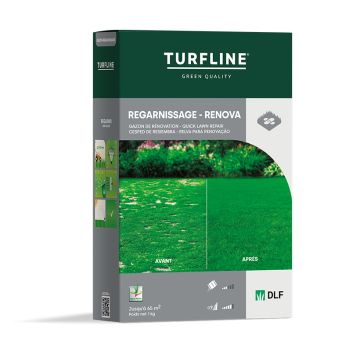
Available in 3 sizes

Available in 3 sizes

Available in 1 sizes

Available in 3 sizes

Available in 3 sizes
This plant carries a 6 months recovery warranty
More information
We guarantee the quality of our plants for a full growing cycle, and will replace at our expense any plant that fails to recover under normal climatic and planting conditions.
Would this plant suit my garden?
Set up your Plantfit profile →
Description
The Continental Smart Lawn is a blend of durable and resilient grasses that enables you to create an attractive lawn in any condition, including cold and damp regions: shaded or sunny spots, with high or low foot traffic, heavy or light soil, limestone or acidic soil, and also considering the preferences of the novice gardener. This mixture rapidly establishes a thick and lively turf in all situations. The seeds should be sown in March-April in the sun, in well-prepared and loosened soil. 1 kg can cover up to 40 m².
Composition:
- Mycosem: lawn seed coating solution containing mycorrhiza propagules, promotes growth and root system function.
- 35% English Ryegrass 4N FABIAN: exhibits superior resistance to heavy footfall, drought, and cold, with a deeper shade of green.
- 25% Creeping Red Fescue MAXIMA
- 10% Chewings Fescue BELLEAIRE
- 10% Crested Dogstail CANDELA
- 10% Meadow Fescue YVETTE
- 10% Smooth-stalked Meadow Grass SABRENA Coated
- Non-forage use
Product Features and Benefits:
- Varieties are specifically selected to harmonise with each other and for their adaptability, ensuring a homogeneous lawn suitable for different garden conditions.
- Mycorrhizal seeds provide significant user and environmental benefits: reduced maintenance, low nutrient requirements, and little irrigation after establishment.
Usage and Dosage:
- 1 kg: up to 40 m²
- Sowing rate: approximately 25 g/m²
In warmer climates we recommend South/Seaside Smart Lawn.
Report an error about the product description
Flowering
Foliage
Plant habit
Botanical data
Cultivar or hybrid
Planting and care
Sowing:
Sow directly in March-April (sow in September-October in hot and dry climates) in well-prepared, weed-free, refined and raked soil. Scatter the seeds on the soil surface and lightly rake to cover the seeds. Alternatively, use a roller to ensure the seeds stick to the soil. Regularly water with a fine spray to keep the soil slightly moist until germination if there is no rain.
Dosage:
- 1 box of 1 kg for 40 m², approximately 25 g/m²
Sowing period
Intended location
Planting & care advice
-
-

-

-

-

-

-

-

-
, onOrder confirmed
Reply from on Promesse de fleurs
Recently viewed products
Haven't found what you were looking for?
Hardiness is the lowest winter temperature a plant can endure without suffering serious damage or even dying. However, hardiness is affected by location (a sheltered area, such as a patio), protection (winter cover) and soil type (hardiness is improved by well-drained soil).

The flowering period indicated on our website applies to countries and regions located in USDA zone 8 (France, the United Kingdom, Ireland, the Netherlands, etc.)
It will vary according to where you live:- In zones 9 to 10 (Italy, Spain, Greece, etc.), flowering will occur about 2 to 4 weeks earlier.
- In zones 6 to 7 (Germany, Poland, Slovenia, and lower mountainous regions), flowering will be delayed by 2 to 3 weeks.
- In zone 5 (Central Europe, Scandinavia), blooming will be delayed by 3 to 5 weeks.
In temperate climates, pruning of spring-flowering shrubs (forsythia, spireas, etc.) should be done just after flowering.
Pruning of summer-flowering shrubs (Indian Lilac, Perovskia, etc.) can be done in winter or spring.
In cold regions as well as with frost-sensitive plants, avoid pruning too early when severe frosts may still occur.
The planting period indicated on our website applies to countries and regions located in USDA zone 8 (France, United Kingdom, Ireland, Netherlands).
It will vary according to where you live:
- In Mediterranean zones (Marseille, Madrid, Milan, etc.), autumn and winter are the best planting periods.
- In continental zones (Strasbourg, Munich, Vienna, etc.), delay planting by 2 to 3 weeks in spring and bring it forward by 2 to 4 weeks in autumn.
- In mountainous regions (the Alps, Pyrenees, Carpathians, etc.), it is best to plant in late spring (May-June) or late summer (August-September).
The harvesting period indicated on our website applies to countries and regions in USDA zone 8 (France, England, Ireland, the Netherlands).
In colder areas (Scandinavia, Poland, Austria...) fruit and vegetable harvests are likely to be delayed by 3-4 weeks.
In warmer areas (Italy, Spain, Greece, etc.), harvesting will probably take place earlier, depending on weather conditions.
The sowing periods indicated on our website apply to countries and regions within USDA Zone 8 (France, UK, Ireland, Netherlands).
In colder areas (Scandinavia, Poland, Austria...), delay any outdoor sowing by 3-4 weeks, or sow under glass.
In warmer climes (Italy, Spain, Greece, etc.), bring outdoor sowing forward by a few weeks.
Shipping country and language
Your country of residence may be:
Your country of residence is:
For a better user experience on our website, you can select:
Your shipping country:
-
 Austria
-
 Belgium
-
 Bosnia & Herzegovina
-
 Bulgaria
-
 Croatia
-
 Cyprus
-
 Czechia
-
 Denmark
-
 Estonia
-
 Finland
-
 France
-
 Germany
-
 Greece
-
 Hungary
-
 Iceland
-
 Ireland
-
 Italy
Italy
-
 Latvia
-
 Liechtenstein
-
 Lithuania
-
 Luxembourg
-
 Malta
Malta
-
 Netherlands
-
 Poland
-
 Portugal
-
 Romania
-
 Serbia
-
 Slovakia
-
 Slovenia
-
 Spain
Spain
-
 Sweden
-
 Switzerland
Language:
-
French
-
 English
-
Spanish
-
Italian
-
German
-
Portuguese
-
Dutch
-
Finnish
My Account
Hello
My wish lists
My cart
Log in / Register
Existing customer?
This form is protected by reCAPTCHA - the Google Privacy Policy and Terms of Service apply.
New customer?
Create an account to track your orders, access our customer service and, if you wish, make the most of our upcoming offers.