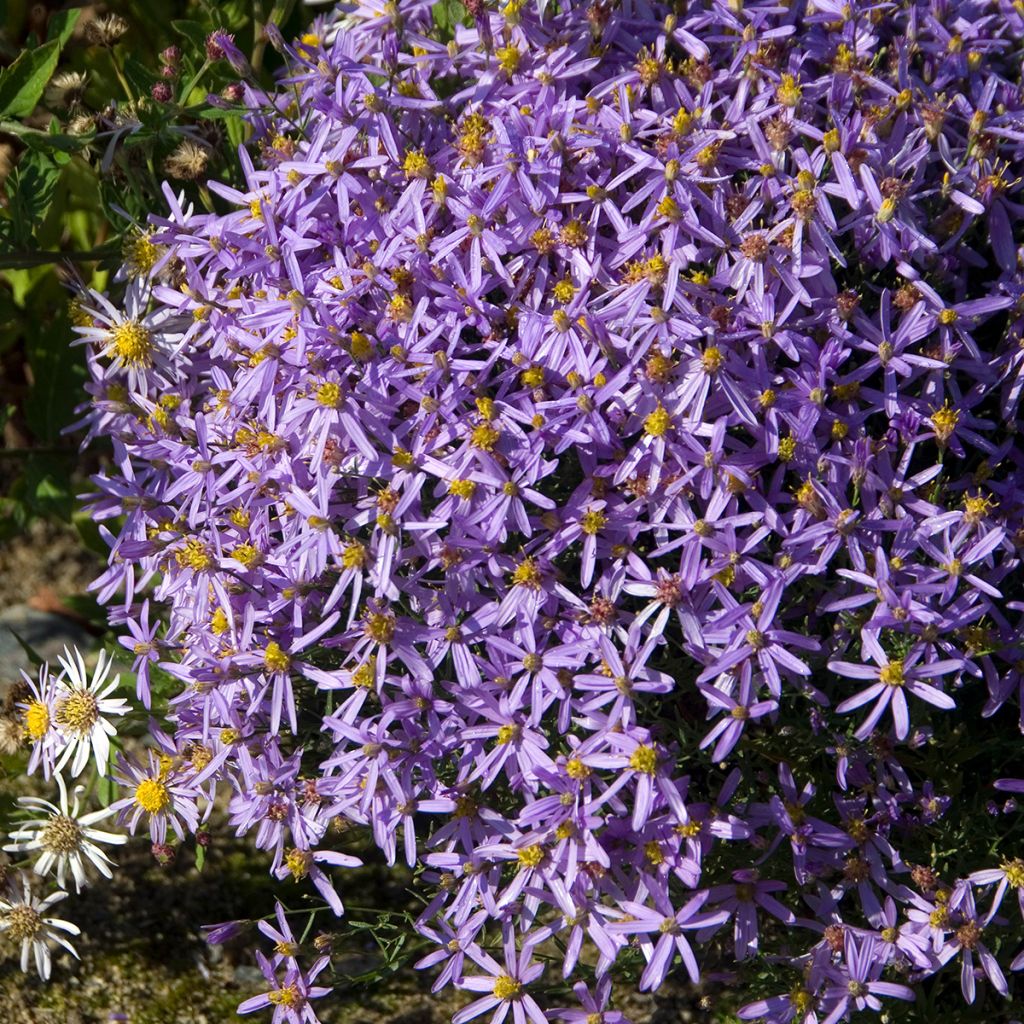
Aster sedifolius Nanus
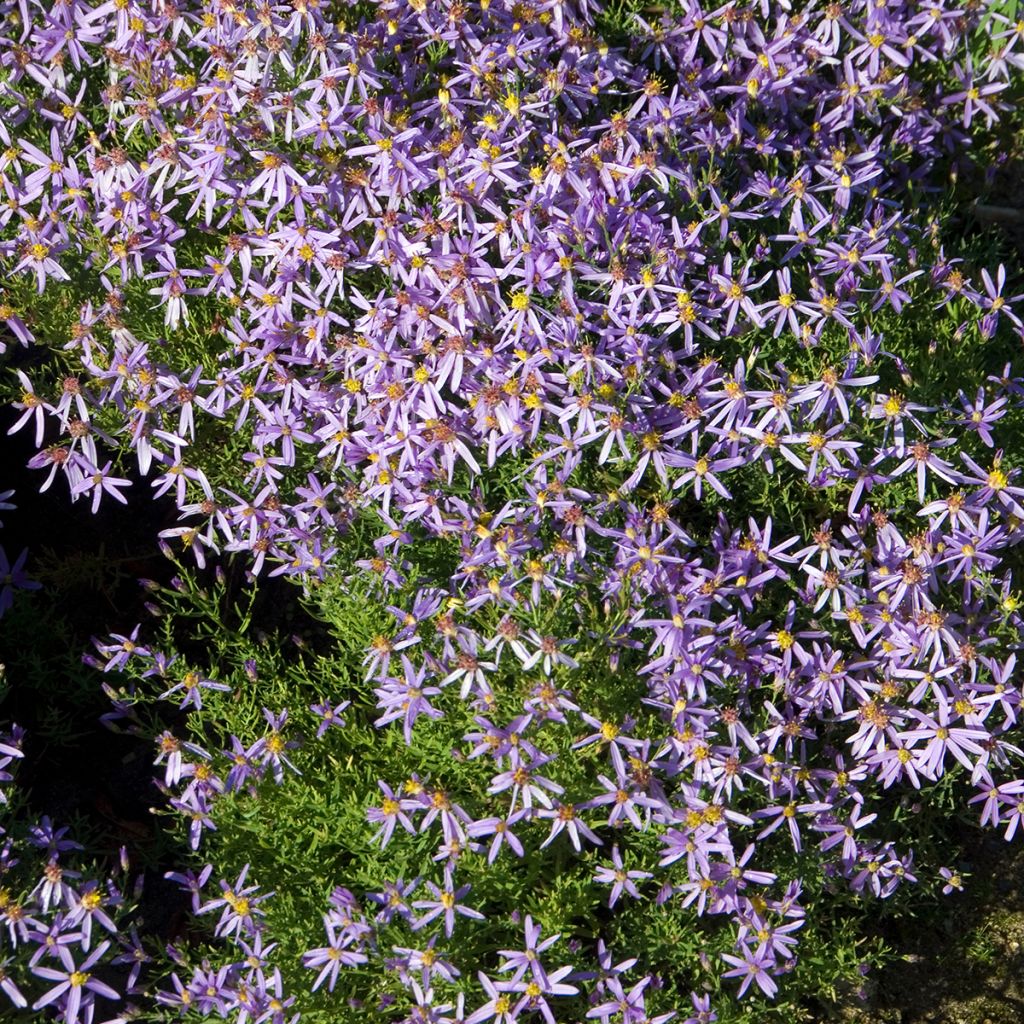
Aster sedifolius Nanus
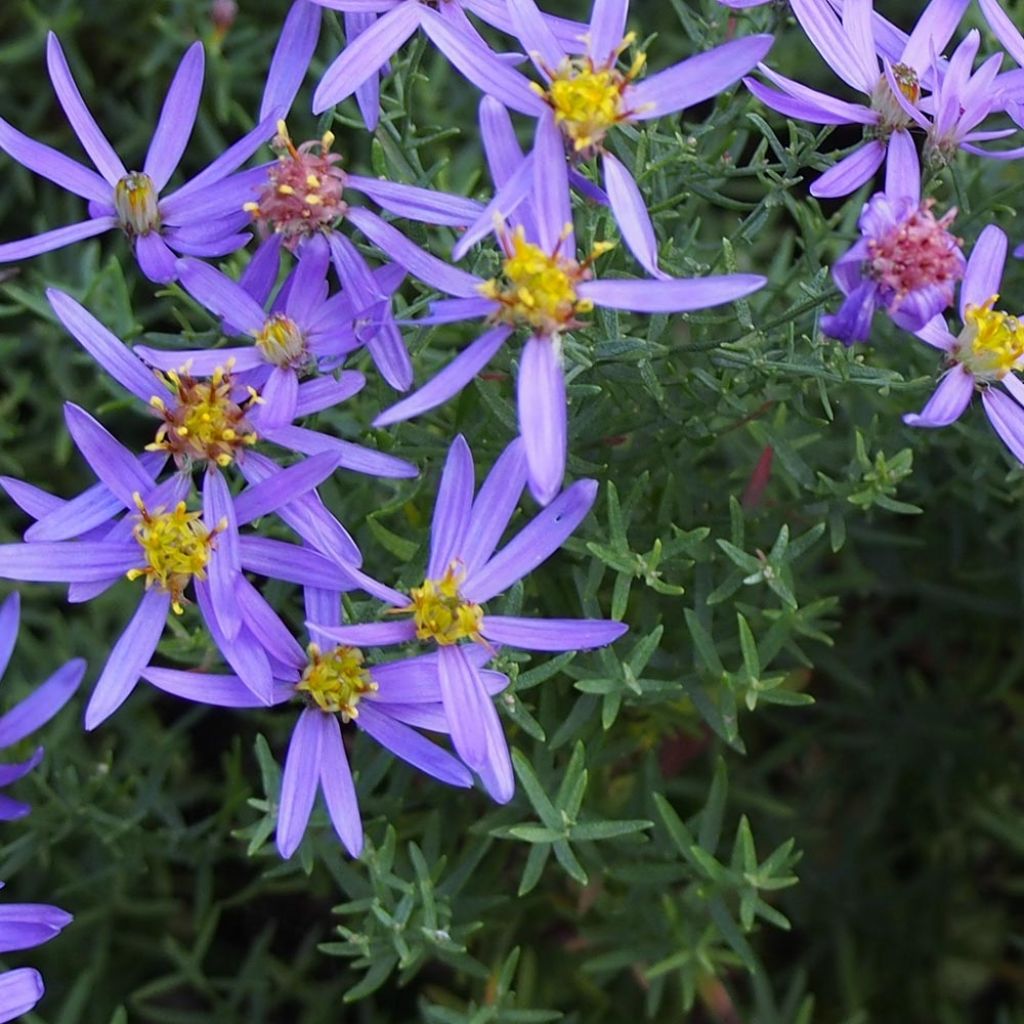
Aster sedifolius Nanus
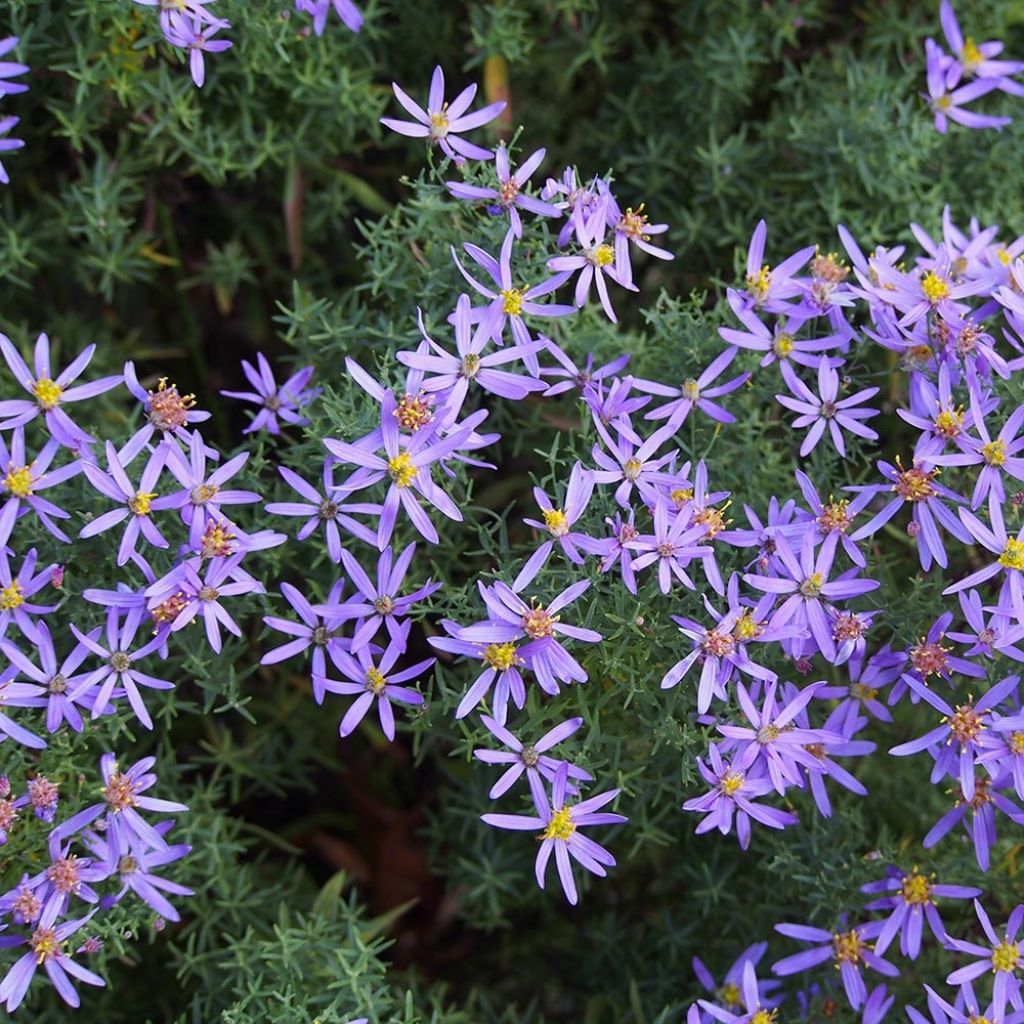
Aster sedifolius Nanus
Aster sedifolius Nanus
Aster sedifolius Nanus
Aster sedifolius Nanus
sedum-leaved galatella
The plant has grown well.
patricia, 21/05/2025
Back-to-school special offer!
Get €10 off for every €50 you spend! And get up to €40 off on a single order.
How does it work?
1. Shop your favourites
Add your favourite plants to your basket. For every €50 you spend (excluding delivery charges, store credit and the plastic-free option), you’ll receive a €10 voucher.
€50 spent = €10 voucher
€100 spent = €20 voucher
€150 spent = €30 voucher
€200 spent = €40 voucher
2. Place your order
Once your basket reaches one of the spending thresholds, place your order. You can even choose your delivery date!
3. Receive your voucher
As soon as your order has been shipped, you’ll receive an email containing your personal voucher code and its value.
4. Use it on your next order
Your voucher is valid for 90 days from the date you receive it. It can be used once only, on a new order worth at least the value of the voucher, excluding delivery charges.
Please note: Vouchers can be combined with other offers, but cannot be split or refunded.
Home or relay delivery (depending on size and destination)
Important: You may be charged customs duties by your country’s customs authorities upon delivery.
Schedule delivery date,
and select date in basket
This plant carries a 12 months recovery warranty
More information
We guarantee the quality of our plants for a full growing cycle, and will replace at our expense any plant that fails to recover under normal climatic and planting conditions.
Would this plant suit my garden?
Set up your Plantfit profile →
Description
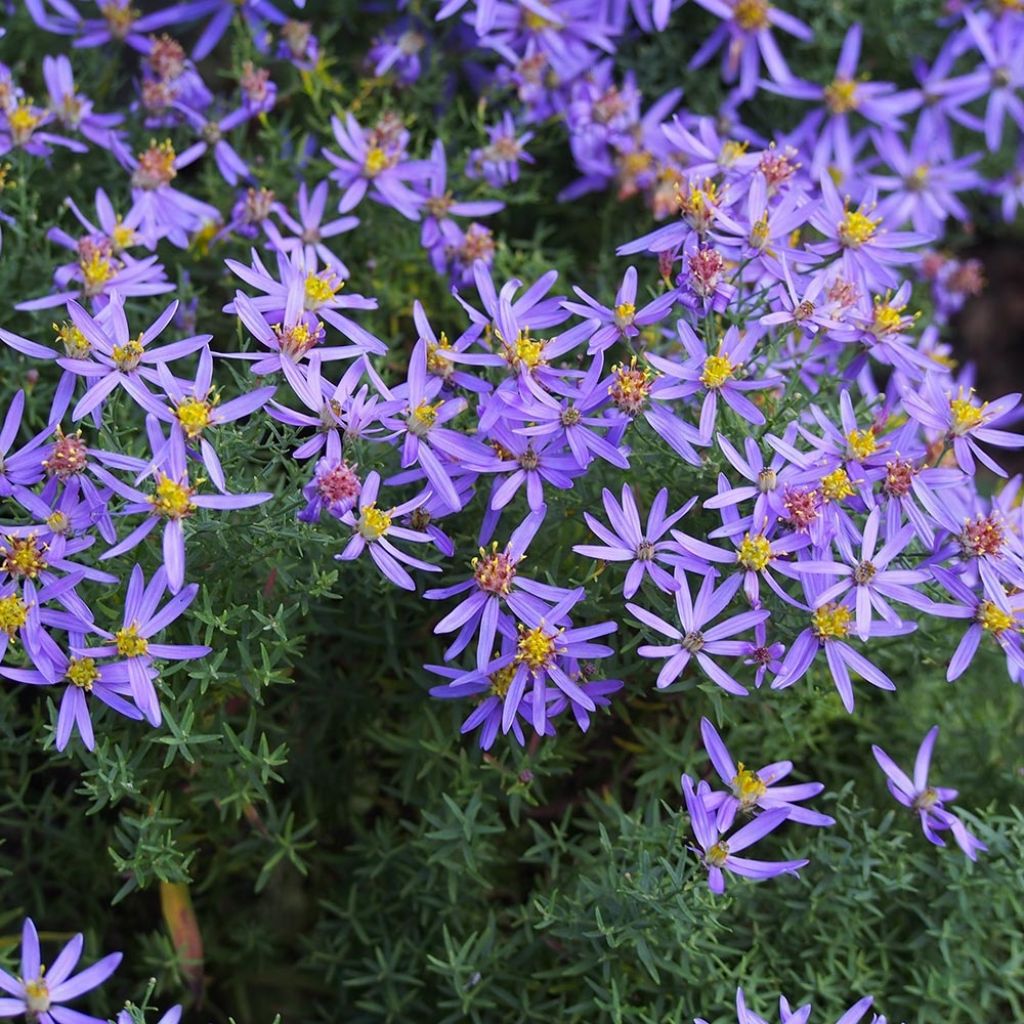
Aster sedifolius Nanus is a dwarf and compact form of the sedum-leaved aster perfectly suited for rock gardens, planters, and borders. This small, bushy plant has the same resilience as the wild version, now renamed Galatella sedifolia, with its narrow leaves and long flowering period of small mauve stars with yellow centres adding charm to the late season. It is a trouble-free perennial, even in poor and limestone soils, perfect for natural or drought-tolerant gardens.
The sedum-leaved Aster or Aster acre, belongs to the aster family. Native to central Europe, this species is also part of the Mediterranean flora. Resistant to cold and tolerant of limestone soils, this species can grow up to 1450m (4757ft) in altitude and is well-adapted to heat and summer drought. The 'Nanus' selection only differs in its denser habit and smaller size.
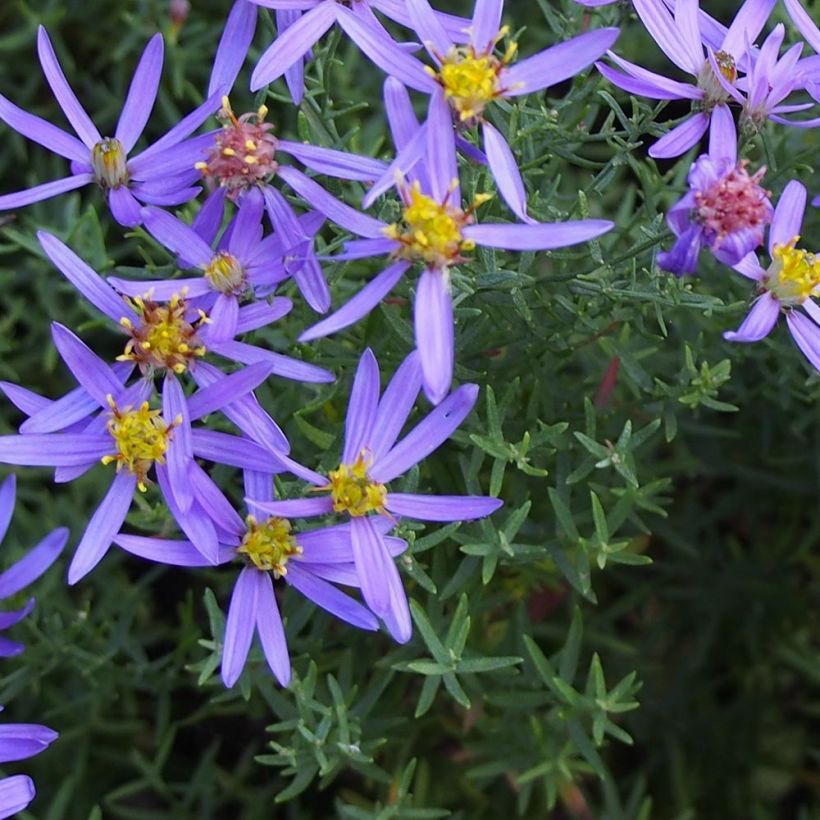
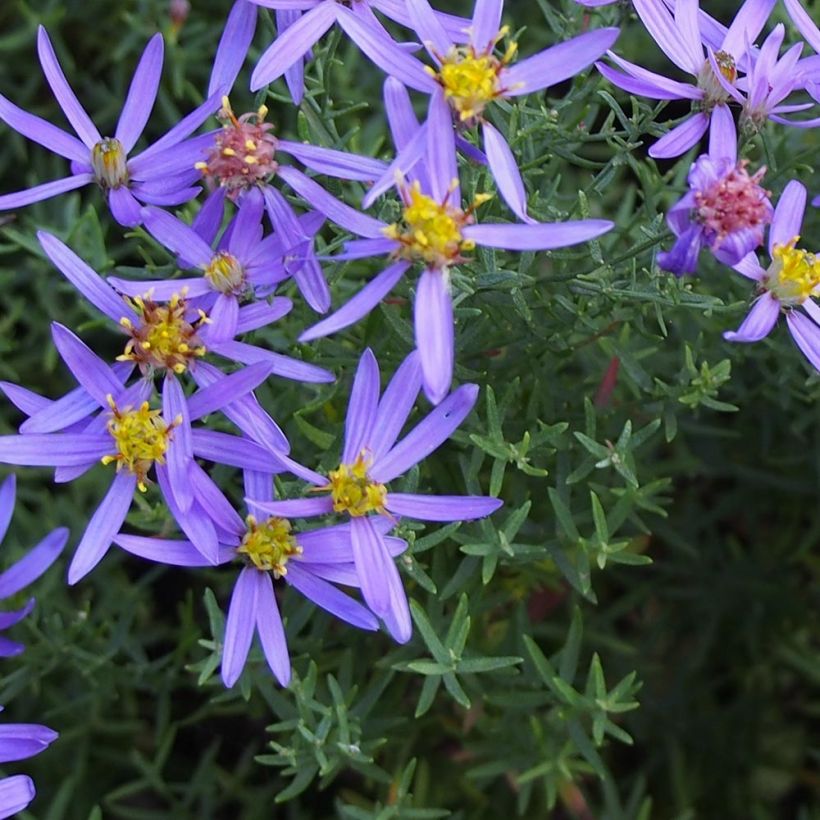
Aster sedifolius Nanus is a small perennial plant with upright, sparsely branched stems measuring about 30cm (12in) high and 35cm (14in) wide. Its stems are covered with rough, elongated, narrow leaves, 4 to 5cm (2in) long, acute, almost linear, and dark green. Flowering occurs from August to late October or early November, depending on the region and climate. It is abundant and prolonged, in the form of numerous small mauve-lilac flowers in 2.5cm (1in) diameter heads, grouped in compact clusters called corymbs, 10 to 15cm (4 to 6in) wide, at the ends of the stems. Each head is composed of a few slender, spaced 'petals' in blue-mauve lilac, surrounding a centre filled with tiny tubular yellow flowers. After pollination, the flowers give way to plume-like, cream-white to greyish seeds called achenes, which will be dispersed by the wind. The above-ground vegetation of this aster dries up and dies in winter, then regrows in spring.
It is impossible to imagine our gardens without aster flowers in their beds or borders. This particular variety is undemanding in terms of soil type and tolerates drought and rocky soils. Whether in a rock garden or flower border, it pairs perfectly with grasses; choose from the more moderate and less demanding ones, such as Stipa tenuifolia, Eragrostis spectabilis (pink cloud in August), Muhlenbergia capillaris (pink in autumn). It also goes well with other low-growing plants like Oenothera missouriensis, carnations, sedums, or ornamental garlics like Allium tuberosum, for example. Asters grow quickly and can fill in empty spaces in a newly planted flower bed. They allow for creating layers and rounded, fluffy shapes by combining asters of different statures and sizes, such as Aster ericoides prostratus 'Snow flury', Aster laevis, or turbinellus. Another idea is to pair with ground-cover roses, which perfectly highlight its delicate flowering.

Aster sedifolius Nanus in pictures
Flowering
Foliage
Plant habit
Botanical data
Aster
sedifolius
Nanus
Asteraceae
sedum-leaved galatella
Galatella sedifolia
Mediterranean
Planting and care
Plant Aster sedifolius Nanus in autumn or spring in ordinary soil, even limestone, clayey or stony, well-drained, moist to dry in summer. It likes a very sunny exposure but tolerates partial shade where it will have a slightly looser habit. In mass planting, leave a space of at least 50 cm (20in) between the plants. It is best to prune the flowerless stems to maintain a compact habit. This plant can self-seed in the garden in light soils.
Planting period
Intended location
Care
Planting & care advice
-

-

-

-

-

-

-

-

-
, onOrder confirmed
Reply from on Promesse de fleurs
Recently viewed products
Haven't found what you were looking for?
Hardiness is the lowest winter temperature a plant can endure without suffering serious damage or even dying. However, hardiness is affected by location (a sheltered area, such as a patio), protection (winter cover) and soil type (hardiness is improved by well-drained soil).

The flowering period indicated on our website applies to countries and regions located in USDA zone 8 (France, the United Kingdom, Ireland, the Netherlands, etc.)
It will vary according to where you live:- In zones 9 to 10 (Italy, Spain, Greece, etc.), flowering will occur about 2 to 4 weeks earlier.
- In zones 6 to 7 (Germany, Poland, Slovenia, and lower mountainous regions), flowering will be delayed by 2 to 3 weeks.
- In zone 5 (Central Europe, Scandinavia), blooming will be delayed by 3 to 5 weeks.
In temperate climates, pruning of spring-flowering shrubs (forsythia, spireas, etc.) should be done just after flowering.
Pruning of summer-flowering shrubs (Indian Lilac, Perovskia, etc.) can be done in winter or spring.
In cold regions as well as with frost-sensitive plants, avoid pruning too early when severe frosts may still occur.
The planting period indicated on our website applies to countries and regions located in USDA zone 8 (France, United Kingdom, Ireland, Netherlands).
It will vary according to where you live:
- In Mediterranean zones (Marseille, Madrid, Milan, etc.), autumn and winter are the best planting periods.
- In continental zones (Strasbourg, Munich, Vienna, etc.), delay planting by 2 to 3 weeks in spring and bring it forward by 2 to 4 weeks in autumn.
- In mountainous regions (the Alps, Pyrenees, Carpathians, etc.), it is best to plant in late spring (May-June) or late summer (August-September).
The harvesting period indicated on our website applies to countries and regions in USDA zone 8 (France, England, Ireland, the Netherlands).
In colder areas (Scandinavia, Poland, Austria...) fruit and vegetable harvests are likely to be delayed by 3-4 weeks.
In warmer areas (Italy, Spain, Greece, etc.), harvesting will probably take place earlier, depending on weather conditions.
The sowing periods indicated on our website apply to countries and regions within USDA Zone 8 (France, UK, Ireland, Netherlands).
In colder areas (Scandinavia, Poland, Austria...), delay any outdoor sowing by 3-4 weeks, or sow under glass.
In warmer climes (Italy, Spain, Greece, etc.), bring outdoor sowing forward by a few weeks.
Shipping country and language
Your country of residence may be:
Your country of residence is:
For a better user experience on our website, you can select:
Your shipping country:
-
 Austria
-
 Belgium
-
 Bosnia & Herzegovina
-
 Bulgaria
-
 Croatia
-
 Cyprus
-
 Czechia
-
 Denmark
-
 Estonia
-
 Finland
-
 France
-
 Germany
-
 Greece
-
 Hungary
-
 Iceland
-
 Ireland
-
 Italy
Italy
-
 Latvia
-
 Liechtenstein
-
 Lithuania
-
 Luxembourg
-
 Malta
Malta
-
 Netherlands
-
 Poland
-
 Portugal
-
 Romania
-
 Serbia
-
 Slovakia
-
 Slovenia
-
 Spain
Spain
-
 Sweden
-
 Switzerland
Language:
-
French
-
 English
-
Spanish
-
Italian
-
German
-
Portuguese
-
Dutch
-
Finnish
My Account
Hello
My wish lists
My cart
Log in / Register
Existing customer?
This form is protected by reCAPTCHA - the Google Privacy Policy and Terms of Service apply.
New customer?
Create an account to track your orders, access our customer service and, if you wish, make the most of our upcoming offers.