Amaranthus caudatus Mira seeds - Love-lies-bleeding
Amaranthus caudatus Mira seeds - Love-lies-bleeding
Amaranthus caudatus Mira
Love-Lies-Bleeding
Back-to-school special offer!
Get €10 off for every €50 you spend! And get up to €40 off on a single order.
How does it work?
1. Shop your favourites
Add your favourite plants to your basket. For every €50 you spend (excluding delivery charges, store credit and the plastic-free option), you’ll receive a €10 voucher.
€50 spent = €10 voucher
€100 spent = €20 voucher
€150 spent = €30 voucher
€200 spent = €40 voucher
2. Place your order
Once your basket reaches one of the spending thresholds, place your order. You can even choose your delivery date!
3. Receive your voucher
As soon as your order has been shipped, you’ll receive an email containing your personal voucher code and its value.
4. Use it on your next order
Your voucher is valid for 90 days from the date you receive it. It can be used once only, on a new order worth at least the value of the voucher, excluding delivery charges.
Please note: Vouchers can be combined with other offers, but cannot be split or refunded.
Home or relay delivery (depending on size and destination)
Important: You may be charged customs duties by your country’s customs authorities upon delivery.
Schedule delivery date,
and select date in basket
This plant carries a 6 months recovery warranty
More information
We guarantee the quality of our plants for a full growing cycle, and will replace at our expense any plant that fails to recover under normal climatic and planting conditions.
Would this plant suit my garden?
Set up your Plantfit profile →
Description
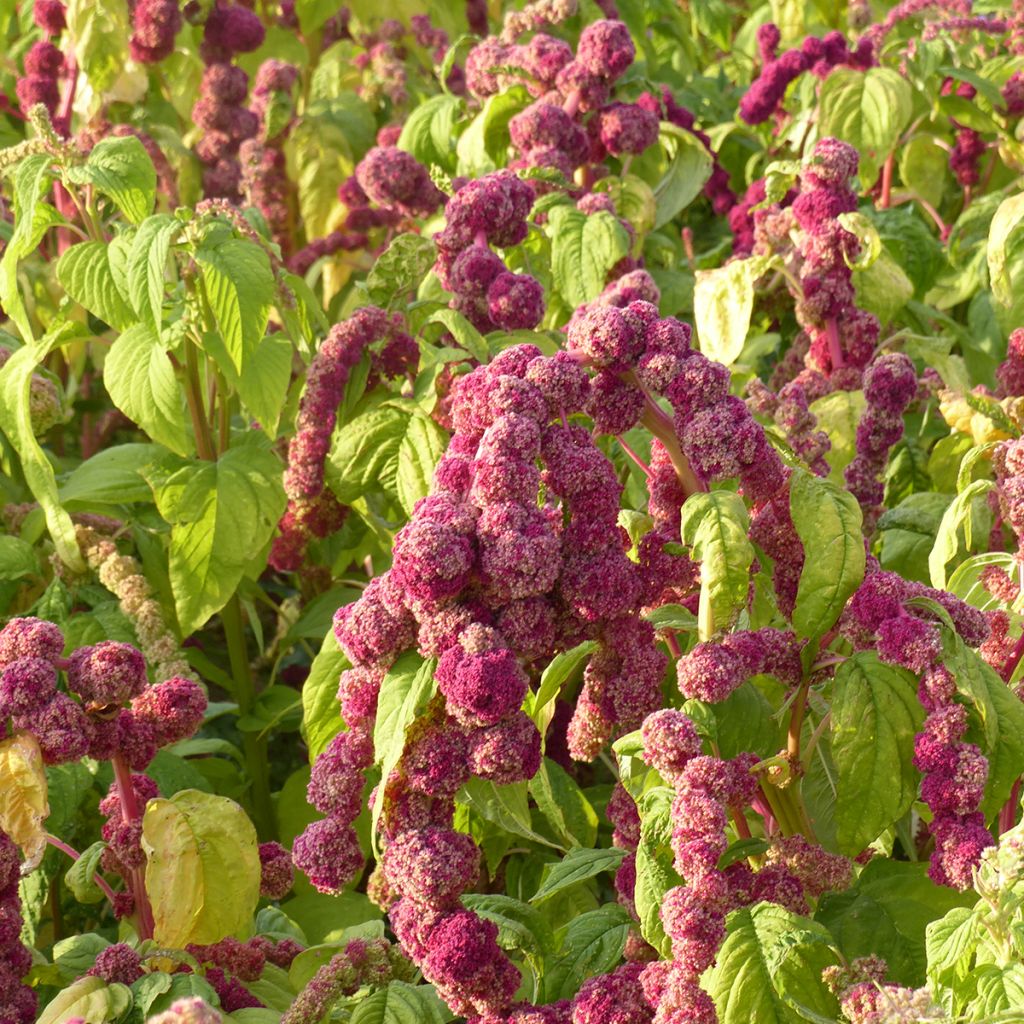
Love-Lies-Bleeding 'Mira' is captivating with its trailing inflorescences blending shades of sage green, powdery pink, and purple. This annual plant thrives in well-drained soil and full sun. Its growth is rapid, and it offers a spectacular flowering throughout the summer. Whether in the ground or in a pot on a terrace, its long colourful panicles are equally suited to naturalistic scenes and dried or fresh bouquets.
The 'Mira' amaranth is an ornamental variety belonging to the Amaranthaceae family. The wild species, Amaranthus caudatus, is an annual plant native to the tropical regions of South America, particularly the high Peruvian Andes. It is known there as "kiwicha" and has been cultivated for millennia for its nutritious seeds. Introduced to Europe in the 16th century, it is now prized for its aesthetic qualities.
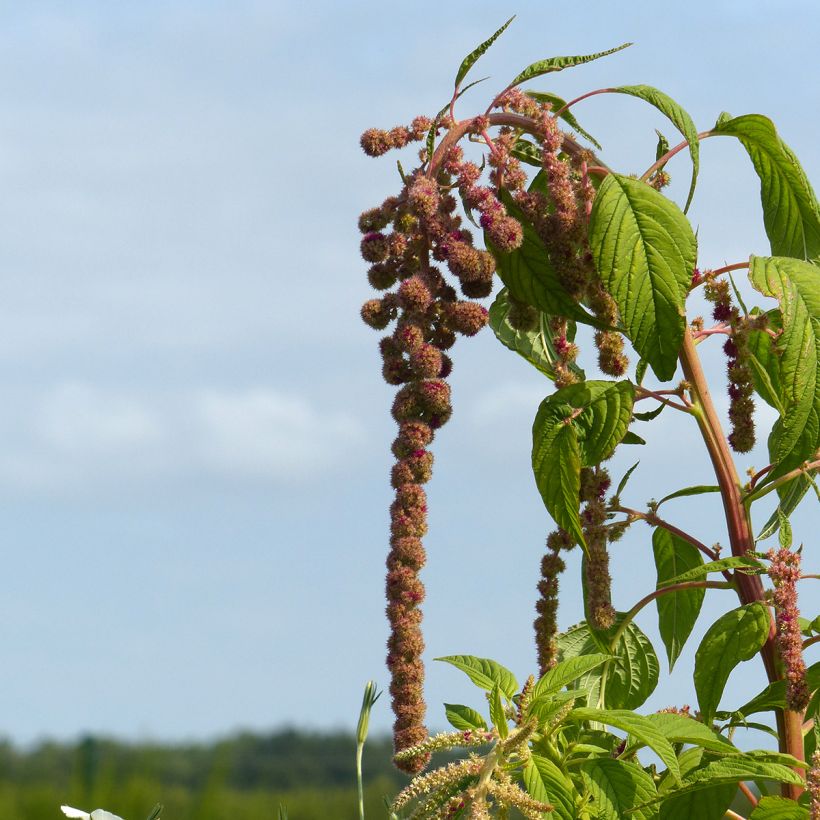
Amaranthus caudatus 'Mira' is an annual plant. It completes its entire life cycle in a single season from germination to flowering, through to seed production, before disappearing with the onset of cold weather. This 'Mira' cultivar is characterised by its pendulous green and pink inflorescences. These long panicles can reach 60 to 90 cm in length. The plant itself reaches a height of 1.20 m to 1.50 m in the ground, with a spread of 45 to 60 cm. In a pot, its growth is more contained, with an average height of 75 cm. The foliage consists of large, ovate to lanceolate, medium to dark green leaves arranged alternately along the sturdy stems. The green to reddish stems are upright and may require staking to support the weight of the inflorescences. Flowering extends from June to October, depending on climatic conditions and the sowing date. The flowers are tiny and densely clustered in pendulous panicles and are primarily pollinated by the wind (anemophily), although insects may also contribute. The fruits are small capsules containing shiny black seeds. The root system is a taproot, with a deep main root and extensive secondary roots, giving the plant good drought resistance.
Love-Lies-Bleeding 'Mira' is an eye-catching plant with a strong, somewhat theatrical appearance. In borders, it makes a bold statement alongside more subdued perennials, such as coneflowers or daisies, which it enhances by contrast. On a terrace, it plays the role of a sculptural and elegant summer bush, in large pots where its trailing habit works well. Planted in groups of three to five specimens amidst a carpet of ground cover like Ceratostigma plumbaginoides or lamb's ears (Stachys bysantina), it creates a scene of beautiful visual intensity.
In Andean traditions, amaranth was considered a sacred plant, used in religious rituals and symbolising eternal life due to the longevity of its seeds. This symbolism has endured through the centuries, and even today, amaranth is associated with perseverance and resilience in the language of flowers.

Amaranthus caudatus Mira seeds - Love-lies-bleeding in pictures
Flowering
Foliage
Plant habit
Botanical data
Amaranthus
caudatus
Mira
Amaranthaceae
Love-Lies-Bleeding
Amaranthus edulis, Amaranthus mantegazzianus, Amaranthus dussii, Amaranthus caudatus subsp. mantegazzianus, Amaranthus caudatus var. alopecurus, Amaranthus caudatus subsp. saueri
Cultivar or hybrid
Planting and care
Sow Love-lies-bleeding Mira from March to May.
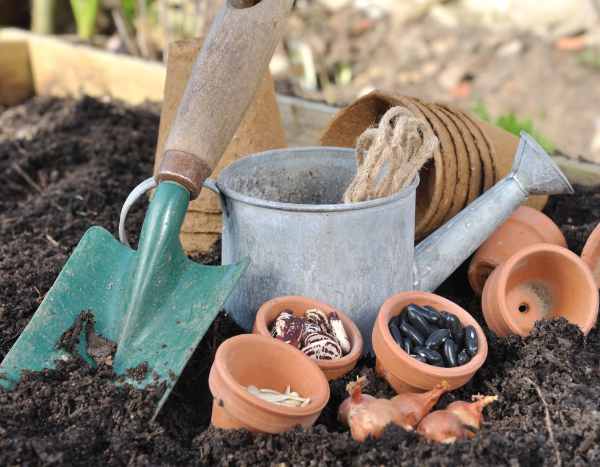
Sow thinly, at a depth of 3 mm at the bottom of small furrows spaced 30 cm apart, in well-worked and loosened soil to a depth of 30 cm. Water regularly to maintain some moisture, especially during dry periods.
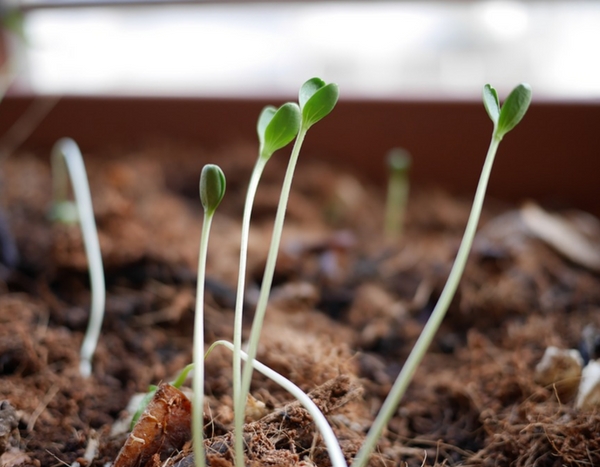
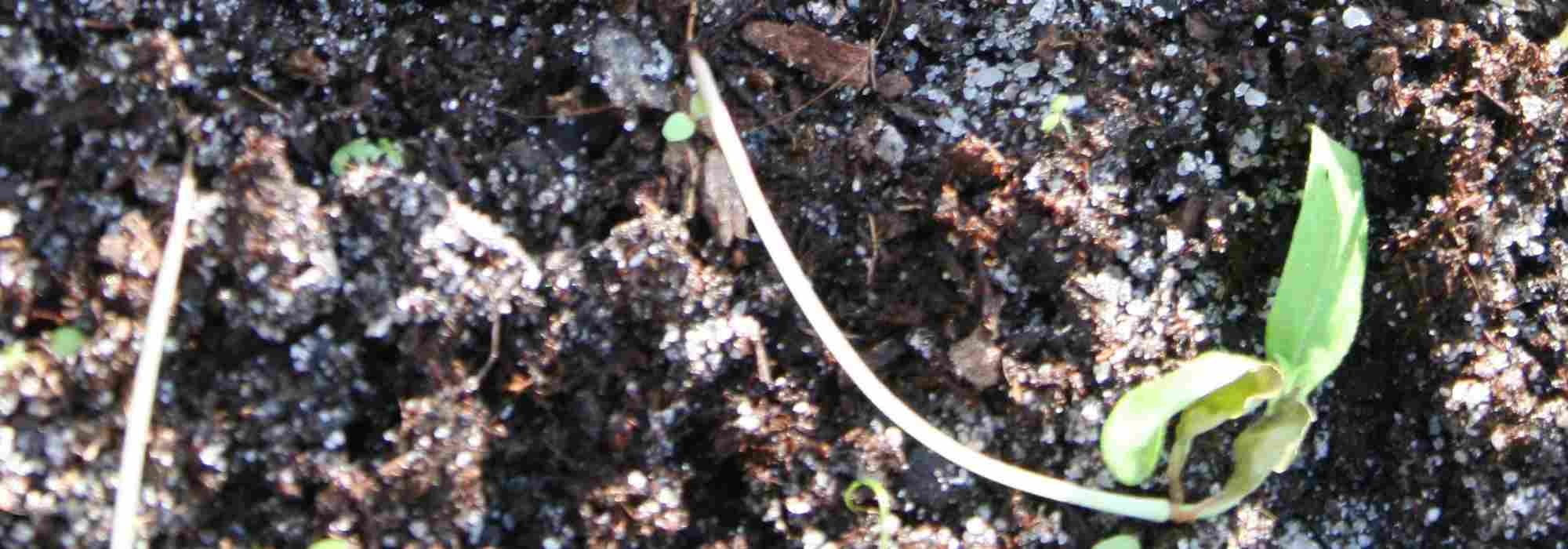
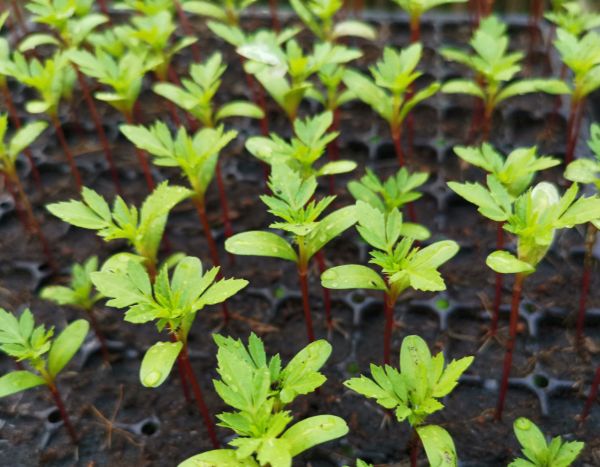
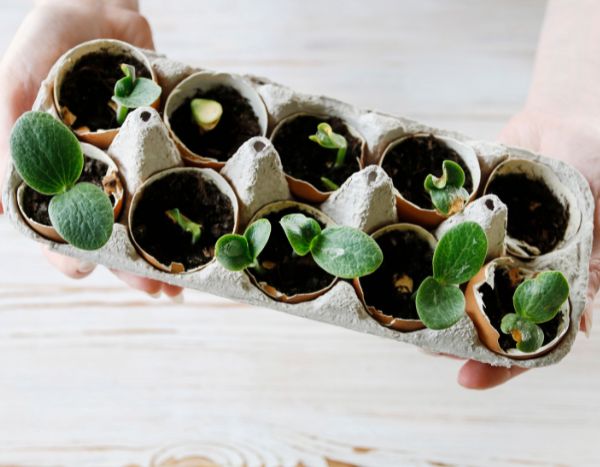
You can also sow in pots or trays filled with moist seed compost, covering the seeds with a very fine pinch of compost or vermiculite. Keep the sowing between 20 and 25°C. Light promotes germination. Keep the compost surface moist, but not waterlogged; germination usually takes 7 to 14 days. Transplant the young plants into 7.5 cm pots or trays. Plant outdoors once all risk of frost has passed.
Love-lies-bleeding are heat-loving plants that thrive in nitrogen-rich soils. Place them in full sun, in light and well-amended soil. Just before frosts, you can pull up the plants to avoid being overrun by self-sown seedlings.
Sowing period
Intended location
Planting & care advice
-
-
-
-
-

-
-
-
This item has not been reviewed yet - be the first to leave a review about it.
Recently viewed products
Haven't found what you were looking for?
Hardiness is the lowest winter temperature a plant can endure without suffering serious damage or even dying. However, hardiness is affected by location (a sheltered area, such as a patio), protection (winter cover) and soil type (hardiness is improved by well-drained soil).

The flowering period indicated on our website applies to countries and regions located in USDA zone 8 (France, the United Kingdom, Ireland, the Netherlands, etc.)
It will vary according to where you live:- In zones 9 to 10 (Italy, Spain, Greece, etc.), flowering will occur about 2 to 4 weeks earlier.
- In zones 6 to 7 (Germany, Poland, Slovenia, and lower mountainous regions), flowering will be delayed by 2 to 3 weeks.
- In zone 5 (Central Europe, Scandinavia), blooming will be delayed by 3 to 5 weeks.
In temperate climates, pruning of spring-flowering shrubs (forsythia, spireas, etc.) should be done just after flowering.
Pruning of summer-flowering shrubs (Indian Lilac, Perovskia, etc.) can be done in winter or spring.
In cold regions as well as with frost-sensitive plants, avoid pruning too early when severe frosts may still occur.
The planting period indicated on our website applies to countries and regions located in USDA zone 8 (France, United Kingdom, Ireland, Netherlands).
It will vary according to where you live:
- In Mediterranean zones (Marseille, Madrid, Milan, etc.), autumn and winter are the best planting periods.
- In continental zones (Strasbourg, Munich, Vienna, etc.), delay planting by 2 to 3 weeks in spring and bring it forward by 2 to 4 weeks in autumn.
- In mountainous regions (the Alps, Pyrenees, Carpathians, etc.), it is best to plant in late spring (May-June) or late summer (August-September).
The harvesting period indicated on our website applies to countries and regions in USDA zone 8 (France, England, Ireland, the Netherlands).
In colder areas (Scandinavia, Poland, Austria...) fruit and vegetable harvests are likely to be delayed by 3-4 weeks.
In warmer areas (Italy, Spain, Greece, etc.), harvesting will probably take place earlier, depending on weather conditions.
The sowing periods indicated on our website apply to countries and regions within USDA Zone 8 (France, UK, Ireland, Netherlands).
In colder areas (Scandinavia, Poland, Austria...), delay any outdoor sowing by 3-4 weeks, or sow under glass.
In warmer climes (Italy, Spain, Greece, etc.), bring outdoor sowing forward by a few weeks.
Shipping country and language
Your country of residence may be:
Your country of residence is:
For a better user experience on our website, you can select:
Your shipping country:
-
 Austria
-
 Belgium
-
 Bosnia & Herzegovina
-
 Bulgaria
-
 Croatia
-
 Cyprus
-
 Czechia
-
 Denmark
-
 Estonia
-
 Finland
-
 France
-
 Germany
-
 Greece
-
 Hungary
-
 Iceland
-
 Ireland
-
 Italy
Italy
-
 Latvia
-
 Liechtenstein
-
 Lithuania
-
 Luxembourg
-
 Malta
Malta
-
 Netherlands
-
 Poland
-
 Portugal
-
 Romania
-
 Serbia
-
 Slovakia
-
 Slovenia
-
 Spain
Spain
-
 Sweden
-
 Switzerland
Language:
-
French
-
 English
-
Spanish
-
Italian
-
German
-
Portuguese
-
Dutch
-
Finnish
My Account
Hello
My wish lists
My cart
Log in / Register
Existing customer?
This form is protected by reCAPTCHA - the Google Privacy Policy and Terms of Service apply.
New customer?
Create an account to track your orders, access our customer service and, if you wish, make the most of our upcoming offers.