
Sunflower Pro-Cut Orange DMR seeds - Helianthus annuus
Sunflower Pro-Cut Orange DMR seeds - Helianthus annuus
Helianthus annuus 'Pro-Cut Orange DMR'
Sunflower
Back-to-school special offer!
Get €10 off for every €50 you spend! And get up to €40 off on a single order.
How does it work?
1. Shop your favourites
Add your favourite plants to your basket. For every €50 you spend (excluding delivery charges, store credit and the plastic-free option), you’ll receive a €10 voucher.
€50 spent = €10 voucher
€100 spent = €20 voucher
€150 spent = €30 voucher
€200 spent = €40 voucher
2. Place your order
Once your basket reaches one of the spending thresholds, place your order. You can even choose your delivery date!
3. Receive your voucher
As soon as your order has been shipped, you’ll receive an email containing your personal voucher code and its value.
4. Use it on your next order
Your voucher is valid for 90 days from the date you receive it. It can be used once only, on a new order worth at least the value of the voucher, excluding delivery charges.
Please note: Vouchers can be combined with other offers, but cannot be split or refunded.
Home or relay delivery (depending on size and destination)
Important: You may be charged customs duties by your country’s customs authorities upon delivery.
Schedule delivery date,
and select date in basket
This plant carries a 6 months recovery warranty
More information
We guarantee the quality of our plants for a full growing cycle, and will replace at our expense any plant that fails to recover under normal climatic and planting conditions.
Would this plant suit my garden?
Set up your Plantfit profile →
Description
Le Tournesol ou Helianthus annuus Pro-Cut® F1 Orange DMR offre de grandes fleurs d'un orange profond au cœur brun foncé, portées par une tige solide idéale pour les bouquets. Pauvre en pollen, la fleur ne laisse pas tomber de poussière sur une table ou un meuble à la maison. Ce cultivar fleurit rapidement, et de l’été jusqu'au début de l’automne. Sa résistance au mildiou est un plus pour les jardiniers amateurs comme pour les producteurs de fleur coupés.
Appartenant à la famille des Asteracées, Helianthus annuus est l’espèce annuelle de Tournesol domestiquée en Amérique du Nord puis diffusée en Europe au XVIᵉ siècle. À l’état spontané, elle occupe le bord des chemins, les friches et cultures installées au soleil.
'Pro-Cut® Orange DMR’ est un cultivar F1 de la série Pro-Cut® conçue pour la fleur coupée : c'est une plante à tige unique, sans pollen, précoce et peu sensible à la longueur du jour, ce qui facilite des semis échelonnés pour des récoltes continues. La version DMR résulte d’un travail d’amélioration mené par NuFlowers / Sunflower Selections (sélections de T. Heaton), intégrant une résistance au mildiou du tournesol. Ce cultivar est un peu plus haut et légèrement plus tardif que ‘Pro-Cut® Orange’.
Le port de la plante est vertical, élancé ; elle ne se ramifie pas. En pleine terre, la hauteur atteint couramment 1,40 m à 1,80 m (jusqu’à 1,90 m) ; plantée dans grand pot profond (40–50 cm), elle se situe le plus souvent entre 1,20 et 1,60 m. La floraison intervient 52 à 62 jours après le semis, soit de juillet à septembre selon la date de semis. Les capitules sont bien ronds, ils mesurent 10 à 15 cm de diamètre. Chacun comporte des ligules orange entourant un disque brun, presque noir au centre. Le feuillage, rugueux, se compose de feuilles ovales à triangulaires, vert moyen, pétiolées, à nervation marquée ; les tiges sont robustes, légèrement striées et hérissées de poils courts. Le système racinaire est dominé par un long pivot, capable d'aller chercher un peu de fraîcheur en profondeur.
Au jardin, ‘Pro-Cut® Orange DMR’ s'installe dans les planches dédiées à la fleur coupée ou à l'arrière des massifs, en plein soleil : semez toutes les 2-3 semaines pour étaler la période de floraison. Glissez quelques sujets au bord de la terrasse, dans de grands pots profonds. Pour composer des scènes estivales "prêtes à couper", associez-le à l'Echinacea 'Purity ' et des zinnias 'Zahara' en mélange, semez du cosmos ‘Purity’ pour apporter de la légèreté, ponctuez de dahlias paysage tels ‘Bishop of Llandaff’ et terminez par une graminée de remplissage comme Briza maxima.
Résistance : la mention DMR signifie « Downy Mildew Resistant », pour résistance au mildiou du tournesol causé par l’oomycète Plasmopara halstedii. Ce pathogène est particulièrement problématique en conditions humides. Cette résistance limite la verse des plantules et l'apparition d'un feutrage blanchâtre au revers des feuilles.
Nos conseils bouquets :
Coupez les tiges le matin juste après l’ouverture des fleurs. Supprimez les feuilles en partant du bas pour ne conserver que 2 ou 3 feuilles sous la fleur. Chaque jour, changez l’eau du vase.

Flowering
Foliage
Plant habit
Botanical data
Helianthus
annuus
'Pro-Cut Orange DMR'
Asteraceae
Sunflower
Helianthus annuus Pro-Cut® F1 Orange DMR
Cultivar or hybrid
Planting and care
The 'Pro-Cut F1 Orange DMR' sunflower can be sown:
Either in March-April, in pots under cover, to prepare young plants that can be placed in your borders after the last frosts.
Or from April to June, after the frosts, directly in position. In a sunny spot in your garden. To enjoy beautiful fresh flowers throughout the season, we recommend staggering your sowings as much as possible.
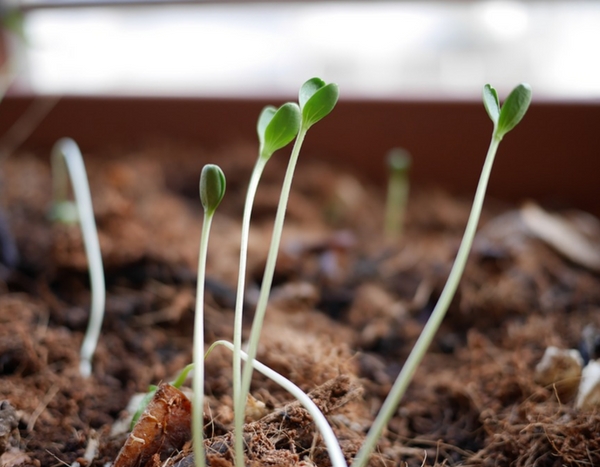
Sow your seeds in groups of 2 at a depth of 1 cm and spaced 50 cm apart. After 20 days, remove the weakest shoot to keep only one per location. The strong growth of the sunflower will require regular watering. When the plant has reached about 1.20 m, you can stop watering and let it make do with rainfall, even if it is scarce. Protect your sowings from snail and slug attacks, as they are fond of the young plants.
Sowing period
Intended location
Planting & care advice
-

-

-
-

-

-

-

-

This item has not been reviewed yet - be the first to leave a review about it.
Recently viewed products
Haven't found what you were looking for?
Hardiness is the lowest winter temperature a plant can endure without suffering serious damage or even dying. However, hardiness is affected by location (a sheltered area, such as a patio), protection (winter cover) and soil type (hardiness is improved by well-drained soil).

The flowering period indicated on our website applies to countries and regions located in USDA zone 8 (France, the United Kingdom, Ireland, the Netherlands, etc.)
It will vary according to where you live:- In zones 9 to 10 (Italy, Spain, Greece, etc.), flowering will occur about 2 to 4 weeks earlier.
- In zones 6 to 7 (Germany, Poland, Slovenia, and lower mountainous regions), flowering will be delayed by 2 to 3 weeks.
- In zone 5 (Central Europe, Scandinavia), blooming will be delayed by 3 to 5 weeks.
In temperate climates, pruning of spring-flowering shrubs (forsythia, spireas, etc.) should be done just after flowering.
Pruning of summer-flowering shrubs (Indian Lilac, Perovskia, etc.) can be done in winter or spring.
In cold regions as well as with frost-sensitive plants, avoid pruning too early when severe frosts may still occur.
The planting period indicated on our website applies to countries and regions located in USDA zone 8 (France, United Kingdom, Ireland, Netherlands).
It will vary according to where you live:
- In Mediterranean zones (Marseille, Madrid, Milan, etc.), autumn and winter are the best planting periods.
- In continental zones (Strasbourg, Munich, Vienna, etc.), delay planting by 2 to 3 weeks in spring and bring it forward by 2 to 4 weeks in autumn.
- In mountainous regions (the Alps, Pyrenees, Carpathians, etc.), it is best to plant in late spring (May-June) or late summer (August-September).
The harvesting period indicated on our website applies to countries and regions in USDA zone 8 (France, England, Ireland, the Netherlands).
In colder areas (Scandinavia, Poland, Austria...) fruit and vegetable harvests are likely to be delayed by 3-4 weeks.
In warmer areas (Italy, Spain, Greece, etc.), harvesting will probably take place earlier, depending on weather conditions.
The sowing periods indicated on our website apply to countries and regions within USDA Zone 8 (France, UK, Ireland, Netherlands).
In colder areas (Scandinavia, Poland, Austria...), delay any outdoor sowing by 3-4 weeks, or sow under glass.
In warmer climes (Italy, Spain, Greece, etc.), bring outdoor sowing forward by a few weeks.
Shipping country and language
Your country of residence may be:
Your country of residence is:
For a better user experience on our website, you can select:
Your shipping country:
-
 Austria
-
 Belgium
-
 Bosnia & Herzegovina
-
 Bulgaria
-
 Croatia
-
 Cyprus
-
 Czechia
-
 Denmark
-
 Estonia
-
 Finland
-
 France
-
 Germany
-
 Greece
-
 Hungary
-
 Iceland
-
 Ireland
-
 Italy
Italy
-
 Latvia
-
 Liechtenstein
-
 Lithuania
-
 Luxembourg
-
 Malta
Malta
-
 Netherlands
-
 Poland
-
 Portugal
-
 Romania
-
 Serbia
-
 Slovakia
-
 Slovenia
-
 Spain
Spain
-
 Sweden
-
 Switzerland
Language:
-
French
-
 English
-
Spanish
-
Italian
-
German
-
Portuguese
-
Dutch
-
Finnish
My Account
Hello
My wish lists
My cart
Log in / Register
Existing customer?
This form is protected by reCAPTCHA - the Google Privacy Policy and Terms of Service apply.
New customer?
Create an account to track your orders, access our customer service and, if you wish, make the most of our upcoming offers.