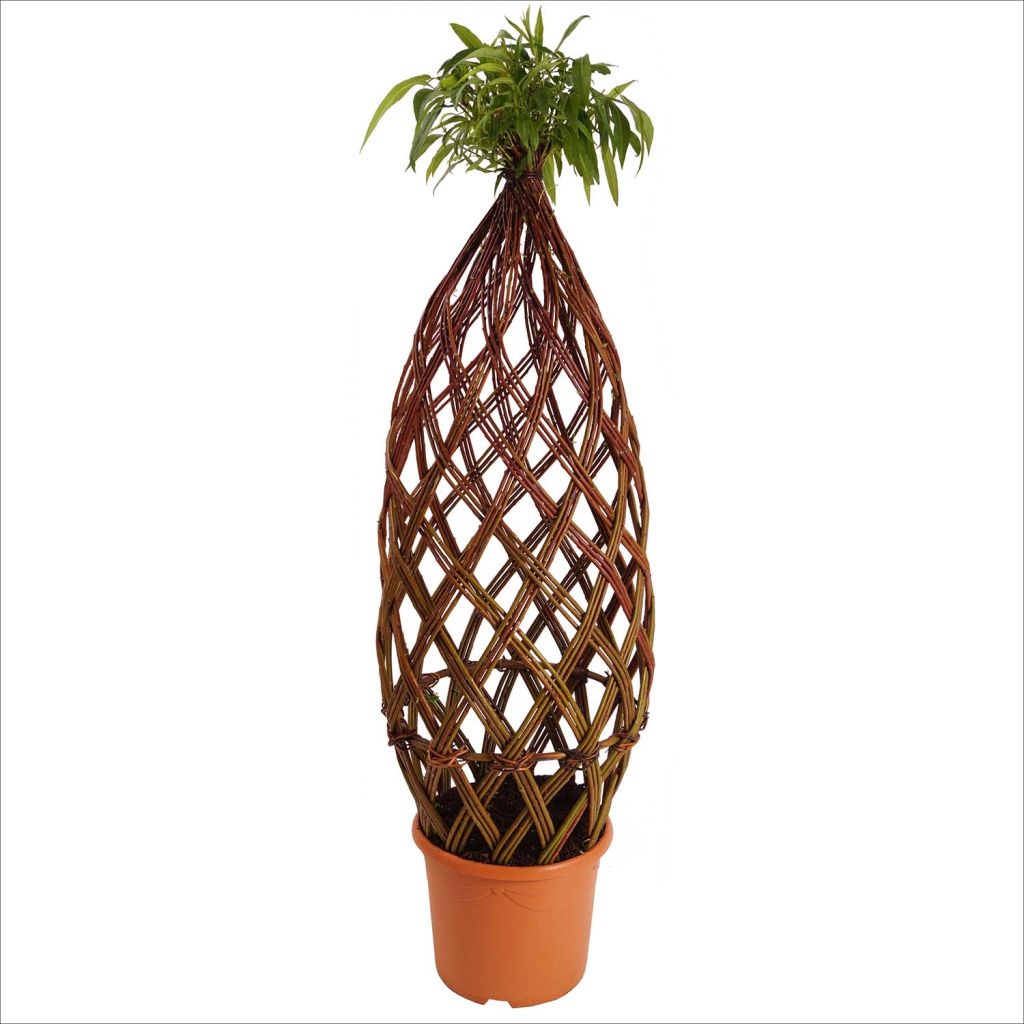
Brown woven wood willow - domed shape
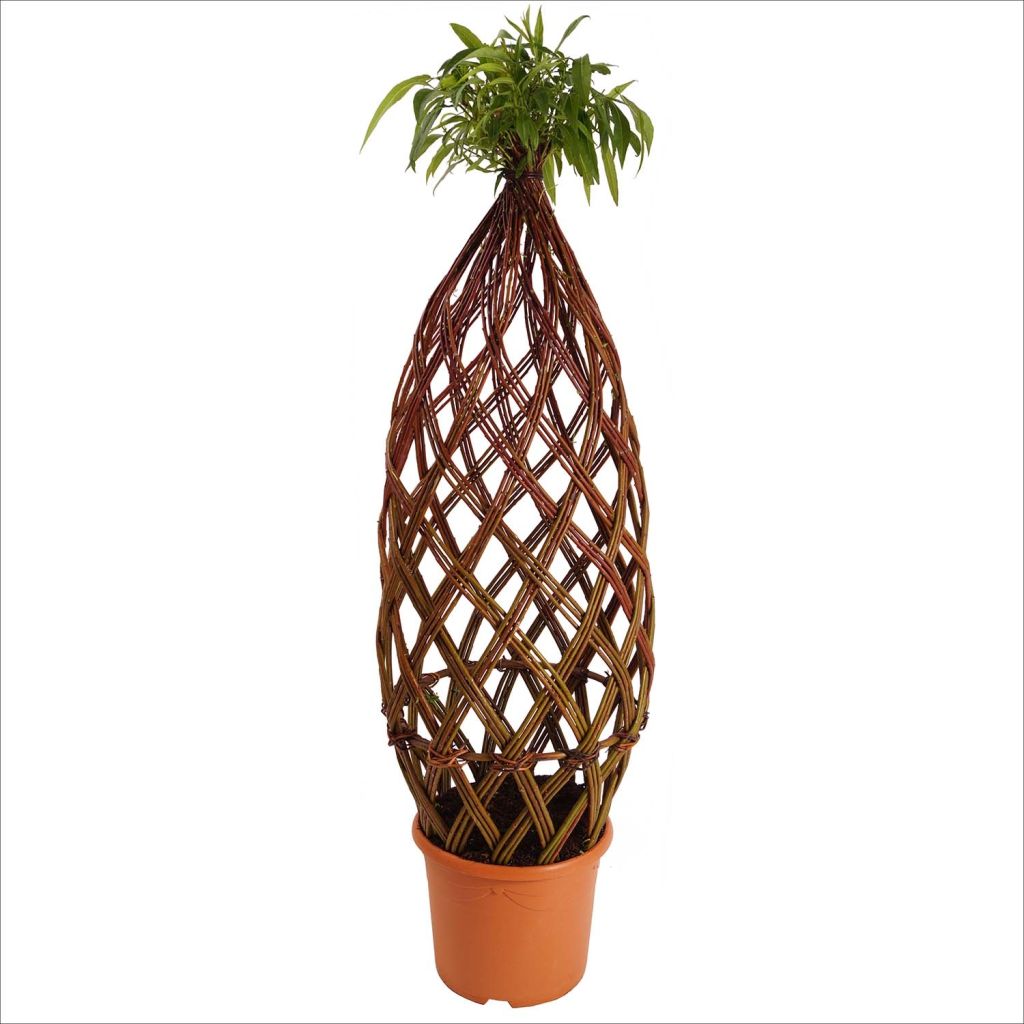
Brown woven wood willow - domed shape
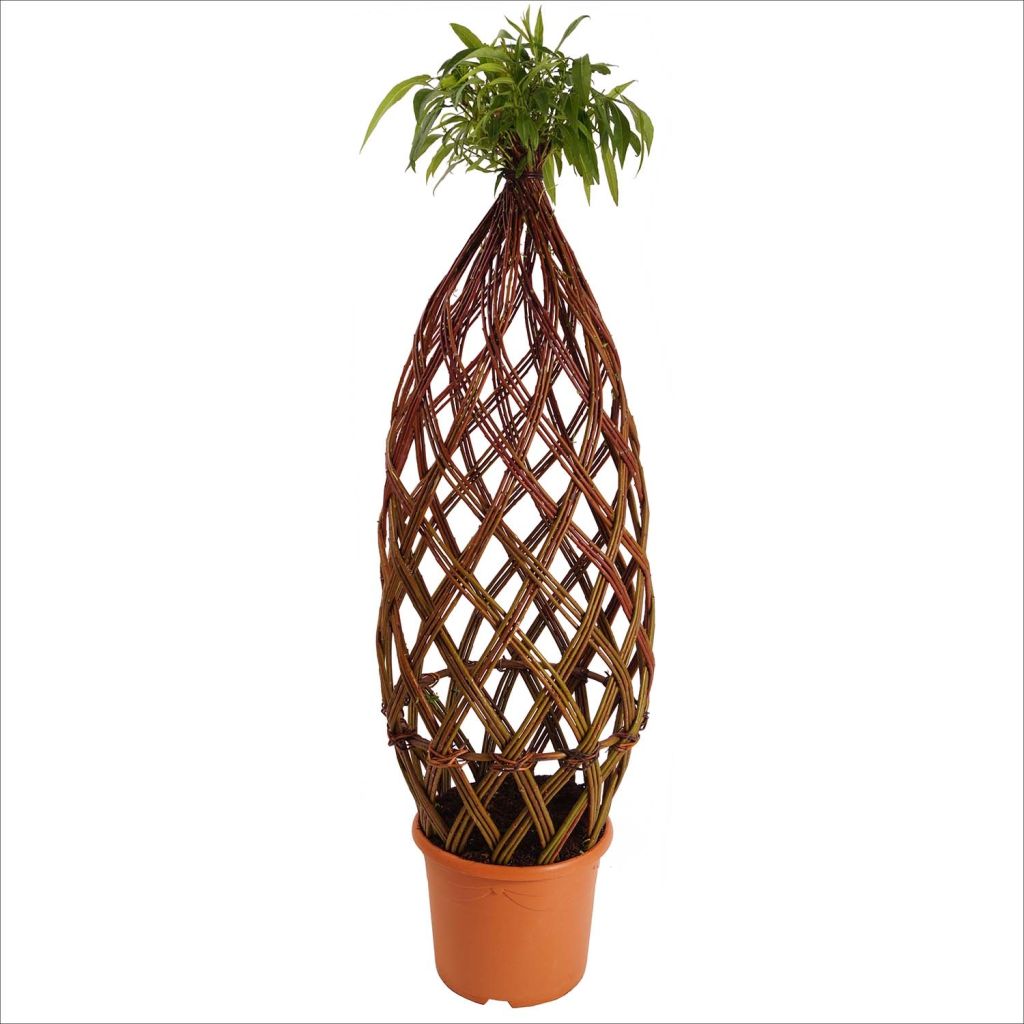
Brown woven wood willow - domed shape
Brown woven wood willow - domed shape
Salix purpurea Americana
Purple Willow, Purple Osier, Bitter Willow
Back-to-school special offer!
Get €10 off for every €50 you spend! And get up to €40 off on a single order.
How does it work?
1. Shop your favourites
Add your favourite plants to your basket. For every €50 you spend (excluding delivery charges, store credit and the plastic-free option), you’ll receive a €10 voucher.
€50 spent = €10 voucher
€100 spent = €20 voucher
€150 spent = €30 voucher
€200 spent = €40 voucher
2. Place your order
Once your basket reaches one of the spending thresholds, place your order. You can even choose your delivery date!
3. Receive your voucher
As soon as your order has been shipped, you’ll receive an email containing your personal voucher code and its value.
4. Use it on your next order
Your voucher is valid for 90 days from the date you receive it. It can be used once only, on a new order worth at least the value of the voucher, excluding delivery charges.
Please note: Vouchers can be combined with other offers, but cannot be split or refunded.
Why not try an alternative variety in stock?
View all →
Available in 5 sizes
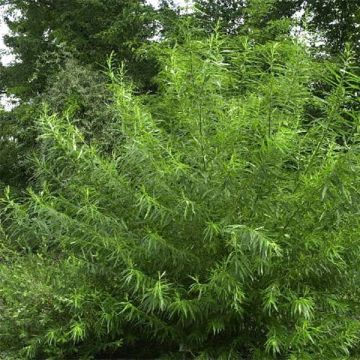
Available in 2 sizes
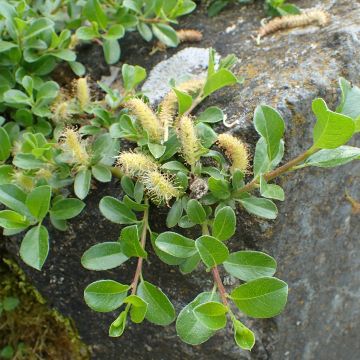
Available in 1 sizes
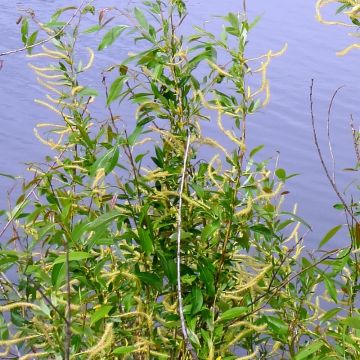
Available in 1 sizes
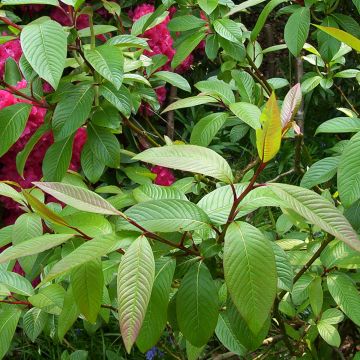
Available in 1 sizes
Available in 1 sizes
Available in 1 sizes
Available in 3 sizes
Available in 4 sizes
Available in 3 sizes
This plant carries a 24 months recovery warranty
More information
We guarantee the quality of our plants for a full growing cycle, and will replace at our expense any plant that fails to recover under normal climatic and planting conditions.
Would this plant suit my garden?
Set up your Plantfit profile →
Description
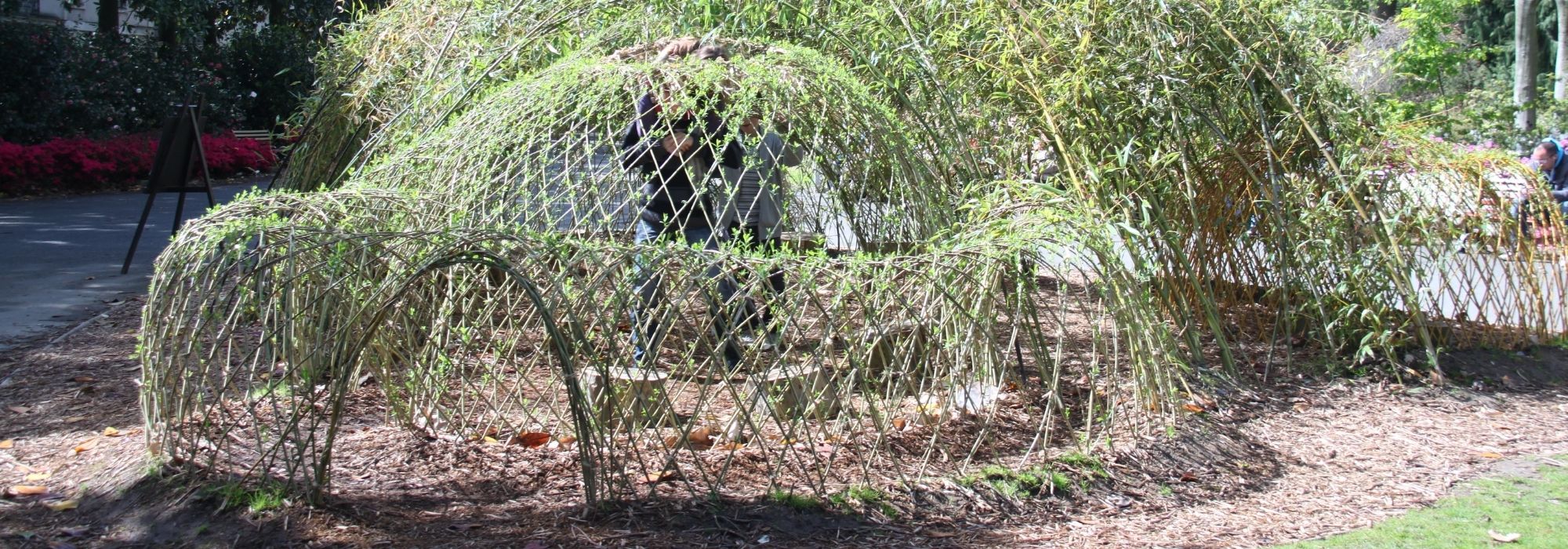
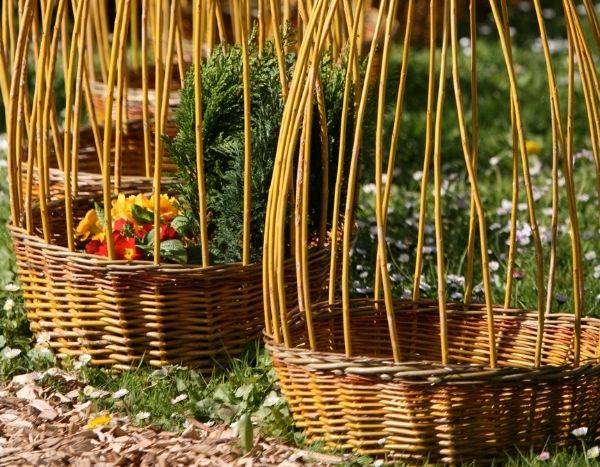
Willow with braided brown wood and a rounded shape, in Latin Salix purpurea 'Americana', is a variety of red willow whose branches have been skillfully braided and bent to evoke a superb living purple osier aviary. Its dark reddish-brown and shiny framework, crowned with leaves with bluish and silvery reflections, has a fabulous design, bringing immediate and extraordinary impact to the garden or terrace. More hardy and less invasive than bamboo, this colorful bush takes up little space on the ground and can compete with it in elegance and flexibility, whether as a standalone specimen in a green room or in a container on the terrace. It accepts pruning very well at any time of the year, this willow bends to all desires.
Salix purpurea belongs to the willow family. It is a deciduous botanical species widely distributed in Europe, central Asia, Japan, and also in North Africa. In its natural environment, this pioneer species colonizes the banks of rivers and ponds, on sandy or gravel-rich soil. While it appreciates a certain level of humidity, the purple willow does not tolerate constantly flooded soils that suffocate its roots. It is capable, like the Salix alba (white willow), of withstanding periods of moderate drought. Its lifespan is around 20 years. The long and flexible branches of this willow have the ability to twist and propagate very easily, which allows creative gardeners and horticulturists to shape it according to their desires. It is sometimes cultivated in the shape of a "pollard" for the production of purple osier. The cultivar 'Americana' has been selected for the length and fineness of its stems, as well as its very fine foliage.
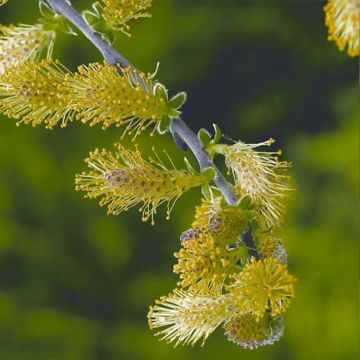
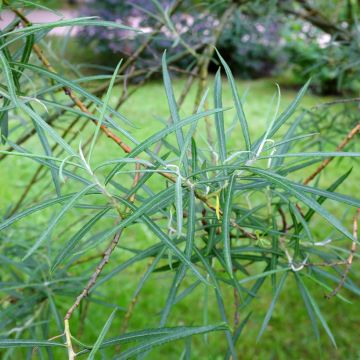
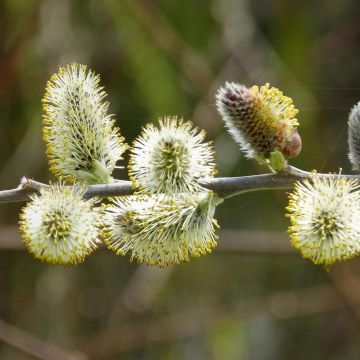
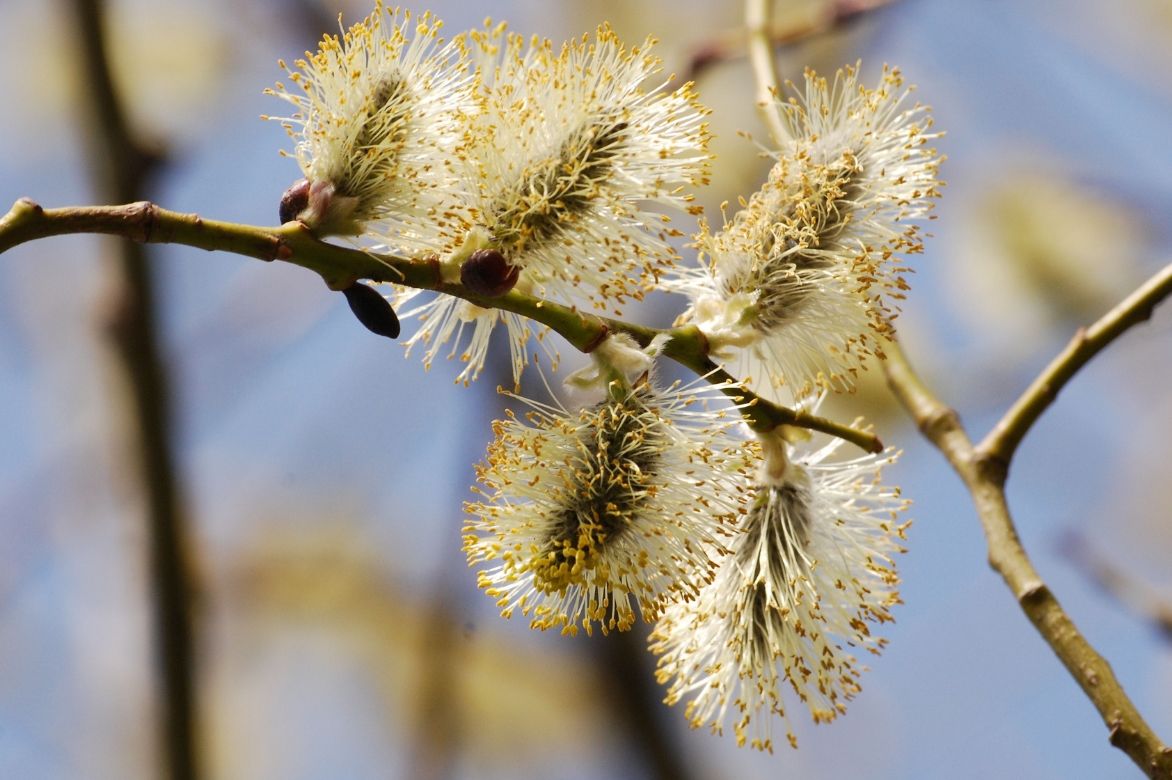
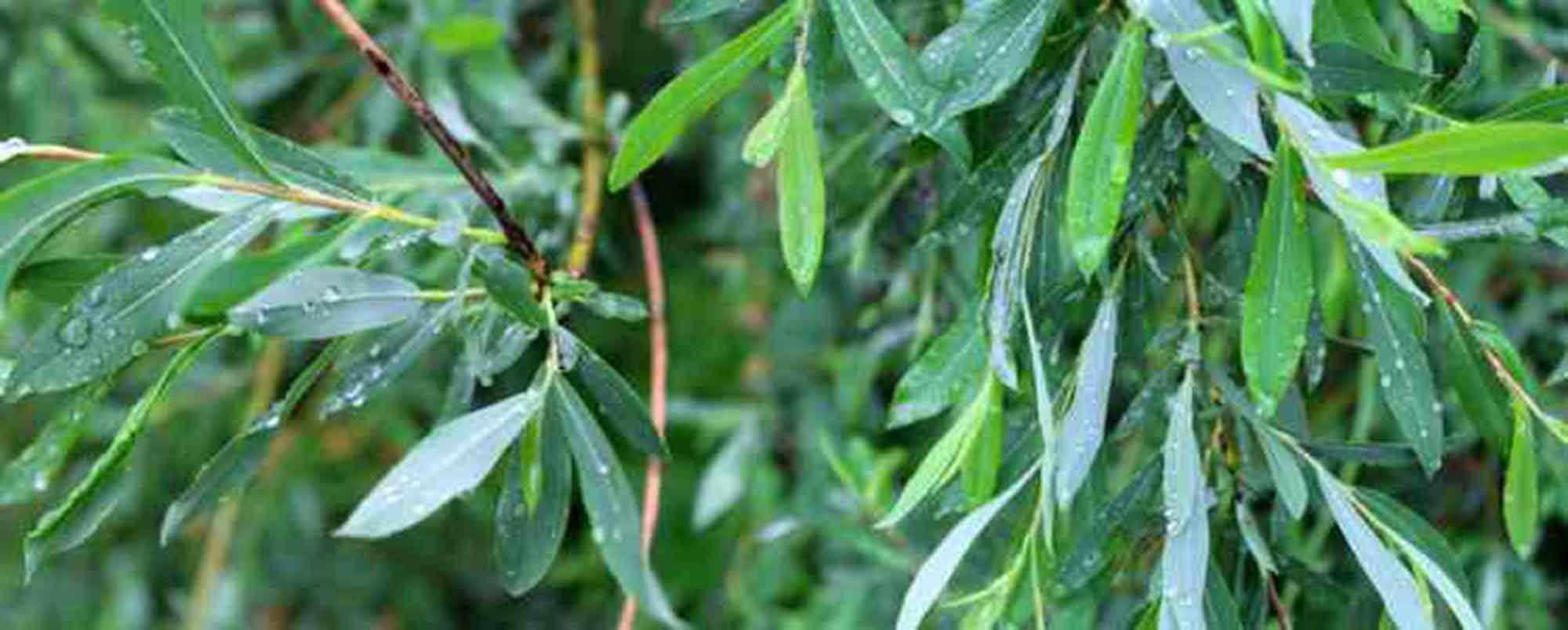
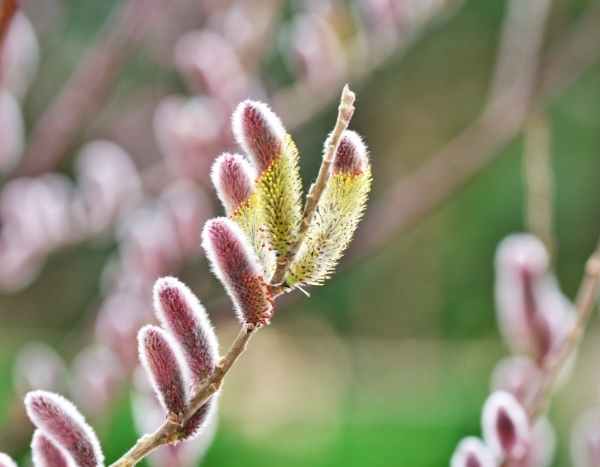
The braided brown-red willow will need to be regularly and severely pruned if you do not want it to reach a height of 10m (32.8ft) and produce a large number of long coloured stems. The young and very flexible branches are a shiny mahogany red and then become more brown with age. The buds are also purple in colour. The deciduous foliage falls in early autumn. It consists of thin leaves arranged in an opposite, not alternate, manner like most other willows. They are thin and narrow, elliptical in shape, measuring 3 to 5cm (2in) long. The lamina is light green-silver on the upper side, while the underside is more bluish and traversed by prominent veins. The foliage turns yellow in autumn. The flowering, quite discreet, takes place in March-April, before the appearance of the leaves. Male subjects bear silky catkins 3-5cm (2in) long, silver-green punctuated with purple stamens. Female subjects bear shorter and very discreet catkins. The fruit is a fluffy capsule that releases seeds covered with long decorative bristles.
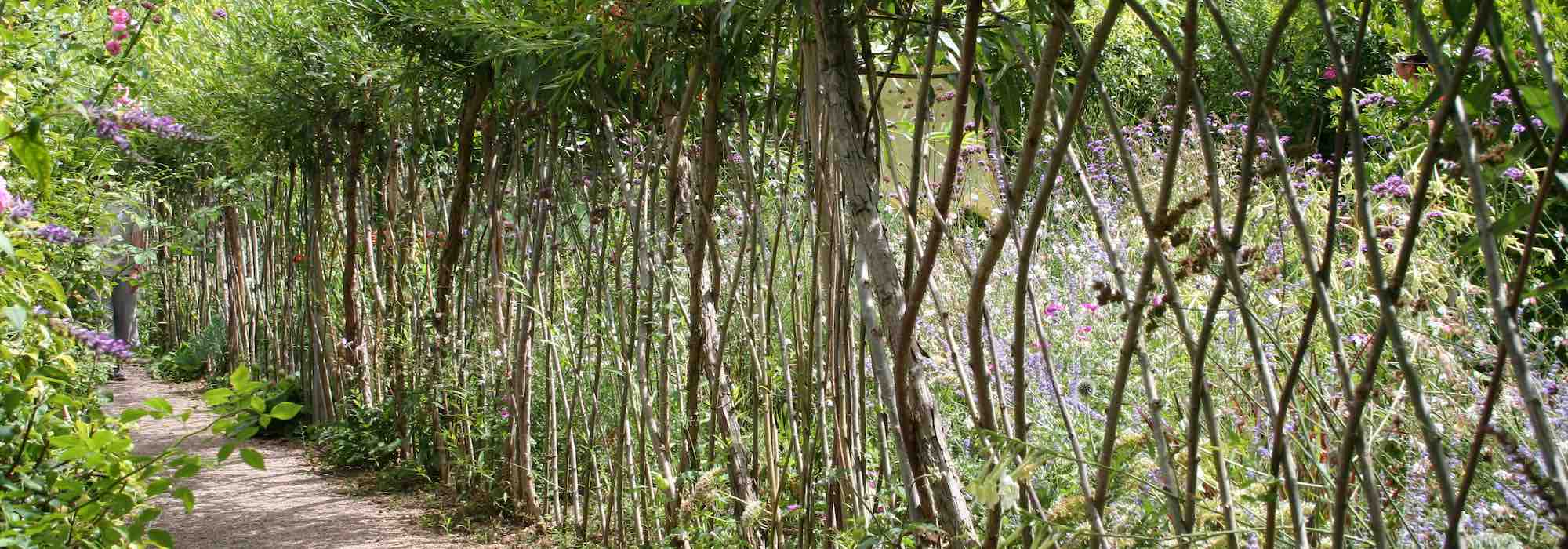
Install your braided brown-red willow in a strategic location in the garden, as a standalone specimen or in groups of 3 subjects. Also place it in a large carefully chosen pot on the terrace or balcony, monitoring watering: it will have a great effect and earn you compliments from your visitors! You can also plant several subjects in a row to form a small graphic hedge that will delimit a vegetable garden square or elegantly hide your compost, clotheslines, a small tool shed... The stems of this willow intertwine to form magnificent geometric figures, overhung by a dense foliage, creating a true living sculpture that is constantly evolving.
Properties:
The red willow is a homely plant, also widely used in basketry. Its ability to stabilize unstable soils along riverbanks through its extensive and ramified root system is used in bank restoration.
Plant habit
Flowering
Foliage
Botanical data
Salix
purpurea
Americana
Salicaceae
Purple Willow, Purple Osier, Bitter Willow
Cultivar or hybrid
Planting and care
Plant the purple willow preferably in autumn, in a very sunny or partially shaded position in a warm climate. It requires a fairly deep soil, preferably neutral to lime-rich, moist but well-drained and poor. It prefers a soil that dries out occasionally rather than a heavy, waterlogged soil. However, it can tolerate poor and sandy or even gravelly soils. Ideally, when planting, use a mixture composed of half compost and half garden soil mixed with coarse sand and gravel if it is compact and clayey. It is perfectly resistant to cold and heavy frost. Prune it short at the end of winter, when vegetation starts, and remove any stems that may detract from the beauty of the weaving. It can be grown in a container for a few years, making sure to water it regularly and provide regular fertilizer for bushes.
Planting period
Intended location
Care
Planting & care advice
-
-
-
-
-

-

-
-

This item has not been reviewed yet - be the first to leave a review about it.
Recently viewed products
Haven't found what you were looking for?
Hardiness is the lowest winter temperature a plant can endure without suffering serious damage or even dying. However, hardiness is affected by location (a sheltered area, such as a patio), protection (winter cover) and soil type (hardiness is improved by well-drained soil).

The flowering period indicated on our website applies to countries and regions located in USDA zone 8 (France, the United Kingdom, Ireland, the Netherlands, etc.)
It will vary according to where you live:- In zones 9 to 10 (Italy, Spain, Greece, etc.), flowering will occur about 2 to 4 weeks earlier.
- In zones 6 to 7 (Germany, Poland, Slovenia, and lower mountainous regions), flowering will be delayed by 2 to 3 weeks.
- In zone 5 (Central Europe, Scandinavia), blooming will be delayed by 3 to 5 weeks.
In temperate climates, pruning of spring-flowering shrubs (forsythia, spireas, etc.) should be done just after flowering.
Pruning of summer-flowering shrubs (Indian Lilac, Perovskia, etc.) can be done in winter or spring.
In cold regions as well as with frost-sensitive plants, avoid pruning too early when severe frosts may still occur.
The planting period indicated on our website applies to countries and regions located in USDA zone 8 (France, United Kingdom, Ireland, Netherlands).
It will vary according to where you live:
- In Mediterranean zones (Marseille, Madrid, Milan, etc.), autumn and winter are the best planting periods.
- In continental zones (Strasbourg, Munich, Vienna, etc.), delay planting by 2 to 3 weeks in spring and bring it forward by 2 to 4 weeks in autumn.
- In mountainous regions (the Alps, Pyrenees, Carpathians, etc.), it is best to plant in late spring (May-June) or late summer (August-September).
The harvesting period indicated on our website applies to countries and regions in USDA zone 8 (France, England, Ireland, the Netherlands).
In colder areas (Scandinavia, Poland, Austria...) fruit and vegetable harvests are likely to be delayed by 3-4 weeks.
In warmer areas (Italy, Spain, Greece, etc.), harvesting will probably take place earlier, depending on weather conditions.
The sowing periods indicated on our website apply to countries and regions within USDA Zone 8 (France, UK, Ireland, Netherlands).
In colder areas (Scandinavia, Poland, Austria...), delay any outdoor sowing by 3-4 weeks, or sow under glass.
In warmer climes (Italy, Spain, Greece, etc.), bring outdoor sowing forward by a few weeks.
Shipping country and language
Your country of residence may be:
Your country of residence is:
For a better user experience on our website, you can select:
Your shipping country:
-
 Austria
-
 Belgium
-
 Bosnia & Herzegovina
-
 Bulgaria
-
 Croatia
-
 Cyprus
-
 Czechia
-
 Denmark
-
 Estonia
-
 Finland
-
 France
-
 Germany
-
 Greece
-
 Hungary
-
 Iceland
-
 Ireland
-
 Italy
Italy
-
 Latvia
-
 Liechtenstein
-
 Lithuania
-
 Luxembourg
-
 Malta
Malta
-
 Netherlands
-
 Poland
-
 Portugal
-
 Romania
-
 Serbia
-
 Slovakia
-
 Slovenia
-
 Spain
Spain
-
 Sweden
-
 Switzerland
Language:
-
French
-
 English
-
Spanish
-
Italian
-
German
-
Portuguese
-
Dutch
-
Finnish
My Account
Hello
My wish lists
My cart
Log in / Register
Existing customer?
This form is protected by reCAPTCHA - the Google Privacy Policy and Terms of Service apply.
New customer?
Create an account to track your orders, access our customer service and, if you wish, make the most of our upcoming offers.