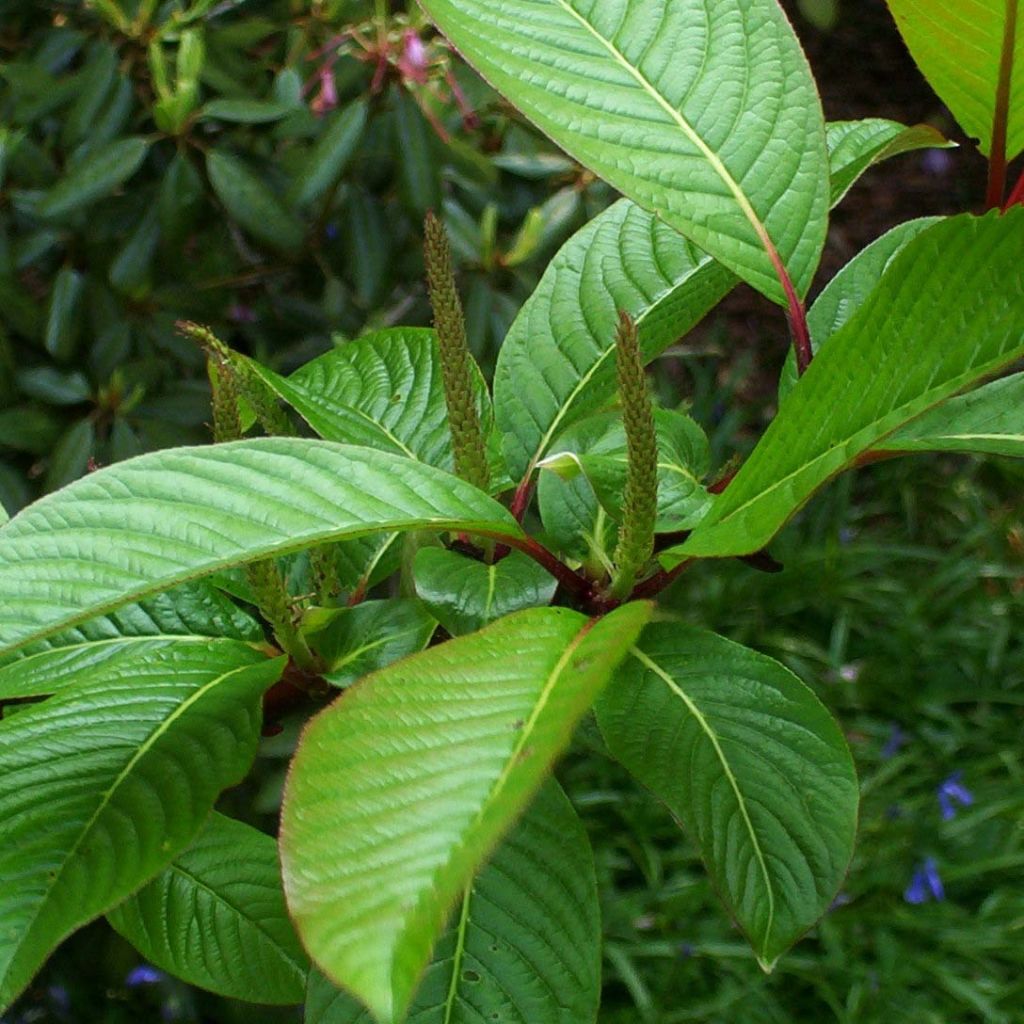
Salix fargesii - Farges Willow
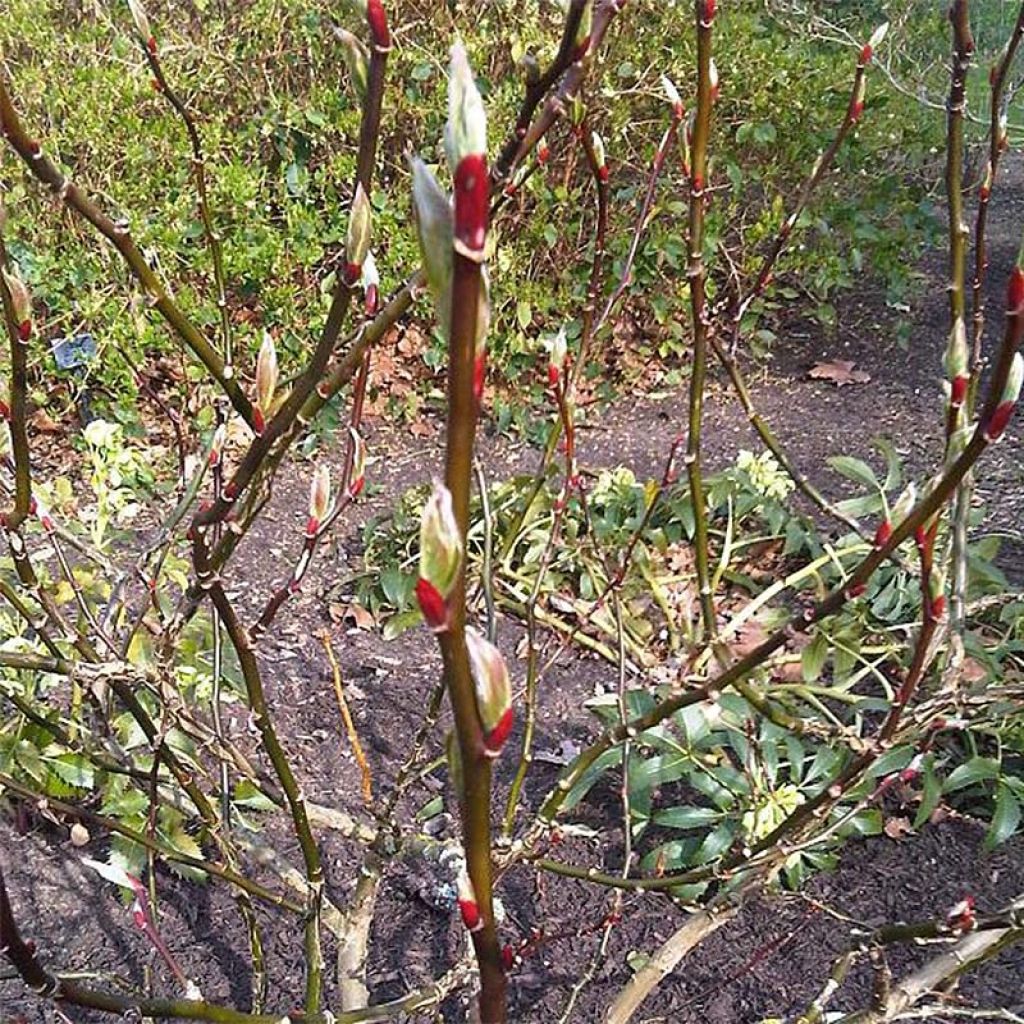
Salix fargesii - Farges Willow
Salix fargesii - Farges Willow
Salix fargesii
Farges Willow
Back-to-school special offer!
Get €10 off for every €50 you spend! And get up to €40 off on a single order.
How does it work?
1. Shop your favourites
Add your favourite plants to your basket. For every €50 you spend (excluding delivery charges, store credit and the plastic-free option), you’ll receive a €10 voucher.
€50 spent = €10 voucher
€100 spent = €20 voucher
€150 spent = €30 voucher
€200 spent = €40 voucher
2. Place your order
Once your basket reaches one of the spending thresholds, place your order. You can even choose your delivery date!
3. Receive your voucher
As soon as your order has been shipped, you’ll receive an email containing your personal voucher code and its value.
4. Use it on your next order
Your voucher is valid for 90 days from the date you receive it. It can be used once only, on a new order worth at least the value of the voucher, excluding delivery charges.
Please note: Vouchers can be combined with other offers, but cannot be split or refunded.
Home or relay delivery (depending on size and destination)
Important: You may be charged customs duties by your country’s customs authorities upon delivery.
Schedule delivery date,
and select date in basket
This plant carries a 24 months recovery warranty
More information
We guarantee the quality of our plants for a full growing cycle, and will replace at our expense any plant that fails to recover under normal climatic and planting conditions.

Would this plant suit my garden?
Set up your Plantfit profile →
Description
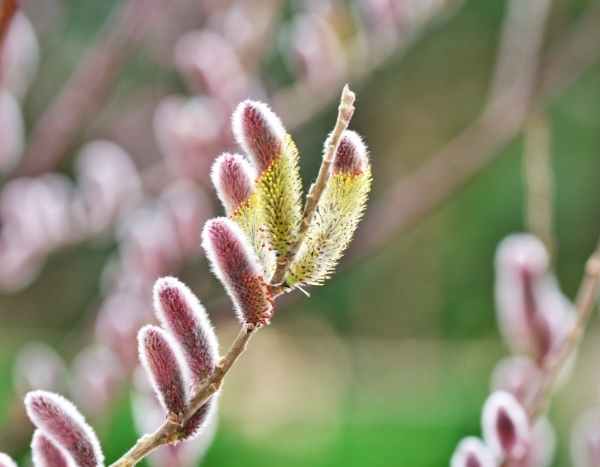
Salix fargesii or Farges' Willow is a Chinese species of small and highly decorative development, more bushy than shrubby, well suited for a small garden. It is interesting for its unusual appearance, as well as for its ease of cultivation in almost all types of soil. Its assets include magnificent, large dark, shiny green magnolia leaves, red young shoots from which large buds covered with silver bristles emerge, and smooth bark of a beautiful coppery brown, which will be admired in winter. Its upright green catkins are barely visible in spring. Resistant to the coldest temperatures, its young shoots can however be damaged by late frosts.
Belonging to the willow family, Salix fargesii is a deciduous botanical species native to mountainous areas in central and western China (Gansu, Hubei, Shaanxi, Sichuan), where it is found at an altitude between 1400 and 1600 metres (4593 and 5249 feet). This plant was awarded in England in 2012 by the Royal Horticultural Society for its ornamental qualities and performance in the garden. It is a very light-tolerant species, less exclusively associated with wet places than most other species of the genus Salix.
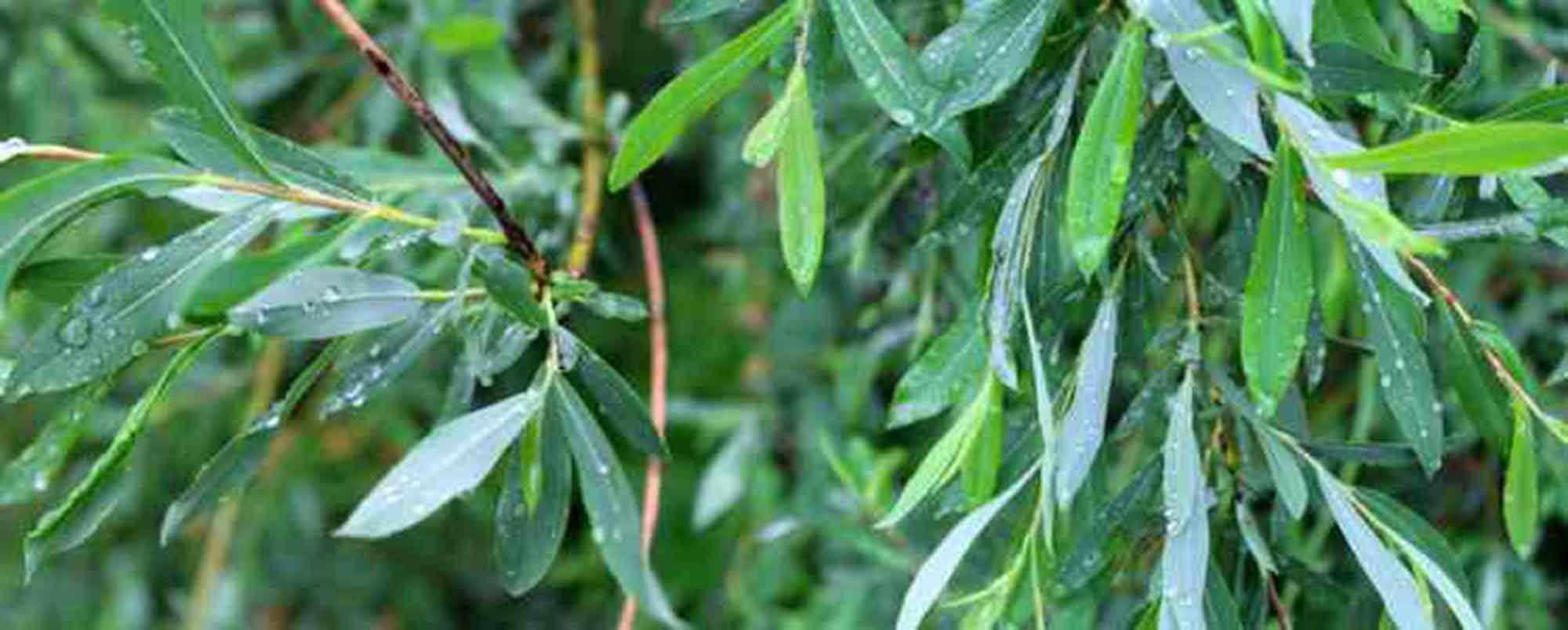
Farges Willow is a rounded, branched shrub, developing many stems from its base. At maturity, this slow-growing willow will reach an average size of 2 metres (7 feet) in all directions, not exceeding 3 metres (10 feet) after many years. The young branches are erect, shiny, and bright red, turning mahogany red to copper red over time. From the end of winter, shiny, bright red buds form, releasing silky and silver leaves. Attached to the branches by red petioles, these leaves unfold, turning pink and then green, until they measure about 11cm (4in) long and 6cm (2in) wide. They have an elegant long oval shape, tapering to a point. Thick-textured and heavily veined, they are beautiful dark green and glossy on the top, lighter underneath. The foliage is deciduous, falling in autumn. The insignificant flowering is somewhat hidden by the foliage in April-May, on separate male and female subjects. The erect male catkins measure up to 12cm (5in) long, while the females, also erect, reach 18cm (7in) long. The fruit is a capsule that opens to release seeds with long bristles.
As charming along a watercourse as in a flowerbed, Farges Willow proves to be easy to grow in ordinary soil, in most regions. Unlike most of its relatives, it does not require moist or waterlogged soil throughout the year, and it will tolerate periods of summer drought with occasional watering. With a beautiful presence throughout the year, it can be placed in the centre of a small flowerbed composed of low shrubs (winter heathers, cotton lavenders, dwarf dogwoods Cornus sericea Kelseyi), or in front of a group of taller shrubs along a pathway. For example, it can be associated with Chinese azaleas and surrounded by Panicum or Miscanthus in a scene full of light.
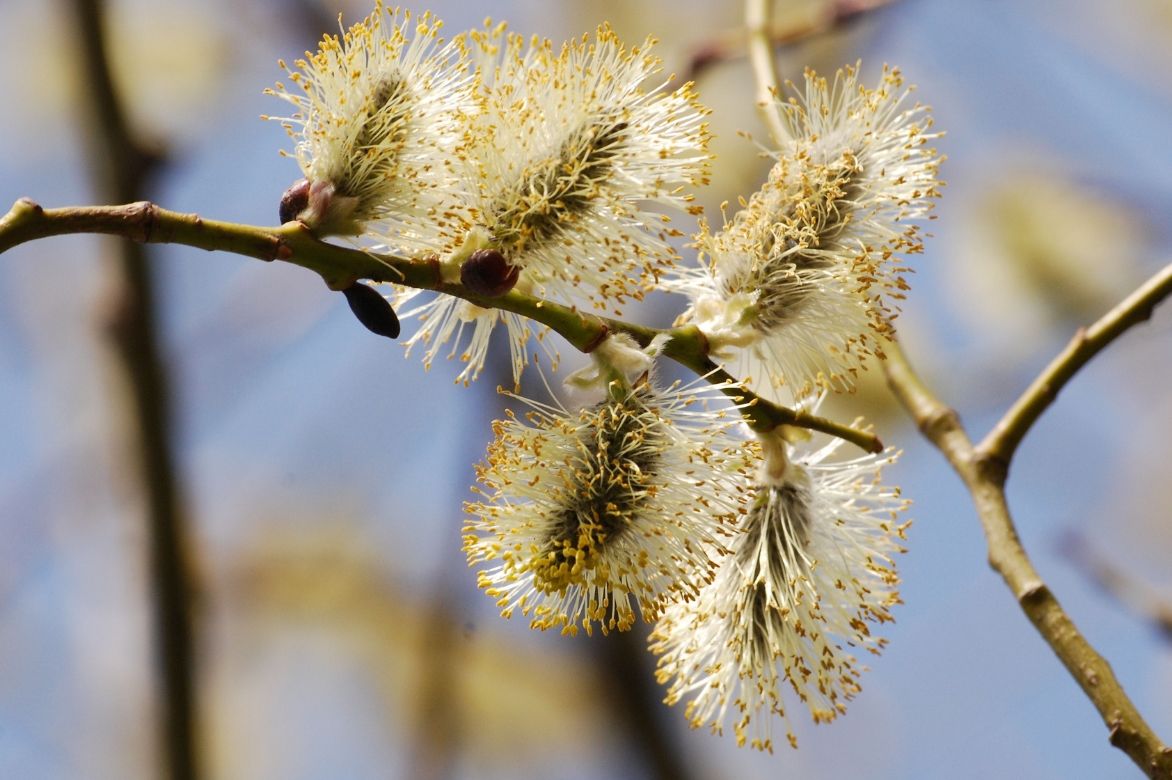
Salix fargesii - Farges Willow in pictures
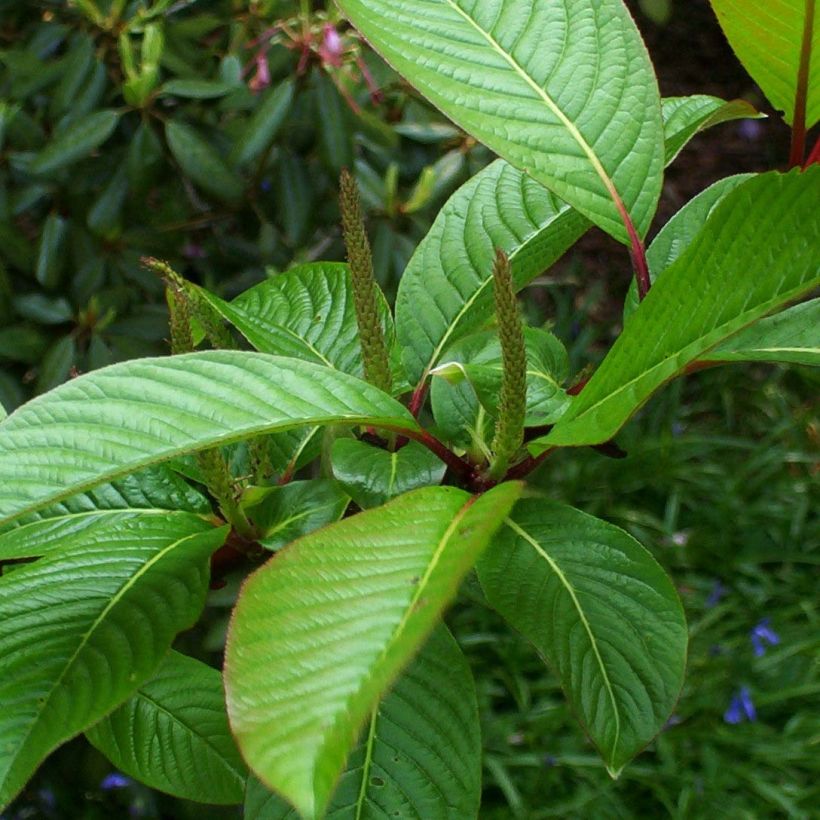
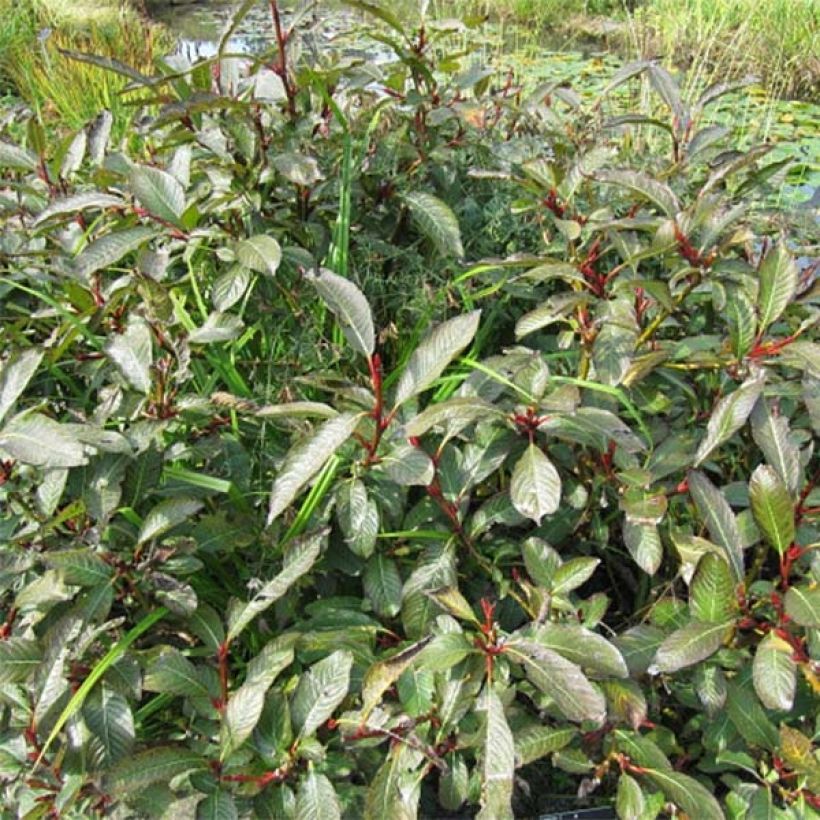
Plant habit
Flowering
Foliage
Botanical data
Salix
fargesii
Salicaceae
Farges Willow
China
Planting and care
Plant Salix fargesii in a sunny position, preferably in autumn. It is undemanding in terms of soil, as long as it has some depth to allow the bush to find some moisture in case of drought. However, it prefers a well-drained soil, rich in humus, that remains moist. It tolerates the presence of limestone as well as clayey and/or acidic soils. In all regions, water regularly during the first two years to help the bush establish itself. In hot and dry regions, once the plant is established, a generous watering every 15 days or 3 weeks will be required. Ideally plant in a mixture composed of half compost and half garden soil. It is perfectly resistant to cold and severe frosts, but its young shoots can be destroyed by late frosts: therefore, avoid planting it to the east in the coldest regions. To promote a bushy habit and the formation of catkin-bearing branches, you can prune every 4 years or so.
Diseases and pests of willows:
The leaves and branches are susceptible to various fungal diseases. Collect all the leaves in autumn, burn them, and treat with Bordeaux mixture. Many insects, such as aphids and caterpillars, devour the foliage.
Planting period
Intended location
Care
Planting & care advice
-
-
-

-

-

-

-
-

This item has not been reviewed yet - be the first to leave a review about it.
Recently viewed products
Haven't found what you were looking for?
Hardiness is the lowest winter temperature a plant can endure without suffering serious damage or even dying. However, hardiness is affected by location (a sheltered area, such as a patio), protection (winter cover) and soil type (hardiness is improved by well-drained soil).

The flowering period indicated on our website applies to countries and regions located in USDA zone 8 (France, the United Kingdom, Ireland, the Netherlands, etc.)
It will vary according to where you live:- In zones 9 to 10 (Italy, Spain, Greece, etc.), flowering will occur about 2 to 4 weeks earlier.
- In zones 6 to 7 (Germany, Poland, Slovenia, and lower mountainous regions), flowering will be delayed by 2 to 3 weeks.
- In zone 5 (Central Europe, Scandinavia), blooming will be delayed by 3 to 5 weeks.
In temperate climates, pruning of spring-flowering shrubs (forsythia, spireas, etc.) should be done just after flowering.
Pruning of summer-flowering shrubs (Indian Lilac, Perovskia, etc.) can be done in winter or spring.
In cold regions as well as with frost-sensitive plants, avoid pruning too early when severe frosts may still occur.
The planting period indicated on our website applies to countries and regions located in USDA zone 8 (France, United Kingdom, Ireland, Netherlands).
It will vary according to where you live:
- In Mediterranean zones (Marseille, Madrid, Milan, etc.), autumn and winter are the best planting periods.
- In continental zones (Strasbourg, Munich, Vienna, etc.), delay planting by 2 to 3 weeks in spring and bring it forward by 2 to 4 weeks in autumn.
- In mountainous regions (the Alps, Pyrenees, Carpathians, etc.), it is best to plant in late spring (May-June) or late summer (August-September).
The harvesting period indicated on our website applies to countries and regions in USDA zone 8 (France, England, Ireland, the Netherlands).
In colder areas (Scandinavia, Poland, Austria...) fruit and vegetable harvests are likely to be delayed by 3-4 weeks.
In warmer areas (Italy, Spain, Greece, etc.), harvesting will probably take place earlier, depending on weather conditions.
The sowing periods indicated on our website apply to countries and regions within USDA Zone 8 (France, UK, Ireland, Netherlands).
In colder areas (Scandinavia, Poland, Austria...), delay any outdoor sowing by 3-4 weeks, or sow under glass.
In warmer climes (Italy, Spain, Greece, etc.), bring outdoor sowing forward by a few weeks.
Shipping country and language
Your country of residence may be:
Your country of residence is:
For a better user experience on our website, you can select:
Your shipping country:
-
 Austria
-
 Belgium
-
 Bosnia & Herzegovina
-
 Bulgaria
-
 Croatia
-
 Cyprus
-
 Czechia
-
 Denmark
-
 Estonia
-
 Finland
-
 France
-
 Germany
-
 Greece
-
 Hungary
-
 Iceland
-
 Ireland
-
 Italy
Italy
-
 Latvia
-
 Liechtenstein
-
 Lithuania
-
 Luxembourg
-
 Malta
Malta
-
 Netherlands
-
 Poland
-
 Portugal
-
 Romania
-
 Serbia
-
 Slovakia
-
 Slovenia
-
 Spain
Spain
-
 Sweden
-
 Switzerland
Language:
-
French
-
 English
-
Spanish
-
Italian
-
German
-
Portuguese
-
Dutch
-
Finnish
My Account
Hello
My wish lists
My cart
Log in / Register
Existing customer?
This form is protected by reCAPTCHA - the Google Privacy Policy and Terms of Service apply.
New customer?
Create an account to track your orders, access our customer service and, if you wish, make the most of our upcoming offers.