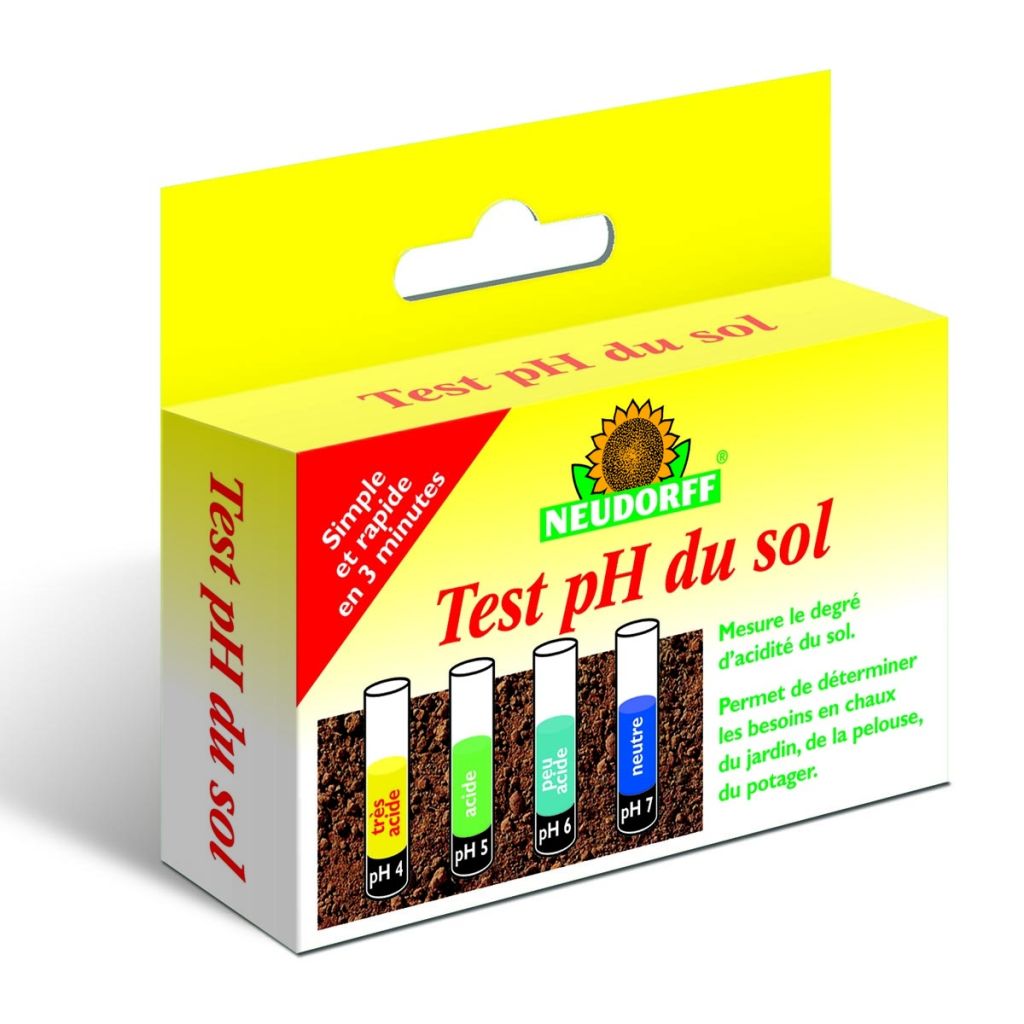
Neudorff Soil pH Testing kit
Neudorff Soil pH Testing kit
Good reception, but not yet tested. To be seen later.
Lilianne, 04/08/2021
Back-to-school special offer!
Get €10 off for every €50 you spend! And get up to €40 off on a single order.
How does it work?
1. Shop your favourites
Add your favourite plants to your basket. For every €50 you spend (excluding delivery charges, store credit and the plastic-free option), you’ll receive a €10 voucher.
€50 spent = €10 voucher
€100 spent = €20 voucher
€150 spent = €30 voucher
€200 spent = €40 voucher
2. Place your order
Once your basket reaches one of the spending thresholds, place your order. You can even choose your delivery date!
3. Receive your voucher
As soon as your order has been shipped, you’ll receive an email containing your personal voucher code and its value.
4. Use it on your next order
Your voucher is valid for 90 days from the date you receive it. It can be used once only, on a new order worth at least the value of the voucher, excluding delivery charges.
Please note: Vouchers can be combined with other offers, but cannot be split or refunded.
We guarantee the quality of our plants for a full growing cycle, and will replace at our expense any plant that fails to recover under normal climatic and planting conditions.
This Neudorff Soil pH Testing kit allows you to quickly determine the acidity of the soil before planting, so you can improve it if necessary.
When designing a new ornamental or vegetable garden, or before planting a lawn, it is useful to evaluate the soil structure, acidity or alkalinity, physical structure, as well as its richness in different essential nutrients for plant development. In case of imbalance, it is usually possible to intervene to correct deficiencies and improve the soil using improvers. It is therefore recommended to perform a soil analysis before planting. This will inform you about some important parameters: major nutrients (nitrogen, phosphorus, and potassium content), trace elements (iron, copper, boron, zinc), pH (acidic or alkaline), and organic matter content. This data will allow you to understand your soil and increase the success of plantings. Knowing your soil well also allows you, with common sense, to give up on growing a plant that will be doomed to failure in the conditions that your garden offers, for example, installing acid-loving species in limestone soils.
Soil analysis can be carried out throughout the year, except during freezing periods. It is advisable to do a test once a year. Generally, sandy soils need to be checked more frequently than clay soils because their pH (acidity, neutrality, alkalinity) and nutrient content can change more rapidly.
The kit contains:
8 packets of soil pH test powder, 1 test tube, 1 bottle of distilled water, 1 information sheet
Instructions for use:
1/ Take at least 3 soil samples at a depth of 10 cm, from areas throughout the entire garden or in a specific area you wish to analyse, for example, between already established plants or at the precise location where you plan to plant.
2/ Place the samples in a container and mix well.
3/ Take a 10 mm portion of this mixture and transfer it to the tube, checking the filling height with the graduated measure.
4/ Fill with distilled water up to the 35 mark.
5/ After adding a pH test tablet, close the tube with the cap and shake until the tablet is completely dissolved.
6/ Let the solution rest until it is no longer cloudy.
7/ Read the result and correct the acidity of your soil by spreading lime in the proportions indicated in the table if you wish.
Promesse de fleurs has chosen Neudorff products for their 165 years of expertise in natural gardening and market-leading plant protection products in Germany (GFK 2018, Jan-May). It is an innovative company, at the origin of the development of active substances existing in nature that have revolutionised the market: ferric phosphate, pelargonic acid, etc. Its highly effective products, recognised by professionals and the general public, can be used in Organic Agriculture in accordance with Regulation (EU) 2018/848.
Promesse de fleurs and Neudorff share common values and objectives: respect for the environment and the promotion of sustainable development, including the use of hydraulic and solar electricity produced on-site, the use of recycled raw materials, and wood from sustainably managed forests.
Tips
Detailed features
-
, onOrder confirmed
Reply from on Promesse de fleurs
Recently viewed products
Haven't found what you were looking for?
Hardiness is the lowest winter temperature a plant can endure without suffering serious damage or even dying. However, hardiness is affected by location (a sheltered area, such as a patio), protection (winter cover) and soil type (hardiness is improved by well-drained soil).

The flowering period indicated on our website applies to countries and regions located in USDA zone 8 (France, the United Kingdom, Ireland, the Netherlands, etc.)
It will vary according to where you live:- In zones 9 to 10 (Italy, Spain, Greece, etc.), flowering will occur about 2 to 4 weeks earlier.
- In zones 6 to 7 (Germany, Poland, Slovenia, and lower mountainous regions), flowering will be delayed by 2 to 3 weeks.
- In zone 5 (Central Europe, Scandinavia), blooming will be delayed by 3 to 5 weeks.
In temperate climates, pruning of spring-flowering shrubs (forsythia, spireas, etc.) should be done just after flowering.
Pruning of summer-flowering shrubs (Indian Lilac, Perovskia, etc.) can be done in winter or spring.
In cold regions as well as with frost-sensitive plants, avoid pruning too early when severe frosts may still occur.
The planting period indicated on our website applies to countries and regions located in USDA zone 8 (France, United Kingdom, Ireland, Netherlands).
It will vary according to where you live:
- In Mediterranean zones (Marseille, Madrid, Milan, etc.), autumn and winter are the best planting periods.
- In continental zones (Strasbourg, Munich, Vienna, etc.), delay planting by 2 to 3 weeks in spring and bring it forward by 2 to 4 weeks in autumn.
- In mountainous regions (the Alps, Pyrenees, Carpathians, etc.), it is best to plant in late spring (May-June) or late summer (August-September).
The harvesting period indicated on our website applies to countries and regions in USDA zone 8 (France, England, Ireland, the Netherlands).
In colder areas (Scandinavia, Poland, Austria...) fruit and vegetable harvests are likely to be delayed by 3-4 weeks.
In warmer areas (Italy, Spain, Greece, etc.), harvesting will probably take place earlier, depending on weather conditions.
The sowing periods indicated on our website apply to countries and regions within USDA Zone 8 (France, UK, Ireland, Netherlands).
In colder areas (Scandinavia, Poland, Austria...), delay any outdoor sowing by 3-4 weeks, or sow under glass.
In warmer climes (Italy, Spain, Greece, etc.), bring outdoor sowing forward by a few weeks.
Shipping country and language
Your country of residence may be:
Your country of residence is:
For a better user experience on our website, you can select:
Your shipping country:
-
 Austria
-
 Belgium
-
 Bosnia & Herzegovina
-
 Bulgaria
-
 Croatia
-
 Cyprus
-
 Czechia
-
 Denmark
-
 Estonia
-
 Finland
-
 France
-
 Germany
-
 Greece
-
 Hungary
-
 Iceland
-
 Ireland
-
 Italy
Italy
-
 Latvia
-
 Liechtenstein
-
 Lithuania
-
 Luxembourg
-
 Malta
Malta
-
 Netherlands
-
 Poland
-
 Portugal
-
 Romania
-
 Serbia
-
 Slovakia
-
 Slovenia
-
 Spain
Spain
-
 Sweden
-
 Switzerland
Language:
-
French
-
 English
-
Spanish
-
Italian
-
German
-
Portuguese
-
Dutch
-
Finnish
My Account
Hello
My wish lists
My cart
Log in / Register
Existing customer?
This form is protected by reCAPTCHA - the Google Privacy Policy and Terms of Service apply.
New customer?
Create an account to track your orders, access our customer service and, if you wish, make the most of our upcoming offers.