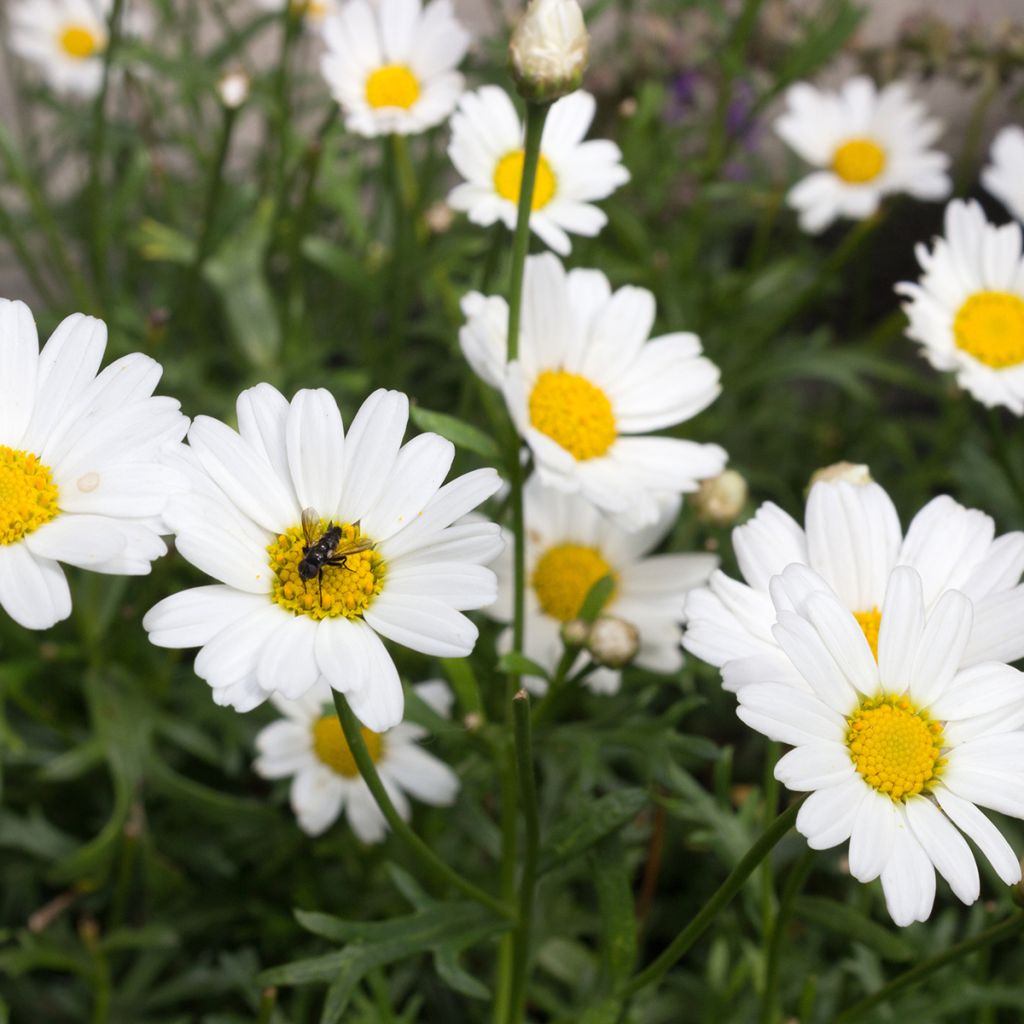
Argyranthemum frutescens Everest White - Marguerite bush
Argyranthemum frutescens Everest White - Marguerite bush
Argyranthemum frutescens Everest® White (blanc)
Marguerite bush, Paris daisy, Marguerite shrub, Marguerite tree
Well packaged and arrived safely. I've potted them as they're a bit small for now.
solange, 29/04/2025
Back-to-school special offer!
Get €10 off for every €50 you spend! And get up to €40 off on a single order.
How does it work?
1. Shop your favourites
Add your favourite plants to your basket. For every €50 you spend (excluding delivery charges, store credit and the plastic-free option), you’ll receive a €10 voucher.
€50 spent = €10 voucher
€100 spent = €20 voucher
€150 spent = €30 voucher
€200 spent = €40 voucher
2. Place your order
Once your basket reaches one of the spending thresholds, place your order. You can even choose your delivery date!
3. Receive your voucher
As soon as your order has been shipped, you’ll receive an email containing your personal voucher code and its value.
4. Use it on your next order
Your voucher is valid for 90 days from the date you receive it. It can be used once only, on a new order worth at least the value of the voucher, excluding delivery charges.
Please note: Vouchers can be combined with other offers, but cannot be split or refunded.
This plant carries a 6 months recovery warranty
More information
We guarantee the quality of our plants for a full growing cycle, and will replace at our expense any plant that fails to recover under normal climatic and planting conditions.
Would this plant suit my garden?
Set up your Plantfit profile →
Description
The Anthemis or Argyranthemum frutescens Everest ® white is part of plants commonly grouped under the name Chrysanthemum. It is a horticultural variety descended from a frost-sensitive species native to the Canary Islands. The plant forms a small, spreading and compact bush, flowering from June to October, with fine greenish-blue foliage, from which emerges a multitude of small daisies measuring 3 to 4 cm (1 to 2in) in diameter, pure white with a yellow center. Not very hardy, this perennial plant is perfectly grown as an annual in sunny, well-drained soil. Its ease of cultivation makes it an ideal plant for flower pots, but also for rock gardens or flower beds.
The Argyranthemum frutescens belongs to the asteraceae family. Although the type, a 1m (3ft) tall bush with white flowers, is no longer widely cultivated, it has left numerous descendants through hybridization with other species, all classified under this name. The plants in the 'Everest' series are frost-sensitive perennials commonly grown as annuals for their long flowering period, dense habit and various colours. The 'Everest white' selection reaches a minimum height of 30 to 40 cm (12 to 16in) and a width of 50 cm (20in). It forms a mound of finely-cut, light-looking foliage. Its growth is rapid. The abundant flowering takes place from June to October, more generously if spent flowers are regularly removed. The flowers are gathered in small white daisies, 3.5 cm (1in) wide, with a golden yellow center. The frutescent anthemis is hardy down to -3/-4°C (26.6/24.8°F), so it will need to be protected during winter.
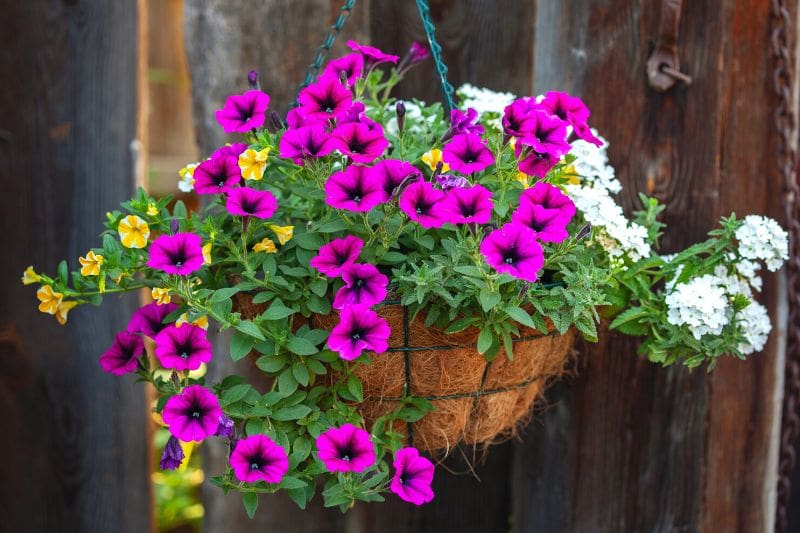
Anthemis plants are sun lovers par excellence and are particularly sensitive to excess moisture in winter. In frost-free climates, plant them in well-drained, slightly acidic, neutral or strongly calcareous soil. Forming beautiful rounded and fully-flowered clumps in no time at all, the 'Everest' Chrysanthemum looks superb alongside old roses, fennels, diascias, cosmos or nigellas. It can be very useful for starting a brand new garden after construction work. It can be planted in countryside-style flower beds as well as in more formal borders, rock gardens, stair borders or along a path in a steep garden. And of course, they offer a fantastic display in flower pots, alongside Dichondra Silver Falls, silver baskets, Begonia Sempervirens, Agératums or dwarf snapdragons, on the terrace or balcony.
Note: Please be advised that our young plug plants are professional products intended for experienced gardeners. Upon receipt, transplant and store them in a sheltered place (veranda, greenhouse, cold fram) at a temperature above 14°C (57.2°F) for a few weeks before being planted outdoors once the risk of frost has definitively passed.
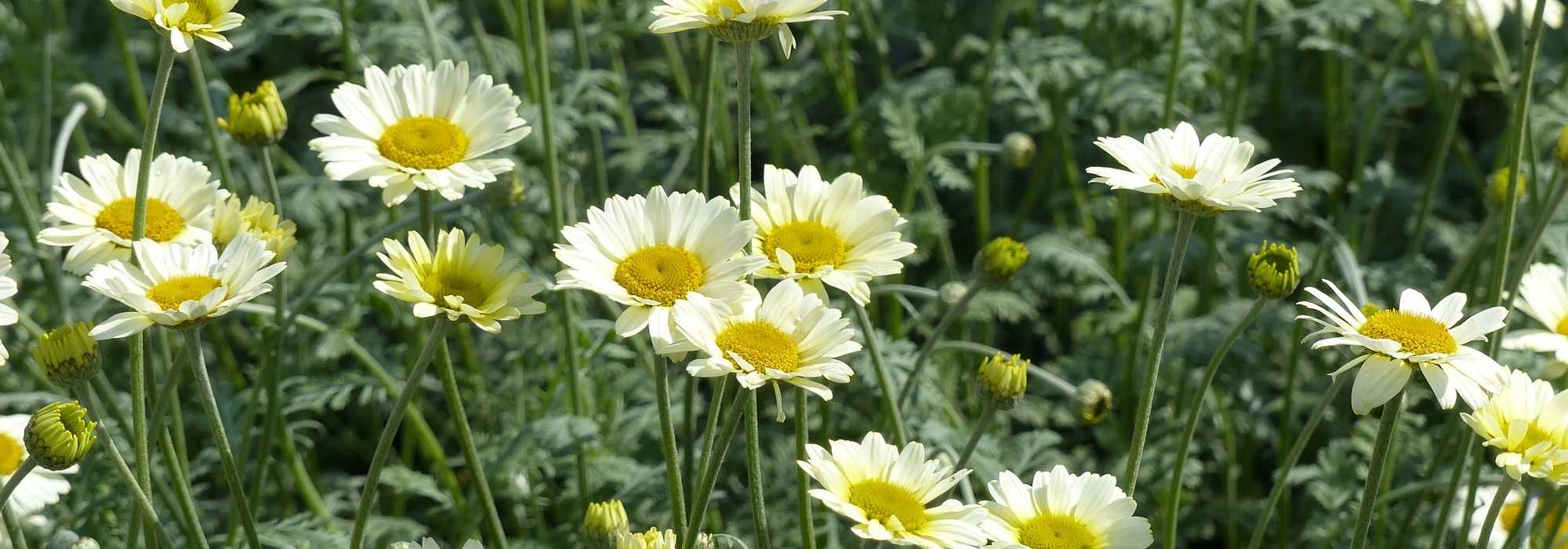
Argyranthemum frutescens Everest White - Marguerite bush in pictures

Flowering
Foliage
Plant habit
Botanical data
Argyranthemum
frutescens
Everest® White (blanc)
Asteraceae
Marguerite bush, Paris daisy, Marguerite shrub, Marguerite tree
Cultivar or hybrid
Planting and care
Growing Anthemis Everest ® white in pots is easy in all regions. Plant the shrubby Anthemis in a light and fertile substrate, composed of compost and sand, enriched with a little compost. Drainage is important, and watering should be abundant but spaced out, allowing the soil to dry slightly between waterings. Potted plants can be overwintered in a bright and well-ventilated location, but with very little heating to keep the plants frost-free.
Anthemis Everest ® white is particularly sensitive to excess humidity, especially in winter. In mild climates, plant it in the ground, in well-drained soil, slightly acidic, neutral, or strongly alkaline to very alkaline. These plants are not very demanding in terms of soil quality. However, in heavy soil, their lifespan is shorter than in poor, dry soil. Their cold resistance is greater when the soil is dry. Cutting back the stems to 20 cm (8in) from the ground in early September or in spring promotes the reconstitution of clumps and, at the end of the season, a slight reblooming.
Planting period
Intended location
Care
Planting & care advice
-
-

-
-
-
-
-

-
-
, onOrder confirmed
Reply from on Promesse de fleurs
Recently viewed products
Haven't found what you were looking for?
Hardiness is the lowest winter temperature a plant can endure without suffering serious damage or even dying. However, hardiness is affected by location (a sheltered area, such as a patio), protection (winter cover) and soil type (hardiness is improved by well-drained soil).

The flowering period indicated on our website applies to countries and regions located in USDA zone 8 (France, the United Kingdom, Ireland, the Netherlands, etc.)
It will vary according to where you live:- In zones 9 to 10 (Italy, Spain, Greece, etc.), flowering will occur about 2 to 4 weeks earlier.
- In zones 6 to 7 (Germany, Poland, Slovenia, and lower mountainous regions), flowering will be delayed by 2 to 3 weeks.
- In zone 5 (Central Europe, Scandinavia), blooming will be delayed by 3 to 5 weeks.
In temperate climates, pruning of spring-flowering shrubs (forsythia, spireas, etc.) should be done just after flowering.
Pruning of summer-flowering shrubs (Indian Lilac, Perovskia, etc.) can be done in winter or spring.
In cold regions as well as with frost-sensitive plants, avoid pruning too early when severe frosts may still occur.
The planting period indicated on our website applies to countries and regions located in USDA zone 8 (France, United Kingdom, Ireland, Netherlands).
It will vary according to where you live:
- In Mediterranean zones (Marseille, Madrid, Milan, etc.), autumn and winter are the best planting periods.
- In continental zones (Strasbourg, Munich, Vienna, etc.), delay planting by 2 to 3 weeks in spring and bring it forward by 2 to 4 weeks in autumn.
- In mountainous regions (the Alps, Pyrenees, Carpathians, etc.), it is best to plant in late spring (May-June) or late summer (August-September).
The harvesting period indicated on our website applies to countries and regions in USDA zone 8 (France, England, Ireland, the Netherlands).
In colder areas (Scandinavia, Poland, Austria...) fruit and vegetable harvests are likely to be delayed by 3-4 weeks.
In warmer areas (Italy, Spain, Greece, etc.), harvesting will probably take place earlier, depending on weather conditions.
The sowing periods indicated on our website apply to countries and regions within USDA Zone 8 (France, UK, Ireland, Netherlands).
In colder areas (Scandinavia, Poland, Austria...), delay any outdoor sowing by 3-4 weeks, or sow under glass.
In warmer climes (Italy, Spain, Greece, etc.), bring outdoor sowing forward by a few weeks.
Shipping country and language
Your country of residence may be:
Your country of residence is:
For a better user experience on our website, you can select:
Your shipping country:
-
 Austria
-
 Belgium
-
 Bosnia & Herzegovina
-
 Bulgaria
-
 Croatia
-
 Cyprus
-
 Czechia
-
 Denmark
-
 Estonia
-
 Finland
-
 France
-
 Germany
-
 Greece
-
 Hungary
-
 Iceland
-
 Ireland
-
 Italy
Italy
-
 Latvia
-
 Liechtenstein
-
 Lithuania
-
 Luxembourg
-
 Malta
Malta
-
 Netherlands
-
 Poland
-
 Portugal
-
 Romania
-
 Serbia
-
 Slovakia
-
 Slovenia
-
 Spain
Spain
-
 Sweden
-
 Switzerland
Language:
-
French
-
 English
-
Spanish
-
Italian
-
German
-
Portuguese
-
Dutch
-
Finnish
My Account
Hello
My wish lists
My cart
Log in / Register
Existing customer?
This form is protected by reCAPTCHA - the Google Privacy Policy and Terms of Service apply.
New customer?
Create an account to track your orders, access our customer service and, if you wish, make the most of our upcoming offers.