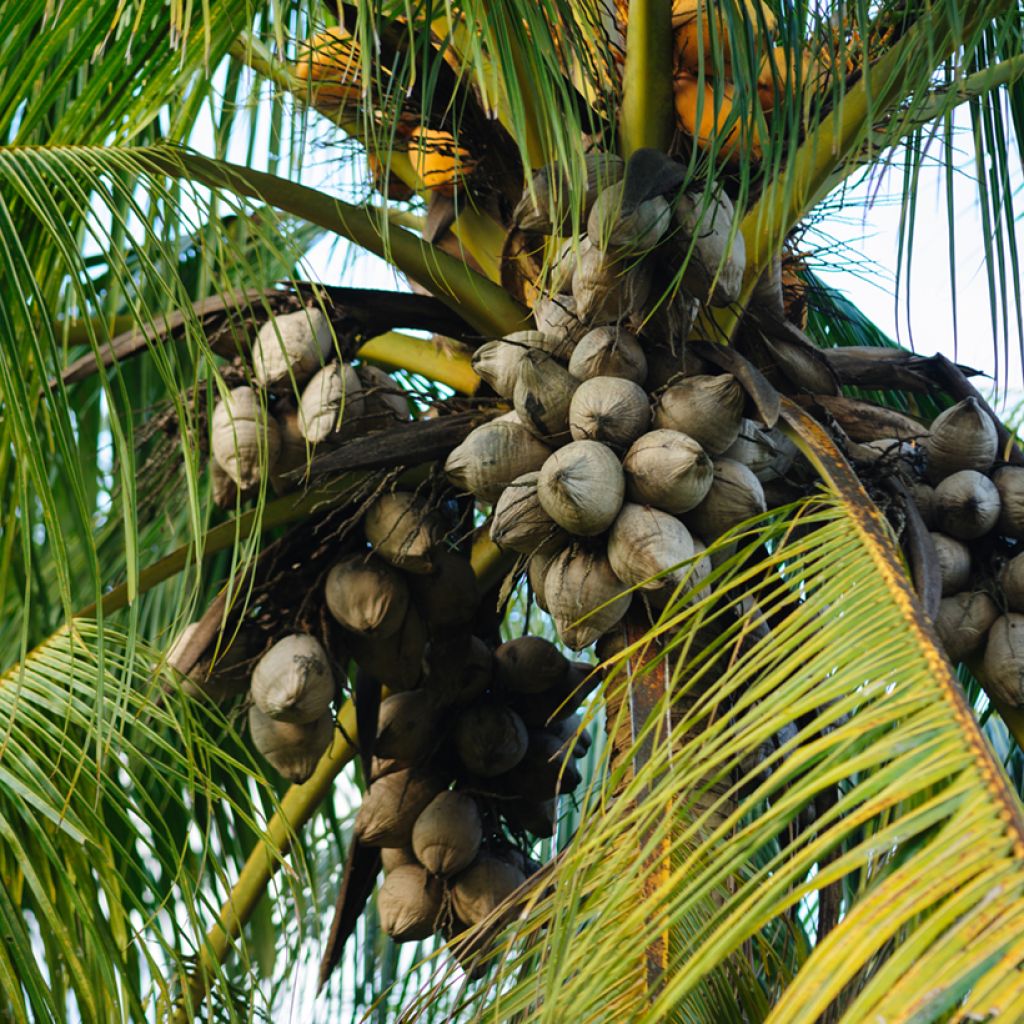
Coconut palm - Cocos nucifera
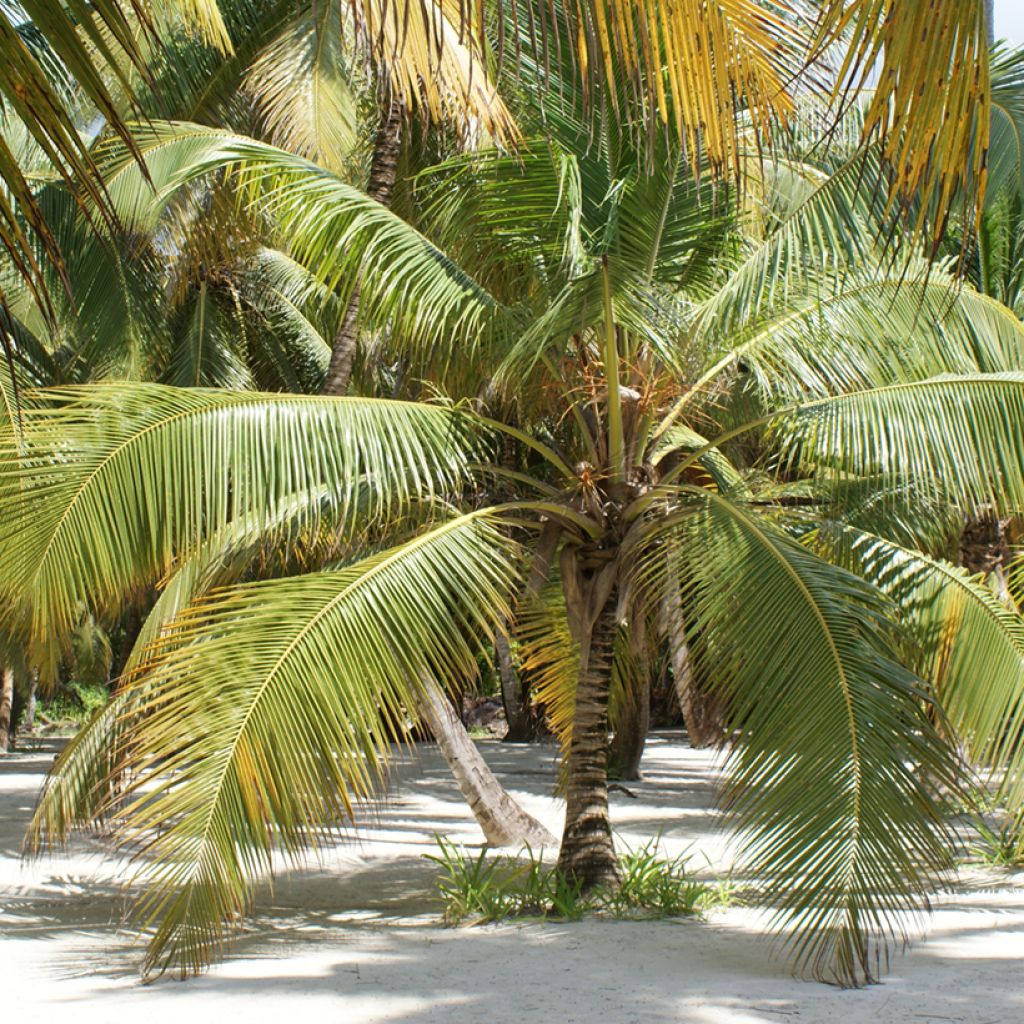
Coconut palm - Cocos nucifera

Coconut palm - Cocos nucifera
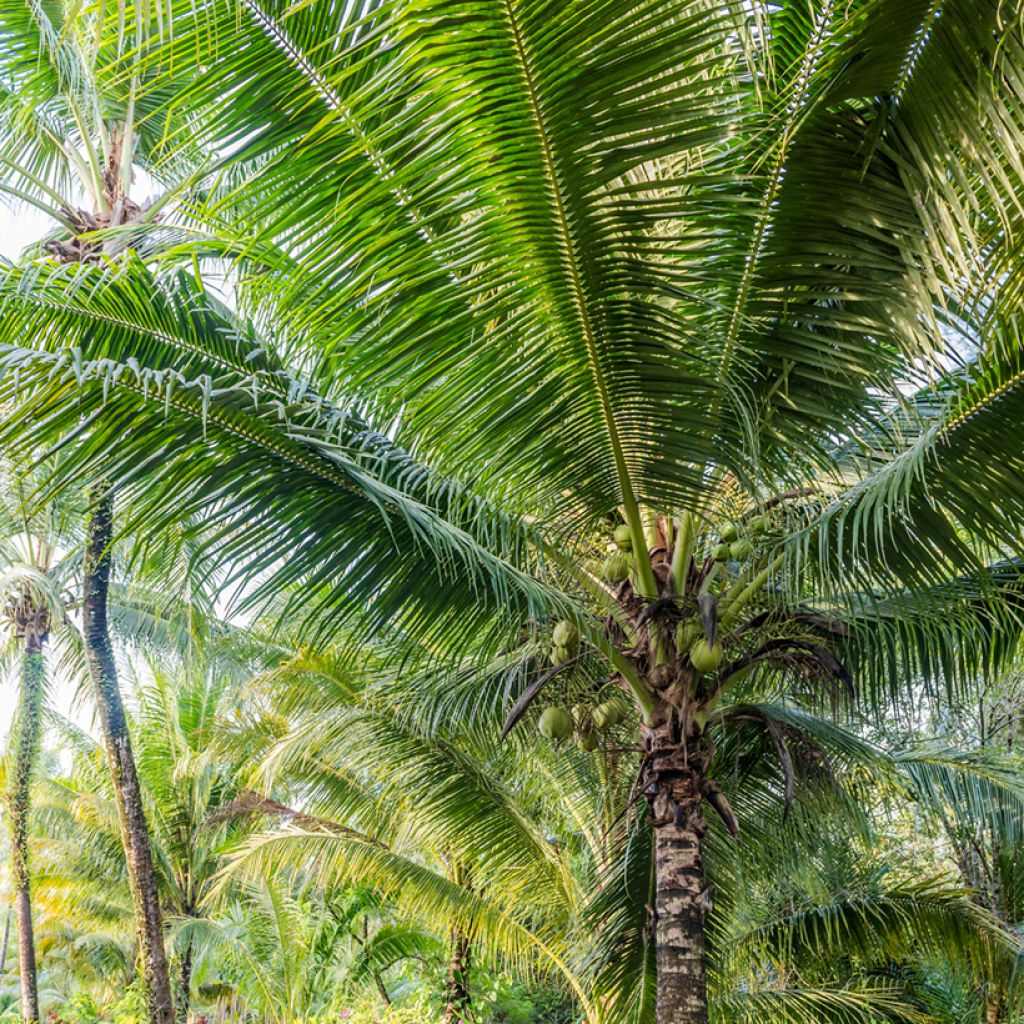
Coconut palm - Cocos nucifera
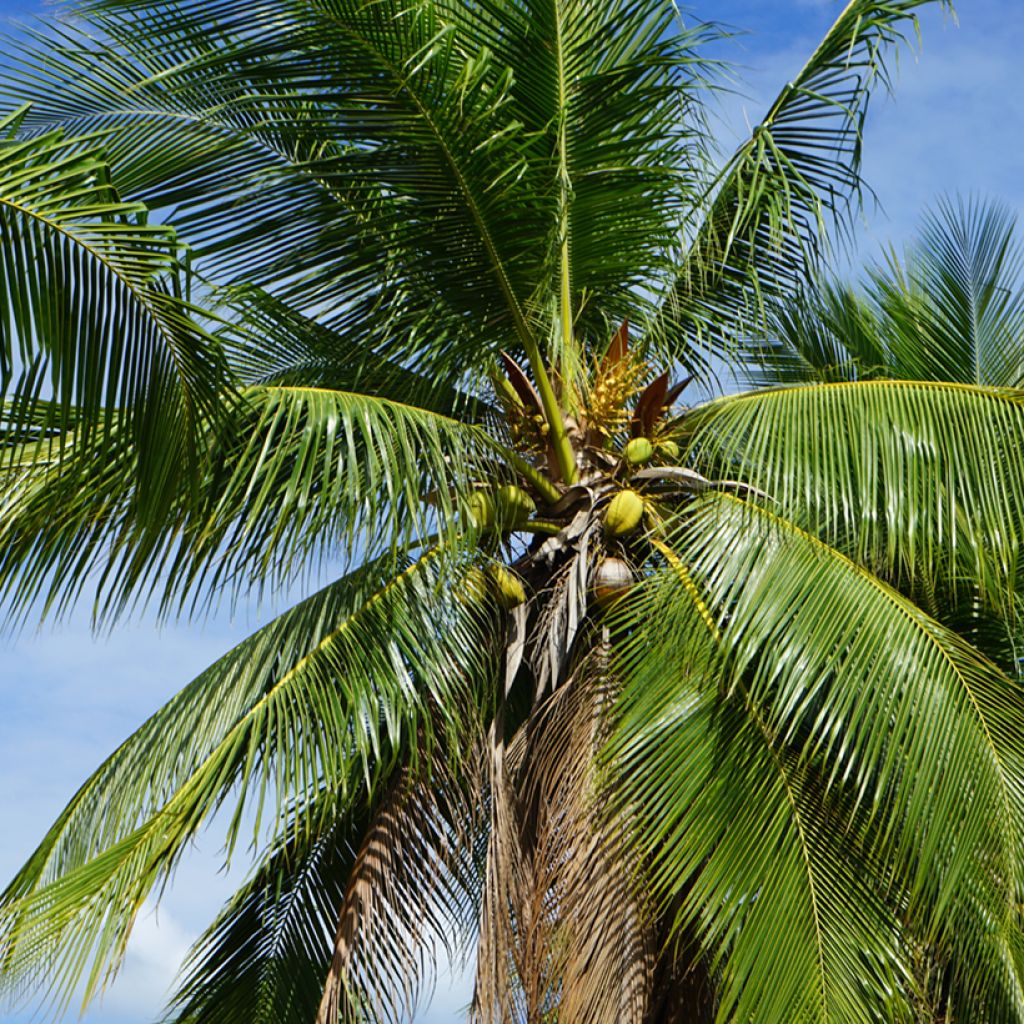
Coconut palm - Cocos nucifera
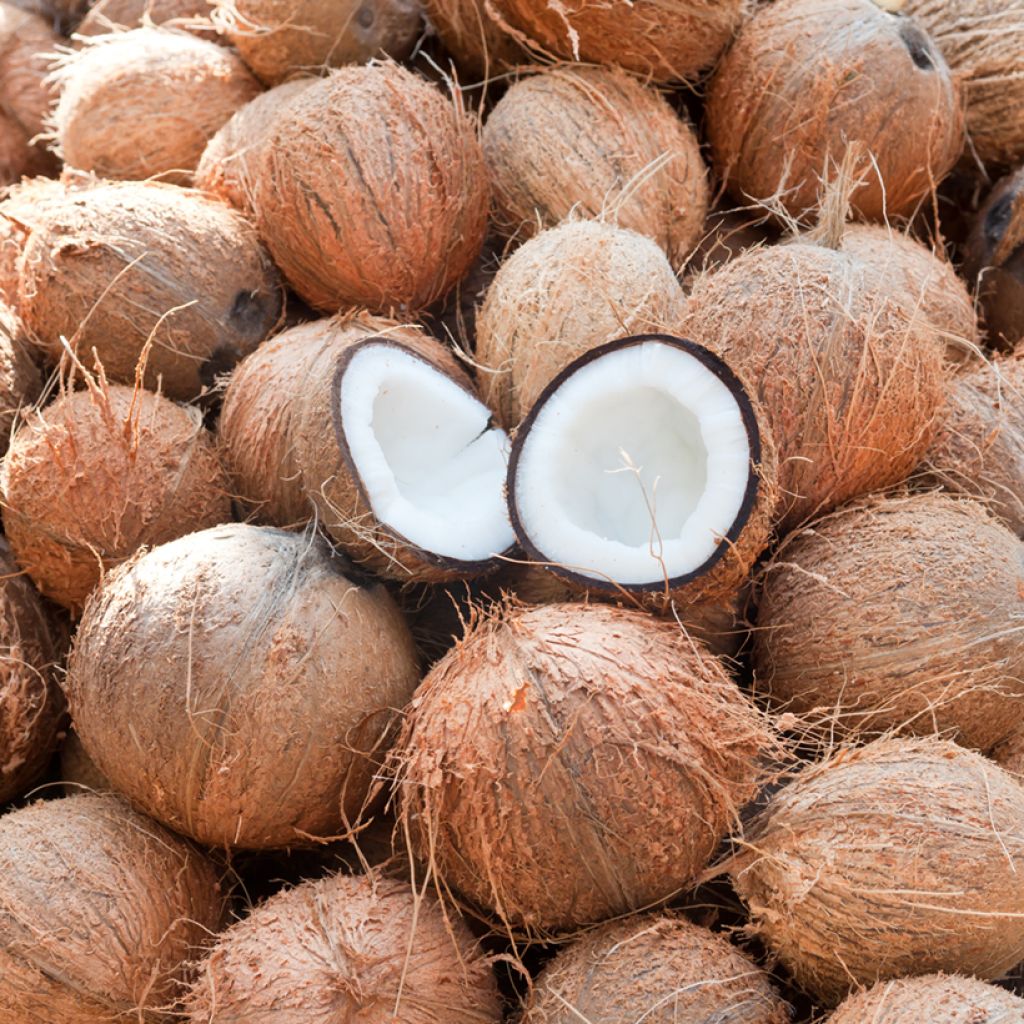
Coconut palm - Cocos nucifera
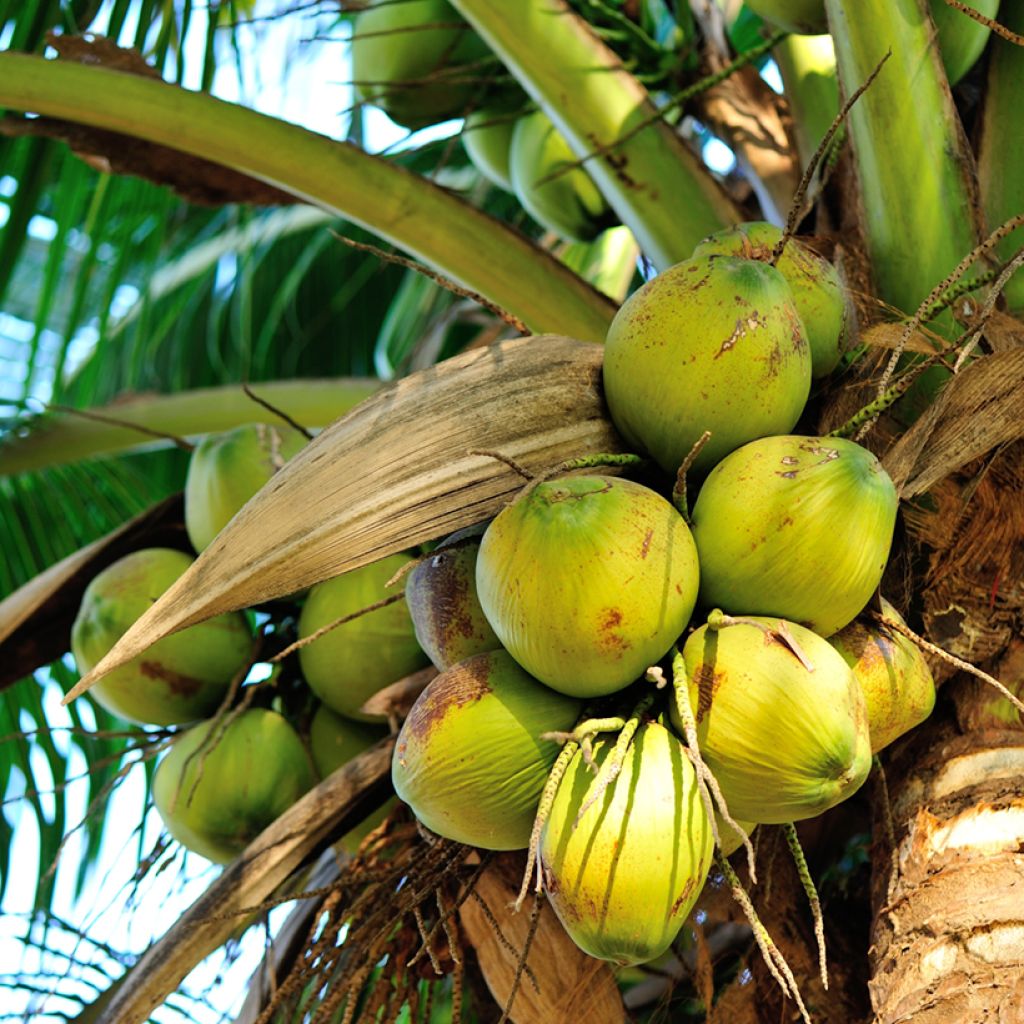
Coconut palm - Cocos nucifera

Coconut palm - Cocos nucifera
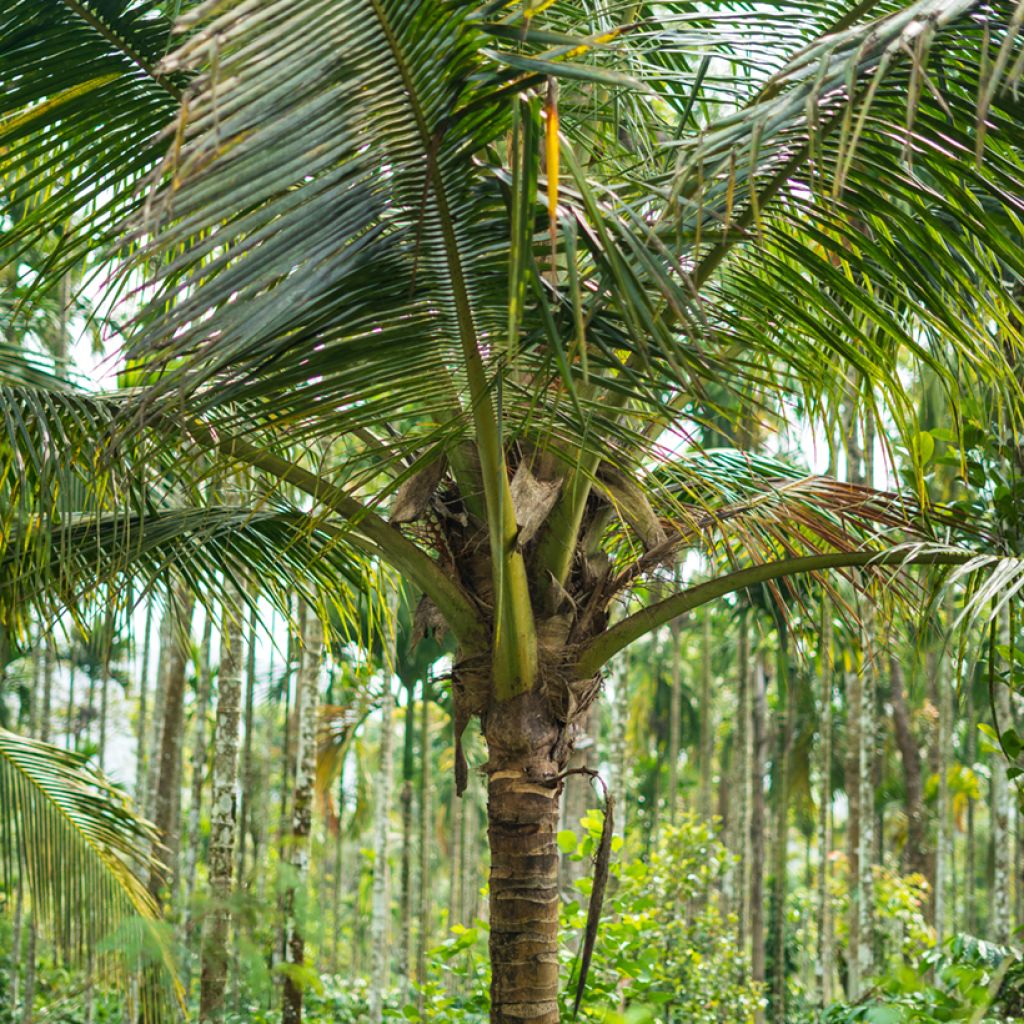
Coconut palm - Cocos nucifera
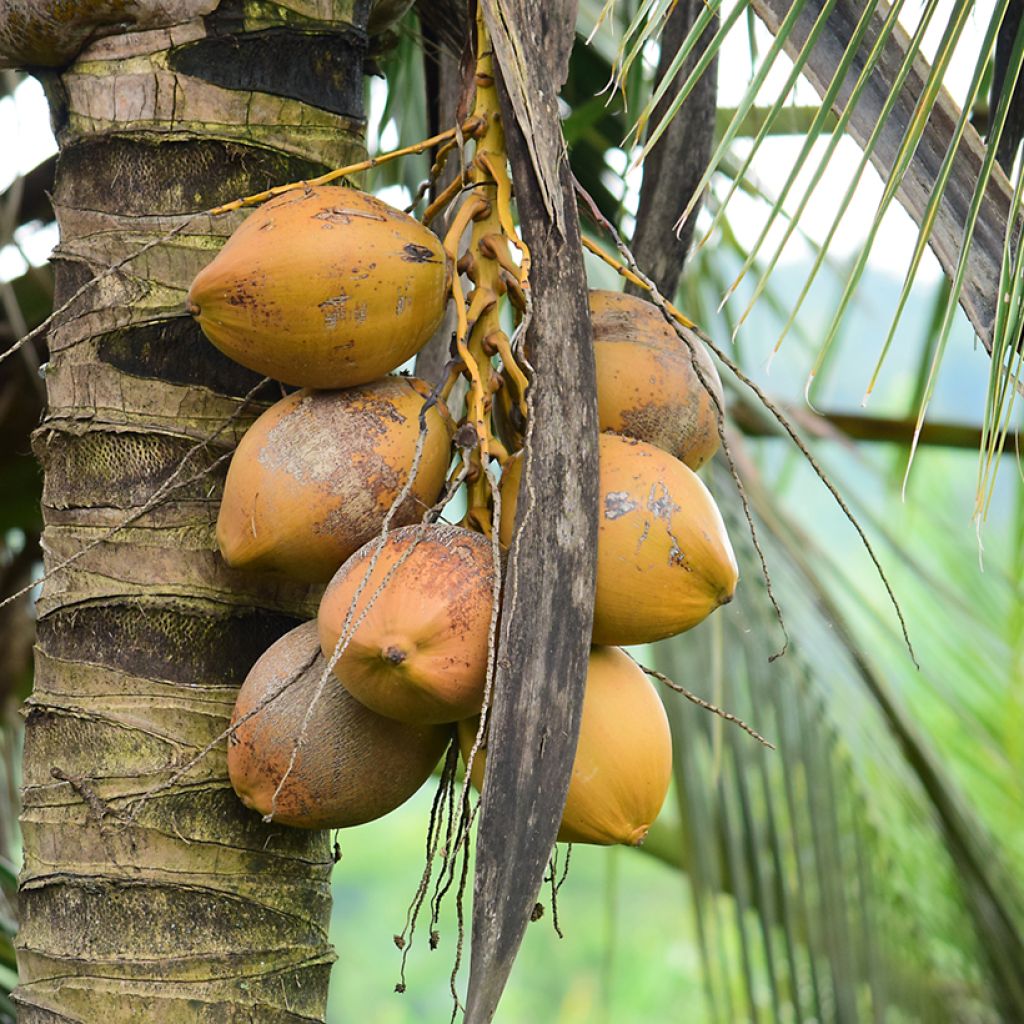
Coconut palm - Cocos nucifera
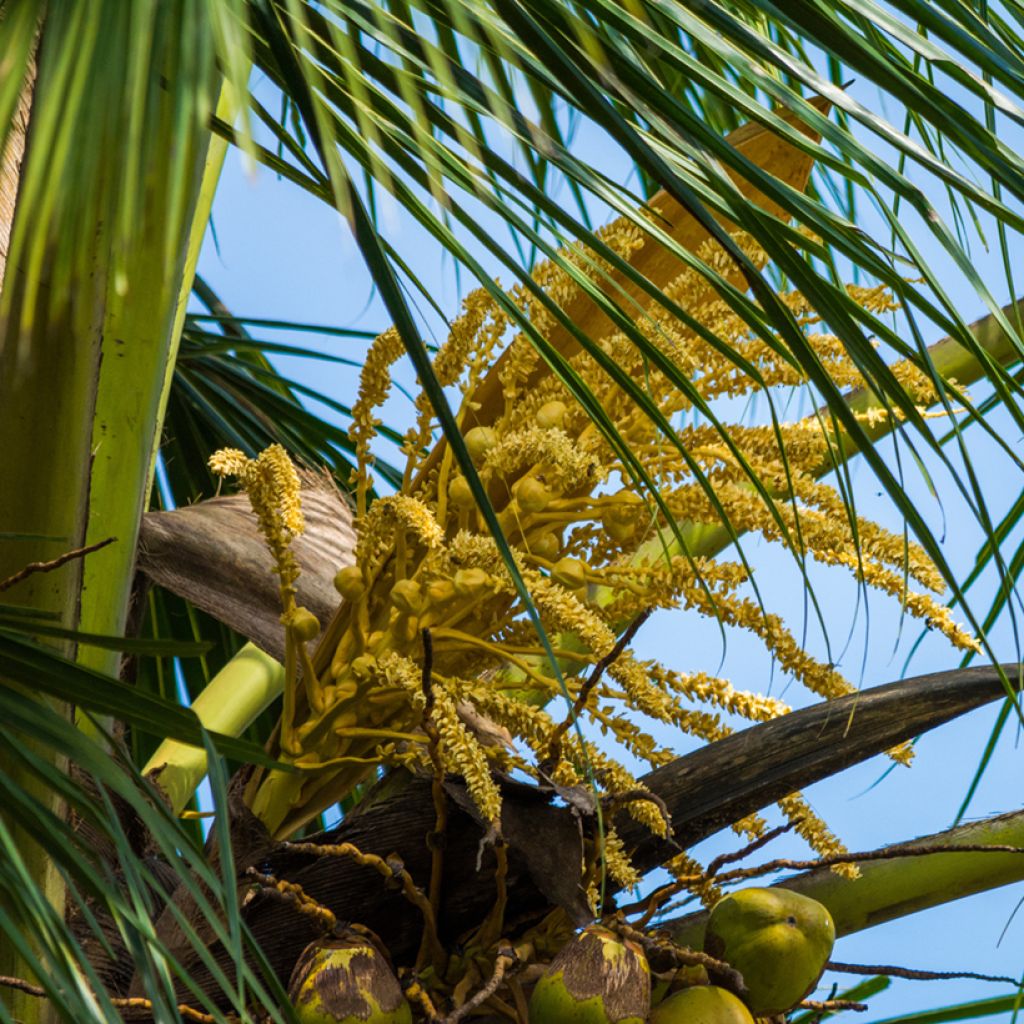
Coconut palm - Cocos nucifera
Coconut palm - Cocos nucifera
Cocos nucifera
Coconut palm
Back-to-school special offer!
Get €10 off for every €50 you spend! And get up to €40 off on a single order.
How does it work?
1. Shop your favourites
Add your favourite plants to your basket. For every €50 you spend (excluding delivery charges, store credit and the plastic-free option), you’ll receive a €10 voucher.
€50 spent = €10 voucher
€100 spent = €20 voucher
€150 spent = €30 voucher
€200 spent = €40 voucher
2. Place your order
Once your basket reaches one of the spending thresholds, place your order. You can even choose your delivery date!
3. Receive your voucher
As soon as your order has been shipped, you’ll receive an email containing your personal voucher code and its value.
4. Use it on your next order
Your voucher is valid for 90 days from the date you receive it. It can be used once only, on a new order worth at least the value of the voucher, excluding delivery charges.
Please note: Vouchers can be combined with other offers, but cannot be split or refunded.
Why not try an alternative variety in stock?
View all →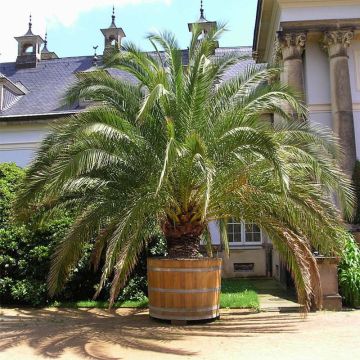
Available in 5 sizes
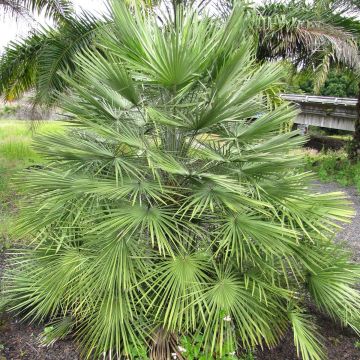
Available in 4 sizes
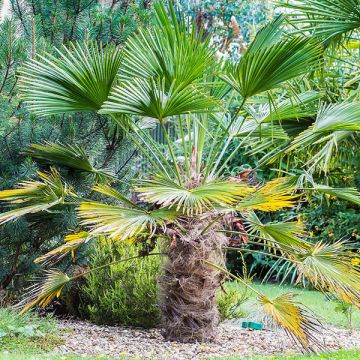
Available in 2 sizes
Available in 1 sizes

Available in 6 sizes
Available in 1 sizes
Available in 1 sizes
Available in 1 sizes
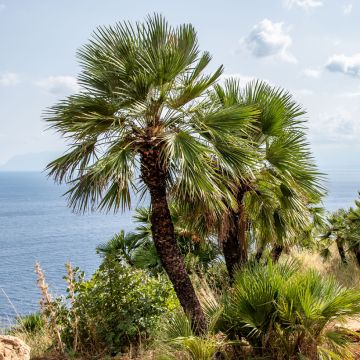
Available in 1 sizes
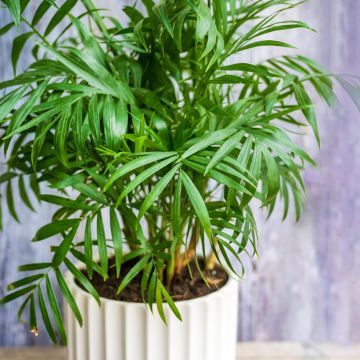
Available in 1 sizes
This plant carries a 30 days recovery warranty
More information
We guarantee the quality of our plants for a full growing cycle, and will replace at our expense any plant that fails to recover under normal climatic and planting conditions.
Description
The Coconut Palm, scientifically known as Cocos nucifera, is an iconic palm tree of tropical beaches that can only be grown in frost-free conditions in our temperate climates. It is a very attractive indoor foliage plant, recognisable by its long, flexible, feathery fronds clustered at the top of a slender trunk. It thrives in bright spaces such as the living room, conservatory, or a slightly heated greenhouse. However, growing it indoors requires special care, making it more suitable for tropical plant enthusiasts than beginners.
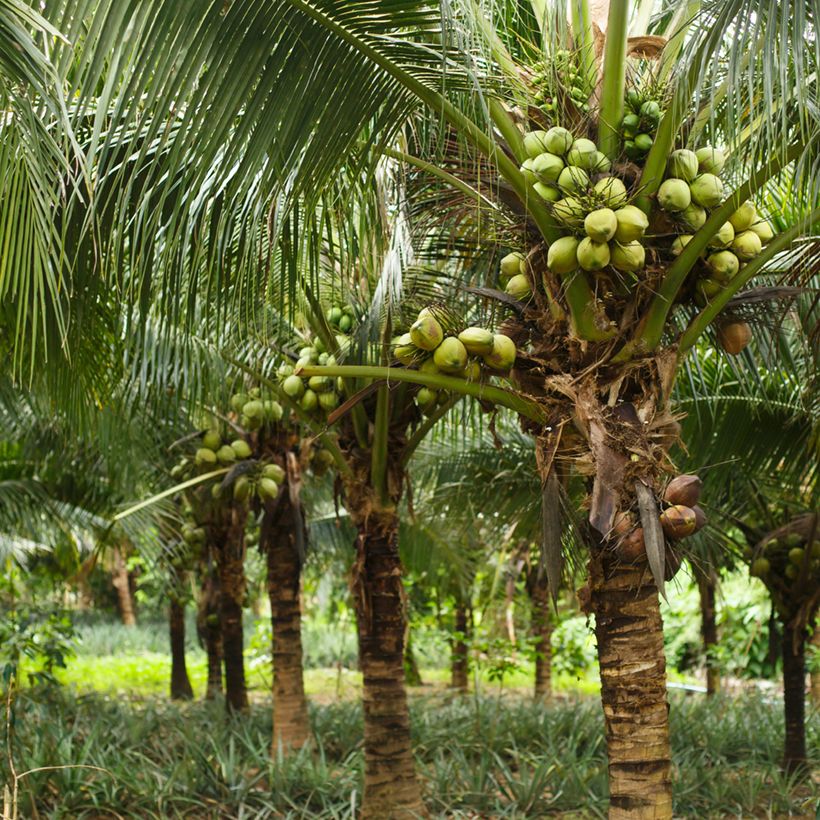
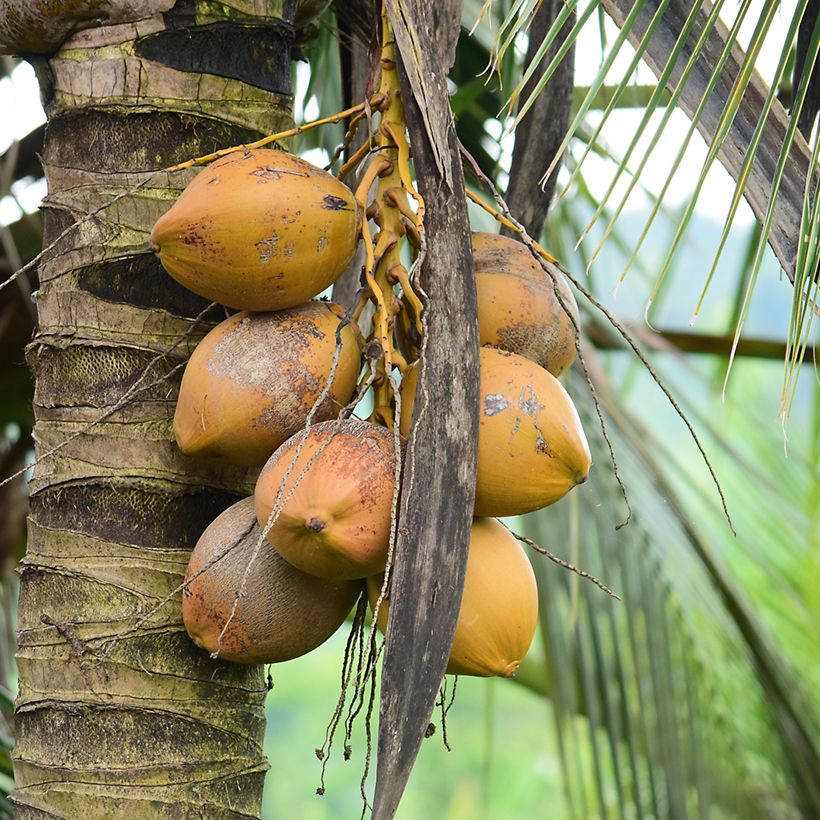
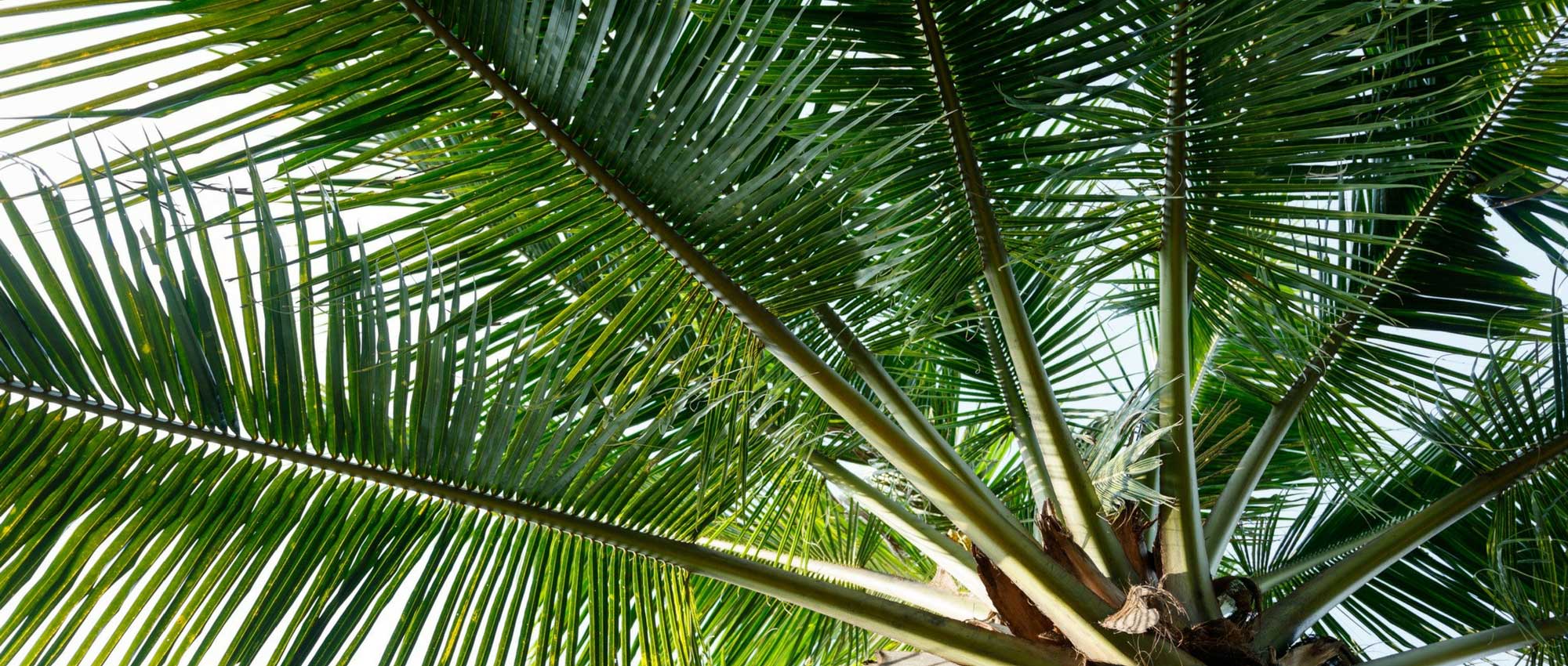
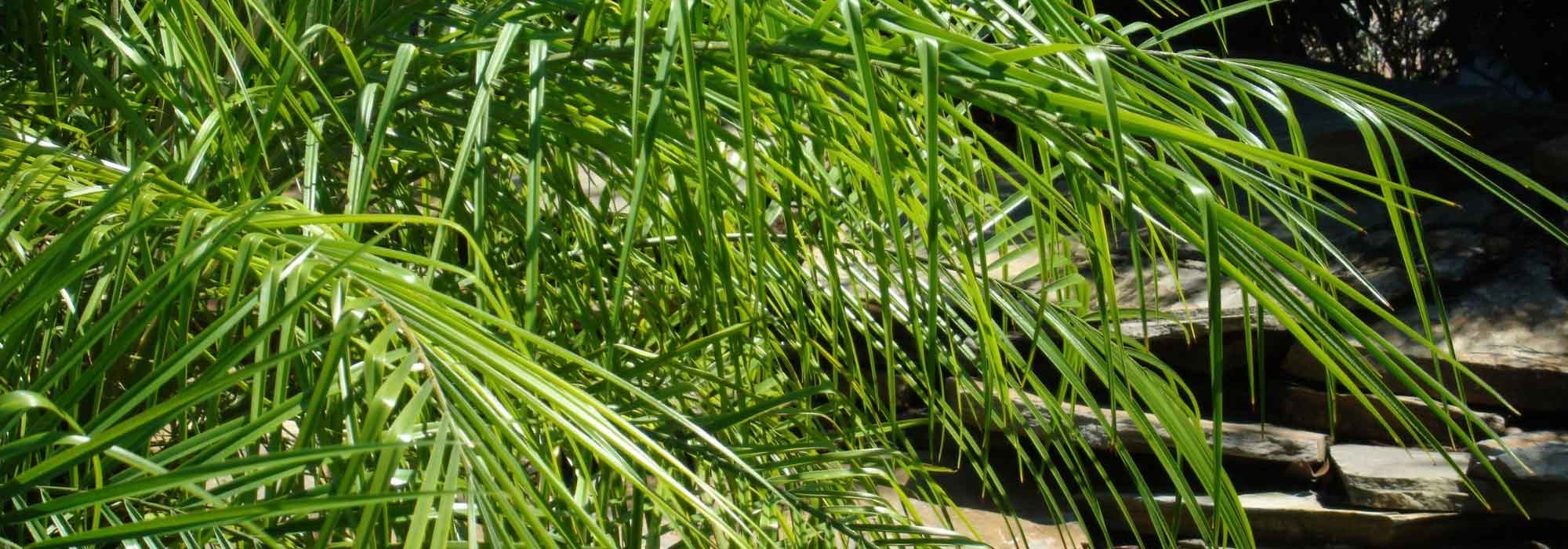
The Coconut Palm (Cocos nucifera) belongs to the Arecaceae family. This palm tree is known for its slender trunk, which can reach up to 30 m in height in its natural habitat. When grown in pots in our climates, it reaches up to 2 m in height and 1.50 m in spread. Its pinnate, arching leaves consist of long, linear-lanceolate, trailing leaflets. They are a glossy green. The Coconut Palm is a perennial plant with moderately slow growth indoors. Flowering, which is rare in indoor cultivation, produces compound inflorescences of small cream-coloured flowers, with both male and female flowers present on the same inflorescence. The species is monoecious. The name "Cocos" derives from the Portuguese word "coco," meaning "head" or "skull," referring to the three markings on the coconut that resemble a human face.
Indoors, the Coconut Palm rarely develops a stipe (trunk) or only minimally. In its natural habitat, Cocos nucifera forms a slender, smooth, ringed stipe, slightly swollen at the base and marked by the scars of fallen leaves. In indoor cultivation, the plant retains its juvenile appearance for a long time, with leaves emerging directly from the base. This is because stipe formation depends on rapid growth and optimal conditions, which are difficult to replicate indoors. Thus, in a pot, the Coconut Palm often remains a bushy palm without a visible trunk for several years, which may surprise those expecting a more "classic" small palm tree.
Native to the tropical coastal regions of Southeast Asia and Oceania, the Coconut Palm has spread to all warm regions of the world, largely due to the ability of its nuts to float over long distances, aiding dispersal by ocean currents. It thrives naturally on sandy beaches, where it benefits from strong sunlight, high humidity, and well-drained soils.
To grow the Coconut Palm indoors, it is essential to provide a very bright location, ideally near a south- or west-facing window, while avoiding direct sunlight through glass to prevent foliar burns. The ambient temperature should be maintained between 18 and 28°C, and air humidity should be high. Regularly misting the foliage with non-calcareous water is recommended to counteract dry indoor heating. Moderate watering is necessary, allowing the substrate to dry slightly between waterings to avoid excess moisture, which could lead to root rot. Adding a balanced liquid fertiliser every two to three weeks during active growth will promote optimal development.
The Coconut Palm makes a striking addition to a spacious living room, conservatory, or greenhouse. To showcase it, choose a large terracotta or natural fibre pot in a bohemian, contemporary, or minimalist style. Pair it with wicker baskets, natural materials like linen or raffia, and other tropical plants such as Monstera deliciosa 'Thai Constellation', an Areca Palm, or a Ficus benjamina. Be mindful that it requires high humidity, so avoid overly dry rooms like a heated bedroom in winter.
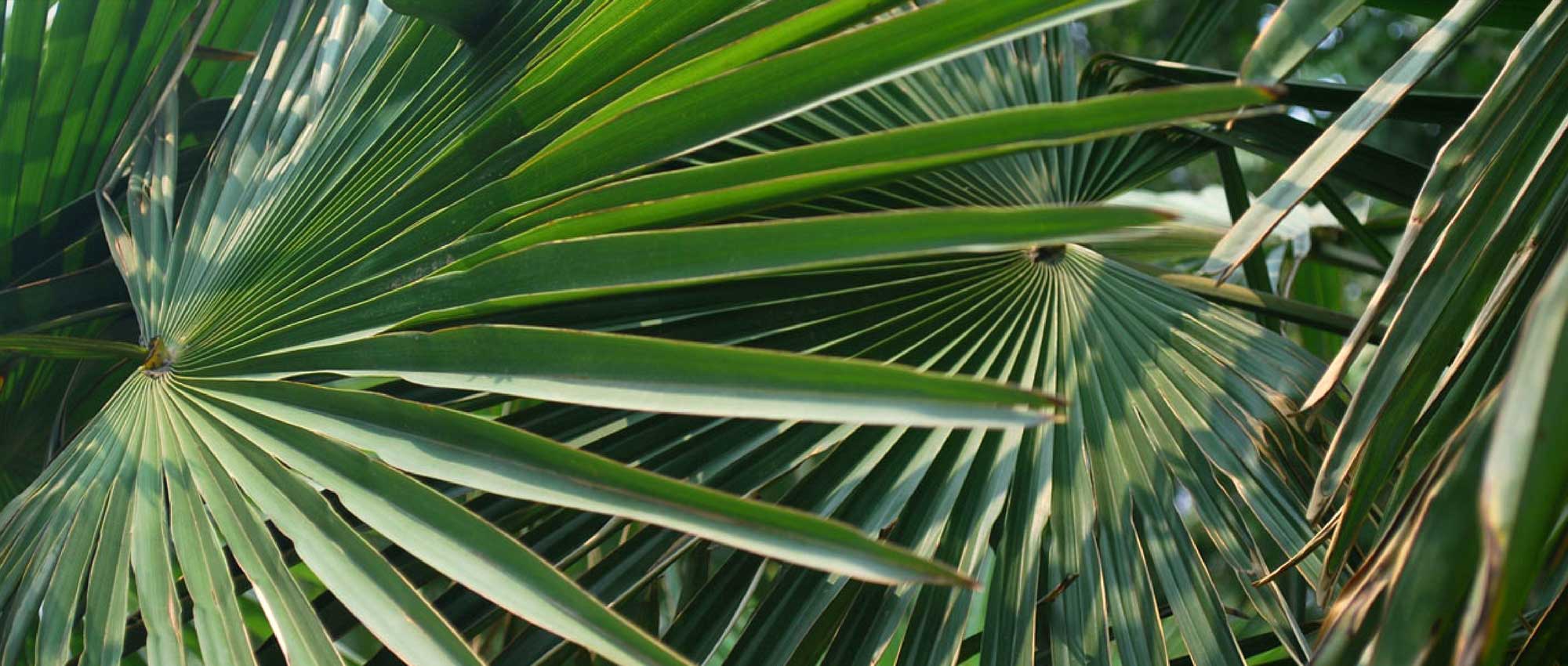
Coconut palm - Cocos nucifera in pictures
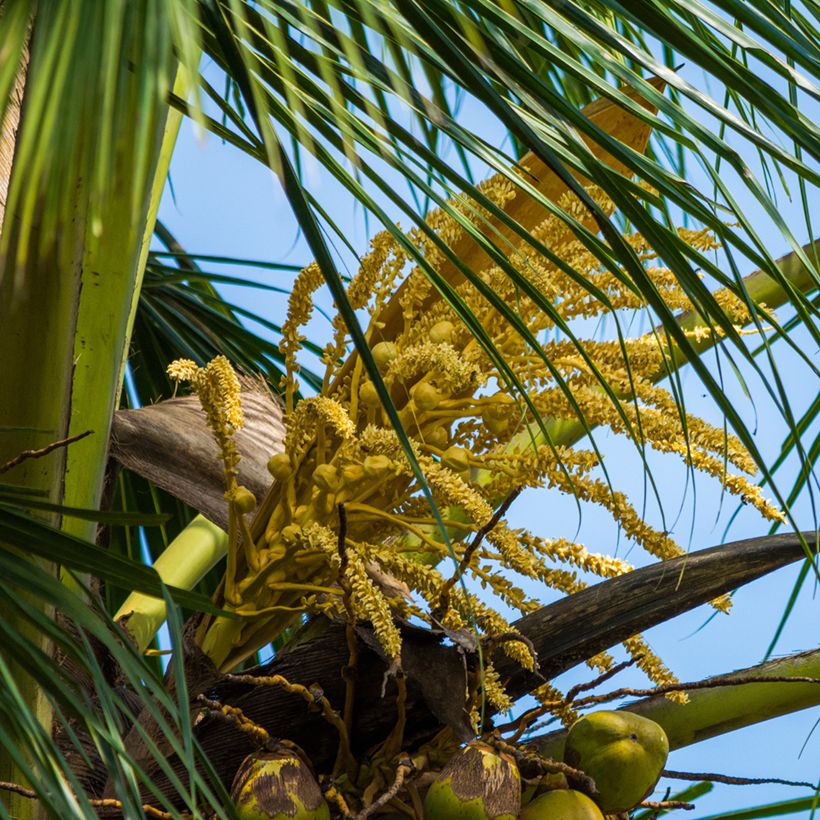
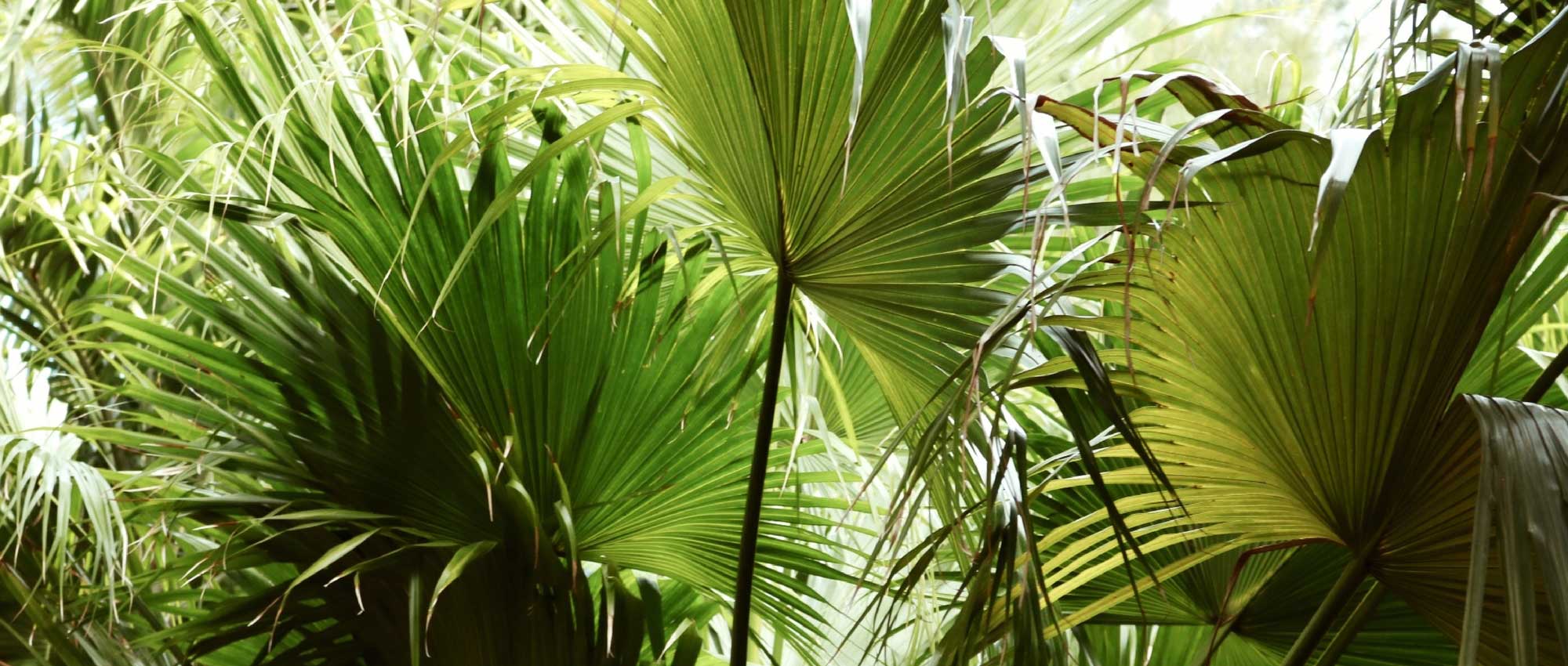
Foliage
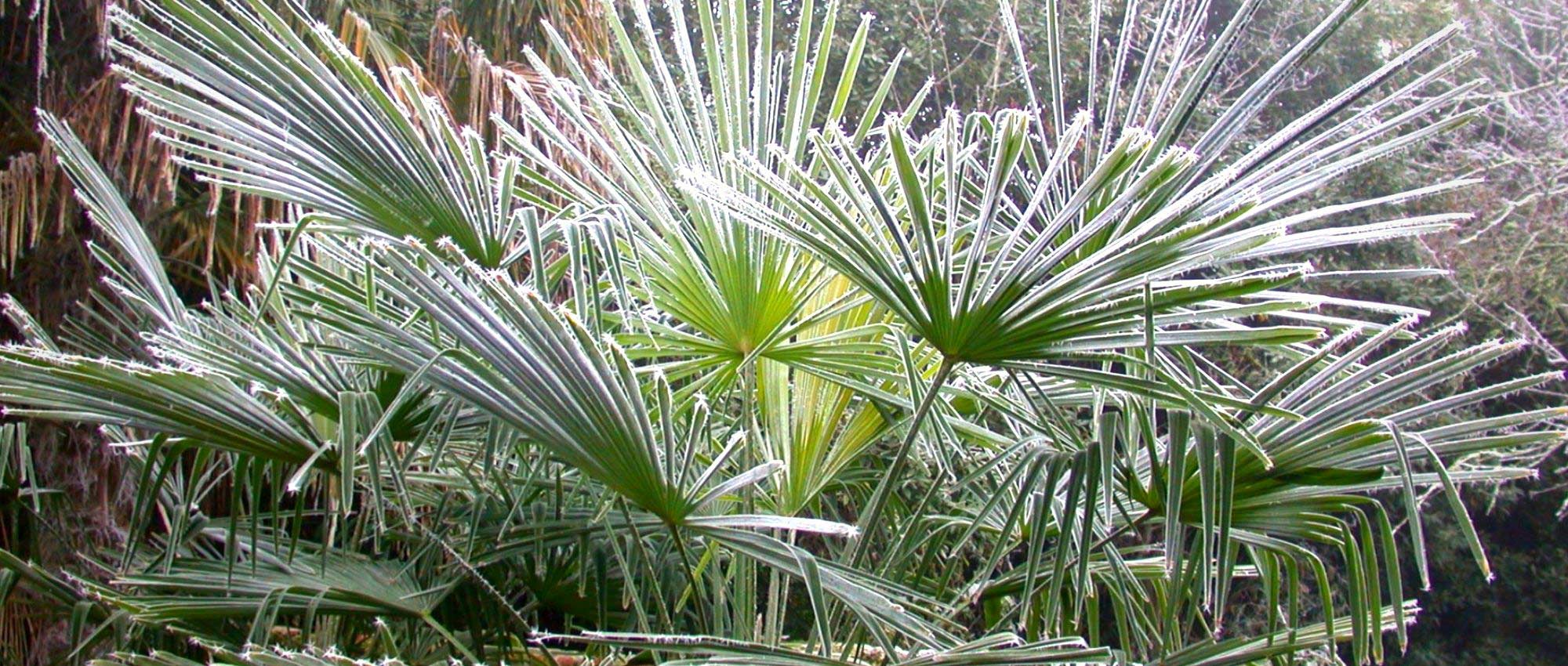
Plant habit
Botanical data
Cocos
nucifera
Arecaceae
Coconut palm
India, Southeast Asia
Location
Location
Maintenance & care
Watering tips
Potting advice, substrates and fertilisers
Houseplant care
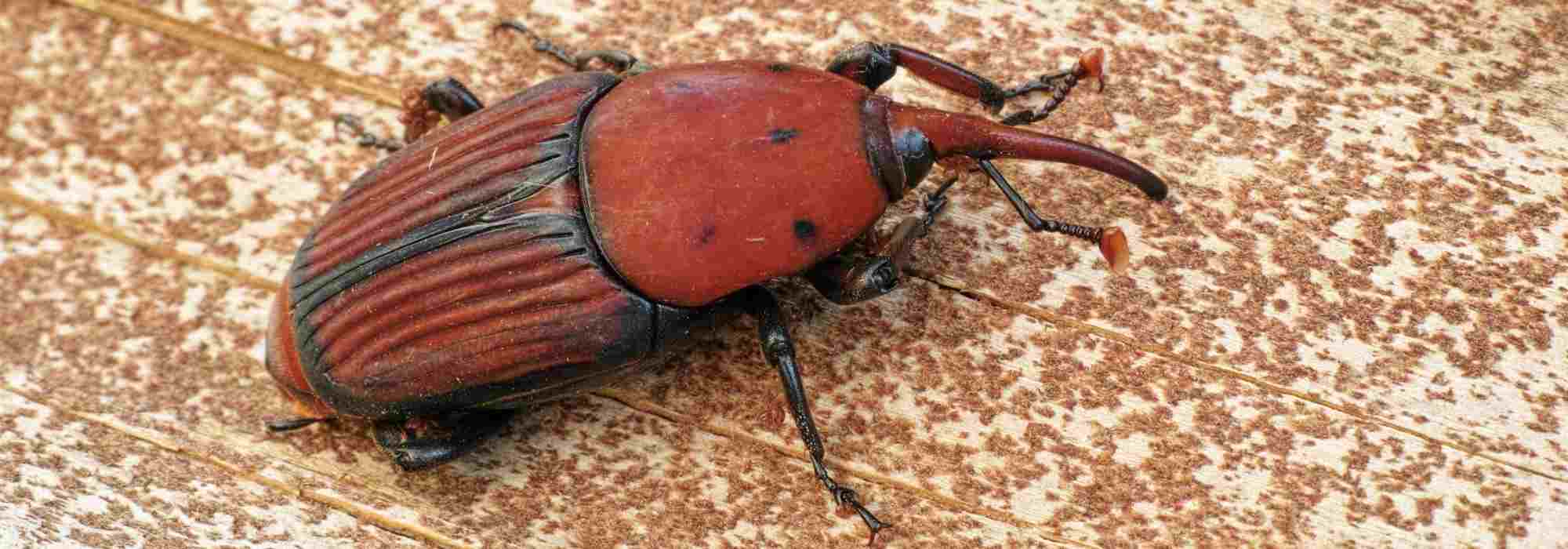
Disease and pest advice
Maintenance & care
Planting & care advice
-
-
-
-
-

-
-

-
This item has not been reviewed yet - be the first to leave a review about it.
Recently viewed products
Haven't found what you were looking for?
Hardiness is the lowest winter temperature a plant can endure without suffering serious damage or even dying. However, hardiness is affected by location (a sheltered area, such as a patio), protection (winter cover) and soil type (hardiness is improved by well-drained soil).

The flowering period indicated on our website applies to countries and regions located in USDA zone 8 (France, the United Kingdom, Ireland, the Netherlands, etc.)
It will vary according to where you live:- In zones 9 to 10 (Italy, Spain, Greece, etc.), flowering will occur about 2 to 4 weeks earlier.
- In zones 6 to 7 (Germany, Poland, Slovenia, and lower mountainous regions), flowering will be delayed by 2 to 3 weeks.
- In zone 5 (Central Europe, Scandinavia), blooming will be delayed by 3 to 5 weeks.
In temperate climates, pruning of spring-flowering shrubs (forsythia, spireas, etc.) should be done just after flowering.
Pruning of summer-flowering shrubs (Indian Lilac, Perovskia, etc.) can be done in winter or spring.
In cold regions as well as with frost-sensitive plants, avoid pruning too early when severe frosts may still occur.
The planting period indicated on our website applies to countries and regions located in USDA zone 8 (France, United Kingdom, Ireland, Netherlands).
It will vary according to where you live:
- In Mediterranean zones (Marseille, Madrid, Milan, etc.), autumn and winter are the best planting periods.
- In continental zones (Strasbourg, Munich, Vienna, etc.), delay planting by 2 to 3 weeks in spring and bring it forward by 2 to 4 weeks in autumn.
- In mountainous regions (the Alps, Pyrenees, Carpathians, etc.), it is best to plant in late spring (May-June) or late summer (August-September).
The harvesting period indicated on our website applies to countries and regions in USDA zone 8 (France, England, Ireland, the Netherlands).
In colder areas (Scandinavia, Poland, Austria...) fruit and vegetable harvests are likely to be delayed by 3-4 weeks.
In warmer areas (Italy, Spain, Greece, etc.), harvesting will probably take place earlier, depending on weather conditions.
The sowing periods indicated on our website apply to countries and regions within USDA Zone 8 (France, UK, Ireland, Netherlands).
In colder areas (Scandinavia, Poland, Austria...), delay any outdoor sowing by 3-4 weeks, or sow under glass.
In warmer climes (Italy, Spain, Greece, etc.), bring outdoor sowing forward by a few weeks.
Shipping country and language
Your country of residence may be:
Your country of residence is:
For a better user experience on our website, you can select:
Your shipping country:
-
 Austria
-
 Belgium
-
 Bosnia & Herzegovina
-
 Bulgaria
-
 Croatia
-
 Cyprus
-
 Czechia
-
 Denmark
-
 Estonia
-
 Finland
-
 France
-
 Germany
-
 Greece
-
 Hungary
-
 Iceland
-
 Ireland
-
 Italy
Italy
-
 Latvia
-
 Liechtenstein
-
 Lithuania
-
 Luxembourg
-
 Malta
Malta
-
 Netherlands
-
 Poland
-
 Portugal
-
 Romania
-
 Serbia
-
 Slovakia
-
 Slovenia
-
 Spain
Spain
-
 Sweden
-
 Switzerland
Language:
-
French
-
 English
-
Spanish
-
Italian
-
German
-
Portuguese
-
Dutch
-
Finnish
My Account
Hello
My wish lists
My cart
Log in / Register
Existing customer?
This form is protected by reCAPTCHA - the Google Privacy Policy and Terms of Service apply.
New customer?
Create an account to track your orders, access our customer service and, if you wish, make the most of our upcoming offers.