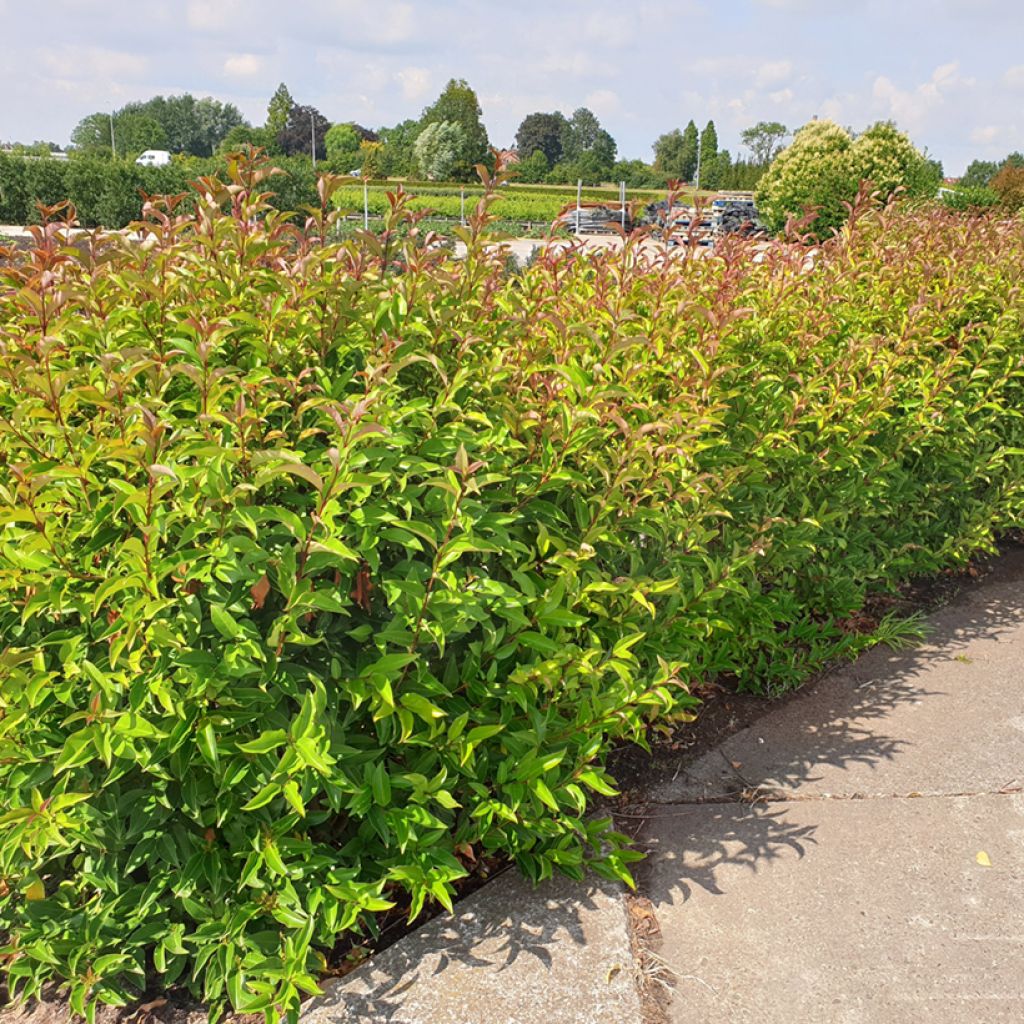
Ligustrum lucidum Bokrascreen
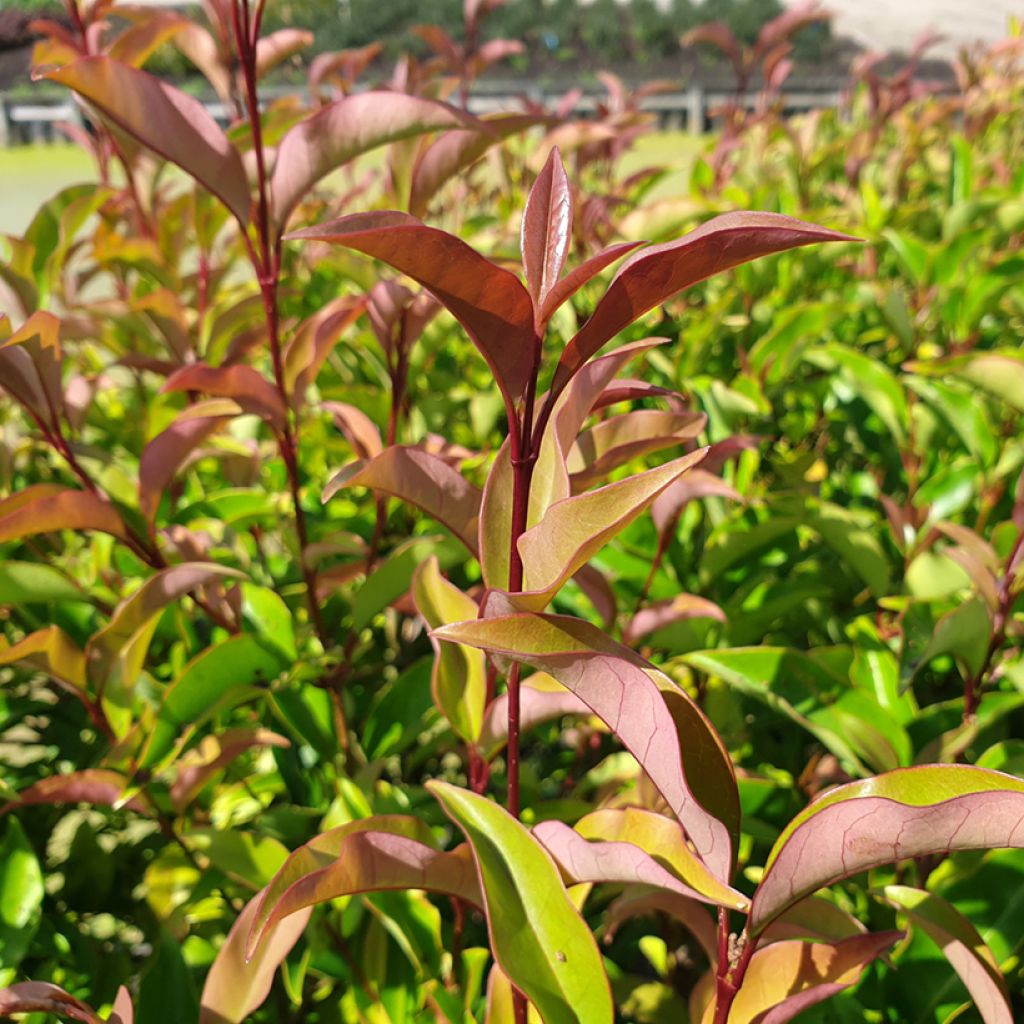
Ligustrum lucidum Bokrascreen
Ligustrum lucidum Bokrascreen
Ligustrum lucidum Green Screen 'Bokrascreen' PBR EU 44346
Glossy Privet, Chinese Privet, Broad-leaf Privet, Tree Privet, Wax-leaf Privet, White Wax Tree
Back-to-school special offer!
Get €10 off for every €50 you spend! And get up to €40 off on a single order.
How does it work?
1. Shop your favourites
Add your favourite plants to your basket. For every €50 you spend (excluding delivery charges, store credit and the plastic-free option), you’ll receive a €10 voucher.
€50 spent = €10 voucher
€100 spent = €20 voucher
€150 spent = €30 voucher
€200 spent = €40 voucher
2. Place your order
Once your basket reaches one of the spending thresholds, place your order. You can even choose your delivery date!
3. Receive your voucher
As soon as your order has been shipped, you’ll receive an email containing your personal voucher code and its value.
4. Use it on your next order
Your voucher is valid for 90 days from the date you receive it. It can be used once only, on a new order worth at least the value of the voucher, excluding delivery charges.
Please note: Vouchers can be combined with other offers, but cannot be split or refunded.
Home or relay delivery (depending on size and destination)
Important: You may be charged customs duties by your country’s customs authorities upon delivery.
Schedule delivery date
and select date in basket
This plant carries a 24 months recovery warranty
More information
We guarantee the quality of our plants for a full growing cycle, and will replace at our expense any plant that fails to recover under normal climatic and planting conditions.
Would this plant suit my garden?
Set up your Plantfit profile →
Description
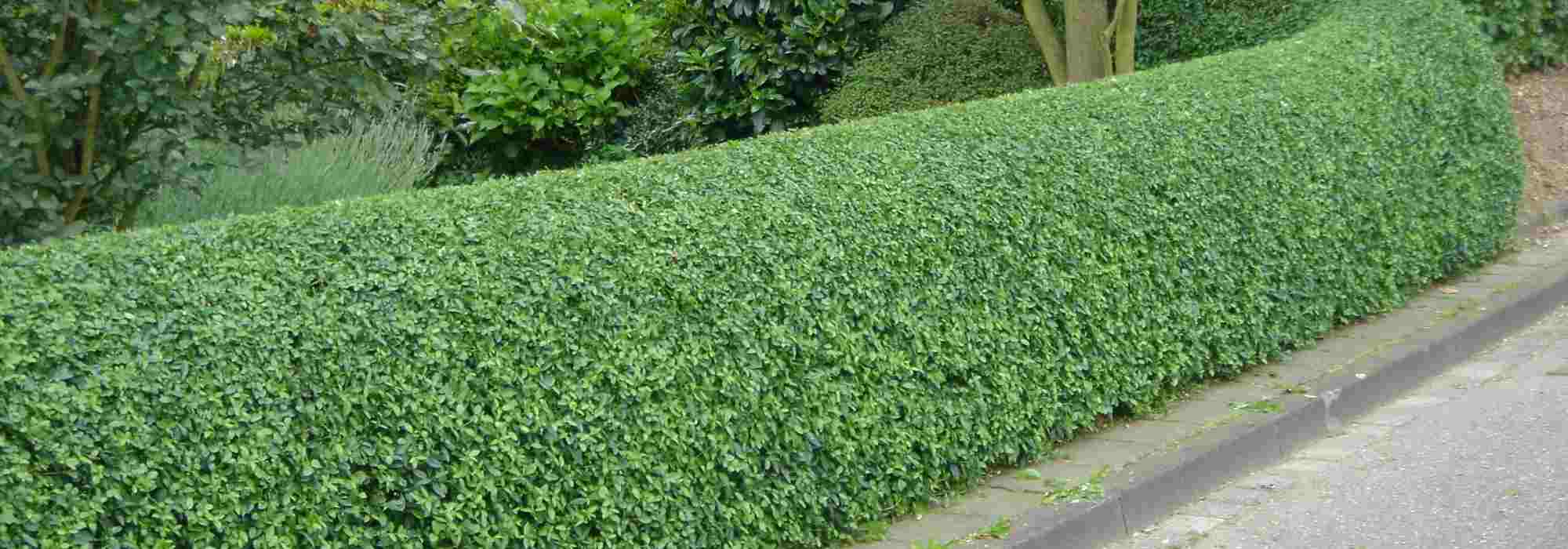
Ligustrum lucidum Bokrascreen or Green Screen is a variety of Chinese Privet or Glossy Privet, that is interesting for its compactness and ornamental appeal. Its medium size makes it easy to use as a hedge, requiring only annual pruning. In spring, it produces highly decorative orange leaves, which then turn bright green. Its evergreen foliage is ornamental all year round and particularly highlights its white and fragrant summer flowers. Small decorative black-blue berries follow until winter. It is easy to grow in most well-drained soils, thrives in full sun or partial shade, and its moderate hardiness makes it suitable for regions without harsh winters.
The Privet (Ligustrum) is one of the 26 genera in the Olive family (Oleaceae), which, alongside the Olive tree, includes many ornamental plants often with a fragrance, such as Jasmines, Lilacs, and Osmanthus. Mainly native to China, but also found in Japan and Korea, Ligustrum lucidum forms a small, upright tree that reaches a height of 5 to 10 m. Its foliage is evergreen, carried by smooth branches with brown lenticels. The oval leaves are 7 to 14 cm long, and two to three times less in width, and are a shiny dark green. The white flowers are borne in upright clusters, 12 to 20 cm long, and then develop into oblong, bluish-black fruits about a centimetre long.
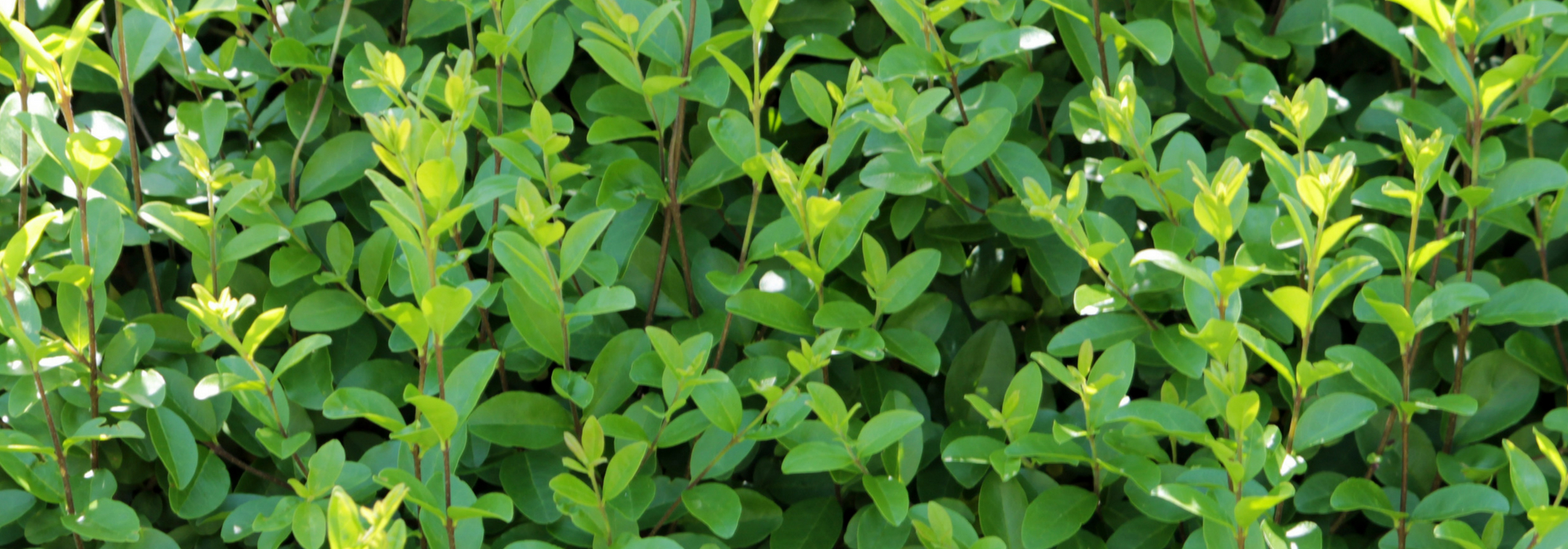
Bokrascreen or Green Screen is a horticultural variety that won a silver medal at the Dutch professional exhibition GrootGroenPlus in 2023 due to its many qualities. It is of medium size, better suited to small urban gardens than the botanical species. This Privet reaches a height of 2 m and a width of 1.30 m in 5 years, and at maturity, after ten years, approximately 3 m in height and 1.50 m in spread, without pruning. It tolerates hedge trimming very well, making it easy to shape into a hedge and maintain at a height of 2 m as required. In spring, the young shoots are particularly attractive with their orange hue, which gradually turns bronze before becoming green. The mahogany-red young branches are also very ornamental. The foliage takes on a bright green colour, lighter than the species, with a characteristic glossy appearance. The oval leaves, with pointed tips, are folded in a V shape along the midrib and gracefully arching. They are opposite-decussate, meaning they are face to face on the branch to which a short petiole attaches them, and are offset by 90° at each level. They are evergreen, therefore decorative throughout the year and provide a backdrop for the flowers from June onwards. The panicles of small cream-white flowers are clearly visible against the darker foliage and bloom until August. They are pleasantly fragrant and attract pollinating insects, and later attract birds when they produce small blue-black fruits in autumn (provided the plant is not pruned during this period). These are decorative and persist until winter if spared by birds, but are toxic to humans. This moderately hardy Chinese Privet, once established, can withstand short frosts of around -15°C in well-drained soil. It adapts to a wide range of soils, neutral, acidic, or alkaline, and once well-established, tolerates summer drought relatively well.
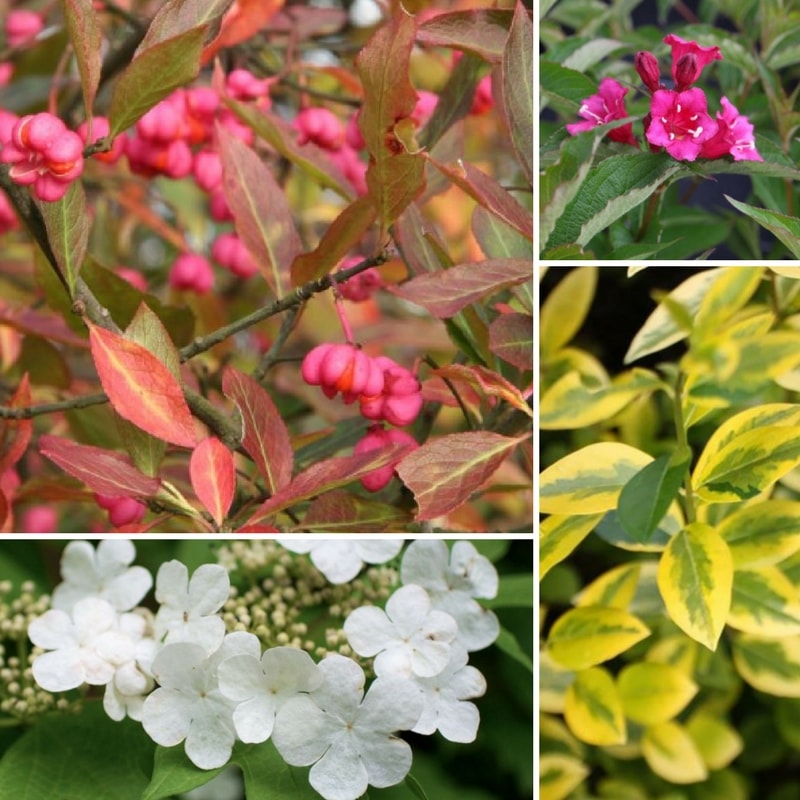
The Green Screen Privet brings a refreshing look and offers new uses as its compactness allows it to be planted in a large container where it can be protected in regions with harsh winters. Plant it in mixed borders or in a multi-species hedge, mixing it with other ornamental species. The effect achieved will be much more beautiful than a monospecific hedge and will be a real asset in a small garden where space is limited. You can then combine it with Elaeagnus (or Oleasters), which, depending on the variety, offer dark green, grey, or variegated leaves with yellow or even white, as well as a late, discreet, but pleasantly fragrant flowering. Euonymus japonicus 'Président Gautier' is a Spindle tree that also offers beautiful white variegation on bright green foliage. Of course, Photinia fraseri 'Red Robin' remains a must-have for this type of hedge, just avoid planting it right next to your Privet so that it doesn't detract attention with its intense red spring shoots.
Plant habit
Flowering
Foliage
Safety measures
Botanical data
Ligustrum
lucidum
Green Screen 'Bokrascreen' PBR EU 44346
Oleaceae
Glossy Privet, Chinese Privet, Broad-leaf Privet, Tree Privet, Wax-leaf Privet, White Wax Tree
Cultivar or hybrid
ingestion
Cette plante est toxique si elle est ingérée volontairement ou involontairement.
Ne la plantez pas là où de jeunes enfants peuvent évoluer, et lavez-vous les mains après l'avoir manipulée.
Pensez à conserver l'étiquette de la plante, à la photographier ou à noter son nom, afin de faciliter le travail des professionnels de santé.
Davantage d'informations sur https://plantes-risque.info
Planting and care
Ligustrum lucidum Bokrascreen is best planted in spring in cold regions or in autumn in mild climates, with 1 m spacing to create a hedge, or within a mixed border. Choose a sunny to semi-shaded exposure, or even shaded in hot and dry climates. Dig a hole two and a half times the size of the pot, loosen the bottom and mix planting compost with the existing soil. You can also add a bit of slow-release fertiliser or organic fertiliser. The roots of this privet can rot in winter in overly wet and poorly drained soil. Water well, especially during the first summers, mulch the soil to retain moisture and prune the branches by half to stimulate the growth of new shoots. Once established, this bush does not require watering in summer if it is planted in sufficiently deep soil that retains some moisture. The hardiness of a mature specimen is around -15°C for a short period, in well-drained soil, as stagnant water exacerbates the effects of frost.
Pruning is not essential in an informal hedge, as it will compromise flowering or fruiting if done at the wrong time. In a trimmed hedge, on the other hand, shorten the new shoots by half each year to encourage branching and the emergence of colourful young shoots in spring. Prune after flowering so that the new shoots hide the unsightly leaves cut in half by the hedge trimmer. Privets are fairly resistant to pests and diseases. However, they can be affected by weevil larvae or caterpillars.
Planting period
Intended location
Care
Planting & care advice
-
-
-

-
-
-

-
-
This item has not been reviewed yet - be the first to leave a review about it.
Recently viewed products
Haven't found what you were looking for?
Hardiness is the lowest winter temperature a plant can endure without suffering serious damage or even dying. However, hardiness is affected by location (a sheltered area, such as a patio), protection (winter cover) and soil type (hardiness is improved by well-drained soil).

The flowering period indicated on our website applies to countries and regions located in USDA zone 8 (France, the United Kingdom, Ireland, the Netherlands, etc.)
It will vary according to where you live:- In zones 9 to 10 (Italy, Spain, Greece, etc.), flowering will occur about 2 to 4 weeks earlier.
- In zones 6 to 7 (Germany, Poland, Slovenia, and lower mountainous regions), flowering will be delayed by 2 to 3 weeks.
- In zone 5 (Central Europe, Scandinavia), blooming will be delayed by 3 to 5 weeks.
In temperate climates, pruning of spring-flowering shrubs (forsythia, spireas, etc.) should be done just after flowering.
Pruning of summer-flowering shrubs (Indian Lilac, Perovskia, etc.) can be done in winter or spring.
In cold regions as well as with frost-sensitive plants, avoid pruning too early when severe frosts may still occur.
The planting period indicated on our website applies to countries and regions located in USDA zone 8 (France, United Kingdom, Ireland, Netherlands).
It will vary according to where you live:
- In Mediterranean zones (Marseille, Madrid, Milan, etc.), autumn and winter are the best planting periods.
- In continental zones (Strasbourg, Munich, Vienna, etc.), delay planting by 2 to 3 weeks in spring and bring it forward by 2 to 4 weeks in autumn.
- In mountainous regions (the Alps, Pyrenees, Carpathians, etc.), it is best to plant in late spring (May-June) or late summer (August-September).
The harvesting period indicated on our website applies to countries and regions in USDA zone 8 (France, England, Ireland, the Netherlands).
In colder areas (Scandinavia, Poland, Austria...) fruit and vegetable harvests are likely to be delayed by 3-4 weeks.
In warmer areas (Italy, Spain, Greece, etc.), harvesting will probably take place earlier, depending on weather conditions.
The sowing periods indicated on our website apply to countries and regions within USDA Zone 8 (France, UK, Ireland, Netherlands).
In colder areas (Scandinavia, Poland, Austria...), delay any outdoor sowing by 3-4 weeks, or sow under glass.
In warmer climes (Italy, Spain, Greece, etc.), bring outdoor sowing forward by a few weeks.
Shipping country and language
Your country of residence may be:
Your country of residence is:
For a better user experience on our website, you can select:
Your shipping country:
-
 Austria
-
 Belgium
-
 Bosnia & Herzegovina
-
 Bulgaria
-
 Croatia
-
 Cyprus
-
 Czechia
-
 Denmark
-
 Estonia
-
 Finland
-
 France
-
 Germany
-
 Greece
-
 Hungary
-
 Iceland
-
 Ireland
-
 Italy
Italy
-
 Latvia
-
 Liechtenstein
-
 Lithuania
-
 Luxembourg
-
 Malta
Malta
-
 Netherlands
-
 Poland
-
 Portugal
-
 Romania
-
 Serbia
-
 Slovakia
-
 Slovenia
-
 Spain
Spain
-
 Sweden
-
 Switzerland
Language:
-
French
-
 English
-
Spanish
-
Italian
-
German
-
Portuguese
-
Dutch
-
Finnish
My Account
Hello
My wish lists
My cart
Log in / Register
Existing customer?
This form is protected by reCAPTCHA - the Google Privacy Policy and Terms of Service apply.
New customer?
Create an account to track your orders, access our customer service and, if you wish, make the most of our upcoming offers.