Cercis canadensis Carolina Sweetheart - Eastern Redbud
Cercis canadensis Carolina Sweetheart - Eastern Redbud
Cercis canadensis Carolina Sweetheart - Eastern Redbud
Cercis canadensis Carolina Sweetheart - Eastern Redbud
Cercis canadensis Carolina Sweetheart
Eastern Redbud, Canadian Redbud, American Redbud, Judas Tree
The tree arrived in a deplorable state, small and in poor general condition, despite careful packaging, which is very regrettable given its price. Over the last four months, I have ordered dozens of plants from you, including a wide variety of trees and bushes, and all were beautiful and healthy. That is why I am very surprised by the quality of this one. I greatly fear that my Cercis Carolina Sweetheart has not survived, as after several cuts, I can see that the wood is dead. It also has no buds, which is also a bad sign (I have several young Cercis in my garden, and they all have buds at the moment). This is a great disappointment, as I have wanted to acquire this specimen for a long time. I first discovered it at the International Garden Festival in Chaumont-sur-Loire, and I must say it is a magnificent tree. Yours sincerely,
Irina, 20/02/2026
Back-to-school special offer!
Get €10 off for every €50 you spend! And get up to €40 off on a single order.
How does it work?
1. Shop your favourites
Add your favourite plants to your basket. For every €50 you spend (excluding delivery charges, store credit and the plastic-free option), you’ll receive a €10 voucher.
€50 spent = €10 voucher
€100 spent = €20 voucher
€150 spent = €30 voucher
€200 spent = €40 voucher
2. Place your order
Once your basket reaches one of the spending thresholds, place your order. You can even choose your delivery date!
3. Receive your voucher
As soon as your order has been shipped, you’ll receive an email containing your personal voucher code and its value.
4. Use it on your next order
Your voucher is valid for 90 days from the date you receive it. It can be used once only, on a new order worth at least the value of the voucher, excluding delivery charges.
Please note: Vouchers can be combined with other offers, but cannot be split or refunded.
Home or relay delivery (depending on size and destination)
Important: You may be charged customs duties by your country’s customs authorities upon delivery.
Schedule delivery date,
and select date in basket
This plant carries a 24 months recovery warranty
More information
We guarantee the quality of our plants for a full growing cycle, and will replace at our expense any plant that fails to recover under normal climatic and planting conditions.
Would this plant suit my garden?
Set up your Plantfit profile →
Description
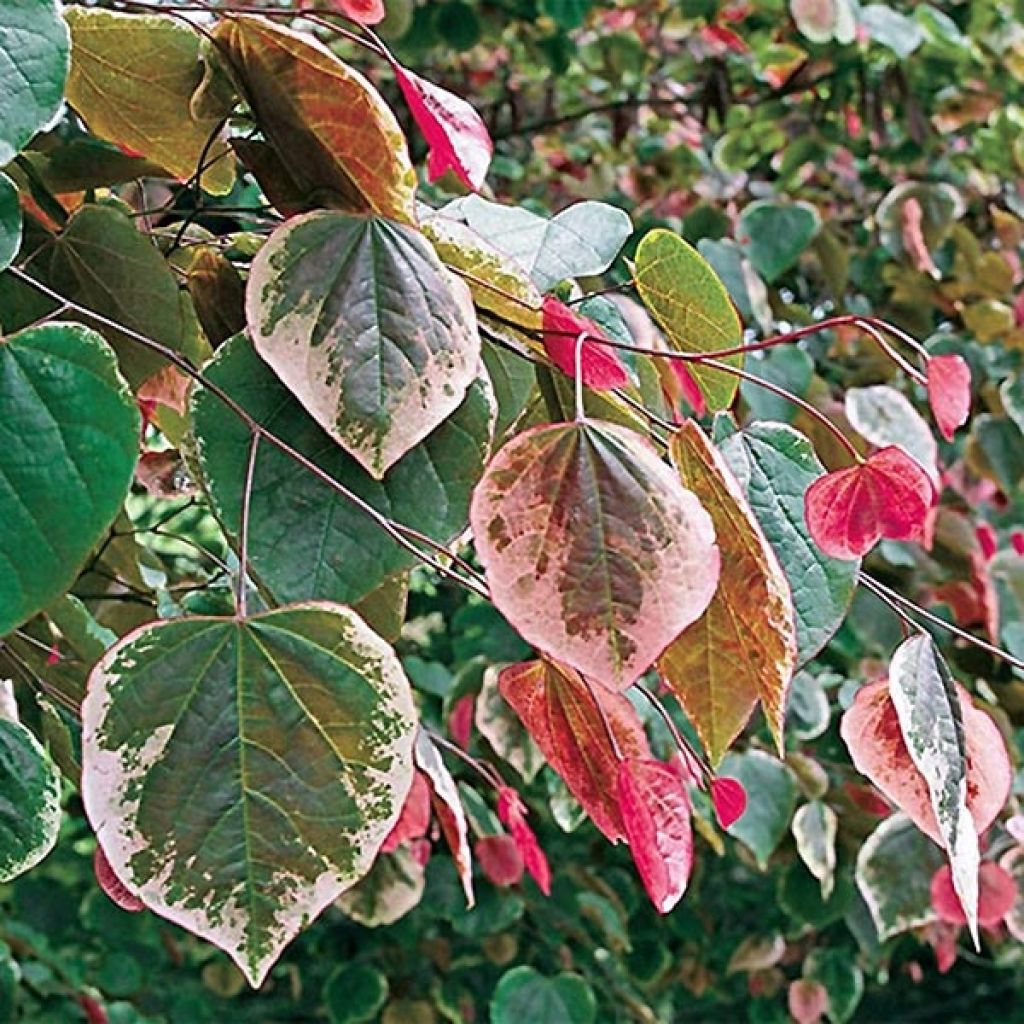
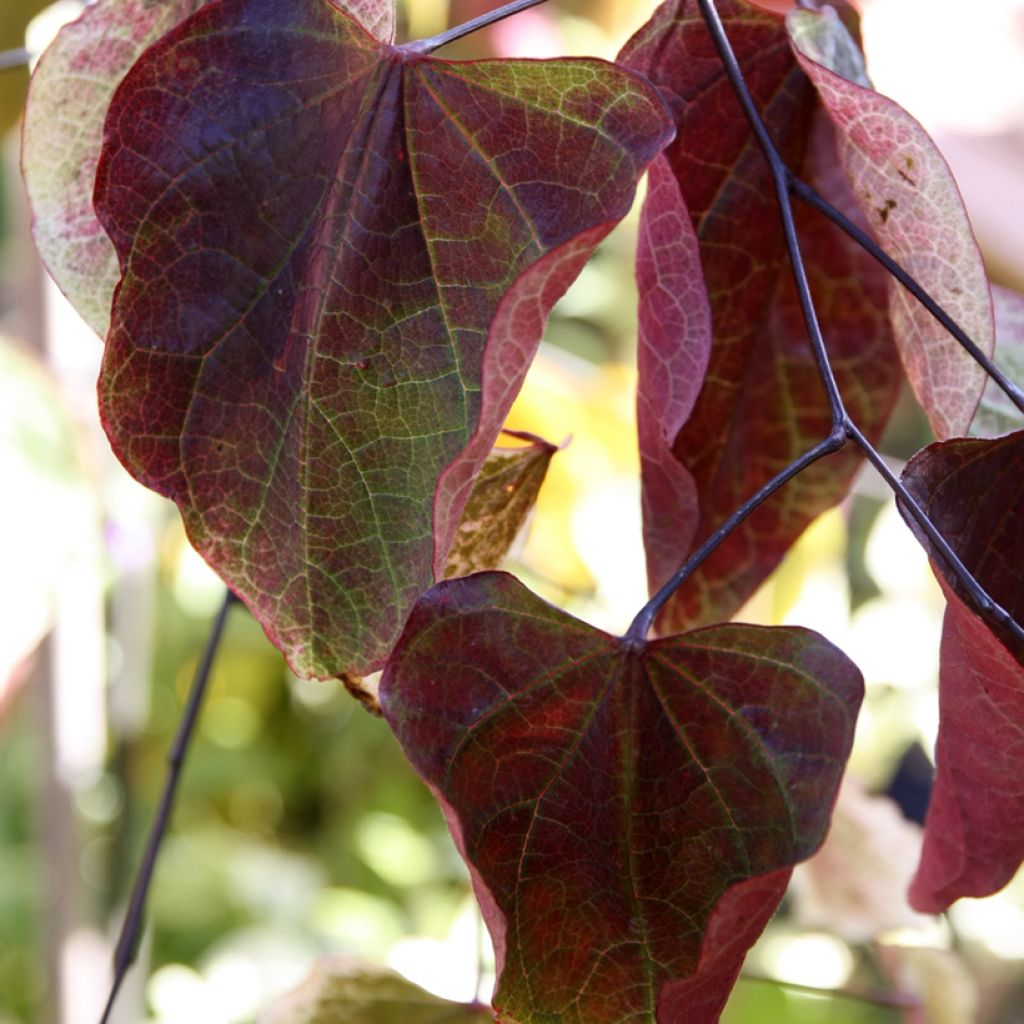
Cercis canadensis' 'Carolina Sweetheart' is undoubtedly the most colourful form of the Canadian Redbud currently observed. This variety selected in the United States is distinguished by its unique foliage, ranging from pink-red during bud burst to a stunning variegation with shades of green, white-cream, pale yellow, and violet-pink, making this small tree with a slightly weeping habit a truly fantastic plant creature. The spectacle of its metamorphosis begins very early in spring when numerous bright pink pea-like flowers bloom directly on its bare bark. Towards the end of the season, its beautiful heart-shaped leaves take on shades of gold and copper. With rather slow growth and moderate development, this variety is suitable for small gardens. It can also be grown in containers on the terrace for several years.
The Cercis canadensis is a deciduous tree native to the eastern and central United States, belonging to the large family of Legumes, now renamed Fabaceae or Papilionaceae. Very frost-resistant, it is also a water-efficient plant that tolerates limestone but not excessively clay and compacted, poorly drained soils. This Cercis can reach 12m (39 ft 5 in) in height in its natural habitat, but rarely exceeds 4 to 7m (13 ft 1 in to 23 ft) in cultivation. It slowly forms a more or less twisted tree, branching near the ground, often wider than tall. The Canadian Redbud has given rise to numerous varieties with varied habits, flowering colours, and foliage, including 'Carolina Sweetheart', born in the state of South Carolina in the USA, introduced to the American market in 2016 and awarded at the 2019 Plantarium (Netherlands).
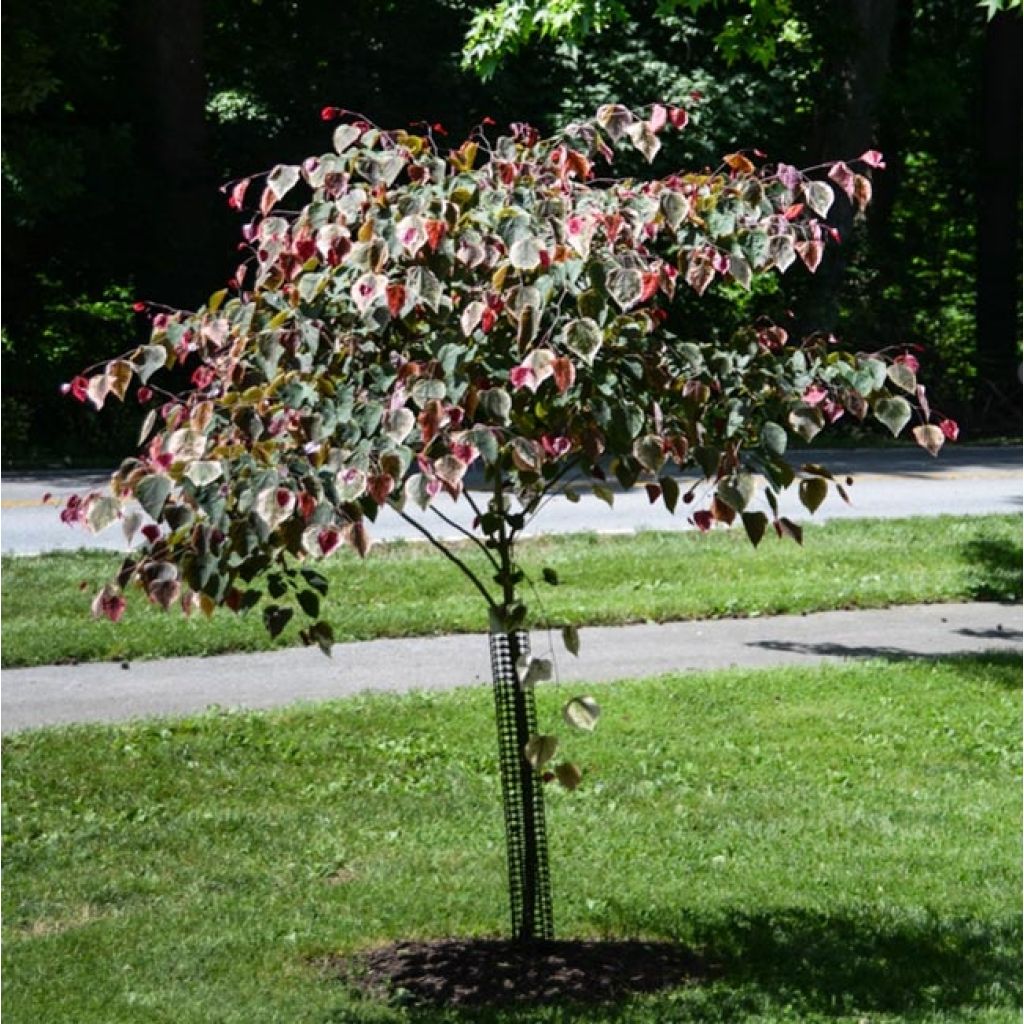
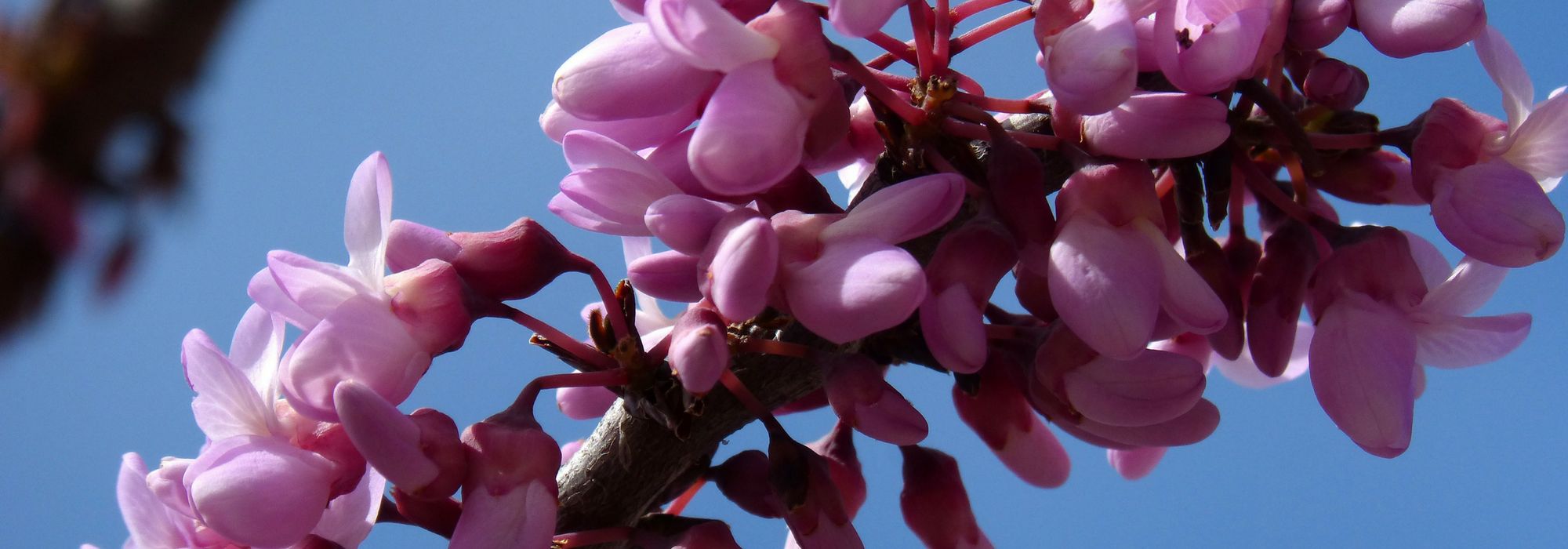
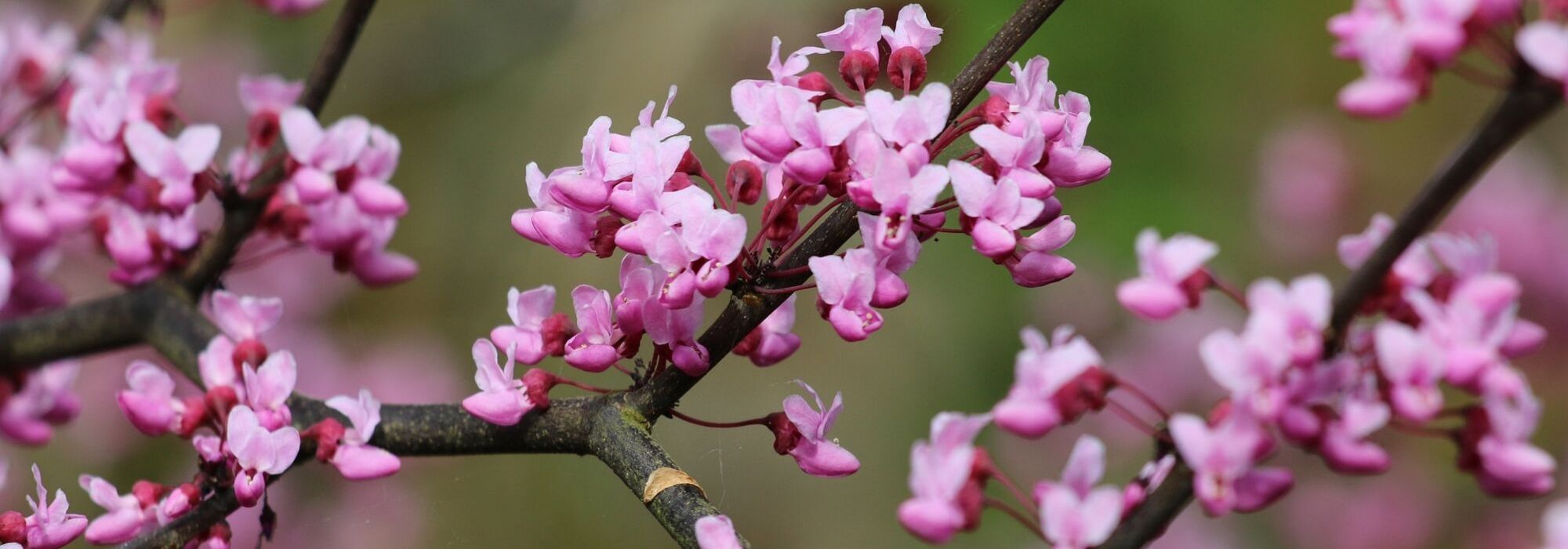
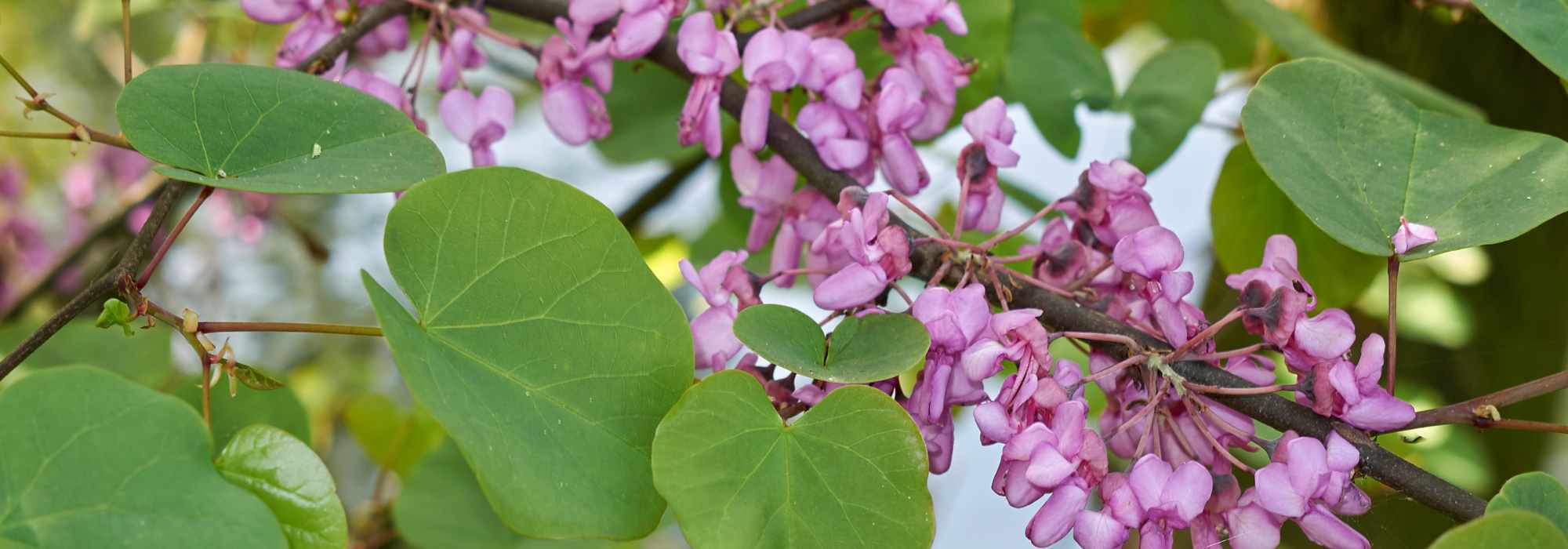
The cultivar 'Carolina Sweetheart' shows a rather slow growth and its size in 10 years will not exceed 3.50m (11 ft 6 in) in height by 2.50m (8 ft 2 in) in width, depending on the growing conditions. Ultimately, it should not exceed 6.50m (21 ft 4 in) in height according to American data, but probably slightly less in our European gardens. It is a small tree with a slightly weeping bushy habit, with branches gracefully arching towards the ground. It forms quite a dense mass, almost as wide as it is tall. The flowers appear before the leaves, in April, directly on the branches, even on the trunk and even those that are only one year old. They are pea-like flowers, vivid pink to purplish in colour, in a shade that is both vibrant and very fresh. The foliage emerges bright pink-red and translucent, then unfolds as its wonderful variegation becomes visible. In summer, green dominates, then autumn comes with the appearance of yellow, orange, or red tones depending on the year and soil conditions. The leaves are heart-shaped, 6-7cm (2.4-2.8 in) long, quite thick, glossy on top and downy underneath. With 'Carolina Sweetheart', it often happens that the young leaves do not show the characteristic variegation, and one or two years of cultivation are necessary to be able to admire it. The older branches and trunk have a fissured grey-black bark. Older specimens often have a twisted trunk and a 'parasol' branching, which gives them a very Japanese-like silhouette.
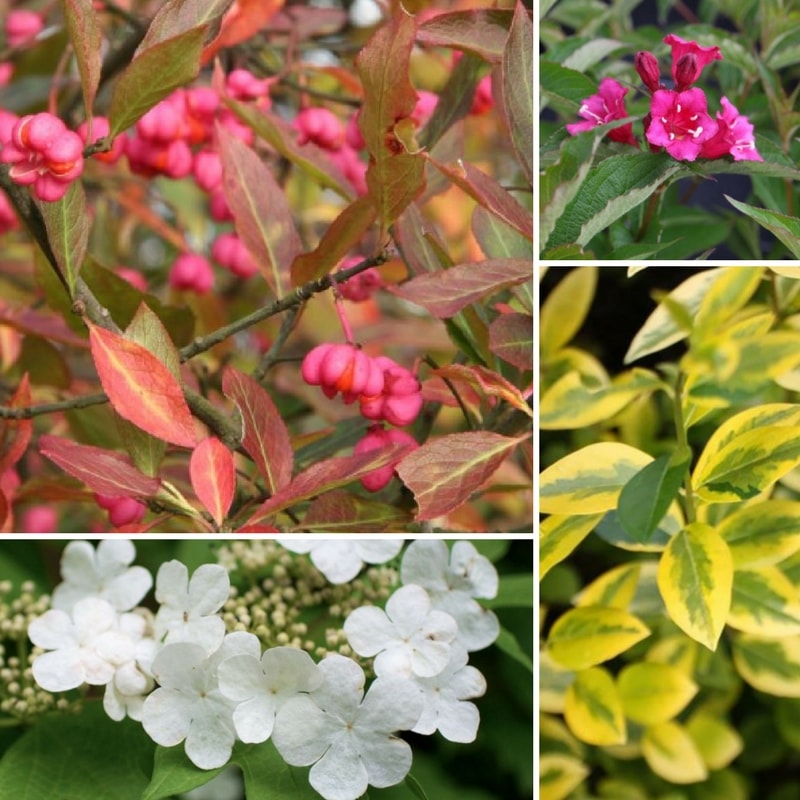
This 'Carolina Sweetheart' Cercis, with its graceful habit and magical colours, is an exceptional small tree that deserves to be highlighted: it is an ideal candidate to bring a unique touch to a small garden or the centre of a large flowerbed. It only requires a fairly deep soil, regardless of its nature, even very chalky and fairly dry in summer. It is very hardy and can be planted in all areas. It does not require any special pruning: in short, it is a very accommodating plant that can thrive in all gardens! It can be planted as a standalone specimen for year-round presence, but also in a shrub border, playing with contrasts of shapes and colours. Consider, for example, the 'Plumosa aurea' Elderberry, the dwarf winged Euonymus alatus Compactus, the wonderful Grace Cotinus with its summer flowering in airy clusters and its sumptuous autumn foliage. At the base of these shrubs, plant some daffodils or Naples cyclamens, a few clumps of Darley Heath, and Hellebores for the winter!
Cercis canadensis Carolina Sweetheart - Eastern Redbud in pictures
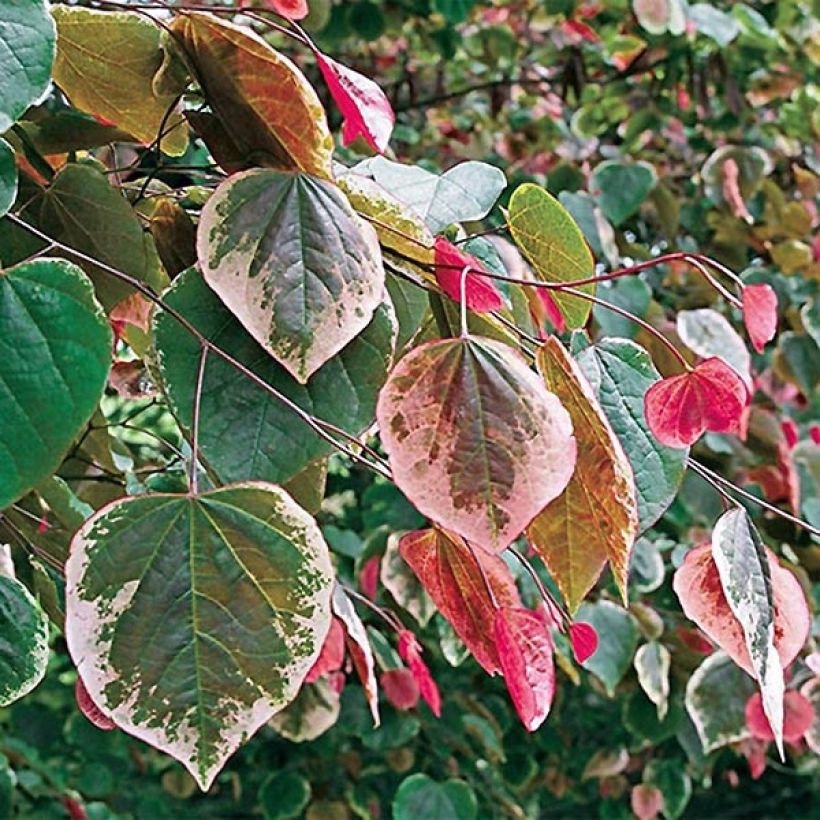
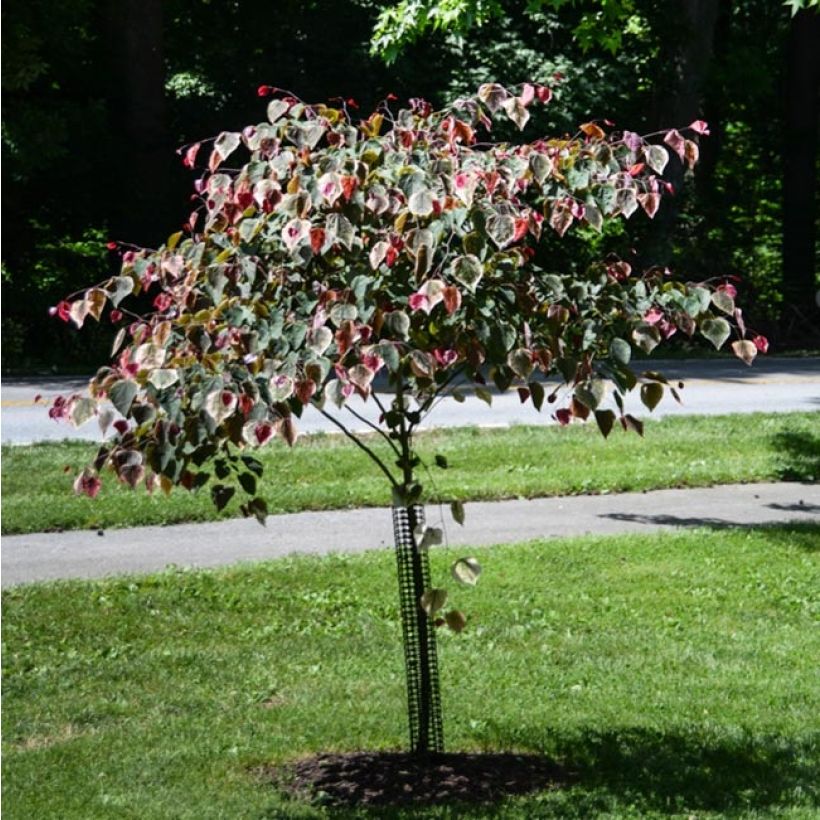
Plant habit
Flowering
Foliage
Botanical data
Cercis
canadensis
Carolina Sweetheart
Fabaceae
Eastern Redbud, Canadian Redbud, American Redbud, Judas Tree
Cultivar or hybrid
Planting and care
Cercis canadensis 'Carolina Sweeetheart' is planted in early spring or early autumn, in the sun or in partial shade. It is not very picky about the nature of the soil, as long as it is somewhat deep. Very chalky soils are not a problem, just like summer drought once it is well established. On the other hand, this redbud tree is sensitive to heavy, compact and constantly wet soils. In poor soil, enrich the planting soil with good compost or potting soil. Water it regularly to help it establish, as well as the first two summers in case of prolonged drought. It can tolerate all types of soils but prefers neutral or chalky soils. It is very hardy (up to -18°C (-0.4 °F) at its coldest), but the young shoots can suffer in case of severe frost in early spring. Protection with horticultural fleece can be useful in the first few years in case of a sudden cold spell in March.
Planting period
Intended location
Care
Planting & care advice
-
-
-

-

-
-
-

-
-
, onOrder confirmed
Reply from on Promesse de fleurs
Recently viewed products
Haven't found what you were looking for?
Hardiness is the lowest winter temperature a plant can endure without suffering serious damage or even dying. However, hardiness is affected by location (a sheltered area, such as a patio), protection (winter cover) and soil type (hardiness is improved by well-drained soil).

The flowering period indicated on our website applies to countries and regions located in USDA zone 8 (France, the United Kingdom, Ireland, the Netherlands, etc.)
It will vary according to where you live:- In zones 9 to 10 (Italy, Spain, Greece, etc.), flowering will occur about 2 to 4 weeks earlier.
- In zones 6 to 7 (Germany, Poland, Slovenia, and lower mountainous regions), flowering will be delayed by 2 to 3 weeks.
- In zone 5 (Central Europe, Scandinavia), blooming will be delayed by 3 to 5 weeks.
In temperate climates, pruning of spring-flowering shrubs (forsythia, spireas, etc.) should be done just after flowering.
Pruning of summer-flowering shrubs (Indian Lilac, Perovskia, etc.) can be done in winter or spring.
In cold regions as well as with frost-sensitive plants, avoid pruning too early when severe frosts may still occur.
The planting period indicated on our website applies to countries and regions located in USDA zone 8 (France, United Kingdom, Ireland, Netherlands).
It will vary according to where you live:
- In Mediterranean zones (Marseille, Madrid, Milan, etc.), autumn and winter are the best planting periods.
- In continental zones (Strasbourg, Munich, Vienna, etc.), delay planting by 2 to 3 weeks in spring and bring it forward by 2 to 4 weeks in autumn.
- In mountainous regions (the Alps, Pyrenees, Carpathians, etc.), it is best to plant in late spring (May-June) or late summer (August-September).
The harvesting period indicated on our website applies to countries and regions in USDA zone 8 (France, England, Ireland, the Netherlands).
In colder areas (Scandinavia, Poland, Austria...) fruit and vegetable harvests are likely to be delayed by 3-4 weeks.
In warmer areas (Italy, Spain, Greece, etc.), harvesting will probably take place earlier, depending on weather conditions.
The sowing periods indicated on our website apply to countries and regions within USDA Zone 8 (France, UK, Ireland, Netherlands).
In colder areas (Scandinavia, Poland, Austria...), delay any outdoor sowing by 3-4 weeks, or sow under glass.
In warmer climes (Italy, Spain, Greece, etc.), bring outdoor sowing forward by a few weeks.
Shipping country and language
Your country of residence may be:
Your country of residence is:
For a better user experience on our website, you can select:
Your shipping country:
-
 Austria
-
 Belgium
-
 Bosnia & Herzegovina
-
 Bulgaria
-
 Croatia
-
 Cyprus
-
 Czechia
-
 Denmark
-
 Estonia
-
 Finland
-
 France
-
 Germany
-
 Greece
-
 Hungary
-
 Iceland
-
 Ireland
-
 Italy
Italy
-
 Latvia
-
 Liechtenstein
-
 Lithuania
-
 Luxembourg
-
 Malta
Malta
-
 Netherlands
-
 Poland
-
 Portugal
-
 Romania
-
 Serbia
-
 Slovakia
-
 Slovenia
-
 Spain
Spain
-
 Sweden
-
 Switzerland
Language:
-
French
-
 English
-
Spanish
-
Italian
-
German
-
Portuguese
-
Dutch
-
Finnish
My Account
Hello
My wish lists
My cart
Log in / Register
Existing customer?
This form is protected by reCAPTCHA - the Google Privacy Policy and Terms of Service apply.
New customer?
Create an account to track your orders, access our customer service and, if you wish, make the most of our upcoming offers.