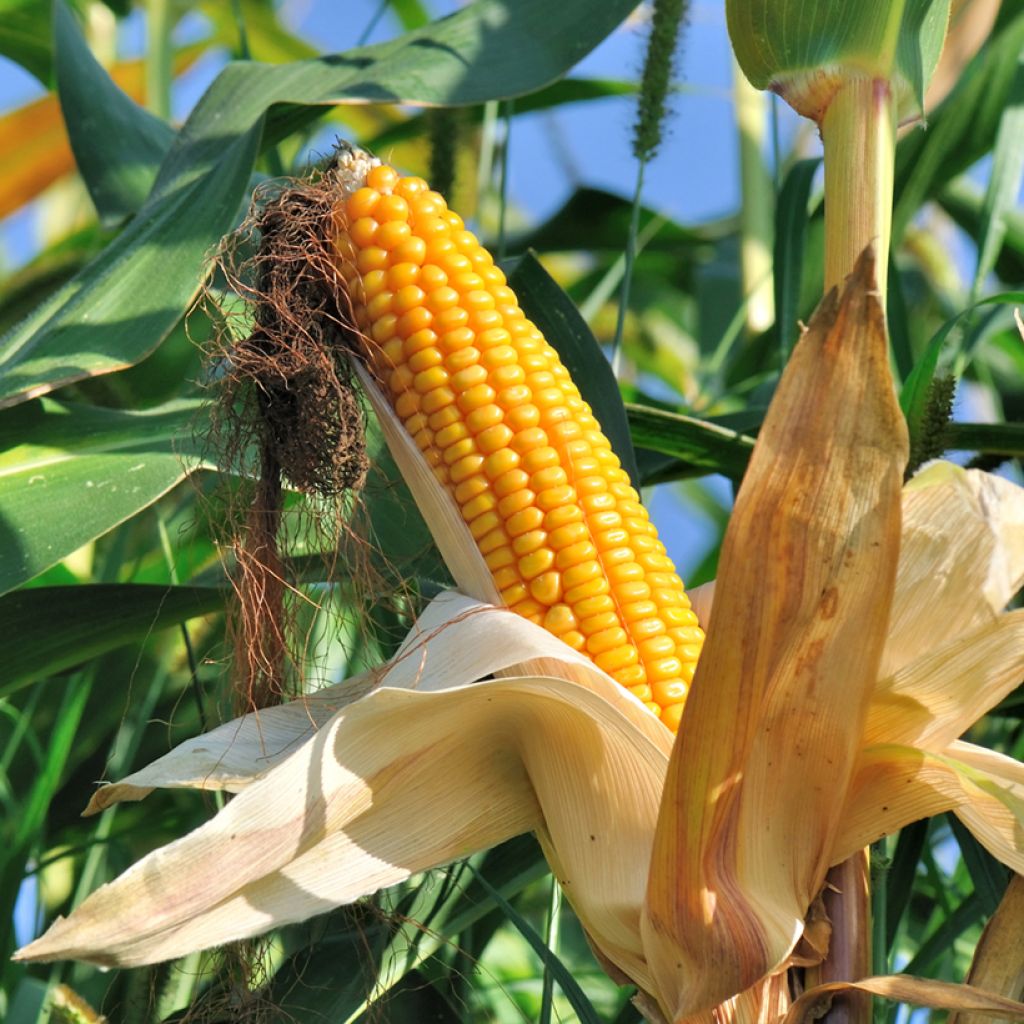
'Lark' F1 Sweetcorn - Zea mays
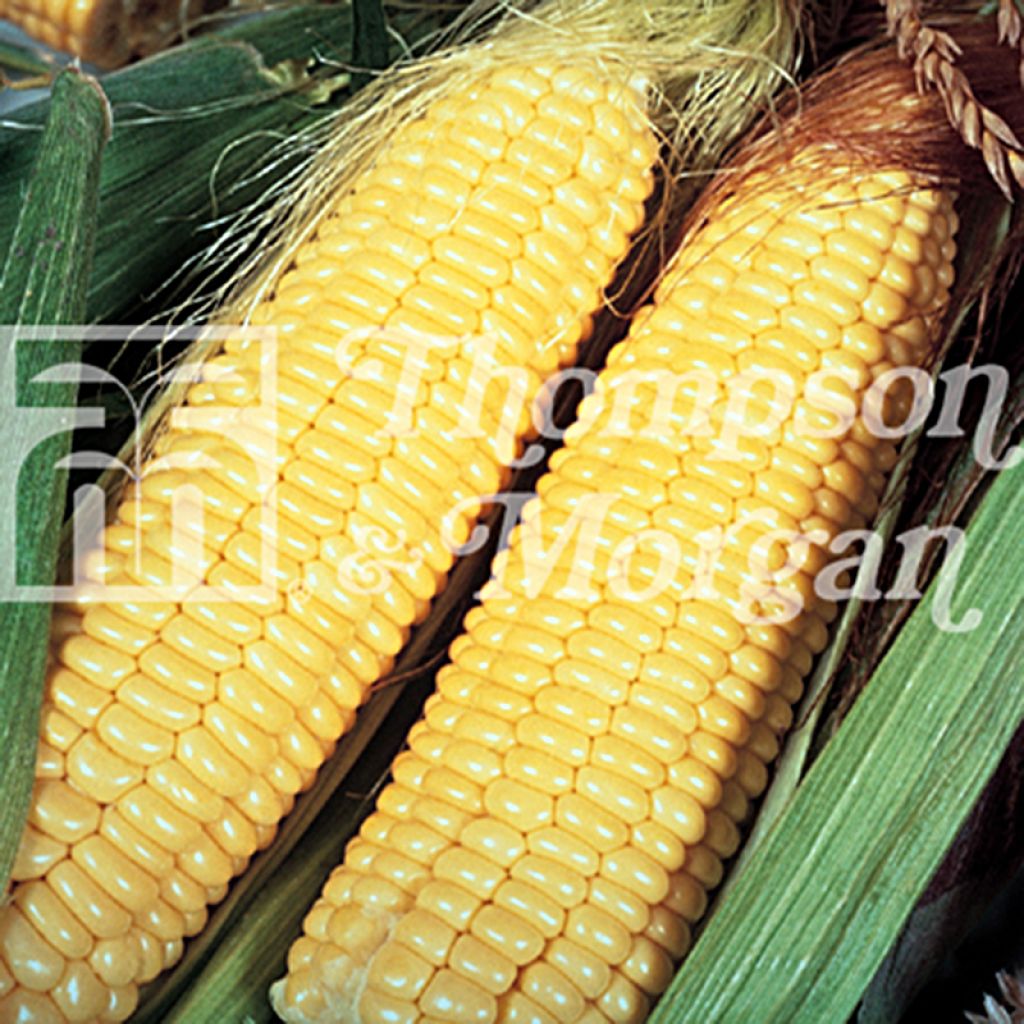
'Lark' F1 Sweetcorn - Zea mays
'Lark' F1 Sweetcorn - Zea mays
Zea mays Lark
Corn, Maize
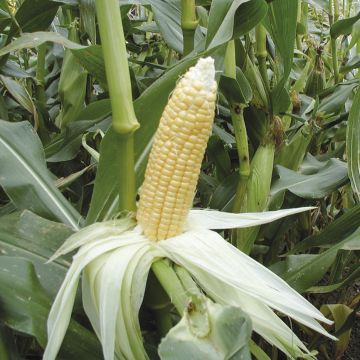
I chose this variety to consume it grilled on the barbecue (or cooked in water when the weather is bad). The cobs are big and long, well-formed, with tight, juicy grains and a good taste. The weather this year has been particularly kind to them (hot weather, well-watered generously). Easy to grow and delicious results, worth repeating.
Claire, 11/10/2017
Back-to-school special offer!
Get €10 off for every €50 you spend! And get up to €40 off on a single order.
How does it work?
1. Shop your favourites
Add your favourite plants to your basket. For every €50 you spend (excluding delivery charges, store credit and the plastic-free option), you’ll receive a €10 voucher.
€50 spent = €10 voucher
€100 spent = €20 voucher
€150 spent = €30 voucher
€200 spent = €40 voucher
2. Place your order
Once your basket reaches one of the spending thresholds, place your order. You can even choose your delivery date!
3. Receive your voucher
As soon as your order has been shipped, you’ll receive an email containing your personal voucher code and its value.
4. Use it on your next order
Your voucher is valid for 90 days from the date you receive it. It can be used once only, on a new order worth at least the value of the voucher, excluding delivery charges.
Please note: Vouchers can be combined with other offers, but cannot be split or refunded.
Why not try an alternative variety in stock?
View all →
Available in 1 sizes
Available in 1 sizes
Available in 1 sizes

Available in 1 sizes

Available in 1 sizes
Available in 1 sizes

Available in 1 sizes

Available in 1 sizes

Available in 1 sizes

Available in 1 sizes
This plant carries a 6 months recovery warranty
More information
We guarantee the quality of our plants for a full growing cycle, and will replace at our expense any plant that fails to recover under normal climatic and planting conditions.


Description
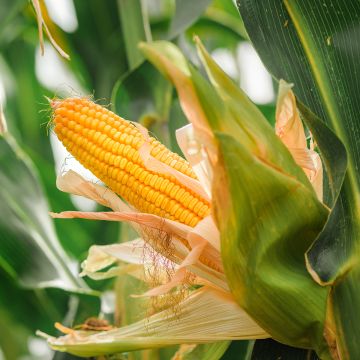
'Lark F1' sweet corn is a midseason tendersweet variety that is recommended for growing in regions with shorter, cooler summers. Each plant produces 2 to 3 ears filled with soft, very sweet golden yellow kernels. Delicious eaten raw in a salad or grilled on the barbecue with a knob of butter! Sow in spring and harvest from July to October.
Sweet corn (Zea mays), also known as pole corn or sugar corn, is a form of maize that has a particularly high sugar content due to a naturally occurring genetic mutation. It belongs to the Gramineae family alongside wheat, barley and rice. It is highly nutritious, containing more protein and five times more fibre than rice. It is also an excellent source of B vitamins, vitamin C, minerals and trace elements. It has a low glycemic index.
Sweet corn likes deep, light, cool soil that is rich in organic matter. It is a heat-loving plant that needs plenty of sunshine to grow. It can be used to create attractive borders around your vegetable garden and individual plots whilst providing valuable shade for vegetables such as lettuces or cabbages.
Harvesting: Sweet corn is harvested 80 to 120 days after sowing depending on the amount of sunshine and water it has received. The ears are ready to be picked when the silks start to turn brown and the kernels are well developed. Check for ripeness by piercing a kernel with your fingernail - it should be tender and milky. When harvested too late, the sugars turn into starch and the skin becomes tough.
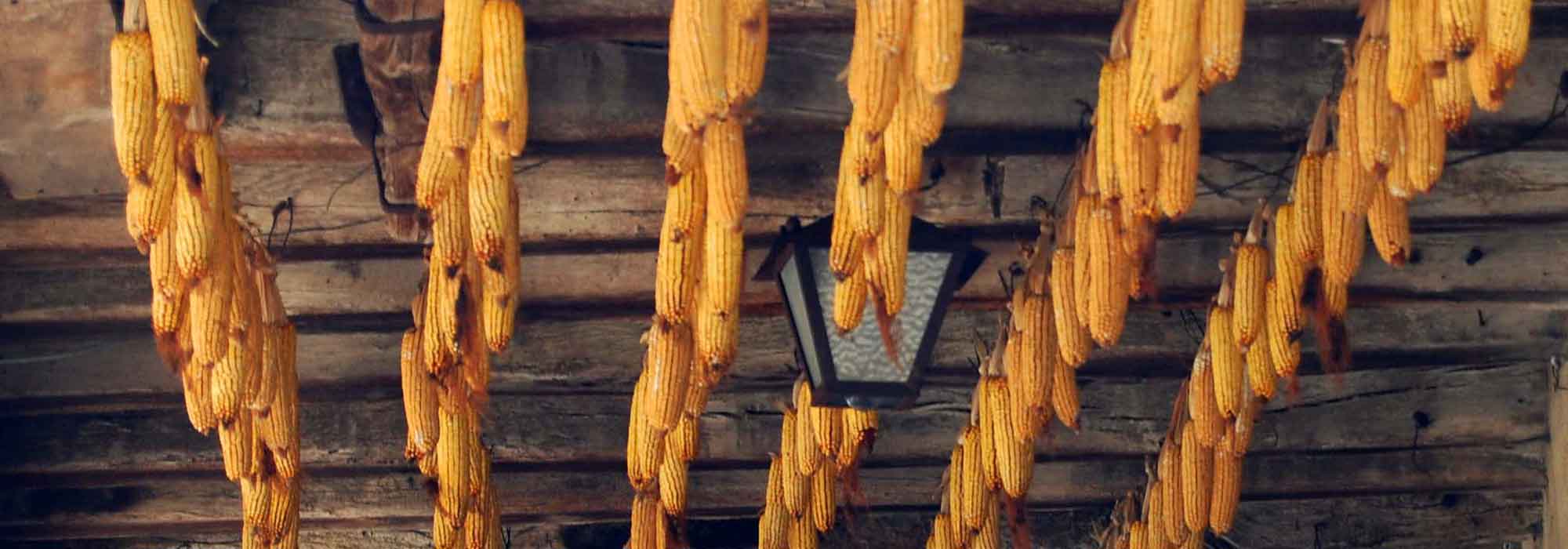
Storing: after harvesting, remove the green husk that is wrapped around the ear. Use quickly, the fresher the better! Sweet corn can also be cooked and frozen or preserved in jars for later use.
Good to know: Traditionally, maize crops were grown alongside squash and bean plants in Central and South America in a system known as Milpa agriculture. Beans would enrich the soil with nitrogen, squash plants would act as ground cover and maize plants would provide support for the beans to scramble up. Start out by sowing your maize plants. When they are about 10 cm tall, sow 2 bean seeds and 2 squash seeds around each young plant.
NB: This variety is marked F1 for "F1 hybrid" meaning that its qualities are derived from carefully selected parent plants. This results in a variety that is both full of flavour and resistant to diseases. Sometimes criticised or wrongly confused with GMOs, F1 hybrid seeds have the advantage of producing reliable, uniform, disease resistant plants. Unfortunately, these qualities will not be passed on to following generations.
Harvest
Plant habit
Foliage
Botanical data
Zea
mays
Lark
Poaceae
Corn, Maize
Cultivar or hybrid
Annual
Planting and care
Corn thrives in the sun, in loose and rich soil. Add compost in the previous autumn.
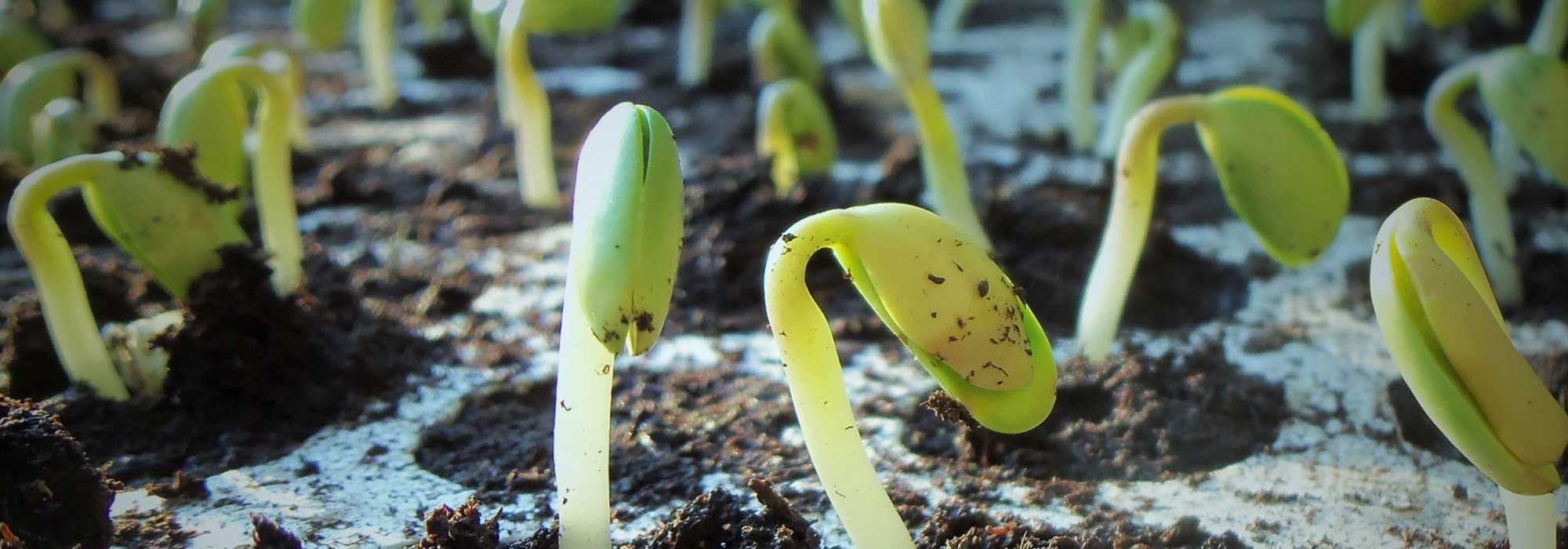
In spring, between April and June, corn can be sown in rows or in holes. The soil must be sufficiently warmed up (12°C). In colder regions, sowing in holes with 3 to 4 seeds can be done in pots, indoors, with seed compost and a bit of compost. The healthiest plant can then be transplanted into the ground around May-June.
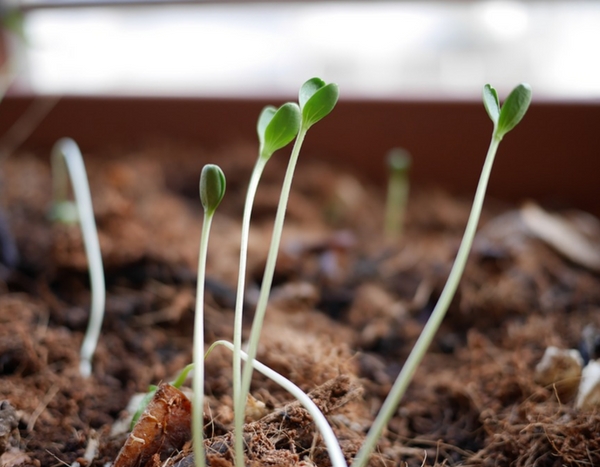
Sowing in rows: stretch a string and dig trenches a few centimeters deep, spacing the rows 70 cm apart. Sow one seed every 10 cm, cover with fine soil and gently firm down with the back of a rake. After germination (around ten days), thin out to keep one plant every 20 cm.
Sowing in holes: sow in holes with 3 or 4 seeds (25 cm apart within the row and 80 cm between rows). Germination occurs around ten days after sowing. Thin out when the seedlings have 4 leaves to keep only the best-developed plant.
Stagger the sowings (every 15 days, for example) to spread out the harvest.
When the corn reaches about 30 cm in height, hill it up to a height of 10 cm to promote anchoring in the soil.
Weeding and mulching will be necessary. Make sure to weed at the surface as corn roots are shallow. Corn needs to be watered regularly, about once a week if there is no rain. The crop rotation for corn is about 4 years.
Seedlings
Care
Intended location
Planting & care advice
-

-

-

-

-
-
-

-

-
, onOrder confirmed
Reply from on Promesse de fleurs
Recently viewed products
Haven't found what you were looking for?
Hardiness is the lowest winter temperature a plant can endure without suffering serious damage or even dying. However, hardiness is affected by location (a sheltered area, such as a patio), protection (winter cover) and soil type (hardiness is improved by well-drained soil).

The flowering period indicated on our website applies to countries and regions located in USDA zone 8 (France, the United Kingdom, Ireland, the Netherlands, etc.)
It will vary according to where you live:- In zones 9 to 10 (Italy, Spain, Greece, etc.), flowering will occur about 2 to 4 weeks earlier.
- In zones 6 to 7 (Germany, Poland, Slovenia, and lower mountainous regions), flowering will be delayed by 2 to 3 weeks.
- In zone 5 (Central Europe, Scandinavia), blooming will be delayed by 3 to 5 weeks.
In temperate climates, pruning of spring-flowering shrubs (forsythia, spireas, etc.) should be done just after flowering.
Pruning of summer-flowering shrubs (Indian Lilac, Perovskia, etc.) can be done in winter or spring.
In cold regions as well as with frost-sensitive plants, avoid pruning too early when severe frosts may still occur.
The planting period indicated on our website applies to countries and regions located in USDA zone 8 (France, United Kingdom, Ireland, Netherlands).
It will vary according to where you live:
- In Mediterranean zones (Marseille, Madrid, Milan, etc.), autumn and winter are the best planting periods.
- In continental zones (Strasbourg, Munich, Vienna, etc.), delay planting by 2 to 3 weeks in spring and bring it forward by 2 to 4 weeks in autumn.
- In mountainous regions (the Alps, Pyrenees, Carpathians, etc.), it is best to plant in late spring (May-June) or late summer (August-September).
The harvesting period indicated on our website applies to countries and regions in USDA zone 8 (France, England, Ireland, the Netherlands).
In colder areas (Scandinavia, Poland, Austria...) fruit and vegetable harvests are likely to be delayed by 3-4 weeks.
In warmer areas (Italy, Spain, Greece, etc.), harvesting will probably take place earlier, depending on weather conditions.
The sowing periods indicated on our website apply to countries and regions within USDA Zone 8 (France, UK, Ireland, Netherlands).
In colder areas (Scandinavia, Poland, Austria...), delay any outdoor sowing by 3-4 weeks, or sow under glass.
In warmer climes (Italy, Spain, Greece, etc.), bring outdoor sowing forward by a few weeks.
Shipping country and language
Your country of residence may be:
Your country of residence is:
For a better user experience on our website, you can select:
Your shipping country:
-
 Austria
-
 Belgium
-
 Bosnia & Herzegovina
-
 Bulgaria
-
 Croatia
-
 Cyprus
-
 Czechia
-
 Denmark
-
 Estonia
-
 Finland
-
 France
-
 Germany
-
 Greece
-
 Hungary
-
 Iceland
-
 Ireland
-
 Italy
Italy
-
 Latvia
-
 Liechtenstein
-
 Lithuania
-
 Luxembourg
-
 Malta
Malta
-
 Netherlands
-
 Poland
-
 Portugal
-
 Romania
-
 Serbia
-
 Slovakia
-
 Slovenia
-
 Spain
Spain
-
 Sweden
-
 Switzerland
Language:
-
French
-
 English
-
Spanish
-
Italian
-
German
-
Portuguese
-
Dutch
-
Finnish
My Account
Hello
My wish lists
My cart
Log in / Register
Existing customer?
This form is protected by reCAPTCHA - the Google Privacy Policy and Terms of Service apply.
New customer?
Create an account to track your orders, access our customer service and, if you wish, make the most of our upcoming offers.