
Aster novae-angliae Purple Dome

Aster novae-angliae Purple Dome
Aster novae-angliae Purple Dome

Aster novae-angliae Purple Dome
Aster novae-angliae Purple Dome

Aster novae-angliae Purple Dome
Aster novae-angliae Purple Dome

Aster novae-angliae Purple Dome

Aster novae-angliae Purple Dome
Aster novae-angliae Purple Dome
Symphyotrichum novae-angliae Purple Dome
New England Aster, Michaelmas Daisy
These small aster plugs established very well. We were treated to a really lovely flowering in October.
Anne, 14/11/2025
Back-to-school special offer!
Get €10 off for every €50 you spend! And get up to €40 off on a single order.
How does it work?
1. Shop your favourites
Add your favourite plants to your basket. For every €50 you spend (excluding delivery charges, store credit and the plastic-free option), you’ll receive a €10 voucher.
€50 spent = €10 voucher
€100 spent = €20 voucher
€150 spent = €30 voucher
€200 spent = €40 voucher
2. Place your order
Once your basket reaches one of the spending thresholds, place your order. You can even choose your delivery date!
3. Receive your voucher
As soon as your order has been shipped, you’ll receive an email containing your personal voucher code and its value.
4. Use it on your next order
Your voucher is valid for 90 days from the date you receive it. It can be used once only, on a new order worth at least the value of the voucher, excluding delivery charges.
Please note: Vouchers can be combined with other offers, but cannot be split or refunded.
Home or relay delivery (depending on size and destination)
Important: You may be charged customs duties by your country’s customs authorities upon delivery.
Schedule delivery date
and select date in basket
This plant carries a 12 months recovery warranty
More information
We guarantee the quality of our plants for a full growing cycle, and will replace at our expense any plant that fails to recover under normal climatic and planting conditions.
Would this plant suit my garden?
Set up your Plantfit profile →
Description
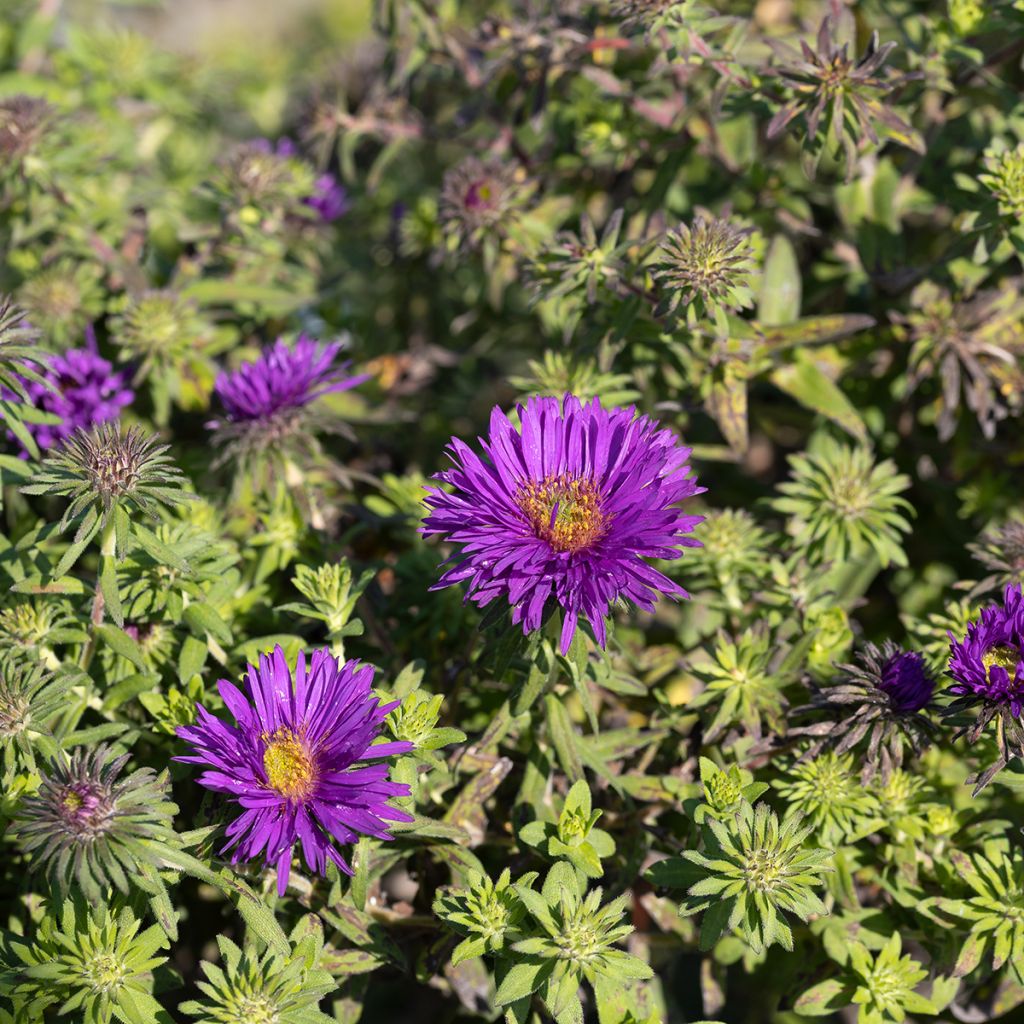
Aster novae angliae 'Purple Dome' (Purple Dome New England Aster) is a remarkable perennial with bright purple flowers with a yellow centre. Asters are considered the kings of autumn borders. Ideal for adding late-season colour to flowerbeds.
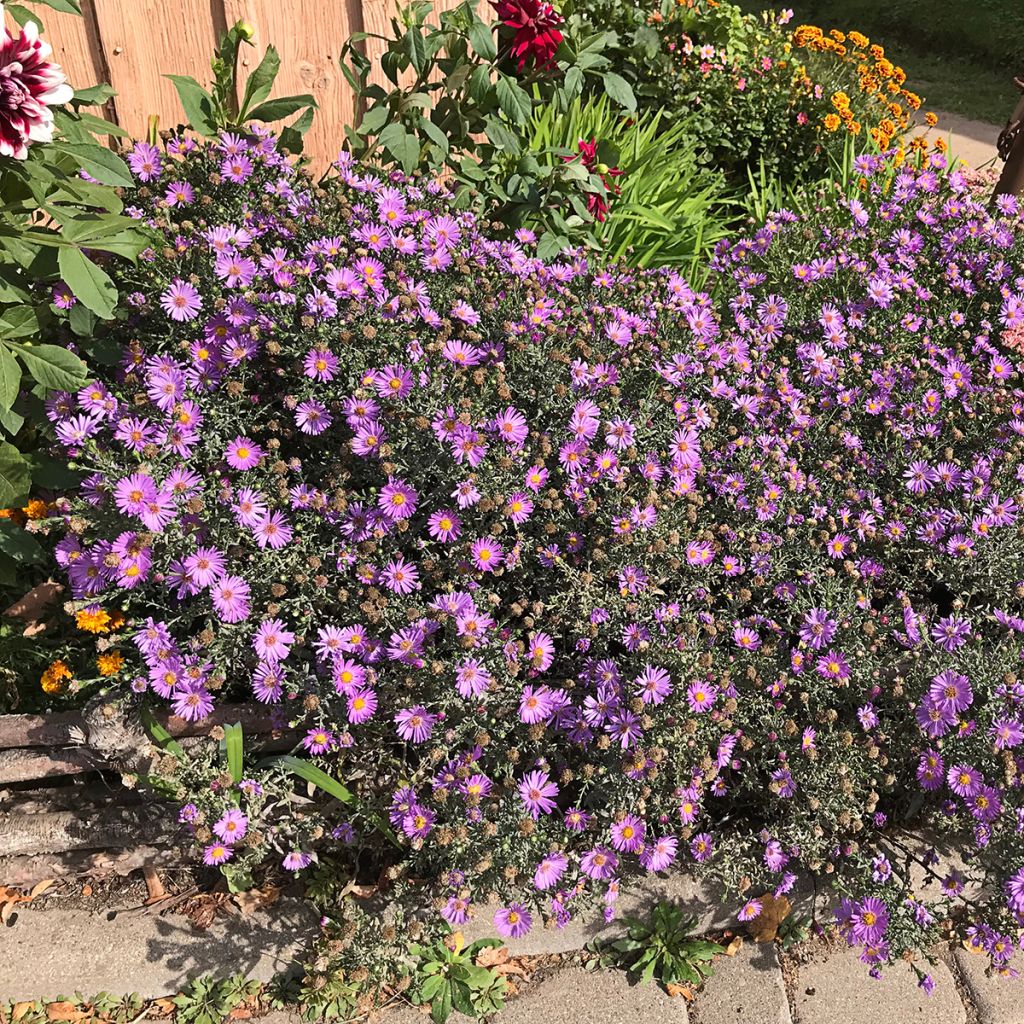
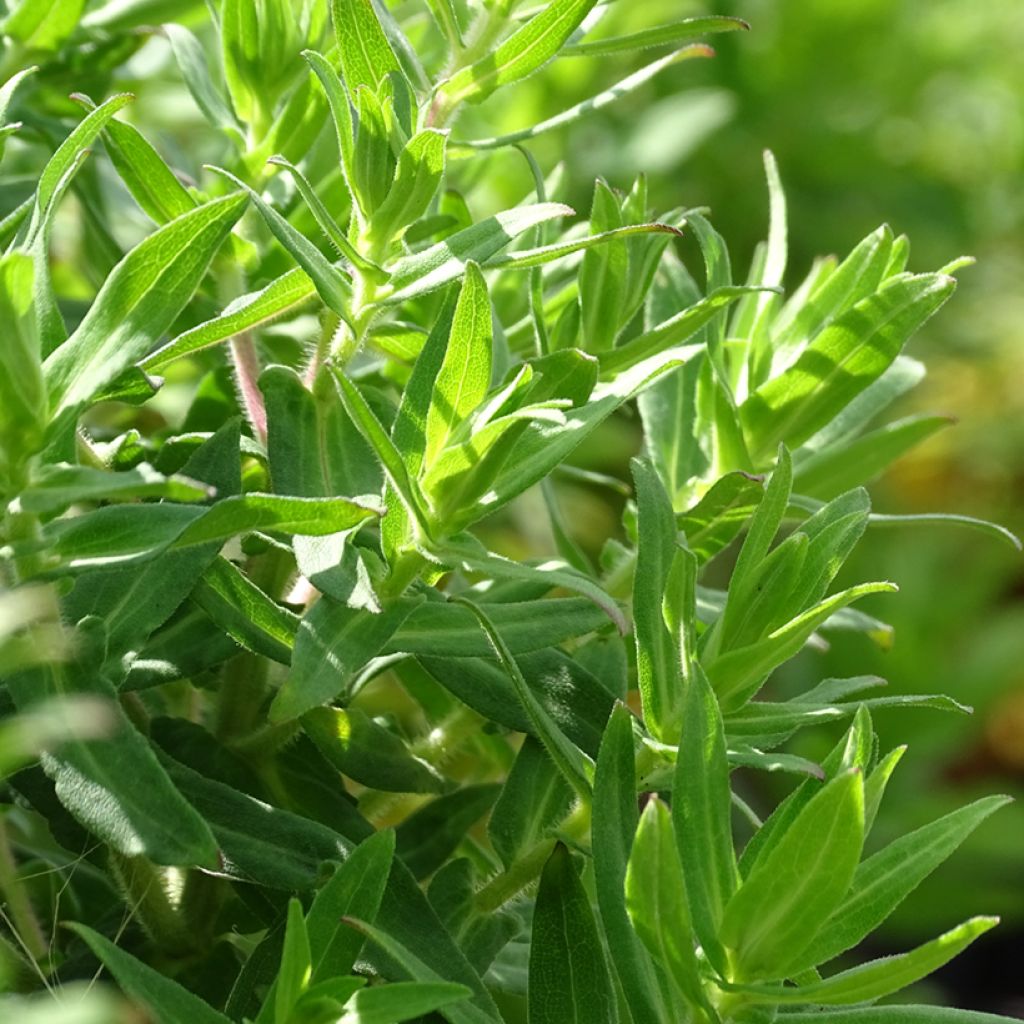
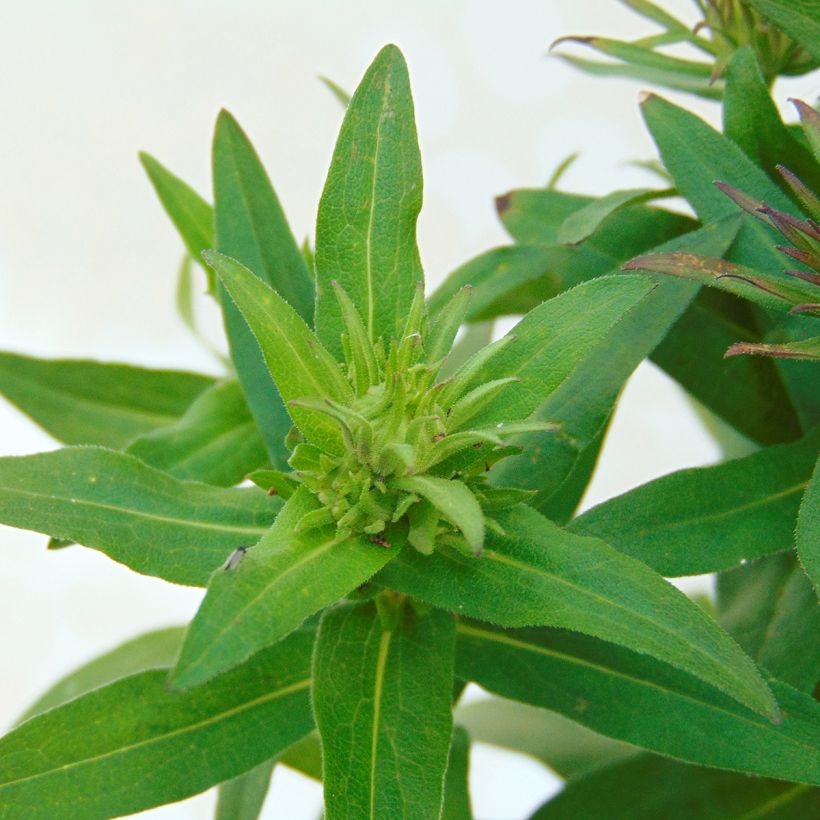
'Purple Dome', unlike other New England Asters, is quite compact, reaching a height and spread of no more than 50 cm (20in). It has medium green, shiny leaves with smooth margins. It is renowned for its abundant flowering from September to October. The yellow hearts of the flower heads contrast beautifully with the purple petals, creating a carpet of vibrant colours at a time when summer perennials are starting to fade from borders.
Very disease-resistant and hardy, it can be grown in beds or containers, as a standalone plant or in combinations. It pairs well with grasses such as stipa, chloris, or deschampsia. Easy to grow, Aster novae angliae 'Purple Dome' thrives in a sunny or partially shaded site in well-drained, aerated soil. It also tolerates limestone. Its compact size makes it perfect for container gardening, allowing you to enjoy its remarkable colours right outside your window.

Aster novae-angliae Purple Dome in pictures

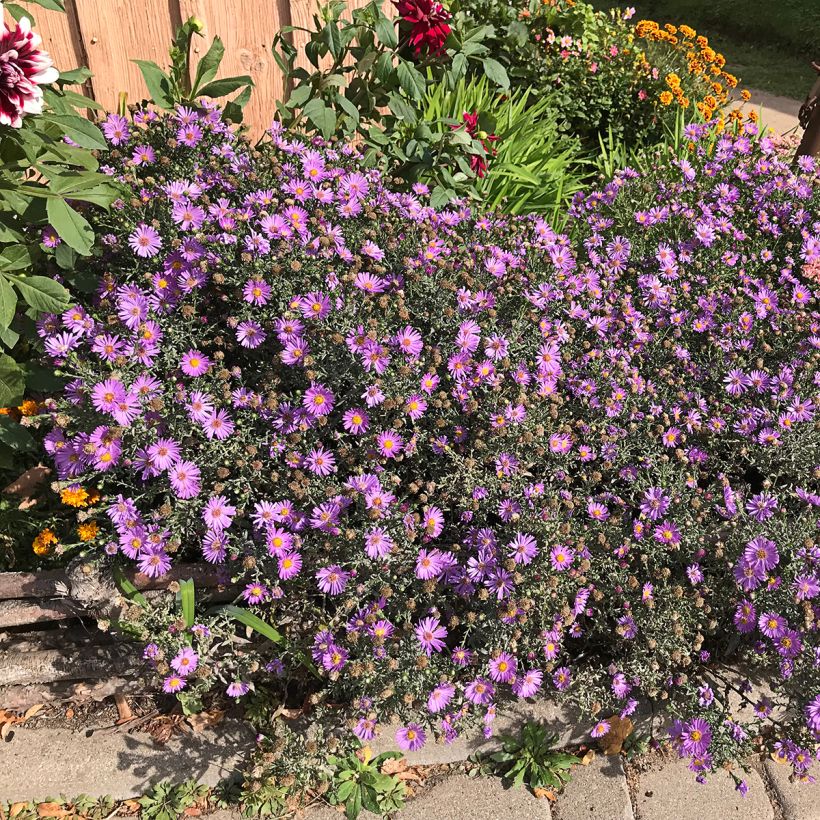
Flowering
Foliage
Plant habit
Botanical data
Symphyotrichum
novae-angliae
Purple Dome
Asteraceae
New England Aster, Michaelmas Daisy
Symphyotrichum novae-angliae ‘Purple Dome’, Aster novae-angliae ‘Purple Dome’
Cultivar or hybrid
Planting and care
Plant Aster novae-angliae 'Purple Dome' in autumn or spring in a rich and moist soil. It appreciates a sunny site but can tolerate partial shade. Adding a layer of mulch around its base will help maintain necessary moisture during summer. At planting, don't hesitate to add some gravel to the soil if it is very clayey - good drainage will prevent root rot in winter. Aster novae-angliae is resistant to powdery mildew and can therefore be planted in moderately humid areas.
Planting period
Intended location
Care
Planting & care advice
-

-

-

-

-

-

-

-

-
, onOrder confirmed
Reply from on Promesse de fleurs
Haven't found what you were looking for?
Hardiness is the lowest winter temperature a plant can endure without suffering serious damage or even dying. However, hardiness is affected by location (a sheltered area, such as a patio), protection (winter cover) and soil type (hardiness is improved by well-drained soil).

The flowering period indicated on our website applies to countries and regions located in USDA zone 8 (France, the United Kingdom, Ireland, the Netherlands, etc.)
It will vary according to where you live:- In zones 9 to 10 (Italy, Spain, Greece, etc.), flowering will occur about 2 to 4 weeks earlier.
- In zones 6 to 7 (Germany, Poland, Slovenia, and lower mountainous regions), flowering will be delayed by 2 to 3 weeks.
- In zone 5 (Central Europe, Scandinavia), blooming will be delayed by 3 to 5 weeks.
In temperate climates, pruning of spring-flowering shrubs (forsythia, spireas, etc.) should be done just after flowering.
Pruning of summer-flowering shrubs (Indian Lilac, Perovskia, etc.) can be done in winter or spring.
In cold regions as well as with frost-sensitive plants, avoid pruning too early when severe frosts may still occur.
The planting period indicated on our website applies to countries and regions located in USDA zone 8 (France, United Kingdom, Ireland, Netherlands).
It will vary according to where you live:
- In Mediterranean zones (Marseille, Madrid, Milan, etc.), autumn and winter are the best planting periods.
- In continental zones (Strasbourg, Munich, Vienna, etc.), delay planting by 2 to 3 weeks in spring and bring it forward by 2 to 4 weeks in autumn.
- In mountainous regions (the Alps, Pyrenees, Carpathians, etc.), it is best to plant in late spring (May-June) or late summer (August-September).
The harvesting period indicated on our website applies to countries and regions in USDA zone 8 (France, England, Ireland, the Netherlands).
In colder areas (Scandinavia, Poland, Austria...) fruit and vegetable harvests are likely to be delayed by 3-4 weeks.
In warmer areas (Italy, Spain, Greece, etc.), harvesting will probably take place earlier, depending on weather conditions.
The sowing periods indicated on our website apply to countries and regions within USDA Zone 8 (France, UK, Ireland, Netherlands).
In colder areas (Scandinavia, Poland, Austria...), delay any outdoor sowing by 3-4 weeks, or sow under glass.
In warmer climes (Italy, Spain, Greece, etc.), bring outdoor sowing forward by a few weeks.
Shipping country and language
Your country of residence may be:
Your country of residence is:
For a better user experience on our website, you can select:
Your shipping country:
-
 Austria
-
 Belgium
-
 Bosnia & Herzegovina
-
 Bulgaria
-
 Croatia
-
 Cyprus
-
 Czechia
-
 Denmark
-
 Estonia
-
 Finland
-
 France
-
 Germany
-
 Greece
-
 Hungary
-
 Iceland
-
 Ireland
-
 Italy
-
 Latvia
-
 Liechtenstein
-
 Lithuania
-
 Luxembourg
-
 Malta
-
 Netherlands
-
 Poland
-
 Portugal
-
 Romania
-
 Serbia
-
 Slovakia
-
 Slovenia
-
 Spain
-
 Sweden
-
 Switzerland
Language:
-
French
-
 English
-
Spanish
-
Italian
-
German
-
Portuguese
-
Dutch
-
Finnish
-
[pl]
My Account
Hello
My wish lists
My cart
Log in / Register
Existing customer?
This form is protected by reCAPTCHA - the Google Privacy Policy and Terms of Service apply.
New customer?
Create an account to track your orders, access our customer service and, if you wish, make the most of our upcoming offers.