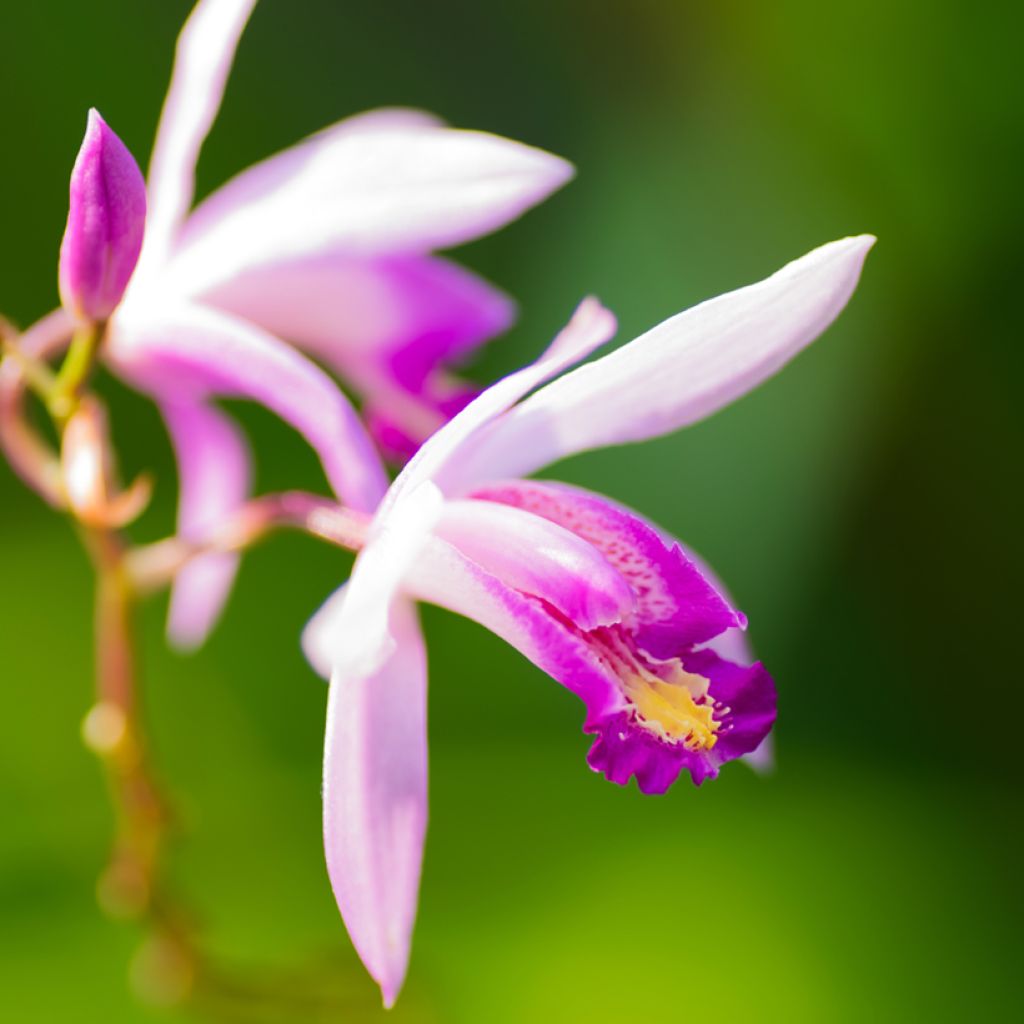
Bletilla Penway Paris - Hyacinth orchid
Bletilla Penway Paris - Hyacinth orchid
Bletilla striata x szetchuanica Penway Paris
Chinese Ground Orchid
Back-to-school special offer!
Get €10 off for every €50 you spend! And get up to €40 off on a single order.
How does it work?
1. Shop your favourites
Add your favourite plants to your basket. For every €50 you spend (excluding delivery charges, store credit and the plastic-free option), you’ll receive a €10 voucher.
€50 spent = €10 voucher
€100 spent = €20 voucher
€150 spent = €30 voucher
€200 spent = €40 voucher
2. Place your order
Once your basket reaches one of the spending thresholds, place your order. You can even choose your delivery date!
3. Receive your voucher
As soon as your order has been shipped, you’ll receive an email containing your personal voucher code and its value.
4. Use it on your next order
Your voucher is valid for 90 days from the date you receive it. It can be used once only, on a new order worth at least the value of the voucher, excluding delivery charges.
Please note: Vouchers can be combined with other offers, but cannot be split or refunded.
Home or relay delivery (depending on size and destination)
Important: You may be charged customs duties by your country’s customs authorities upon delivery.
Schedule delivery date,
and select date in basket
This plant carries a 6 months recovery warranty
More information
We guarantee the quality of our plants for a full growing cycle, and will replace at our expense any plant that fails to recover under normal climatic and planting conditions.
Would this plant suit my garden?
Set up your Plantfit profile →
Description
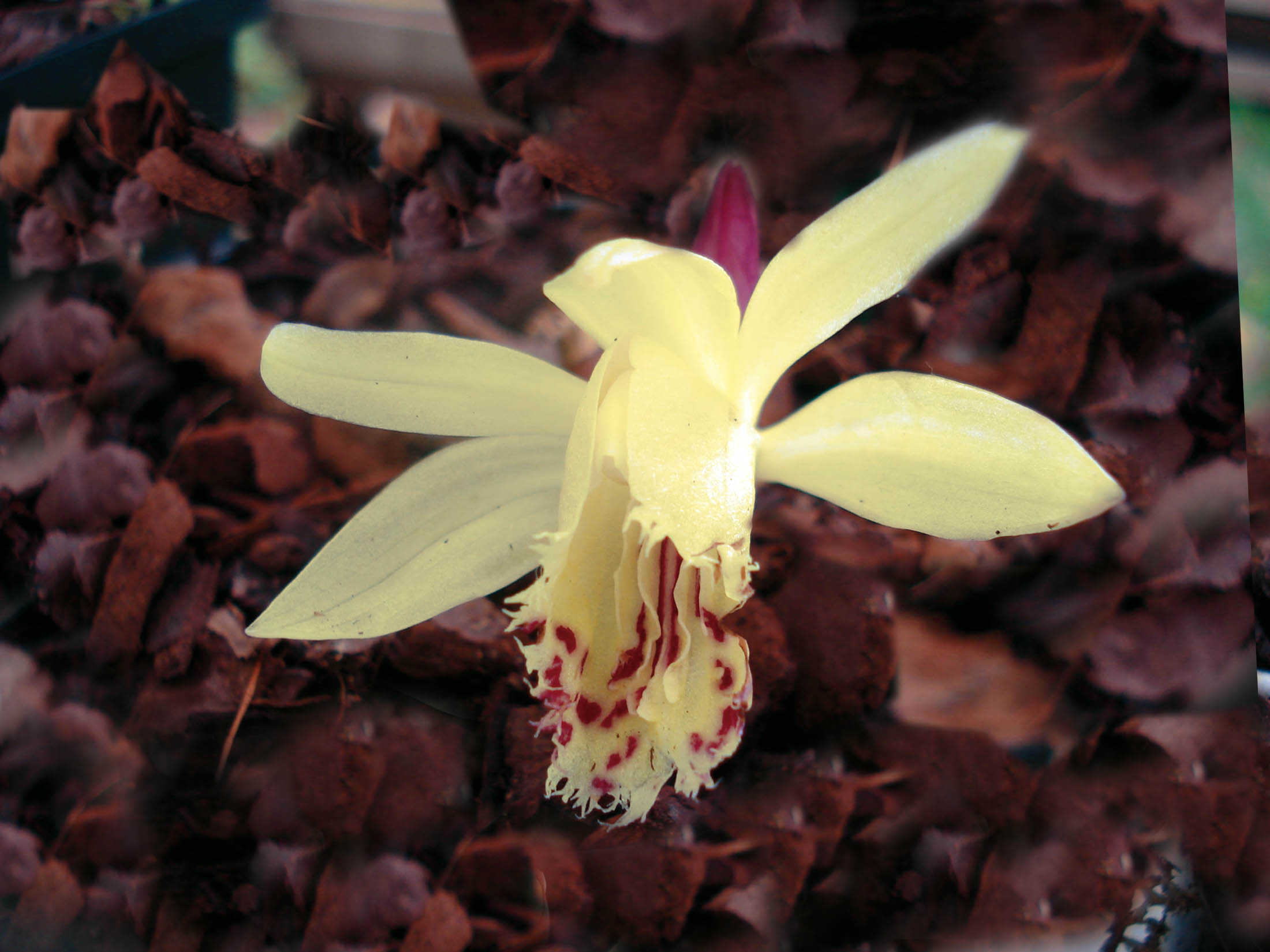
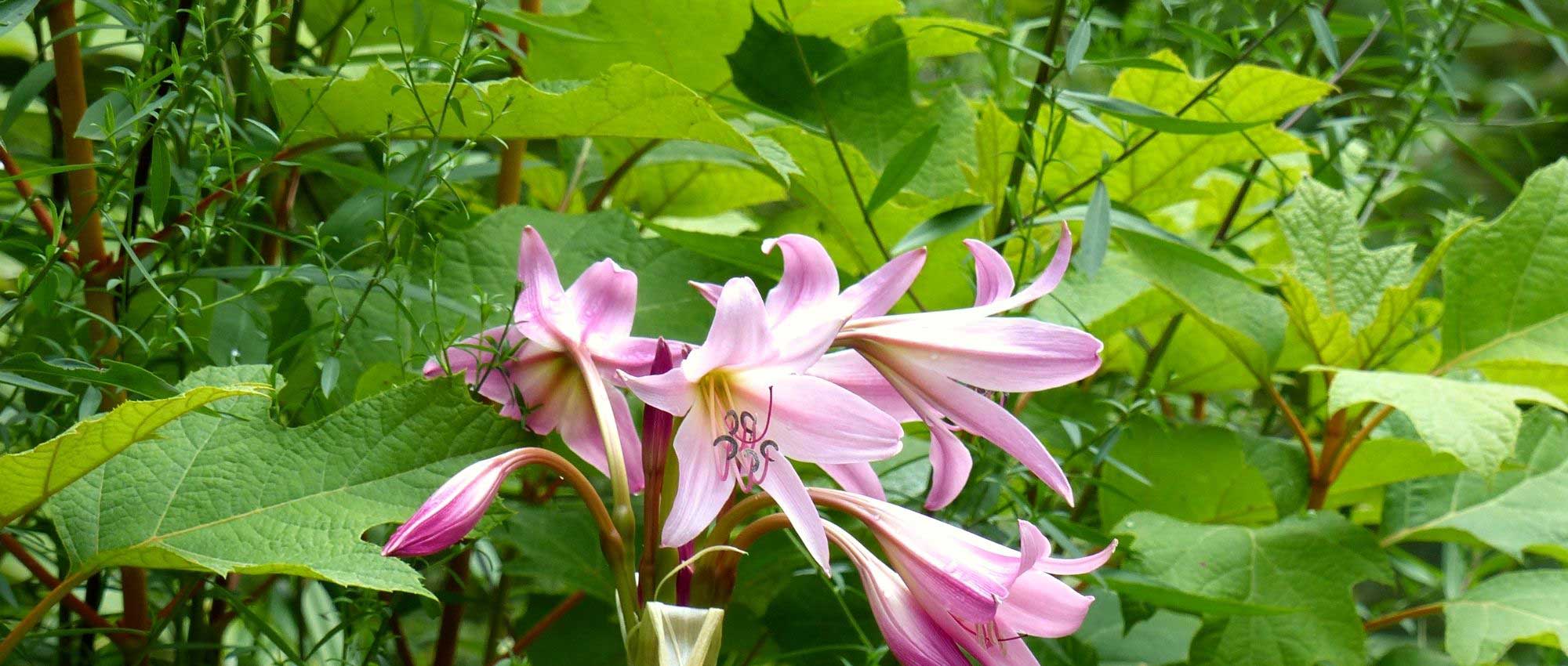
The 'Penway Paris' Bletilla is a beautiful, hardy terrestrial orchid, one of the few that can be planted in the ground. Its large lilac flowers, abundant in late spring, rise above long pleated leaves and bring lightness and exoticism to partially shaded borders in cool, well-drained, humus-bearing soil. It is also stunning in a pot or at the edge of a pond.
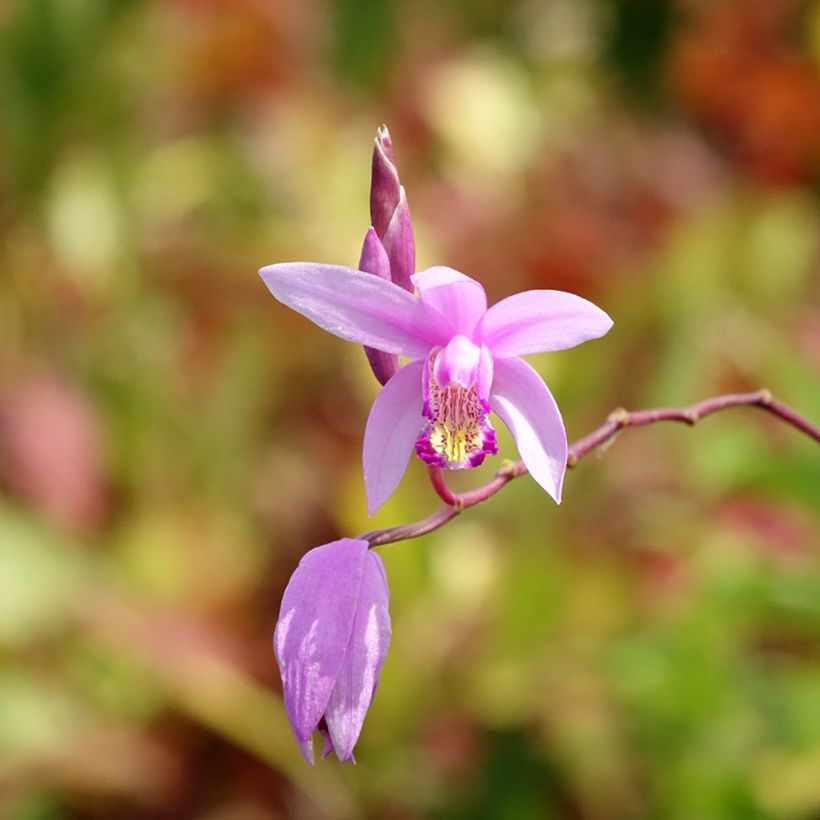
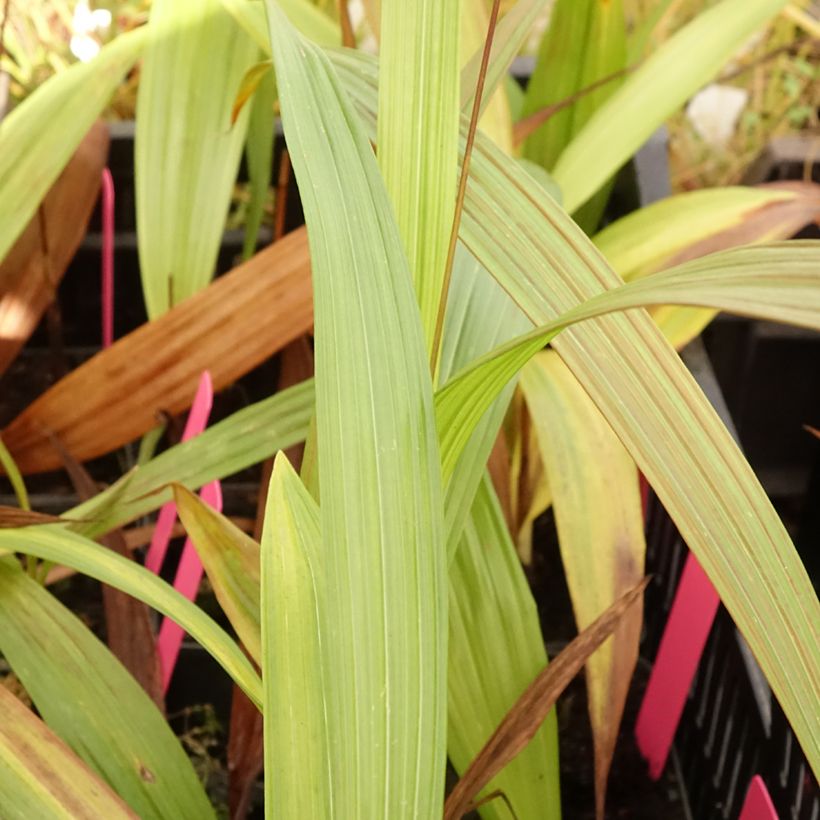
Bletilla belongs to the Orchidaceae family, which includes over 25,000 species distributed worldwide - making it one of the largest botanical families today. While we are more accustomed to seeing orchids growing on bark in warm greenhouses and conservatories, many terrestrial and hardy species exist. Did you know that there are over 160 species in mainland France alone? Bletilla orchids, native to evergreen high-altitude forests in China, produce lanceolate light green leaves, which are pleated, slightly arched, with prominent veins, measuring 35 cm long and 5 cm wide. Between May and June, slender spikes emerge, bearing several large flowers. They are typical of the family, with a large central petal modified into a "tunnel" called the labellum. It spreads slowly through short rhizomes, eventually forming a more or less sparse clump depending on the soil fertility.
The 'Penway Paris' variety crosses Bletilla striata and B. szetchuanica, another taller and more delicate species. Their hybrid, robust, numerous beautiful lilac-toned flowers with a darker labellum are peculiarly distributed on both sides of the stem, whereas they are on the same side in B. striata. It thrives in bright shade and can reach about 50 cm in height and width under favorable conditions.
Resilient, the 'Penway Paris' Bletilla is hardy down to at least -15°C, but it has some requirements for proper growth: it requires a perfectly drained soil; if water does not drain well during winter, the rhizomes can rot. It particularly appreciates woodland conditions, meaning a cool, partially shaded or lightly sunny, rich and humus-bearing, and slightly acidic to slightly alkaline soil. Full sun is detrimental as it damages the foliage. The plant completely disappears during winter and emerges quite late, so mark its location to avoid an unfortunate spade blow! In colder regions, it is advisable to mulch the stump for protection.
You can create an exotic-looking border by combining it with other perennials such as Asian Epimediums (Epimedium davidii, E. 'Amber Queen', E. 'Domino'...), Arisaema, Saruma henryi, ferns like Dryopteris sieboldii or Athyrium 'Pewter Lace', all at the base of trees like Acer griseum, Magnolia delavayi or Aralia elata 'Silver Umbrella'. It can be planted in a pot and at the pond's edge, as long as the drainage is sufficient.
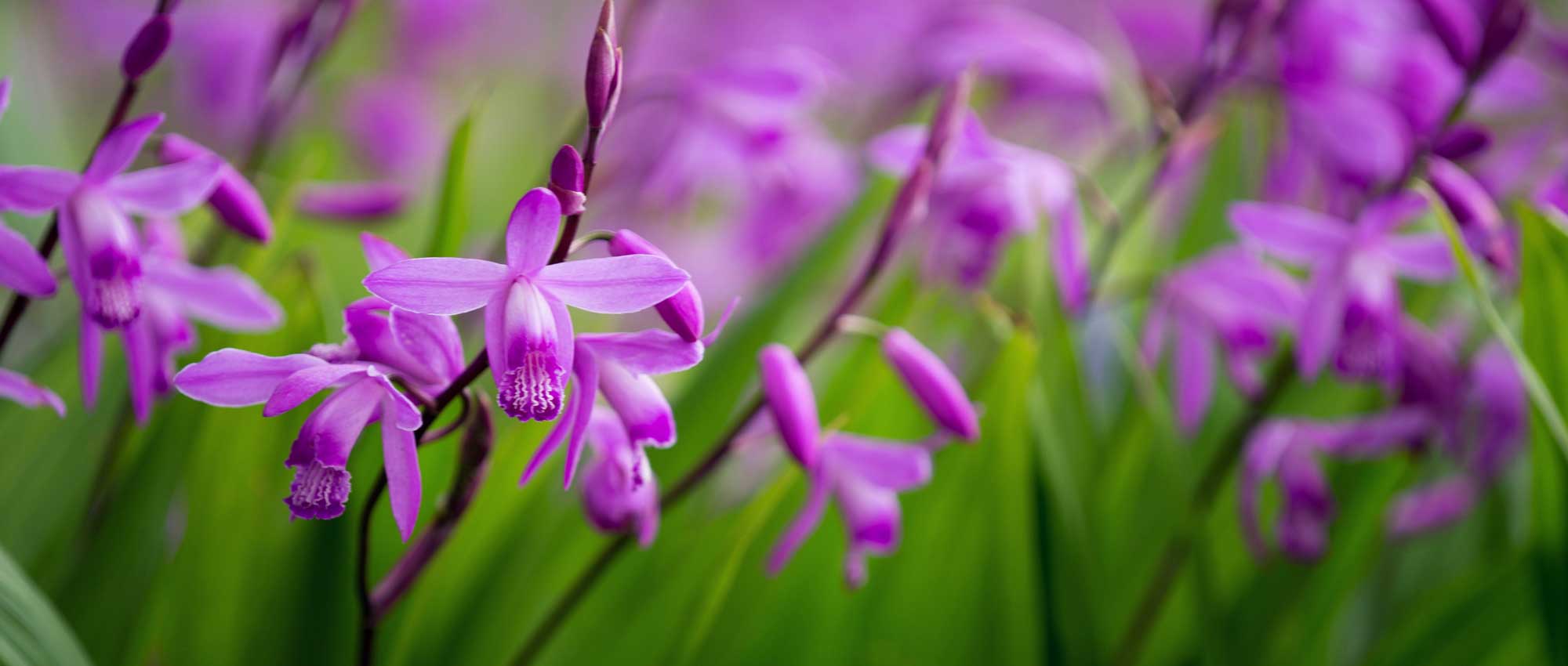
Bletilla Penway Paris - Hyacinth orchid in pictures
Plant habit
Flowering
Foliage
Botanical data
Bletilla
striata x szetchuanica
Penway Paris
Orchidaceae
Chinese Ground Orchid
Cultivar or hybrid
Planting and care
Plant the Bletilla striata in a rich, humus-rich, light, airy, and well-drained soil. You can improve the soil in your garden by incorporating compost for perennial plants. For optimal results, add 20% lava stone, which will help maintain good moisture in summer while ensuring good drainage during winter. More than intense frost, the excess water in winter proves to be the main enemy of the pseudobulbs. Bletilla can also be grown in pots. However, be sure to choose a large container with a minimum diameter of 30 to 40 cm to allow new shoots to develop on the periphery. Water regularly from April to September, then let your plants rest. In regions with very harsh cold temperatures (-20 °C), place your pots in a cool (below five °C) and bright location in winter.
Planting period
Intended location
Care
Planting & care advice
-
-

-
-
-
-
-

-
This item has not been reviewed yet - be the first to leave a review about it.
Recently viewed products
Haven't found what you were looking for?
Hardiness is the lowest winter temperature a plant can endure without suffering serious damage or even dying. However, hardiness is affected by location (a sheltered area, such as a patio), protection (winter cover) and soil type (hardiness is improved by well-drained soil).

The flowering period indicated on our website applies to countries and regions located in USDA zone 8 (France, the United Kingdom, Ireland, the Netherlands, etc.)
It will vary according to where you live:- In zones 9 to 10 (Italy, Spain, Greece, etc.), flowering will occur about 2 to 4 weeks earlier.
- In zones 6 to 7 (Germany, Poland, Slovenia, and lower mountainous regions), flowering will be delayed by 2 to 3 weeks.
- In zone 5 (Central Europe, Scandinavia), blooming will be delayed by 3 to 5 weeks.
In temperate climates, pruning of spring-flowering shrubs (forsythia, spireas, etc.) should be done just after flowering.
Pruning of summer-flowering shrubs (Indian Lilac, Perovskia, etc.) can be done in winter or spring.
In cold regions as well as with frost-sensitive plants, avoid pruning too early when severe frosts may still occur.
The planting period indicated on our website applies to countries and regions located in USDA zone 8 (France, United Kingdom, Ireland, Netherlands).
It will vary according to where you live:
- In Mediterranean zones (Marseille, Madrid, Milan, etc.), autumn and winter are the best planting periods.
- In continental zones (Strasbourg, Munich, Vienna, etc.), delay planting by 2 to 3 weeks in spring and bring it forward by 2 to 4 weeks in autumn.
- In mountainous regions (the Alps, Pyrenees, Carpathians, etc.), it is best to plant in late spring (May-June) or late summer (August-September).
The harvesting period indicated on our website applies to countries and regions in USDA zone 8 (France, England, Ireland, the Netherlands).
In colder areas (Scandinavia, Poland, Austria...) fruit and vegetable harvests are likely to be delayed by 3-4 weeks.
In warmer areas (Italy, Spain, Greece, etc.), harvesting will probably take place earlier, depending on weather conditions.
The sowing periods indicated on our website apply to countries and regions within USDA Zone 8 (France, UK, Ireland, Netherlands).
In colder areas (Scandinavia, Poland, Austria...), delay any outdoor sowing by 3-4 weeks, or sow under glass.
In warmer climes (Italy, Spain, Greece, etc.), bring outdoor sowing forward by a few weeks.
Shipping country and language
Your country of residence may be:
Your country of residence is:
For a better user experience on our website, you can select:
Your shipping country:
-
 Austria
-
 Belgium
-
 Bosnia & Herzegovina
-
 Bulgaria
-
 Croatia
-
 Cyprus
-
 Czechia
-
 Denmark
-
 Estonia
-
 Finland
-
 France
-
 Germany
-
 Greece
-
 Hungary
-
 Iceland
-
 Ireland
-
 Italy
Italy
-
 Latvia
-
 Liechtenstein
-
 Lithuania
-
 Luxembourg
-
 Malta
Malta
-
 Netherlands
-
 Poland
-
 Portugal
-
 Romania
-
 Serbia
-
 Slovakia
-
 Slovenia
-
 Spain
Spain
-
 Sweden
-
 Switzerland
Language:
-
French
-
 English
-
Spanish
-
Italian
-
German
-
Portuguese
-
Dutch
-
Finnish
My Account
Hello
My wish lists
My cart
Log in / Register
Existing customer?
This form is protected by reCAPTCHA - the Google Privacy Policy and Terms of Service apply.
New customer?
Create an account to track your orders, access our customer service and, if you wish, make the most of our upcoming offers.