Eucomis comosa Can Can - Pineapple flower
Eucomis comosa Can Can - Pineapple flower
Eucomis comosa Can Can - Pineapple flower
Eucomis comosa Can Can
Pineapple flower, Pineapple lily
Back-to-school special offer!
Get €10 off for every €50 you spend! And get up to €40 off on a single order.
How does it work?
1. Shop your favourites
Add your favourite plants to your basket. For every €50 you spend (excluding delivery charges, store credit and the plastic-free option), you’ll receive a €10 voucher.
€50 spent = €10 voucher
€100 spent = €20 voucher
€150 spent = €30 voucher
€200 spent = €40 voucher
2. Place your order
Once your basket reaches one of the spending thresholds, place your order. You can even choose your delivery date!
3. Receive your voucher
As soon as your order has been shipped, you’ll receive an email containing your personal voucher code and its value.
4. Use it on your next order
Your voucher is valid for 90 days from the date you receive it. It can be used once only, on a new order worth at least the value of the voucher, excluding delivery charges.
Please note: Vouchers can be combined with other offers, but cannot be split or refunded.
Home or relay delivery (depending on size and destination)
Important: You may be charged customs duties by your country’s customs authorities upon delivery.
Schedule delivery date,
and select date in basket
This plant carries a 6 months recovery warranty
More information
We guarantee the quality of our plants for a full growing cycle, and will replace at our expense any plant that fails to recover under normal climatic and planting conditions.
Would this plant suit my garden?
Set up your Plantfit profile →
Description
Eucomis comosa 'Can Can', also known as pineapple lily or pineapple flower, is a perennial bulbous plant with a tropical appearance that is actually hardy in many regions. It forms a rosette of long, ribbon-like leaves with very ornamental wavy edges. In summer, its spectacular flowering spike reaches up to 70 cm in height, carried by a purple floral stem. Dozens of small star-shaped flowers bloom for several weeks, in shades ranging from pinkish white to creamy white. This astonishing and little-known plant has a great impact in flowerbeds in the garden and thrives just as well in a pot to enhance a terrace. It grows in rich, moist, well-drained soil, in full sun and can tolerate light shade.
Eucomis was classified in the Lily family, then moved to the Hyacinthaceae family and now belongs to the Asparagaceae family, which includes several former botanical families. It includes asparagus (Asparagus), after which the family is named, and a multitude of ornamental genera, such as Yucca, Agave, or Chlorophytum found in our interiors. There are 15 species of Eucomis, all deciduous and native to southern Africa. These plants grow from a swollen bulb, forming clumps of crown-like leaves resembling the silhouette of a pineapple, hence their common name.
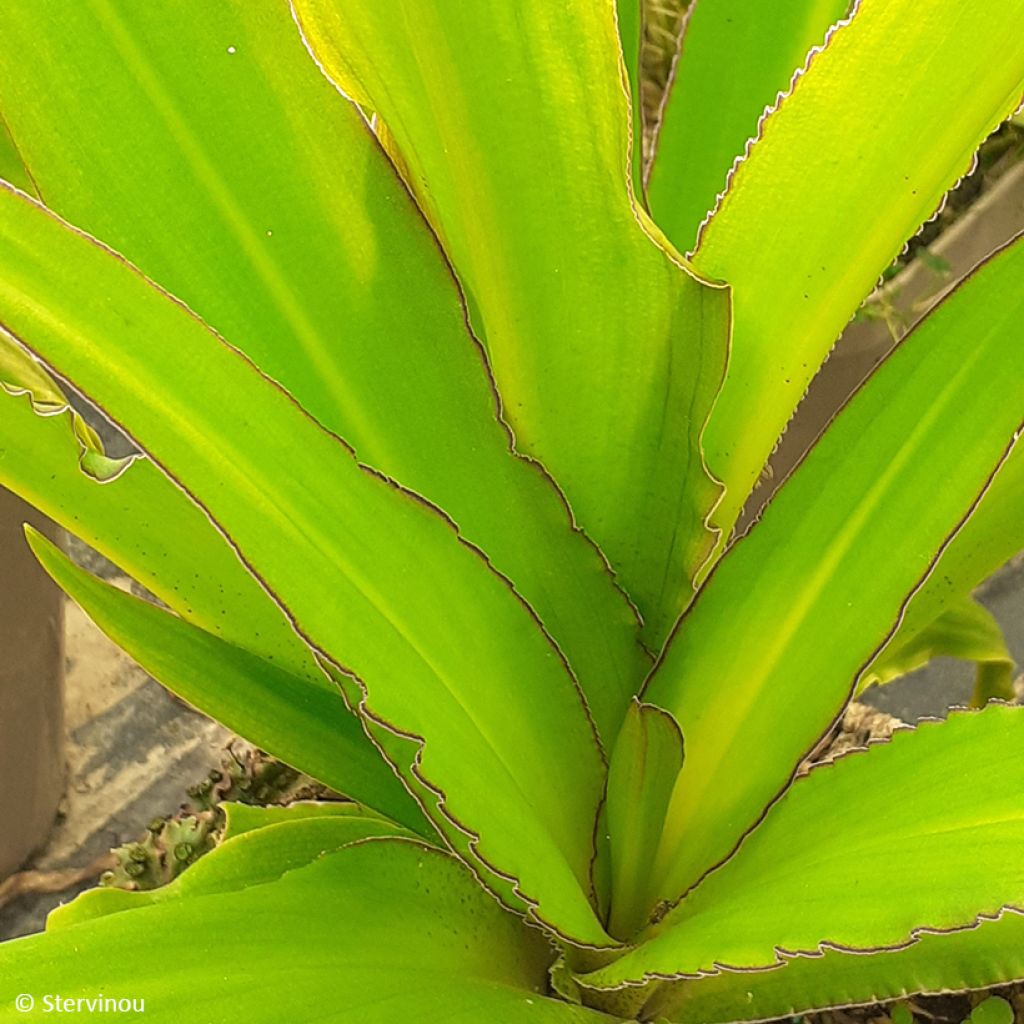
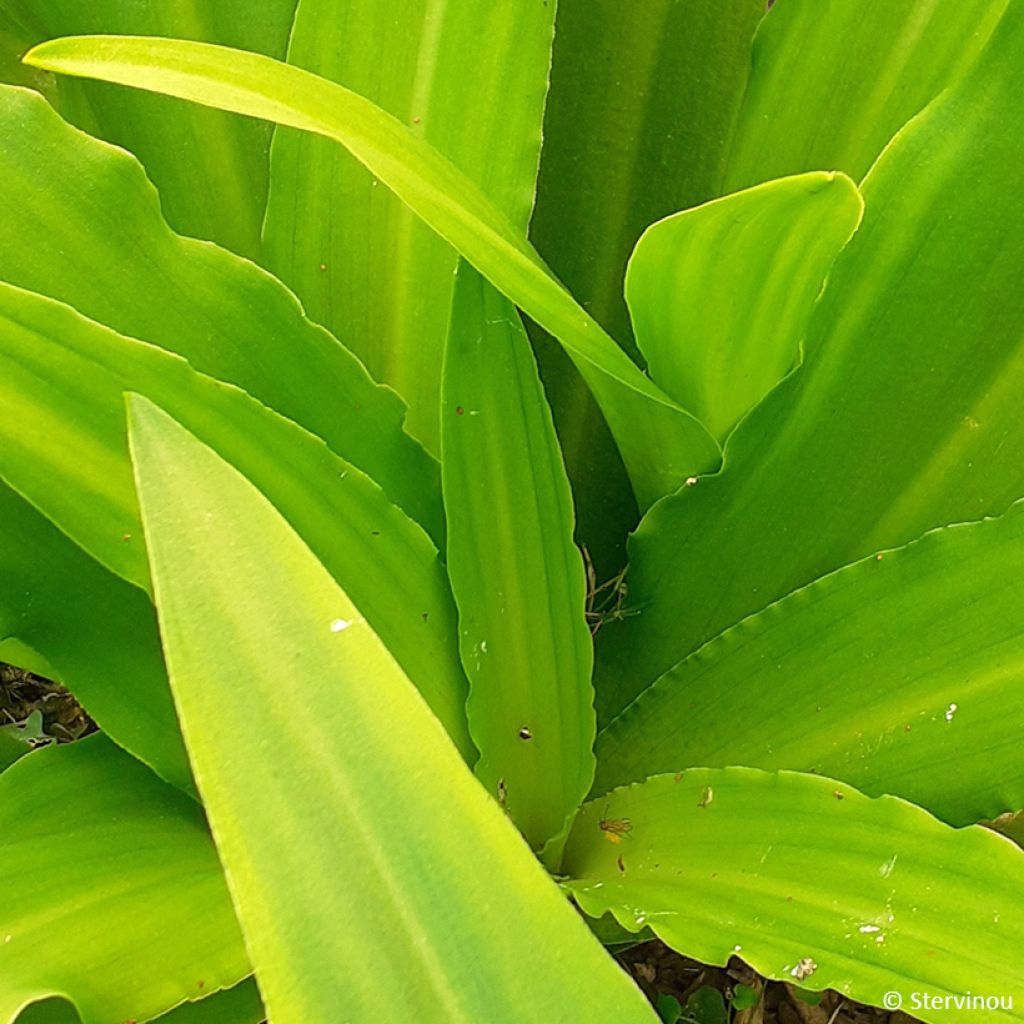
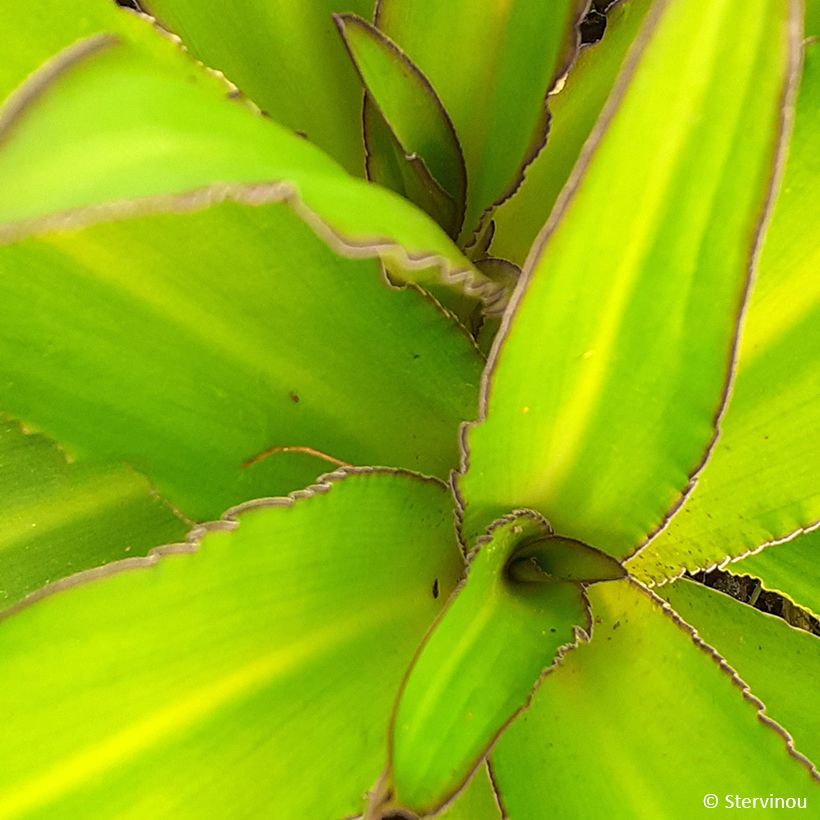
'Can Can' is a horticultural variety obtained by the American breeder Eddie Welsh, who ran a nursery near the town of Palmerston North in New Zealand and was a world specialist in the Eucomis genus. Like the botanical species, this cultivar forms a large rosette of long, narrow leaves, with a well-defined central vein, giving the leaf blade a V-shaped open section. Gradually tapering to a point, the leaves have wavy edges, creating a very aesthetic visual effect. Of a beautiful bright green, they are sometimes edged with a purple line that further enhances their original architecture. Measuring 60 to 70 cm in diameter, the deciduous clump of leaves that emerges in spring is quite impressive.
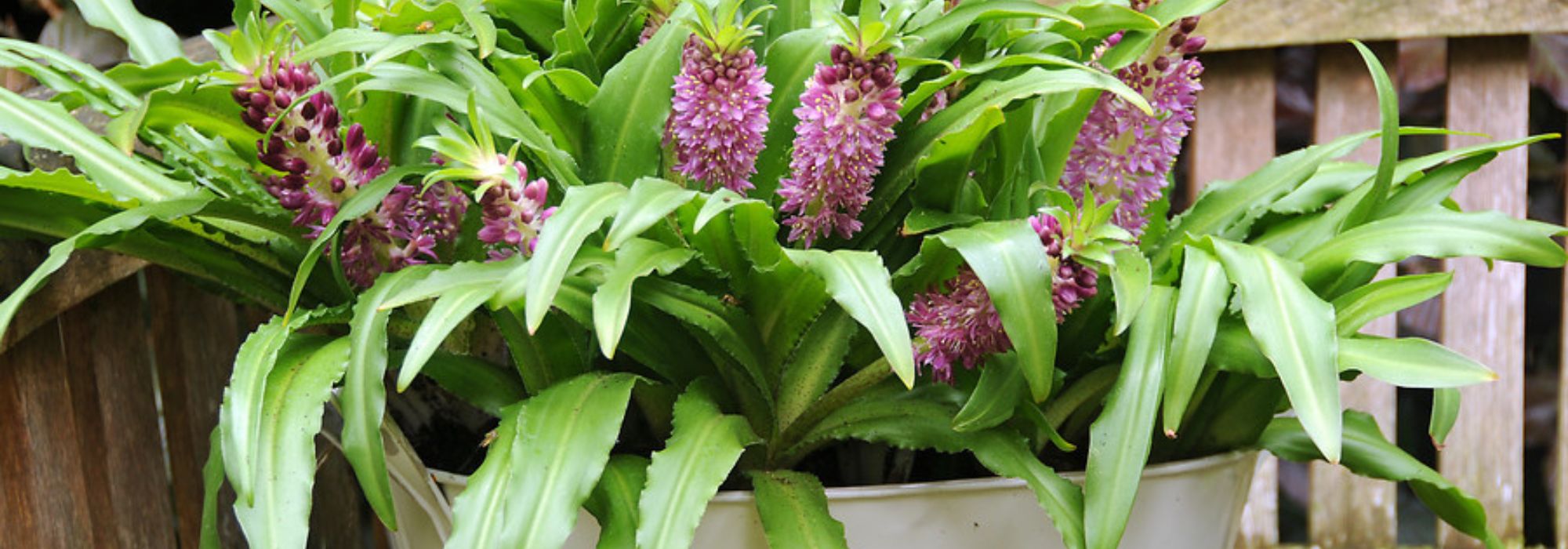
By late spring, a growth forms in the centre of the rosette and grows to exceed the height of the foliage. This purple stem supports a floral spike made up of several dozen flowers and measuring around twenty-five centimetres in length. Pink floral buds open into small six-branched cream-white stars, dotted with a dark pink heart. The flowers open sequentially from the bottom of the spike upwards, with mature flowers being overshadowed by unopened buds, while a cluster of green bracts dominates the spike, giving it the appearance of a pineapple. The flowering, which can last up to a month and a half, spreads between July and September and is eye-catching in the garden, given how unusual and exceptional the plant is. In autumn, its deciduous foliage disappears, entering dormancy, awaiting the following spring to emerge again.
With quite respectable hardiness, except in cold regions where frost can harm it, Eucomis comosa 'Can Can' is one of those ideal plants to give a tropical feel to a flowerbed. Pair it with Aloe striatula, with an equally exotic silhouette featuring fleshy rosettes and abundant flowering in orange-yellow spikes, placing it on a small mound of soil for good drainage and to enhance its appearance. Hedychiums, or ornamental gingers, are also perfect for evoking the Tropics with their large silky green leaves and notably their incredibly graceful flower spikes. Position them in the background under light shade and water them in summer to promote flowering. And to add an even more exuberant touch, plant a Tetrapanax papyrifera 'Rex', with huge leaves that can reach 1.10 m in diameter, especially if pruned severely each year. Also, consider surrounding it with a rhizome barrier, as it tends to sucker profusely.

Eucomis comosa Can Can - Pineapple flower in pictures
Plant habit
Flowering
Foliage
Botanical data
Eucomis
comosa
Can Can
Asparagaceae
Pineapple flower, Pineapple lily
Cultivar or hybrid
Planting and care
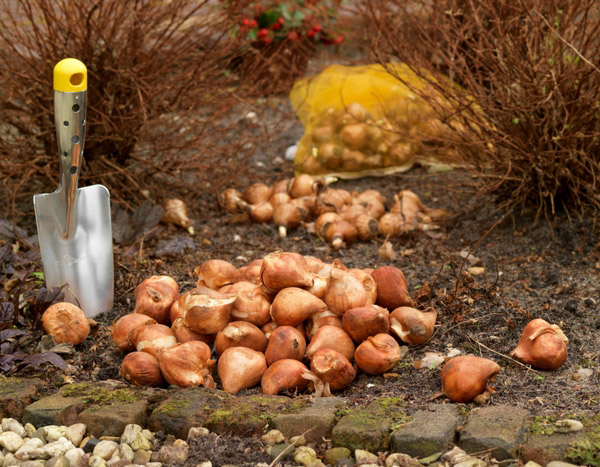
Plant Eucomis 'Can Can' bulbs 10 cm deep in well-drained soil, spaced 15 cm apart. In heavy soil, plant the bulb in pure sand. Also easy in a pot: 1 bulb per 18 cm diameter pot. The plant is hardy down to -15 °C, in well-drained soils not waterlogged in winter. Where severe winters are expected, mulch the clumps and protect them with a tarpaulin or ridge tile. It is also possible to lift the bulb from the ground in autumn and replant it in spring.
Planting period
Intended location
Care
Planting & care advice
-

-
-

-
-
-
-
-

This item has not been reviewed yet - be the first to leave a review about it.
Recently viewed products
Haven't found what you were looking for?
Hardiness is the lowest winter temperature a plant can endure without suffering serious damage or even dying. However, hardiness is affected by location (a sheltered area, such as a patio), protection (winter cover) and soil type (hardiness is improved by well-drained soil).

The flowering period indicated on our website applies to countries and regions located in USDA zone 8 (France, the United Kingdom, Ireland, the Netherlands, etc.)
It will vary according to where you live:- In zones 9 to 10 (Italy, Spain, Greece, etc.), flowering will occur about 2 to 4 weeks earlier.
- In zones 6 to 7 (Germany, Poland, Slovenia, and lower mountainous regions), flowering will be delayed by 2 to 3 weeks.
- In zone 5 (Central Europe, Scandinavia), blooming will be delayed by 3 to 5 weeks.
In temperate climates, pruning of spring-flowering shrubs (forsythia, spireas, etc.) should be done just after flowering.
Pruning of summer-flowering shrubs (Indian Lilac, Perovskia, etc.) can be done in winter or spring.
In cold regions as well as with frost-sensitive plants, avoid pruning too early when severe frosts may still occur.
The planting period indicated on our website applies to countries and regions located in USDA zone 8 (France, United Kingdom, Ireland, Netherlands).
It will vary according to where you live:
- In Mediterranean zones (Marseille, Madrid, Milan, etc.), autumn and winter are the best planting periods.
- In continental zones (Strasbourg, Munich, Vienna, etc.), delay planting by 2 to 3 weeks in spring and bring it forward by 2 to 4 weeks in autumn.
- In mountainous regions (the Alps, Pyrenees, Carpathians, etc.), it is best to plant in late spring (May-June) or late summer (August-September).
The harvesting period indicated on our website applies to countries and regions in USDA zone 8 (France, England, Ireland, the Netherlands).
In colder areas (Scandinavia, Poland, Austria...) fruit and vegetable harvests are likely to be delayed by 3-4 weeks.
In warmer areas (Italy, Spain, Greece, etc.), harvesting will probably take place earlier, depending on weather conditions.
The sowing periods indicated on our website apply to countries and regions within USDA Zone 8 (France, UK, Ireland, Netherlands).
In colder areas (Scandinavia, Poland, Austria...), delay any outdoor sowing by 3-4 weeks, or sow under glass.
In warmer climes (Italy, Spain, Greece, etc.), bring outdoor sowing forward by a few weeks.
Shipping country and language
Your country of residence may be:
Your country of residence is:
For a better user experience on our website, you can select:
Your shipping country:
-
 Austria
-
 Belgium
-
 Bosnia & Herzegovina
-
 Bulgaria
-
 Croatia
-
 Cyprus
-
 Czechia
-
 Denmark
-
 Estonia
-
 Finland
-
 France
-
 Germany
-
 Greece
-
 Hungary
-
 Iceland
-
 Ireland
-
 Italy
Italy
-
 Latvia
-
 Liechtenstein
-
 Lithuania
-
 Luxembourg
-
 Malta
Malta
-
 Netherlands
-
 Poland
-
 Portugal
-
 Romania
-
 Serbia
-
 Slovakia
-
 Slovenia
-
 Spain
Spain
-
 Sweden
-
 Switzerland
Language:
-
French
-
 English
-
Spanish
-
Italian
-
German
-
Portuguese
-
Dutch
-
Finnish
My Account
Hello
My wish lists
My cart
Log in / Register
Existing customer?
This form is protected by reCAPTCHA - the Google Privacy Policy and Terms of Service apply.
New customer?
Create an account to track your orders, access our customer service and, if you wish, make the most of our upcoming offers.