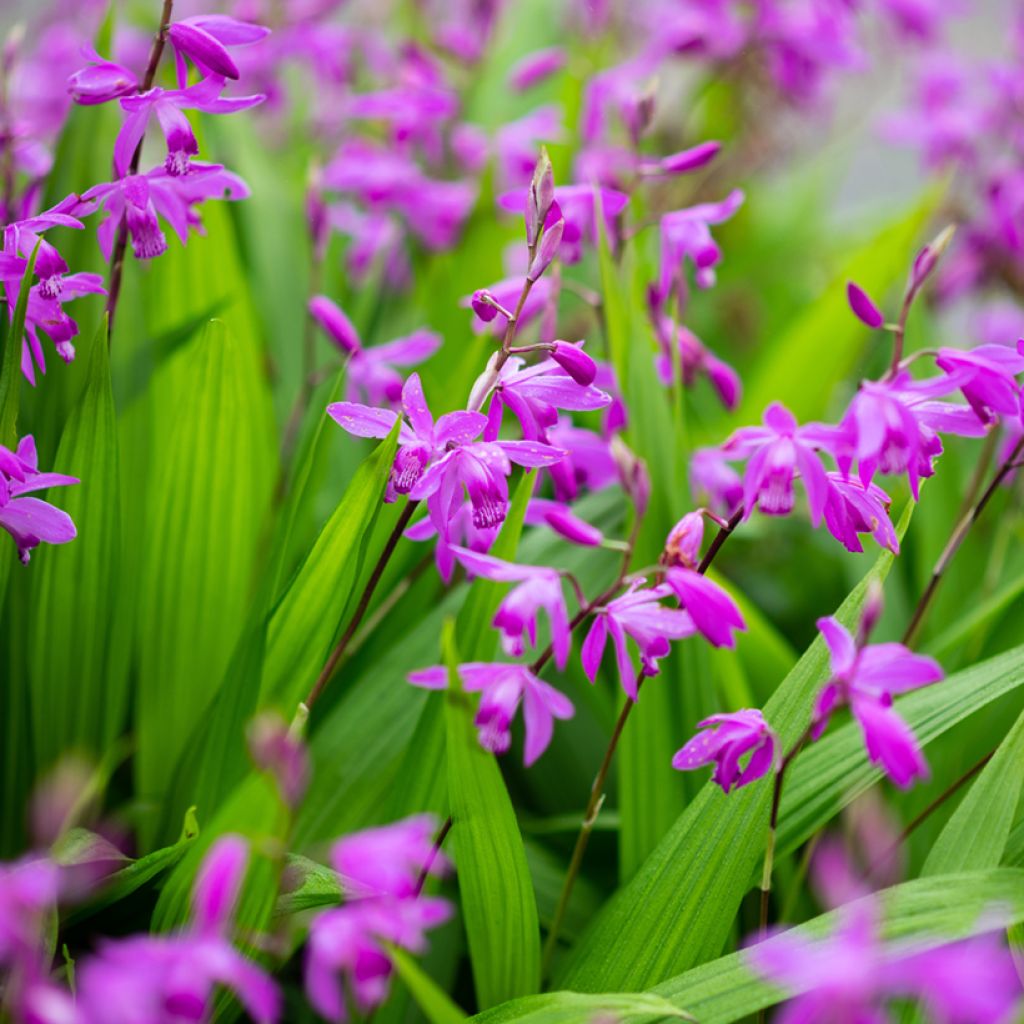
Bletilla striata Purple - Hyacinth orchid
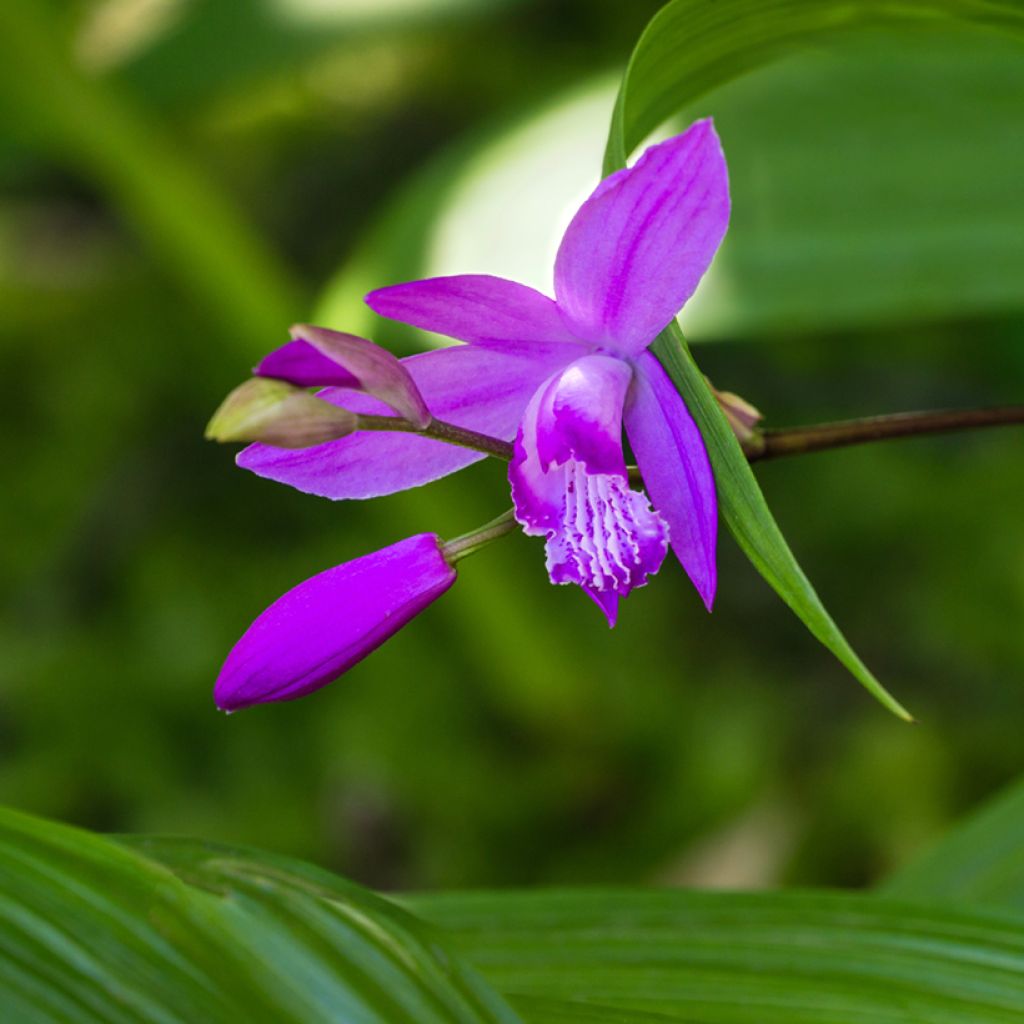
Bletilla striata Purple - Hyacinth orchid
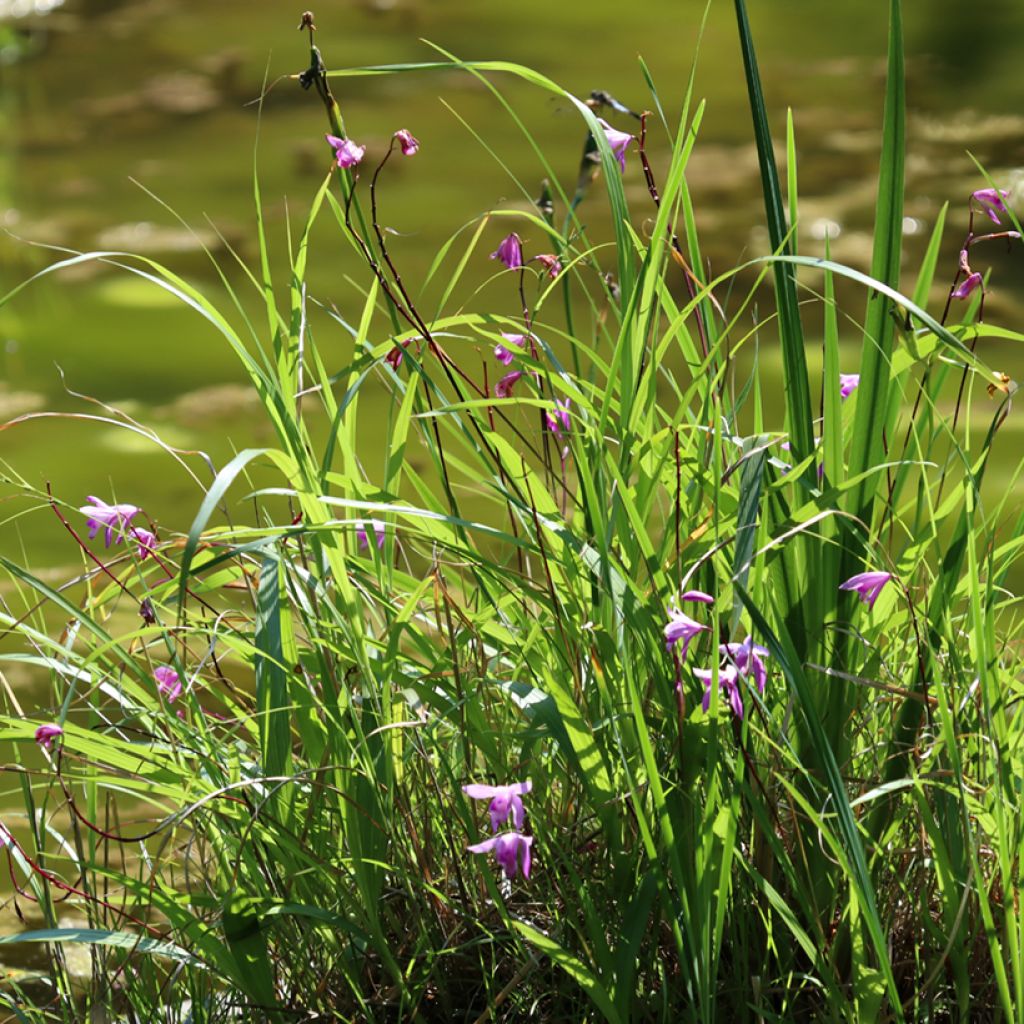
Bletilla striata Purple - Hyacinth orchid
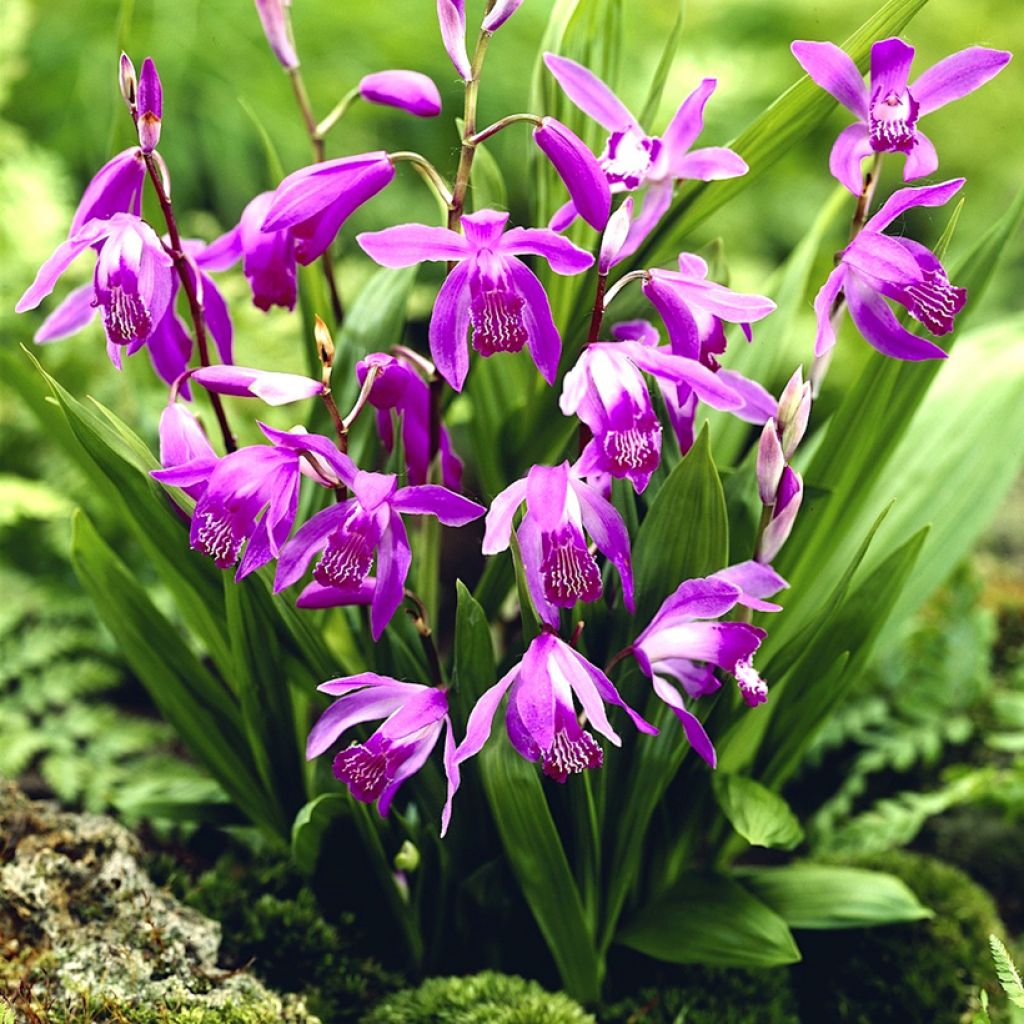
Bletilla striata Purple - Hyacinth orchid
View more pictures
Hide images
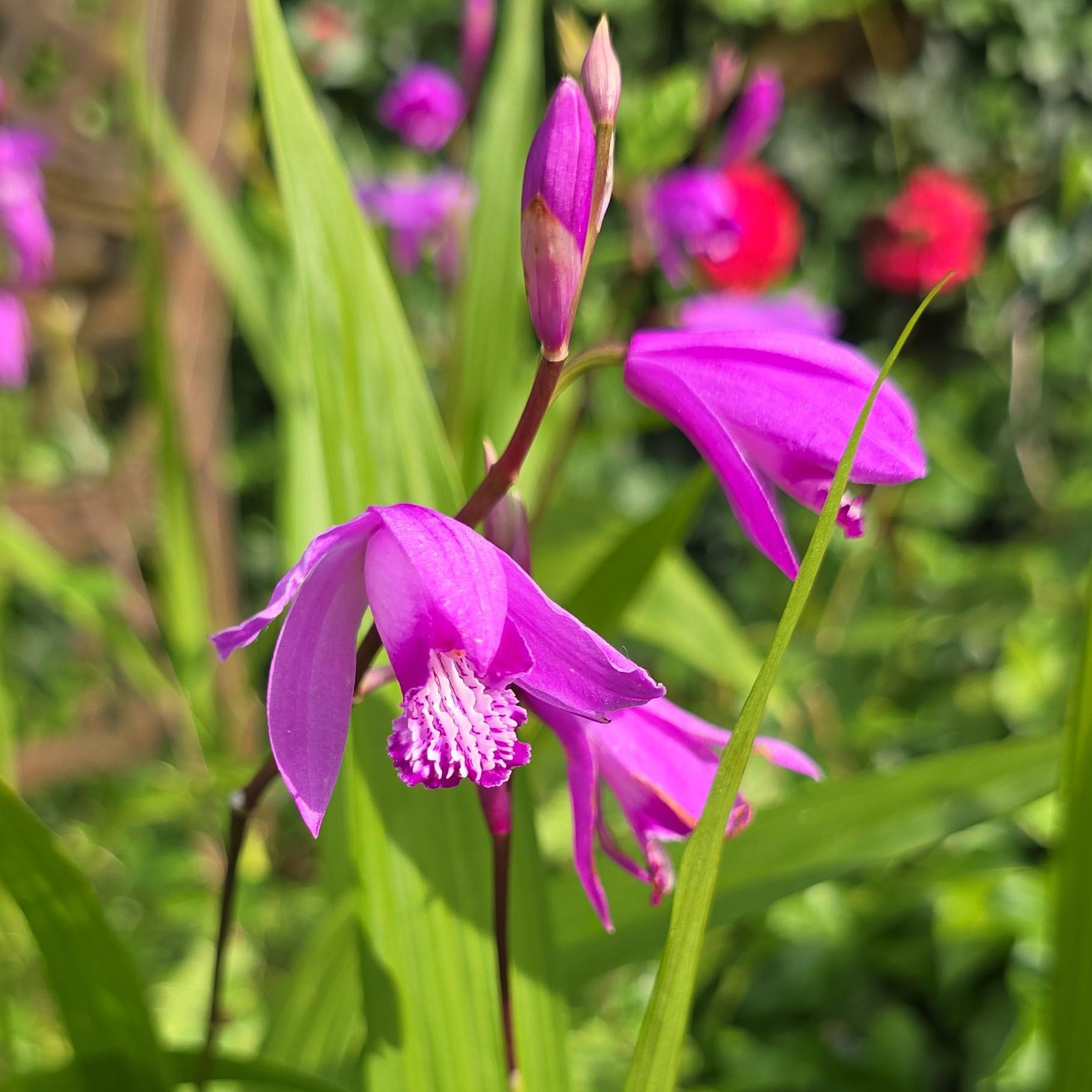
Alain B.
Bletilla striata Purple - Hyacinth orchid
Alain B. • 69 FR
Bletilla striata Purple - Hyacinth orchid
Bletilla striata Purple
Chinese Ground Orchid, Hyacinth Orchid, Urn Orchid
Back-to-school special offer!
Get €10 off for every €50 you spend! And get up to €40 off on a single order.
How does it work?
1. Shop your favourites
Add your favourite plants to your basket. For every €50 you spend (excluding delivery charges, store credit and the plastic-free option), you’ll receive a €10 voucher.
€50 spent = €10 voucher
€100 spent = €20 voucher
€150 spent = €30 voucher
€200 spent = €40 voucher
2. Place your order
Once your basket reaches one of the spending thresholds, place your order. You can even choose your delivery date!
3. Receive your voucher
As soon as your order has been shipped, you’ll receive an email containing your personal voucher code and its value.
4. Use it on your next order
Your voucher is valid for 90 days from the date you receive it. It can be used once only, on a new order worth at least the value of the voucher, excluding delivery charges.
Please note: Vouchers can be combined with other offers, but cannot be split or refunded.
Home or relay delivery (depending on size and destination)
Important: You may be charged customs duties by your country’s customs authorities upon delivery.
Schedule delivery date
and select date in basket
This plant carries a 12 months recovery warranty
More information
We guarantee the quality of our plants for a full growing cycle, and will replace at our expense any plant that fails to recover under normal climatic and planting conditions.
Would this plant suit my garden?
Set up your Plantfit profile →
Description
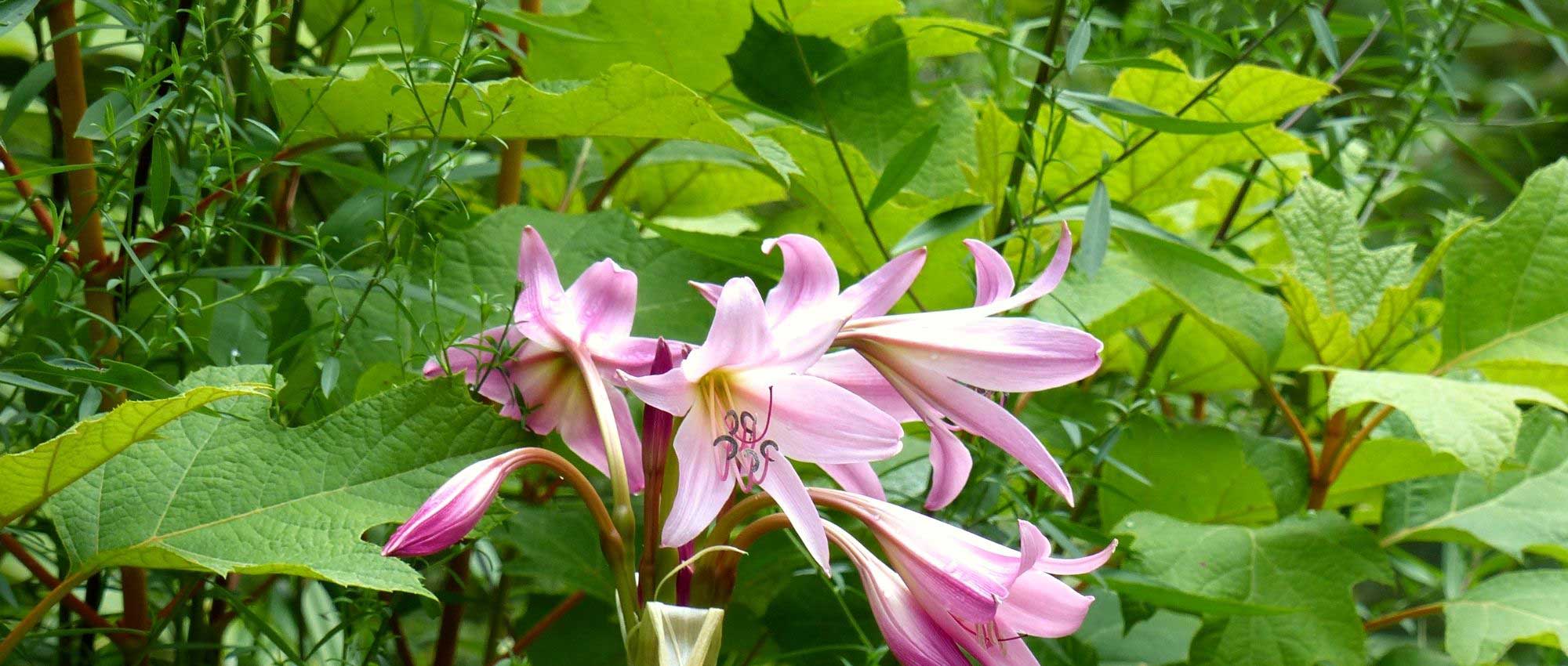
Bletilla striata 'Purple' is one of the easiest terrestrial orchids to grow, and also one of the hardiest. It forms large clumps of elegant, tapering, beautiful slightly shiny green leaves, which disappear in winter. Its typical, purplish pink orchid flowers appear in late spring. This perennial will tolerate sun in not too hot climates, and also thrives in partial shade, in any well-drained, not too dry garden soil.
Bletilla belongs to the vast and fascinating Orchidaceae family, rich in 850 genera and 25,000 species found in tropical to temperate regions. Many are epiphytes, using trees as support to grow, and others are terrestrial, growing in the ground. The Bletilla genus, which has only five species, is part of this second category. Bletilla striata is an Asian species native to China, Tibet (in the Himalayas), Japan, and Myanmar (Burma). It is found on cliffs or in mountain forests, at altitudes ranging from 1100 to 3200 m, which explains its good hardiness. In these regions, flowering occurs between March and July depending on the climatic zones. The species produces pink flowers and 'Purple' is a variant with more purplish flowers.
This orchid develops from egg-shaped, compressed pseudobulbs, which serve as a reserve organ allowing the plant to resgrow in spring. The deciduous foliage disappears in winter and reappears in spring in the form of long, narrow, tapering leaves, reaching 45 cm long. They are a beautiful green, curiously pleated, and their surface is semi-shiny. Generally, there are 4 to 6 leaves per shoot, and over time they form a fairly dense carpet, as the plant gradually spreads, even naturalising when the ambient conditions are perfect. After a few years, a plant can develop to produce 20 to 30 flower stems. These appear in June and bear up to a dozen flowers each. They open successively and not in groups on the spikes. The flowers are typical of orchids with petals and sepals of roughly equal size except for the lower petal, called the lip. While the other five are uniformly purplish pink and have a lanceolate shape with a slightly pointed tip, the lip is widened at its tip, which is wrinkled and of a more intense purple with wavy white veins, to attract pollinating insects. Flowering lasts approximately one month between June and July. The foliage, on the other hand, persists for quite a long time, until November, then disappears, and the plant enters its winter dormancy.
Bletilla striata 'Purple' is the beginner's orchid. It is easy to grow, its main requirement slightly moist soil in summer, and not too chalky. Its exotic appearance can help create a tropical-inspired bed, where you can plant it in the foreground. Plant a few clumps of ornamental ginger, such as Hedychium gardnerianum, with its exuberant foliage and long, fragrant, orange-yellow flower spikes, in the second row. In not too cold climates, you can also make room for the astonishing Musella lasiocarpa, a dwarf banana tree called the "golden lotus" due to its unique golden yellow inflorescence. Arisaema fargesii, or cobra lily, will also add character to your bed with its mahogany-coloured flowers, veined with white, imitating the posture of a snake.
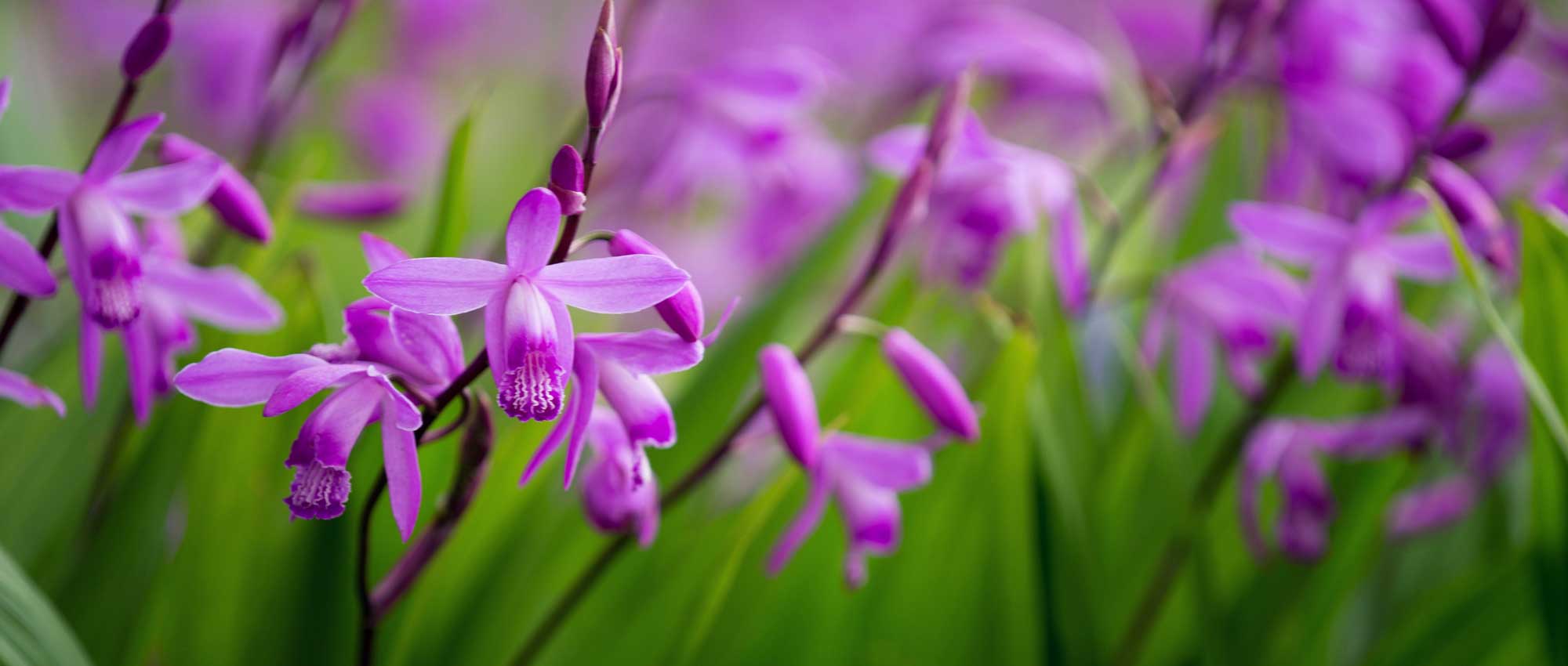
Bletilla striata Purple - Hyacinth orchid in pictures
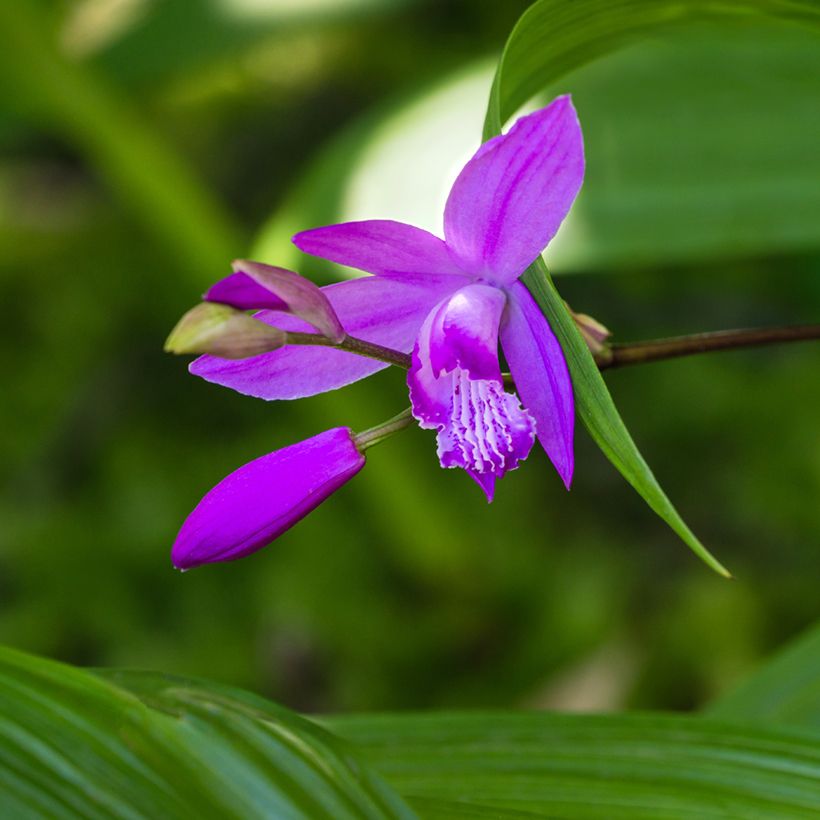
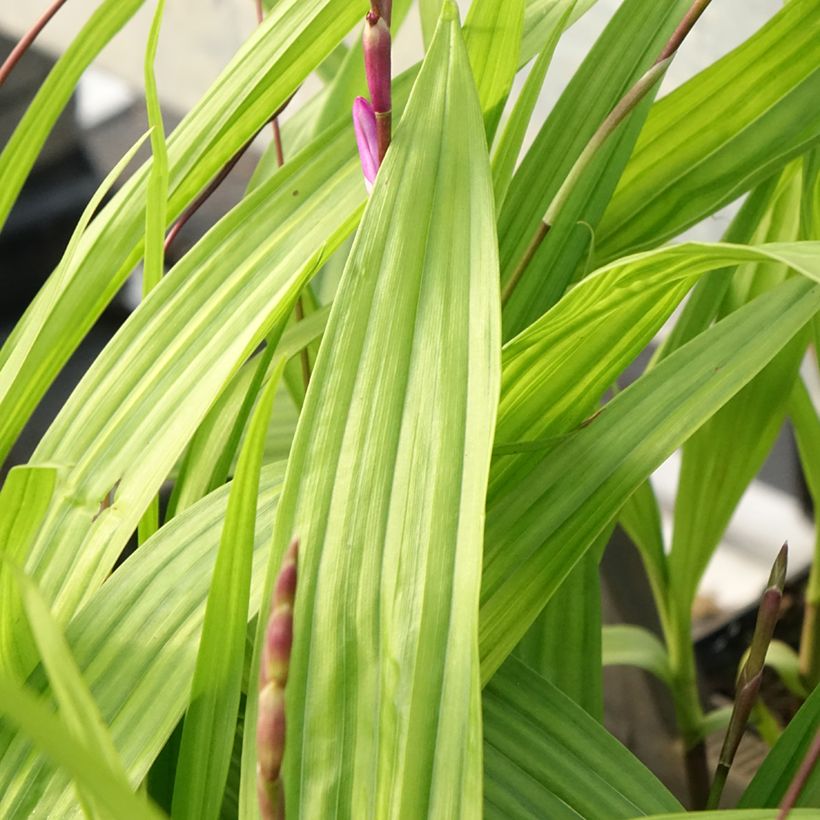
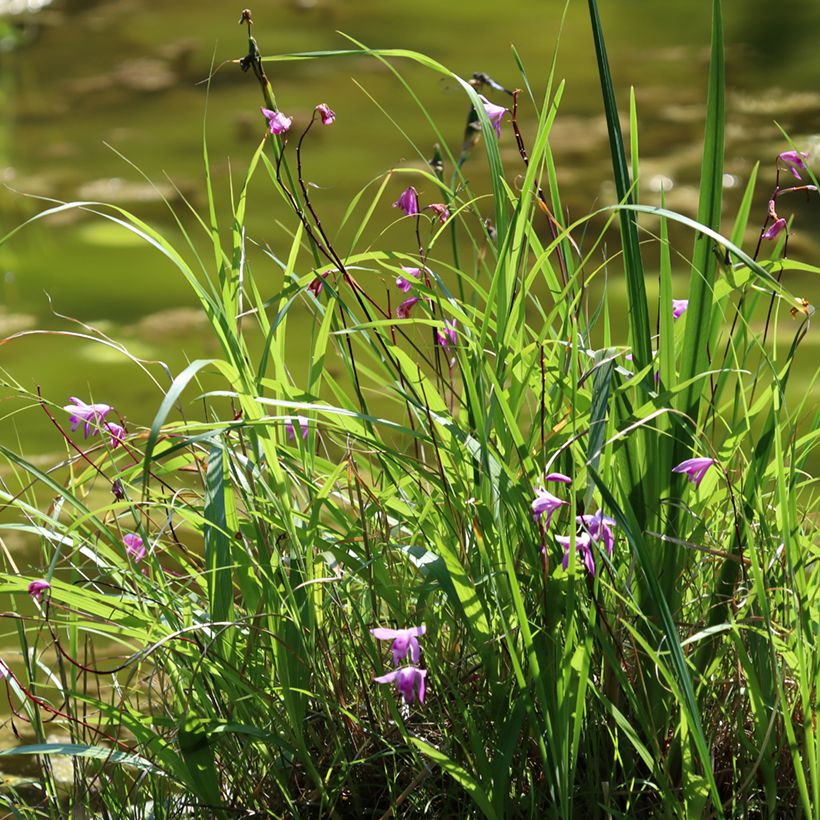
Flowering
Foliage
Plant habit
Botanical data
Bletilla
striata
Purple
Orchidaceae
Chinese Ground Orchid, Hyacinth Orchid, Urn Orchid
Cultivar or hybrid
Planting and care
Plant the 'Purple' Bletilla striata in a semi-shaded location in southern regions, and in sunny areas where the sun is less intense. It needs rich, light, airy, and well-drained soil, remaining slightly moist in summer. You can improve your garden soil by incorporating compost for perennial plants. For optimal results, add 20% lava rock, which will help maintain good moisture in summer while ensuring proper drainage in winter. Rather than intense frost, it is an excess of water in winter that proves to be the main enemy of the pseudobulbs. If your garden soil is too compact or clayey, we recommend creating a planting pocket. Dig a hole about 40 cm in all directions, cover the bottom with a layer of drainage (lava rock or fine gravel), and fill it with the above-mentioned mixture.
Bletilla can also be grown in pots. However, make sure to choose a container that is large enough, with a minimum diameter of 30 to 40 cm, to allow new shoots to develop on the periphery. Water regularly from April to September, then let your plants rest. In winter, in regions with very harsh cold (-20°C), place your pots in a sheltered, cool (below 5°C), and bright location.
Planting period
Intended location
Care
Planting & care advice
-
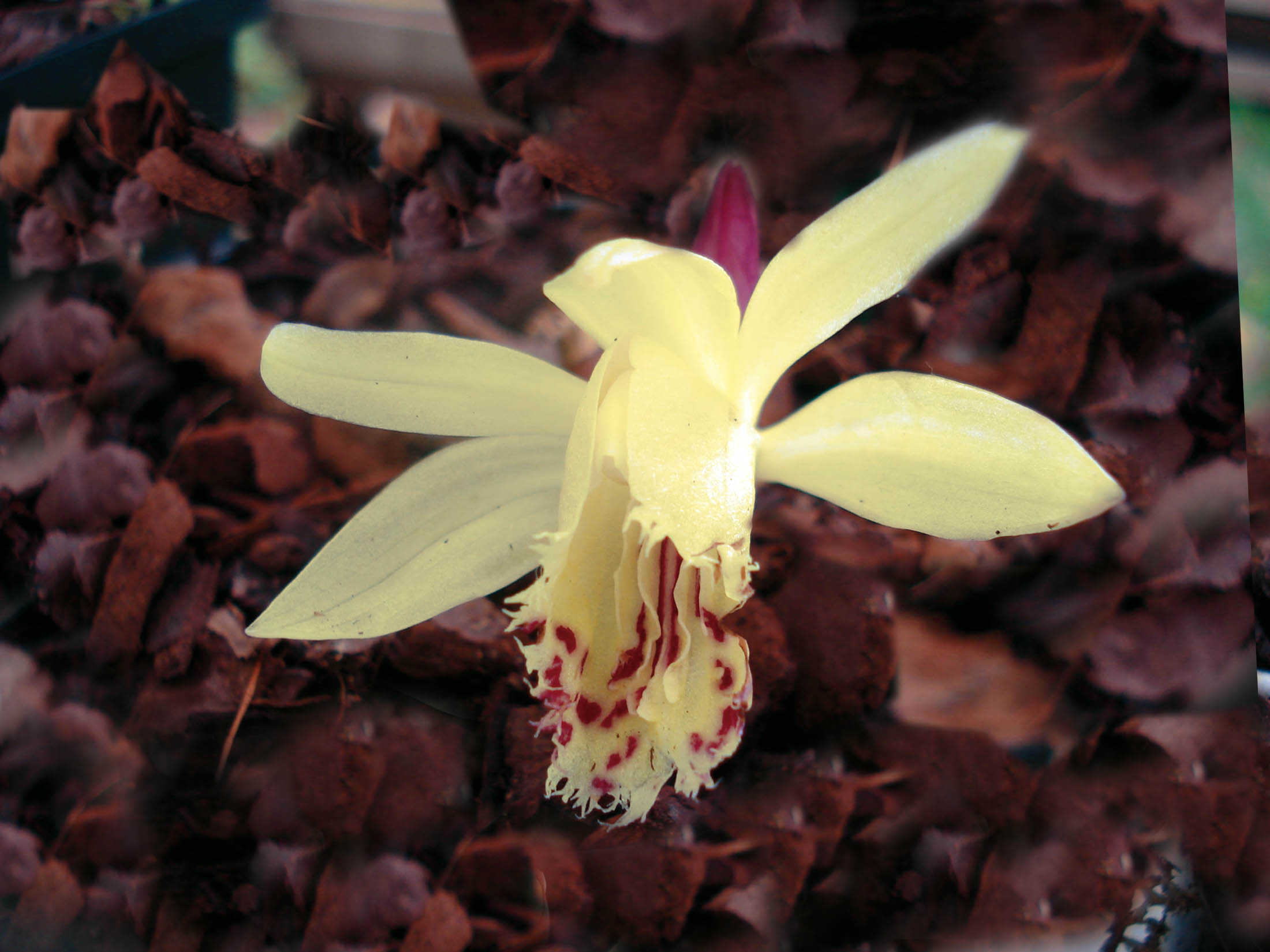
-
-
-
-
-
-
-
This item has not been reviewed yet - be the first to leave a review about it.
Recently viewed products
Haven't found what you were looking for?
Hardiness is the lowest winter temperature a plant can endure without suffering serious damage or even dying. However, hardiness is affected by location (a sheltered area, such as a patio), protection (winter cover) and soil type (hardiness is improved by well-drained soil).

The flowering period indicated on our website applies to countries and regions located in USDA zone 8 (France, the United Kingdom, Ireland, the Netherlands, etc.)
It will vary according to where you live:- In zones 9 to 10 (Italy, Spain, Greece, etc.), flowering will occur about 2 to 4 weeks earlier.
- In zones 6 to 7 (Germany, Poland, Slovenia, and lower mountainous regions), flowering will be delayed by 2 to 3 weeks.
- In zone 5 (Central Europe, Scandinavia), blooming will be delayed by 3 to 5 weeks.
In temperate climates, pruning of spring-flowering shrubs (forsythia, spireas, etc.) should be done just after flowering.
Pruning of summer-flowering shrubs (Indian Lilac, Perovskia, etc.) can be done in winter or spring.
In cold regions as well as with frost-sensitive plants, avoid pruning too early when severe frosts may still occur.
The planting period indicated on our website applies to countries and regions located in USDA zone 8 (France, United Kingdom, Ireland, Netherlands).
It will vary according to where you live:
- In Mediterranean zones (Marseille, Madrid, Milan, etc.), autumn and winter are the best planting periods.
- In continental zones (Strasbourg, Munich, Vienna, etc.), delay planting by 2 to 3 weeks in spring and bring it forward by 2 to 4 weeks in autumn.
- In mountainous regions (the Alps, Pyrenees, Carpathians, etc.), it is best to plant in late spring (May-June) or late summer (August-September).
The harvesting period indicated on our website applies to countries and regions in USDA zone 8 (France, England, Ireland, the Netherlands).
In colder areas (Scandinavia, Poland, Austria...) fruit and vegetable harvests are likely to be delayed by 3-4 weeks.
In warmer areas (Italy, Spain, Greece, etc.), harvesting will probably take place earlier, depending on weather conditions.
The sowing periods indicated on our website apply to countries and regions within USDA Zone 8 (France, UK, Ireland, Netherlands).
In colder areas (Scandinavia, Poland, Austria...), delay any outdoor sowing by 3-4 weeks, or sow under glass.
In warmer climes (Italy, Spain, Greece, etc.), bring outdoor sowing forward by a few weeks.
Shipping country and language
Your country of residence may be:
Your country of residence is:
For a better user experience on our website, you can select:
Your shipping country:
-
 Austria
-
 Belgium
-
 Bosnia & Herzegovina
-
 Bulgaria
-
 Croatia
-
 Cyprus
-
 Czechia
-
 Denmark
-
 Estonia
-
 Finland
-
 France
-
 Germany
-
 Greece
-
 Hungary
-
 Iceland
-
 Ireland
-
 Italy
Italy
-
 Latvia
-
 Liechtenstein
-
 Lithuania
-
 Luxembourg
-
 Malta
Malta
-
 Netherlands
-
 Poland
-
 Portugal
-
 Romania
-
 Serbia
-
 Slovakia
-
 Slovenia
-
 Spain
Spain
-
 Sweden
-
 Switzerland
Language:
-
French
-
 English
-
Spanish
-
Italian
-
German
-
Portuguese
-
Dutch
-
Finnish
My Account
Hello
My wish lists
My cart
Log in / Register
Existing customer?
This form is protected by reCAPTCHA - the Google Privacy Policy and Terms of Service apply.
New customer?
Create an account to track your orders, access our customer service and, if you wish, make the most of our upcoming offers.