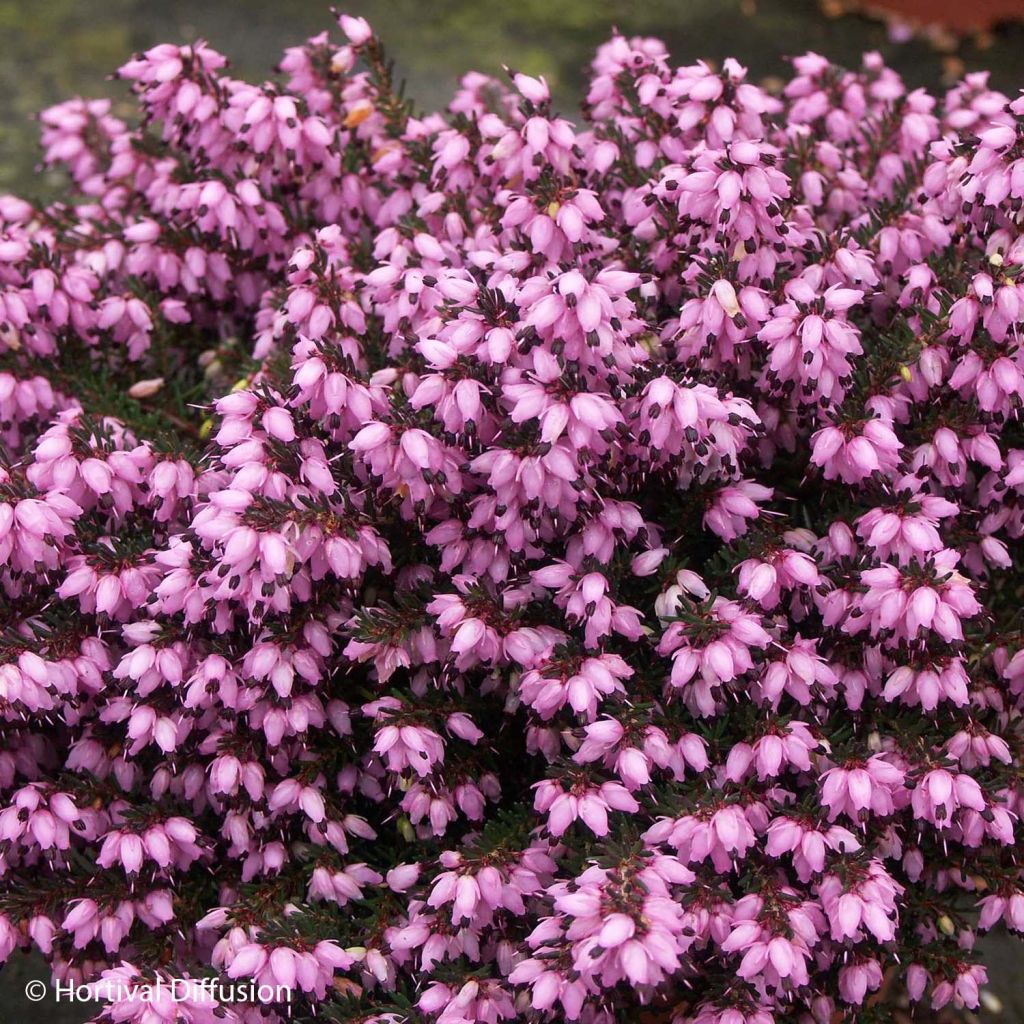
Erica darleyensis Tyann - Winter Heath
Erica darleyensis Tyann - Winter Heath
Erica darleyensis Tyann
Heather
Back-to-school special offer!
Get €10 off for every €50 you spend! And get up to €40 off on a single order.
How does it work?
1. Shop your favourites
Add your favourite plants to your basket. For every €50 you spend (excluding delivery charges, store credit and the plastic-free option), you’ll receive a €10 voucher.
€50 spent = €10 voucher
€100 spent = €20 voucher
€150 spent = €30 voucher
€200 spent = €40 voucher
2. Place your order
Once your basket reaches one of the spending thresholds, place your order. You can even choose your delivery date!
3. Receive your voucher
As soon as your order has been shipped, you’ll receive an email containing your personal voucher code and its value.
4. Use it on your next order
Your voucher is valid for 90 days from the date you receive it. It can be used once only, on a new order worth at least the value of the voucher, excluding delivery charges.
Please note: Vouchers can be combined with other offers, but cannot be split or refunded.
Home or relay delivery (depending on size and destination)
Important: You may be charged customs duties by your country’s customs authorities upon delivery.
Schedule delivery date,
and select date in basket
This plant carries a 24 months recovery warranty
More information
We guarantee the quality of our plants for a full growing cycle, and will replace at our expense any plant that fails to recover under normal climatic and planting conditions.
Would this plant suit my garden?
Set up your Plantfit profile →
Description
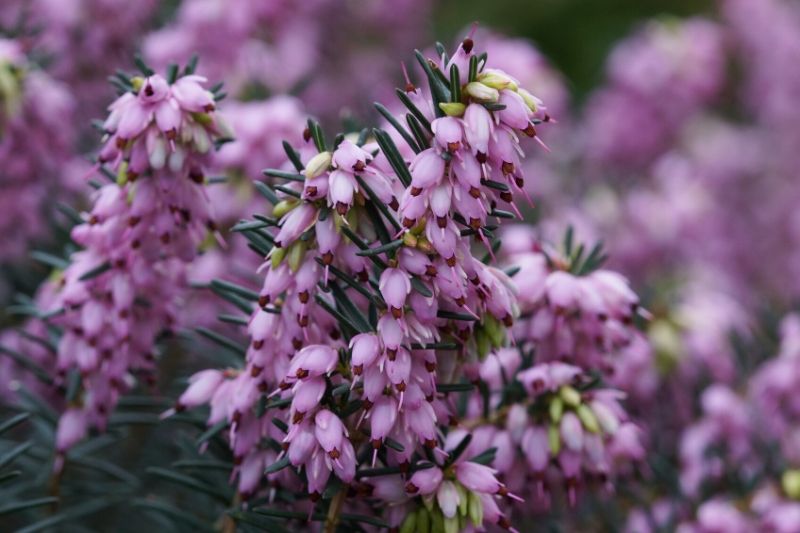
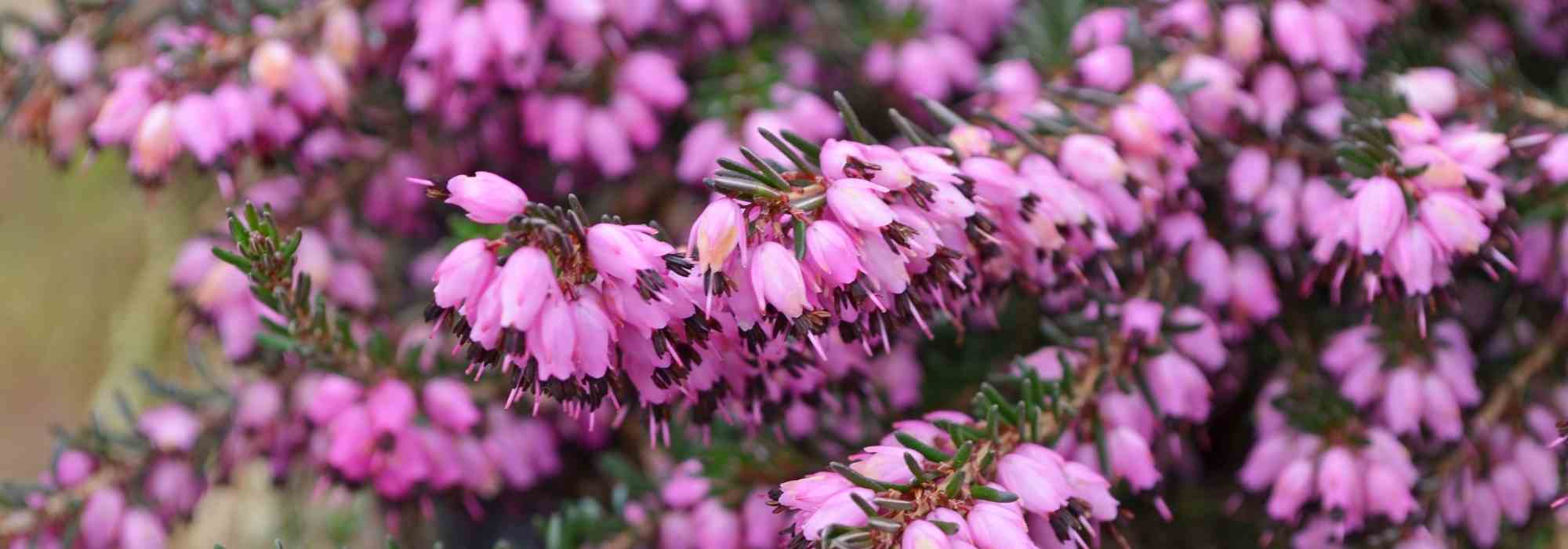
The acid-loving shrub Erica x darleyensis 'Tyann' is an improvement of the variety 'Spring Surprise' with larger flowers and more abundant flowering! It forms a low and spreading bush that is completely covered with small, tender pink flowers in the middle of winter, at a time when the garden lacks colour and liveliness. Its numerous dense and slender stems are adorned with fine, green, evergreen leaves, forming a beautiful compact tuft, perfect for creating a permanent decoration for your borders, flower beds, pots, and rockeries. This small shrub is also hardy and easy to grow as long as it enjoys sunlight or partial shade and well-drained soil. By combining different varieties with staggered flowering times, Darley heathers create a patchwork of colour for 6 to 7 months, in the garden or in pots, even in slightly chalky and dry soil.
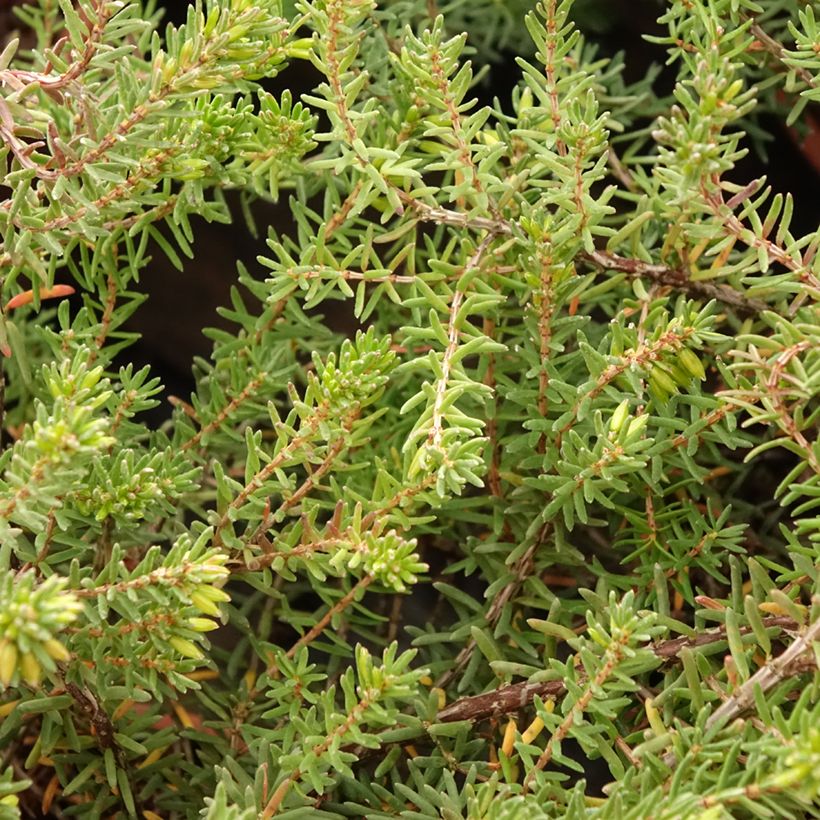
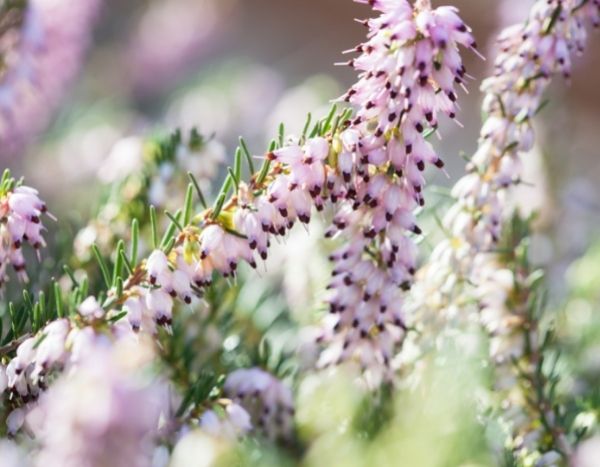
Erica x darleyensis 'Tyann' is a French horticultural creation by J. Renault in 2011 and is part of the Winter Belles heather range. It is the result of cross-breeding between Erica carnea, native to mountainous areas of southern and central Europe, flourishing on limestone soil, and 'Erica erigena', native to western Europe. Hybrids from this lineage are appreciated for the abundance and size of their flowers, which allow for delightful, highly-coloured flower masses. This evergreen, rounded and spreading shrub will reach approximately 40 cm (15.7 in) in height and 60 cm (23.6 in) in width at maturity, with a relatively slow growth rate. Its lifespan is around 10 to 15 years. 'Tyann' generally blooms between January and April, depending on the climate, for several weeks. Its flowers are small, pendulous urns of tender pink margined with dark purple. These 3 mm (0.1 in) long flowers are gathered in clusters measuring 3 to 10 cm (1.2 to 3.9 in) long scattered along the branches, amidst linear leaves measuring 3 to 10 mm (0.1 to 0.4 in) long, arranged in an opposite manner. The evergreen foliage of this variety is medium green.
Hardy and undemanding in terms of soil type, this sturdy little shrub is ideal for the creation of winter heather flower beds, in the company of other varieties, notably the white and snowy variety 'Silberschmelze' or the bright carmine-pink 'Kramer's Rote'. The Darley heather also makes an excellent ground cover, whether alone or combined with dwarf creeping conifers (Juniperus squamata 'Blue Star', Juniperus horizontalis 'Blue Chip', J.repanda...), or ground cover plants such as the silver basket or the wall bellflower Campanula portenschlagiana for example. It will also occupy the front of flower beds, animating them throughout the year, especially in winter.

Erica darleyensis Tyann - Winter Heath in pictures
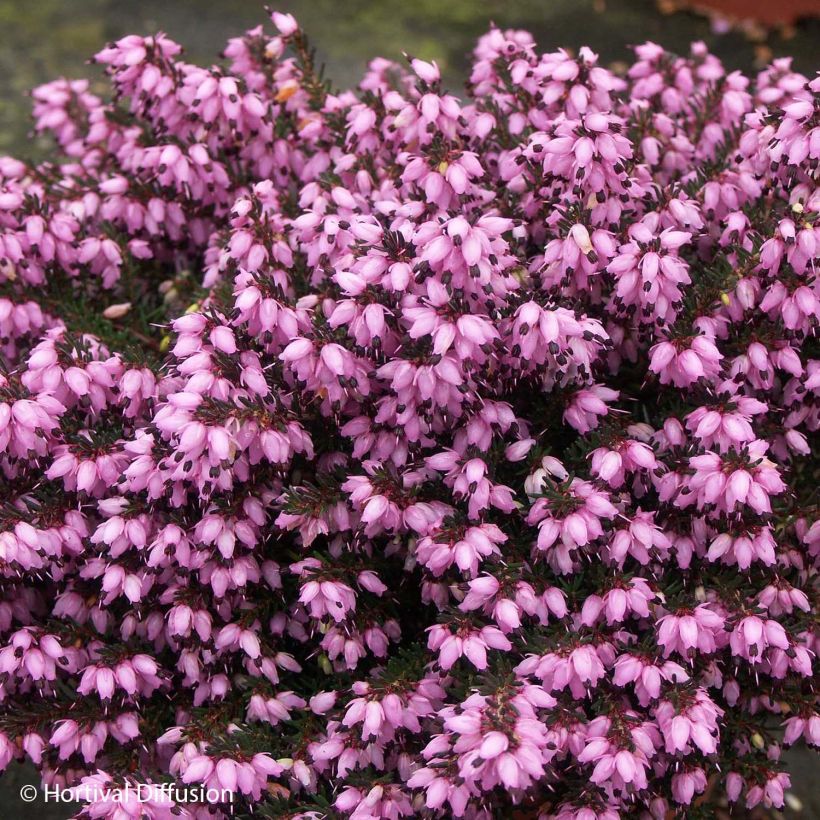
Plant habit
Flowering
Foliage
Botanical data
Erica
darleyensis
Tyann
Ericaceae
Heather
Cultivar or hybrid
Planting and care
Erica darleyensis 'Tyann' appreciates full sun, which enhances its flowering, and can tolerate any type of soil, even clayey or slightly chalky, provided it is well-drained and deep. Once well established, it can resist anything, but its planting must be careful and watering should be maintained during the first two years: if the root ball dries out while the root system is still underdeveloped, the plant will die. Conversely, waterlogged soil, especially during hot weather, can promote the development of a fungus called Phytophthora which, once established, will kill this heather.
During planting, it is advisable to loosen the root ball a little, trim any long roots, and plant in a 30x30 cm (11.8 in) hole filled with a mixture of organic matter, ericaceous soil, and garden soil. Water it once or twice a week to keep the soil moist while the plant establishes itself. To maintain a compact habit and increase the lifespan of the heather, it is useful to prune back the faded branches to 2-5 cm (0.8-2 in) from the previous year's growth every year after flowering, making sure not to cut below the last green leaves. Erica can also be susceptible to Phytophthora and Rhizoctonia during hot and humid periods. Fertilizer is not necessary and is even discouraged, in order not to promote foliage production at the expense of flowers (heathers are generally plants that thrive in poor soils).
Planting period
Intended location
Care
Planting & care advice




This item has not been reviewed yet - be the first to leave a review about it.
Recently viewed products
Haven't found what you were looking for?
Hardiness is the lowest winter temperature a plant can endure without suffering serious damage or even dying. However, hardiness is affected by location (a sheltered area, such as a patio), protection (winter cover) and soil type (hardiness is improved by well-drained soil).

The flowering period indicated on our website applies to countries and regions located in USDA zone 8 (France, the United Kingdom, Ireland, the Netherlands, etc.)
It will vary according to where you live:- In zones 9 to 10 (Italy, Spain, Greece, etc.), flowering will occur about 2 to 4 weeks earlier.
- In zones 6 to 7 (Germany, Poland, Slovenia, and lower mountainous regions), flowering will be delayed by 2 to 3 weeks.
- In zone 5 (Central Europe, Scandinavia), blooming will be delayed by 3 to 5 weeks.
In temperate climates, pruning of spring-flowering shrubs (forsythia, spireas, etc.) should be done just after flowering.
Pruning of summer-flowering shrubs (Indian Lilac, Perovskia, etc.) can be done in winter or spring.
In cold regions as well as with frost-sensitive plants, avoid pruning too early when severe frosts may still occur.
The planting period indicated on our website applies to countries and regions located in USDA zone 8 (France, United Kingdom, Ireland, Netherlands).
It will vary according to where you live:
- In Mediterranean zones (Marseille, Madrid, Milan, etc.), autumn and winter are the best planting periods.
- In continental zones (Strasbourg, Munich, Vienna, etc.), delay planting by 2 to 3 weeks in spring and bring it forward by 2 to 4 weeks in autumn.
- In mountainous regions (the Alps, Pyrenees, Carpathians, etc.), it is best to plant in late spring (May-June) or late summer (August-September).
The harvesting period indicated on our website applies to countries and regions in USDA zone 8 (France, England, Ireland, the Netherlands).
In colder areas (Scandinavia, Poland, Austria...) fruit and vegetable harvests are likely to be delayed by 3-4 weeks.
In warmer areas (Italy, Spain, Greece, etc.), harvesting will probably take place earlier, depending on weather conditions.
The sowing periods indicated on our website apply to countries and regions within USDA Zone 8 (France, UK, Ireland, Netherlands).
In colder areas (Scandinavia, Poland, Austria...), delay any outdoor sowing by 3-4 weeks, or sow under glass.
In warmer climes (Italy, Spain, Greece, etc.), bring outdoor sowing forward by a few weeks.
Shipping country and language
Your country of residence may be:
Your country of residence is:
For a better user experience on our website, you can select:
Your shipping country:
-
 Austria
-
 Belgium
-
 Bosnia & Herzegovina
-
 Bulgaria
-
 Croatia
-
 Cyprus
-
 Czechia
-
 Denmark
-
 Estonia
-
 Finland
-
 France
-
 Germany
-
 Greece
-
 Hungary
-
 Iceland
-
 Ireland
-
 Italy
Italy
-
 Latvia
-
 Liechtenstein
-
 Lithuania
-
 Luxembourg
-
 Malta
Malta
-
 Netherlands
-
 Poland
-
 Portugal
-
 Romania
-
 Serbia
-
 Slovakia
-
 Slovenia
-
 Spain
Spain
-
 Sweden
-
 Switzerland
Language:
-
French
-
 English
-
Spanish
-
Italian
-
German
-
Portuguese
-
Dutch
-
Finnish
My Account
Hello
My wish lists
My cart
Log in / Register
Existing customer?
This form is protected by reCAPTCHA - the Google Privacy Policy and Terms of Service apply.
New customer?
Create an account to track your orders, access our customer service and, if you wish, make the most of our upcoming offers.