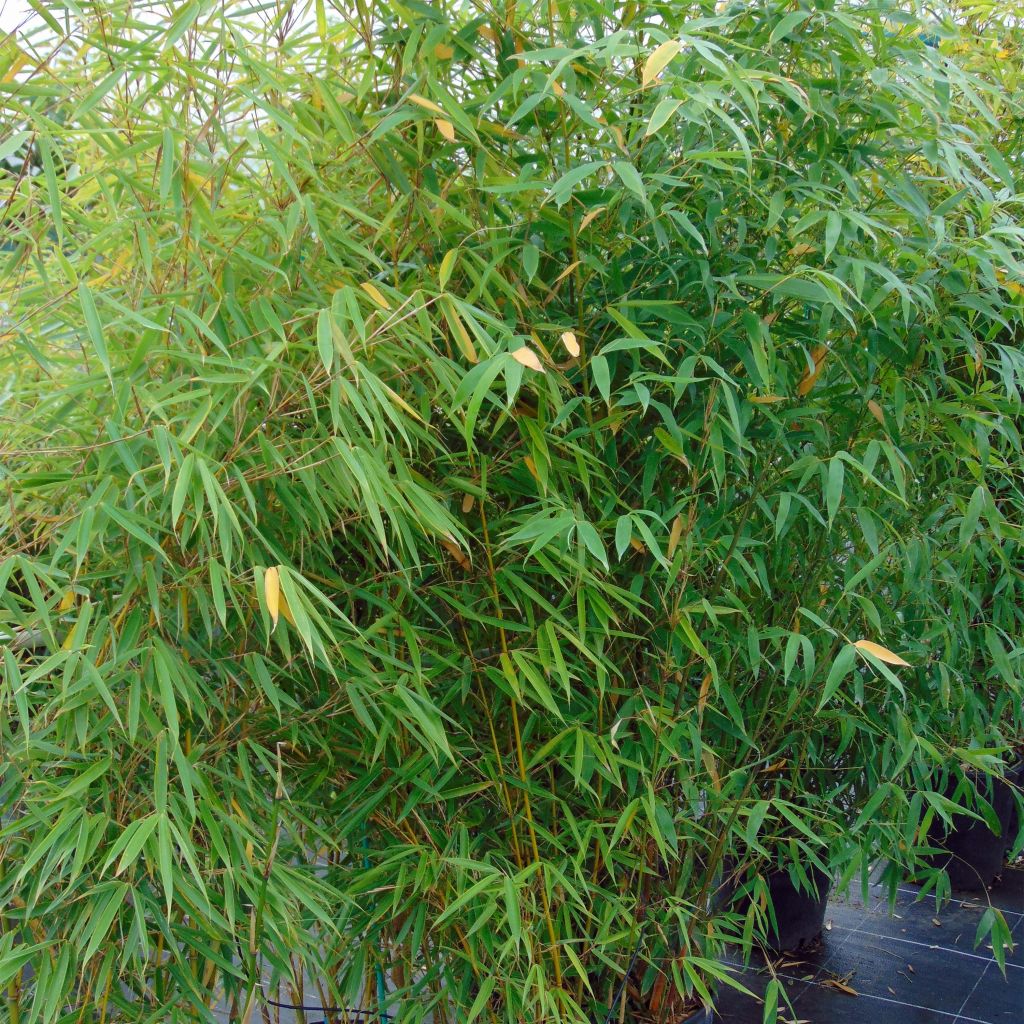
Fargesia robusta Campbell
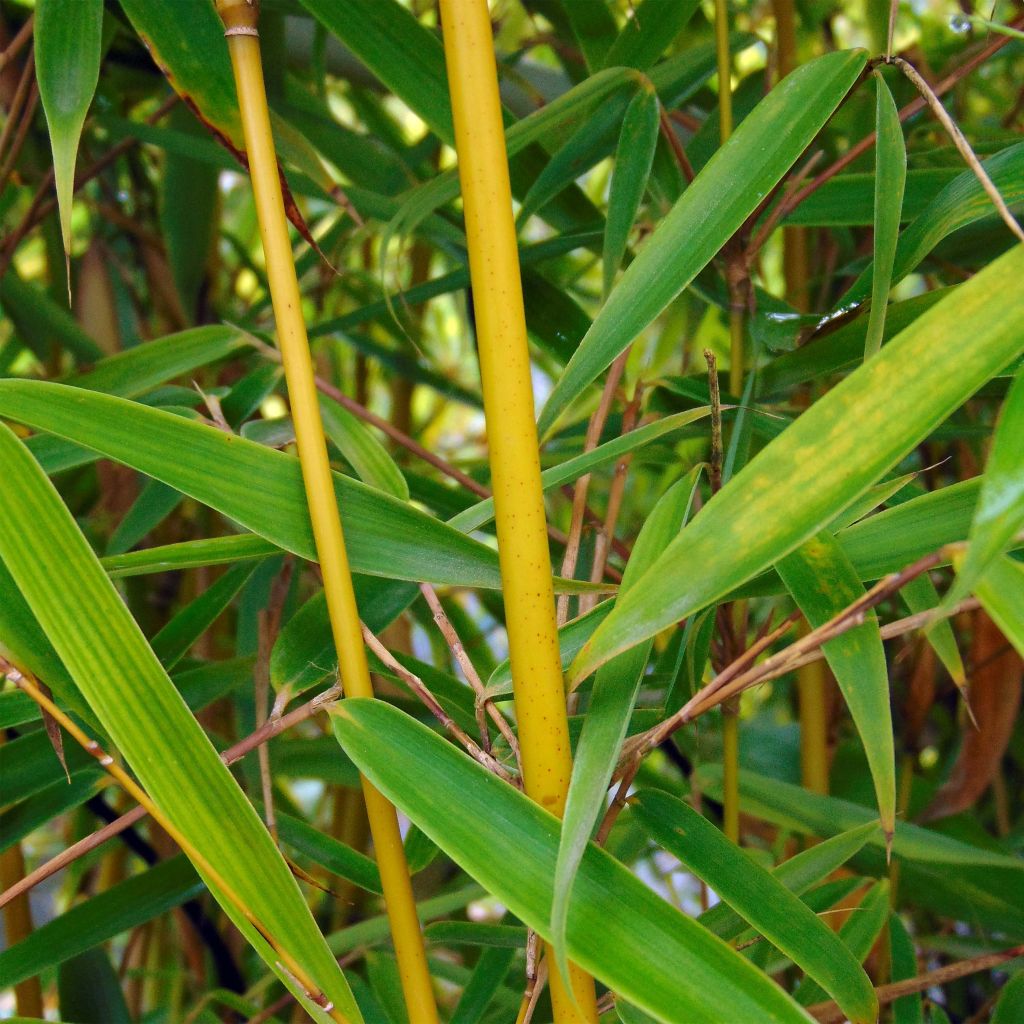
Fargesia robusta Campbell
Fargesia robusta Campbell
Fargesia robusta Campbell
Wolong Bamboo
In good condition, but it’s taking its time to grow and fill out. I think it’ll get there eventually.
Tom, 03/05/2025
Back-to-school special offer!
Get €10 off for every €50 you spend! And get up to €40 off on a single order.
How does it work?
1. Shop your favourites
Add your favourite plants to your basket. For every €50 you spend (excluding delivery charges, store credit and the plastic-free option), you’ll receive a €10 voucher.
€50 spent = €10 voucher
€100 spent = €20 voucher
€150 spent = €30 voucher
€200 spent = €40 voucher
2. Place your order
Once your basket reaches one of the spending thresholds, place your order. You can even choose your delivery date!
3. Receive your voucher
As soon as your order has been shipped, you’ll receive an email containing your personal voucher code and its value.
4. Use it on your next order
Your voucher is valid for 90 days from the date you receive it. It can be used once only, on a new order worth at least the value of the voucher, excluding delivery charges.
Please note: Vouchers can be combined with other offers, but cannot be split or refunded.
Home or relay delivery (depending on size and destination)
Important: You may be charged customs duties by your country’s customs authorities upon delivery.
Schedule delivery date,
and select date in basket
This plant carries a 24 months recovery warranty
More information
We guarantee the quality of our plants for a full growing cycle, and will replace at our expense any plant that fails to recover under normal climatic and planting conditions.
Would this plant suit my garden?
Set up your Plantfit profile →
Description
The Fargesia robusta Campbell is a non-invasive bamboo that is highly versatile and easy to cultivate, widely used by landscapers to create evergreen screens or windbreak hedges. This robust variety is also majestic with its very vertical habit, tall stature, and generous foliage. The young spring shoots with a pink hue are particularly attractive, as are older canes whose pattern resembles a white and green mikado. This plant is resistant to cold weather, thrives in sunlight, and can be easily grown in ordinary, moist, and well-drained soil. It also looks beautiful in a container on the terrace or balcony, or as a standalone plant in a small garden.
Fargesia robusta is a plant belonging to the Poaceae family, a type of grass with woody culms that develops from a non-invasive rhizomatous rootstock, known as clump-forming. In this type of bamboo, the very short internode rhizomes develop slowly at the periphery of the rootstock, which gradually expands, but they also grow towards the centre of the clump, keeping it dense without thinning in the middle. Fargesia robusta is native to Sichuan province in China. This bamboo is one of the most robust, withstanding temperatures around -18 to -25°C (-13 °F) (-0.4 to -13 °F).
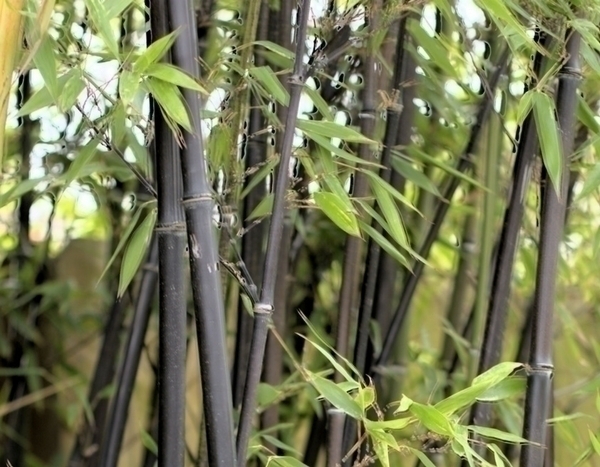
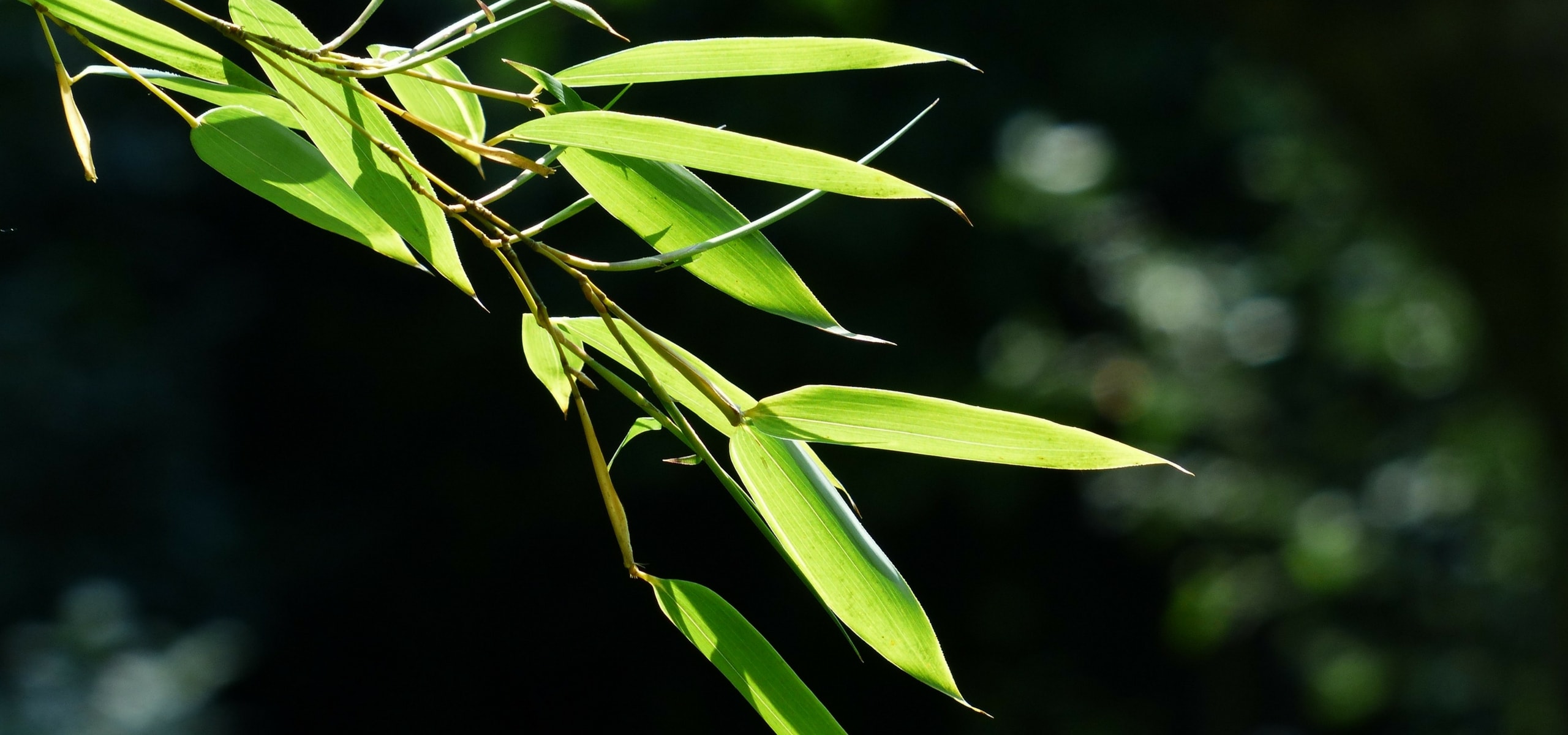
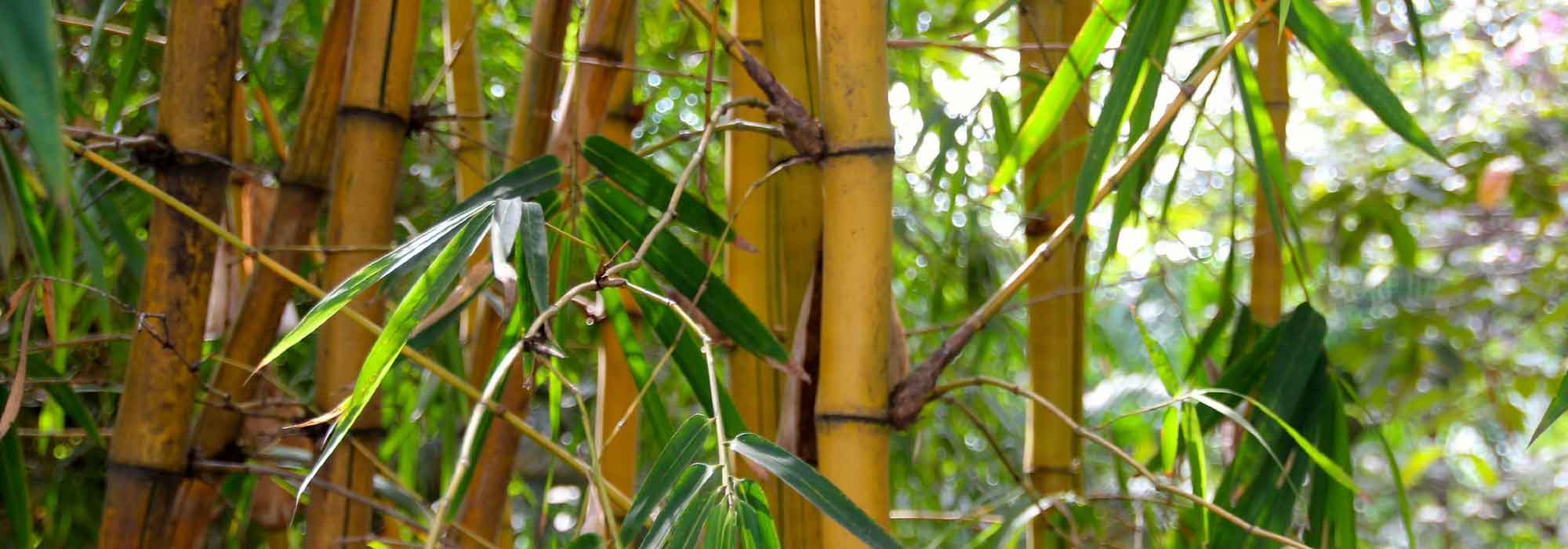
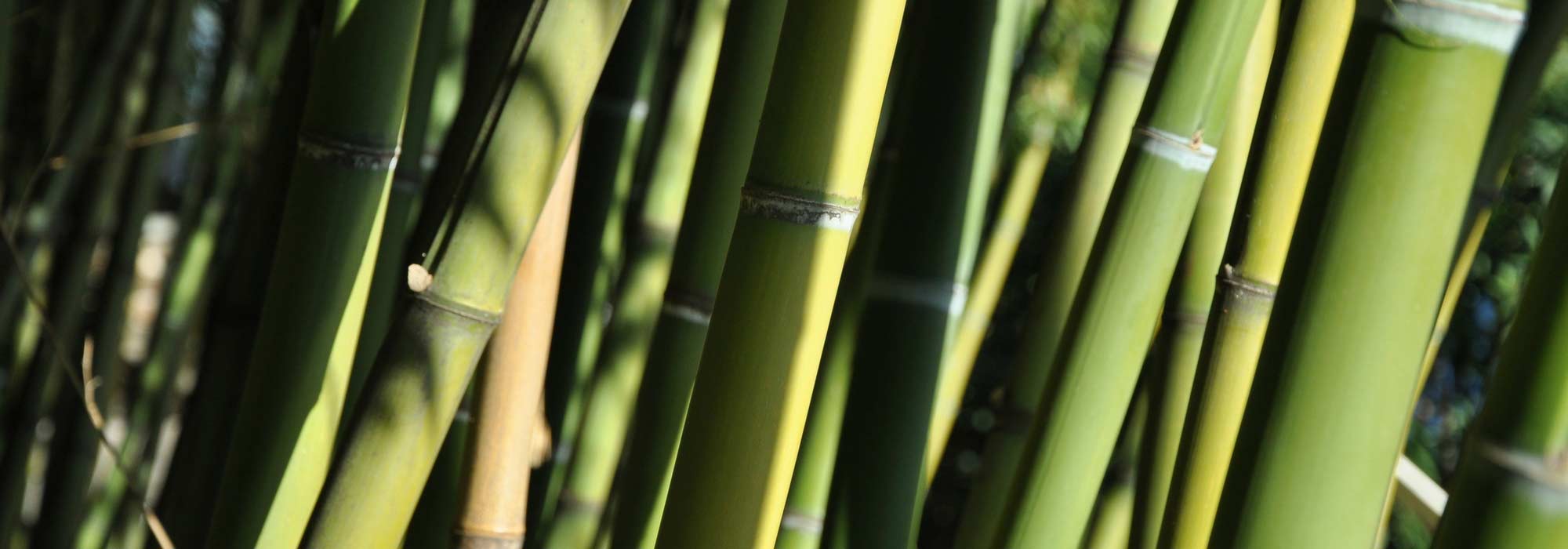
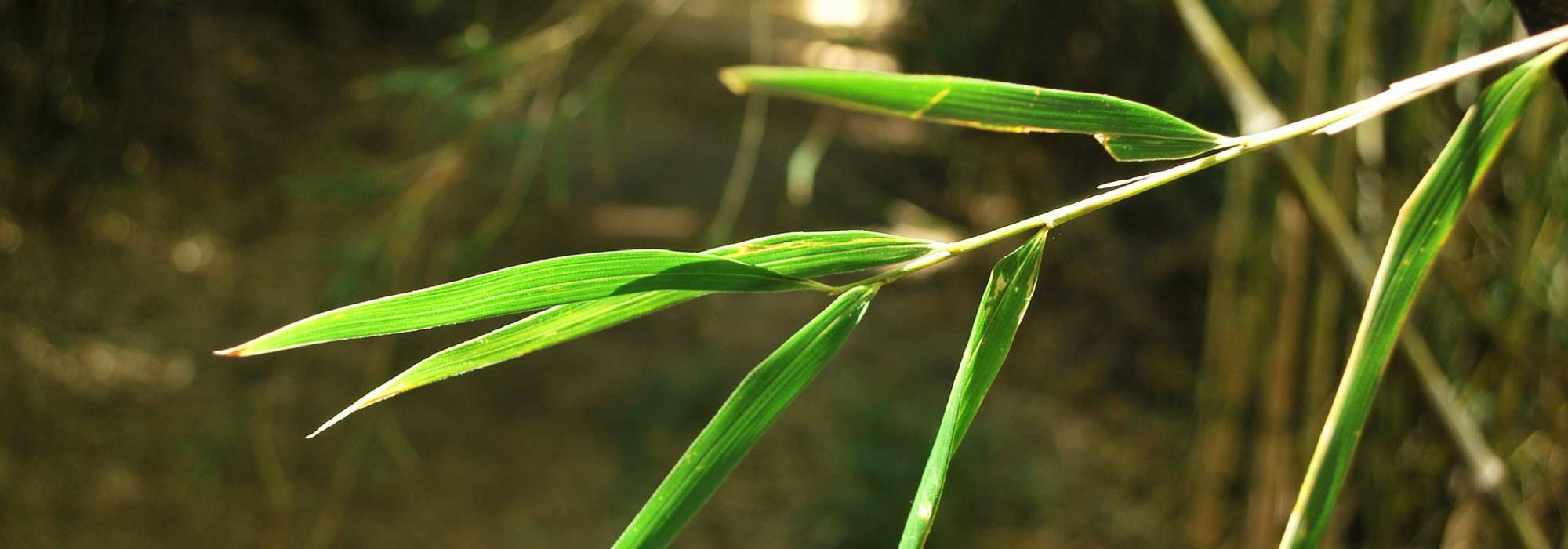
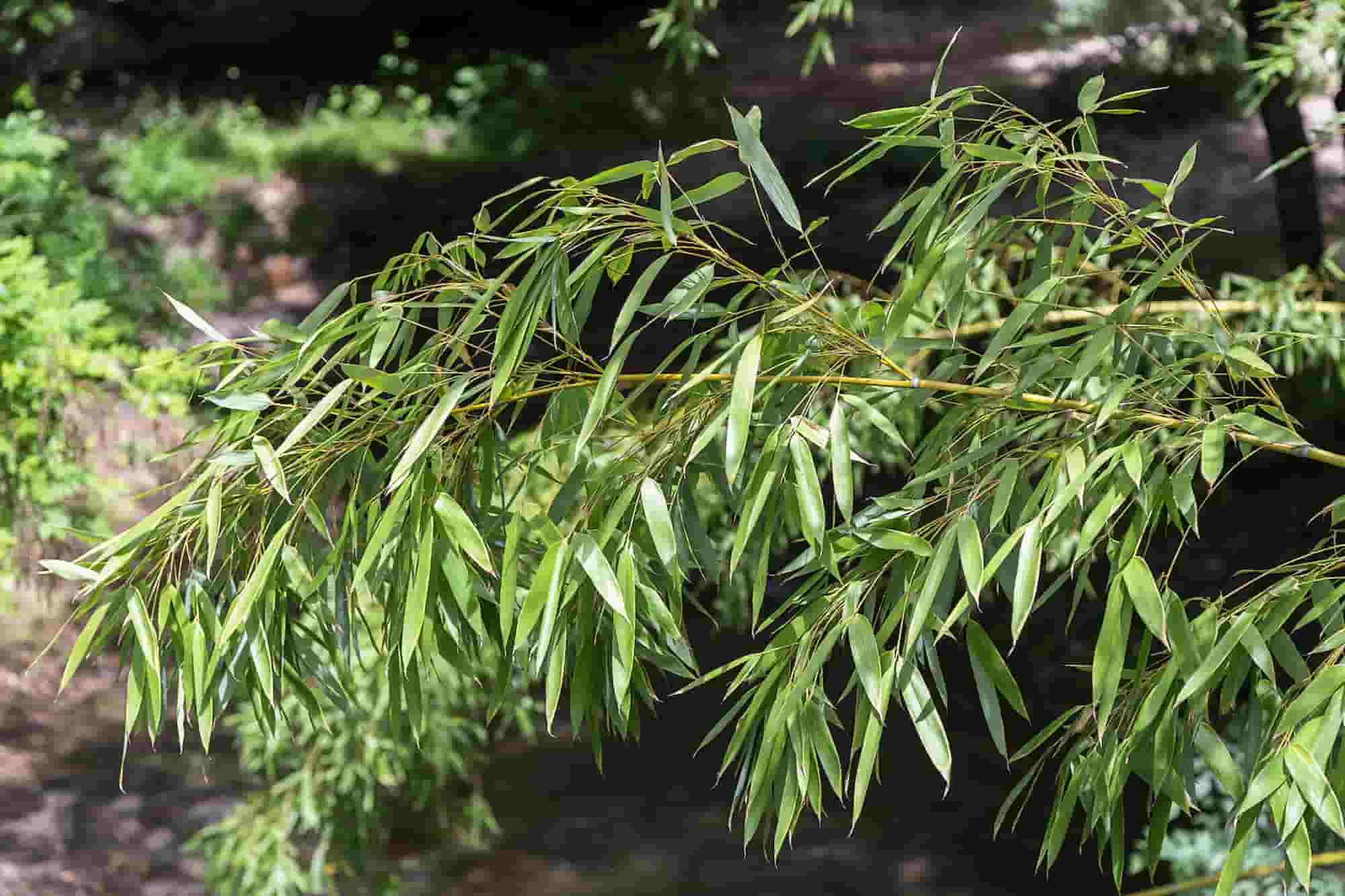
The 'Campbell' cultivar is a recent horticultural selection, chosen for its vigour and dense foliage. It displays a bushy habit that is both dense and upright. Its height growth is rapid. At maturity, this bush will reach approximately 2m (6 ft 7 in) in width. It develops thin, sturdy culms from its rootstock, measuring about 2.5cm (1 in) in diameter, and can reach a height of 4m. These 'canes' emerge from the ground in a salmon-pink colour. They lengthen, turn dark green, and are covered with evergreen whitish sheaths. At this stage, the culms are cream-striped. Mature culms take on a brighter yellow shade under the sun. They are abundantly adorned with long, fairly wide, tapering evergreen leaves that have a rather dark, satin-like green colour.
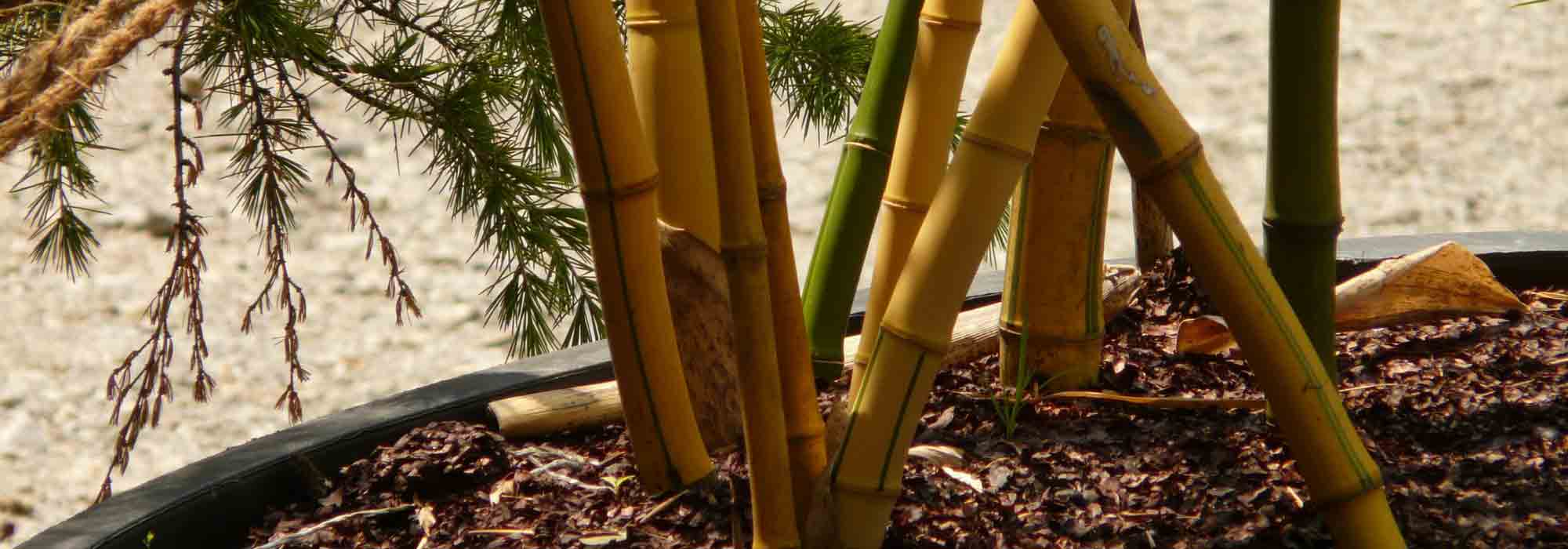
Bamboo is versatile in various garden styles, including Asian-inspired, contemporary, exotic, natural, and water gardens. Campbell bamboo is particularly noteworthy for creating an exotic forest effect when planted en masse, adding a sense of verticality and lushness to any garden. It grows quickly and densely, making it ideal for concealing unattractive views or as a windbreak, but it's essential to plant multiple plants with a spacing of 1m (3ft 4in) between them. It can also be grown as a standalone specimen plant if given enough space to showcase its beauty. Additionally, it pairs well with other evergreen shrubs such as Nandina domestica, hollies, Mahonia, or Sarcococca. In tropical-style beds, it complements a variety of plants such as Cannas and Fatsia japonica. Fargesia robusta Campbell can also be grown successfully in containers, making it an excellent choice for creating intimate spaces on balconies or terraces.

Fargesia robusta Campbell in pictures
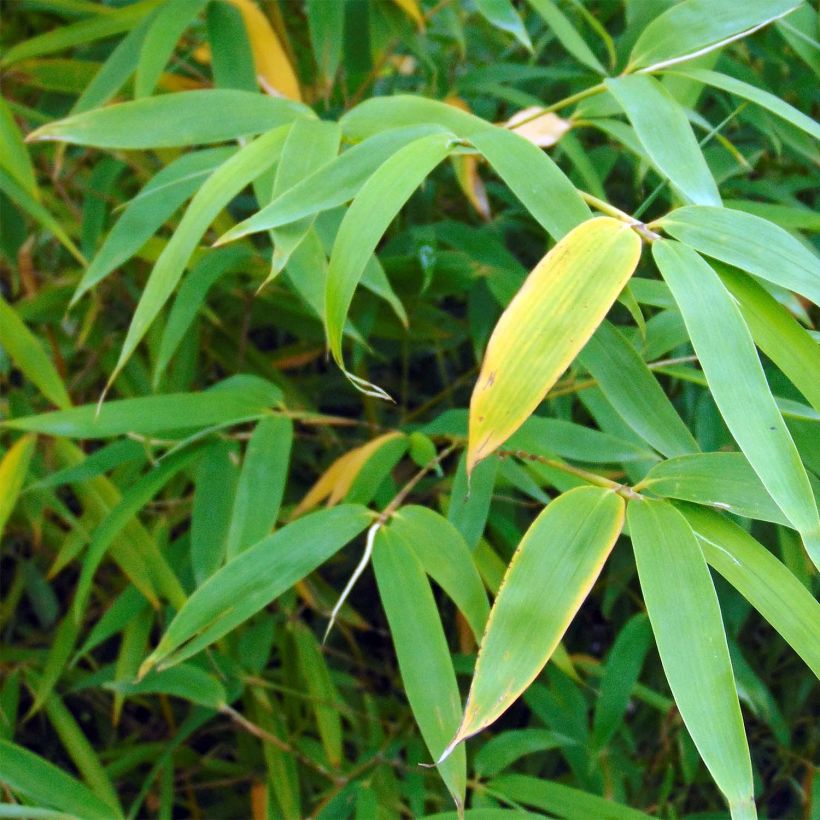
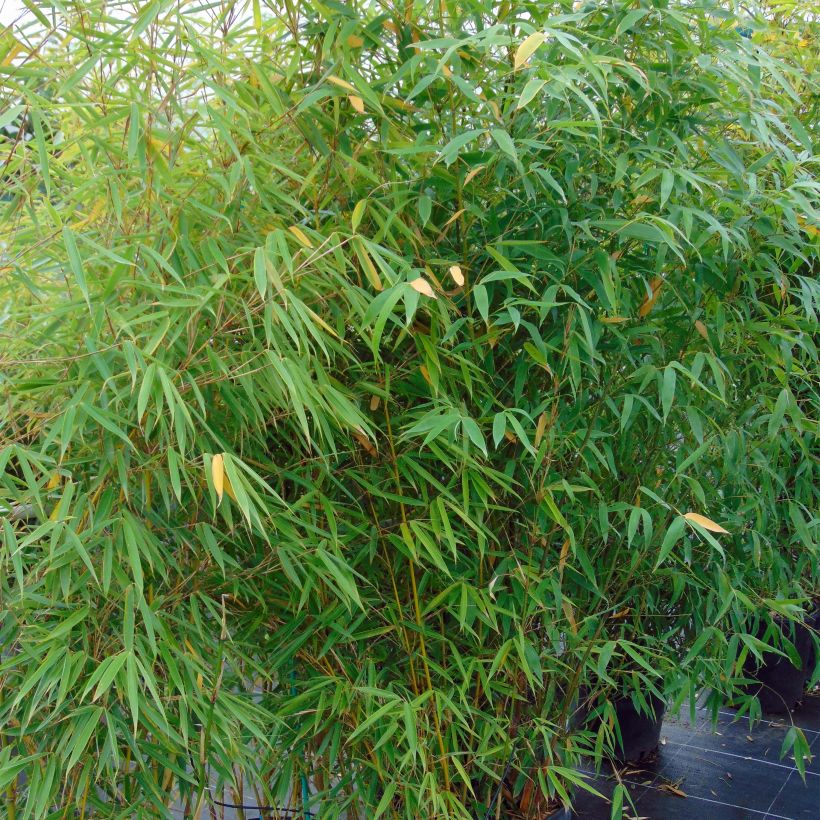
Plant habit
Foliage
Botanical data
Fargesia
robusta
Campbell
Poaceae
Wolong Bamboo
Cultivar or hybrid
Planting and care
If you want to grow bamboo in containers, you can plant it any time of the year except during frost. However, it's best to plant it in late summer or autumn when the soil is warm and there's more rainfall. The spacing between each plant depends on how you want to use the bamboo. If you're doing a mass planting, space them 2 feet 7 inches to 3 feet 4 inches apart, but if you're making a hedge, space them 2 to 2 feet 7 inches apart.
Bamboo prefers rich, well-drained soil that stays moist and can be either acidic or neutral. It can tolerate slightly alkaline soil, depending on the type. When you plant it, soak the root ball and add well-decomposed compost. If you plant it in the ground, you should water it regularly during the first year. If you grow it in pots, you should water it constantly. The bamboo can take a while to grow, so don't worry!
This particular type of bamboo is not invasive, so you don't have to install a rhizome barrier, which is a thick and resistant polypropylene film.
To maintain the bamboo, weed around the base, especially in the beginning, until the dead leaves form a natural mulch on the ground. It can be beneficial if you apply nitrogen fertiliser (well-decomposed manure or liquid fertiliser) in spring and autumn.
Planting period
Intended location
Care
Planting & care advice
-
-
-
-
-

-
-
-
-
, onOrder confirmed
Reply from on Promesse de fleurs
Recently viewed products
Haven't found what you were looking for?
Hardiness is the lowest winter temperature a plant can endure without suffering serious damage or even dying. However, hardiness is affected by location (a sheltered area, such as a patio), protection (winter cover) and soil type (hardiness is improved by well-drained soil).

The flowering period indicated on our website applies to countries and regions located in USDA zone 8 (France, the United Kingdom, Ireland, the Netherlands, etc.)
It will vary according to where you live:- In zones 9 to 10 (Italy, Spain, Greece, etc.), flowering will occur about 2 to 4 weeks earlier.
- In zones 6 to 7 (Germany, Poland, Slovenia, and lower mountainous regions), flowering will be delayed by 2 to 3 weeks.
- In zone 5 (Central Europe, Scandinavia), blooming will be delayed by 3 to 5 weeks.
In temperate climates, pruning of spring-flowering shrubs (forsythia, spireas, etc.) should be done just after flowering.
Pruning of summer-flowering shrubs (Indian Lilac, Perovskia, etc.) can be done in winter or spring.
In cold regions as well as with frost-sensitive plants, avoid pruning too early when severe frosts may still occur.
The planting period indicated on our website applies to countries and regions located in USDA zone 8 (France, United Kingdom, Ireland, Netherlands).
It will vary according to where you live:
- In Mediterranean zones (Marseille, Madrid, Milan, etc.), autumn and winter are the best planting periods.
- In continental zones (Strasbourg, Munich, Vienna, etc.), delay planting by 2 to 3 weeks in spring and bring it forward by 2 to 4 weeks in autumn.
- In mountainous regions (the Alps, Pyrenees, Carpathians, etc.), it is best to plant in late spring (May-June) or late summer (August-September).
The harvesting period indicated on our website applies to countries and regions in USDA zone 8 (France, England, Ireland, the Netherlands).
In colder areas (Scandinavia, Poland, Austria...) fruit and vegetable harvests are likely to be delayed by 3-4 weeks.
In warmer areas (Italy, Spain, Greece, etc.), harvesting will probably take place earlier, depending on weather conditions.
The sowing periods indicated on our website apply to countries and regions within USDA Zone 8 (France, UK, Ireland, Netherlands).
In colder areas (Scandinavia, Poland, Austria...), delay any outdoor sowing by 3-4 weeks, or sow under glass.
In warmer climes (Italy, Spain, Greece, etc.), bring outdoor sowing forward by a few weeks.
Shipping country and language
Your country of residence may be:
Your country of residence is:
For a better user experience on our website, you can select:
Your shipping country:
-
 Austria
-
 Belgium
-
 Bosnia & Herzegovina
-
 Bulgaria
-
 Croatia
-
 Cyprus
-
 Czechia
-
 Denmark
-
 Estonia
-
 Finland
-
 France
-
 Germany
-
 Greece
-
 Hungary
-
 Iceland
-
 Ireland
-
 Italy
Italy
-
 Latvia
-
 Liechtenstein
-
 Lithuania
-
 Luxembourg
-
 Malta
Malta
-
 Netherlands
-
 Poland
-
 Portugal
-
 Romania
-
 Serbia
-
 Slovakia
-
 Slovenia
-
 Spain
Spain
-
 Sweden
-
 Switzerland
Language:
-
French
-
 English
-
Spanish
-
Italian
-
German
-
Portuguese
-
Dutch
-
Finnish
My Account
Hello
My wish lists
My cart
Log in / Register
Existing customer?
This form is protected by reCAPTCHA - the Google Privacy Policy and Terms of Service apply.
New customer?
Create an account to track your orders, access our customer service and, if you wish, make the most of our upcoming offers.