12 dye plants for natural plant dyes
Colourful plants to grow in the garden!
Contents
Thanks to the pigments contained in their flowers, leaves, roots, berries or bark, some plants can be used to produce beautiful colours for making your own natural dyes and plant-based paints. These are dye plants, whose botanical designation “tinctoria” (from the Latin tinctorius, meaning “used for dyeing”) clearly reveals their nature.
Before the rise of chemical dyes, dye plants brought fame and prosperity to our regions. Among the most famous “Tinctoria” are the red dye from madder (Rubia tinctoria), the yellow dye from weld (Reseda luteola) and the blue dye from woad (Isatis tinctoria), which became the blue of the kings of France.
Here is a selection of colourful plants commonly found in gardens and chosen for their ornamental qualities as much as for the richness of their pigments. We also explain three ways of preparing a plant-based dye to make yourself. The shades obtained are always unique. It is up to you to create…

Shades of yellow & orange
Yellows are fairly easy to obtain, and the shades produced are very varied, from golden yellows to fiery oranges.
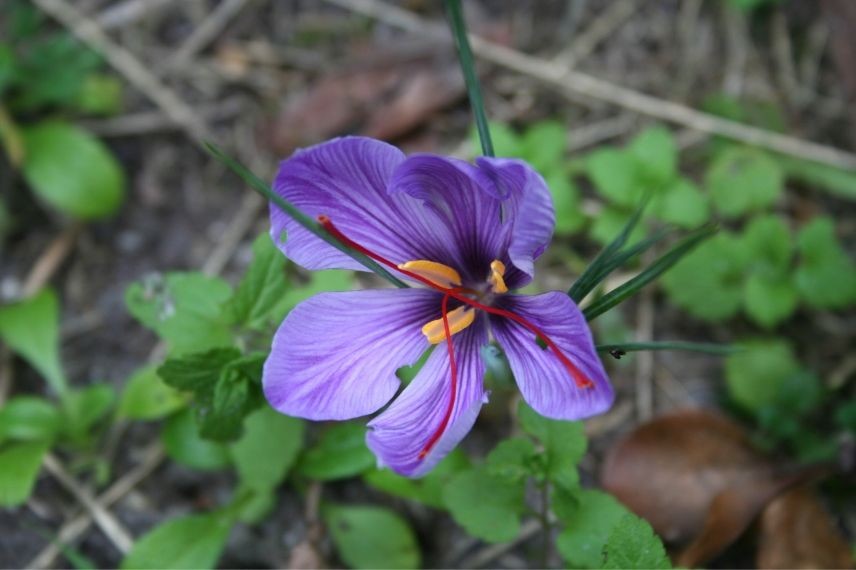
Saffron Crocus (Crocus sativus) – Intense yellow to orange
The saffron crocus is a perennial bulb with pretty mauve flowers (family Iridaceae), whose red stigmas are made up of saffron and have remarkable colouring power: one measure of saffron colours up to 100,000 times its volume in water yellow. Saffron is also a spice sought after for its incomparable aroma and medicinal properties. This pretty autumn bulb should be grown in full sun in very well-drained soil, even chalky soil that is dry in summer.
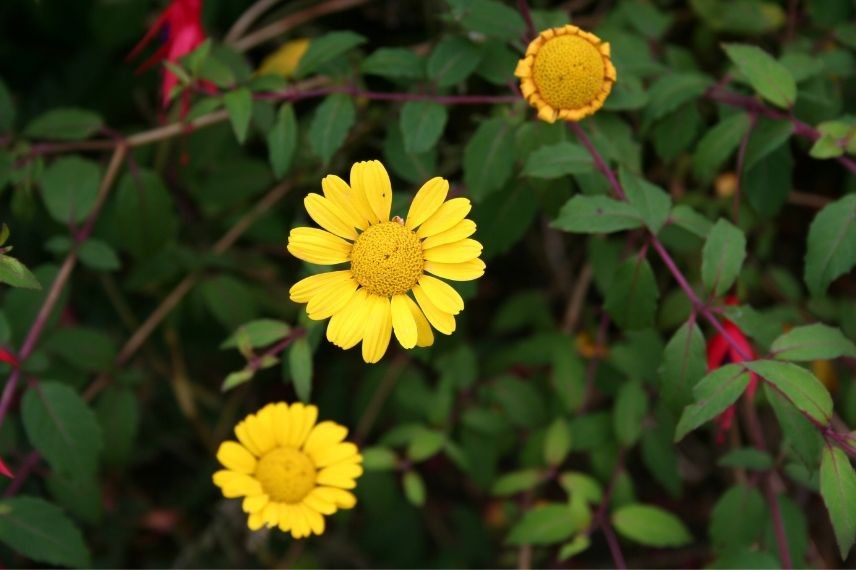
Dyer’s Chamomile (Anthemis tinctoria) – Yellow, lemon yellow, golden yellow, olive green
Anthemis tinctoria is a herbaceous perennial plant (family Asteraceae), from whose dried flowers yellow-gold pigments are extracted. Dyer’s chamomile forms beautiful, compact, very floriferous clumps, formed of small pale yellow daisies with a golden-yellow central disc. Like other varieties of Anthemis, it is not bothered by rocky, poor and well-drained soils, and thrives in full sun.
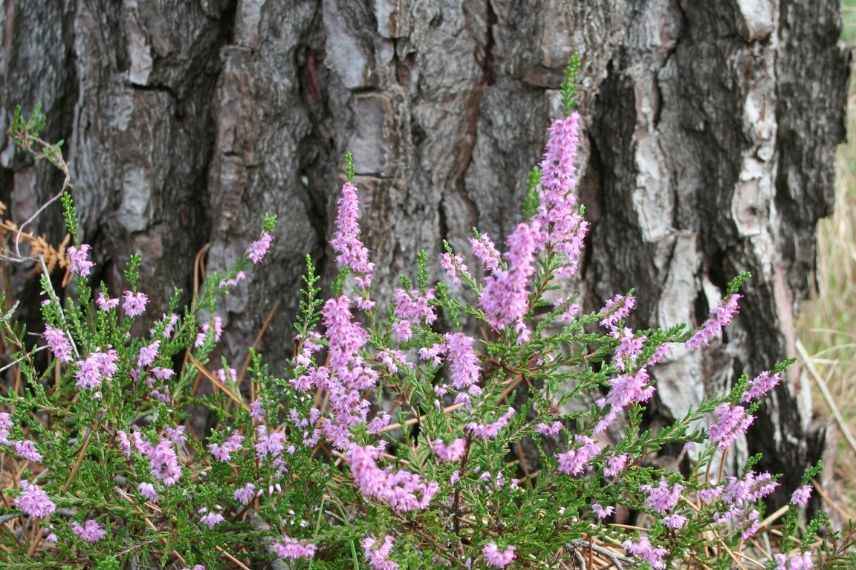
Common Heather (Calluna vulgaris) – Bronze yellow
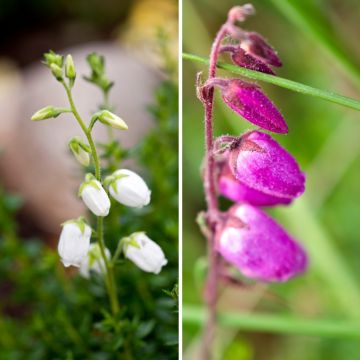
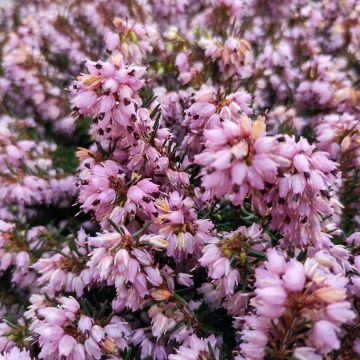
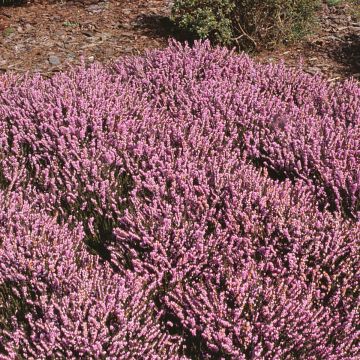
All common heathers can produce beautiful pigments in a very wide range of shades. A decoction of heather produces a beautiful golden-brown yellow, while the young shoots appearing at the beginning of spring produce a more olive-toned, bronze-yellow shade. Common heather (family Ericaceae) is covered in a multitude of small pink bells in August and September, brightening rock gardens, path borders and woodland edges. It also grows very well in pots and window boxes, where it will form beautiful seasonal displays.
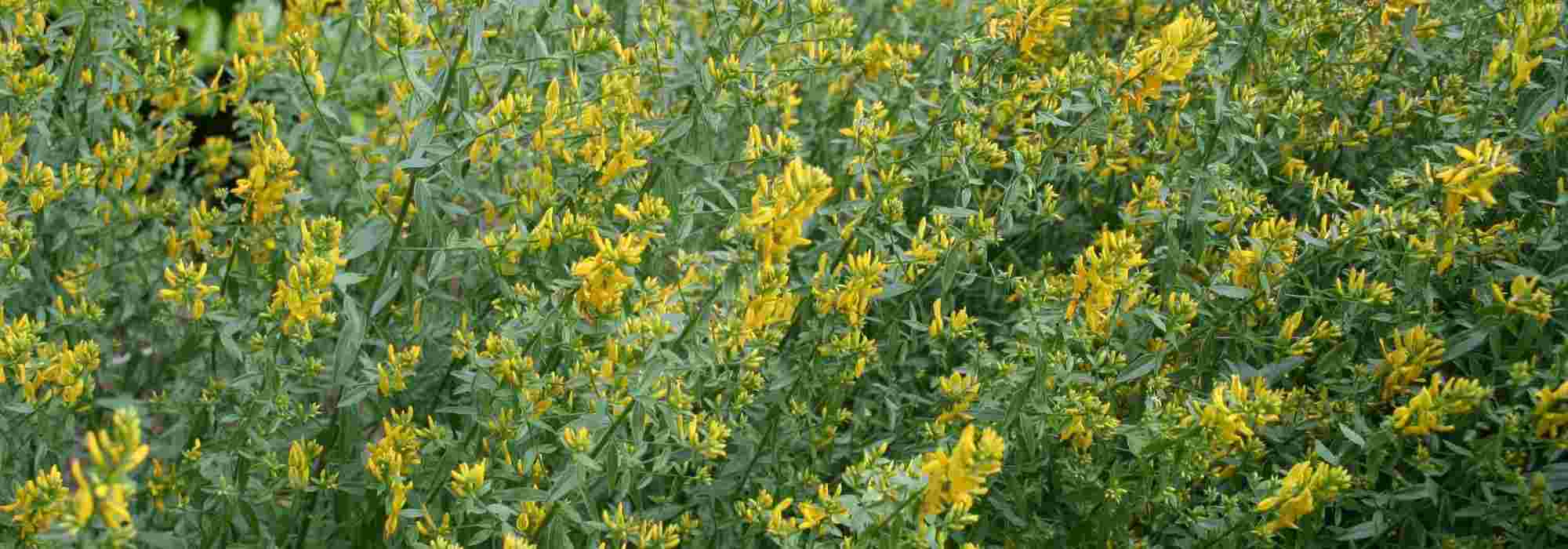
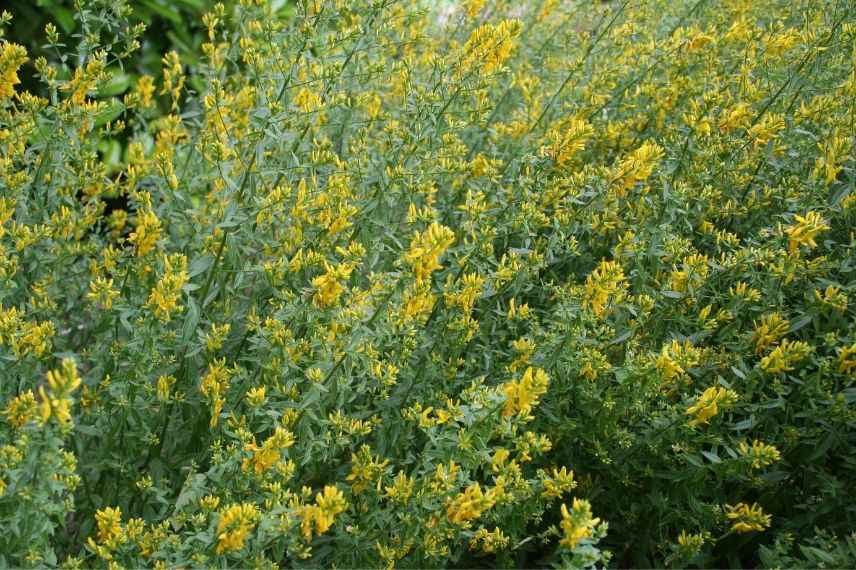
Dyer’s Greenweed (Genista tinctoria) – Yellow
The pigments present in the fresh flowers of dyer’s greenweed produce different shades of yellow, ranging from bright yellow to golden yellow, depending on the variety used. This small shrub forms a beautiful woody clump and flowers abundantly in May-June. Sun-loving and slightly fragrant, greenweed is superb as a standalone plant, along a border or at the front of a bed. It likes poor, well-drained soils and full sun, but dislikes waterlogged conditions. Let us not forget that it also has medicinal properties.
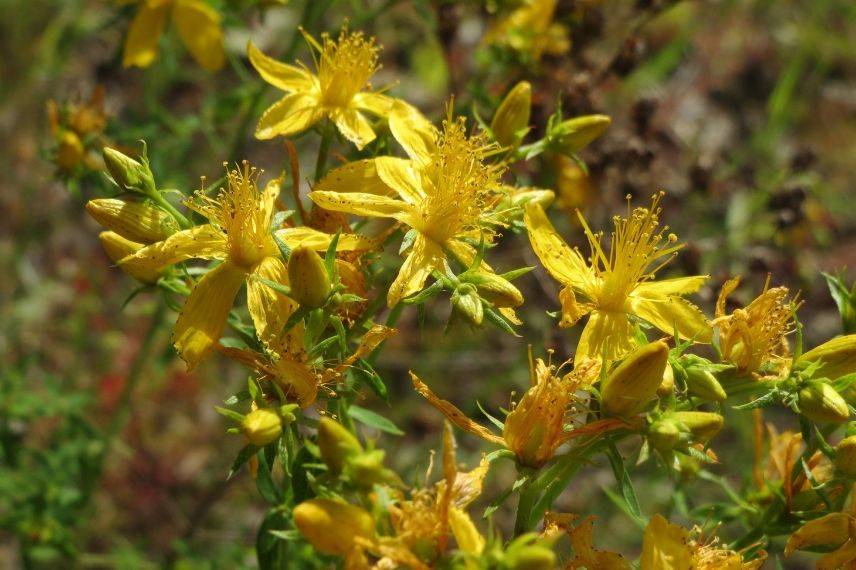
St John’s Wort (Hypericum) – Golden yellow, orange and copper
Tradition has it that the “thousand-hole plant” should be harvested on St John’s Eve, at the summer solstice. Its flowers then produce a beautiful golden yellow or, depending on the strength of the baths, copper, russet and orange shades. Undemanding and fast-growing, St John’s wort (family Hypericaceae) is a hardy perennial plant or shrub that is not bothered by cold and adapts to all soils. It can be grown in the garden for its incomparable brightness, or in a pot, where it will also thrive.
Shades of red
Many plants provide beautiful reds that adorn gardens with their deep, vibrant shades. You can also be surprised by red plant dyes extracted from … green plants!
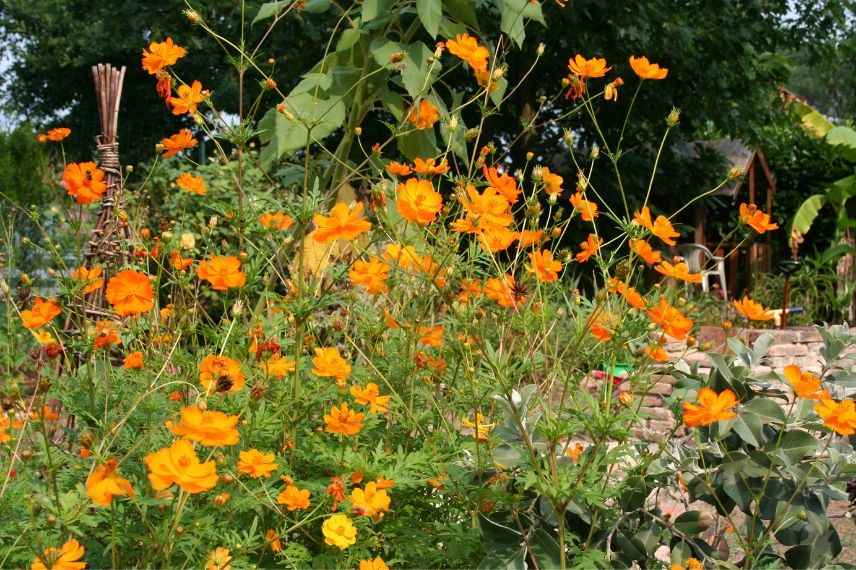
Sulphur cosmos (Cosmos sulphureus) – red
From the daisy family, cosmos are undoubtedly among the easiest annuals to grow successfully. The flowers of sulphur cosmos (with orange flowers) produce red dye and paint, while their stems provide yellow shades. In containers, beds and borders, sulphur cosmos shoot up from June onwards and do not disappear until the first frosts. Their long flowering period will attract bees and butterflies to the garden.
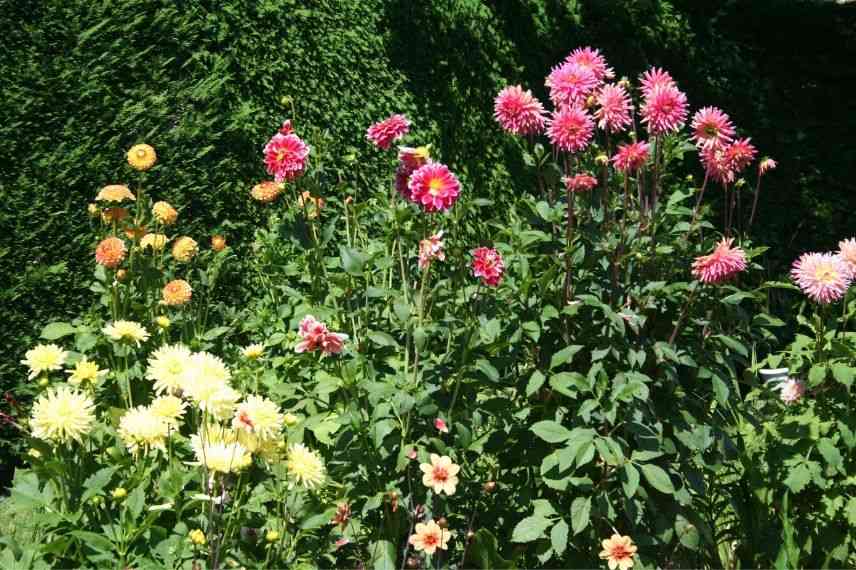
Dahlia (Dahlia) – Orange to vivid orangey red
The flower of dahlia (in the Asteraceae family) provides a beautiful orange shade, more or less intense depending on the strength of the dye baths. The shades can also range from orange to red and pink, depending on the colour of the flowers. Like sulphur cosmos and tickseeds, it is the flower petals that produce the plant dyes. Form, height, colour … there are very many varieties of this tuberous plant. One thing is certain: whatever dahlia you choose, its flowering will continue throughout the summer, whether you grow it in the ground or in a container.
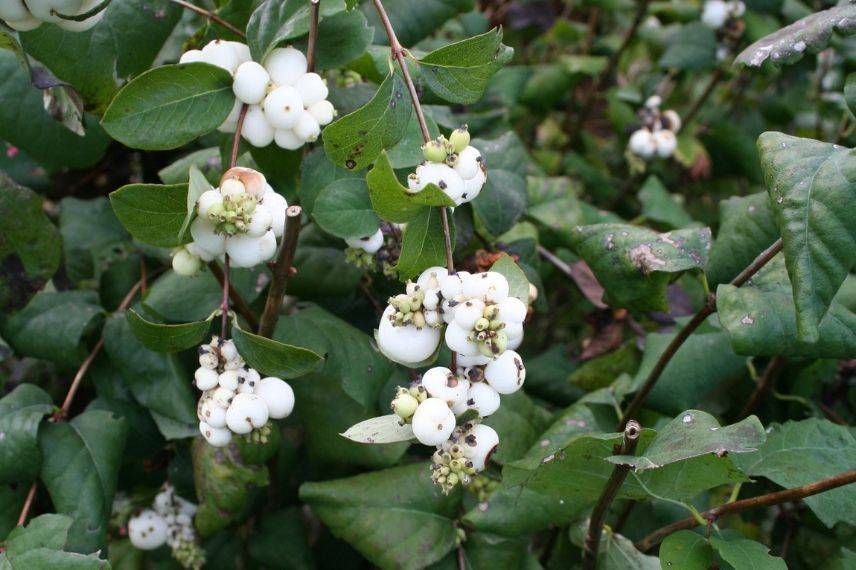
Snowberry (Symphoricarpos albus) – Reddish brown
Also known as the “pearl tree”, snowberry is a very decorative shrub, often planted as a hedge. Its summer flowers, discreet pink bells, develop into striking white berries that last until January. Its tannic acid is revealed through photo-oxidation (oxidation under the effect of light) and produces reddish-brown shades. This lovely shrub supports biodiversity in the garden, as its flowering is nectar-rich and its berries attract insects and birds!
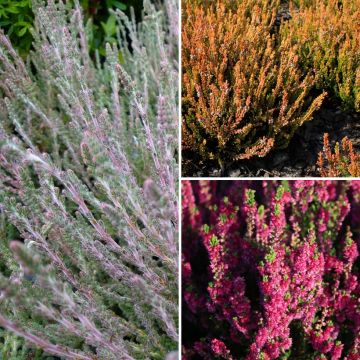
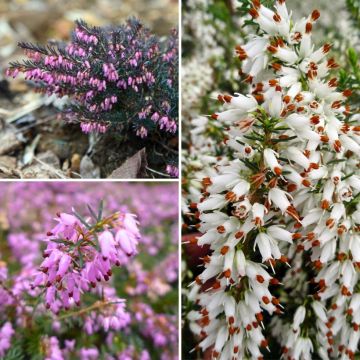
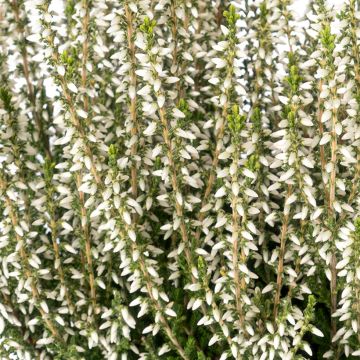
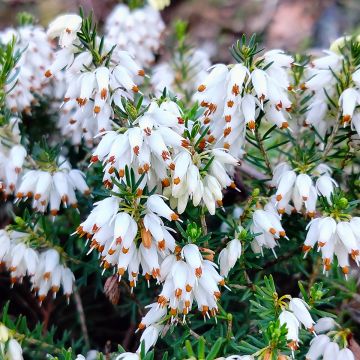
Discover other Heathers
View all →
Available in 3 sizes
Available in 1 sizes
Available in 2 sizes
Available in 0 sizes
Available in 0 sizes
Available in 2 sizes
Available in 2 sizes
Available in 0 sizes
Available in 3 sizes
Available in 1 sizes
Shades of blue & purple
Periwinkle, Ceanothus, agapanthus, plumbago and hydrangea: many blue flowers can be found in the garden, but few have dyeing properties. However, there are a few, including ….
Woad (Isatis tinctoria) – Blue
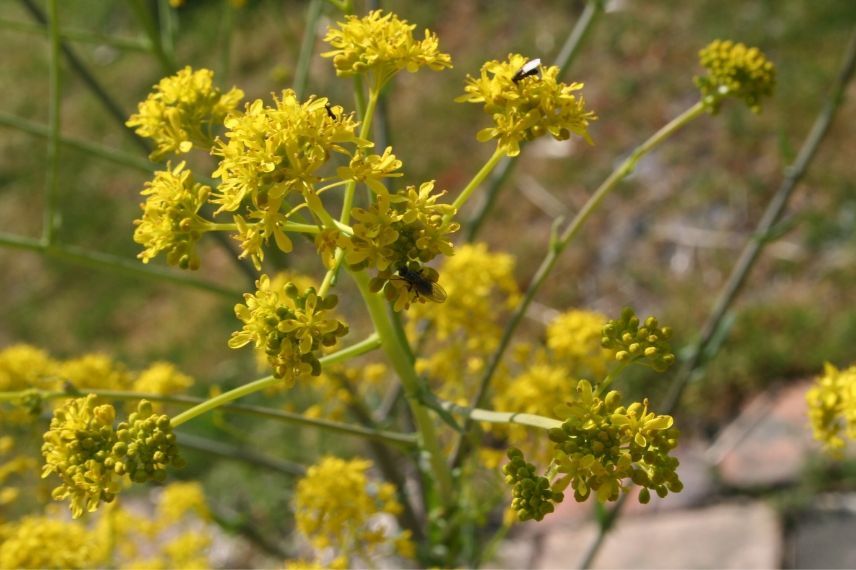
The most famous of them all, Isatis tinctoria, better known as woad or dyer’s woad, or even Lauragais herb, is a herbaceous plant native to Central and Eastern Asia, as well as south-eastern Europe. Do not be misled by its yellow flowers, but look instead at its foliage, from which the blue pigment known as indigo is extracted. It is, in fact, the only European plant to naturally provide this pigment, although extracting its colour involves a series of long and complex processes. Isatis conquered the great courts of Europe. A colour of nobility, blue and its many shades were also used by painters and decorators. In France, it brought wealth to the South-West, particularly in Albi and Toulouse.
Isatis is an attractive ornamental plant that fits well into flower beds and can be used to make vibrant bouquets. It can be grown in the vegetable garden like mustard, as its flowers and leaves can be eaten in salads. It likes open, sunny and well-drained sites. Clearly a plant with many uses, Isatis is also an ancient medicinal plant, valued for its dermatological properties, particularly its healing action. A little reminder of the Greek word “Isado”, meaning “to heal”!
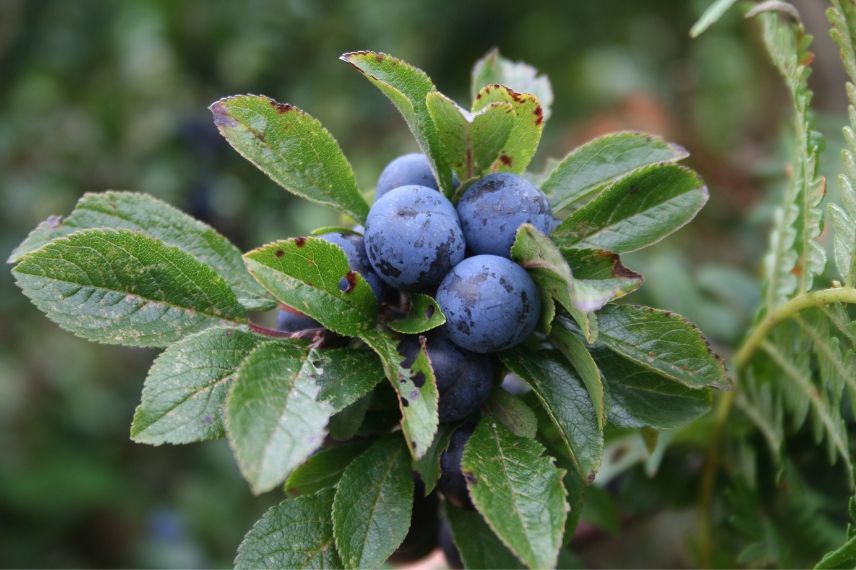
Blackthorn (Prunus spinosa) – Blue
The roots of blackthorn produce a beautiful slate blue. Mixing the roots and berries produces a vivid blue. Ripe sloes, picked in October, can also be used to extract a lovely pink, although it is not colourfast when washed. This large thorny deciduous shrub or small tree, with a bushy habit, is a familiar sight in our landscapes, where it punctuates spring with a superb white flowering display. Well known for its black edible fruits, the sloes sought out by birds, it has a rightful place in a country-style and defensive hedge. Fully hardy, genuinely robust and resilient, it prefers fairly fertile clay-limestone soils and grows anywhere, without care or maintenance, even in dry soil.
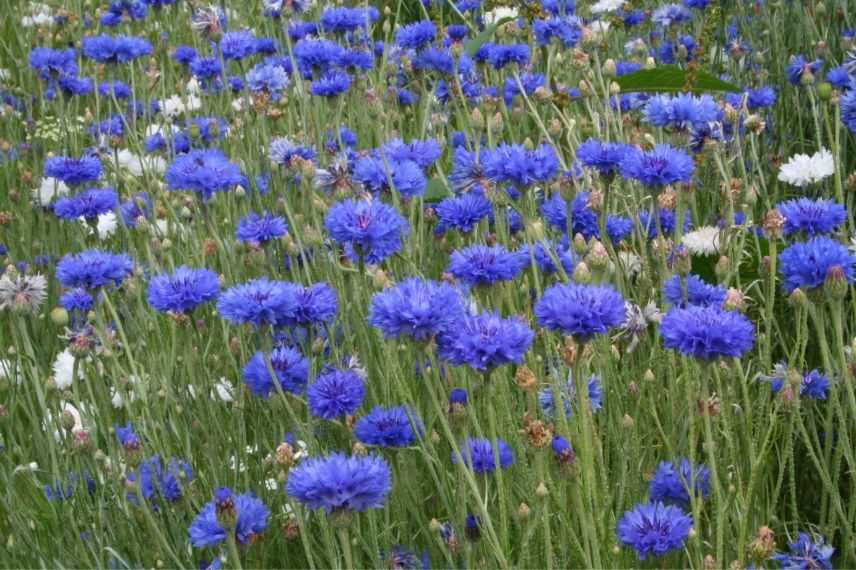
Cornflower (Centaurea cyanus) – Blue
This cornflower, also known as Centaury, is a perennial plant sown in spring, directly in its final position, in all types of soil. Alongside poppies and grasses, it gives naturalistic gardens a slightly old-fashioned charm. The deep, luminous blue of its flowers was long used for illumination. The cornflower flowers from June to August.
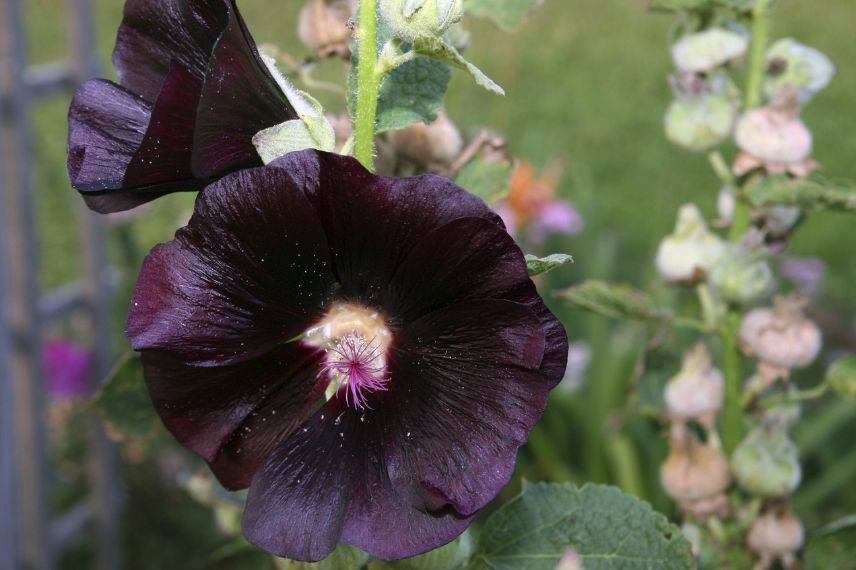
Hollyhock (Alcea rosea ‘nigra’) – Violet, purplish blue
Beautiful shades of violet to purplish blue can be extracted from the petals of the purple hollyhock. This perennial plant (family Malvaceae) or biennial is a staple of cottage gardens, where it flourishes along walls, sheltered from the wind. Its flowering spikes, which can reach more than 2 metres in height, give structure to the garden and lend it a little Île de Ré charm! Hollyhocks come in a wide range of colours, from white to almost black purple, as well as powder pink, creamy yellow, orange and red. Not only is the hollyhock a dye plant, it is also edible: its flower buds and leaves can be eaten raw or cooked, in salads.
What about green, then?
Green dye can be obtained by mixing blues and yellows. You can also extract lovely shades of green from a decoction of fern, elder or fig leaves.
It's your turn now!
Infusion, decoction and maceration are all easy ways to obtain a coloured bath for dyeing your materials. The higher the concentration of plant material, the more intense the colour. The shades obtained are unique every time!
Whatever method you choose, your material must be prepared so that it holds the colour properly. This stage, known as mordanting, can be carried out using three different mordants: alum, copper sulphate or iron sulphate.
Discovering dye plants
If you would like to explore the colours of your dye plants and create your own natural plant dyes, here is both a recipe book and a source of inspiration: Teintures végétales, published by Eyrolles. Its author, Aurélia Wolff, combines leaves, roots, bark and flowers to create colour charts, which she explores on different materials: hanks of wool, weaving or knitting yarns, organic or reclaimed fabrics, and linen grown and made in France. An artisan above all, she shares the fruits of her experience in natural dyeing and her environmentally respectful approach in this book.
And for the most passionate enthusiasts, the Jardin Conservatoire des plantes tinctoriales de Lauris, located in the heart of the Luberon Regional Nature Park, opens its gates and gardens from early May to the end of October. Situated on the terraces of the château, this unique site in Europe grows nearly 250 species of dye plants. It offers a fun and educational trail that also raises awareness of environmental protection and respect for biodiversity. It is managed by the Couleur Garance association.
- Subscribe!
- Contents
This form is protected by reCAPTCHA - the Google Privacy Policy and Terms of Service apply.































Comments