





























Gone are the days when a vegetable garden was merely a large plot of tilled earth, crossed by planks for walking. Nowadays, vegetables rise above the natural soil, with or without legs: here is the raised vegetable garden!
Different types of raised vegetable gardens
The term “raised vegetable garden” (or “raised bed” in English) refers to two types of setups:
- Raised beds on legs
Inspired by growing tables designed for people with reduced mobility, these gardens allow you to garden while sitting or standing. They are deep containers, made of wood, metal, or plastic, installed on legs. Varying in size, they are very ergonomic and adapt well to small spaces like balconies and terraces.
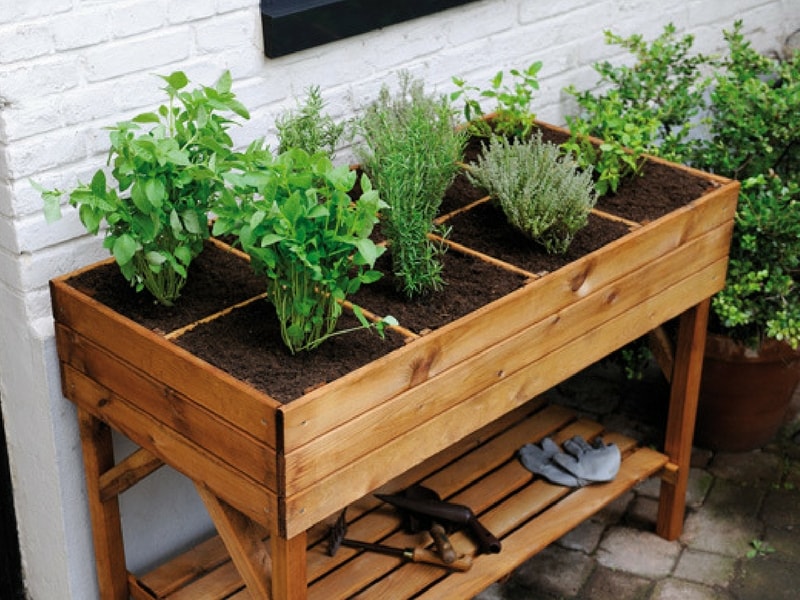
Raised bed on legs - Photo: Burger
- Ground-contact raised beds
This other type of raised garden consists of bottomless containers, varying in height and size. They are placed on the ground (soil or any other surface), and their shape and depth can vary greatly: from about fifteen centimetres to over a metre. Often constructed from wood, they are filled with substrate that can be soil, potting mix, or various layers of organic materials to create “lasagna” beds.
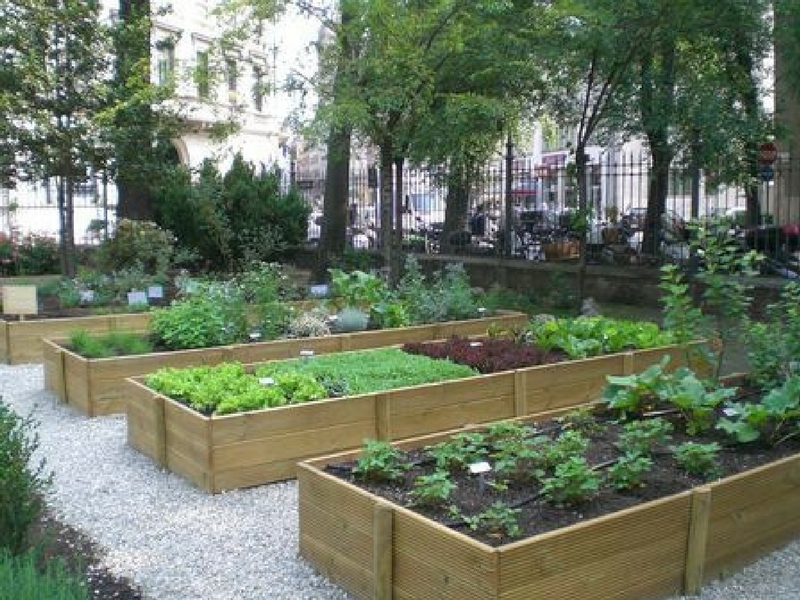
Raised vegetable gardens in the city - Source: Pinterest
How to build your own raised vegetable garden?
It’s simple; if you’re handy, make your own plans or search for tutorials online: you’ll have plenty of options! Would you like something a bit different but lack inspiration? Take a look at Pinterest, where ideas abound. Also, a very comprehensive book: "Raised Vegetable Gardens: From Construction to Planting" by Tara Nolan has just been released by Ulmer. It is full of examples, plans, and tips.
Also read our tutorial: How to make vegetable squares?
The advantages of raised vegetable gardens
Raised vegetable gardens offer numerous advantages. Ergonomic, they provide real comfort while working since the soil is higher up! They are also reputed to get “dirty” less quickly: even though adventive plants can settle in, their structure acts as a barrier to running weeds. Their height also facilitates drainage: water easily infiltrates, which is very practical if you garden in damp conditions. Furthermore, the soil warms up faster, making it ideal for early sowing and for shaded areas.
These gardens can be very aesthetic and, depending on the materials chosen, can perfectly match various styles. As you can build them to measure, they adapt to the shape of your garden as well as its slope. Anyone with a sloped garden will understand what I mean!
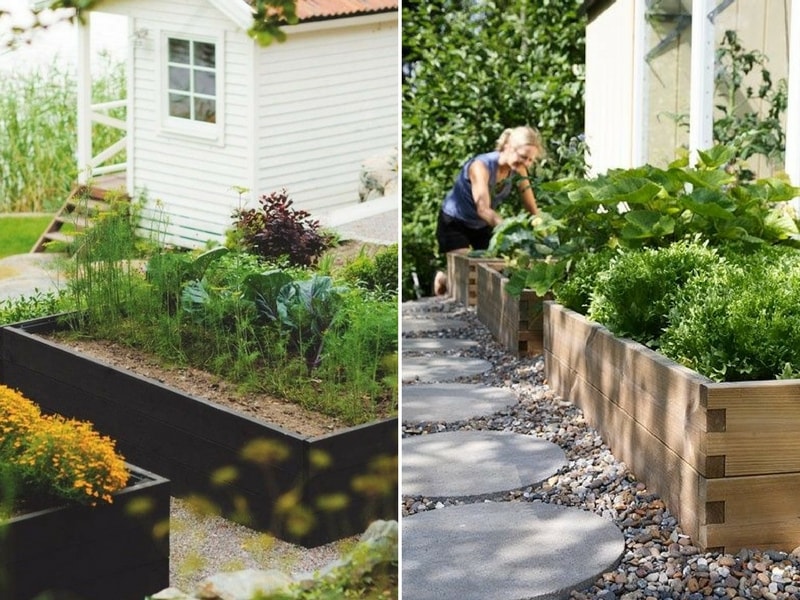
Two particularly aesthetic raised vegetable gardens - Source: Pinterest
The limitations of this type of setup
However, this type of setup has some limitations or disadvantages.
The main limitation is clearly the investment (in time and money) required for their installation.
Indeed, although you can find ready-made or kit modules on the market, they are generally expensive or of poor quality (sometimes, they even combine both!). Moreover, they are often constructed with treated wood, which is not ideal when you want to grow healthy vegetables. To successfully complete this type of project, you will ideally need to exercise your carpentry skills… and, above all, find wood that is both durable and untreated. Good luck.
Another disadvantage is the need for soil. Raised beds on legs contain no more soil than large planters. But for other types, the volumes can quickly become significant. Let’s do the math: to fill a simple square measuring 1.2 metres on each side and 80 cm high, you will need one cubic metre of soil... that’s 1000 litres, which corresponds to 12 to 13 full wheelbarrows or 33 bags of 25 litres of “Or brun” potting soil… which equals a weight of 833 kilos! I wouldn’t even want to estimate the cost.
Under these conditions, unless you have a neighbour (and friend) who is a hybrid of MacGyver and the Incredible Hulk, you will be somewhat constrained to limit the number. Therefore, to grow and harvest a wide variety of vegetables, it will be necessary to manage the space by carefully considering crop rotation and companion planting.
Are raised vegetable gardens a good solution?
In conclusion, and in my humble opinion, raised vegetable gardens are a very good solution if you have a small space, if your garden is devoid of soil, or if you suffer from back pain. It’s also an easy way to grow a few vegetables for pleasure. But if you have a nice area with even just decent soil and you plan to feed your family… cultivating directly, “the old-fashioned way”, is a much more effective… and economical method. Certainly, improving it will require some effort, but transporting a few bags or wheelbarrows of good manure or compost is far from insurmountable!

Comments