





























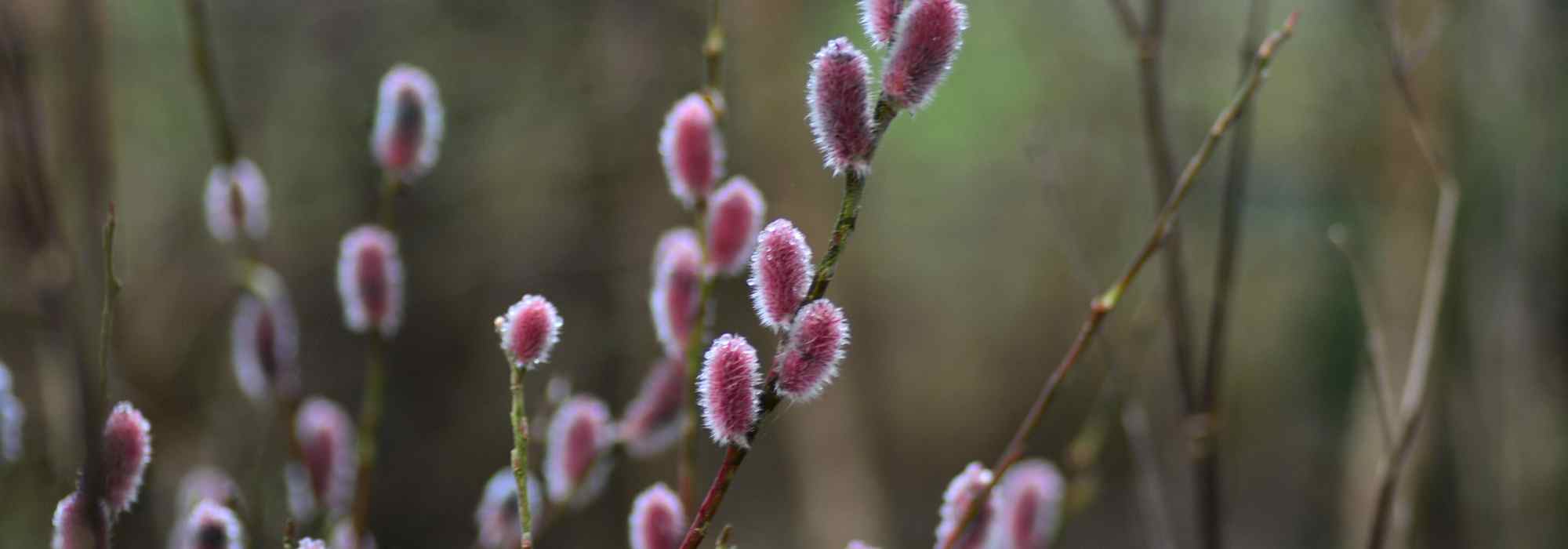
The Willow 'Mount Aso'
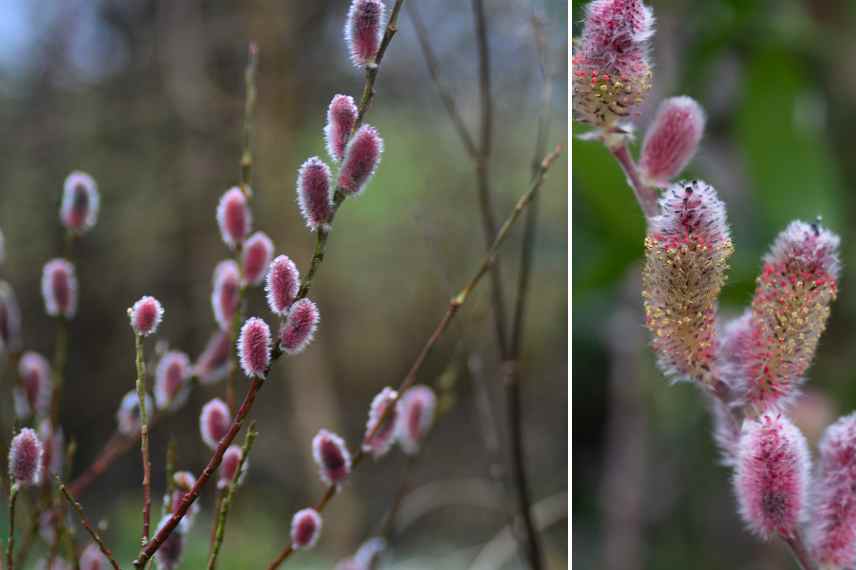
Pink and fluffy aments
Contents
Today, Olivier presents one of his recent favourites: the Salix ‘Mount Aso’. This is a stunning willow with red-pink catkins of Japanese origin! Very hardy, this willow can reach 2 to 3 metres and thrives in full sun.
→ Let’s discover in this video everything you need to know about the ‘Mount Aso’ willow.


Where does this amazing willow come from?
Willows… There are all sorts: some magnificent, some spectacular, and… even more beautiful willows. We previously talked about the Salix acutifolia ‘Blue Streak’, a willow with bluish branches. This time, a completely different willow is being presented: Salix ‘Mount Aso’.
This willow is native to Japan. The name ‘Mount Aso’ refers to Mount Aso, an active volcano in southern Japan. Regarding the scientific name of the species, botanists are not yet entirely in agreement. Is it derived from Salix gracilistyla or rather from Salix chaenomeloides? To keep it simple, you will often find just the variety name on the labels: Salix ‘Mount Aso’.
Why plant a 'Mount Aso' Willow at home?
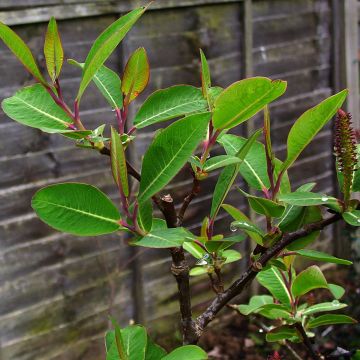
The ‘Mount Aso’ Willow features slightly reddish branches, reminiscent from a distance of a decorative wood dogwood. However, it is primarily the pink-red flowering aments that appear from the end of January or in February that makes this willow a must-have in our gardens.
The green foliage somewhat resembles that of a Japanese quince (hence its presumed lineage with Salix chaenomeloides). It may sometimes take on coppery orange hues before falling in autumn. In winter, it is the branches adorned with bright red scales that will stand out when little colour is present in the garden.
Discover other Willow - Salix
View all →
Available in 1 sizes
Available in 1 sizes
Available in 1 sizes
Available in 1 sizes
Available in 1 sizes
Available in 1 sizes
Available in 1 sizes

Available in 1 sizes
Available in 2 sizes
Available in 2 sizes
Cultivation of 'Mount Aso' Willow
Cultivating this willow is very simple. It is very hardy and enjoys a sunny position. As for the soil: it doesn’t matter as long as it remains moist. Don’t hesitate to provide good mulching to keep moisture at its base.
It can be planted in a slightly wild free hedge, in small groups, or as a specimen alongside some spring bulbs (crocuses, daffodils, Galanthus…).
In our area, it will hardly exceed 3 m in height. In any case, it can easily be pruned to maintain a reasonable size, but especially to encourage the production of very red and floriferous young shoots. This willow should be pruned after flowering at the end of February to early March.
→ A little tip: you can cut a few shoots with buds to place in a vase indoors. They will then flower and can brighten up your living room or dining room.
- Subscribe!
- Contents
Comments