Zanthoxylum armatum - Winged Prickly Ash
Zanthoxylum armatum - Winged Prickly Ash
Zanthoxylum armatum - Winged Prickly Ash
Zanthoxylum armatum
Winged Prickly Ash, Toothache Tree, Nepalese Pepper.
Back-to-school special offer!
Get €10 off for every €50 you spend! And get up to €40 off on a single order.
How does it work?
1. Shop your favourites
Add your favourite plants to your basket. For every €50 you spend (excluding delivery charges, store credit and the plastic-free option), you’ll receive a €10 voucher.
€50 spent = €10 voucher
€100 spent = €20 voucher
€150 spent = €30 voucher
€200 spent = €40 voucher
2. Place your order
Once your basket reaches one of the spending thresholds, place your order. You can even choose your delivery date!
3. Receive your voucher
As soon as your order has been shipped, you’ll receive an email containing your personal voucher code and its value.
4. Use it on your next order
Your voucher is valid for 90 days from the date you receive it. It can be used once only, on a new order worth at least the value of the voucher, excluding delivery charges.
Please note: Vouchers can be combined with other offers, but cannot be split or refunded.
Home or relay delivery (depending on size and destination)
Important: You may be charged customs duties by your country’s customs authorities upon delivery.
Schedule delivery date,
and select date in basket
This plant carries a 24 months recovery warranty
More information
We guarantee the quality of our plants for a full growing cycle, and will replace at our expense any plant that fails to recover under normal climatic and planting conditions.
Would this plant suit my garden?
Set up your Plantfit profile →
Description
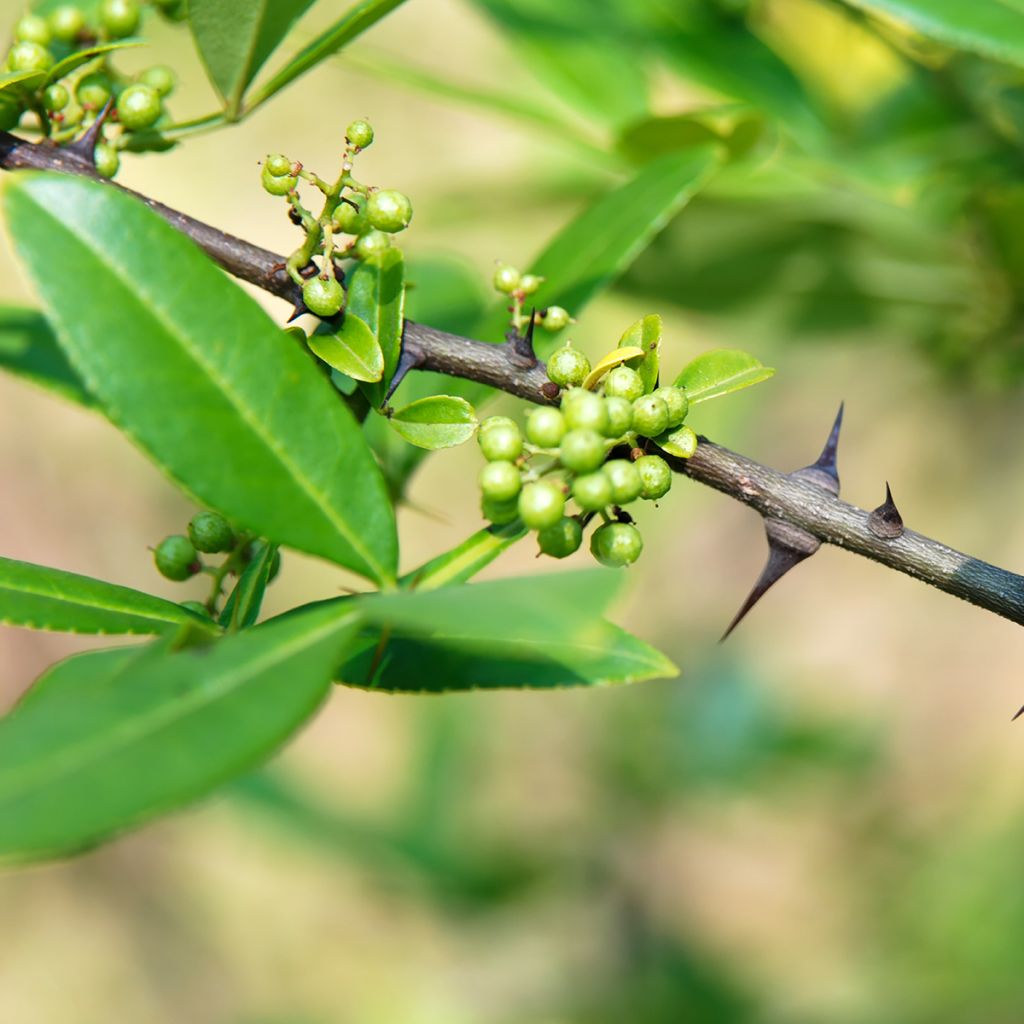
The Zanthoxylum armatum, known by its vernacular name Timut Pepper Tree, is a species closely related to Sichuan pepper, but with berries that are more lemony and aromatic, and stronger in flavour. It belongs to a group of tall shrubs and small trees called prickly ash trees, known for their aromatic fruits and foliage. Its colourful autumn foliage transitions from yellow-orange to purple. Relatively easy to grow, hardy below -15°C, this pepper tree with prickly branches is perfect for a defensive hedge. For this reason, it is best placed away from pathways and gloves should be worn during harvest.
The Zanthoxylum armatum is native to Asia and belongs to the Rutaceae family, like citrus trees. Its botanical synonyms include Zanthoxylum alatum var. planispinum, Zanthoxylum planispinum, Zanthoxylum alatum. It can be found in various habitats, below 3100 meters altitude, in Nepal and Tibet, China, as well as Bangladesh, Taiwan, Bhutan, India, Indonesia, Japan, Kashmir, Korea, Laos, Myanmar, Nepal, Pakistan, the Philippines, Thailand, and Vietnam.
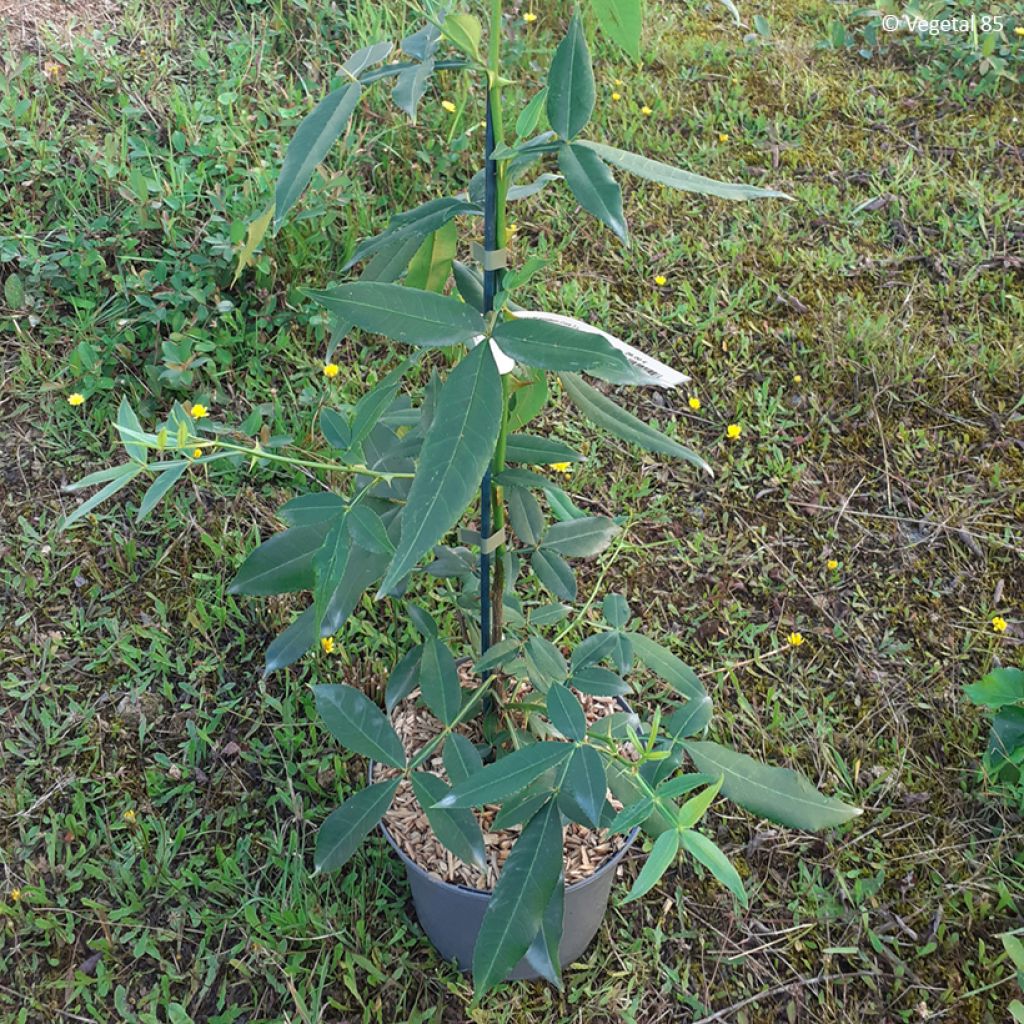
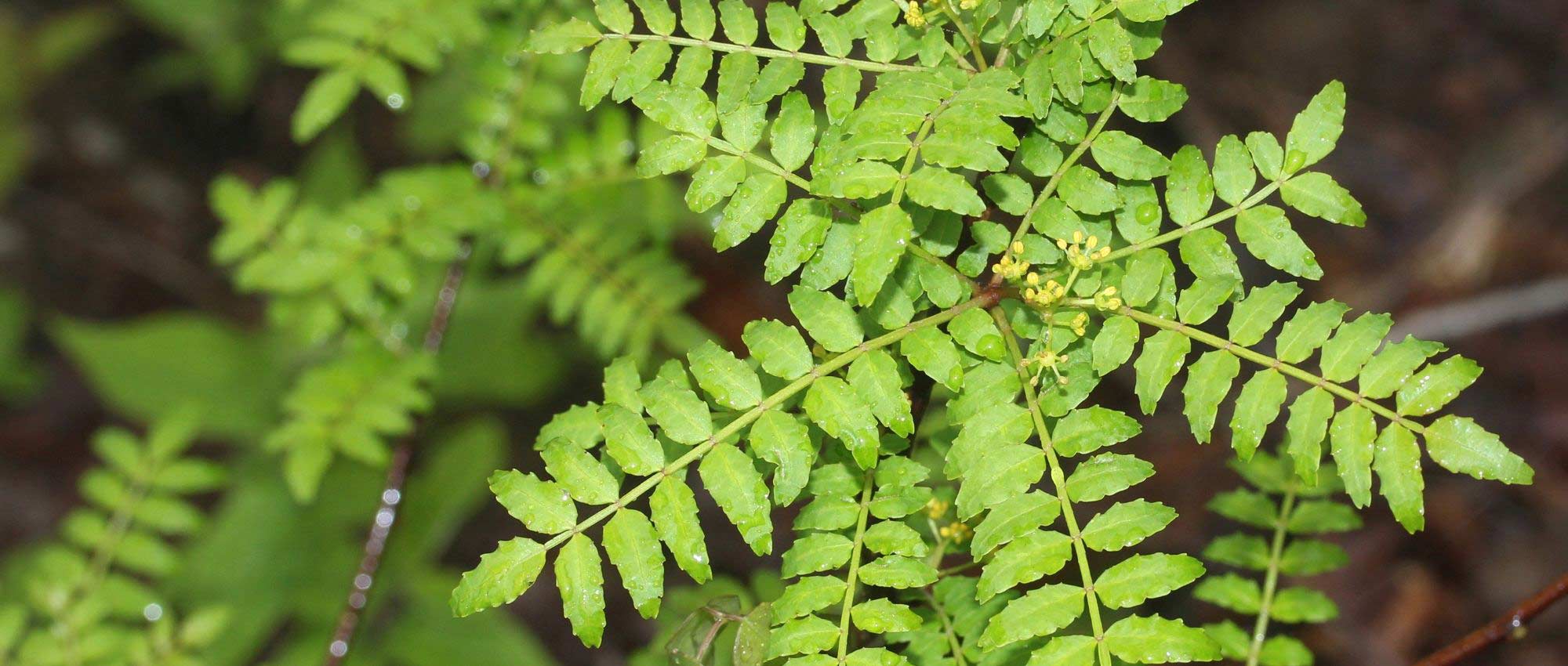
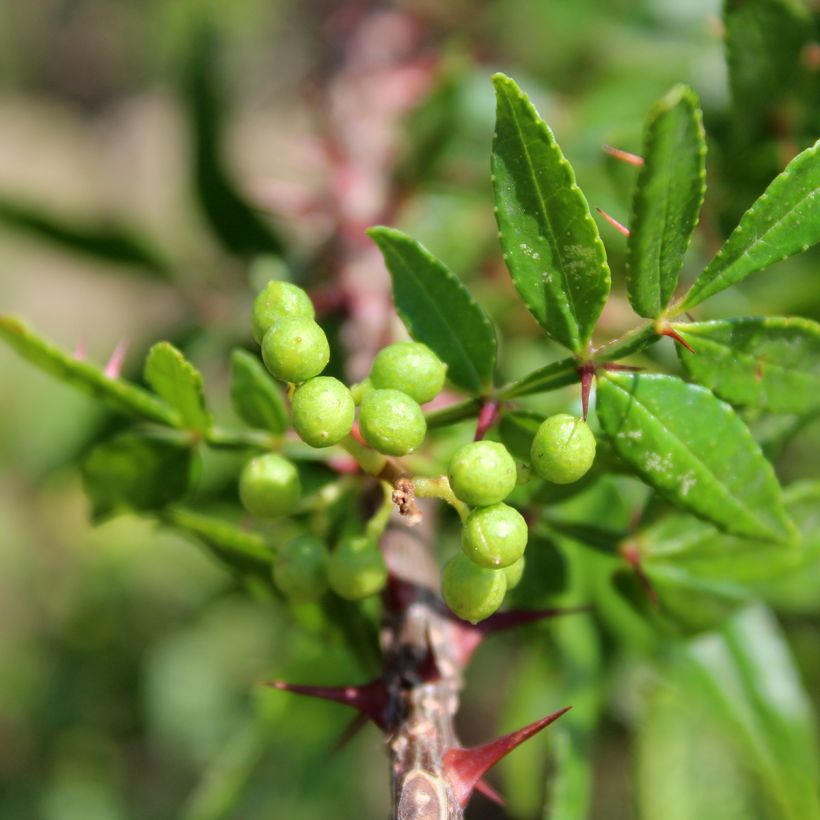
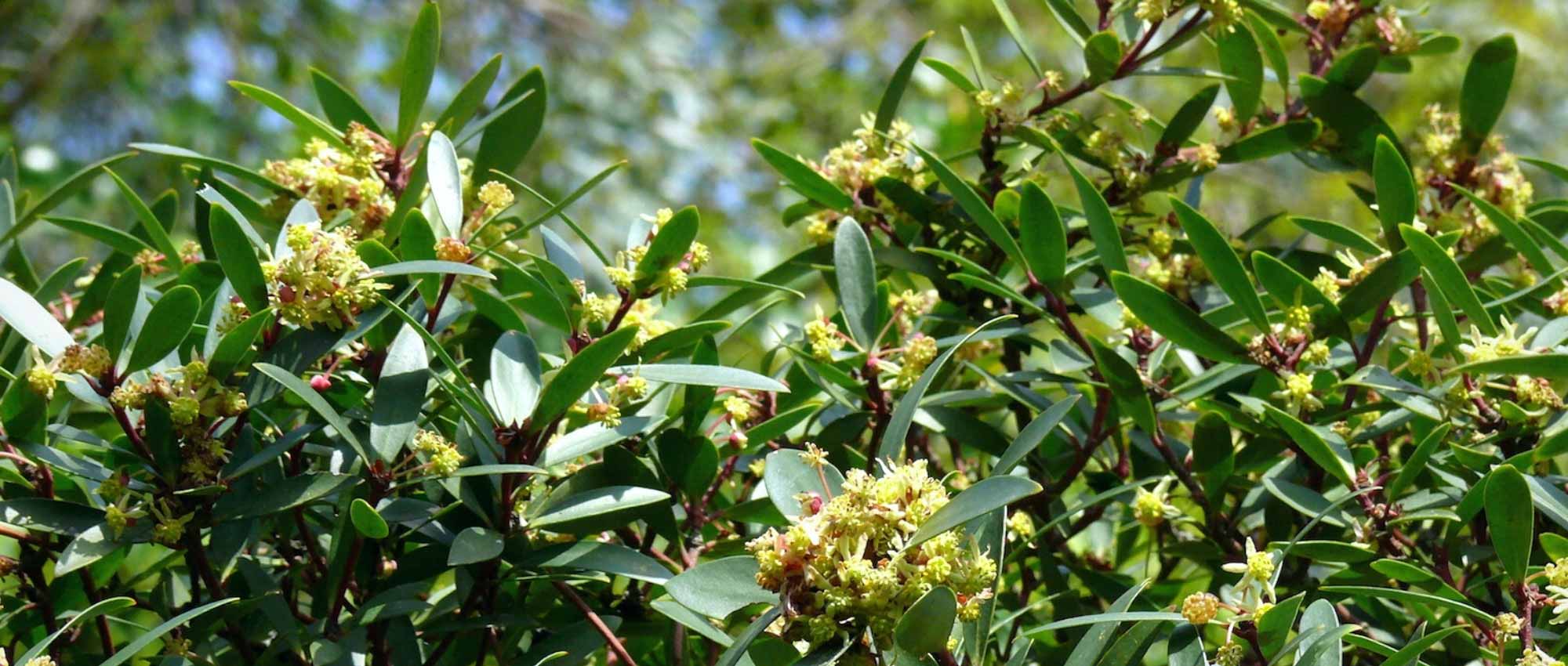
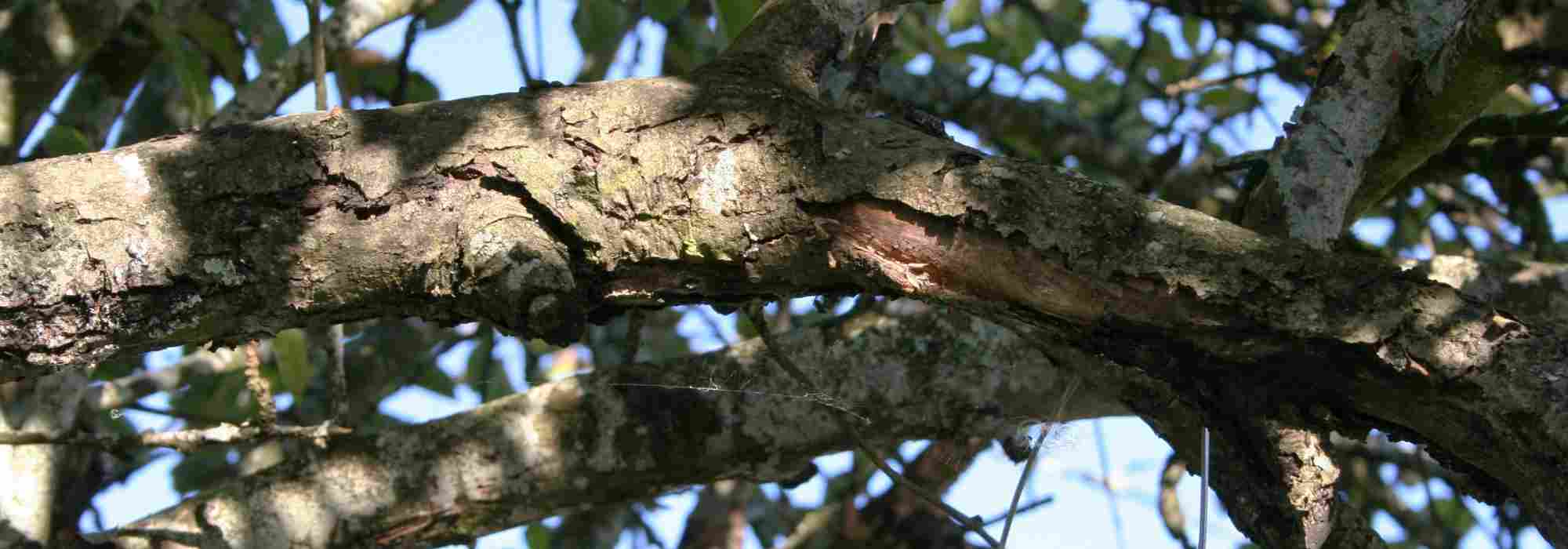
The Zanthoxylum armatum has highly aromatic foliage with a lemon scent. This species sheds its foliage in winter and thrives in well-drained soil, even rocky limestone. This fast-growing small tree reaches 2 m by 1.5 m at 10 years and eventually reaches a height of around 4 m with a similar spread. Its graceful habit is naturally spreading, supported by a few main branches. Each bud on the branches is topped with 2 thorns. Over time, the thorns blunt, resembling small bumps. The branches bear opposite, lanceolate, ovate, or elliptical semi-evergreen leaves with essential oil glands and small prickles. When crushed, they release a fresh lemon scent. The leaves have prickles on the central veins. Flowering occurs in May-June, varying depending on the climate, on year-old branches. The flowers are small clusters or compound cymes of discreet yellowish-green flowers, at the axils of the leaves. This shrub bears both male and female flowers. After pollination, round fruits measuring 3 to 4 mm in diameter form on the female flowers. Their fleshy covering turns brown when ripe. These fruits are highly aromatic, with a fairly strong taste, citrusy aroma reminiscent of grapefruit, and possessing anaesthetic properties (similar to cloves). Indians reportedly chewed them to relieve dental pain. They are harvested from August to November.
Timut Pepper Tree grows in various soil types but prefers consistently moist soil in summer for a good harvest. It integrates well in an English-style or naturalistic garden. Left untrimmed, it naturally fits in an untamed hedge, alongside fruiting dogwoods (Cornus mas), rowans, viburnums, Amelanchier ovalis, Osage Orange trees, ornamental apple and cherry trees, bee bee trees, for instance. The spiny nature of its young branches makes this beautiful shrub an ideal candidate for a defensive hedge. In this use, it can be paired with Poncirus trifoliata, Pyracantha, jujube tree, hawthorn Crataegus monogyna, Japanese quince Cido, sea buckthorn, for example.
Zanthoxylum armatum - Winged Prickly Ash in pictures
Plant habit
Flowering
Foliage
Botanical data
Zanthoxylum
armatum
Rutaceae
Winged Prickly Ash, Toothache Tree, Nepalese Pepper.
Zanthoxylum alatum var. planispinum, Zanthoxylum planispinum, Zanthoxylum alatum
Himalayas
Planting and care
The Timut Pepper Tree is preferably planted in spring north of the Loire, and in early autumn in drier and warmer climates. A sunny or semi-shaded exposure is suitable, only dense shade prevents it from flowering and fruiting. It adapts to all well-drained soils. It tolerates poor or rocky limestone soils well, and adapts to sandy or slightly acidic soils. Its growth is rapid if the soil remains somewhat moist in summer. Once established, after 3 years of cultivation, it can do without watering in summer in most of our regions (except in very arid Mediterranean areas). If necessary, lighten your garden soil with a supply of river sand, gravel, or pumice.
This Zanthoxylum armatum is an easy-to-grow plant that requires little maintenance. For a free hedge, plant one every meter. Pruning, if necessary, should be done in autumn, but the following spring flowering will be sacrificed.
Planting period
Intended location
Care
Planting & care advice
-
-

-
-
-

-
-
-

This item has not been reviewed yet - be the first to leave a review about it.
Recently viewed products
Haven't found what you were looking for?
Hardiness is the lowest winter temperature a plant can endure without suffering serious damage or even dying. However, hardiness is affected by location (a sheltered area, such as a patio), protection (winter cover) and soil type (hardiness is improved by well-drained soil).

The flowering period indicated on our website applies to countries and regions located in USDA zone 8 (France, the United Kingdom, Ireland, the Netherlands, etc.)
It will vary according to where you live:- In zones 9 to 10 (Italy, Spain, Greece, etc.), flowering will occur about 2 to 4 weeks earlier.
- In zones 6 to 7 (Germany, Poland, Slovenia, and lower mountainous regions), flowering will be delayed by 2 to 3 weeks.
- In zone 5 (Central Europe, Scandinavia), blooming will be delayed by 3 to 5 weeks.
In temperate climates, pruning of spring-flowering shrubs (forsythia, spireas, etc.) should be done just after flowering.
Pruning of summer-flowering shrubs (Indian Lilac, Perovskia, etc.) can be done in winter or spring.
In cold regions as well as with frost-sensitive plants, avoid pruning too early when severe frosts may still occur.
The planting period indicated on our website applies to countries and regions located in USDA zone 8 (France, United Kingdom, Ireland, Netherlands).
It will vary according to where you live:
- In Mediterranean zones (Marseille, Madrid, Milan, etc.), autumn and winter are the best planting periods.
- In continental zones (Strasbourg, Munich, Vienna, etc.), delay planting by 2 to 3 weeks in spring and bring it forward by 2 to 4 weeks in autumn.
- In mountainous regions (the Alps, Pyrenees, Carpathians, etc.), it is best to plant in late spring (May-June) or late summer (August-September).
The harvesting period indicated on our website applies to countries and regions in USDA zone 8 (France, England, Ireland, the Netherlands).
In colder areas (Scandinavia, Poland, Austria...) fruit and vegetable harvests are likely to be delayed by 3-4 weeks.
In warmer areas (Italy, Spain, Greece, etc.), harvesting will probably take place earlier, depending on weather conditions.
The sowing periods indicated on our website apply to countries and regions within USDA Zone 8 (France, UK, Ireland, Netherlands).
In colder areas (Scandinavia, Poland, Austria...), delay any outdoor sowing by 3-4 weeks, or sow under glass.
In warmer climes (Italy, Spain, Greece, etc.), bring outdoor sowing forward by a few weeks.
Shipping country and language
Your country of residence may be:
Your country of residence is:
For a better user experience on our website, you can select:
Your shipping country:
-
 Austria
-
 Belgium
-
 Bosnia & Herzegovina
-
 Bulgaria
-
 Croatia
-
 Cyprus
-
 Czechia
-
 Denmark
-
 Estonia
-
 Finland
-
 France
-
 Germany
-
 Greece
-
 Hungary
-
 Iceland
-
 Ireland
-
 Italy
Italy
-
 Latvia
-
 Liechtenstein
-
 Lithuania
-
 Luxembourg
-
 Malta
Malta
-
 Netherlands
-
 Poland
-
 Portugal
-
 Romania
-
 Serbia
-
 Slovakia
-
 Slovenia
-
 Spain
Spain
-
 Sweden
-
 Switzerland
Language:
-
French
-
 English
-
Spanish
-
Italian
-
German
-
Portuguese
-
Dutch
-
Finnish
My Account
Hello
My wish lists
My cart
Log in / Register
Existing customer?
This form is protected by reCAPTCHA - the Google Privacy Policy and Terms of Service apply.
New customer?
Create an account to track your orders, access our customer service and, if you wish, make the most of our upcoming offers.